Crossing Genres

Good morning! Well, its been an exciting few weeks with book releases and readings, and promoting the hell out of my stuff. I’m so excited to get back to actual writing, and talking about writing. Today, in collaboration with the fine folks at The Writing Forge, I’m going to talk about crossing genres, both as an author and also within singular books.

For more check out this podcast: “Look Both Ways Before Crossing Genres

So, what does it mean to be a cross-genre writer? Well, it’s more prolific than you might think. Very rarely does an author stick to one genre alone for the entirety of their lives (I was going to say career but I’ve never actually known a ‘retired’ writer. We write up until the day we shuffle off the mortal coil as far as I know). Nora Roberts writes romance but she also crosses over into Mysteries as J.D. Robb. J.K. Rowling went from YA fantasy to Adult Fiction, Anne Rice has written everything from Vampires to DomSub, to Christianity. Hell, even James Bond’s creator, Ian Flemming wrote “Chitty Chitty Bang Bang”. So the better question is not should you become a cross-genre writer but when and how.
Photo by Wallace Chuck on Pexels.com

Writing in multiple genres can be done in one of two ways. By switching genres completely by novel or story, or by incorporating multiple genres into one project. Let’s start with the first.

So, let’s say you’ve been churning out kids books for the last ten years and you’re ready to jump into something new. You’re an established name in the genre, with a following (let’s dream big while we’re dreaming). Yay for you! But how do you go about the transition seamlessly?

First, know the genre you’re getting into. Mysteries don’t follow the same plot points or tropes as kids books (wait, do they?) Read as many mysteries as you can, gain a good understanding of typical tropes and character types for your new genre. Discover what you like and what you don’t, what works, and what doesn’t. This way, you’ll be ready to write a mystery that will appeal to the die-hard fans of the genre and hopefully make your work more acceptable.

Second, if you’re established in one genre and are jumping the creek into another, you may want to try a pen name. When people know you for a certain story/genre type, they’re going to follow you. But maybe they don’t want to read your new blood spatter fest to their 8 year old. So, establish a new name for your new genre. (J.D. Robb, A.N. Roquelaure, etc.)

However…if you are a sci-fi writer and you’re dabbling in fantasy, this is a smaller jump and you can probably keep your name. Those followers you have will probably be more lenient and accepting of your next adventure, and if you can take an established base on a new adventure all the better.

What would be the benefit of writing in multiple genres in this way? I’m so glad you asked. Here’s a bullet list.

  • Its a great way as an author to diversify your writing, get your work into different venues, and expand your base of readers
  • It can help beat boredom of following the same tropes/patterns over and over
  • It will help grow your skills as a writer. Romance writers know dialogue and relationships, Fantasy writers know word building, Horror writers know suspense. All of these skills can be honed and developed to the betterment of all your writing.
  • It makes you hard to pin down and undefinable. Frankly, I don’t like being put in a box. Yeah I write romance, I also write speculative fiction, suspense, sci-fi, and erotica. I dabble in poetry, and sink into human interest non-fiction. Don’t you put your labels on me.
Photo by anouar olh on Pexels.com

Now Let’s talk about utilizing multiple genres in a single novel/story/project.

Its slippery slope. Genre fans are genre fans for a reason. They like the predictability. They like knowing where the story is going and that it will end in a certain way. Mixing up loved tropes, taking side quests, and tripping the hero on his journey might lose you some fans. And genre fans are a huge base. I’ve even turned off a couple of readers because some of my romances were not ‘sweet’ enough. They were a little too dark for the genre. And that’s a risk I took by telling a grittier story in a genre that likes to stay flowery.

BUT the benefits to writing this way, are that you can incorporate elements of storytelling that best suit your characters and the story itself. I wrote a science fiction novel set on the rings of Saturn with time/space wormholes, and a heavy nod to literary poets. It had elements of religion, and romanticism, and social commentary, all in the midst of blaster fire and moonglass blade fights. It was one of my favorite stories to write and one of my best recieved and I think that’s because sometimes a story is just too big to fit in one genre.

Sometimes your story, is more like life. A daring, romantic, mysterious, fantasy western set in modern day suspense-filled and poetic semi-reality. And its interesting and unpredictable in spaces, and comforting and ties up well in others. And that’s why knowing the elements of each genre is important and can boost your plot line into something quite magical.

Crossing genres is, all in all, a great way to improve your writing and your reach. Knowing your audience, and understanding the different and distinct elements of your genres will help you do it in a successful and enjoyable way. I hope that you all give it a chance and let me know how your forays go.


Going Back to School: How Writers Benefit from Classes, Conferences, and Trainings

Photo by Katerina Holmes on Pexels.com

There are plenty of ways to keep your skills sharp as a writer. Last week, I covered the conference season and this post will be similar in that I’m going to give you some online resources for improving your writing skill, developing a business or marketing plan, and helping to boost your creativity. Just like conferences, a writer can easily blow their budget by trying to train themselves into success. My goal is to offer you a spectrum of options with the caveat that classes can show you how to write better, give you pointers on the business side of things and offer marketing advice, inspire new ideas, and improve your editing. About the only thing they can’t do is write your book for you.

The Long Haul:

MFA/MA Programs: These programs (Master of Fine Arts and Master of Arts) are advanced, graduate degrees that can help to help your overall exposure to the big picture of writing (MA tends to focus more on Literature and less on writing, MFA can be broken down into Creative Writing, Journalism, Linguistics, etc). In these programs you will learn pretty much everything, from plot and structure, to dialogue and character development, to grammar and editing. It will take two years at least, and the cost averages out to about $38,000, not counting room and board. You’ll read an enormous amount of material. You’ll probably complete a novel or collection as part of your thesis. Not a horrible way to go, but studies are showing that the cost of MFA programs are often not paid back in employment afterwards so–carefully think through that one.

Online Writing Courses:

A number of reputable online courses and classes are now offered through various writing groups, professional/successful authors, and university departments. The courses are less intensive than a MFA and can often be done at your convenience. They cost a lot less (some are even free) and you can often pick and chose the ones that will benefit you the most. Here’s a small list courtesy of softwaretestinghelp.com:

  1. Wesleyan University Creative Writing Specialization
  2. Gotham Writers Online Writing Classes
  3. Reedsy Learning Courses
  4. Udemy Creative Writing Courses
  5. edX Creative Writing Courses
  6. FutureLearn Creative Arts and Media Writing Courses
  7. OpenLearn Creative Writing
  8. SkillShare Online Creative Writing Classes
  9. Emory Continuing Education Creative Writing
  10. Universal Class
  11. Writers.com Online Writing Courses
  12. Masterclass Creative Writing Classes

Conferences, Seminars, Retreats

Feel free to refer back to my other post: https://thebeautifulstuff.blog/2021/04/01/a-word-or-several-about-writing-conferences/)

I’m going to offer this plug one more time, because I truly believe in this conference and because it’s completely hybrid, you can attend from anywhere in the world, participate, and get the benefits without the travel costs, having to get dressed up, or use a public restroom–winner, winner, chicken dinner. Register for this one:

WHWA Writing Conference

For this area of your continuing education I’ll ask that you explore seminars (mini conferences, or a series of five or more classes on one topic, like Novel Writing) and retreats in your area. I’m sure there are beautiful, far-flung retreats in tropical islands that are also available, but with travel restrictions, lack of funds, and a busy life outside of writing, those may not always be attainable, so do a little research closer to home. Some of my favorite retreats and seminars have been offered through Writing Heights Writers Association at a very fair cost and are conveniently located. It also helps my sense of altruism to know I’m giving my money into a local organization that turns around and helps other writers in my area.

Retreats tend to fall into two categories, those with classes/seminars and free-write time, and those with simply free-writing time, punctuated with social hours. You may wonder how effective three or four days, stuck in a lodge, with nothing but time spent writing can be as beneficial as say, a whole weekend of conference classes. Well, young writer, let me elaborate.

Classes, conferences and seminars are excellent resources for enhancing your writing and helping you learn technique as well as opening up your mind to the business side of things–just like I mentioned above. And, just like I mentioned above, they can’t write a book for you. Only you and time can do that. As a mother of two busy kids, with a couple of side gigs, and a whole household to run–I don’t always have time to write. Somedays I’m lucky to get 20 minutes in. So to have four days, uninterrupted by children, husbands, dogs, laundry, volunteering, teaching, or grocery shopping, cleaning, and yard work, just focused on my writing is priceless. I’ve finished novels in that time. I’ve written four months of blog posts and edited entire series. I’ve barreled through plot holes that I thought I could never find solutions to.

The truth is, when there’s nothing else to pull your procrastination strings, you can get some shit done. PLUS, its immensely helpful to be surrounded by other writers while they’re “in the zone”. There is an inexplicable energy that catches you up when you’re surrounded by other souls and brains focused on their art and passion. Plus there’s usually some socializing/decompression hours at the end of the day to give yourself respite.

Okay–that seemed like a lot of info and I don’t want to bore you to tears. Check out some of the ideas above this week for taking yourself back to school. When we invest in our writing, it becomes less the pipe dream, and more of an attainable goal. Good luck out there, writers. Keep me posted on your progress or if you’ve found some great retreats, classes, and resources yourself!

Listening to Our Characters

Good morning dear readers and writers. First, may I offer a huge thank you for all the comments and encouragement I received from the last post. Writer’s know what it is to get bogged down in the process, and no one is better at pulling you up from that dark, dusting off the weight of the little failures that cling to your shoulders, and giving you a gentle but determined shove back up on the road. So thank you for your advice and encouraging words. They mean a lot.

Between that last blog and this one, I was lucky enough to take Todd Mitchell’s workshop on Creativity. I’d been to a few of his classes but this one seemed serendipitous. I knew I needed to start writing again, a novel. A big project to immerse myself in, and I have a beautiful trio sort of dangling between first draft and not quite done currently on my computer. I love the second book, and that’s obvious by how close to done it is. The third, similarly has pulled me in and I’m enjoying working through the rough patches. But the first. Ah…the first. Kind of the keystone in a series…well…it’s a piece of shit.

And it took me a while to really figure out why during rewrites last year. The main character had somehow taken on the dreaded Susie Sunshine persona (probably because the concept of her was born many years ago.) So, I put her through a character-lift (like a facelift but for imaginary people without faces yet). She got a spanking new name and I roughed up her edges. But nothing in the story seemed to make sense and it felt like trying to force an incorrect puzzle piece into a million different holes that did not fit. What in the hell was wrong with her? I knew what she needed to do and the plot and arc of the book was solid.

But I didn’t believe she was the woman to live it. And I was stuck.

And then Todd said something about struggling with a novel for years until he finally sat down and wrote a letter to his main character and asked him “What is it you want me to know? What’s your story? What am I not seeing?”

For the average human reading this post, I’ve just solidified in your head what absolute insanity writers possess. What do you mean you ask your characters? You created them. You know them. That’s your brain.

But the brain is a tricky place, silly non-writer. It’s vast, and expansive and it has a million rooms we’ve never even found the doors to, let alone explored. And sometimes, characters and answers lay behind those doors. And the only way to access them is to stop trying to force the answer. (I’m planning a post on Alpha State writing so hanging in for that one). Answers com only when we calm the hell down, and sit quietly outside the door, letting go of our ego and our need to tell the story, and just listen to their story.

Sounds crazy. Absolutely, bat-shit, bonkers.

And it totally works.

I put on a meditative playlist, took some deep breaths and focused on her name. Her new name. Her newly rough edges. And I sat, with my back to her door and took some deep breaths. I closed my eyes and started typing. And I didn’t question or stop, or allow myself to think of what she was saying. I just listened to her.

Here’s what it looked like:

Hey Dani,

Hey Sarah.

So, I’ve been struggling with you.

Yeah, I know.

I want to create you

You can’t create me. I just am.

So who are you?

Wrong question

What is it you want me to know? What am I missing about you?

I’m dark.

You began so light and perfect

That’s not how the world works. Not for babies abandoned, babies with parents like mine.

What does that mean? Who are you?

I am Danika Brennen. I was left at a fire station as a baby. An orphan.

Who left you there?

A pregnant vagabond, disowned. My mom

Who was she?

An member of the High Guard,

kicked out

Are you ***’s daughter?

No, I’m Loki’s.

holy shit.

Now, I’m not going to give everything away, but that last thing she said…that was an answer I didn’t know until I let her talk to me. And it’s an answer that I can write a book from. That will help me, help her navigate through this story…to a better place. To a life she deserves. As dark as she thinks she is.

It’s crazy right? But talk to any fiction writer and I guarantee they’ve had some kind of experience with their characters talking to them, to each other, offering unwanted suggestions or criticism along the way. And yes, they’re all in our heads. But I think as humans we underestimate the expansive reach of our brains and neural capacity.

I mean what if they’re not just our consciousness, what if they’re wavelengths in a much bigger plane of existence that we’ve only just started to understand. The wavelengths and dimensions that only open to us, When we listen.

All Editing and No Writing Makes Sarah a Dull Creator

Before you get on some high horse about how editing is a part of writing, allow me to unbuckle your saddle while you’re still on it. I know that the process of being a novelist is a journey of different landscapes. The initial sunrise of bursting light (inspiration) is followed by rocky paths (writing and plotting) and raging storms (character development and killing darlings) to the darkest nights (getting stuck) and comforting moonrise (resolution the big story arcs). Then there’s editing. And it’s important, amazingly important. A piece of shit first draft only becomes a good book because of proper and often harsh rewrites.

But lately… Oh lately… I’ve been spending the majority of my time in edits for 4 different novels coming out this year.

And because it is a constant parade of fixing and rewriting, and cutting, and facing my inadequacies on the daily, editing to me feels like the endless beach scenes in The Drawing of the Three. Or slogging through an infinite desert on your way to somewhere but with no clear end in site. And though it’s repetitive you can never just let your feet (or your eyes in this case) zone out as you plod ahead. Because you’re traversing that same wondrous journey from an outside and judgmental perspective, and at least for the hundredth time and all the rocks seem to look the same, and the plot holes are huge, and there’s that lovely garden that serves no purpose so it must be felled. And when you reach the end, that moonrise? Well, it just skips forward again to the start. And you take smaller steps, sentence by sentence steps, every comma, period, flagrant and free-range POV that escaped the first dozen times. And you know this story and you’re sick of the characters and every step, every sentence feels heavier and heavier and…

You start to wonder why you’d ever want to write down another journey again.

Add to that, when you do sit down to write, you’re brain is in so much of a “Pick this shit apart and find what’s wrong with it” mode that you barely get two sentences in before you’re going back to the start of them to preemptively rewrite. The free flow of the sun coming up over the mountains looks more like a giant yellow strobe light over hills that you can no longer describe off the tip of your fingers like before.

What I’m saying is, I’ve been neck deep in editing now for months, and I’m grateful that I have so many projects coming out this year. I truly am. But if I don’t start limiting those hours of cuts and rewrites, I’m worried I’ll lose my joy in telling a story in the first place. I worry that the editor in me will take over the controls and I will be stuck in self-editing mode long enough, that I no longer am capable of telling a story. Just judging one. That I’ll be stuck in that deserted wasteland where no words are allowed out, because they don’t come out in 20th draft form.

What’s the point of this rant? I’m not sure, except that if you’re a writer, I’d love to hear how you balance out your creativity with the necessary clean up of editing. Right now, I am struggling and it’s left me frustrated, uninspired, and if I may say, more than a little disheartened. And a writer with no heart…

Letters To Ourselves

Of few things I am certain.

Change is inevitable.

Babies and puppies will always cause some kind of visceral, deep rooted reaction.

You need a night sky, devoid of city lights and full of stars to feel your appropriate size.

Fewer sounds are more calming than a river flowing, rain hitting your rooftop, or a dog snoring nearby.

Nothing tastes as good as when your grandmother made it.

Nothing comforts like the right pair of pajama pants, and

procrastinating cleaning the bathroom always takes longer than actually cleaning it.

Time is finite and infinite. It’s a construct without construction and we know so little in our tiny human brains about what happens, how the universes expand, and where our consciousness ends up in the grand scheme of things that we are little more than specs of stardust in a grand swirling ocean of time and space.

You always discover these things too late: that you’ve loved, that you’ve lost, and that you wished you would have tried harder.

We will always blame ourselves for things we cannot control,

We will always forgive others more often than they probably deserve.

Every love song written is written about you and how you deserve love.

I know that when you start loving yourself, truly, you start asking for what you deserve and

this is how we learn our worth, internally, not externally.

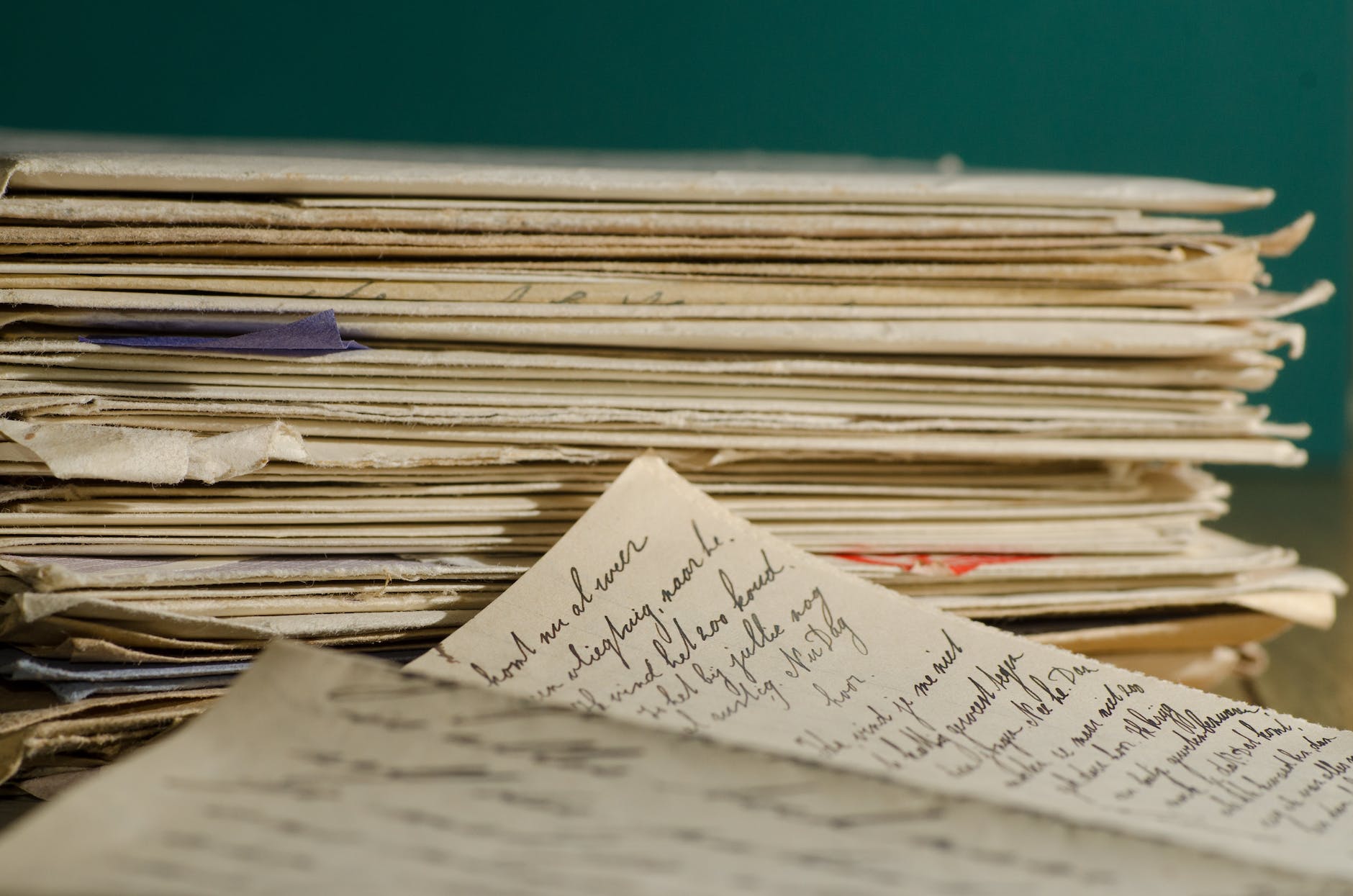
And letters that I write to myself, in the darkest nights of my soul are always the messiest, truest words I ever speak. True for the moment. Even if it is hard and ugly truth.

Writing, from pen to paper, is a line of truth between that infinite, unaware conscious and the swirling cosmos of existence.

So my exercise for you today, dear writer, is not to journal.

It is not to blog, or pound out letters aiming for a word count.

Sit with your breath for a solid five minutes,

just your breath,

let the chaos that you’ve been pushing to the back of your mind with endless tasks, fill the silent spaces between inhalation and exhalation.

When all that’s left, is the ocean pulling in and rushing out

and your weight is heavy against the solid seat of the earth

…write

Write about what is running torrents in your mind.

Write your worries, your fears, your wins and losses.

Write down the set backs and jump starts and the hopes.

Write a love letter to yourself.

Show patience, understanding and care as you would if you were writing to your child or someone you love beyond bounds.

Be kind.

Be honest.

Be true.

Call yourself sweet things, like Love and Darling and Starshine.

Be hopeful.

Then, tuck it away.

Get on with your work, see if the chaos has settled just a bit.

Plough ahead, and check off that to-do list…

Until one day you stumble upon that letter.

And remember…that there is truth in you.

There are words and brilliant ideas, and hope.

And you belong in the world,

That you are loved.

Remember.

What Change Can Teach Us

Ah, sweet homeostasis. That divine little holding pattern that so many of us humans cling to. Cute little creatures of habit, we like to find our lane, our niche, the familiar, the expected, the routine. I’m almost even inclined to believe that we not only enjoy it, but the longer we spend in our well-loved ruts, the harder it is to leave them. Even when we need to. Even if we want to. Even as the world changes around us. Isn’t that just when trauma and painful growth usually happens? When we are forced to change? Or are left behind because we refuse?

I could probably write a good 10,000 words alone on what change does to us as humans, but this blog is about writing, so I’m going to narrow it down.

Every writer has a rut. The niche you gravitate towards, the style you use, the genre, the POV, even your character choice…we have familiars that feel good to write in because they come easy. We know the pattern, the trope, the arc of a plot and all its points. And we could write this way forever and do, probably, quite well for ourselves (James Patterson and Nora Roberts own prime real estate on this front). But we don’t do very much growing.

Why is it important to grow?

Well, unless you ARE James Patterson or Nora Roberts (and if you are, holy shit welcome to my humble blog, thanks for reading) the chances of you scoring big on mass repetition are slim. Plus, the world of writing is changing and trending and learning to understand and at least try out these new waves, will help us adapt to the new and dynamic tides of readers. It will also help diversify your portfolio for future projects. Sounds like a 401k investment plan, right? Well—in a way it is.

Changing up your routine, your genre, your trope, your characters, even your plot is scary and hard and it may feel like you’re stumbling around in the dark. You may get tangled up, and blocked. But the best thing happens when you struggle and even when you fail. You learn. You learn what works, you learn how to take chances on solutions you might not have thought of before. You learn that you are capable of writing a flash fiction piece when all you’ve ever written were 200,000 word novels. You may learn you can plot a novel when all you’ve tried before is a 1200 word magazine article. You learn that you can explore different avenues of writing and still keep your voice.

You will learn. And learning empowers us, it invests in our ability and talents so when the next project, idea or work in progress comes around, we are armed with experience and inspiration to deal with it. So submit to a contest or journal that takes something you’re new to trying. Sign up for a class not in your genre. Try out a magazine article, or a poem if that’s not your normal route home. Do it. The worst that can happen is rejection and that’s not the worst that can happen in the grand scheme of things.

Get out of your comfort zone and face change and challenge as if they were opportunities for bigger, grander landscapes ahead. Say yes once in a while, even when it scares you.

We don’t always get to choose the changes that happen in our lives, but we can choose how we move forward with our art. We can jump out of the rut and careen into the unknown. We can fall. We can get scraped up. We will rise, take the lesson and keep leaping. To the end, that someday, we won’t be afraid of any new endeavor and will jump up to the opportunities that come by. And every time we do…we learn how to land on our feet. We will learn to navigate all kinds of bigger change if we chose to jump into the small changes.

You never know where your next great adventure will show up. Don’t let your head be buried in your rut when it does.

Photo by Ksusha Semakina on Pexels.com


First Loves

You never forget. Do you? That first love. The first erratic heart palpitations, the unbridled joy and shaking knees when they’d walk into the room? It’s true. The memories of those people, places, experiences have shaped the way we approach or flee from similar feelings that arise along the path of our life. It is the same in writing.

I’m sure, if you’re a writer with some years and miles behind you, you’ve gained experience, plowed through or given up on projects, and learned a little bit from every sentence and every stanza. Even if you’re fairly new to the craft, you still probably remember your first attempts and have learned from them, how to be a little better each time.

Photo by Pixabay on Pexels.com

I still have a folder of my poetry from high school. I don’t keep it in hopes that someday I can revamp them to share with the world. Great goddess no. I keep them to remind myself of the first tremblings of love that struck me when I realized I could put words to paper to mirror the chaos inside. That I could write out feelings and emotions. That I had a voice. That I could use it. I keep those rambling, teenage angsty writings to remind myself of the first throes of passion, as awkward and stumbling as they were, and why every new project should be approached, with the same stirrings of love, excitement and untempered desire.

I also keep them to show myself how far I’ve come. How much I’ve learned, and how much I’ve improved.

I believe the grace and goodness of a writer comes, in part, from remembering the passion and applying our ever-growing knowledge to it. If we’re all one or the other, our writing will either be an incomprehensible mess, fliting off through the meadow picking daisies and talking to forest creatures, or a stoic, by the book repetition of perfectly punctuated lines that feels more like a textbook on fiction, than an actual story.

A good story is a balance of passion and craft and remembering why we fell in love with writing in the first place helps us to approach our new projects with the fervor of that kid in Freshman English without having to rhyme every stanza or create perfect stereotypes for her characters. Just like when you are seeped in first love, your joy shows through your writing when you are doing it without too much emphasis on what it can and should do for your future endeavors, but just to enjoy the shivers it brings you in the present.

At the same time, like the earned experience of an older lover, you know how to manipulate the language, intensify the feelings, and push the right buttons with a perfect amount of pressure to bring your readers over the top in their own emotional response, all while doing it with good grammar and in a timely manner.

So today, take a few minutes and remember your first love (human or word based) and think about what stirred your heart so much about it. Think about the unbridled joy and relentless passion. Try to replicated it on the page, put yourself in the new love phase with your writing and see where it takes you. Don’t stop to judge or rewrite, or edit. Just…do what comes naturally. It’s not like anyone else will be privy to these thoughts. They’re yours alone. So have fun with them.

Feel Like Makin’ Love

You’re welcome for getting that song stuck in your head.

Last week I talked about heat index and how to define your novels for submission or how to search for the right Goldilocks-level of heat for your preference. This week, I want to talk about writing engaging love scenes in your books.

No matter the level of heat you’re writing in, the sexiness of a scene doesn’t just depend on how many engorged members you’re throwing in there.

Photo by Pixabay on Pexels.com

Wow, what a visual. Yeah, that actually makes it less sexy thinking of it…penises getting thrown into bedrooms willy-nilly. Ha, willy-nilly…ugh. Ahem, let’s move on.

Let’s get something straight right away, sexiness isn’t about sex. Heat and desire, aren’t about sex. At least not for the majority of women. (Men, if you’re reading this, get a notebook.) Sexiness is about connection. Two strangers can have sex, and people will read it. Penthouse has proven this. But if you really want someone to read a whole book about two characters, follow them through the quagmire of plot arcs and dialogue, sex is the perfectly balanced frosting on the cake of it all. Two characters that are emotionally connected interacting in a physical way, drives up the excitement and anticipation in the reader tenfold.

It’s all about chemistry. It is vital when aiming to curl the toes of your readers, that you give your characters a connection that feels genuine, deeper than surface level, and tied to their emotional well-being. Then, when you get to the point of all that delicious teasing, it makes the ‘climax’ all the better. Because it isn’t just about physical satisfaction, it’s about connecting in the most intimate way with someone who really gets you. Who loves you. Who sees your scars and your war wounds, and kisses every one of them with acceptance and care.

So if you want to up the sexiness of your scenes, establish a good connection, (even if its enemies to lovers). Find a common ground between them, a exposition of trust that opens hearts, and a deeper understanding of one another that makes the sex even better because there will be less reserve, fear, or doubt involved.

And this brings me to another point, writing good connection between characters is a subtle art that you can employ in your dialogues, body language cues, and inner dialogue (if you write that POV).

Next, depending on your comfort level, what you crave in romance, the nature of your book, or the heat index you’re working on, be honest about the sex. It doesn’t always have to be pretty. Heads get bumped, knees get scraped, giggling ensues. Don’t shy away from the human experience and the parts that make it truly beautiful. With that remember that there are a lot of senses involved in the act. Sight, sounds, smells, touch, taste. Don’t be afraid to play around with them as a way to bring readers in. How far in you bring them is up to you, but even the best closed-door scenes have an awesome build up to the point the door slams shut.

Attraction, chemistry, and desire are the tenements of any good romance, but remember that it starts with connection. Human connection, in all its glorious messiness. Putting in those beautiful messy moments will help bring your characters in a place where the love they make is a natural and much anticipated progression in your book.

Poetry 1-26-2023 (a collection)

I was supposed to write something wonderful today, about writing or marketing or something akin.

I was supposed to sell my books to you today and tell you how much you’ll love them, and how fun my writing is. I was supposed to remind you to submit, to tell you to check out my social. To connect to me in a thousand different ways, and hey–leave a review if you can? And tell me you’re favorite romance trope…

But today…is not that day. Today the poet sits in the captain-of-my-soul chair. Today I want to connect to you with words and not flashing scrolling reels. Because today, grief and loss are sitting heavy in my soul. Because I’ve crossed over a line I cannot travel back over. Because I have lost so much of myself. And I am tired. Today I am tired. And I’m full of heavy words and thoughts.

So– I’m not going to sell you my books, or my enemies to lovers tropes, or my poetic tomes. I’m not going to sell you myself today. I’m just going to gift you a piece of my heart, while I still have some of it to call my own.

Photo by Vera Silkina on Pexels.com
Rooted

I fell
a lone tree in the woods
not even the soft whisper of leaves
touching ground
to announce my end

and now, even slain
recumbent on the forest floor
my heart continues on
in irregular beats
a strange, sad creature
gnarled and stubborn
a stump not removed,
rooted too deep 
a fixture of these 
dark woods

you cut into my core
the center rings
the childhood yew
the heart of my heart
cleaved in two
with such a cruel and easy
grace

I am no fixture to you
no rooted thing
you see forests,
not me
a weeping willow, 
scythed down, 
with one stroke 
of your sharp
and pitiless
tongue.


Found
 
when they find me

i will be alone

the questions and headshakes
directed in quizzical depths
to the loam and silt they cannot sort through
no reasoning to be caught
in bucket or screen
 
when they find me

dressed as animals are
in the skin i was in
the day i roared into the plain
i will shock in cold white
filled with trout breath
and minnow kisses
 
When they find me
broken shell
battered 
lovely in purple and blue
head struck rock 
knee scraped branches
lips in shades to make 
mountain bluebell envious
they will lament
such wasted splendor
 
when they find me

the questions of why
i was lost to the brine 
a jointer to the self-takers before me
whispers will static the air
of all the ways i failed
and too long loitered in futility
 
when they find me

they will burn the empty package
while I sneak, 
soul-snake in water
down river bends to the sea

never to be found again


This Isn't a Poem for You

So this isn’t a poem for the broken hearted
it is not for those who were left behind
or ghosted
or dumped
or abused
or disregarded

This is a poem for those who watched
as another soul walked away
sat in their silence
was released from another person’s life
faced pain at their hands
or were simply ignored
into nothingness…

You are the warriors of time
you, who have felt the sting
of heart break 
and disappointments

you are the carriers of grief
and the bodies made of scars
and you have lived through
every burning cut
and every lonely night

This is not for the soul they broke,

this is for the you that survived.

This is not a sermon from some high tower
that you are stronger for it
that you are braver because of it
that you are a better person
a heart bigger, 
with these new and ragged cracks 
to let the light in

I will only tell you what I know

You survived.

you packed up your heart and your mind
and you moved on
you accepted their silence
you treated your wounds and closed the door
you started paying attention to yourself 
when they no longer did

and that carries weight

self determination
and the ability to move past
the fickle and soft-seated lies,
of a love always perched to flee 
the very second things got hard

Your feet remain grounded
and you outlasted

You heart is a seasoned warrior
and it may never let another in

but it doesn’t have space anyway
because in their absence
beyond the echoes of their abuse
the pain of their mistreatment,
you’ve filled your heart
with the unfaltering love
of yourself

they can’t ever move back in

there isn’t room any more.



Soul Care

I’m not sure it’s a good sign when my first blog post of the year is late, but I think it’s probably an honest representation of my life. And let’s be fair, it’s only late by a few hours.

I had a busy year in 2022, and some of the seeds I planted are now bearing a shit-ton of fruit (mostly in the form of edits, publishing, book panels, and conferences) so I’m finding I rarely have time to brush my teeth, let alone keep up on my extraneous writing, teach my classes, love on my kids while I still have them around, and walk my dog. (sorry River, you great house hippo) but I’m not complaining.

Because in times of less time, I’ve discovered that I’m forced to let go of something. Sometimes it’s something I really wanted to do, or have, or pursue…but sometimes we have a brilliant opportunity to let go of something we’ve been holding on to for far too long that has been wasting our precious time and effort. I’m not saying it’s easy, but I will say it is worth it.


Think of this as your beginning of the year pep talk, not just for writing but for living.

Photo by Pixabay on Pexels.com

Arrive gently into this year, or arrive like a fucking lion, all I ask is that you arrive. Be your own biggest advocate. If something has been weighing you down, impeding your growth, causing you to lose sleep or pick up the bottle a little too frequently, that thing does not deserve a place in your one precious life.

Take a deep breath, and take stock of the things in your life worth holding on to. You only get so many trips around the sun so travel light.

Are there relationships or situations that poison you? Where is the toxic pull coming from that robs you of your sleep, of your ability to regulate your emotions without coping mechanisms? What is the root of your distress and unease? Who or what is draining your energy?

Because the truth remains that whether you are seeking peace or a revolution you will not find either if you’re expending your energy in undeserving places.

Self-care is important but even more so is soul care (I’m not talking taking yourself to church and repenting—you sassy heathen *kiss*). Soul care means that you don’t accept things, people, situations, or habits that destroy, harm, or otherwise dull the luster of your soul. We all were born within the brilliant light of opalescent divinity, and darlin’, you were meant shine.

So when you drive to work and feel your stomach tie itself into knots. Or go out to meet that friend and feel your teeth clenching. Or look at all the diet books on bookstore shelves and feel the heaviness of trying to make yourself small. Or when you sit down with that one family member, or across the table from your partner and you feel anything but calm, loved, inspired and supported then it’s time to let go.

This requires trust. Trust that the universe has a BBP (bigger, better plan) for you, and it’s your job to start taking steps towards it. Towards what makes you happy. Away from that job, that friend, impossible and disgusting expectations and judgements, relationships, projects, whatever. Whatever the weight. It’s not meant to be carried anymore.

You’ve been around long enough to know that you ARE enough and you deserve love and respect.

You do not need approval. From. Anyone.

Your purpose does not require permission.

You are steeped in the sensual glaze of wisdom and confidence.

You do not have to continue on any path that doesn’t serve your happiness.

There is no requirement to stay somewhere or with someone who does not help your divinity flourish and grow.

So this year I urge you…rather than starting off the year with outrageous and unrealistic expectations on yourself (that have probably been placed on you by a society of consumerism and vapid body shaming) to take stock first. If you are nervous in the gut, triggered by people and situations, lying awake at night or drinking too much just to numb all of the other feelings that jostle around in your brain…find the root of this dis-ease.

And find a way (therapy, journaling, communication with friends, your faith, saying ‘fuck it’ and moving to Cabo, whatever your go-to catharsis) to dig it out and plant something better.

Because time is non-refundable, and your life is not replicable or renewable. This is it. The one we get. I beg of you, do not spend it somewhere that doesn’t deserve your brilliant, opalescent divinity. Shine. As you are meant to.