A Word (or Several) About Writing Conferences

Photo by Pixabay on Pexels.com
I’m not going to lie, I’ve been a busy bee of late, and I’ve got plenty on my plate to make me feel justified when I rehash an old blog, especially if it still fits with what I’d like to talk about.

This, being May and smack dab in the middle of the Writing Conference Season (I’m not sure if that should be a capitalized title, but it seems like an event so…I’m going with it) I thought it would useful to budding writers out there to go over some conference basics as well as some advice that has really helped me get the most out of them. This also being a totally new era, I’ve added some modifications to reflect our new Zoom/Teams lifestyles (not NEARLY as cool as a Rock n’ Roll lifestyle).

So, let’s get into the meaty goodness of writer’s conferences and why you should strive to attend at least one a year.


How do you choose which one to attend?

• Firstly, most conferences, at least since the pandemic, have had to switch to some type of online format or perhaps online-in person hybrid to make accommodations for safety. So, the good news is, you may not have to shell out so much for travel expenses as they can be taken from the comfort of your home. Bad news is that you’ll still be at home and all the challenges that can go along with it. I’ll touch more on that later on.

• If you are anything like me, you’re wealthy in creativity but strapped for cash. One of the biggest deciding factors, for me, is the cost of the conference, along with which classes, speakers, and agents will be there. Getting to pitch to an agent, or multiple agents for publishers specific to your genre is a boon. Classes that are not just interesting but will help expand your craft are also good factors to consider.

• Some conferences are genre specific and if you are a comfort-hugging archetype who doesn’t flirt around outside your style and subject matter, then definitely consider something specifically geared to your genre. The Romance Writers of America used to host in fun and far-off lands like…San Diego and…New York City…*le sigh* Genre specific conferences are awesome if you’re looking to polish skills or start out in a new genre that you don’t normally write in. Don’t be afraid to flirt a bit (outside of your genre, that is *wink)

• If you’re stuck deciding between two, look at the courses offered, the speakers presenting, and if they are offering pitch sessions, especially agents suited to your work. Pick the one that gives you the most opportunity for growth and stretches your creative and ambitious goals.

How do I get the most out of my conference?

• Here’s what I’ve learned. Plan ahead but be flexible.

Conferences don’t just start the minute you pin that snazzy name badge on your seldom-used dress clothes (or, via online conferences, log in with only dress clothes on your upper half). They start the year before, during writing when you self-reflect on the issues you have with your WIP, your style, your grammar, or even the steps you want to take next. If you have trouble with dialogue but are a whiz at plotting out the perfect story arc, then use your conference to build up your weak points. Even if it means stepping out of your comfort zone. Which leads me to my next point:

• Sit it on at least one session that is outside of your genre, comfort zone, or even interest.

Look, conferences can be amazing experiences but if you’ve been through sixteen hours of various takes on the query letter or trying to perfect your memoir pitches, you’re not growing as much as you could be. Why do athletes cross train? Why does an engineering major still have to take social science classes? Because learning about the realm outside yourself will make you better in all aspects of your work. Try a sci-fi world-building class or screenwriting. I guarantee, you will get something new out of it that will help your project and your craft.

• Push your limits.

Talk to people you wouldn’t normally, share your story, your success, and your pitfalls. This is an awesome opportunity (I’m talking to you little introvert) to commiserate, vent, and rejoice in the craft you love so much. Pitch your novel, article, or story. Talk to the larger-than-life keynote speaker (here’s a hint: every single one of them I’ve had the pleasure to meet has been the kindest, most down-to-Earth and supportive writer). Come away feeling like the weekend/day was an experience that has changed you in some fundamental way.

How do I not get overwhelmed?

• For goddess’ sake, take a break in the midst of it all. I’m the worst at this. I’m a classic victim of; “I paid the money and I’m going to hit every single class. I will volunteer, pitch, hit up the speakers at the dinner table, and stuff every bit of information into my head until explodes!” Then by day two, nothing makes sense in my mind, words are blurry, I’m not sure what my name is, and I’m crying into a self-made mashed-potato tower, while wearing Underoos on my head that clearly are not my own.

Take the breaks between sessions or even forgo a session and find a quiet corner or go for a walk outside. You need it to recharge, allow time to absorb the information and be refreshed for the next round. This is especially true for online conferences! Take the computer to different rooms (if they’re still quiet) or outside if available, take walks in between sessions, take eye and body breaks (look far off for a spell, or ‘rest’ your eyes away from the screen, get up and stretch as often as available). Its’ almost like interval training—the space between, the recovery is what sets you up for the next round, so take it.


• If you are pitching to an agent or editor, polish the shit out of that thing beforehand. Take your pitch to your critique group, your friends, random people on the street before the conference and learn how to deliver it with confidence and clarity. Know your story, your characters, and your plot, inside and out. That first page should sing the sweetest siren’s song anyone has ever heart and lure the tepid agent from the afternoon lunch lull into something exciting they want to read more of. The more you practice your pitch, the more it will feel like a conversation with a good friend instead of an interview.

• If you are pitching, don’t be intimidated by the agent or editor. Remember they are people. They are there, specifically, to talk to you. To hear your story. To find the next big thing. Most of them are also just like you…they may even be wearing Underoos and like mashed potatoes. The point is, it’s okay to be nervous, but don’t go in assuming they relish the idea of shooting you down. Be polite and always thank them for their time and any advice they have to give.

• Sleep before. Sleep after. Eat nutritious food, take walks outside whenever you can, and watch the caffeine and the booze. Free coffee stations are like crack for me (or conversely at home for online conferences—having my own espresso machine) and cash bars are a tempting mistress at the end of a long, people-filled day. But you’ll have things to do the next day and Underoos will stay safely tucked in if you can avoid that third cocktail.

To conclude, I’d like to share one of the best lessons I’ve learned from conferences.

For every conference I attend, I add a layer to the writer in me. That is to say, through the people I meet, the classes I take, and the lectures I attend, I learn more about the craft. How, and when, and why, and what and all the technical attributes that come along with the delicate balance of creativity and grammatical science. But more than just the sum of these limitless parts, I learn a greater whole.

The whole that is me as a writer.

And in doing so, I’ve learned how to enjoy myself more at these kinds of functions by listening to my body, my brain, and my growing years of experience.

Back in the day, I would be hand-cramping from the steady stream of notes at each session. I would be tumbling from one to the next, chugging down coffee between in hopes to keep my energy up so I wouldn’t miss a thing. I would strategically place myself at the agent’s table who I wanted to garner the literary affections of. I would, in essence, be the adult version of my grade-school brown-nosing self.

Something happened one year, while at the meet and greet “networking” event. I found myself long past my emotional and mental boundary and crossing all lines of my introvert nature, to garner the attention of at least a few more experts in the field. I was mentally exhausted, untethered and I felt like I was on emotionally shaky ground. I realized after a long day of learning and being ‘on’ that I didn’t want to be there.

I didn’t understand my limits or that honoring them was at the core to being successful at a conference (and let’s face it, in life)

I thought I could talk it all day, learn it all day, do it all day. Nerding on a pro-level is a quintessential part of who I am. I loved hearing about other projects much more than I like talking about my own and reveled in the creativity and ingenuity of my fellow conference goers.

But…the more stories I heard, the more classes I took, the more advice I tried to apply—the less sure I became of my ability. The more tired I got, the more flustered I became, the wearier my mind, the less information I could process.

Until everything was just noise and words.

Then I learned a secret.

You don’t have to throw yourself under a bus to catch it.

Knowing your limits is not just useful in this particular scene. Knowing your limits is useful for all humans. And it comes with age and the ability to let go of unrealistic expectations.

During a few of my sessions, even as I listened to the speaker, I listened to myself. If I was inspired to write; I let myself write.

If the iron was hot, I struck while in the moment, abandoning the mad scribble of notes.

Did I miss a little of the presentations? Sure, but in the midst of other brilliant minds and the energy they impart, in the middle of shutting out the rest of the world, the heart and brain start to do this funny little dance and learn to play again.

Inspiration doesn’t always happen at the opportune times. You have to write when the words are ready and when the heart is open. Conferences have given my heart a doorway, an acceptance into writing what often builds up behind all my carefully constructed walls.

In years past, I’ve forced myself to jump the hurdles of social interaction and witty conversation until late hours, when all I really wanted was to wander off to a quiet room and take a nap.

I had to make it OK for myself to listen to that want, in order to get the most out of my time at conferences. These events open pathways, but only when we’re not too busy to see them. If we are embroiled in getting the most out of every single planned moment of the time, then we may miss the real lesson.

Creativity is like a river and if you fully submerged you’ll easily drown. You’ll miss the beauty of the ride, the view, and the sounds.

So, know yourself, Writer. Do the things that you know work for you. Let the river of creativity, carry you, but always leave yourself plenty of breathing room to be inspired.


Mumpsimus: A Closer Look

When thinking of what to write this week, I waffled between poetry and writing advice, or perhaps I could delve into philosophy. The possibilities were really endless. But then I thought, why not simplify it. Down to a word. So kids, today we’re going to learn a new word (well it was new to me, I hope its new to you) and really think about its meaning and how we can use it.

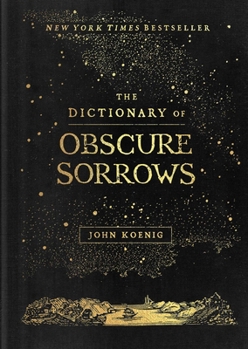
From this lovely book, I opened a random page and picked the first word my eyes landed on. (P.S. if you’re a poet, writer, or just a vocabulary aficionado please check it out: Dictionary of the Strange, Curious & Lovely)

yes, my desk really is this chaotic most of the time

Mumpsimus: A view stubbornly clung to even after shown to be wrong; one holding such a view; [from a historical blunder for Latin sumpsimus (we have received)]

I thought this was such a timely word and something that seems incredibly relevant today. But let’s break it down a little.

This word first appeared around 1520-30 when a Catholic priest accidentally used mumpsimus instead of sumpsimus (to take) and refused to admit his mistake and change the word when confronted with the correct one. This process of near-homophony has other literary variants, from mondegreen to malapropism (you’ve probably heard that one before), and earslip. But the key to this is the refusal to admit to the mistake when confronted with the correct use.

I can’t be the only one who has known a person who has done this. Made a mistake and rather than correcting themselves when prompted, did not want to risk his fragile ego. As a result the word or action becomes commonplace, although wrong and misused. All because he could not own to the mistake and correct himself. It has been a common practice in my black belt training, when a higher-ego mistakes a technique and rather than correcting himself, changes the entire technique and makes everyone relearn it to the ‘corrected’ version simply because saying “You’re right, sorry, I messed up” would, I assume he thinks, make him look stupid, rather than human.

On a grander scale, the idea of recognizing and admitting a mistake from our public officials and those launching into a useless war, practice this on the daily. Misconstruing mistakes into ‘new truths’ that, they believe, if are offered repeatedly (and loudly) will become actual truths. It’s the job of a well-informed, well-read society to catch these mistakes and make them known. If nothing else, to not adopt the false truths, just because some guy at a pulpit or podium proclaims them to be true. Keep practicing the correct technique to make sure you don’t skew or ruin the concept beneath it. You don’t want your truths or your techniques to not work when they are most needed, after all.

This word, mumpsimus, can also be applied to accepted beliefs or views that are proven wrong by scientific, socially studied, and tested facts. The world was once believed to be flat. This was proven to not be true by centuries of studies and scientific testing. To continue to believe the world is flat, because someone on a podcast theorizes it, is a mumpimus belief. And it makes you look stupid. Because believing things that have been proved to be incorrect makes you stupid. Vaccines don’t work. Gayness can be prayed away. Women are naturally nurturing and weak. Men don’t cry. All of these erroneous concepts, I believe, are kept close to heart (but loud on social media posts) when people are afraid to admit that they have been wrong. They double down on their hatred and stupidity, hoping that the fervor in their convictions will somehow make them true.

But it doesn’t.

So, now you know. Mumpsimus. Don’t be one. Don’t have beliefs based on them. Call them out when you see them. And send me some of your favorite malapropisms.

Living in a State of Discomfort

I’ve been thinking a lot about pain lately. I fell, earlier this week. Hard. Like too hard for a 46 year old who already had problems with her lower back. Hard like my soul left my body for a few seconds and I had to reorient my brain to the five foot change in altitude I took within seconds. Like I immediately wondered if my dog would know to go home and get help or if she’d just cross the street to the goose-poop strewn park to get her fill of the foul treats. Like I knew my 10k race plans were blown to hell within seconds, after months of training.

I made it home. I iced my tailbone. I wrote the doctor to tell them I’d been an unusually brutal dumbass and should I be concerned. Not peeing blood and nothing was numb so… it was a wait and squirm day of trying to manage pain and try not to think too much about what this damage will feel like in the next twenty years. But being in pain, less now than yesterday has also made me think about discomfort. And how we, as humans, seem to do anything in the world we can to avoid it. We live in a culture that fears death and pain and hides from it. But it doesn’t stop us from experiencing it. It can be the loss of a loved one. It can be in the form of disappointment or rejection. It can simply be in the form of everything, in our lives and around us being subjected to inevitable change.

And my how things are changing these days, aren’t they? The advent of technology that is quickly superseding our ability to control it. Threats of nuclear and world wide warfare, on the daily. The rise and fall of our stock market, admittedly a irrational and imaginary play of numbers that dictates the cost of our continued living. Never knowing what next ridiculous, volatile, dementia-riddled thing will come out of his mouth next. Not knowing if our kid’s meningitis vaccine will be covered or trying to combine your pancreatic shadow MRI with your possible coccyx breakage scan so you won’t risk angering the insurance gods… We’re in a constant state of discomfort. And the prevailing consensus is this is not normal.

I had a lovely breakfast with one of my only favorite humans (one of maybe 7 in my life) and we could only shake our heads over greasy-spoon diner coffee at what the solution could be. What do we DO in these upheaved states of matter? What CAN we do? The answer was as nebulous and unshaped as the over-easy eggs on our plates. Where does an artist, a philosopher, an intellectual, an absurdist do when the world becomes a dark, stupid, unthoughtful, ridiculous mass of chaos? No one is listening. No one is reading. No one is thinking. That’s how we ended up here. No one was paying attention. They were face down in screens and algorithms, creating universes out of their own system-fed narcissistic tendencies to equate worth and purpose and meaning with views and likes… and the resulting discomfort begs for relief. For us to DO something.

So, what actions can we cling to, to not be lost in the madness ourselves? I could only offer the lame simplicity; we keep writing. We keep loving each other. We keep finding reasons to laugh. We keep telling our unread truths. We adopt street dogs and write bad poetry. We postulate dreams of buying a cabin in the woods and fly the bird at the world on our way out of society. But ultimately? We learn to sit in the discomfort, and rather than be embittered by it, let it make us softer. More artistic, more loving, more silly. We embrace fully the stupid human condition that is both finite and extinguishable. We embrace the mess we are. We embrace each other. Because what else can be done? The end will come, pain and discomfort will find us. We will lose the ones we love. We’ll be lost ourselves. Our words may never find pages or readers. Our thoughts might die on our aging laptops. But for now, in this breath, across this table, in this ever-present radiating pain from my backside, we’re alive. And being consciously alive, especially in pain and discomfort centers us in the beautiful now. That’s all we really have. Warts and all, the beautiful, irreplaceable now is an unprecedented cosmic accident that may never happen again.

So breathe it in. Have one more cup of coffee, and linger a little while. Be in the moment, with who you love. I can’t predict what the coming months will bring. But I do know, I have enough heart to live in all of its discomfort, and still embrace the wonder of it all.

The Beautiful Writers Workshop #23: “Snap To! Let’s Get Organized!”

Disappointed I can’t find an image of the scene when John Gavin shouts this line while fumbling with a live chicken and coming out of a tranquilized haze. Apparently, the internet DOES NOT have everything.

I’m not immune to the fact that this blog has tripped around in the dark a bit lately. Let’s be honest, all of us are probably tripping in the dark. We’re in unprecedented times, facing stresses and noise that we’ve never dealt with before. It’s easy, in the dissonance, to lose our path.

So for the next three to four months, the first week of the month, I’ll be getting organized and coming back to a series I ran a few years back called the Beautiful Writer’s Workshop. I’ll probably skip around a bit, everything from how to submit your work to how to organize your series. No, I’m not going to make you deconstruct your sentences into diagrams, circling your subject, double scoring your gerunds, slashing through your adverbs (or will I? Could be a fun practice in the lost art of sentence diagramming AND tortuous. I’m a girl who likes it a little rough).

For the love of all that is good and holy…

I’ll be re-blogging in line with issues I’m seeing my students face, and those I’m facing myself. For as many classes as I’ve taken on any number of writing related topics, I always seem to glean something new. Hopefully these little once-a-month writing lessons can help you too. If you have specific issue you’ve been fighting with, contact me and I’ll try to run a post about it.

That’s not to say I won’t occasionally throw in a “stop being assholes to each other” rant. I like to keep it exciting after all.

It’s been a while since we dabbled in the lighter word count and heavier hand of poetry so I thought…why not start there? Especially since this is the first week of National Poetry Month.

(Hold on to your asses, she’s about to ADULT over here!)

Poetry used to be the sole conveyer of great stories, epic tales, and the meat and potatoes of religious creed. The first believed poem, author unknown, was called The Epic of Gilgamesh. Besides this epic, there was Rig Vedas of Hinduism, and The Song of The Harper from Egypt. Centuries before we first heard a Greek throw down an ode to an urn, people were writing poems.

Poetry was borne in the heart of burgeoning cultures and empires. As we move west across the world, we have The Iliad, Beowulf, 154 shout outs to Will Shakespeare’s best girl(s) (and possibly boys?), and eventually, on to the new world with works like The Song of Hiawatha.

From these epic and structured beginnings, poetry has evolved and moved, like a river around obstacles, constant but ever-changing. One of the reasons I love poetry is its ability to capture the heartbeat of time-periods through the use of its language and form, as well as the ideas that it holds.

Poetry records history. From the simplest nursery rhymes (“Mary, Mary Quite Contrary” was actually based on Queen Mary I, aka Bloody Mary, who tortured and killed hundreds of protestants. Silver Bells and Cockle Shells aren’t perennials, they’re torture devices.) to Walt Whitman’s descriptions of the horror and decimation from America’s Civil War (“O Captain, My Captain” was written about the assassination of Lincoln just before the close of the ‘storm’ of war) poetry is a powerful conveyer of humankind’s journey through time.

Poetry connects. It’s visceral and often uncomfortable. It paints pictures with the deepest hues of language. Poetry is vital to song writing, memory retention, and a host of other deep-seated neural mechanisms humans use to survive. (the ABC song, “Thirty days hath September…”, “I before E except after C–and about a dozen other exceptions because the English language is a bastardized torture device for anyone learning it”)

So how do you write a poem?

Well, that’s the beautiful thing. We are no longer shackled to the 15 line iambic pentameter, nor are we beholden to ends that rhyme. Poetry can be written in just about any form you can conceive. You can write it, you can rap it (rap=rhythm and poetry), you can sing it, you can paint it across a street in bold letters. There are no rules but one.

Poetry should be true to your soul.

It should never be half-way. It should fling open the shutters of your close-held heart and expose it to the light. Poetry should reflect the thoughts and the feelings, the commiseration and worry, the anger and peace, the joy or the sadness that fills your head and your community. The simplicity of a world rarely observed in detail. The shadows of what lingers in the memory of scents and phrases. The ignored, buried, and burned histories of forgotten and enslaved peoples.

When I think of poetry, I think of catharsis and a means to work through big and hard emotions (a girl’s favorite kind?) I think of finding meaning and perspective, shrinking down the large imposing impossibilities to moments I can do something with. To feelings I can direct towards change. I think of telling the truth, especially when it’s hard. I think of informing the world of a voice and perspective that once was silenced.

To write a poem is to be truthful about what hurts most in that moment. And what survives through the grit of human spirit.

I’m sure you can guess this week’s exercise. Write some poetry. In any form you want. Send it to me, let me know if you want it to have a little spot here on The Beautiful Stuff, or if you rather just share it with another soul. I don’t have a preference for form or length. Just get to the darkness, poke around in there, tickle the tender underbelly of what drives your biggest emotions and tug it out into the light.

If you’re looking for a group to join and a community to support you through the month with a light-hearted challenge, check out Writing Heights Writers Association Poetry Challenge (30 prompts, 30 days, Discord server check in, and a month free membership with WHWA: email newsletter@writingheights.com for more info, it’s okay to get a late start)

Happy Writing.

Poetry 3/26/26

The week has been a full one with meetings and interviews, all manner of busy-making to keep myself…accountable? Distracted? In a false sense of purpose? Sometimes, in eras of encroaching depression, I find that making myself go through the motions is akin to treading water in the middle of the ocean. I’m not really getting anywhere, but I’m not sinking under either. All that to say, here’s some poetry. About quietness. And how loud it really can be.

In Quiet

the world is less complicated
without the obligation of you

it is simple now
in droning waves of sunshine and
isn't that better?

no need to perk my ears
to your words

no longer worrying my lips
over where yours are residing

life is simpler here
it's quiet like
a ragged street in a forgotten city

trash caught in dead weeds and
chainlink

its quiet like
burnt olive carpet in funeral homes

ghosts of lilies
blooming to fade in grief
it's quiet

like a room with no children
and a meadow with no breeze

silent like a catacomb
stale and cold communion with death

my world is less complicated
without you
in it

it's finally
oh so quiet

Newsletter March-April 2026

Hello readers and writers,

Welcome to my monthly update about what’s going on, what’s not, and how I’m navigating the current horrors. Surprise! There are a lot more horrors than last month. I’m really not sure how this current administration continually jumps the fucking shark every week, but… I guess when you lack morals and have the full use of 342 million people’s taxes, you can do some righteously awful fuckery. So here’s a couple of pictures that helped me remember that the world isn’t all ugly and it will be a lot more beautiful when we’re all gone, (crosses fingers for an asteroid). But first, the only thing more constant than the sun rising, is that if you open a cookie package within a mile of her, River will know and demand her rightful percentage.

Random Shit:

In, non-writing related news, I spent a little time in my old stomping grounds. Not my home-home, and not somewhere I think I still could live, but San Diego has always been a little part of me. Particularly OB, PB, and some of the more quieter shores. I’m a mountain girl at heart, but if I had to pick a close second, it would be the ocean. Nothing calms me quite like that sound, and the way every wave keeps coming, even if just a little different than the last. I got a few words in (3000 or so) and worked on my editing. Discovered a few new artists at the Museum of Art in Balboa Park and slept in for a couple of days.

Now back to work.

Reading:

In reading news, I started “taking a look” at another book by one of my writer friends. (He swears he’s not a writer, not really. He also swears he’s not very good at it. To both points he’s miserably wrong). One day, he was just pondering the philosophical significance of theater, and theater life and decided to just sit down and bang out 34,000 words on the topic. Then asked me to take a look, like I wasn’t already fawning over the man’s talent about a book he’s currently shopping around. Friends, I try not to be angry at an author who just gets progressively better at his craft, and he didn’t start out nearly as badly as I did. I’m not angry, it’s brilliant. Comparing the life and worries of the stage to the philosophical questions and perspectives of life, is turning out to be a damn fine book and I hope he lets the rest of the world see it.

Still working on “How We Learn to Be Brave” by Mariann Edgar Budde. Still learning to be brave. Instead of overwhelmed. I’ve also started to dabble in “Night Vision: Seeing Ourselves Through Dark Moods” by Mariana Alessandri, because that seems really on point right about now.

I finished “Nettle and Bone” by T. Kingfisher, and it only made me want to read more by them. Also, I realized I need a genre book mixed in with all of the non-fic stuff (or not if I want to finish the non-fic stuff…hahahahah)

Writing and Editing:

I’m working through the second hard round of edits of “Heir to Time”, the last book in the Timekeeper series, after a miscommunication with my editor that made me worry it was so awful she’d trashed the whole thing and burned my contact info. Turns out, no. I still have to work on it. But it’s going better and we’re getting it cleaned up. There’s an unfortunate “surprise” in the first two books where I’ve mistyped the hero’s last name. I’m sure some readers have already noticed. I guess that’s how you know it was written by a human. This sucker won’t be out until May probably. But it will get done. If you liked “The Mummy” and Jane Austen, you’re gonna love this little book with a nod to sapphic romance and all the hours I spent obsessed over Egyptology in middle school.

I’m chugging away at 5 Prince Publishing’s first shared-town anthology due out in the 2026 holiday season. My little derelict of a Hallmark failure is currently sitting around 28,000 words so I’m on track to finish it on time with a few weeks of editing to spare. If you want to check out my idea board for shits and giggles, you can find it here: 8 Nights in Everpine

I had a poem accepted by Levitate, so I’m stoked about that and I was brutally rejected by two more small presses. (I say brutal, but it was more like a toe-stub)

AWP (the Association of Writers and Writing Programs) was a thing. I learned some cool stuff and met some cool people. I also met some jerks, such is the way of life. I took some cool classes on how to move your writing workshops out doors, how to use your art and your writing as protest and in defense of human rights, and how to more effectively use silence in poetry. I’m not sure if I’ll go back, but I did get some good info on some independent presses and made a few contacts with some like minded people. Next year its in Chicago. A town I love, but that was a lot of damn people and I’m not really interested in posturing. I’d rather just go for the museums, the architecture, and the food, and skip the hullabaloo. I did get to see Poe’s grave, so that part was pretty cool.

I’m super excited to be able to participate in the Fort Collins BookFest in April! Yay! This event is one of my favorite and if you’ve never been, you should go. There are several different readings, panels, book signings, and other fun literary events to satisfy the bibliophile in you. I’ll be on a panel for romance authors on April 11th. But you can find the full schedule here: FoCo Book Fest.

Finally, if you’re in the area tomorrow (Friday, March 20th) from 5-7pm, I’ll be at Grimm Brothers Brewery in Loveland, hosting a write in with some folks from WHWA. You don’t have to be a member to stop on by and work on your writing, poetry, or anything that needs a little focused time.

Well, that’s about all I have. I’m currently helping out the Wyoming Writers Inc, as a board member to put together a killer conference in Casper Wyoming in June, but I’ll put more out about that next month. I have to save some of what little news I have so it’s actually a ‘news’ letter and not just…a letter.

Take care of yourselves. Take care of each other.

Sneak Peek: Heir to Time: Book 3 in the Timekeeper Series

Listen, I’m coming off of AWP, with notes to still type up, meetings to catch up on, emails waiting, a submission not yet done, new edits, word counts, laundry that’s been through about four dryer cycles (IYKYK) and had to come back in straight away to give a presentation on “Burnout” (*maniacal laughter*) for a lovely little local conference Founded in Fort Collins. So when I sat down to a blog post, blank screen and cursor blinking, I literally had nothing. But I do have my latest work. If you read Book One (Time to Byrne) and Book Two (Courting the Lion) then you are a beautiful human and I would thank you for a review.

Book Three takes a little turn, and a lot more adventure, bringing together both of the couples and an ancient Sapphic mystery in need of solving. Instead of the cool, green fields of Britain, our team of adventurers find themselves in 1920’s Egypt (camel milk lattes?) and the tomb of an unknown physician who started the whole bloody mess. So, I thought I’d share an excerpt from the book for this post. I’m currently in my third round of edits, with probably one more to go. I had hoped for March, but it might be more like early May.

Enjoy!

(oh! And if you read Courting the Lion, I would seriously love a review on it. If it’s not your type–i.e. Heated Rivalry but Regency and without the Hockey–pass it along to someone who might like it. It truly is a lovely story)

Heir to Time: An Excerpt

“What are you even doing here?”
Matthew staggered back a few steps before coming back to stand straight in front of her. He gestured back at her. “What am I doing here? You are my wife, you disappeared! Did you not think I wouldn’t come and find you? Did you think I would just leave you to time?”
“It isn’t safe for—”
“We talked about this and I thought we’d agreed. This mission was too dangerous for both of us! We said that we would not go! Despite the very reasonable and rational things we discussed, and seemingly in agreement, you loved me into oblivion only to leave me the next morning.”
Lillian stopped for a moment, her eyes went soft, remembering that night. Her body responded with such a force that she had to step away. “We did not agree! You had your reasons and your rationalizations and once settled in your own head, you stopped listening to me. You would not come with me, so had to do it on my own.”
“And in your efforts to prove me wrong, something happened to you. You did not return!”
Lillian’s face turned white. “Matthew,” she whispered.
“I was imprisoned for your death, Lillian.”
“But that’s impossible—”
“I wish it were. I spent a month in a cell. All the while knowing that you were probably dead. Or lost to time,” he paused to frown. “Or that you simply did not want to come back to me.”
She threw her hands up into her hair in frustration. “Why would you even say such a thing. Of course I want to be with you.”
“Then why did you leave?”
Lillian turned silent. She had left to find adventure. To prove herself. To flaunt her independence in the face of Matthew’s desire to settle down. “I,” she stuttered. “Because I thought it was the right thing to do.”
Matthew stalked closer to her. “Did you not think for one moment what leaving would mean to me, to all of us who care for you? When Richard discovered the altered history, that I was accused of your murder and hanged for the crime, he and Thomas used a map to come and rescue me.”
“Matthew, I’m sorry,” she paused but he continued on.
“Did you not think what you leaving would do to my heart?” Matthew said, his voice breaking. Lillian’s lips trembled and she looked at him with wide eyes.
“I did not know! How could I have known?”
“Do you think I care for living at all without you? Do you think I would not follow you to the ends of the earth, or to the ends of time? I love you. You are my wife and I will always come for you.”
Lillian crossed the distance between them quickly and silenced Matthew with a kiss. Hard and biting, she knocked him back two steps and pressed her body into his. He returned the kiss just as hungrily, forcing her back and up against the wall, where he held her against his hard and straining muscles. She gasped into his lips, her whole body burning to feel his touch.
“Lily, my angel,” he whispered against her cheek, caressing her curves with hungry and needy hands. The taste of him, his warm breath, the delicious pressure of his fingers against her back, her waist, her bottom, drove her mad with the desire to have every inch of him touching every inch of her. His hot, wet tongue delved into her mouth and she moaned, her breasts heaving against the strong beat of his heart. Lillian’s hands ran up Matthew’s chest and she brought them around his neck even as he lifted her into his arms and her legs spread wide to wrap around his waist. The pressure of him between her legs caused a delicious shiver to run up her spine.
“I missed you,” she cried against his lips as he broke away and bit and licked his way down her neck, causing her body to pulse in waves, closer to his. He paused in their fervent play and shook his head against her collarbone, as if he still had a weight on his mind. “What is it?”
“You did not find solace in Alistair’s arms?” Matthew asked lowly.
At the mere thought of Alistair, her whole body stiffened and she pushed herself away from him. She landed on her feet and shoved him backwards. Matthew backed away with his hands up, lips red and breath panting.
“Lillian, I only—”
“Did you find solace in Amelie’s bed? She implied that you were her boyfriend, and that you were smitten with her. That you were having discussions about your deceased wife in her bedroom. You told her I was dead!”
“She made the inference herself and I did no such thing. It was in her apartment with Natalie as chaperone.”
“Natalie?”
“Richard and Thomas’s daughter.”
“The little girl. In the car?” she said, breathless, and her heart softened. “She’s their daughter?” She had not had time in their hasty retreat to even ask, or meet the girl. The wild ride back to their hotel had not allowed time for introductions.
“She is. And she is incredible, but that’s not what I want to talk about.” Matthew said. “We must work through this. I cannot spend another night without my wife.”
Lillian narrowed her gaze. “Fine, spill it then.”
Matthew took a big breath. “Amelie plucked us out of a market while I was babysitting her so her fathers could… have some intimate time.”
“Matthew Blackwell, doctor turned au pair,” Lillian smiled.
Matthew scowled. “In any case, Amelie had said that she knew Alistair and even hinted that you might be with him. So, I agreed to dinner at the Golden Dial with her to get more information and hopefully see you. Which I did. I did see you. When you kissed Alistair!”
“He kissed me! I was upset and worried and thought I was going mad with missing you because I thought I’d seen you in the arms of that cheeky little harlot. I was confused and he pulled me in before I knew what he was doing. You mean to tell me you did not kiss her?”
Matthew swallowed and backed away. “There can be no lies between us. I am afraid I did indeed use Miss Sheldon to get closer to you. We were at a loss and I needed any information I could get concerning you. She kissed me, yes, under quite some duress on my part. She said it was payment for getting us into The Golden Dial.”
“Under some duress? What does that even—”
“It was not as though I was staying in her hotel room!”
“I’ve been sleeping in a maid’s closet! Every night since we parted, amongst the rats and the dirty laundry! Thinking of nothing but getting back to you. Doing nothing but missing you!” Her eyes filled with tears and she rushed past him into the bedroom and slammed the door. Matthew watched with his heart breaking and wondering how they would ever survive this mess.
Richard and Thomas came through the door of the suite. Thomas poured both himself and his daughter water from the pitcher and took Natalie out to the patio to watch the procession of merchants packing up their wares below. When they were outside, Richard stared at Matthew who was breathing heavily and staring at the closed door.
“We both heard the last of that. You idiot,” Richard said.
“Yes, quite.”
“Well?”
“What am I supposed to do? She left me, to find adventure.”
“Upon the faulty assumption that she would be back before you even noticed.”
“But I was right! It was too dangerous, something did happen to her, and she should at least admit to that!”
“What did the Timekeeper promise you two, exactly?” Richard asked.
Matthew paused as his brain went through the verbal contract of their ‘supposed’ last assignment. “That we would be able to choose the time we lived in. And,” he swallowed and stopped. Richard lowered his gaze.
“And?”
“That we would be safe. That you and Thomas would be safe to live your lives as you pleased. With no further intervention from the Timekeepers. She promised that…that they would find her father and return him safely to her.”
“So she saw a future for all of the people she loved, safe and happy?”
Matthew was quiet at first. “Yes.”
“And you are angry that she wanted to risk that? For you? For her own father who risked so much to keep her from dying? For Thomas and I, and our child? You are angry that she would secure a future for all of us?” he motioned out the door to the laughing girl and his beloved husband. Matthew’s face blanched.
“I—”
“I’ve only known Lillian for a short while,” Richard’s voice was thick with emotion. “But I have loved her in every moment. She is bumbling and often crass. She is misguided, yes, at times. But when she came to me, crying in the library of Oxford, so heartbroken over losing you, she made me, a hardened and cynical lion, believe that a love strong enough to survive any fire could exist. She would not give up. She would not give in. She threw herself into the ether, risking death, just to find you again. And she was right,” Richard wiped a tear away and looked back to his beloved Thomas. “Love is all there really is.” Natalie’s laughter filled the space of their rooms and the distant sound of Lillian, still sobbing in the bedroom, filtered in.
“What do I do?” Matthew said, his voice cracking with emotion.
“What indeed?” Richard scowled. “Surely nothing out here in the hall will help.”
Matthew took a deep breath in. There was nothing he loved more in this world than Lillian. They had been through the worst of things. Danger, forced parting, murder, fire and unfair propriety. She had stayed by his side, protected him and kept him safe. She had done it all for him. For the people she loved. He had only selfishly thought what his life would be without her. If he had gone with her, if he had only agreed to do this together, they would not be suffering so.
What would her beautiful heart be, if not filled and committed to the ones she loved? It was all his fault. He let out the breath and stepped quietly into the bedroom. She had not locked it. He hoped that meant she wanted him to follow her. He closed it quietly and locked the door behind him.

Well, there you have it. The novel that has been a bit of a Moby Dick to my Ishmel. Really though. If I survive this one, I may just call myself a writer. Stay tuned, next week, for my ever-popular, always appreciate (she said, rolling her eyes) newsletter.

Xoxo, Happy Reading.

The Beautiful Writers Workshop #26: Flashing for Fun and Profit

Yep. I said that. But in my defense…I don’t have a defense. I’m childish and immature. Please don’t go around “flashing people”. It’s not fun for anyone involved and you don’t make a good profit. In fact I hear bail is not cheap.

When I say “Flashing” I’m talking about our next topic of discussion which is, of course, Flash Fiction.

If you like the brevity of poetry and quick, hard words that nail emotion to the theoretical wall with brute force, you’ll probably enjoy practicing flash fiction.

Let’s get started with a little introduction.

Ahem, Flash Fiction, these are my beautiful writers *gestures wildly out into the far reaches of the internet* They’re kind, amazing, and talented.

Writers this is Flash Fiction.

Flash fiction sprung up in the 1990s and has become a formidable form of storytelling that appeals to newer generations with ever-shortening attention spans and busy lives. Flash Fiction condenses a tapestry of story into a few short sentences/words/paragraphs. It also serves as a method to condense big ideas into concise writing, especially in terms of reporting (flash non-fiction?) and conveying information.

Ugh, that was dry. Talk about an awkward introduction.

Here are the basics. Flash Fiction is a form of short story that relies on brevity. Specifically, a word count between 5 and 1,00. If you’re wondering how you can tell a story in under in under 1,000 words, or even in under ten, allow me to give you one of the most famous examples:

“For sale, baby shoes, never worn.”

This very simple sentence/story has two commas, one period and a myriad of images that can affect the reader.

Flash Fiction is further divided into micro-fiction, sudden fiction (Wham! Suddenly there was Fiction! Out of nowhere and sudden!), postcard fiction, short story, and the short short story. Believe it or not, there are even sub-categories called drabble which refers to stories that come in at 100 words and dribble that come in at 50 words.

Why Flash Fiction, Sarah?

Well, I’m glad you asked. And…if you didn’t know, that’s what the S in S.E. stands for. The E stands for Enigmatic. Or maybe Exciting. Earnest. Edward. Eggo-(not to be confused with Ego). Who knows? Only my mom and she’d never tell because she’s as loyal as the day is long.

Back on point:

The advantages of Flash Fiction are as follows:

Several websites, literary journals, anthology collections, and magazines are interested in these bite sizes of life.

They are relatively quick to write from an artist’s perspective, which makes them more versatile and easier to explore different genres with.

I personally find flash fiction refreshing to write. For one, when you’re embroiled in a 120,000-word novel, bogged down in outlines and character sheets, plagued with plot holes and tense issues (aren’t all issues a little tense?), it feels pretty damn good to step out with a 250-word taster of a completely unrelated character’s flash-in-the-pan dilemma.

Don’t misread. Flash Fiction may have fewer words, but it doesn’t mean that it’s ‘easy’. (She’s fast but she ain’t cheap). Writing more with less is difficult, especially if you’re accustomed to novel length work.

So, to start this little experiment, I’m going to make your first time (or maybe I’m not your first…it’s completely okay, I’m not judging what relationships you had before me) nice and gentle.

Take a current work in progress, a novel you’ve published, a poem you’ve written, and write a flash piece based on the characters or subject in a strange and new situation. Or, maybe six months after the novel ended. Or six months before. Show them in the parking lot with a new baby, or thrown into jail at sixteen, or sunk unexpectedly into the third World War (too close for comfort?)

Then…and this is the trick; don’t go on and on.

Think snap shot, not photo album.

One picture will tell us a lot about a person, without needing to see the whole photo album. (have you ever had to sit through someone else’s photo album? No, Sarah, because we’re not three-hundred years old, we have Instagram like normal people…what century are you from?)

Flash fiction is a novel if a novel were poetry. Condensed, potent, memorable.

For sale, baby shoes, never used.

Here’s a little flash piece (a drabble to boot) I submitted that won honorable mention, if you’re looking for an example.

She hadn’t meant to set it on fire, exactly. But now that the heat burgeoned from its windows, charring the leather seats and crackling up through the retrofitted steering wheel, she was glad for the warmth.

It was a shame he’d never get to see the way the flames jumped and swayed in the clear night turning cloudy. It was a shame he’d left it unlocked, parked outside the strip club. A shame he’d said he was at a meeting. What. A. Beautiful. Shame.

She pirouetted against the star-filled sky, and danced along the edges of erupting metal and smoke.

Try it out, have fun, and let me know how it goes. Share or don’t. I look forward to hearing how it goes!

Happy Writing!

On Laurels and Mountains

Photo by Startup Stock Photos on Pexels.com

I was trying to think up a topic today, within the sphere of writing, that might be new and interesting. It was then that I realized I like to fall back on my favorites. Character writing, dynamics of character interactions, emotion on the page, building tension. Or perhaps turn the microscope on myself and talk about burn out and creativity, progress without production, heart without hustle. But I feel a little bored with those topics and if you read my blog enough, you’ve probably read more than you wanted to.

So what do you write about when you’re toolkit feels a little… empty?

Well, maybe just that. I’ve long been at war with myself over the worthiness of a higher degree in the Literary Arts. Let me preface by saying in no uncertain terms: Every Degree You Get is Meaningful. Education is never a waste. And time spent learning and perfecting your art and voice and style is a worthy pursuit. But I have to add, that economically speaking, it doesn’t always give you an advantage. And…if you are at an economic disadvantage due to student loans, it can be harder to pursue a writing career.

So, what does a financially unstable writer do, when faced with the knowledge that she could certainly use a little more education and a freshening up of her skillset? Well, honestly, I could just rest on my laurels. I’ve published books and had work in different literary magazines. I’ve won some awards. I could argue I know enough.

But that would be short sighted and frankly pretty fucking egotistical. I don’t know everything. I could know more. I could experiment more. I could find a new mountain to climb, and shouldn’t we all? After all, what are we doing with this life if not learning? So, I’ll be looking for some affordable alternatives and, for any other writer who might be, like me, looking for a new challenge in their skills department, share some interesting options from down below.

  • Research new or unknown forms of poetry. This is my new favorite. I’m working on pantoums and cinquinta, and all kinds of weird little funness
  • Take a class from a local writing group or community center: Like Writing Heights or Lighthouse Workshop
  • Try an online course like MasterClass or a YouTube channel: Currently I’m taking Aaron Sorkin’s Screenwriting, and Roxanne Gay’s Writing for Social Change
  • Join a Book Study or Writing Challenge: again–shameless plug for Writing Heights Writers Association
  • Check out what Harvard offers on line for free: Harvard Free Classes
  • Take a class or invest in a book, outside of your genre: I’m currently reading both a Screenplay book, and one called “Howdunit” all about how crimes are committed and solved.
  • Consider switching over to Fiction or Non-Fiction: whichever you don’t normally do
  • Attend a conference or workshop in your area: Despite the recent hubbub, (and it’s not in my area) I will be attending AWP with the hopes of taking some classes that can broaden both my poetic skill and my writing organization’s offerings.

Well, I hope those ideas have given you a little goose to the behind to get started on reclaiming your lifelong love of learning (or inspiring one if you lacked it).

Happy Writing!

Newsletter February-March 2026

Hello readers and writers,

Welcome to my monthly update about what’s going on, what’s not, and how I’m navigating the current horrors. First, look at my damn cat. Every damn day, this is what I put up with. If she’s not yelling at me to let her on my shoulders, she’s taking up space on whatever project I’m trying to work on. Pray for me.

Random Shit:

In, non-writing related news, I spent the weekend going outside more for the Great Backyard Bird Count. I think in times which are particularly trying to one’s heart and soul, it’s important to spend more time in nature. Away from the screens, and ground ourselves in something that’s real. It’s a strange sort of joy to sit still in a field, stand next to a marsh, breath quietly beneath the canopy of evergreens and just listen. Not for the loudest, most painful rhetoric, but the simple song of birds in conversation with one another. It resets our nervous system and tells our lizard brain that we are safe. A predator-less moment is much welcome.

Reading:

In reading news, here’s what I’m currently working on. My book club is reading “The Extraordinary Life of Sam Hell”. I put it down somewhere around 20%. Why? Well, I don’t know. But I think it’s because I’m really not interested in reading something from the white male perspective right now. Because within a couple of chapters between his youth and adulthood, he both vilified men who were making derogatory comments about his mother’s body, and made similar comments about an assistant in his office. I don’t think I used to notice those things. But they’re glaring now. And I’ve already spent over half of my life being bombarded by this particular viewpoint and I’m bored with it.

So I put it down in favor of: “How We Learn to Be Brave” by Mariann Edgar Budde. While I was raised in a Christian faith, I no longer practice, and I have some deep and justified rifts with the church. However, this book is written by the Episcopalian Bishop who spoke out against Trump’s horrific public policy. It’s a pretty engaging book about how various people throughout our country’s history have been on the precipice of great and difficult choices and chose to be brave, stand for what they believed was right, and up against tyrannical forces. Budde includes examples of her own life and how we, as ordinary individuals can utilize our own inner strength to act when it counts. I’ll let you know how it goes.

I’m also lightly reading “Nettle and Bone” by T. Kingfisher. I’m only about a chapter and a half in, but I like it so far. Beautiful fantasy, and it’s fun to get back into a genre I haven’t read in a while.

Writing and Editing:

I finished up my first deep-dive edits of “Heir to Time”, the last book in the Timekeeper series, and sent them off to my astounding editor. I’ll still have a couple more rounds to go, but I feel like the major issues have been addressed and with any luck, it’ll be ready to go on to cover and publishing in March sometime. I’ll keep you posted and next week I’ll include a blurb. If you liked “The Mummy” and Jane Austen, you’re gonna love this little book with a nod to sapphic romance and all the hours I spent obsessed over Egyptology in middle school.

I’m also participating in 5 Prince Publishing’s first shared-town anthology due out in the 2026 holiday season. 9 authors, of the several, from 5 Prince will all submit a short novella (30-50000 words) based in the same small town over the holidays. It should be an interesting group, from across a wide spectrum. Mine will be, as usual, a little subversive, and a little dark, but it will be a beautiful nod to finding the light on the darkest days, and having someone to share it all with.

I’m participating in a “Postcards for Peace” project where I write a thought, hope or poem on peace and send one out a day to a stranger who has signed up. That’s going well and it’s nice to get some good thoughts in the mail for once.

I recently got a short story accepted at a small press (Rat Bag Lit). It’s a bit horrific and dark, but also strangely romantic. More on that as it gets closer.

Before you think I’m too high up on my horse, also know that I’ve received 4 glorious rejections so far this year as well. Well on my way to the 52 for the year I’m aiming for.

I’ll be attending AWP in March and I’ve never been to a conference this big for any reason. The Association of Writers and Writing Programs annual meeting is chocked full of classes, not just on craft but on how to teach and encourage other writers and inspire your community through your organization. I’m hopeful it will help me be a better organizer and community resource for Writing Heights and the expansive group of writers in the Colorado and Wyoming areas.

Finally, if you’re in the area tomorrow (Friday, February 20th) from 5-7pm, I’ll be a the Loveland Ale Works, hosting a write in with some folks from WHWA. You don’t have to be a member to stop on by and work on your writing, poetry, or anything that needs a little focused time.

Well, that’s about all the news that’s fit to print. I wish you luck on your projects this week, even if all that means is getting out of bed and brushing your teeth. Even the little stuff matters in a world overrun with big stuff.

Take care of yourselves. Take care of each other.