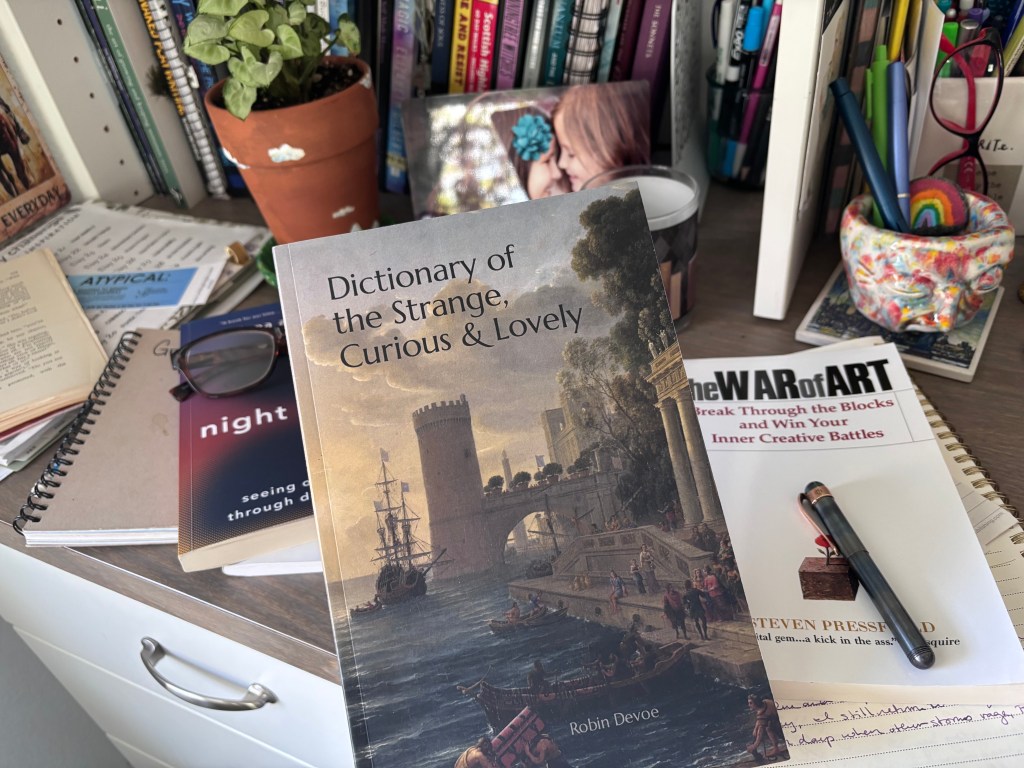
In a slight deviation from last month, I’m looking through a different book by Robin Devoe. “Dictionary of the Rare, Creative, and Beautiful” is a book with strange and beautiful words but also “cool-sounding names from history, poetry et alia“. There are some fascinating and funny examples in this book (take for example: Brandolini’s Law or the BS asymmetry principle which states that the amount of energy needed to refute bullshit is an order of magnitude bigger than that needed to produce it. AKA every day of Trump Administration en toto.)
Today though, we’re going to talk about lacrimae rerum which at first sounded like some kind of yarn art that you do over and over… ha. hahahahahaa… See my past post on malapropisms if you have a hard time understanding what my weird little brain does. But no. This is not a rerun of macramé. This is something much sadder.
Lacrimae rerum is latin for: the inherent tragedy or sadness of human existence; literally: tears of things.
The inherent sadness of our existence. The undeniable knowledge that is taught to us by almost every world religion, and made concrete with every scientific revelation. We are impermanent. And most of the the little time we have in our conscious, physical existence is plagued with suffering. Not just physical suffering of a body that springs up in painful-bone growth ways, but also begins to decay and hurt as we age. Add to that the inevitable pain of wanting things and people (to stay the same, to have, to love, to pay attention to etc.) and not ever really having them. Suffering is caused by wanting, desiring, and never being able to have in perpetuity. Because there is also the universality of change. Everything will always change. So we can never really hold on to anything.
Along with that, there is a certain sadness in knowing our own mortality. While it can be a great driving force to experience and live our lives more fully, it can also leave us feeling regretful that we don’t have more time or perhaps have ‘squandered’ said time on ‘unworthy’ pursuits. It has yet to be proven or disproven whether any other animal on Earth has consciousness of it’s own death, and what that means in terms of its very existence being snuffed out. We do know that some animals practice rituals around death, and even grieve. But do they see in themselves, the ending of it all? Do they wonder if there’s something afterwards? What a horrible price to pay for such big and beautiful brains, am I right?
When we think of inherent anything, I feel like it’s short sighted to believe that there is only one inherent emotion. I have seen too many humans with inherent joy at their existence, to think that it’s all just sadness. Perhaps when the phrase was coined, it came about to explain the great tragedies of the time and of the stage. Perhaps it was to bring us all back down a notch and remember our sadness. Hey, you kids! Stop eating, drinking, and being merry! Have you forgotten tomorrow we die? Focus on worthy pursuits so your one wild life is not lived in vain! Or some such nonsensical mashup of ancient Greece and Mary Oliver.
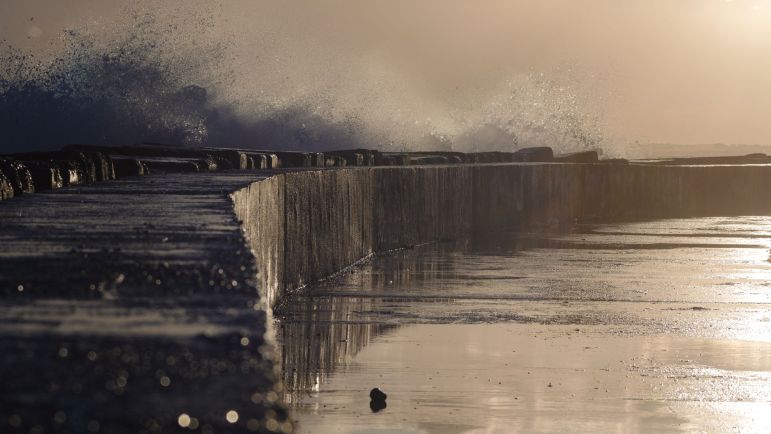
But perhaps being aware (all this goddamn awareness) of our inherent sadness…our bone-deep tragedy of loss, of disappointment, of death, is the ocean we must build seawalls against in order to actually live. Don’t get me wrong, we all deserve a good ‘woe-is-me’ fainting on the couch moment. And I’m a huge proponent of painfully hard, cathartic crying once in a blue moon, but what if we can build a sturdy wall to stand on amidst it all. A rampart against the pounding waves, and ever rising and falling tides, to watch the swells from? If our hearts and brains (those stupid, beautiful, big brains) were meant to be awash in tragedy, then I believe we were also built to notice, accept, and eventually find beauty in the tears of all our things. We grieve because we love. We fight against losing, because we love. We miss, we pine, we ache, because we love. So maybe the great sadness of things is really our funny little human hearts constantly saying; ‘this is beautiful to feel this sadness. This is beautiful because it means I care. This hurt is beautiful because I would not and do not cry over what I do not care for. This is beautiful because a lifetime of loss comes from a lifetime of loving. Of being in love with the inherent act of living. Of knowing it is short. Of knowing we will lose. Of still wanting to love despite it all.
So…as you go about your day, and you find yourself down from some unavoidable loss, or tearing up over something tragic, and you start to think of the great lacrimal sea of sadness inside of you, I hope that you find the purpose in it all to still smile. Life is a beautiful, tragic, heartbreaking, enigmatic ride that no one prepares you for, and no one can tell you how to do properly. Except to love it. In all its joy. And especially in all its sadness.