
When thinking of what to write this week, I waffled between poetry and writing advice, or perhaps I could delve into philosophy. The possibilities were really endless. But then I thought, why not simplify it. Down to a word. So kids, today we’re going to learn a new word (well it was new to me, I hope its new to you) and really think about its meaning and how we can use it.
From this lovely book, I opened a random page and picked the first word my eyes landed on. (P.S. if you’re a poet, writer, or just a vocabulary aficionado please check it out: Dictionary of the Strange, Curious & Lovely)
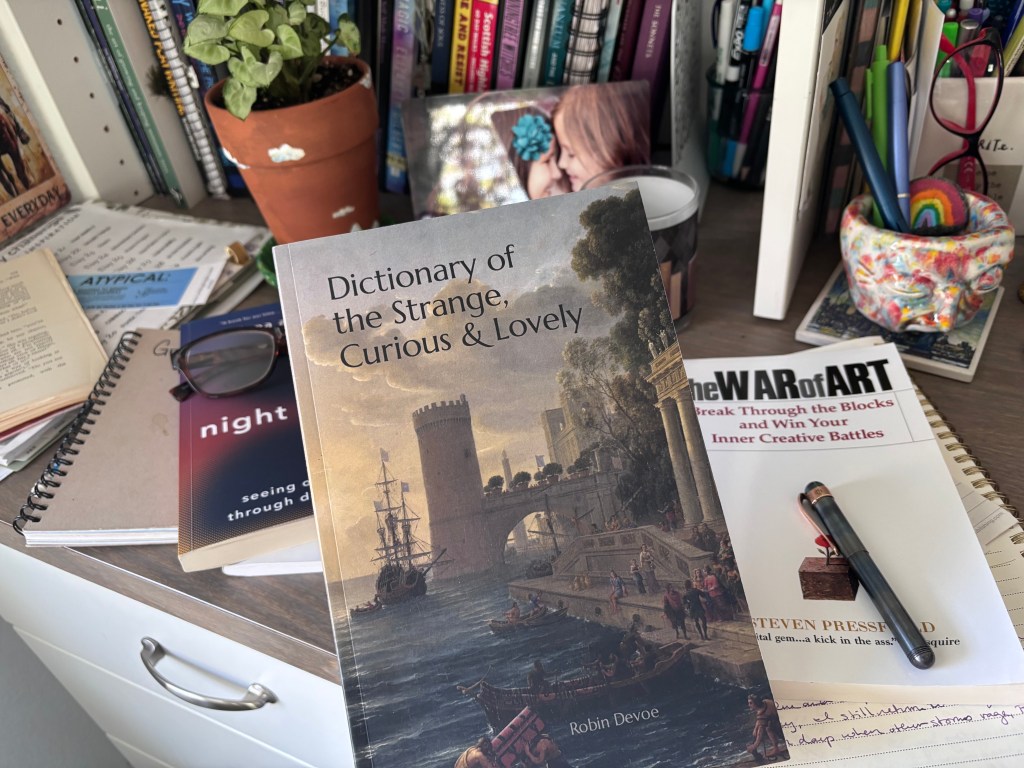
Mumpsimus: A view stubbornly clung to even after shown to be wrong; one holding such a view; [from a historical blunder for Latin sumpsimus (we have received)]
I thought this was such a timely word and something that seems incredibly relevant today. But let’s break it down a little.
This word first appeared around 1520-30 when a Catholic priest accidentally used mumpsimus instead of sumpsimus (to take) and refused to admit his mistake and change the word when confronted with the correct one. This process of near-homophony has other literary variants, from mondegreen to malapropism (you’ve probably heard that one before), and earslip. But the key to this is the refusal to admit to the mistake when confronted with the correct use.
I can’t be the only one who has known a person who has done this. Made a mistake and rather than correcting themselves when prompted, did not want to risk his fragile ego. As a result the word or action becomes commonplace, although wrong and misused. All because he could not own to the mistake and correct himself. It has been a common practice in my black belt training, when a higher-ego mistakes a technique and rather than correcting himself, changes the entire technique and makes everyone relearn it to the ‘corrected’ version simply because saying “You’re right, sorry, I messed up” would, I assume he thinks, make him look stupid, rather than human.
On a grander scale, the idea of recognizing and admitting a mistake from our public officials and those launching into a useless war, practice this on the daily. Misconstruing mistakes into ‘new truths’ that, they believe, if are offered repeatedly (and loudly) will become actual truths. It’s the job of a well-informed, well-read society to catch these mistakes and make them known. If nothing else, to not adopt the false truths, just because some guy at a pulpit or podium proclaims them to be true. Keep practicing the correct technique to make sure you don’t skew or ruin the concept beneath it. You don’t want your truths or your techniques to not work when they are most needed, after all.
This word, mumpsimus, can also be applied to accepted beliefs or views that are proven wrong by scientific, socially studied, and tested facts. The world was once believed to be flat. This was proven to not be true by centuries of studies and scientific testing. To continue to believe the world is flat, because someone on a podcast theorizes it, is a mumpimus belief. And it makes you look stupid. Because believing things that have been proved to be incorrect makes you stupid. Vaccines don’t work. Gayness can be prayed away. Women are naturally nurturing and weak. Men don’t cry. All of these erroneous concepts, I believe, are kept close to heart (but loud on social media posts) when people are afraid to admit that they have been wrong. They double down on their hatred and stupidity, hoping that the fervor in their convictions will somehow make them true.
But it doesn’t.
So, now you know. Mumpsimus. Don’t be one. Don’t have beliefs based on them. Call them out when you see them. And send me some of your favorite malapropisms.

