Blog

NANOWRIMO Week One: The Honeymoon

Ah, yes, the glorious stage of excitement and foreplay. The thrill of fleshing out your characters, and having them say clever things to one another, and building beautiful worlds with soft hues and brilliant sunsets. It’s champagne and butterflies, it’s rainbows and 3 hour love-making sessions with your laptop (please, God, not literally…the keys are hard enough to keep clean with just my coffee and pastry habit).

The words come easy, the beginning is new and exciting, the chemistry is just right. Possibly you’ve been planning this novel for awhile, maybe you even used October to plan it out and things are running smoothly and in great gushes of inspiration and excitement. (I think ‘gushes’ might be just as bad as ‘moist’ for cringe-worthy words).

OR

You’re stuck in front of your blank page and wondering why in God’s name you agreed to this. The stress of completing such a herculean task is causing every neuron to march around your addled brain with tiny little picket signs protesting the ridiculous workload before they even endure it.

You’re thinking of giving up. It feels as though you agreed to do this on a brash weekend in Vegas and you might have done so under the influence of alcohol and you really don’t know this book that well and what will your parents say and… is it too late for an annulment?

In the first case: Congratulations, keep going! If you have the stamina and inspiration to do so, front load these first couple of weeks so you can have a few days to ride if you need to recover. (I can’t help but hear Sheriff Bart’s voice in my head “Man, them schnitzengrubens will wipe you out!” Come on, people…Blazing Saddles)

In the second case: Don’t give up just yet. So she/he’s a gamble and you may have rushed into things. It’s normal to be nervous. It’s normal to feel like there’s nowhere to go. But you’re a writer. And writer’s do best when they stop questioning the end product and just write. See where that impromptu spouse will lead you, let it play out for a few days and enjoy the crazy weird ride that you’re on.

The secret to NANOWRIMO is to not overthink it. Because that’s when you start looking for all the imperfections and plot holes that send you into editing mode and canceling out any forward movement you have.

If you’re having trouble with getting your word count every day here’s some tips that have helped me:

  1. Break it up into smaller sections. A little in the morning, a little at lunch, some at night. Carry the laptop or notebook with you and write a few lines whenever you have a chance
  2. Keep your characters in your head with you at all times. How would they react to what you’re doing? What would they say to each other in the grocery store line? Let them talk to each other while you’re doing the dishes or in that third useless meeting of the day (come on, we all know at least 2/3rds of all meetings are just wastes of time that allow one person to hear themselves talk).
  3. Strike when the fire is hot. If you are on a roll, do everything in your power to keep writing…then in the middle of a paragraph or even a sentence–stop. Yeah, you read that right. Stop. It will frustrate you and keep your mind on what will happen next until you pick it back up. Foreplay people…there’s nothing like a little flirtatious teasing to make the next interlude all the more passionate.
  4. DO NOT be discouraged if you have a short day. Every word counts and a 400 word day is still 400 words. Like running or training, or anything really–great things are accomplished not always in leaps and bounds but by small progressive steps forward.
  5. Rest your fingers and your brain. Take breaks, sleep well, eat well, exercise, and get away from it throughout the day. Burnout probably happens most in the first couple of weeks when our inspiration gets ahead of our ability to keep at it with the same frantic pace.

Okay. That’s all I’ve got for this week.

Remember, comment below with how it’s going or send me quick email with any frustrations or elations you have and I’ll enter you to win a goodie basket with some books and writer self-care stuff that will help keep you going into this crazy month.

Good skill, Writer.

Writing to Frighten: The Art of Suspense and Tension

Photo by Monstera on Pexels.com

Good morning, writer. As we approach Samhain and the dark, twisty corners of the season I thought it would be a great time to bring up suspense in your writing. I’m not a horror writer and I’m not going to pretend to be just to fit in to the theme of the month but I do believe that being able to create suspense in any genre is key to keeping your readers engaged and turning the pages.

Suspense can help build emotion in your reader up to your critical moments of change (the top of your acts–the big doors–crisis of faith moments—etc.) And that helps them become more invested in your character and the outcome of the scene. Because it’s been awhile, I’m going to give you a good-ol’ bullet list. Everybody likes a bullet list. Here are some top tips to factor in while working the element of suspense into your novel/Work-In-Progress. Keep in mind, these are general so they can be applied to most genres, but within each tip, there are a hundred different directions you can go–from the benign to the macabre.

  • Tap Into Universal Fears: We all have some pretty basic fears that drive us. They are usually based in survival. Fear of death, loss of child/loved one, fear of physical pain, starvation, exposure–anything that can take away the basic needs for survival. Fear of the unknown–can mean anything from not knowing what’s making that bumping noise in the closet, to not have existential knowledge of where you’ll end up after death. Fear of emotional pain, fear of social stigma. We’re scared little apes, so there’s an endless well to tap into here.
  • Create the Right Atmosphere: Depending on your genre and the style you like to write in, you could use your scenes to strike psychological terror (inner thoughts, rampant and illogical emotions, mind-games, gaslighting, etc) physical/gross terror (think limbs stripped of their muscle fibers, blood spurting, eyeballs popped out, or any other gory, pain-inducing action), or subtle/unseen terror (the ever present feeling of dread–small sounds getting closer, lights flickering down long hallways, those two notes on the piano when Jaws was nearby)
  • Make The Stakes High: It’s not going to ruffle your readers feathers if your character meets the friendly neighborhood cat at night if they love cats and brought yum-yums to share. Make it ten mange-riddled cats with broken, sharp teeth, stalking down a feline-hater, from all directions on a deserted city street and then you have a show. Losing a job sucks–but make it the job with the benefits that her sick daughter needs the insurance for, and its a different game (let us pause for a moment when discussing terror and how the American medical system has actually become something that induces terror…think about that for a moment)
  • Consider Your Point of View: There isn’t a wrong POV for horror, it just depends on how you want the reader to feel. Are you aiming to put them in a shed with the axe murderer outside, holding their dying cell phone? (FIRST PERSON)Or are you sitting beside them in the shed with eyes on how close the bloodied axe is to the door, yelling out in the middle of the library “Make the call, you idiot!!! He’s coming for you!!” (THIRD PERSON)
  • Don’t Forget the Character: Listen, it all comes down to the basics, if the reader isn’t invested in your character, they aren’t going to feel the empathy needed to induce terror no matter what horrifying situation you put them into. Make your character someone worth following into the dark and twisted. If your character is the dark and twisted, give it/them the solid justification that makes the reader question who the bad guy really is.

OK! Well, that’s all you get today. Good luck out there creating some suspense. Use it as you need to in your own work and if you feel the Hallow’s Eve vibe, try your hand at a little horror. I always encourage dabbling outside your genre to help make your work stronger.

Happy Writing!

On Challenging Ourselves: National Novel Writing Month and Why It Matters

Good morning readers and writers. I’ve collaborated with the amazing folks at Masticadores to bring you a short series on what we affectionately call NaNoWriMo here in the States. National Novel Writing Month (NaNoWriMo) is a world-wide, month-long challenge to help writers of all ages, genres, and abilities finish the first draft of novel (50,000 words) in one month (30 days).

Looking at those numbers, especially as a beginning writer, feels daunting, I know. But, having participated for 8 years, including 6 novels published (and soon to be published) I can tell you; it is possible.

Now listen, I’m not a full-time writer. I’m a mom and a teacher. I’ve got a household, and pets, a garden, and other writerly obligations to fulfill, so I understand the idea of committing to this kind of word count can feel impossible. In this intro, I’ll break down the basics, and by the end I hope you’ll look at this challenge as something you can’t wait to start.

Breaking it down:

  1. If you want to get all math-y, 50,000 words in 30 days is only 1667 words a day and you don’t have to write them consecutively. 330 in the morning, 560 on a lunch break, 780 in the evening, and you’re there. OR, 5000 over the weekend and smatterings throughout the week as you have time. THE MOST IMPORTANT POINT IS TO KEEP WRITING. One of the purposes of this challenge is to make you realize how much available time you actually do have to write, when you make it a priority.
  • This isn’t about the final product, i.e. DON’T WASTE YOUR TIME EDITING! One of the major killers of first drafts and time is self-editing. JUST WRITE. Don’t worry if it’s not perfect, don’t worry if it’s down-right shit, just put the words on paper. Editing will come later, but you can’t edit what you haven’t written. So, write first…save the editing for December.
  • Use the resources at the website: National Novel Writing Month. You can set up your own dashboard, upload ideas, picture boards, short excerpts, possible titles and even inspirational playlists for each project. On the website you’ll find links to local events, helpful tips and blogs, ways to connect with other writers (buddies!), all kinds of support and help, and badges to keep you inspired along the way. ALSO: you can log your words per day and check on your progress (honestly one of the best tools for me. Nothing like a swanky bar graph to get a girl all excited to blow the curve, you know what I mean?)
  • If you don’t make the 50,000 words, there isn’t some Squid-Games pit that will open up and swallow you whole, but you will have made progress and learned a bit about your writing habits. If you do succeed in that word-count, you’ll receive free goodies to help in the next steps of editing, cover design, and self-publishing if you choose that route.
  • If you aren’t a novelist, don’t count this challenge out. At your author page/dashboard, you can select if you want to participate in the traditional challenge (50,000 words in 30 days) OR create a challenge of your own. It can be a collection of short stories or poetry. I’ve had friends and collogues use the challenge to get through final edits of their current novels or for drafting a complex series. The point is that you use the 30 days to build a habit of putting your writing first.
  • Lastly, as this blog is coming out in October, you will have plenty of time to prepare, especially if you’re a plotter/mapper. The weeks leading up to November 1st are a great time to outline your novel, create character boards, and get excited about telling your story.

For every week in November, I’ll be running one short blog (Wednesday or Saturday?) on this website to offer you inspiration for the week ahead. If you like the challenge, please support the cause by donating or picking up some sweet swag on their website. NaNoWriMo offers support and programs free for young writers to grow their skills, and for those disadvantaged or formally overlooked writers whose voices deserve to be heard.

I hope you’ll sign up. I hope you’ll find the time to invest in your book and yourself. I’m always open to any questions or thoughts on the matter, so hit me up at my website www.thebeautifulstuf.blog, through the contact page.

Thanks, and Happy Writing!

In the Dark and Light

So, last week, I hit a rough patch, and I appreciate all of the kind comments and voices of concern that were raised for my well being and in defense of the human. I wanted to take a moment, before I launch into today’s poetry (brought to you by the amazing NCW Writing Retreat I was able to attend) to reach out and say a few words.

I know all humans aren’t assholes. I also know it’s our job (each human) to try and do our best not to be assholes. To not raise assholes. To forgive those who are being assholes. I know these things. But just like holding a weight constantly can fatigue a muscle and cause injury, holding on to this dark while trying to be light can be draining, so it behooves us all to drop the weight once in a while and call out the asshole-ness when we see it. After all, our job as humans is to try to make it a better world and that sometimes means calling on others to do better by one another.

And now: Poetry:

Photo by Darius Krause on Pexels.com
Breakdown
When we break apart
to find the core of iron-will within
or the soft underbelly of a soul
too long denied air
Then we will understand the
driving nature of our force
Lies not in what covers us
but what centers us

When we give in to the churning
burn of a life outside our control
the masticating masses of teeth bared 
in anger and fear
Then we will understand that
we only control the product 
of our own mind
And we are the owners of
sanctuaries or hells
within our own creation

When we let go
of the idea that its our job
to dictate the perfections of others
to drive their engines
to direct the film of their lives
and focus instead on 
what beauty we can leave behind
Then we will find the only
fragile, and faltering peace
a human can own.

Humans are Assholes

Photo by elifskies on Pexels.com

Yep. That’s where I’m going today. I know this blog is primarily about writing, but it’s also a blog about living. And in the course of living this past week I’ve come to the ultimate conclusion that humans, by and large, are assholes. You can argue the point. I admit there are some good ones out there…but as our society ‘progresses’ I swear I’m witnessing an overturn of kindness and compassion into a collective settling of “me-first” assholeness.

From people honking behind you if you pause too long at an intersection, to those that sprain your wrist in karate class because you threatened their fragile ego. To those judgmental mothers who raise judgmental daughters who body shame other girls, in the same nasty way it has always been since long before I was born, because we’re so caught up in tearing each other down that we don’t realize how much powerful we’d be if we built each other up.

Photo by Pixabay on Pexels.com

To those spewing venom on the internet, raging in hateful and hurtful ways without stopping to listen to their own disgusting thought-vomit long enough to ask if it’s truthful. To the creators of those social media worlds that know the beast they’ve created is addictive and harmful, a veritable cesspool of useless and divisive vitriol that has been proven to be suicide-inducing, yet charge ahead anyway because the pay is sweet and the power sweeter.

Photo by Pixabay on Pexels.com

To the world that’s declining around us, fires and drought, floods and monsoons, dead coral reefs and decimated animal populations, the earth itself dying a little more every day, racing headlong into environmental destruction.

To the countries that slaughter and enslave women. To our own that treats women as if they were only good for being incubators and objects of desire (really only a step up from the aforementioned countries).

To the drug epidemic, our addiction to technology, poverty, wars we shouldn’t fight, battles we can’t win, politicians (career assholes) who care more about being reelected than they do about what they accomplish towards the common good…

Man, with this slew of examples, what subset of assholery does one even pick to write about? Humans have so many veins of douchery to tap into, I just don’t think I can choose one. All of this has settled like heavy sediment inside my skull and I have little room to breathe in any creativity. I have little room to breathe at all. It’s no wonder people purposefully walk away from it all, permanently or otherwise.

Who wants to live with a bunch of assholes?

Photo by Julia Volk on Pexels.com

The Rainy Day

Good morning, readers.

Today, I’m sharing one of my very first short stories. It’s always good to dig up past stuff and see how far you’ve come. It’s a little rusty, but it works. Enjoy!

Photo by Ryutaro Tsukata on Pexels.com

The Rainy Day

            Lydia Tremel stared down at her hands, folded in her lap. Like a pair of leather gloves. Cracked nails, tipped each finger, shortened and broken. She was never able to keep them nice for very long. The backs of her hands, now with parched valleys of wrinkles and darkened spots shouted, we’ve done our part, more than our fair share. Ed cleared his throat a foot away. He glowered down.

            “You’re gonna get the goddamn house, you know,” he said with veiled venom. Lydia bit her shaking bottom lip and clenched her hands tighter in her lap. “They always give the goddamn woman the house.” He paced the sterile corridor of the courthouse.

            Lydia stared across the wall at the cork board listing the community events on haphazard copies of paper. But her mind traveled far away to the endless hours spent caring for the house. To the dead, grey skin of her knees hidden under her nylons. The testament to countless hours scrubbing floors and bathroom tiles.

            She could feel Ed’s eyes on her, beneath his sweaty brow. His cheeks sagged like a bulldog’s jowls and his stomach stretched the yellow shirt above his brown slacks. A banana shoved into too tight a skin. “Thirty years…” he grumbled and resumed pacing.

            Thirty years. The two words bounced around the hall, and in her brain, conjuring up time that seemed to both last forever and to somehow already be gone. She thought of three children raised and loved by her arms only in ‘the house’. She thought of the tens of thousands of meals she alone had cooked and cleaned up after. She thought of how her girls were now all grown and gone. She glanced up to watch Ed rocking back and forth on his stubbed feet.

            Their names were called. They stood before the judge; lawyers coldly morose on either side. Due to his infidelity, she would receive the house and a proper alimony. Lydia hung her head. Ed’s face blossomed in red sweat, the argument caged behind his closed lips. His lawyer steadied him. Lydia stood up so suddenly that the heat of the courtroom caused her to waiver. The judge and lawyers swung heads in her direction, unaccustomed to a protest from the benefiting side.

“Only the house, your honor,” her mouse-like squeak fell short of the stand. The judge asked her to repeat her request.

“With all due respect, your honor; I would only like the house.” 

Ed sputtered beside her, either from disbelief or joy she wasn’t sure. When asked if she was certain, she only nodded in agreement. The judge raised his eye brows, papers were shuffled, and the request was granted. The rest of the words faded into the background of Lydia’s unadorned mind. The world faded around her glance, and she retreated into the years. Only to be snapped up by the banging gavel and the required signatures. Ed’s face lit up and there was much harrumphing and back slapping on the opposite side of the aisle.

            Twenty minutes to undo what a lifetime had built. Twenty minutes in his office with some pitiful soul hoping to improve her life. She had left her lipstick on his collar, and the smell of her cheap perfume all over his jacket. Twenty minutes in the court, at the end of her rope. Lydia thanked her lawyer and slid into her worn coat. She walked away alone, down the sun-drenched steps, towards the bus. Her knotted hands held tight to her purse as she sat watching the streets of her town sliding by. The market she shopped at, the gas station where he had her buy lotto tickets every week. The park they had once walked hand in hand together. The world was a new and strange place.

            The movers came that afternoon. She hadn’t wasted time in calling. Lydia was nothing if not efficient. Three messages were on the answering machine, one from each of her girls. They seemed to offer only weak assurances from thousands of miles away. Her heart warmed with hearing their voices. They were the best thing he could have given her.

Ed only showed up as the last of his things were being loaded into the grimy white truck. He stood somberly in front of her on the porch. A strange sadness came over his face as if he just realized what was happening.

            “Well.”  He waited for her to fill in his blanks, like a little boy without direction. When she stared blankly at him, an anger and bitterness surfaced in his eyes and face. “I hope you’re happy.”  She turned and closed the door behind her, locking him away. She stood still, eyes closed for a few endless moments. Happy. The word simmered under her skin, a most alien idea. Then, with the clarity she had not possessed since she was a little girl, she went to work.

            She dug into the back of her bottom bureau drawer, behind the lacy knickers and vanilla slips. To an old pair of nylons she had long since worn through. Balled up, and tightly wound around her contingency plan. Ten dollars, every week, for the last twenty some years. Just in case. Not enough to notice, but enough to make a difference on a rainy day. Lydia held the dense ball between her hands and took a deep breath. This was the contingency. This was her rainy day.

            She fidgeted around the house, suddenly not feeling comfortable in its lonely halls and empty rooms. Places still smelled of his cologne, of the roast she had cooked him a month ago, the night she had found the evidence. The same night something deep inside her had broken loose.

She couldn’t find the stomach for food. So, she poured herself a drink and sat in the living room, staring blankly at the freshly vacuumed carpet, the newly dusted shelves. The lifetime of duties now faced her like a museum display. The drink made her dizzy. She wobbled down the hallway and laid down on her side of the empty bed. Still clothed in her best but much dated suit, Lydia fell asleep.

            The next morning’s sun tore through the open blinds without apology. Lydia sat up and glanced around, making sure she had not dreamt the whole episode. Her friends would be meeting for coffee this afternoon. She had to get the last of her work done. With fresh clothes and shampooed hair she set about her to do list. She began with her most important task. It did not take her long, and she found herself with a few minutes to spare. When the box was sealed, she stood for a moment staring down at it. Bold plain print, neatly taped, no return address. She would need to get it to the post by five tomorrow evening. Lydia paused at the kitchen sink.

Staring through the window out into the back yard only brought back the memories of her happier and more ignorant youth. When all she had ever needed was him and the path he’d led her down. The phone rang, successively within the next hour. Her daughters each called again. She reassured them she was fine. She told each and every one of them, how much she loved them, how proud she was of them. They were exceptions to the rules that had governed her own life.

            Lydia had been brought up by parents who did not believe in that sixties-free-thinking-nonsense. She had attended community college but dropped out after meeting and marrying Ed. She began her family quickly as was expected by her parents. Upon the birth of a third daughter, when he had so hoped for a son, Ed had called it quits on having any more children. He placed the blame firmly on Lydia.

Something had simmered beneath the surface of Lydia’s skin as she held her last baby, alone in the hospital. Something that drove her to tuck away cash in an old nylon every week. Something that made her change her own ideas about where a woman’s place should be. Though she had never held a notion of a different for herself, she insisted upon it for her daughters. She raised them against her own grain. Raised them to be independent, strong willed, fighters. She gave them all of the gifts she had never received. And they blossomed. They spread their wings and flew. They’d left her nest. She stared at the sunlight glaring off of the counter top, bouncing across the waxed floor. Was a nest really a nest, without baby birds inside of it? A thin smile creased her lips as she took off her apron and hung it beside the door.

At a quarter to one, Lydia stepped out her front door, package in hand. She locked  up behind her and held on a moment longer to the door handle. Her walk to the bus station felt like leaving home for the first time. She never glanced behind her, kept her eyes forward to the sunlit trees, casting shadows across the pavement. Children were set free from the confines of school and buzzed by on their bicycles. Their shining happy faces bright in the sunlight, their laughter trailed behind them as they passed. She took the mid-town line to a small post office far across town. She paid in cash.

Unhindered by the parcel, she took another bus back to the west side to meet her homemaker’s group for coffee. The springs beneath her bounced rhythmically and she stared out of the window with quiet contentment. The buildings sandwiched together with pencil thin lines separating them. Delis next to barber shops, hardware stores next to diners. People walked about in their normal routine, never straying from the paths that had kept them comfortable for years. Never stopping to notice the world around them. Never questioning the choices they’d made, or the lives they resigned themselves to. Lydia closed her eyes and felt the gentle rocking of the bus beneath her.

The ladies were assembled at their normal table when she arrived. They greeted her easily and resumed their conversation. Their voices were muffled in Lydia’s ears, like a flock of birds twittering to one another. She smiled when they laughed, shook her head when they whispered conspiratorially. Jeanine, who sat next to her, placed a gentle hand on her knee and gave her a small smile.

“How are you fairing, dear?” she whispered. The other ladies stopped their other conversations and swung their well-pompadoured heads towards Lydia. She smiled small and cast her eyes downward. Jeanine had meant it to be between them, but the whole group had been dying to know.

“Fine, I’m just fine.” Lydia produced a tear, and wiped it away on a napkin. “The movers left yesterday. I’m doing alright,” said Lydia. Jeanine squeezed her around the shoulders warmly. The bit of affection warmed her more than anything he’d done for her in the last ten years.

“You’ll let us know if you need anything at all?” one said.

“I hope you got the house,” another chimed in.

“Serves him right,” continued an older woman. Lydia smiled and thanked them, then quickly turned the conversation to anywhere else. When the topic came to the alimony she wasn’t receiving, an awkward silence fell over the booth.

“But Lydia what will you do?”

“How will you make ends meet?”

“Why would you…”

The questions ranged from genuine concern to aghast disbelief. Lydia smiled outwardly while cringing inside.

“I don’t want him owing me anything.” Silence and staring faces responded. Jeanine held her hand firmly.

“Well, good for you then,” her warm eyes were honest. Lydia noted the raised eyebrows and gazes that said she’d lost her mind. Jeanine understood. She smiled into her coffee cup. With a calm knowledge behind her eyes, Lydia thought how much she would miss Jeanine. When coffee was over, her friend walked with her to Jeanine’s car.

“Can I give you a ride, Honey?” Jeanine had never understood why Ed had never let Lydia have a car. She didn’t even know if her friend could drive. Maybe that could change now.

“I think that I’ll take a little walk around town,” replied Lydia.

Jeanine studied the face that she’d known since high school. They’d raised their children alongside each other, exchanged recipes, tips and tricks. Occasionally they’d joke about their husbands over quiet cups of coffee in the kitchen. Lydia had been the only one to show true concern for her after the chemo two years ago. She’d bring her meals, take over her chores and errands with the efficiency of a military commander. She could see something now, ignited within her friend, that both frightened and intrigued her.

“May I join you?” Jeanine’s voice was small on the warm downtown sidewalk. Lydia thought for a moment. It would be wise to have someone with her.

They walked down the street, lined with shops, stopping to glance in windows, daydream or shake their heads.

“Are you really alright?” asked Jeanine as they both stared at a cherry-print sun dress.

“I will be.” Lydia smiled at her old friend. She nodded towards the store’s entrance.

“That?” she pointed disbelieving at the coquettish dress.

“I’m a free woman now,” Lydia shrugged dismissively and walked inside.  

Two hours later and a few packages heavier the friends walked along in silence. Jeanine insisted on giving her a ride home. With arms full of her celebratory packages, Lydia found no reason to protest. The drive was much faster without having to stop at every bus station. Lydia mused how much time in her life she’d wasted because he didn’t want her having a car.

As they rounded the corner of the sleepy suburban street, something was noticeably wrong. Smoke clouded the air and the bright flashes of emergency lights bounced around eerily in the sullied sky. Crowds were gathering.

“What on earth do you suppose…?” Jeanine stopped short as they looked down the street to where three large fire trucks were parked. Yellow mounds of men were putting out the last of the flames, muddying up the ashes with cautionary bursts of water. The smell was choking. The destruction complete.

“Oh, Lydia!”

They rolled to a stop and burst from the car. Lydia ran full-tilt, dropping her purse and packages along the street.

“Ma’am, please!  Stay back!” the shouts were too late as she careened towards the soggy, ashen lawn. The house. Her eyes filled with tears. Her throat choked with a release of sobs. Blackened tinder stood sharp and broken in odd places. A skeleton of burned bones was all that remained of her life.

Jeanine came up from behind, sobbing. “Oh, Lydia!” she said it again, at a loss for anything else. The firemen gently moved her back by her shaking shoulders. Gone. Gone away. All of it lay smoldering and wet. Lumps of charred wood, melted glass, nothing of what she’d closed up behind her this morning was left. She fell to her knees and cried. Tears she had held on to, tears she had kept to herself for so many years. Until she lay spent and free in the grass. Small ashes floated down onto her hair and cheeks. They merged with her tears and painted Lydia’s face with thirty years of nothingness.

The insurance adjuster came on the first day of summer to Jeanine’s house. Lydia had moved in temporarily while the paperwork had been filed and inspections had been made. The investigator determined that faulty wiring in the garage had ignited a pile of Ed’s oily rags.

“Why didn’t he take those damn things with him,” Jeanine seethed. Lydia remained silent. Her eyes were still red and swollen.

“We are very sorry for your loss, Mrs. Tremel. You will, of course be covered by your policy. This brings me to another, more positive note.” He shifted his paperwork more as a matter of building self-importance. Lydia studied the young man’s face and wondered if he’d ever known tragedy in all his short life. “This is quite the silver lining actually,” he paused pulling out another paper from his new briefcase. “It seems you and your former husband increased your fire insurance policy ten years ago.”

“Yes, when there were all of those fires on the east side of town,” nodded Lydia. She had insisted that Ed adjust their coverage. In case of a rainy day.

“With the current property values in your neighborhood, you’re actually coming out well ahead. If you chose to sell the property on top of this check, you’d have a nice little nest egg.”  Lydia glanced at him.

“How much ahead am I?” The young man cleared his throat and reached into his portfolio. He slid the check across the table. Jeanine grabbed it when Lydia seemed to be frozen in place.

“Oh, Lydia,” she gasped out. The young man offered his condolences again and left the stoic Lydia staring at the scrap of blue paper.1q           

The bright, autumn sunlight filtered down through the trees, settled on the rows and rows of vines that stretched out among the rolling hills. A youthful woman stood on her balcony, staring out at the pastoral haven. Her bright red nails shone in the light. Newly colored black locks curled around her face and were piled in a messy coif that elongated her neck.

“Boungiorno!” She waved to the neighboring children on their way to school. They smiled and returned her wave. The beautiful American woman always seemed to be smiling. The postman knocked on her door below the balcony. Barefooted, she ran down the stairs to open the door.

“Boungiorno, Signora,” a tip of his cap. “This parcel just arrived for you. It looks as though it has been around the world, no?” She smiled graciously at him and he blushed in return. He winked slyly at her, acknowledging the charm of her beauty and the power of her age. She filled out the cherry-print dress with curvy peach skin.

“Grazie, Signore.” She took the well-worn box from his grasp.

Later, alone in at the rustic kitchen table, where a coffee cup ring and crumbs still lay, she set the package down. With a large knife she tore through the tape, barely a whisper escaping her lips. Two photo albums, three baby’s hospital bracelets, wire sheath cutters, and a copy of her insurance policy lay beneath the divorce papers. She put the albums on her coffee table and shoved the box in her closet. She called her daughters to tell them goodnight, and not to worry, it never rained here.

Photo by Tim on Pexels.com

Poetry 9-2-2021

It’s been a month-long week. Here’s some poetry that boils it down. Wherever you are, whatever you’re doing, whoever and whatever you’re spending your energy on–I hope it is worthy of your time and love. Take a breath…or seven-hundred.

Photo by Rodrigo Souza on Pexels.com
The Gift of Silence

What the silence gave me
was the horror
of having to sit with my own 
disasters
car-piled up in my head
like an apocalypse of trauma
each vying for attention
on the quiet stage 

I can’t whack-a-mole them down
without ten more sprouting up
the what about and
the have you forgotten when...
I'm the resistant owner
of a vice-gripped mind 
constantly expanding with 
unsettling pressure

What the silence gave me
was one full breath,
an ocean wave in and out
before the panic of being alone 
in the frayed mess of my life
took that air
in short, shallow gasps 
and suffocated my dopamine.

What the silence gave me
was the truth
that I’ve packed it all in 
too tightly
for too long 
and something
must give.
But I cannot ‘give’.
I was not built to throw away
I was not taught to let go.

I cannot sit in gifted silence 
because I cannot stand the sound
of my own shit show.
Raging its insecurities
its expectations 
like expandable insulation
in the cracks of my gray matter.
I cannot accept this gift
of silence
because my thoughts
are far too loud.

Write What You Love

Today I’m talking about two pitfalls many writers fall into. First, the desperate search for the holy grail of what’s on fleek (do they say that anymore?) or ‘trending’. And secondly, the pursuit of higher literary fiction as the only respectable way to claim ‘writer’ status.

It’s no secret that trends play a big role in what kinds of books get produced and published. Like some kind of secret surfing spot, the waves that peak are often unpredictable and by the time you get your board out into the fray, the ride has already passed.

In the same manner, when writers take it upon themselves to invest in their education with an MFA program or something similar, they are put into a strange and high-walled box of what constitutes ‘worthwhile’ literary fiction.

When, as writers, we are so desperate for that publishing contract, agent, representation, royalty check—or whatever your goal may be—we often forgo our ‘pet projects’ to work on something that will sell or is more ‘meaningful’ aka digestible by a higher caliber of reader.

These are pitfalls and I’m going to tell you why.

  1. No one can predict trends. No one. In an excellent class, taught by Todd Mitchell, he talked about a controlled experiment wherein three groups were kept isolated (online) and given the same songs to listen to, vote on, dissect, and judge. In every group, a different song was chosen to be ‘best’. In every group, when one song started to get more votes, strange herd-like mentality propelled it further. Bottom line, people will choose at random and marketing departments of publishing companies don’t represent the whole palette of readers in the world. Writing to trends, especially if it’s not something you love or are invested in, is a waste of your talent and time.
  2. MFA programs are great at exposing you to a range of writers, styles, perspectives and technique. I highly recommend if you have the money and time, to pursue one. But you don’t need a higher degree to become a better writer. Also, having an advanced degree will not guarantee you will be published. The main focus of an MFA program is to get you to finish a novel, a whole project. In the process, it will look down its nose at genre fiction, light-reads, and non-literary fluff. Which may lead you to believe that kind of writing is not worth your time. Even if you enjoy it. Even if most readers prefer a lighter, easier book for at least some (if not all) of their reading time.

So what do we do? Well…I’m going to offer you the best advice I’ve ever gotten.

Write what YOU love.Trends can’t be trusted and you won’t write with heart and fire if the subject doesn’t drive you. The world only needed one Hemingway. What the world is severely lacking is your book. Written your way. I’m not saying you can throw out good writing, grammar, decent editing and the one-two punch of great plot and snappy characters. I’m saying if you love your pet project about ghosts on a mission to save their grandchildren from mutated vampire bats, but you try to write a theory-deep mind fuck about 21st century American Existentialism, because you think it will be more impressive—nothing will go well.

Writing without heart, without passion, will feel empty to readers. AND it will discourage and squelch your flame…and a writer without fire inside will sputter to ash.

So write what you love.

When it’s done, you’ll be excited about it, you will nurture it…it will be easier to promote and share because you believe in it. And it won’t matter who else picks it up or loves it, because it’s already loved. Even if it doesn’t ‘make it’ by industry standards, you win because you have created something that brought you joy. Approaching your project with love puts positivity into the universe and it tends to circle back around. With every project you do with maniacal joy and persistent love, you’ll build the confidence in your work and your purpose as a writer, which is the beauty of creating as a whole. And it leads to miraculous things.

So get out there…without worrying about the current trend or if you’ll hit the sweet spot of American capitalistic consumption. Create what you love to create. That’s success.

Poetry 8-5-21

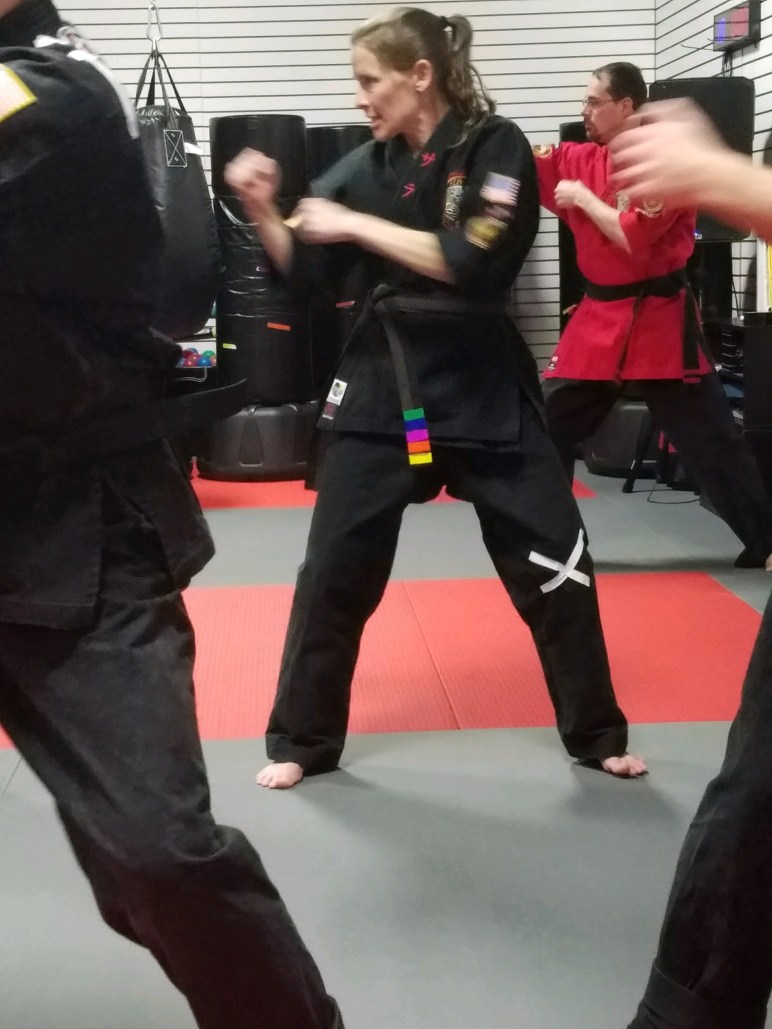
Good morning, readers. Today, I’m about to head into my second night of pre-testing for my 2nd Degree Black Belt in Kenpo Karate. Odds are at the time this post runs, I will be brain deep in trying to prepare, sore from the previous night’s test, and blinking vacantly over my first cup of coffee. I would offer, to my future self and to all eyes reading this, a heart-felt reminder:

You are capable of things you can’t even imagine. You are brilliant and resilient. Don’t ever stop fighting for yourself and the things you want. Self doubt happens to us all, but it’s an insult to your capacity for achievement. So instead of reacting to challenge with doubt, ask yourself this instead: WHAT IF I CAN?

DO NOT SHRINK YOURSELF TO FIT INTO SMALL EXPECTATIONS.

also… take a nap, whenever you get a chance. You’re only as strong as the rest you give yourself

Good skill to all of you out there, in all of your endeavors.

And now, this:

Not Myself of Late

I am long away from the girl I once knew.
The embodiment of all that was light
and acquiescing 
Annihilated beneath weighted skies.
Mired in confused need,
heart floundering in dark embankments.

I dig it from the muck; 
calm it’s fluttering gasps.
brush away the silt
	It’s ok... It’s alright now
we know what we have to do.


I'd let the world upend me.
I let it through the open door
An idea, a hush of doubt
Embedded into my soil.
Tender but steadfast seedling.

I forgot 
myself.

Forgotten that its all just shadow
Borne from the reflections of hurt.
A chemical reaction, unchecked.
I was dry underbrush,
And it, just a catalytic match.

But now
I am the fire.
I am all heat and 
nothing less than utter devastation.
I don’t need suggestive darkness
to know that I am bright.


Guest Blog: Nina Naylor

Good morning! Today’s guest blog comes to us from the incomparable Nina (pronounced 9-uh) Naylor. She will be featured in the “Wilderness of Soul” anthology and I’m excited to share her work here with you. Nina has a beautiful approach to the world, writing, and how we all feel as wordsmiths with regards to calling ourselves ‘real writers’.

Here’s a little bit about her:

Nina Naylor is a writer, poet, and essayist.  She wrote her first poem at age 8.  She is a member of Northern Colorado Writers and the Academy of American Poets.  She has had poems, essays and articles published in organizational publications.  


Nina was able to take early retirement and has been focusing on her writing dream.  She is currently working on a poetry book, a book of prayers, and a memoir.  

The subject of her first poem?  A dancing pig!

I spent the last few days fretting about driving down to Denver alone to visit my
granddaughter. The address existed in an area my mind at once equated being outside my
comfort zone. The various degrees of fear rampantly invaded my rational thinking, and my
inner critic flooded my brain with negative outcomes and reasons why I should not go. But this
cannot be the individual I confidently relate to when I envision that person inside me in its
truest form! That woman who embraces all things new and enterprising…who still wants to
experience the exhilaration of adventure – the kind that excites and awakens my soul, that
allows me to explore new cultural diversities in an unbiased demeanor…who wants to see the Divine Light that shines throughout!

This same consternation relates to my internal dance of viewing myself as a writer and
not. To move past the wishing stage and be vulnerable enough in sharing myself with the
world. My writing engulfs me – it lives in my soul and to lay myself open to ridicule, critiques
and rejection seemed incredulous.

Nevertheless, my adventurous soul still burns – aches to be released and my lifelong
dream to write and be published flourishes! Friends and family encouraged my writing
throughout the years, but not until I found the fortitude to believe in myself along with the
willingness of mind, body and spirit did my journey come to fruition. Last year at Christmastime
a dear friend rewarded me with the ultimate gift of support: a poetry book by another woman
who recently found the courage to share her soul along with my friend’s accompanying
sentiment “I’ve been fortunate to hear some of your poems and stories. Now, I want others to
experience the joy of reading them.”

Each year I choose a word to live by and this year my word comes from Debbie Z.
Almstedt’s book Zibu: The Power of Angelic Symbology . My word Rakumi means “clarity of
purpose
” and the accompanying affirmation is “I continue to gain clarity as I listen within
knowing the answers unfold with ease.
” To fully embrace the adventure and accept myself as a
writer opens opportunities each day by being willing to believe and surround myself with
positive motivations. This entails positive friendships, writers’ groups, reading the genre l like to​
write, and sending my work for consideration. I encourage you to seek out what truly fulfills
your soul.

Just so you know, I still can have doubts, but they don’t last. The night before I found
out two of my poems would in the anthology, I had thought to myself, “who am I to think I can
write?!” Believe in yourself…put yourself out there…be willing.

I like to write acrostic poetry and I will leave you with one using my word for this year.

R eceiving
A nswers and
K nowledge.
U nfolding
M yself
I ntentionally.

By the way – the outing with my granddaughter and her boyfriend in Denver? Joyous!!