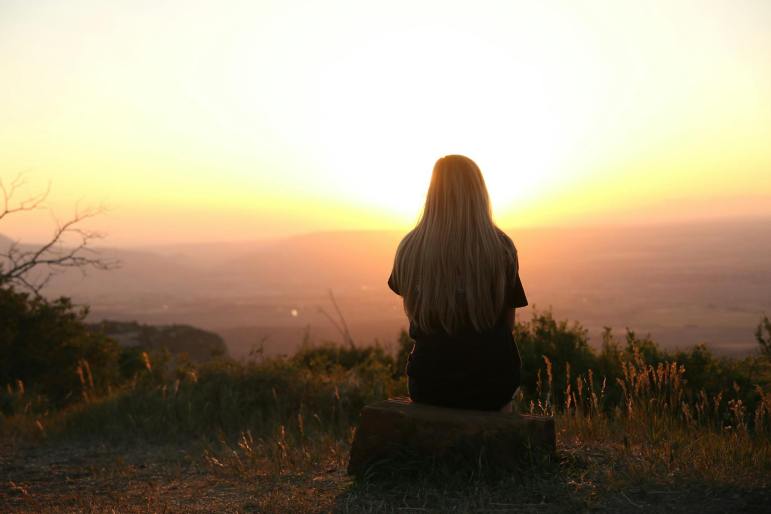
Worth for Awhile

A large part of human nature’s beauty lies in our failures and follies. Perfect people are rarely very interesting. As a writer, creating ‘perfect’ characters is a sure-fire way to distance your readers and lose their interest. Why? Because no one wants to read about someone who always gets it right. Who can share commonality with that? And yet…our reality is often ruled by what we, as actual humans, fail at.

When thinking about human frailty and my own failings I stumbled across the largest stone in my path of late; Self-Worth.

I know I’m not alone. I see you out there.

It’s more than fair to say that we are comparative beings. The media propagates it, competitive constructs in work and school demand it, and long-standing cultural threads tie our successes (and our failures) to what we’re worth in the eyes of the rest of the world.

Its the single most destructive lie we’ve ever been told.

And its easy to say that it doesn’t affect us. That we don’t care how we stand in relation to other people, that we don’t have a competitive nature, that we don’t feel the need to be anything else than what we are. I say those things all the time. And they rarely do more than offer a feeble disguise over the surface of self-doubt.

If we didn’t care, we’d cease to try. We’d stop looking for ways to improve. But something that should drive our greatness often tears us apart and we are left with shreds of the human we used to be, torn apart in an effort to create something more inspirational in the eyes of the world.

I was recently told, by a very generous soul, that my self-worth shouldn’t come from anyone but myself. That I couldn’t let the berating, criticism, or comparisons of the world let me feel any less than what I was worth. That it wasn’t the outside that should decide, but what was inside of me.

So it made me wonder; What am I worth?

In terms of chemistry, my physical make-up is probably no more than about $3.00 worth of material.

If you broke down my daily tasks and how much you’d have to pay someone else to do them, some would say I’d be worth about $140,000 a year. If you based my worth on what I contribute to the world with my writing we’re looking at a solid $50 a year. Monetarily, its not very impressive. And again, I’m basing my worth on what other’s consider useful tasks/materials.

So what am I worth? What are you worth? Sit still with yourself and ask the question:

“What do I do, what am I, that matters to me? That impacts the world? That brings me contentment?”

Deep…yes. Sometimes we gotta get past the cloak of simple thought to really understand why we matter. We have to, for the sake of our own self-preservation. After all; if you don’t see worth in yourself, you start to feel like a burden to the people you love. And all sorts of ugly outcomes arise from that train of thought…trust me, I’ve been building a scary set of tracks in that direction myself of late.

So I sat down, prompted by my friend’s words and suffering through a trough of depression, and asked myself what I was worth.

I came to the conclusion that for a long time I’ve let the words and actions of other people (in their own beautiful human imperfection) determine my self worth. If they were mad at something in our shared existence, I took it on as a fault of mine. As a problem that I didn’t fix or prevent. If comments were made about appearance, I took the darkest path of focusing on my imperfections and felt the need to correct them by any strange and unhealthy way possible.

It left me wanting and sick.

Why do I let my brain do that?

Because we’re taught to improve. To impress. To be better. To strive for more. Instead of just being what and who we are and understanding that we aren’t responsible for other people’s happiness or conforming to ideas of perfection. We must set boundaries to the information we let affect us. Even my friend’s well intentioned advice was still someone on the outside telling me what to think about my self worth. It’s not about letting someone tell me I am worth-while. Its about knowing my own worth and not letting the outside world sway that knowledge either negatively or positively.

Now there are times, when someone who loves us may come to us with good intention, and full hearts and offer us a viewpoint about something destructive they see in us. There are times when someone has honest praise to offer. With careful appreciation of the information we’re given we can chose to look at it with neutrality and see if there is helpful advice within it, and take it as an opportunity for self-reflection.

I love you guys, for all you are. Just as you are. Have a beautiful week and stretch your brains and hearts to fit the worth inside of you. It’s there.

“My dear,
In the midst of hate, I found there was, within me, an invincible love.
In the midst of tears, I found there was, within me, an invincible smile.
In the midst of chaos, I found there was, within me, an invincible calm.
I realized, through it all, that…
In the midst of winter, I found there was, within me, an invincible summer.
And that makes me happy. For it says that no matter how hard the world pushes against me, within me, there’s something stronger – something better, pushing right back.

Truly yours,
Albert Camus”

Artists Need Each Other

So yesterday I was invited to this really cool space in north Fort Collins, called Kestrel Fields Studio and Art Residency. The owner, Heather Matthews, is a delightful human who has created this space to help support not just artists in need of a space to work and focus their attention on their craft, but also as a gathering space for artists from all around. Last night, she invited a lively and varied crowd of Arts Administrators from the area to mingle, talk, and answer some important questions about what art means in our community, how we can work together, and what the future of art in our community could look like.

I won’t go into great detail but I did notice a few things that were brought up time and time again. First, that even in communities where the art scene (I’m covering it all; music, visual arts, performing arts, literary arts, etc) is vibrant, there is often a disconnect between artists sharing their work and the public being connected to it. We all know that funding for the arts has taken a hit under the current federal administration. When we couple that with an economy that’s currently circling the toilet bowl, private funds are also being withheld as the whole country braces for these depressive futures. In itself, this creates a depression and repression of a different kind. Creation of art is not free nor easy. It costs time, and material and effort.

Artists in America (with the exception of those billion dollar stars out there) are not paid well, if at all. Art is not considered worthy of compensation to a capitalist system. Why? Because it defies all the markers of capitalism. It is not meant to be consumed and thrown out in an never-ending wasteful cycle. It is not massed produced, or homogenized for easier consumption. Art is unique, and personal, and deep-rooted. It asks the observer to think and to feel, and to step outside of their own perceptions. Art is uncomfortable and often questions power. It is dangerous in all the right ways. Because people who think and ask you to question our societal confines are often discredited. After all, why would a system promote someone trying to shake us out of a stupor to acknowledge our humanity above powerful, greed-driven systems? Art does not serve systemic oppression.

The point is that art and artists in America are more often seen as quaint, quirky and starving, rather than being hard-working harbingers of change and progress. Unfortunately, the marker of respect in our society is tied with monetary compensation, and we do not give that to artists, no matter how they may improve our lives or move our souls. So…something to think about is how you interact, support, and uplift the artists in your community. First, by going to their shows, reading their books, reviewing them and spreading the word. Paying a cover designer when you can. Paying for someone who edits or writes copy for you. Paying a musician to preform at your event. That money goes directly back to the artists and therefor the community. And it speaks a louder truth that Art Is Worthwhile.

Along those lines, let’s talk about cross-support. A big issue that came up was the “siloing” (I feel like that’s a hot-topic word of late) of artists. Painters stay in gallaries, musicians only go to music festivals, writers stay home in their pajamas and turn their ringer off. Yes. It’s hard to step outside of our own comfort zones within our art. But the beautiful thing about art, in any sphere, is just what I mentioned above. Art makes you think. Makes you question. Gets you outside of your world and asks you to see something new. To question. To feel. And those questions and feelings, especially when planted in the seed of another artistic mind, will lead to a garden of beautiful, unique and expansive ideas. If you’re familiar with ekphrastic work, you know that a painting can inspire a poem. A poem can become a song lyric. A song can drive the hand of a painter. We are not siloed, we are an expansive field of fertile and ready soil. And at the risk of sounding sensual, we should start cross-pollinating. Not only for the health and vitality of our own art, but to support the minds and hearts of people who share in our struggle and joy of being translators of the soul into art.

I am proud of the community of writers and poets I work with. I am overjoyed to meet the artists who paint, and draw, and sing, and perform. I love to know how art and passion move through their bodies, and to feel kindred in their drive to create something that feels like touching the deep truths of humanity and shared experience. My ask of you today, whether you write or not, is to find out more about the artists in your community. Go to their shows, follow them on line, support them with words and presence if you don’t have the funds. But let them know they’re important. That they are seen. Because artists see you. They work and create to bring us all closer to understanding each other. And that’s something worth leaving my pajamas for.

Two Ears, One Mouth: The Power of Listening for Writers

I know it’s been a pretty poetry-heavy blog of late and I’m honestly not apologetic about that. Poetry is a grace that fits into my life better these days. It’s more accessible to write, to slip my fingers into it’s lines, and to distill so many of the big and difficult feelings I’m currently holding. If you don’t poetry, you should. (Yes, it’s a verb, and a noun). But for today, I wanted to write about something I think is a skill whose value is immeasurable for writers.

The power to listen. Now, I’ve always been kind of a quiet kid (until I know you better, then good luck getting me to shut up) and was subjected to all kinds of comments. “Doesn’t she know how to talk?”, “I guess she’s just not much of a joiner, huh?”, “She’s so quiet.” All of this and more almost berated me into more silence until I was into my adulthood, and was forced to be more proactive in communicating. Still, to this day, in a large crowd of people, I prefer to be the one slinging one question into the crowd and then softly withdrawing to the sidelines to watch the frenzy.

Because I learn more this way.

First: I learn about character, history (or backstory), as well as flaws and strengths. In the listening to their words, their thoughts, their stories in total, yes, but also… I learn how they speak, I listen for intonations, and body cues. I listen for changes in pitch and pace, I listen for old dialects and idioms sneaking through. I listen with my eyes to watch the way their hands talk, their body nervous or posturing. I listen to the subtext of history behind it all. I learn about humans, and their story when I listen. And learning about humans is such a fundamental skill for writers to have. Not because we want to poach a character straight out of our monthly PTA meeting (well, maybe you do, I’m not here to judge) but so that when we sit down with our characters we can visualize them. As they are, with all of their imperfections and mannerisms, and really start to build a world true to what they’re saying in words, thoughts, and actions.

Second, and perhaps more utilitarian, I learn about the world. Listening to people opens me up to experiences and knowledge that I don’t have, maybe that I may have never even wondered about. And every story that settles into my encyclopedia brain is a new idea, a richer understanding of an old idea, and a bigger picture of this fantastical world. Every human being is a conduit to experience I don’t have enough years to gather myself. What a wonderful way to learn, am I right?

Third, and this is a natural consequence of the last point, listening to someone is a sign of respect, of interest, and on some level, love and acknowledgment of their existence, their struggle, and their worth in the world. More than just getting that character quirk you’ve been struggling with for months, or learning that a group of hippos is called a ‘bloat’, you are validating the experiences and importance of another person’s life. You are willingly giving them your time and attention (finite resources) and being present with them. That matters. More than just as a writer, but as a human being.

So–next time you’re in a crowd, writer… pay attention. Focus in, feel the presence of being in someone’s audience and listen to the story they show and tell you. It may lead to the next grand idea, it may help you unstick your work, or it may just help another human being feel seen.

On Getting Un-Stuck

Argh… I have to tell you, there’s nothing more frustrating than staring at that blinking cursor with no words to keep it moving. I know I’ve long been a denier of the “writer’s block” theory. That we are only blocked when we stop moving and that every word out is a word that counts. But I’ve never felt this severe shortage of words before.

I’m a voracious writer when I get in my zone. To be clear, they aren’t the best chunks of writing every time and there’s often a lot of editing that needs to follow. But when it comes to the count, I’m kind of a rock star. Until this book. This final in a series of three. This book with a deadline. This book that should be no problem to write, because it has four of my favorite characters, and a fun premise, and all the adventure and romance available to it. This book that has stalled out on the sandy streets of 1920’s Cairo and I can’t seem to get it started again. It’s like I ran my character’s path straight into the side of a pyramid and there’s no where else to go.

So what does a writer do? When they’re boxed in? When they’ have 30,000 more words to get written in the span of a month? And the story is finished?

Well, we pivot. The book must go on. The story is not over, it’s threads are just hidden away. I’ve lost the path, perhaps even took an unintended side street that was not meant to be their final course. So, I’m struggling this week with some of my tried and true practices for ending the block and finding my way back into the flow. Normally, it would include taking a break and a step back to write something else, but I’ve been doing that. My brain has had plenty of breaks…I’m not gentle parenting her anymore. It’s time for tough love. Behold the bullet list.

  • I will write my major characters into a different scene, in a different place/time and see what happens
  • I will write three different endings to the story and work my way backwards from my favorite.
  • I will work my way backwards from my least favorite.
  • I will go back through and re-read the first three chapters, writing 1000 words as a continuation from those initial, more inspired thoughts.
  • I will look back through my synopsis of the series, see what was promised, and find two scenes to complete (out of order)
  • I will write at least three heated and NSFW scenes between characters that may or may not make it into the book to reestablish their passion and their dynamic so I can re inject some of that into the story-line that’s grown cold.
  • I will write my publisher, admit to my struggles, and ask for a respectable extension. Then I will give myself reasonable word count goals to get to that date, with room to spare for editing.

Okay, well, now that my plan is public I have no other choice to follow it. Sometimes the accountability of admitting to our failings and planning out what we intend to do, helps to keep the urge alive. Thanks for being my sponsors. Happy writing this week. I’ll let you know how it goes.

Poetry 7-3-25

Travel leads to thoughts. Interesting new connections and inspirations do too… Travel also leads to not a lot of time getting to sit down and make up blog posts. So I hope you’ll forgive me for posting two poems in a row. This is an older one, not in my current headspace, but always, somehow, tattooed beneath my skin.


Remember Your Lines

What does depression feel like?

Like I want to sleep forever

but every time I fall into that

blissful unconsciousness,

I hope I never come back out

that it’s just a peaceful send off

So long…have a good flight

Don’t call when you get there.

Because…that would be weird

And freak everyone out…

It feels like…

I can’t feel

sunshine, or joy, or pride, or hope

I’m a slab of granite,

wavering on two crumbling pillars of sandstone

stuck in quicksand and sinking

and I don’t care if I go under

in fact, I welcome it and hope

it suffocates me

with calm commands,

breathe in…breath out…and hold

like an MRI of your final moment

but it never tells you

to breath in again

Depression feels like

I have no energy in my synapses

and even if I did, nothing I could do with it

would be worth anything to anyone

least of all myself

Depression is a gray, weighted blanket

only not for comfort, it’s for the unsurmountable load

that life gives you to carry

and you just can’t find a good enough reason

to carry it anymore;

but you can’t find your way out

from underneath it either

Depression is seeing through eyes

that are a movie screen

to an audience that lost its will to care

lacks empathy, doesn’t recognize

Art

or love

or fleeting time

or beauty

Depression is a cage that I shout meaningless words out of,

fake platitudes

in hopes no one else falls into the cage next to me

I’m fine!

You’re fine,

you’re fine, baby girl

you’re fine…

I love you

it’ll be okay

It’ll be okay is tattooed beneath my skin

so that I don’t forget these

lines to a play that I rehearse and repeat,

back to the world that asks

Are you?

Okay?

I look down to the scars I once cut

but can’t cut again; they’ll see

Children learn from watching

so I don’t show,

I tell…

I tell lines

I tell them the lines I need to tell

I tell them,

Though the world is burning around us

and women will never be safe

and human lives don’t matter

cattle for the breeding grounds or

simply to slaughter to the gods of capitalism

Stop!

don’t say that…

don’t project the hopeless…

Read the line

Read the provided line

not the truthful line

of scars….

It’ll be okay

I’m

Okay

You’ll be…

… will you be?

Okay?

Depression is lying to loved ones

so you never have to worry that you’ll be

their downward spiral,

the same scythe of your mother’s loss

that cut you down

Cause we’re all Ok

we just need to…

I just need to

Remember my lines

Living in Abundance

I love this word. Abundance. Say it to yourself. Abundance. It feels full and heavy, it feels like satiation and potential. I love when my yoga teacher tells me to widen my stance, when bending forward to make space for my Abundance. It feels like a loving way to approach what we have, and to be content in our space.

As a creative, abundance is not something we may consider. In fact, if there’s anything a writer is good at, it’s practicing the fear of Abundances counter point; scarcity. Scarcity says that there won’t be a next idea. There won’t be a next poem or painting or song. Scarcity says you better hang on to this project and keep working on it, because it’s the only one you have. Scarcity will tell you lies of the well inside you, drying up. That once you expend so many words, there will be no more. Once you complete this idea, that will be the end of your road and maybe your career. So hang on, greedily to that idea, to that brilliant book proposal, that one perfect poem. It could be stolen or critiqued apart, or lost. Best to hold it close to you, where it maintains a certain pristine quality. Your precious.

The funny thing about scarcity, and abundance, is that they are both self- fulfilling states of being. When we hold on to one idea, one book, one poem…our hands are useless to catch more, to reach for more, to hold more. I know, its scary. To think that this might be your last, great idea. To let it go, either out into the world, or back into the drawer for a later date. It might feel (especially when you have been working on the same novel or project for years) that this is it. All you will ever be. All you will ever write. The great American novel, never to be surpassed. Perhaps you worry you’ll never write anything as good again ( I feel that, acutely friends) But I’m here to tell you from experience, that its a good time to look at it from a different perspective.

You see, your creativity and your potential to make more art, pursue different stories, write more…it’s endless. It is a bottomless well of energy. And even after we’re gone, the things that we put into the world spark more ideas, and more stories, so really…think of your writing and creativity as a river, not a stagnant pool. When you dam it up, from fear, from worry (I’ll never write another poem this good, my novel isn’t ‘ready’) stagnation will occur. It is the only idea (ie water) in your pond. Letting it go, releasing that barrier, putting it out, submitting it, allows the water to flow freely again.

Creativity, in this way, is abundant. It is a river that we dip our hands into and grasp the ideas that come our way, play with them, run with them, drink them in (don’t drink river water, please, giardia–Beaver Fever–is real) and then when its time, let them go down stream and sit along the banks for the next one to come along. And it will come.

How do we let go? We let others see it, we make the best changes we can and throw it out into the world. Be conscious that once you let it go, its a bird flown from the nest. It might come back to visit, but you are no longer it’s home, it belongs to the world now and you have a big beautiful space (time and mental playground) for the next hatchling.

I’ve used so many metaphors in this thing, I think I got lost myself. Rivers, birds, abundance. Always abundance. You have it. You have room for all the beautiful things in your brain and those that haven’t been found yet. So let go of the fear that you’ll dry up. Loosen your hands around your one great idea so you can embrace the potential of you.

Happy and Safe Pride

In honor of Pride Month and celebrating all of the amazing human beings, in their struggled to be themselves, live fully, and be safe from violence and oppression, I’m doing all I can to support LGBTQ+ writers and poets. Listed below are a group of wonderful authors and their work that you should check out. If you can buy from them directly do, and leave positive reviews if you have some to give. Each one is an opportunity to learn, to grow, to understand and to find connection. Not just this month, but every month. Enjoy and be the loving force for change you want to see in the world.

  • One Day I Will Write About This Place: A Memoir by Binyavanga Wainaina
  • As Beautiful as Any Other: A Memoir of My Body by Kaya Wilson
  • La Bâtarde by Violette Leduc, translated by Derek Coltman
  • The Truth About Me: a Hijra Life Story by A. Revathi, translated by V Geetha
  • The Sex Lives of African Women: Self-Discovery, Freedom, and Healing by Nana Darkoa Sekyiamah
  • The Pink Line: Journeys Across the World’s Queer Frontiers by Mark Gevisser
  • Modern Nature by Derek Jarman
  • My Lesbian Experience with Loneliness by Nagata Kabi, translated by Jocelyne Allen
  • People Change by Vivek Shraya
  • Asylum: A Memoir & Manifesto by Edafe Okporo
  • Welcome to St. Hell: My Trans Teen Misadventure by Lewis Hancox
  • We Have Always Been Here: A Queer Muslim Memoir by Samra Habib
  • Dear Senthuran: A Black Spirit Memoir by Akwaeke Emezi
  • The Other Side of Paradise by Staceyann Chin
  • Red Azalea by Anchee Min
  • Me Hijra, Me Laxmi by Laxminarayan Tripathi, translated by PG Joshi and R. Raj Rao
  • They Called Me Queer compiled by Kim Windvogel and Kelly-Eve Koopman
  • Unicorn: The Memoir of a Muslim Drag Queen by Amrou Al-Kadhi
  • Angry Queer Somali Boy: A Complicated Memoir by Mohamed Abdulkarim Ali
  • Thérèse and Isabelle by Violette Leduc, translated by Sophie Lewis (1966)
  • Maurice by EM Forster (1971)
  • Orlando: A Biography by Virginia Woolf (1928)
  • America is Not the Heart by Elaine Castillo
  • Hotel World by Ali Smith
  • Less by Sean Andrew Greer
  • The Price of Salt aka Carol by Patricia Highsmith
  • Valencia by Michelle Tea
  • Under the Udala Trees by Chinelo Okparanta
  • Paper is White by Hilary Zaid
  • Stone Butch Blues by Leslie Feinberg.
  • Orlando by Virginia Woolf
  • Giovanni’s Room by James Baldwin
  • Sodom Road Exit by Amber Dawn
  • Angels in America: A Gay Fantasia on National Themes by Tony Kushner
  • Fried Green Tomatoes at the Whistle Stop Cafe by Fannie Flagg
  • The Book of Salt by Monique Truong
  • Tea by Stacey D’Erasmo
  • Tipping the Velvet by Sarah Waters
  • Alice Isn’t Dead by Joseph Fink
  • Oranges Are Not The Only Fruit by Jeanette Winterson
  • Marriage of A Thousand Lies by SJ Sindu
  • Nightwood by Djuna Barnes
  • Tales of the City by Armistead Maupin
  • Close to Spider Man by Ivan E. Coyote
  • Jack Holmes and His Friend by Edmund White
  • A Single Man by Christopher Isherwood
  • Fruit by Brian Francis
  • Salt Fish Girl by Larissa Lai
  • Morrow Island by Alexis M. Smith
  • Pages for You by Sylvia Brownrigg
  • Confucius Jane by Katie Lynch
  • Little Fish by Casey Plett
  • Such a Lonely, Lovely Road by Kagiso Lesego Molope
  • She of the Mountains by Vivek Shraya
  • For Today I Am A Boy by Kim Fu
  • The Color Purple by Alice Walker
  • Rubyfruit Jungle by Rita Mae Brown
  • Disoriental by Négar Djavadi
  • Speak No Evil by Uzodinma Iweala
  • The Life and Death of Sophie Stark by Anna North
  • Never Anyone But You by Rupert Thomson
  • Hood by Emma Donoghue
  • Blue Boy By Rakesh Satyal
  • My Education by Susan Choi
  • Here Comes The Sun by Nicole Dennis-Benn
  • Aristotle and Dante Discover the Secrets of the Universe by Benjamin Alire Sáenz
  • We Are Okay by Nina LaCour
  • Summer of Salt by Katrina Leno
  • 48 Shades Of Brown by Nick Earls
  • Call Me by Your Name by André Aciman (2007)
  • The Language We Were Never Taught to Speak by Grace Lau
  • Butcher by Natasha T. Miller
  • Water I Won’t Touch by Kayleb Rae Candrilli
  • The Renunciations by Donika Kelly
  • Bestiary by Donika Kelly
  • Paul Takes the Form of a Mortal Girl by Andrea Lawlor
  • You Better Be Lightning by Andrea Gibson
  • Lord of the Butterflies by Andrea Gibson
  • Black Girl, Call Home by Jasmine Mans
  • Black Queer Hoe by Britteney Black Rose Kapri
  • If They Come for Us by Fatimah Asghar
  • Nothing is Okay by Rachel Wiley
  • Cenzontle by Marcelo Hernández Castillo
  • The Tradition by Jericho Brown
  • Soft Science by Franny Choi
  • Bodymap by Leah Lakshmi Piepzna-Samarasinha
  • Night Sky With Exit Wounds by Ocean Vuong
  • When the Chant Comes by Kay Ulanday Barrett
  • More Than Organs by Kay Ulanday Barrett
  • Don’t Call Us Dead by Danez Smith
  • Things You Left Behind by Keondra Bills Freemyn
  • Femme in Public by Alok Vaid-Menon
  • Wild Embers by Nikita Gill
  • Chelsea Girls by Eileen Myles (1994)

BOOKS: POETRY

Honoring Your Quirk

Hello writers. How are you fairing in this strange, unhinged, cacophony of terror? Despite the political, cultural, and technological mess that we’re in, I hope that you’re shutting out distractions for at least a couple of hours a day to find some peace, and your own voice again.

Today, I wanted to talk about writing style. Not so much our voices as writers (though I’ll be covering that in a later post) but the way at which we approach the art, and the process of engaging in it. I’m in a busy season after signing on with my publishing company for another three-book series. It wouldn’t be so bad, but this is the first time I’ve proposed a series that was not yet complete. Which means, I now have a very real, somewhat daunting deadline of trying to write a novel (and polish it as well as I can) by the end of August. The first two books are done (mostly) so they will both be in editing by the end of this week. But the last book…

Let me start by explaining my process. I’ve written three trilogies. Two have been published, one is complete but won’t come out until 2026-2027. This newest one (my 4th) began with a Vella novel on Amazon (remember that flash in the pan?) and grew to a two book project that includes my first male-male romance as the second book. Both are fun, time-traveling fantasy romances, set in one of my favorite eras. All very exciting, and I had no trouble at all banging through the first drafts of them. Because I wrote them, as I always do, by puttering through whatever scene I was in the mood for at the time. Then I hodgepodged them together, as I always do, and fill in the gaps where needed.

Now that you have a little insight to my style (non-chronological, emotionally driven panster) I must tell you what a struggle this last, unwritten novel in the series is becoming. Because I had to write a proposal, I outlined it for my publisher. I never outline anything. I let the characters lead along a generalized path where there are key scenes I know I want to include. I had no key scenes starting out. I just knew a general path. It was all going along pretty well, for the first 20,000 words. And now…I’m stuck. I’ve pretty much written along the lines of my outline and I think the book won’t even make the 60,000 mark. In addition to that, when I’ve gone back to read, it all feels very flat. Like a Marvel movie. Like a dime-a-dozen romance. There’s no quirk. There’s no character depth. Even though it contains the same characters that I loved and developed for two books. So…what’s the deal?

Last night, after being stuck all week at that 20,000 word mark, I just let myself write a scene between the protagonist and the antagonist, a pivotal scene concerning the loss of someone very important. The concept was not in my outline. The scene was not planned, but just something my brain had been toying with in the shower after edits to the first novel started kicking in. I knew before starting this new scene, that it probably wouldn’t end up in the final version. It was just play.

But then…Suddenly there was passion. I saw true character coming out from underneath the gray and basic facade. I wrote over two thousand words in a matter of 20 minutes. That’s the kind of writing I’m used to. That’s my sweet spot. That’s my quirk. And I realized then, that for the last month I’ve been trying to write like other authors I know on deadlines. Straight through and stick to your outline. Keep it clean, time’s too limited to be able to waste it on multiple rounds of editing. The trouble is, there won’t be a book by the end of that limited time to edit, if I don’t write like my brain likes to write. I am not like any other writer. I’m quirky and I need to respect that.

So, that’s my lesson for you today. Yes, it’s important to try new methods and fart around with writing in different ways as a means to experiment and freshen up your routine, but I encourage you to find your quirk and respect it. What works for you, works. And when you’re on a deadline, do what works.

Happy writing. Now back to the grindstone.

Retreats, Writers, and the Greater Sum

I’m at the last day of Writing Heights yearly Spring Workshop and Retreat. It’s been a wonderful two days filled with classes, writing time, collaborations, critiques, and conversation. Normally, I don’t do much talking or reaching outside of my happy little home-body shell, so these types of events are rare and sometimes anxiety fueled.

But when you agree to take leadership of something, you don’t really have the option to sit back and let someone more extroverted take over. I believe that living a decent life has more to do with stepping outside of your comfort than constantly seeking it. And the beauty of it is that the uncomfortable and large becomes like a warm sweater and an intimate evening. I’ve been to a lot of conferences and retreats, but somehow its this group that always feels like coming back home.

If this retreat has taught me anything, its that there are so many beautiful, intelligent, thoughtful and worthy voices in this world that need to be heard. It has taught me that art is not dead, that hope is not lost, and that we are all standing on the edge of something extraordinary. To know we are not alone in the struggle, to know that someone is rooting for us to continue on, and that words still matter maybe even more than ever is enough to lift any downtrodden heart out of the mud. Separate, we are all each a powerful story waiting to be told. Together we are an ocean of love, a battlefield of strength, a universe of humanity, and the unshakeable faith that something greater will be found in the connection to this beautiful tapestry of human consciousness.

My advice to you is this. Live your life with a sense of urgency (not anxiety) and purpose. Live as if you knew you didn’t have forever to waste. Do the thing. Today. Write the words, finish the poem, read it out loud. The love of writing, of learning, and seeing new perspectives is a rising tide against ignorance and hate. The world needs you now. We must not falter.

Thank you to my amazing writers (yes I’ve claimed you as mine, like a momma duck keeps all her littles safely close) to the teachers who helped me by offering their knowledge and expertise, their warm hearts and belly laughs. I hope if you’re a writer, reading this, then you find a way to meet us in the mountains next time. Bring your heart and all your words.

Next retreat is October 16-19th in Winter Park, CO. Find out more HERE

I saved an earthworm…

To be exact, they were what I would deem a “nightcrawler”. On my rainy walk, with my rescue dog River, and her distaste for the wet (I think it’s the pit bull in her mix) we encountered the large under-dweller, struggling against the asphalt. I watched for a moment. Remembering, that as a child growing up in a dry state (Wyoming), we rarely saw worms that size. If ever you did, was a good omen to gardeners and those were the ones you never took fishing. I bent down lower than my 45 year old knees liked and gently picked up its twisting body, and placed them gently in my palm where it squirmed for freedom, even from a small safety. The rain poured down around us and I let myself feel all of the tickling, wriggling, slightly slimy motion of a life in peril. I took them tenderly towards the grass and out of the space where tomorrow’s sun on the blacktop would bake them, and set them down.

“There you go buddy, good luck.” I said and a woman walking her dog on the sidewalk, moved carefully away from me.

Why don’t we care for things anymore? When did we become so crass? How is it we have become too busy to save even the smallest of consciousnesses? I’ve been thinking a great deal about ‘modern’ life these days, and how less like actual life it feels. “Life” is suddenly something we are fed, by those who control the information. Life is on screens, and filtered to be pretty, it’s reductive, or ridiculous. Competitive and unrealistic. It’s shallow and degrading. When was the last time you held something in your hand that was real? A worm? Your child’s hand? Dirt from your garden? A pen? An apple? Someone you loved (known or in secret) arms wrapped tight and trying to stop time, just for a minute? When did you notice last, a being in struggle? Did you stop? Did you help?

I no longer want to be part of an unreal world. I don’t have years to waste on anything not authentic. What is the point? If I only have so many days, why would I spend them sucked into an algorithm? I want to hear my friend’s voices. I want to read their handwriting. I want to see them across a table or next to me on a walk. I don’t want to be force fed advertising, and told that I need wrinkle cream. As though the natural progression of my body is not something to rejoice in and enjoy. I don’t want to be told in spiraling doom scroll what this world amounts to in the number of likes or angry faces it has. Watch the volley of hatred and hurtful ignorance between neighbors be slung around like poisoned arrows. See artists reduced to fodder for machines, and the brainwashing of it all being NECESSARY, take us over, as though we have no choice in the matter. How can we really justify, as artists, “needing” a platform that abuses and misuses our hard work? I can’t. I never had any big hopes of making it in the industry anyway, so I’m not going to keep buying into a system of false promises, while it robs me of my creativity and passion.

We haven’t always been this way. Don’t you remember?

I know I will miss out. Your faces, your lives, the beauty of your progression in the world. I will not see you. I won’t get to laugh at your memes or comfort you in times of loss. But I will think of you. Just because I’m not there, posting weird writing shit, or poetry, or my bastard of a cat…I am here, thinking about you. Whether we’ve been friends since the fourth grade, or you just joined my writing group, or you read my books, or you gave birth to me…I love you. You don’t need the algorithm to tell you that. You don’t need Facebook as a go-between to keep us connected. I’m here. Loving you. Hoping good things for you. Wishing you a day better than you thought it would be, every day. Each one of you. No likes necessary.

I feel a bit like Neo. Taking the pill. To wake back up to what is real. And it’s scary. And I don’t know if I’ll just be forgotten. Maybe I will. But I suppose the hearts that forget me, I never really had residence in to begin with. Today’s the last day and I’m a little scared. The connection it offered was wonderful, the addiction it’s brought me to and the worry it sustains, is not healthy. For any of us. Here’s where you can find me:

  • BlueSky: @sereichertauthor
  • SubStack: @sarahreichertauthor
  • Website: https://www.sarahreichertauthor.com
  • email: director@writingheights.com
  • Address (I love letters and will send you one if you provide a return address): NCW, 4128 Main St, #144, Timnath, Colorado 80547

I hope I see you in the real life. I hope you find the balance you need. I hope you don’t give in to the idea that you’re data points and not a living, breathing, squirming, fighting, good-omen of humanity. I won’t be there anymore, but I’ll be around.

Photo by Grafixart_photo Samir BELHAMRA on Pexels.com