2nd Person POV: You Are the Great White Whale of Perspective

Your name is Ahab but you ask the crowd to call you Ishmael. You are the outcast. A man with a singular determination that will destroy your life one league at a time. One sharp harpoon, rusty tipped after another; giant nails in the coffin of your sanity. You spend your life in pursuit of an enemy, who stole your leg, the ghost of which pains you every night, mocks you, like the monster’s great white smile…

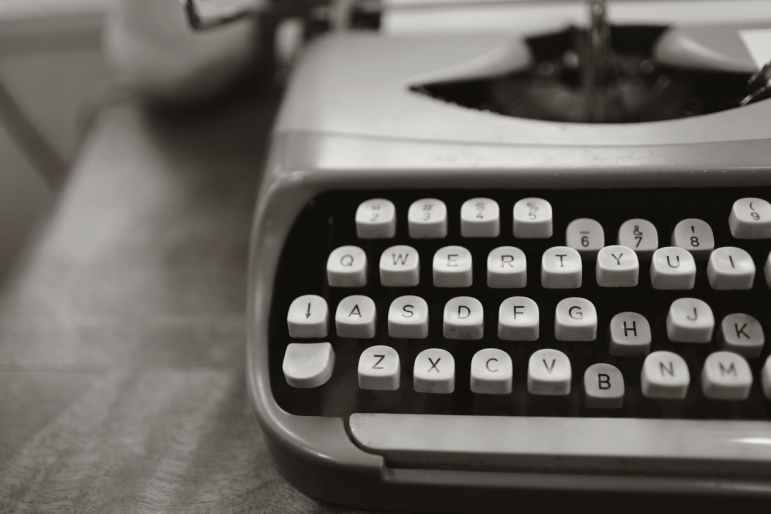
I’ve talked about perspective before but today, I wanted to get more into the elusive and cagey fellow that lies between the literary popular 1st, and the genre popular 3rd. This is the perspective one rarely writes a novel in (though it has been done) but can pack a powerful punch when building emotional investment in your reader.

Let’s talk about “you“. That is…the 2nd Person POV.

What you may not know is 2nd person POV is often used as a more intimate alternative to 1st person. It almost feels like a narrator is putting the reader in the middle of the action and making them the lead while they hold their hand through the journey.

But why is it so treacherous?

Well, the grammar alone can be strange, and redundant. On top of that, it is easy to fall into heavy and long-winded monologuing from this perspective and forget that your novel/book/story, must also contain those vial elements of setting, other characters, dialogue, and plotline

(If you ever want to see how it’s done right, I encourage you to check out Bright Lights, Big City by Jay McInerney: link)

So why do we bother using it? Well, like anything good and worthwhile in life, storytelling should evolve, it should test boundaries and experiment with ways to bring readers into our little worlds. In addition to that, 2nd person POV is a beautiful way to break up a scene by adding suspense, asking bigger picture questions, and engaging our readers on a more personal level.

It is an effective tool for removing a reader from a difficult situation while still keeping them interested. If your subject matter is ethically challenging (drug abuse, violence, non-conforming ideals) putting the scene or story in 2nd allows for the author and the reader to put you in the shoes of the person going through the questionable behavior. It’s a way to show the humanity behind bad decisions or the person in the crime, rather than being removed and judgmental towards the material presented.

If we see, third-hand, a man using cocaine in a bathroom we will make all kinds of judgements, but when the writer says something like,

“You promised yourself this would be the last hit, the one-way ticket to get you back to where you needed to be in your circle of friends. After all, those friends are the only family you have. What’s one little white line? They are cheering you on from behind and it feels like being on top of the world for that one brief inhale.”

2nd person POV is a beautiful way to get inside the characters head and making you the character at the same time.

2nd person is also great for allowing the writer to break a bit of the fourth wall and talk to a reader directly. Which can be fun, and strange but like I said, experimenting brings us to new ideas about how writing can affect us and our readers.

One of my favorite ways to use 2nd person POV is in a broader sense of humanity. I utilize it occasionally in poetry when dealing with universal ideas of loss, scarcity, war, hardship, joy, birth and death. Authors can tell the story we all are a part of and bring clarity and consciousness to larger metaphysical concepts and philosophy.

This method is often employed in passages scattered throughout a 3rd or 1st person POV novel, as a character telling a larger-picture story or asking a question that begs for more introspection.

If you’d like to give it a try remember: Avoid long monologues, stick to the action (just like any good writing), and don’t forget to do the work of writing (dialogue, scenes, sensory info). Also, start small, poetry, flash, short stories are a great venue for experimenting.

Converting current WIP (works in progress) or parts of them into 2nd can help you suds out the emotion you’re trying to hook the reader with as well as give you a fresh perspective on a character or scene that is simply not working.

Good luck out there.

Remember this Saturday (7/30), Episode 5 (“The Rainstorm”) of Westbury Falls will be available on Kindle Vella (link)
Westbury Falls is Live!!! And Other Cool Stuff

Two promotion blogs back to back? What the hell have I become? A corporate lackey? No–just an artist who’s excited to share her work as well as the work of some really stellar writers.

First things first. Westbury Falls is now available per chapter on Vella and here’s the link:

Westbury Falls

But why read it, you say, if I’ve gotten it up to chapter 10 for free here?

Well, because I’ve added things, changed the chapters around, and you’ll actually get to know what happens when things get steamier beneath all those layers of clothes and propriety. It’s a beautiful and intriguing mystery/sci-fi/steamy romance and I can’t wait to see how it ends (I’m mean–I’m pretty sure I know how it’ll end) Also, per legal reasons, I’m removing it from my website.

The good news is: You can read the first three episodes for free, and the tokens for subsequent chapters are really…really…inexpensive. (Like, I’ll make maybe $3.49 for everytime someone reads the whole book) So if nothing else, you’ll be supporting your friendly neighborhood author for a price less than a cup of coffee.

Second: My charming, delightful and wonderful co-paneling author and friend, Courtney Davis just released her newest book “Princess of Prias” (click on the title to take you directly to the order page). Davis is an author with 5 Prince Publishing, a wonderful small publishing company founded here in Colorado that has a fantastic and diverse line up of romance writers. Check out more of their titles here:

5 Prince Publishing

I’ll be doing some book reviews in the next few weeks of some of 5 Prince Publishing’s major authors as well as some of the cool writers I met with over Fan Expo.

Because I don’t want this to be entirely about promotion, here’s a little writing advice for the week:

I’m in the thick of my first real edits for my 8th novel and I’m realizing that I’m rewriting a great deal of it from scratch. But although its labor-intensive, I’m crafting a story that I like even more than the original and building a world that I want to spend some time in (say two more novels at least?) At the same time I’m trying to multi-market my work as much as possible. I sometimes wonder if I’m spreading my creative energy too thin. This is a new world for writers and authors. We are our own marketing staff. We have to have an online presence and a platform, and still manage to find the time to actually write and edit books.

Don’t forget your purpose. Don’t get so bogged down in the business side of writing that you forget to come back to the joy that drove you to start. I once heard someone say, “Don’t let your ambition get in the way of your joy” and that really struck me. I also believe that when we start with our joy, it is easier to believe in it and feel good about sharing it with others. So here’s the advice…let your joy be the source of your ambition, but make time to enjoy what you love without the endgame always being financial success.

Catching Up and A Whole Lotta Links

Just a quick blog this week to let you know I’ve finally gotten Westbury Falls set up on Kindle Vella, and the first episode will be available Sunday, July 10th. I’ll send a link out via all the socials on it’s release date. There will be additional goodies written into the chapters, so even if you’ve been keeping up so far, you’ll get new insights to Lillian and Matthew’s adventures.

For those of you waiting for the next books (The Sweet Valley Series) I’m afraid you will have a little while longer to wait. I’m exploring some different opportunities but I guarantee that when I hear news you’ll hear it too. My goal is to have them out sooner rather than later.

Also worth mentioning. My science fiction adventure novella is now a completed audiocast! Here are the links in various formats to listen to it.

https://music.amazon.com/podcasts/ff4ba549-f715-4fa8-b6f0-a6bc3b9727af/saturn-rising?refMarker=null&

https://www.audible.com/pd/Saturn-Rising-Podcast/B09SNLTJ6B

https://podbay.fm/p/saturn-rising

I’m so proud of this project, and love hearing the story brought to life. A thousand times a billion thanks to Ngano Press Studios and their amazing work. I hope I can collaborate with them in the future on other projects.

Submissions for The Beautiful Stuff Anthology 2023 are still open! Contact me here for more details or visit the submissions page to get a list of the rules. The theme is “A Beautiful Twist” and I’m accepting multiple formats (poetry, short story, flash fiction) of writing.

I attended the Fan Expo in Denver last weekend and was blown away by the amount of talented, generous, and wonderful writers in attendance. In the coming weeks, I’ll be writing up some reviews on their books and services they offer.

In the panels I was able to attend, I met a lot of beautiful humans, both readers and writers, and was able to engage in some great discussions about where the genre of Romance is headed, why it’s important to utilize it in other genres, and how to expand your audience and reach. All in all, it was a successful, fun, and engaging time and I wanted to thank everyone who stopped by.

I’m always heartened by how many people are out there, aspiring to write, working hard on finishing their works in progress, and struggling as we all do. Keep up the good fight. Keep writing. Don’t let life, distractions, or self-doubt kill that desire. Write. Write. Write.

That’s my quick catch-up and I hope in the next weeks to get you some book reviews, write ups on Point of View, how romance has changed and evolved, and what we can look forward to in the future with genre trends. Also, links to more of my work and some exciting things coming out.

Again, feel free to contact me with questions about submitting to the anthology!

Until then. Write. Write. Write.

Photo by Lisa on Pexels.com

Mining your memories: A Short Blog About Memoirs

Good morning kids. Today’s blog is about memoir. Before you close out of my page, thinking you’re too young to write such a thing and that it’s for little old people who are trying to recapture the sand slipping away in their hourglass…let me stop you.

Good stories are ones we relate to, and so can come from anywhere, in any time period, in any state. Being able to tap into your memory, isn’t just good for memoirs, it’s also good for descriptive scene setting, character development, and capturing those beautiful ‘show’ moments.

How do I figure?

Fiction or not, being able to recall details, sift through what you remember and why it was memorable, is a skill that will serve you in any genre. The perspective of ten-year-old you is a charming voice that we all, in some part, want to re-experience. Retelling from your memories is a practice that can help you see the world through different lenses, and what you remember tells you a lot about where you were in life and the character you embodied. A mom’s perspective and memory of her child’s first day of school is going to be completely different than her child’s memory of the day. The first breaking of your heart at 16 is going to harken a different intensity than your last broken heart a decade later. Understanding the humanity of your memories will bring you closer to creating depth in your characters.

So, how do you even begin?

Everything has a story and the best stories are told by ordinary people. It’s not about what happened, necessarily, it’s what happened to you. What you remember and what stands out to you from past memories, creates a personal tie to your reader and their own memories. It also shrinks down big events and forces the humanity into view.

Example:

“I remember the spiky Velcro of my sneakers, scratching my legs as I sat criss-cross in the lunchroom (still smelling of sloppy joes and spilled milk) while the third-grade teacher wheeled in the small TV to the center of our circle. The grainy picture of a rocket puffing out into a cloud of white with the trailing boosters snaking off into the atmosphere was confusing and anticlimactic to the excitement in the room. But what was more troubling was the way the teachers behind us gasped, crumpled to the floor, sobbed and looked to one another for explaination that could not be found, before hurrying us back to our classrooms.”

Versus-

“The Challenger, carrying high school teacher Christa McAulliffe, exploded shortly after takeoff, on January, 28 1986”

The biggest obstacle to this practice is, the human brain is often complex and muddled and gleaming the true memory of an event or time can be hard. Having practiced this a little, I can tell you that it’s really shocking how much of my childhood I don’t remember. Because I simply haven’t made a habit of talking about it. Many of us don’t. We no longer live in an oral-storytelling society and it’s a real detriment to how we solidify memories.

When writing from memory, we have to work from both memory and imagination, and reassemble the past with both. We have no other choice than to see it through the lens of who we are now, so even the best memories are filtered by the knowledge and experience we’ve gained since the time we’re trying to remember. We often reframe memories in a way that fits into our whole story, and as soon as we write about it, we begin to shape it. That’s not all that’s funny about memories.

If you’ve ever noticed telling a story and retelling it to a different person or group, the story starts to change depending on the audience. Other factors that can contribute to muddling the memory water are how long its been since the event, who was there, and how we want people to perceive it.

My suggestion to you is to start writing events down that you remember. Big and small (the death of a family member, to the first time you tied your shoes). Pick a year, an event, a memory, just one a day and write what you remember about it. Find a quiet spot. Close your eyes, think of the memory and with pen and paper (or laptop if you simply must) write down whatever comes up. Even if it’s murky, even if its disjointed. These are shadows that exist for a reason. In fact, write down what you can’t remember (I remember the flowers were bright pink and orange, but I can’t remember walking out of the funeral home). Those details speak to the state of mind you were in.

These are the rough drafts of human interest and ways to connect to others. Your essays on memories can be the the bulk material needed for character history, short stories or poetry. And maybe one day, your own memoir.

Whatever your past, however dull or fantastical you think it is, whether it’s 89 years worth of experience and life or only 12, you have a responsibility to put it down.

The Giant But

Nope. I didn’t miss a “t”. And this isn’t a self-reflective rant about the aging spread going on behind me. Today’s blog is about excuses, dare I even say… self-imposed limits.

I believe I’ve talked about the dangerous ‘but’ in terms of how we love one another, and how we limit feelings by making excuses from perceived imperfections. However, today’s talk is more about the detrimental “but” that gets between us and our dreams.

I can’t tell you how many times I’ve heard from friends, colleagues, and even acquaintances the exact phrase:

“I’d love to write but…”

But…I have no time. But…I just can’t get started. But…I’m not very good. But…It’s hard to publish these days. But…people may not like it.

No.

Nope.

Stop it, no.

Nuh uh.

Not valid (and who cares if they like it?)

Article done! BAM!  Shortest blog ever. Happy writing!

Okay…I’m kidding.

Those big buts up there don’t lie. They are all valid excuses. Excuses that we build like walls in front of our potential. Walls of excuses to keep us from even attempting the loving art of writing because it also keeps us safe. Safe from rejection, safe from the work, safe from the expectation. Safe from failing. Safe from succeeding.

But is a wall builder.

But builds walls based on fear and hatred and not scientific, psychologically proven facts.

But keeps you away from ever having to actually start.

Now I’m sure there are people out there saying they want to write a novel to make me feel like I’m not so strange, all wholed-up in my pajamas, afraid of the general public. Maybe people tell me they’d “love” to write more, to make polite conversation.

This blog isn’t for those small-talkers (but bless your heart for trying to make me feel comfortable about my chosen/driven profession despite its financial drawbacks).

This blog is for those whose eyes shine with longing when they talk about that book they want to, need to, would love to write. This is your permission slip to the great unknown outside your stuffy, self-imposed safety.

No more buts.

Try this:

Say it outloud…softly “I would like to write a book.”

Little bit louder now: “I would love to write a book!”

Say it like you mean it!: “I want to write a book!”

So the people in the back can hear!!: “I WILL WRITE A BOOK!”

Deep breath you crazy loon.

And rejoice in not using the but.

You will write that book.

Stop looking at the world as a place of excuses waiting to trip you up and make you fail and start looking it as the beautiful, messy experiment that has no wrong turns, only lessons.

Need help starting? Great! Let’s strike while your fire is hot!

If you have an idea for your novel, or article, or short story, write it down. Loose outlines are great but if you are a type-A outliner, then give yourself an hour or two to adequately plot it down. There are some great computer programs if you’re that kinda nerd. Or if your MY kind of nerd, post-it notes on a wall or story board are awesome.

Chances are if you’ve been thinking about a book then you already have some characters in mind. Spend twenty minutes (or whatever you can spare at kid’s practices or boring meetings) writing down your main and sub characters’ physical attributes, their strengths, their weaknesses. Write about their childhood, their friends, their parents…none of which needs to go into the book, but it will help you understand their motivation so that when you write the story, they behave in ways coherent with their core.

Join a writing group and take the classes they offer. Todd Mitchell (Todd’s Website) once offered an amazing four week class on writing a novel that covered everything from plotting, to dialogue, to genre, and story arcs. It was maybe the most profound and important class I’ve taken and I highly recommend you start with something like that if you are struggling at the start. Plus going to classes and joining groups helps to build the immensely important network of friends and cohorts who will help you along in your process.

Stock up your library. One of the first things I did after scribbling down a rough outline was lay in the fetal position in tears (well, not quite that dramatic but it makes for a better story) and wonder how someone actually created a functioning plot. Enter the Write Great Fiction Series. They’re some of my favorite resources and they offer everything from plot and structure, dialogue, character and viewpoint etc.

Final bit of advice. Don’t let the but come back into your process. (I’d love to edit my novel but the laundry needs doing– the vacuuming, the scope of work meeting notes, the kids fiftieth soccer game this month.)

Nope. Fuck that noise.

There is time in your life to write a novel. You just have to want it and learn to say no to buts.

giggle
Come on. It’s a but joke…

You have to make your word count your priority. And no cleaning for god’s sakes until your daily goal is met. No video games or puttering around either.

If you want the novel; if you want to unleash the story burning inside of you, then stop giving yourself the excuses to not write it.

Make the time. Make the novel. Banish your but(t)… to the chair.

To write your novel.

Go.

The Power of “What If?”

I know that I’ve written before about bolstering our creativity by keeping open minds concerning the direction our stories, characters, and plots can take. But in a world that can sometimes feel like a dark cloud over new ideas I think it’s important to revisit the power of a positive “What If?” in the way we approach our roadblocks.

We’ve all been in the middle of a down time in our writing and creativity. I know there are people out there that will preach that writer’s block does not really exist and you’re just procrastinating, or not wanting to put the work in.

While it is true that you’ll never write anything if you don’t actually sit down and write, trying to pour out a story (whether its 500 words or 100,000) from an overloaded, overworked, and over stimulated brain can be like trying to jam a king-sized sleeping bag into a twin sized sack. You know what I’m talking about.

There’s not enough room.

Some of the blocks taking up space may include fear (of failure and/or success), self-doubt, and perfectionism. These show up like the ghost in a Scooby Doo episode, unmasked to reveal depression, anxiety, imposter syndrome, and even ADHD.

So you’ll never hear me say that writer’s block doesn’t exist (and if I have claimed that before, I retract it). I believe that the inability to create can have very real sources that we sometimes need a dynamic team of teenage detectives in an ugly van to suss out.

Today, I’d like you to apply the two-word question to those moments of stifled creativity and see what happens.

Here’s an example:

“I have a novel, nearly complete, but you can’t figure out how to end it. It’s been on my laptop for a month and it’s driving me insane but every scenario in my head doesn’t ‘feel’ quite right, so I’m just not writing any ending at all.”

Why, that’s not a werewolf! It’s that dirty landowner PERFECTIONISM (who runs a floating crap game called FEAR).

By asking ourselves what we’re really afraid of, what’s really so hard about the situation (I don’t want to write the WRONG ending, none of the endings are GOOD ENOUGH) we can face the fear directly and start asking what if….

What if you took one hour each day to write three separate endings, for each of the different possibilities you have? Unattached to the novel, a separate document. Call it exploratory research. I would bet dimes to dollars that you’ll find one that is the BEST for your novel, and feel much more capable of completing the next project on deck.

Here’s another one.

“I haven’t written any new poems in over a week, I don’t feel creative, I don’t have any ideas. I can’t find the RIGHT words. I have submissions due, I can’t focus, and I can’t even remember how to write a good poem. I’m not a poet.”

Say, that’s not a two headed mummy! It’s the motel owner’s shady uncle ANXIETY and his henchman DEPRESSION. Your brain is overworked and can’t focus, you feel like there’s nothing new in the world to write about, or worth writing about. With a trace of PERFECTIONISM, and a dash of IMPOSTER SYNDROME, this combination puts an end to possibilities before they can even reach your brain.

What if you spent ten minutes outside? Find a tree, flowering bush, cloud, roly-poly, something not man made, and focus on it for ten solid breaths in and out. Don’t look at anything else, don’t think about anything else, don’t draw your attention away from that one object. How does it move, how is the light hitting it, how long has it been there, what color is it, does it smell, does it have a taste, what’s it made of?

Not only will being outside and remembering to breathe help you to relax and curb some of those anxious and depressive feelings, but you’ll realign yourself with the beauty of noticing the small things. And details bring poetry to life. Then sit down, in the grass, and write something, no more than a page, about what you felt, what you saw, what you took in through all of those sentences. Repeat, with anything. Human, animal, mineral, place, time, concept. The possibilities are endless.

Last one, best one.

“I can’t write a synopsis! It’s so detailed and I can’t possibly boil down my entire novel into a few pages. I wouldn’t know where to start, and what’s the point, no one will take my novel anyway!”

Oh, my little defeatist, that’s not a man-eating robot, why it’s nothing but the cranky heiress SELF-DOUBT dressed up in a spray painted, cardboard box!

Look, not every writer is birthed knowing how to write a synopsis. In fact, absolutely none of them are (I think they are, however, birthed with an extra gene carrying the appreciation of ‘old-book’ smell and a tendency towards adverb-overuse and caffeine addictions) We all had to research it, take a class on it, and put in the work including probably a dozen revisions along the way.

You can find a great resource for how to write one here:

https://blog.reedsy.com/how-to-write-a-synopsis/

If you’re an plotter, a synopsis is easier. You have it all typed up somewhere, so work off your outline and put aside a time-specific block to work on it and only it. If you’re a pantster, may God have mercy on your immortally, unorganized soul, because it is fucking hard to do. Same thing though, set aside an afternoon (or two) with a start and end time and write it out like you would a copy of Cliff Notes

Add something enjoyable to the completion (extra coffee or old books?) to make the goal a little sweeter to reach. Have someone who doesn’t know your book read the synopsis (yes, it should give away the ending, no, don’t worry if Janet in Accounting knows how it ends). They can let you know if it’s easy to follow without being overwhelming.

Self-doubt, fear, perfectionism, anxiety and depression are not final resting places for your writing (or other creative endeavors). They’re road blocks brought on by your own expectation and unrealistic standards. The best advice I can give you about “What If” is to ask yourself, in the face of rejection, frustration, and doubt…

What if you can? What if you can write that book? What if you could write three poems in an hour? What if you can send your pitch, synopsis, and novel out by the end of the week?

What If, when used properly, can be the precursor to hope.

So give yourself hope. Give yourself a choose-your-own-adventure. Give yourself a good what iffing.

That got weird. You know what I mean.

Self-Editing (It’s Not Just for Polite Conversation)

I’ve read a lot of books on this topic, scoured blogs, took any and every class I could at conferences and workshops on the matter, but I always still feel like there’s vast room for improvement when it comes to editing your own work.

Part of the reason is that it’s incredibly hard after writing, rewriting, and rewriting again (times a thousand) to edit all of those words. Not because we’re narcissistic megalomaniacs and don’t think there’s anything wrong with our novel, but because there’s a true phenomenon that happens in our brains as we read (and re read, and re read again) our own work.

The human brain is complex and the way it takes in and interprets stimuli from outside is a complicated and delicate dance. If we were to notice every single thing in our world, we wouldn’t be able to exist in it. The noise, the colors, the sound, the smells are so varied and ever present that our brains would be in a constant state of interpretation that would cause us to vomit, or pass out. Or both. (Which is one of the reasons so many people on the spectrum can have a difficult time coping with crowded, noisy, overstimulating places). As a result, we tend to soften the edges of a lot of information, block it out, or keep it in the peripheral of our consciousness, allowing our brains to make up a great deal of what we take in, through context.

It can be the same as when we edit. We tend to be in a taking-things-for-granted-because-I-read-it-so-many-times-before haze. We coast over the words and retell ourselves the story we already know in our heads, rather than focusing on what is actually on the page.

You, the author who created this magnificent book, know what it’s supposed to say, you know what you meant when you wrote it. So in your brain, when your eyes pass over the words, it will fill in the missed words, ignore the double ones, and forgive the dangling participles because in your brain, it’s reading correct. Very rarely do we ever approach our own work as a completely new reader. It’s practically impossible to do.

Does that mean we shouldn’t edit? Fuck no. Unless you’re incredibly rich and can afford an editor to take your first draft to your final over the course of 9 rewrites. And if you are that author, why the hell are you reading this blog? This is for the poor, struggling authors who are trying to procrastinate their own editing by reading my blog. Not for big money-bag writers who bang out twenty political spy thrillers a year because they have a nanny, and a cook, and a dog walker, and a personal shopper, and a house cleaner…

Where were we—ah yes, self-editing. Here are some of the biggest tips that have helped me produce a much better final version (before I send it in to an editor for the one or two rounds I can afford).

  • Take it line by line, sentence by sentence. Is the structure sound? Does it make sense? Is it passive? Is it clear who is doing the action, who is in control of the perspective? Is there a random “pineapple” thrown in at the end of a paragraph?
  • Read it out loud. When all else fails, read it cover to cover, out loud. That’s when I find most of my mistakes. Or, if you’re not into that (or you live with people who aren’t into listening to you and by people, I mean cats) at least read aloud the passages, paragraphs and parts that feel awkward or over the top.
  • It’s not too late to kill some darlings. I have been known to cut out scenes/sentences/dialogue, in my final rounds that I knew didn’t belong but I clung to them like a freezing poor boy on the wreckage of the Titanic. Save them in a different file, but if you know in your heart it’s there to stroke your ego at your brilliant wordage but it’s not doing the story any good then show some humility and axe it.
  • Check your tense, check your POV, be consistent in those little things because they make a HUGE difference on whether or not your reader can follow the story and isn’t frustrated trying to do so.
  • Print it out. You can get a good deal at local or national printing companies (my local FedEx cashier knows me and it is so heartening every time she asks “new book?” and hands me the brown box of hope). Double sided, nothing fancy, cheapest version possible will still only set you back about $30 for a 250 page book. You will see things in ink that you cannot see on the screen, guaranteed.
  • Get a Beta reader or twelve. Yeah, it’s not really self-editing, but it’s part of the process that will help bring new eyes to your work. And usually it’s a low cost way to get a ‘real readers’ perspective on your work.

All right, that’s all I’ve got. Good luck out there. Don’t think this bullet list will take the place of a good professional round of editing, but it should help in your process. And maybe it can even help turn your first drafts into better drafts.

Flash Fiction: A Raccoon, A Traffic Jam, and Another Call for Submissions

Mornin’

As promised, I’ve thrown together a couple of flash fiction pieces that I’ll be running in the next couple of weeks. Before we get into the fantasy, I want to give you a reminder that submissions are still be accepted for The Beautiful Stuff’s 2022 Anthology, “A Beautiful Twist”. Here are the details (the short version for folks like me with a minor attention span)

  • Dates: January 28th to September 16th
  • Winners notified September 19th 2022
  • Publication Date: TBA Early November
  • Submission guidelines: Short stories (2000-5000 words), Flash Fiction (200-1000 words), Poetry (up to 5 poems allowed per submission), novel excerpts (up to 3000 words), Personal Essays (up to 2000 words). Non fiction, fiction, speculative fic, western, sci-fi, fantasy, romance, erotica, historical, hysterical, time jumping primates, talking frogs, brains in jars, and ANY combination thereof. Submissions translated to English are preferred. Contest is open to domestic and international writers but awards will be paid in US dollars. Please submit your work as an attachment to your email which will be a lovely cover letter about you (name, email, your submission title, brief bio). Email subject line should read BEAUTIFUL TWIST SUBMISSION_name. The submission file (please use .doc, .docx, or another Word friendly format) should be the title of your submission and your last name i.e. “Merry Krampus-Reichert”
  • Top 3 submissions will earn prizes as follows: 1st–$30, 2nd–$20, 3rd–$10 paid via PayPal or Venmo (or check if need be). Runners up will be published in the anthology with a chance to compete in the Colorado Book Awards.
  • You may submit in multiple formats, multiple times (ie poems and flash, or novel excerpt and essay) but each submission must be in a separate email.
  • PLEASE DO NOT submit anything that has been previously published or that you no longer own the rights to. Simultaneous submissions are absolutely fine but LET ME KNOW if your work gets accepted elsewhere as soon as possible.
  • Prohibited subject matter includes: overtly violent or gruesome content that does not further the story, non consensual sexual acts, racist/homophobic/misogynistic/hate filled writing, violent or hurtful actions against children or animals, and anything that judges, stereotypes, or seeks to harm another human being based on their human being-ness.

Whew! Send in your stuff. I’m excited to read it. And now this:

FLASH 1: Raccoons and Moving On

“This is your fault.”

“Mine? How is this even remotely my fault?”

“You wanted to have the dinner party in that stupid farm to table place. With a stupid glamping theme. In the stupid middle of a stupid field!”

“Why is everything I do stupid?” he fired back. She glared over the dinner napkin pressed to her cheek and pulled away the bloodied cloth to show him, once again, the angry gashes that had undone the beauty of her Botox.

“This for one!” She put the cloth back on the wound and crossed her other arm in front of her low cut dress. The ER was always busy this time of the week, but she’d never had to wait for anything, and especially not with the general public, so it seemed even worse.

“I mean—the food wasn’t bad. The whole evening could have been worse.”

“Worse? Mark? Really? How could it possibly have been worse? A goddamn raccoon tried to take my face off!”

“You tried to pet it!”

“I was trying to scoot it out of the tent! Brought in by your ‘not bad food’ buffet!”

“Well, I mean, it was out in the woods. So technically, it was just like having a neighbor come over for dinner.”

“You’re a goddamn idiot.”

Mark laughed. He laughed so hard he doubled over. Hooting until tears came to his eyes.

“Wha—why are you laughing?”

“Just—the way your face looked when that little guy came at you! Eyes wide and—” he gasped for air between chuckles, “and shrieking like a banshee.”

“I want a divorce,” she yelled.

“I know you do. That’s why I planned the evening! To try and start to mend things.” At this he stopped laughing. “But I realized I can’t mend the past. I can only look at the future.”

She grumbled. “What does that mean anyway?”

“I’ve been seeing someone.”

“What?”

“She’s a park ranger, actually. The one that recommended the venue?”

“Are you out of your goddamn mind?”

“I probably won’t be once the papers get signed. Look, here’s your ride.” She failed to even notice as the nurse came to her with a wheelchair and an exasperated look.

“The doctor can see you now, Mrs. Sinclair.”

“Oh, it’s just Ms.” Mark corrected before helping to move his near catatonic wife, soon to be ex-wife, into the dingy wheelchair and watched it disappear with a squeaking tirade down the hall.

FLASH 2: The Longest Light

At first he didn’t notice when the light hadn’t changed. Louis could always find an excuse to look at his phone, play a quick game of Candy Crush, or text that hot little thing from accounting. He just figured it was a long light.

But it turned into an excruciatingly long light. Three games in and an unanswered tawdry text about how he’d like to ‘spread sheet’ with her, he finally looked up and found that the light had not changed. In fact, nothing had changed. Louis put down his phone and looked over at the driver in the lane next to him. Sipping her coffee. He watched for a good thirty seconds. Still sipping. He looked up towards the person in front of him.

The guy had been reaching into his back seat, not moving since they’d stopped.

“What the—“? Louis paused to adjust his radio, but the same note was still playing. The same long C. Echoing through frozen airwaves. Louis turned off the stereo and got out. That’s when the light would change right. Isn’t that how it always worked? But it remained, stuck on red.

The street was lit in the garish tone of a sun that had seemed to stop. No shadows moved. No sounds of tires against asphalt. No wind blew. He looked up into the sky and caught a strange dark shape. He thought it was a plane, tiny and glacially moving across the sky. But it wasn’t moving.

And it wasn’t a plane. Louis closed his door and looked closer at the pigeon, suspended in mid-air. His heart hammered against his chest, the only beat in the city. He looked at the woman in the car next to him, the drivers in the opposite lanes. Everyone, like some strange flash mob in reverse, was holding perfectly still.

“Hey!” Louis yelled, angry in his fear. “Hey, what’s the big deal! Move your car!” He jogged up to the first car in the lane. A woman, bags beneath her eyes, white knuckling the steering wheel and glazed over stare into the quiet nothing. In the backseat, a toddler, with his face red and sweaty mouth open in a silent and unending scream, clutching an empty applesauce packet in one hand and a sodden blankie in the other.

“What’s the big idea? What is this?” He pounded on her window with a force that have been loud enough to wake the dead. It did not wake her. Louis went from car to car, with the same method and the exact same reaction. Nothing moved.

The world was frozen in time and he was the only one outside the loop. Louis dove back into his car and grabbed his phone. Candy Crush was now dormant, he tried tapping on his messages but nothing budged. As if the moment his hands put it down, it too became frozen. A cold shiver shot up Louis’ spine and he spun in a circle.

“Knock it off! Whatever this is! It’s not funny anymore!” When the strangled universe refused to reply Louis took off down the street, looking for any sign of life, in a world without.

It would be the longest thirty years of his life.

Flash Fic: Weekly Prompt

Hello writers and readers.

Today, I’m stepping out of my normal routine of poetry and serial romancing to bring you a couple of exercises on writing flash fiction and some prompts to help get you started. (Think 1-800 word count, 1000 tops)

Now, I’ve talked in length about the fine art of flash fiction and what its doing in the field of literary wonder these days. Many a journal, website, and anthology are accepting these tiny powerhouses of storytelling as submissions. Their growing popularity, I believe, has to do with our shortened attention spans as well as our lack of free time. (Well, I mean we’d have more free time if we weren’t captivated by tiny screens most of our waking hours, but that’s a soap box for a different day).

A flash fic piece will tell the reader a whole story in a few hundred words and usually pack some kind of emotional, suspenseful, or humorous punch (‘humorous punch’ feels strange to write. Like slapstick?). For more on the logistics and down and dirty of them here’s a great blog on the topic… https://thebeautifulstuff.blog/2020/08/06/the-beautiful-writers-workshop-26-flashing-for-fun-and-profit/

So, if you are interested in trying it out, or if you’re an ‘old hat’ in the flash arena, I’m offering up some fun prompts to work with this week, to help boost your submission pool and get you used to the art of brevity. If you find one you like, let me know and I’ll give it a shout out and a bump on the site (AHEM–you could also submit it to my Anthology due out at the end of the year: https://thebeautifulstuff.blog/2022/01/27/call-for-submissions-2022-anthology-a-beautiful-twist/

I will also post one of mine next week to show solidarity for all of our creative endeavors. You aren’t in this alone, after all. OK–here’s a bullet list because I know how much we like that kind of thing.

  • A man/woman/nonbinary person goes about their normal day, not realizing that they died three years ago.
  • A dog comes back to its owner after a rousing game of fetch, but instead of the ball, it’s carrying a human skull.
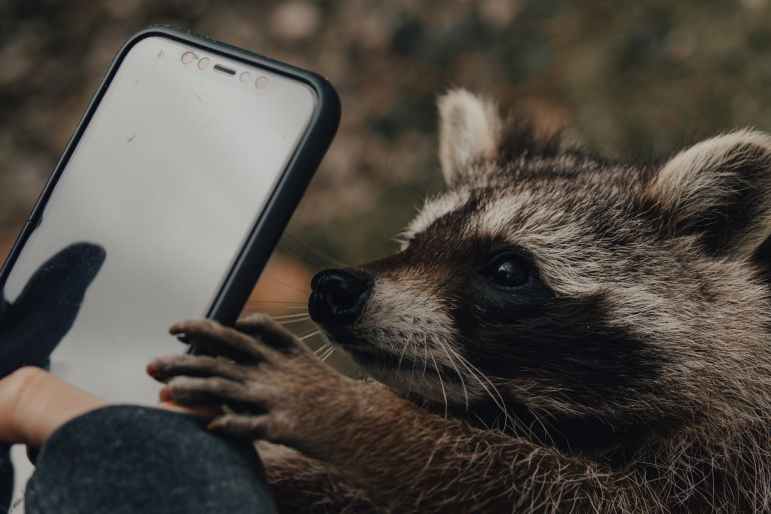
  • A dinner party, a raccoon, an affair (don’t ask me, it’s your job to make it work)
  • A parent’s first night in an empty nest
  • Time freezes at a traffic light, for everyone but the man in the third car
  • After kissing a stranger at a party, a woman finds she can no longer lie
  • Maybe it’s puberty, maybe they’re a werewolf
  • A demon finds a portal out of hell, but it empties into the ball pit at a fast-food playplace.
  • A man who can smell colors. And he’s a chef.
  • A lake, a toad, the agony of getting what you ask for

Okay–get writing. Go make something beautiful and strange.

Spring Cleaning and The Writer’s Mind

Sometimes, at the beginning of the year when I’m trying to plan out my blog posts, I will randomly insert a brainstormed title with no idea where it will lead. The above is a case in point. I love the concept of brainstorming but it often makes me look back at past Sarah with a scowl (‘whatdafuq does spring cleaning have to do with the writer’s mind, Sarah? Whatwereyouthinking?)

So now, I’m going to attempt to free-style on the topic of “Spring Cleaning”.

Photo by Taryn Elliott on Pexels.com

To be fair to past Sarah, she knew this blog would come around the time of the spring equinox which is a brilliant time to clean out homes, old clothes, ancient ideas…anything that’s not serving you, from your too-tight college jeans to the ideal that says you still should fit into those. Throw that baggage out.

At first I considered telling you to do the very practical, literal cleaning out of your laptop, files, and paperwork. Grouping together like-minded topics, removing old or already published notes that are no longer needed, and generally getting yourself a clean slate for the year ahead. But as I started to look through my own little chaos, the temper of the idea changed.

No one’s desk is probably more a mess than mine. It looks fairly ordered but the truth is, it’s a jumble of post-its, three-word ‘grand ideas’ scribbled in crayon on lunch napkins or old receipts, and seven different rewrites of the same novel that I have absolutely no reason to still hang on to. I have letters from old high school friends, squirmy notes about boys we liked and the bittersweet ones after our subsequent heartbreaks. I’ve got writing notes from conferences, random journals of poetry, thank you cards with mismatched envelopes, and the last letter my grandmother Emma sent me before she passed away. I’ve got pictures of the two friends I lost after high school and the tiny pamphlets from their funeral services. I have the fuel receipt from my first solo flight. And a certificate from my training as an early childhood educator.

I have my winning poetry from 8th grade Young Writers competitions, and the short story that lost magnificently about star crossed lovers on either side of the Berlin Wall (fuck yeah, I’m that old). And its jumbled and slung into folders like a field of wildflowers, contained in manila.

Nothing is in order, but everything has its place.

Perhaps I should go through. Let go of some of this history. Let go of the girl I used to be and the dreams she used to dream. I should stop looking to the past and wondering what I could have done, or been. How brightly I used to burn, when I was young and half-wild. Maybe we should all, let go. Clean out the things in our life that no longer look like our current state.

And in some ways, I suppose it is good. Sometimes we use these things to look back, to regret or be stuck in a cycle of ‘what if’…in some ways that can hold us back. But somethings also remind us of who we are. Sounds silly but–if you’re anything like me, and you’ve spent most of your life, trying to fit into boxes, shrink down, be smaller, be ‘easier’ to love, or be what you think people want…it can get so easy to become lost.

So maybe you read your grandma’s last letter. And your best friend’s note about her no good boyfriend, or that first draft you kept for no reason, and you let them all take you back for a moment. To the person you were, the person who was just a bit more trusting. A bit more bright. Before the world sanded down your edges and made you behave. Maybe you remember that these are pieces of you that are still in there. That cannot be fully swept away.

That you are still, even in small ways, young and half-wild.

Maybe I’ll toss the other six drafts. Maybe I’ll get rid of any napkins and three-word ideas that I can’t connect to. Maybe I’ll donate the books I know I won’t read, and let go of the thank you notes with no matching envelopes.

Photo by Anastasiya Lobanovskaya on Pexels.com

But I’ll keep everything else that makes up the story of me. So on days when I feel like I belong too much to the world and the other people around me, I can return to that girl, that wildling burning bright, and remember who I am. The girl who’s been a poet since she was 12. The girl who believed love could tear down walls on a grand, societal level. The girl who misses her friends, who promised to fill her days with the life they never got to finish. The girl who refused to shrink.

Clean up your space, but leave the layers of your soul intact. They are the story of you, and no one else can tell that story.