Updates, New Releases, and Encouragement

Good morning, my fellow readers and writers. I hope that this blog finds you well. If you’re participating in NaNo, I hope it’s going well. If you’re just trying to survive the summer, I hope you’re surviving. If you’ve given up society for a cabin in the woods, you won’t get this blog but I am happy for your new and quieter lifestyle.

Photo by D J on Pexels.com

I’m recently back from a trip to Japan and still trying to adjust to the time and the ‘normalcy’ of my life. If I could tell anyone to do anything that would influence, affect, and change their lives, I would tell them to travel. Especially to a country where you don’t speak the language. Especially to a culture half-a-world away from your own. Become a stranger. Become a wanderer. That’s where you find the kindness and humanity in life, and the excitement of getting lost outside of your comfort zone. Traveling this way helps you to understand that the best lessons come when we are at our most vulnerable and humble. Also, America really needs to step up their toilet game and their vending machine capabilities.

Photo by furkanfdemir on Pexels.com

A quick note that I will be trying to do a couple of virtual write-ins this month for NaNo, on my social sites, so follow me here: Facebook for more info on that. I’m sticking to Sunday afternoons from 2 until 3 for the rest of the month and a final one on Monday the 31st from 5-6pm. If possible, I may be able to give you some prompts, answer a few questions, and give encouragement. I’ll have to see how that all works as I’ve never done it before.

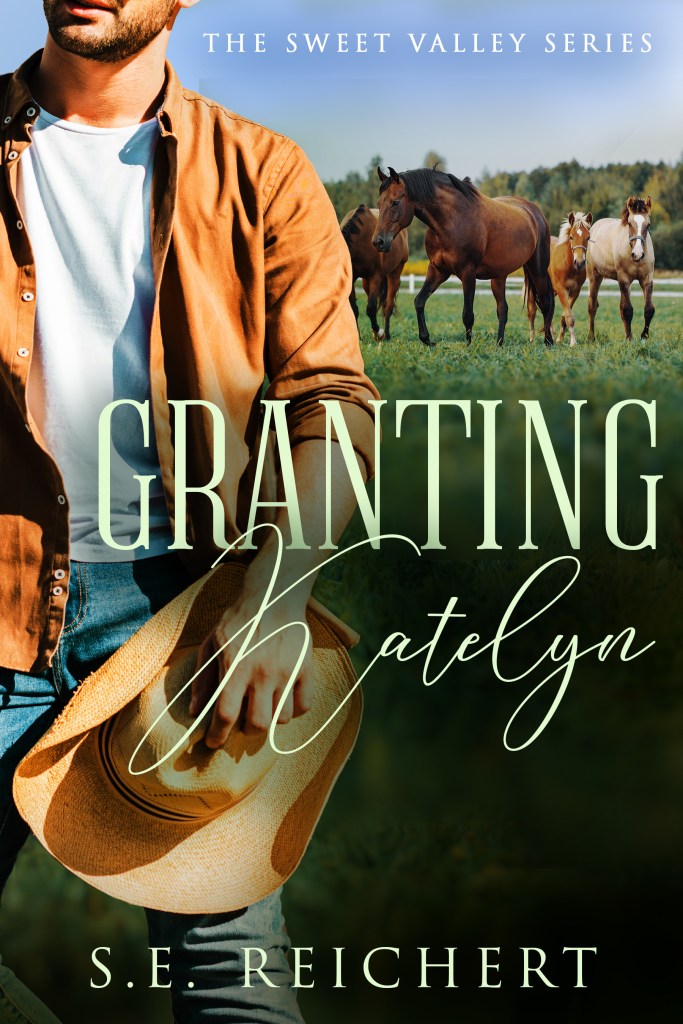
Also!!!! I’m getting to release two new books August 1st (whew, she’s a busy bee!) Granting Katelyn, the 2nd book in the Sweet Valley Series will be out along with my stand alone, sweet comedy romance Back to the 80s. You are able to preorder those through 5 Prince Publishing and online at Amazon. The Back to the 80’s book will be launched into the world at a totally rad party hosted by Totally 80’s Pizza here in Fort Collins, August 1st, at 6pm. We’ll have games, books, some readings, and maybe even trivia. Love to see you there. I’ll get you details on Granting Katelyn’s Launch as they progress.

Stay curious out there. Keep writing. And get yourself some sun and a couple of lazy naps in if you can.

Love, me.

Creativity and The Writer: Part 1

Feels like that could equally say, “Beauty and The Beast”. So many ideas of what creativity is exist. Is it limited by IQ? Is it genetic? Does it only happen at given times or is it always on the bench, waiting to be put into play? Do some people have more of it? Does it dry up?

Often, as a writer, I’ve asked myself all of these. At times she has felt like a constant companion, whispering ideas and daydreams into my ear. At times, it feels like I’m alone in the middle of a lifeless desert, not an idea or a breath to take. When the good is good, ah they high it brings. When she’s nowhere to be found, there’s not a deeper low. And sometimes it feels like some writers are blessed with a giant bag of it, that they can’t possibly use in one lifetime, while mine is just an empty plastic bag, with a hole in the bottom.

I know many things, physically, can affect your creativity so I’m going to start there. Here are some basics you ought to know:

  1. You need sleep. Sure, sleep deprivation can give you some really interesting half-cocked (i just wanted to use that word) ideas. But they’re rarely fully formed enough to make much out of, especially once you’re coherent enough. Get sleep. Your brain needs it to problem solve, and that’s a HUGE factor in being creative.
  2. Don’t treat your body like a circus tent. Eat good foods, vegetables, lean and clean protein, drink water, watch the sugar and the processed foods. Limit the caffeine (see sleep more). Vitamins, nutrients, and minerals all help to keep your synapses firing correctly and your brain clear.
  3. Cut back the Alcohol. I’m not ashamed to say I struggle with this one. Its in my genes, and I have to be very conscious about it. I’m actually taking steps towards sobriety. One glass of wine softens my brain enough to let go of my anxiety and words seem to come easier. But I’m not the kind of person who can stop at one glass usually. Because if one feels good…two would be great right? And why not a third? And pretty soon you can’t even see straight and the brilliant ideas of last night that you scribbled down are incoherent the next morning. Creativity works better with Clarity.
  4. Exercise. Might surprise you to know that the old brain needs oxygen to function. How does it get that? Through our vascular system. Want to have a healthier vascular system? Exercise. Not only does it increase your oxygen level and hit you up with a tasty dose of endorphins, it gives your muscles, joints, and tendons a lot of love and attention. I don’t care how you do it, (bike, run, walk, lift, yoga, pilates, belly-dancing, martial arts) just do it, at least 30 minutes a day. Bonus points for doing it outside.
  5. Take time away from your screens. This one is going to lead into part 2. We are an overstimulated bunch of hairless monkeys. My goddess, did they do a number on us the day social media was invented. Here’s a little hit off a fake feeling of mattering. Now get twenty thousand of them a day while you scroll through nothing but recirculated and watered down ideas. Nothing original, nothing too insightful, and please feel free to stay in your designated echo chamber. I truly believe these systems, algorithms, AI and the entire corporate conglomerate of Meta is one of THE BIGGEST creativity killers ever known to humans.

So, that’s the beginning, taking care of the basic human needs that create an environment conducive to creativity. Think of it like a garden. You can’t grow anything in a dry and poisoned patch of dirt. It needs all the good stuff to begin a healthy bunch of ideas. Next week, we’ll talk about a little more about what creativity is and what it is not, and you’ll get another good list of ways to cultivate it and use it in all aspects of your life.

Happy writing!

Crossing Genres

Good morning! Well, its been an exciting few weeks with book releases and readings, and promoting the hell out of my stuff. I’m so excited to get back to actual writing, and talking about writing. Today, in collaboration with the fine folks at The Writing Forge, I’m going to talk about crossing genres, both as an author and also within singular books.

For more check out this podcast: “Look Both Ways Before Crossing Genres

So, what does it mean to be a cross-genre writer? Well, it’s more prolific than you might think. Very rarely does an author stick to one genre alone for the entirety of their lives (I was going to say career but I’ve never actually known a ‘retired’ writer. We write up until the day we shuffle off the mortal coil as far as I know). Nora Roberts writes romance but she also crosses over into Mysteries as J.D. Robb. J.K. Rowling went from YA fantasy to Adult Fiction, Anne Rice has written everything from Vampires to DomSub, to Christianity. Hell, even James Bond’s creator, Ian Flemming wrote “Chitty Chitty Bang Bang”. So the better question is not should you become a cross-genre writer but when and how.

Photo by Wallace Chuck on Pexels.com

Writing in multiple genres can be done in one of two ways. By switching genres completely by novel or story, or by incorporating multiple genres into one project. Let’s start with the first.

So, let’s say you’ve been churning out kids books for the last ten years and you’re ready to jump into something new. You’re an established name in the genre, with a following (let’s dream big while we’re dreaming). Yay for you! But how do you go about the transition seamlessly?

First, know the genre you’re getting into. Mysteries don’t follow the same plot points or tropes as kids books (wait, do they?) Read as many mysteries as you can, gain a good understanding of typical tropes and character types for your new genre. Discover what you like and what you don’t, what works, and what doesn’t. This way, you’ll be ready to write a mystery that will appeal to the die-hard fans of the genre and hopefully make your work more acceptable.

Second, if you’re established in one genre and are jumping the creek into another, you may want to try a pen name. When people know you for a certain story/genre type, they’re going to follow you. But maybe they don’t want to read your new blood spatter fest to their 8 year old. So, establish a new name for your new genre. (J.D. Robb, A.N. Roquelaure, etc.)

However…if you are a sci-fi writer and you’re dabbling in fantasy, this is a smaller jump and you can probably keep your name. Those followers you have will probably be more lenient and accepting of your next adventure, and if you can take an established base on a new adventure all the better.

What would be the benefit of writing in multiple genres in this way? I’m so glad you asked. Here’s a bullet list.

  • Its a great way as an author to diversify your writing, get your work into different venues, and expand your base of readers
  • It can help beat boredom of following the same tropes/patterns over and over
  • It will help grow your skills as a writer. Romance writers know dialogue and relationships, Fantasy writers know word building, Horror writers know suspense. All of these skills can be honed and developed to the betterment of all your writing.
  • It makes you hard to pin down and undefinable. Frankly, I don’t like being put in a box. Yeah I write romance, I also write speculative fiction, suspense, sci-fi, and erotica. I dabble in poetry, and sink into human interest non-fiction. Don’t you put your labels on me.
Photo by anouar olh on Pexels.com

Now Let’s talk about utilizing multiple genres in a single novel/story/project.

Its slippery slope. Genre fans are genre fans for a reason. They like the predictability. They like knowing where the story is going and that it will end in a certain way. Mixing up loved tropes, taking side quests, and tripping the hero on his journey might lose you some fans. And genre fans are a huge base. I’ve even turned off a couple of readers because some of my romances were not ‘sweet’ enough. They were a little too dark for the genre. And that’s a risk I took by telling a grittier story in a genre that likes to stay flowery.

BUT the benefits to writing this way, are that you can incorporate elements of storytelling that best suit your characters and the story itself. I wrote a science fiction novel set on the rings of Saturn with time/space wormholes, and a heavy nod to literary poets. It had elements of religion, and romanticism, and social commentary, all in the midst of blaster fire and moonglass blade fights. It was one of my favorite stories to write and one of my best recieved and I think that’s because sometimes a story is just too big to fit in one genre.

Sometimes your story, is more like life. A daring, romantic, mysterious, fantasy western set in modern day suspense-filled and poetic semi-reality. And its interesting and unpredictable in spaces, and comforting and ties up well in others. And that’s why knowing the elements of each genre is important and can boost your plot line into something quite magical.

Crossing genres is, all in all, a great way to improve your writing and your reach. Knowing your audience, and understanding the different and distinct elements of your genres will help you do it in a successful and enjoyable way. I hope that you all give it a chance and let me know how your forays go.

Going Back to School: How Writers Benefit from Classes, Conferences, and Trainings

Photo by Katerina Holmes on Pexels.com

There are plenty of ways to keep your skills sharp as a writer. Last week, I covered the conference season and this post will be similar in that I’m going to give you some online resources for improving your writing skill, developing a business or marketing plan, and helping to boost your creativity. Just like conferences, a writer can easily blow their budget by trying to train themselves into success. My goal is to offer you a spectrum of options with the caveat that classes can show you how to write better, give you pointers on the business side of things and offer marketing advice, inspire new ideas, and improve your editing. About the only thing they can’t do is write your book for you.

The Long Haul:

MFA/MA Programs: These programs (Master of Fine Arts and Master of Arts) are advanced, graduate degrees that can help to help your overall exposure to the big picture of writing (MA tends to focus more on Literature and less on writing, MFA can be broken down into Creative Writing, Journalism, Linguistics, etc). In these programs you will learn pretty much everything, from plot and structure, to dialogue and character development, to grammar and editing. It will take two years at least, and the cost averages out to about $38,000, not counting room and board. You’ll read an enormous amount of material. You’ll probably complete a novel or collection as part of your thesis. Not a horrible way to go, but studies are showing that the cost of MFA programs are often not paid back in employment afterwards so–carefully think through that one.

Online Writing Courses:

A number of reputable online courses and classes are now offered through various writing groups, professional/successful authors, and university departments. The courses are less intensive than a MFA and can often be done at your convenience. They cost a lot less (some are even free) and you can often pick and chose the ones that will benefit you the most. Here’s a small list courtesy of softwaretestinghelp.com:

  1. Wesleyan University Creative Writing Specialization
  2. Gotham Writers Online Writing Classes
  3. Reedsy Learning Courses
  4. Udemy Creative Writing Courses
  5. edX Creative Writing Courses
  6. FutureLearn Creative Arts and Media Writing Courses
  7. OpenLearn Creative Writing
  8. SkillShare Online Creative Writing Classes
  9. Emory Continuing Education Creative Writing
  10. Universal Class
  11. Writers.com Online Writing Courses
  12. Masterclass Creative Writing Classes

Conferences, Seminars, Retreats

Feel free to refer back to my other post: https://thebeautifulstuff.blog/2021/04/01/a-word-or-several-about-writing-conferences/)

I’m going to offer this plug one more time, because I truly believe in this conference and because it’s completely hybrid, you can attend from anywhere in the world, participate, and get the benefits without the travel costs, having to get dressed up, or use a public restroom–winner, winner, chicken dinner. Register for this one:

WHWA Writing Conference

For this area of your continuing education I’ll ask that you explore seminars (mini conferences, or a series of five or more classes on one topic, like Novel Writing) and retreats in your area. I’m sure there are beautiful, far-flung retreats in tropical islands that are also available, but with travel restrictions, lack of funds, and a busy life outside of writing, those may not always be attainable, so do a little research closer to home. Some of my favorite retreats and seminars have been offered through Writing Heights Writers Association at a very fair cost and are conveniently located. It also helps my sense of altruism to know I’m giving my money into a local organization that turns around and helps other writers in my area.

Retreats tend to fall into two categories, those with classes/seminars and free-write time, and those with simply free-writing time, punctuated with social hours. You may wonder how effective three or four days, stuck in a lodge, with nothing but time spent writing can be as beneficial as say, a whole weekend of conference classes. Well, young writer, let me elaborate.

Classes, conferences and seminars are excellent resources for enhancing your writing and helping you learn technique as well as opening up your mind to the business side of things–just like I mentioned above. And, just like I mentioned above, they can’t write a book for you. Only you and time can do that. As a mother of two busy kids, with a couple of side gigs, and a whole household to run–I don’t always have time to write. Somedays I’m lucky to get 20 minutes in. So to have four days, uninterrupted by children, husbands, dogs, laundry, volunteering, teaching, or grocery shopping, cleaning, and yard work, just focused on my writing is priceless. I’ve finished novels in that time. I’ve written four months of blog posts and edited entire series. I’ve barreled through plot holes that I thought I could never find solutions to.

The truth is, when there’s nothing else to pull your procrastination strings, you can get some shit done. PLUS, its immensely helpful to be surrounded by other writers while they’re “in the zone”. There is an inexplicable energy that catches you up when you’re surrounded by other souls and brains focused on their art and passion. Plus there’s usually some socializing/decompression hours at the end of the day to give yourself respite.

Okay–that seemed like a lot of info and I don’t want to bore you to tears. Check out some of the ideas above this week for taking yourself back to school. When we invest in our writing, it becomes less the pipe dream, and more of an attainable goal. Good luck out there, writers. Keep me posted on your progress or if you’ve found some great retreats, classes, and resources yourself!

Listening to Our Characters

Good morning dear readers and writers. First, may I offer a huge thank you for all the comments and encouragement I received from the last post. Writer’s know what it is to get bogged down in the process, and no one is better at pulling you up from that dark, dusting off the weight of the little failures that cling to your shoulders, and giving you a gentle but determined shove back up on the road. So thank you for your advice and encouraging words. They mean a lot.

Between that last blog and this one, I was lucky enough to take Todd Mitchell’s workshop on Creativity. I’d been to a few of his classes but this one seemed serendipitous. I knew I needed to start writing again, a novel. A big project to immerse myself in, and I have a beautiful trio sort of dangling between first draft and not quite done currently on my computer. I love the second book, and that’s obvious by how close to done it is. The third, similarly has pulled me in and I’m enjoying working through the rough patches. But the first. Ah…the first. Kind of the keystone in a series…well…it’s a piece of shit.

And it took me a while to really figure out why during rewrites last year. The main character had somehow taken on the dreaded Susie Sunshine persona (probably because the concept of her was born many years ago.) So, I put her through a character-lift (like a facelift but for imaginary people without faces yet). She got a spanking new name and I roughed up her edges. But nothing in the story seemed to make sense and it felt like trying to force an incorrect puzzle piece into a million different holes that did not fit. What in the hell was wrong with her? I knew what she needed to do and the plot and arc of the book was solid.

But I didn’t believe she was the woman to live it. And I was stuck.

And then Todd said something about struggling with a novel for years until he finally sat down and wrote a letter to his main character and asked him “What is it you want me to know? What’s your story? What am I not seeing?”

For the average human reading this post, I’ve just solidified in your head what absolute insanity writers possess. What do you mean you ask your characters? You created them. You know them. That’s your brain.

But the brain is a tricky place, silly non-writer. It’s vast, and expansive and it has a million rooms we’ve never even found the doors to, let alone explored. And sometimes, characters and answers lay behind those doors. And the only way to access them is to stop trying to force the answer. (I’m planning a post on Alpha State writing so hanging in for that one). Answers com only when we calm the hell down, and sit quietly outside the door, letting go of our ego and our need to tell the story, and just listen to their story.

Sounds crazy. Absolutely, bat-shit, bonkers.

And it totally works.

I put on a meditative playlist, took some deep breaths and focused on her name. Her new name. Her newly rough edges. And I sat, with my back to her door and took some deep breaths. I closed my eyes and started typing. And I didn’t question or stop, or allow myself to think of what she was saying. I just listened to her.

Here’s what it looked like:

Hey Dani,

Hey Sarah.

So, I’ve been struggling with you.

Yeah, I know.

I want to create you

You can’t create me. I just am.

So who are you?

Wrong question

What is it you want me to know? What am I missing about you?

I’m dark.

You began so light and perfect

That’s not how the world works. Not for babies abandoned, babies with parents like mine.

What does that mean? Who are you?

I am Danika Brennen. I was left at a fire station as a baby. An orphan.

Who left you there?

A pregnant vagabond, disowned. My mom

Who was she?

An member of the High Guard,

kicked out

Are you ***’s daughter?

No, I’m Loki’s.

holy shit.

Now, I’m not going to give everything away, but that last thing she said…that was an answer I didn’t know until I let her talk to me. And it’s an answer that I can write a book from. That will help me, help her navigate through this story…to a better place. To a life she deserves. As dark as she thinks she is.

It’s crazy right? But talk to any fiction writer and I guarantee they’ve had some kind of experience with their characters talking to them, to each other, offering unwanted suggestions or criticism along the way. And yes, they’re all in our heads. But I think as humans we underestimate the expansive reach of our brains and neural capacity.

I mean what if they’re not just our consciousness, what if they’re wavelengths in a much bigger plane of existence that we’ve only just started to understand. The wavelengths and dimensions that only open to us, When we listen.

All Editing and No Writing Makes Sarah a Dull Creator

Before you get on some high horse about how editing is a part of writing, allow me to unbuckle your saddle while you’re still on it. I know that the process of being a novelist is a journey of different landscapes. The initial sunrise of bursting light (inspiration) is followed by rocky paths (writing and plotting) and raging storms (character development and killing darlings) to the darkest nights (getting stuck) and comforting moonrise (resolution the big story arcs). Then there’s editing. And it’s important, amazingly important. A piece of shit first draft only becomes a good book because of proper and often harsh rewrites.

But lately… Oh lately… I’ve been spending the majority of my time in edits for 4 different novels coming out this year.

And because it is a constant parade of fixing and rewriting, and cutting, and facing my inadequacies on the daily, editing to me feels like the endless beach scenes in The Drawing of the Three. Or slogging through an infinite desert on your way to somewhere but with no clear end in site. And though it’s repetitive you can never just let your feet (or your eyes in this case) zone out as you plod ahead. Because you’re traversing that same wondrous journey from an outside and judgmental perspective, and at least for the hundredth time and all the rocks seem to look the same, and the plot holes are huge, and there’s that lovely garden that serves no purpose so it must be felled. And when you reach the end, that moonrise? Well, it just skips forward again to the start. And you take smaller steps, sentence by sentence steps, every comma, period, flagrant and free-range POV that escaped the first dozen times. And you know this story and you’re sick of the characters and every step, every sentence feels heavier and heavier and…

You start to wonder why you’d ever want to write down another journey again.

Add to that, when you do sit down to write, you’re brain is in so much of a “Pick this shit apart and find what’s wrong with it” mode that you barely get two sentences in before you’re going back to the start of them to preemptively rewrite. The free flow of the sun coming up over the mountains looks more like a giant yellow strobe light over hills that you can no longer describe off the tip of your fingers like before.

What I’m saying is, I’ve been neck deep in editing now for months, and I’m grateful that I have so many projects coming out this year. I truly am. But if I don’t start limiting those hours of cuts and rewrites, I’m worried I’ll lose my joy in telling a story in the first place. I worry that the editor in me will take over the controls and I will be stuck in self-editing mode long enough, that I no longer am capable of telling a story. Just judging one. That I’ll be stuck in that deserted wasteland where no words are allowed out, because they don’t come out in 20th draft form.

What’s the point of this rant? I’m not sure, except that if you’re a writer, I’d love to hear how you balance out your creativity with the necessary clean up of editing. Right now, I am struggling and it’s left me frustrated, uninspired, and if I may say, more than a little disheartened. And a writer with no heart…

Feel Like Makin’ Love

You’re welcome for getting that song stuck in your head.

Last week I talked about heat index and how to define your novels for submission or how to search for the right Goldilocks-level of heat for your preference. This week, I want to talk about writing engaging love scenes in your books.

No matter the level of heat you’re writing in, the sexiness of a scene doesn’t just depend on how many engorged members you’re throwing in there.

Photo by Pixabay on Pexels.com

Wow, what a visual. Yeah, that actually makes it less sexy thinking of it…penises getting thrown into bedrooms willy-nilly. Ha, willy-nilly…ugh. Ahem, let’s move on.

Let’s get something straight right away, sexiness isn’t about sex. Heat and desire, aren’t about sex. At least not for the majority of women. (Men, if you’re reading this, get a notebook.) Sexiness is about connection. Two strangers can have sex, and people will read it. Penthouse has proven this. But if you really want someone to read a whole book about two characters, follow them through the quagmire of plot arcs and dialogue, sex is the perfectly balanced frosting on the cake of it all. Two characters that are emotionally connected interacting in a physical way, drives up the excitement and anticipation in the reader tenfold.

It’s all about chemistry. It is vital when aiming to curl the toes of your readers, that you give your characters a connection that feels genuine, deeper than surface level, and tied to their emotional well-being. Then, when you get to the point of all that delicious teasing, it makes the ‘climax’ all the better. Because it isn’t just about physical satisfaction, it’s about connecting in the most intimate way with someone who really gets you. Who loves you. Who sees your scars and your war wounds, and kisses every one of them with acceptance and care.

So if you want to up the sexiness of your scenes, establish a good connection, (even if its enemies to lovers). Find a common ground between them, a exposition of trust that opens hearts, and a deeper understanding of one another that makes the sex even better because there will be less reserve, fear, or doubt involved.

And this brings me to another point, writing good connection between characters is a subtle art that you can employ in your dialogues, body language cues, and inner dialogue (if you write that POV).

Next, depending on your comfort level, what you crave in romance, the nature of your book, or the heat index you’re working on, be honest about the sex. It doesn’t always have to be pretty. Heads get bumped, knees get scraped, giggling ensues. Don’t shy away from the human experience and the parts that make it truly beautiful. With that remember that there are a lot of senses involved in the act. Sight, sounds, smells, touch, taste. Don’t be afraid to play around with them as a way to bring readers in. How far in you bring them is up to you, but even the best closed-door scenes have an awesome build up to the point the door slams shut.

Attraction, chemistry, and desire are the tenements of any good romance, but remember that it starts with connection. Human connection, in all its glorious messiness. Putting in those beautiful messy moments will help bring your characters in a place where the love they make is a natural and much anticipated progression in your book.

Heat Index: What Spicy Pepper is Your Novel?

Photo by Rosie Ann on Pexels.com

Hands down, one of the dumbest blog titles I’ve ever come up with. But what are you going to do? We all have seasons of creativity in our lives, and sometimes I’m in the winter of title production. Today is that sometime. On to the point.

What is a Heat Index?

Great question! Well, if you don’t write/sell/promote romance, you probably don’t need to worry about it, but as it’s the month of ‘love’ or whatever made-up Hallmark holiday craze February represents to you, I thought I at least owed ONE blog about passion, romance, and how to make sure the right readers for your work find you.

Heat Index is, as in spicy peppers, a way to grade the level of sexual interaction (description of and frequency) in your books. Now, romance has a wide and varying range of heat levels. This blog will help you understand where yours falls, where you might need to edit to keep it in a certain level, and how and who to market it to based on it’s score.

Below is the breakdown of Heat Index. Keep in mind, this may vary from publisher to publisher, but in general the levels correspond pretty closely.

  1. “Wholesome”, Sweet” or “Clean” (I’m not a fan of either of these terms as it denotes that anything outside of this classification suggests that sex is dirty or nasty–and those are ‘bad’?) These are sometimes called ‘inspirational’ romances, and often fall into Christian Romance sub genres. They might have kissing, holding, etc, but rarely is a bodily fluid exchanged and the romance is built heavier in the emotional/spiritual attachment.
  2. “Sweet”, “Closed Door”, “Off The Page”, “Gentle”, or “Quiet”— This level of heat says that there is sex in your novel, but it happens without the reader being included. The characters may kiss, fondle, make out, and get excited physically but they will shut you (the reader) out in the hall while they get down to business. Mainstream women’s fic will employ this index more often, and there’s something to be said for leaving a few things to the imagination of the reader. I’m not sure about the terms “gentle” or “quiet”–as we don’t know what’s going on behind that door. Ha. Sorry.
  3. “Sensual”, “Sex on Page” and “Minimal Description”–This level the readers definitely know that sex happened, as it’s written down, but not poured over. Minimal description can mean an author uses euphemistic language, very basic terms and ideas, or even is more mechanical in description. They sort of “beat about the bush,”….he…heeheheheheha. Ugh, sorry, I had to. Nobody else laughing their ass off, just me? Ok.
  4. “Sexy”, “Sex on Page” and “Explicit” also “Erotica”–In other words, if you’re at your kids karate/dance/hockey/ soccer practice, it would be wise to not let anyone read over your shoulder. These scenes get as close as any good OB/GYN or proctologist might (but in a less clinical way). Sometimes the lines between 3 and 4 are more blurred. My rule of thumb, is that if it makes me blush, feel warm all over, and a bit flustered after reading it (or writing it), it’s probably a level 4. What constitutes “Sexy” might be more based on the female main character’s exploration of fantasy. “Erotica”, has much more to do with the physical aspects of romance and can be broken down by ‘special interest’ (ie bondage, monogamous menage, reverse harem etc.). In both cases, these are not “letters to playboy” books, even with more descriptive love scenes, they still have emotional attachment and a satisfying (nearly said ‘happy’) ending.

Well, there you have it. If you write romance, and especially if you’re looking to query your manuscript, it helps to know what you’re selling and if the publisher is a good match. If you just like reading romance, look for these keywords (often in online descriptions and sometimes on jacket covers) to make sure you’re getting the romantic endorphin hit you crave most.

Happy Reading!

A Year in Review

Photo by u5f20u6210 on Pexels.com

Two days until we put to rest 2022, and I’m currently engaged in a battle with myself, whether or not this was a year of positive net.

It certainly was one of the most interesting ones I’ve survived.

On the bright and beautiful side, I pushed myself farther and to greater heights with my writing than I ever had before. I took chances and got out of my comfort zone, and thank goddess for that. Because those investments in myself and explorations into new experiences led me to some of the best connections I’ve made, the dearest of friends, more published pieces I’ve had in the last five years combined, and a publishing contract with a company I believe in. https://www.5princebooks.com/sarahreichert.html

Not only that, but when I put my fear of rejection aside, and made a deal with my writing bestie (Rebecca Cuthbert) I succeeded in my goal of 100 rejections for the year (along with about 15 acceptances that I’m so grateful for). My work was featured in awesome and quirky journals and sites and some even were accepted in more traditional venues. I co-wrote my first romance with my wonderful friend and mentor Kerrie Flanagan . I learned a lot about myself as a writer, how to manage my time in a busy world, how to write in different genres and formats, and how to shrug off the worry of failure. I learned that I can do things. Hard things. New things. Interesting things. Things I never even imagined. I learned that I can do whatever. I. Set. My. Mind. To.

On the darker side of things, I was, and still am engaging in a battle with my daughter’s worsening OCD. It is a constant in our lives and I am in a cyclical ride of refilling and emptying out my patience levels, trying to find and give to her compassion on the daily, reassurances to the virulent voices in her head that tell her on repeat horrible things will happen if she doesn’t follow its asinine rules. (More Info Here) I have to put aside my own anxieties and depression, I have to square my shoulders and tuck away my own mental strains so that I can be a solid rock for her during this ongoing storm. In turn, these pressures have left me very little space for other people’s bullshit, and maybe that’s a good thing.

I’ve become aware that I no longer tolerate the levels of injustice I used to. I no longer tolerate the levels of disrespect and flagrant wasting of my time that some people think is acceptable. That I’m not going to let assholes go on being assholes without telling them they’re being assholes. And I’ve come across some doozies in the last few months.

Not for the first time, I got a taste of gender imbalance and misogyny in my outside-of-writing-profession. It’s disheartening, especially, when it comes from men in a position of trust who have been my supposed ‘family’ for so long. It reminded me that the imbalance of power in our culture is always in play, no matter how safe you think a business or place is. I watched as a world that was once my sanctuary turned into a dark place where people I once trusted, threw dirt on the grave of my autonomy and denied my worth as a human being.

I’m still battling with if I should stay at my instructor position for the sake of the children and other females in the school. Is their instruction and safety worth more than having to put up with the culture that would allow and overlook frightening behavior and disrespect? Still battling over that one, and I guess if I give myself time to think (as I’m doing this week from social media) I will arrive at the solution that is the best for myself and the people I care about most.

But I have my writing, and I have my friends, and I have people who have stood by me and loved me and shook their fists for me when I just wanted to curl up and die. And that’s not nothing. Years like this teach you who your allies are. And who you should not put your faith or your respect in. They teach you who will stand by your side, and who will throw you under the bus, for their own personal gain. And that knowledge is not nothing either.

So as you look into the new year, I urge you to not forget the lessons you’ve learned. I urge you to write your own story. One worthy of you. I ask that you take leaps of faith, and do things outside of your comfort zone. I ask that you let yourself get rejected and keep moving forward. I ask that you let loose your imposter syndrome and know that you and your art are more than enough to be shared.

In this new year, surround yourself with people who put your safety in mind and value your worth. I urge you to stand up for the friend in need of some fist shaking. I urge you to not put up with anymore bullshit, especially the hateful, uneducated, dehumanizing kind. Use your heads, use your hearts. Build this year, 365 single days at a time, and find something at the end of it that has made you outgrow a little more of the old you.

Choose what to carry, and what to let go. Some things are too heavy, but more than their weight, they don’t belong to you. They are not yours; they serve no purpose to you or to the greater good of the world. They are merely weights that keep you from getting to where you’re meant to be. So know when to let them go, and don’t berate yourself for leaving them behind. Sometimes the absolutely strongest thing we can do, isn’t to keep holding on. It’s in the letting go. So you will have both hands open for the next, better opportunity.

Writing Frequently Asked Questions

Given how heavy last week’s blog was, I thought I might lighten it up a bit. In the course of my career, as soon as people know I’m a writer, I’ve gotten a lot of questions, ranging from the concerned “What did your parents do to you?” to the outright rude, “Oh, so what restaurant do you bus tables at?” But some are genuine and interested.

I’ve picked out a few questions not just to give you my personal answers but as a way to think about your own journey as a writer and why having the answers to some of them is important, whether you get asked or not.

Writers Frequently Asked Questions:

How do you come up with your ideas?

I dunno man. It’s part magic and part just paying attention. Sometimes it’s a character from my childhood that I want to reformulate and expand upon. Sometimes I’m watching a nature show on octopods and flip the station to an expo on genetic research. I will say this for the good writers I know. Ideas are everywhere, and it’s all about paying attention to why each story, article, factoid, or fungi is interesting and how they could be moreso. Even though tropes and genres rarely change, the situations, characters, and actions are an endless pool of inspiration.

I’ve written about space captains and cowboys, Krampus’ nephew and Bacchus as a modern-day AA member. I’ve written about a nurse with OCD and a child who was the reincarnation of Peter Pan… Ideas are everywhere. Go on line, find prompts. Read the newspaper. Watch people. Read. Think about what makes a good story—a character you care about, an impossible situation, high stakes, dynamic growth. And give your brain down time to think and daydream (walking the dog, in the shower, at your kid’s soccer game—don’t look at me like that it’s okay to zone out for those once in a while too). Play with the What-If and don’t self limit.

Also—buy a small notebook and a pen (or you could use your phone, ugh) and write down things you notice, articles that were interesting, conversations you overhear, even the strangest ideas from out of nowhere. You never know…

How many hours do you write a day?

Pshhh… Listen, if all I needed to do in a day is write, I’d probably say at least 4 to 5 hours or more. But I don’t know any of us who don’t have some other job, a family, or otherwise adultish tasks to complete. So, I’m going to be completely honest and watch die-hard writing theorists gasp in shock.

Somedays I don’t write at all.

*gasp! How does she even call herself a writer!?*

Somedays I’m so plagued with class planning and familial obligations and oh-my-god-whats-growing-in-the-bathroom-sink, and teaching, and making dental appointments that I don’t get to sit down at my computer until late in the evening when my brain is effectively mush.

But it’s not always about the quantity.

Because sometimes on those nights, in the span of twenty minutes before bed, I can bang out three or four solid pages. Sometimes I only stare bleary eyed at what I wrote earlier in the week. The point is, it isn’t about the hours and hours of singularly devoted time you put in. It’s about concentrating and working with focus for every minute you do get and making it impactful over time.

So—on average in a week, I maybe write 1-2 hours a day. If you factor in editing and rewrites and marketing and advertising my stuff, that probably gets bumped up to about 3. It’s not as much as some…but for now, it’s what I have to work with and I capitalize on all the moments I can.

What are you working on now?

I’m not like other writers. I’m a goddamn, flighty scatterbrain. So my answer is…complicated *wheels out an old chalkboard packed full of a complex theory, diagrams, and stick figures*.

At any given moment I’ve got multiple projects and I’ll tell you why.

Because I get bored. And sometimes I’m tired. (hahahahaha—ah…that’s funny because I’m ALWAYS tired)

I’m not saying I can’t sit down, focus, and write a novel, end to end in about a month. I can. I have. I usually reserve all of November to do that. Or on projects with co-authors as there are expectations and deadlines to meet.

For me, having multiple projects that I enjoy helps to keep me engaged and inspired and lets me cater my writing to the state of my life that day.

Maybe I only have twenty minutes. So I write a poem, or submit a poem. Or both

Maybe I have an hour, but I’m not feeling very fictional—I work on my weekly blog or catch up on emails from other writing projects. Or get a solid chunk of editing done.

Maybe I have an uninterrupted afternoon, I’ve been daydreaming about my characters and what I can do to torture them…I’ll bust out a few chapters on my novel.

Being a writer is a career best done when diversified.

One, we learn how to write better when we give ourselves more variety.

Two, we will burn out less often when we can take breaks from something that’s got us stuck—AND, AND AND…sometimes being able to put down ‘stuck’ projects and work on something else will lead to that magical AHA moment of unstuckness, because your brain has stepped back and can look at it without so much intensity.

Three, in terms of getting paid? You might love your novel, but its your magazine articles that are paying for your PB and J’s while you wait for the next publisher to realize how amazing you are (and you are amazing)…so have something more lucrative if you want.

Four, I hate to say it, but marketing, editing, and submitting count as writing. It’s the new and best chance way to really make it as a writer these days.

So—what am I working on?

3 novels: one in first edits with a cowriter, one is the first in my new urban fantasy/romance series—heavy rewrites but mostly formulated, one is my Kindle Vella romance that I’m writing, frighteningly, chapter by chapter (I’ll plan that out better next time)

A weekly Blog post

3-5 Poems a week

The new Beautiful Stuff anthology

1-2 Submissions a week (leading to new poetry and flash fiction pieces)

Edits for some accepted short stories

Soon: Edits for my first novel coming out with 5 Prince Publishing

You make any money at that?

No.

Not at all.

After editing, marketing, and website fees are factored in, I’m actually, constantly, in a hole. In fact, I love writing so much, I started working a part time job just to afford it.

But this is important to know about yourself as a writer. Why do you write? For the money? Because there are ways to do that—freelance, magazine articles, content writing, textbook editing. But you should also know that getting published right away, with a good book deal and royalties is not common. It isn’t impossible but you’re going to have to work for it.

My suggestion is to write because you love it. Because if you do that, and you throw it out into the world to see if it lands with someone, and it doesn’t get picked up, then at least you loved what you did, enjoyed what you made, and created something that was meaningful. And that’s not nothing.

If you don’t enjoy it and try to meet a trend, or publish some MFA tome that you hated every minute of, I honestly believe that the chances of it ‘landing’ and being picked up, are less.

Stories with heart and passion behind them, are just better stories.

Do you get writer’s block?

I go back and forth about those two little words. Yes, I believe that writers can get blocked. but I prefer to call it “Life Blocked”.

Writing doesn’t get blocked. We block ourselves. We get in our own way. Life gets in our way. The other worries, concerns, judgments, conflicts, and comparisons surrounding us get in our way. The writing is always there, just waiting to come out. It’s not beyond our reach. Until we put up walls of insecurities and excuses in our own path.

Somedays the inspiration isn’t there. Write anyway (see my answer from above about switching up projects, doing something that is still writing but not what’s got you puzzled). Somedays you are burnt out. Take a day off. Watch stupid movies. Take a nap. Keep your hands off the computer until you’re gnashing to get back to putting words down. Writers forget that inspiration is always there, you just sometimes have to clear out the path before it will flow. That might mean writing that scene you’ve been dreading until it turns into one of your favorites. Or sitting in the chair, writing the worst shit you’ve ever written nonstop for thirty minutes via a timer until you realize that it’s not all bad and that you were just afraid admitting that we all write shitty stuff sometimes.

Don’t believe in writer’s block. Believe in normal human emotion and limitation, give yourself grace but don’t give yourself excuses.

Where can I find your work?

Always know this answer and, if possible, have a card with your info on it. You can find my work on Amazon, libraries, in some journals and newspapers as well as on my website. www.sarahreichertauthor.com (and yes, get a website)

How do you finish a book, I just can’t!

How do people climb Mt. Everest? How do people raise children? How do people retire comfortably after 45 years of work?

One step at a time. Always forward. Never giving up. Pause if you need, catch your breath, remember why you’re putting in the work, eyes on that distant horizon and keep moving. You will get stuck. You will want to quit. There will be stories you do have to quit or rewrite completely. Just don’t stop writing. One page a day. One sentence. Six chapters. It doesn’t matter. People who don’t finish their books have let the world win. They let their doubt win. They let the aspect of editing and cutting out what wasn’t working win. They let the fear of finishing a book and what that might mean for expectations on them win.

Don’t let fear or hard work stop you. Just write. Because you love it. Because you love the character. Because you love the journey. Because you love being lost in that world. When it gets hard, shift course, skip over the dark and come back after you’ve written through some light. There are a million ways to quit. But there are at least as many to persevere. Find what makes you keep going and do that.