Fear of Failure

“A thinker sees his own actions as experiments and questions–as attempts to find out something. Success and failure are for him answers above all.”
― Friedrich Nietzsche

I know that I’ve talked about failure before (mostly because I’m kind of an expert at it), but today I’m looking at the fear of it and how that can affect us, on not just an emotional side but the physical as well.

The human brain is wired for survival. Which means, its really good at flooding us with chemicals to help us outlive the tiger in the grass. It gives us a healthy fear of risk, so that we can live another day to make fire, hunt and gather, and make more big-browed babies. The problem is that some of the deep seated responses and reactions are no longer as useful in our present day. So often, our overstimulated brains are inundated with stress-response chemicals at every little infraction. Boss angry? Jerk cut you off in traffic? Partner says ‘we need to talk’? All of these things can cause an immediate fear response.

Sometimes it’s still helpful, but on the whole it shuts down our ‘thinking’ brain which is a much slower, more thoughtful contributor to our actions. What does it have to do with failure?

Let’s talk about the concept of ‘worst case scenario’. All the mom’s in the crowd know what I mean. You’re child is playing on the playground, but you’ve already mapped out every sharp edge, every eye-poking branch, and every potential bully. Because we’re wired to look for danger and to prepare ourselves for the worst things that can happen. Even if they never do.

Switch over to that manuscript, or poem, or article on your computer that you’ve been working and reworking, and fussing over for years. You have a genuine fear that if you let it out of your sight, it’s going to get poked in the eye with a sharp stick, or fall off of the faulty ladder and break every bone in it’s body. So you keep it safe, you keep it to yourself.

Can you imagine a kid that never, ever left home? That never stepped out, that never met anyone else? That wouldn’t be much of an existence and the world would miss out. Unlike your own child, your writing will not die if you expose it to some danger. In fact, it’s through this ‘danger’ that it will grow, learn, and become better.

So, when you’re trying to decide about submitting, or putting your work in a critique group, remember that its normal to feel apprehensive but that the point of using our voice, of writing what we love, is so that we can share it. And the worst case scenario is really that someone else doesn’t like it. Here’s a little insight-it doesn’t matter if they don’t. If they have good feedback that makes sense and would improve it, great–but don’t let the fear of not being instantaneously accepted keep you from trying. Every work is not for every body. But you won’t know which body it will speak to, if you never let it out.

So–go get ’em. Take that piece to a critique group, give it to a friend to read, submit it to a magazine. Just don’t let the fear keep it (and you) in a cave.

Ah, Buckle This…A Pantser’s Guide to Buckling Down and Plotting

They say we are divided, us wily writers. Those creative fluffs that let the words burn through them and damn the story arc consequences until the laborious editing process. Those starched-collar spreadsheet architects that engineer the life out of a story until it can be laid out like a mathematical equation. Two ends of a long spectrum encompassing how we all go about writing our stories.

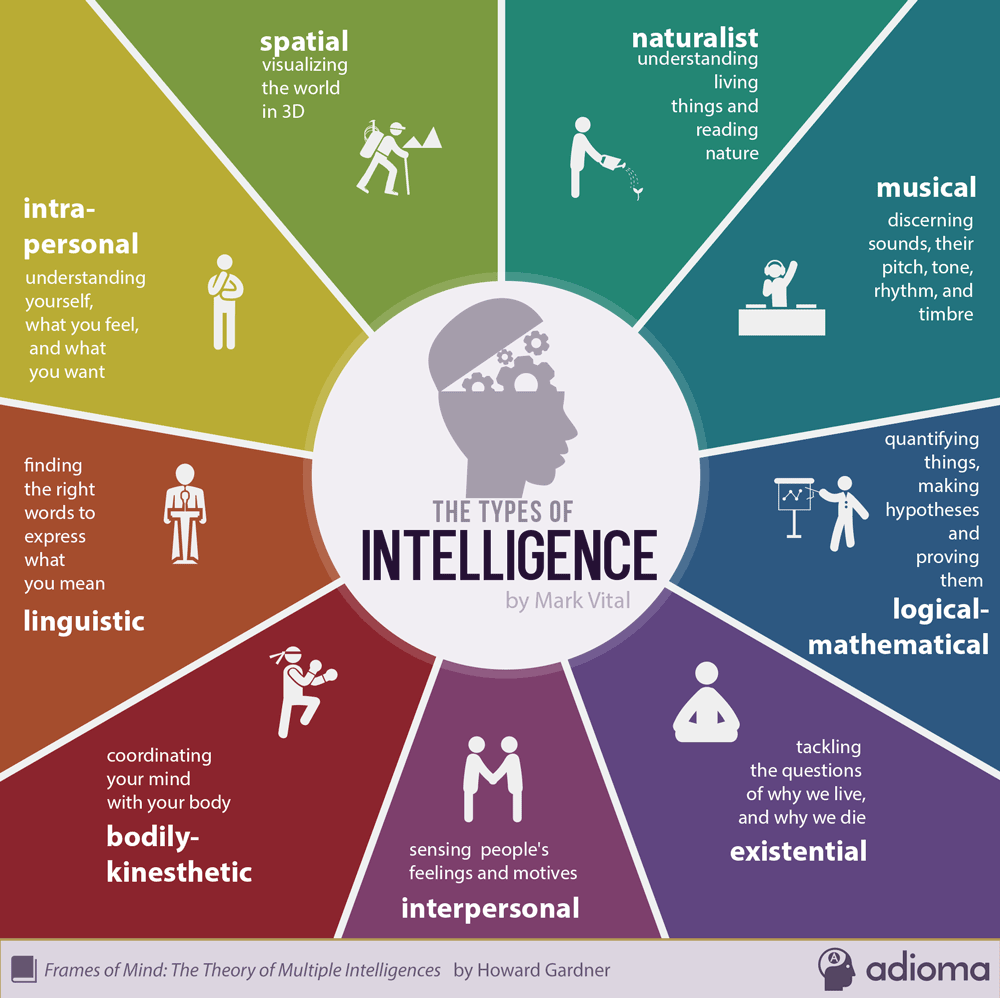
Whether you’re on your first novel, your seventieth short story, or your tenth attempt at nailing flash fiction, we all have a style that suits our particular intelligence. When I use that word, intelligence, I’m not talking IQ scores or any other accepted standardized measure of smarts. I’m talking about the way we each learn and create. Some of us are spacialists. Some of us are naturalists. Some of us are mathematicians. Some of us are socialis–uh…well not ‘socialists’ in the negative way that gets a bad wrap these days…social butterflies? We all have strengths in different areas of “smarts”. (pssst–check out the cool infographic from blog.adioma.com–based on Mark Vital’s work. If you have an extra minute, look through it and see where your head’s at)

HOWEVER, each one of us–and I’m making this assumption because you’re reading a writing blog–are gifted with some level of literary intelligence. Storytelling. Weaving words. Building worlds with letters. So let’s start on that common ground and get to know why plotting out your story, no matter how fly-by-the-seat-of-your-pants-writer you are, will help free up brain space for better writing and save you a literal shit ton of time in editing.

I’m a pantser. I’ve always been that way. It’s a creative deluge in my brain on many days. Hundreds of thousands of words, hundreds of characters, plots galore. ALSO– at least six unfinished nearly full length novels, countless ‘story-starts’ as I call them, and plots that have fizzled simply because the fire burned itself out when it hit the cliff of not having a plan.

If you are on my side of the spectrum, how do we avoid the graveyard of fizzled projects, laying stagnant on our lap tops?

Well, we simply need to learn to buckle down.

OK, OK, COME BACK!

No one shuts off Billy Idol

Jesus, I’m not some pastor dad from a bad 80’s movie, trying to tell you to shut off the Billy Idol and get a real job.

I’m just saying, as we mature as writers we can still have fun, and be responsible (I feel like a “The More You Know”, “after school special” moment coming on) to our stories and characters.

When I say buckle down, I’m thinking more in terms of a roller coaster. The buckles keep you secure while the ride still thrills and delights.

Here’s how I balance out my willy-nilly need to write untethered and the reader’s need to have structure (yes–reader’s need structure…what happens on the roller coaster is fun, but they don’t want to fall to their deaths on the first loop-d-loop)

  1. When you get your idea (character, plot, situation etc): Write the hell out of it. I always think of them as scenes. I imagine situations or characters that play out in my head and I just write without self-editing the movie in my head. this can be a couple of pages, up to even 10-15 pages of material. Once I feel, like this story/character has potential and I want to know more about them, that I want to invest book-length time and effort into them, I then…
A River Sleeps Through It.
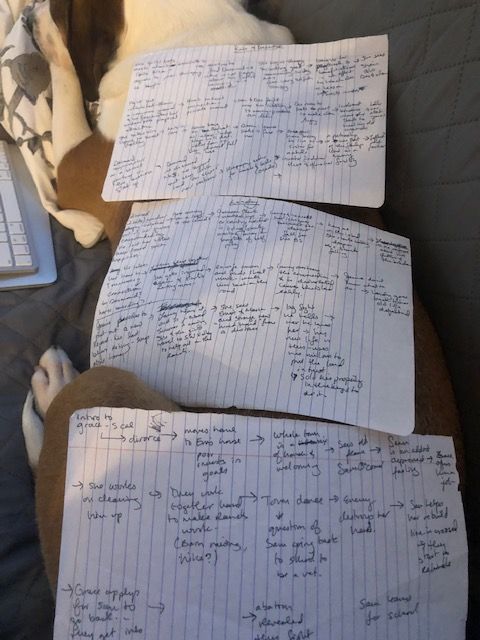
  1. Create a loose story-line. Usually on an informal notebook page, turned sideways. Some people use graphics and spreadsheets. I know myself. If I started doing that it would turn into flashbacks of Anthropological Research Methods and my only C paper…ever… ew, statistics David. That would take all the joy from it for me. Like strapping into a roller coaster with seven belts and having the cart inch along at a safe three-mile-an-hour speed. Don’t fence me in, Excel.
  2. The story line doesn’t have to be crazy detailed. But it should have an act structure. Sure, I could dictate (*snicker* dic-tate) that it be a hard-line three act structure with appropriate crises and resolution points. But some stories require more, (rarely less). If you went through step one above, chances are you have a pretty good idea of at least the beginning and end. You know what your character wants and if they get it or not. The tricky bit is in the center and that brings us to this…
  3. Plotting is important because it will help you get through the doldrums of the middle, where most novels go to die. Having some definite ideas about how crisis points build, where and when they come to a head, and how your character changes afterwards will help you know what to write next to keep the story moving in the right direction. Within that outline, is still a great abundance of wiggle room, so don’t get caught up in specifics when you draft your outline.

Well, I think that that’s all I’m going to torture you with today. You might find, by starting with this simple diagram you feel more comfortable elaborating on it, adding plot points, character transition moments, and secondary or series arcs into it. Good luck out there, pantser. Buckle up, writers. It’s one hell of a ride.

Photo by Dana Cetojevic on Pexels.com

What’s The Deal, Brain?

I’m normally a prolific writer. Like…I can put down 2,000 words plus a day when I have time and am in the middle of the glorious magical lapse, where time ceases to exist and there is only writing. But of late, that space is hard to find.

Now, to be fair to myself, I did just get done with a big project for my writing organization as well as helping to put on a conference. The kids are home right now, and there have been a lot of to-do’s in life. All of those excuses aside, when I sit down to write, it’s less a raging waterfall and more a sad little trickle, if it happens at all.

At the beginning of this year, coming off a year of publishing five books, I told myself that the main goals of the year would be learning and teaching. I would take classes, I would teach classes and give my brain a break from the writing, and especially, editing aspect of what I do–at least in terms of publishing goals. But I think I did myself a disservice.

By not writing consistently, at least a little everyday on various projects, I think I’ve lost some neuro pathways. I’m having a hard time with my focus, with my word count, and with that magical blossoming of new ideas. But is that all? Because I’m pretty fucking loopy these days. Like can’t concentrate, I’m tired all the time, I’m crabby (granted the world is a shitfest currently), and often depressed.

This is where the post gets a little weird, but I encourage people (men, women, and everyone between and along the spectrum) to stick with it.

Let’s talk about perimenopause. (Ew! I know, but shut up and listen) Brain fog is real, ya’ll. It also means night sweats and if those don’t keep you awake, the random brain and body signals being sent will. Less sleep equals…even more brain fog. I’m struggling to find balance, and focus, even though I haven’t changed any of my normal dietary, exercise, or life practices. All this to say, sometimes, life and biology don’t work with us. Sometimes we have to find new pathways and methods to do what we love.

Right now I’m researching it. I’m trying to eat healthy, let myself rest when I’m tired, and (despite also still teaching and learning this year) I’ve started writing again. A small, simple and sweet little book that’s not requiring too much investment as of yet, because I need to keep practicing, but I also need to keep it enjoyable, and not too convoluted for the brain cells that are already fighting strange hormone dips and tricks.

I know I’ll get through this, I’m looking into therapies and other things that can be done. Because I’m committed to managing my health and I’m committed to my creativity. Even if that means (as a woman and isn’t it ALWAYS the case) I have to work a little harder to find that balance. I’ll keep writing, a little each day. I’d rather be stuck in the traffic going slowly in the right direction, then pull of the road and never get back on.

Take care out there kids, and bring a fan. It’s going to get hot randomly.

Poetry 4-10-2024

I’m ten days late to Poetry Month. So, in penance, I’ll be posting poems every blog this month and a few more on my socials. Because if the world needs anything right now, It’s poetry.

Here’s an odd little collection. Read, sift through, taste them on your tongue, roll them over your neurons and let them…sink in.

Poem Speaks

She scribbled me down
in the depths of anguish
The sharp lines that cut through
conventions of writing forms
and cursive norms

uncaring of limits or margins
for there were none to her suffering
no lines could contain
the horror that poured
fresh blood on the page

She died on that page, over and over
for nights on end
awash in loneliness
visions of failure
longing for the final epilogue

and all I could do was trail behind the pen
powerless to stop the deluge
helpless to stop the stabbing wounds
of ink and metal
I was merely the blood spattter
the aftermath

sometimes a river of words
flooded over with her tears
until she lay spent across the page
a traveler unable to cross that river
unable to battle the current
but unwilling to stop fighting
for safe shore

I loved her every word
her every dark thought and
the possession of her passion
that overtook those nights

Because at least when the damaged words flowed
and their messy calligraphy
misspelled itself across the page
there was breath to her

there was fire within
and she burned bright

in the blackness of a cold world
there was enough fodder of love to suffer
to ache
to ignite

The pause of me meant the death of her
the blank page was a heart
too weary to go on
a silent pen was a life ended

I persisted in the days when I was her written world
survived while she lived
in all her aching splendor

When she lies still,
pen laid to rest against desk
I will only breathe
if her words pass through
new eyes, ride across new tongues
I will be the fire she leaves behind.

S.E. Reichert
Tiny Speck Wanderer

Hey, tiny speck wanderer,
no more than a bird’s heart beat
A flutter of space dust,
careening out of control
headed into the black abyss
along with all the other
stardust heart beats.

What’s one head of a pin
drumming on a thimble mean
to a galaxy of celestial beings?

Don’t you ever feel small?
No matter to your matter, at all?

The moon takes up a quarter’s space
to those tiny bead eyes
Jupiter—the mighty giant
just a hole in the dark night’s skin,
pricked by needle tip.

Yet there you spin,
the world in orbit around you
The cares of your heart
the temperature of your feet
the hunger or fullness
weight or lightness in your belly.
The love worn or tossed away,
Suddenly the concern of the cosmos.

Tiny speck wanderer
The universe beats for you.
in the petite coils of your
Underrepresented brain junk.
A flutter of space dust—
with universal ego.

S.E. Reichert
Untitled 1-24

I swing from suicide
to bird song
in the hair-breadth
of a star

one shade dark
now light
but...

When I have purpose
the pendulum halts
the need for center
a string of balance hangs
my sanity
and...

When unrequited and impossible love
teases the fluttering edges
of this tattered heart
I forget that I want to jump
off a bridge
in the small moments of
polite conversation
so...

Even when
its all just illusion
the empty purpose,
and impossibility of love
the light from a star
billions of years ago
now dead and gone...

They are the precarious
threads of hope
from which I swing.

From Beneath A Pile of Tissues

Good morning, Gentle writers.

I hope that this blog finds you well and in good health. Over the weekend, I acquired a…virus? And what had planned to be an ambitious weekend, filled with a long-run in preparation for a half-marathon, finishing up my latest Vella, and reworking my two-act play, became the sad potato of me huddled in bed. I don’t get sick often. Certainly not the kind of sick that forcibly dunks me beneath the unconscious depths of two-hour naps. I get frustrated when my body does this. At one point, I even took my laptop to bed, determined that I could let my body rest and my mind could still function.

Brains don’t like fevers. That’s what I’ve learned. And the longer and stronger that fever, the less coherent I was. My brain got frustrated with me. It quickly became apparent, right before I was knocked in the head by the flu-fairy with a large sleepy stick, that nothing I wrote in that state would be worth a damn. So…I put my life aside and gave myself the permission to sleep.

Sounds silly, huh? Just sleep when you need to sleep, you don’t need “permission”! But when you’re a mom, and a woman, and a go-getter, and a do-er…it’s about the hardest thing in the world to grant yourself. Especially to do it guilt free. I lost space and time and the kids were just fine. The laundry still got done, the world did not fall apart. How little grace we give ourselves to rest, I thought, in between workshops of unconsciousness.

Know the best part? Besides the tripped out dreams (holy revisiting of homework-being-late paranoia)? I realized how much I really fucking love sleep. I realized how little of it I actually get in my day to day. I realized that I average about 4 hours a night. And that’s maaaaaybe not enough. I realized that after a day of sleeping, the twenty minutes of writing I did get at night was a lot easier to do.

So here’s my advice for the week. Don’t discredit sleep as a writer and a creative. You may be a super lark or a tenacious night owl, but if you’re not getting in the repair work that only sleep can do, not only will you likely catch more colds, but your brain won’t be its wrinkliest. And a wrinkly brain is a…is a…where was I going with this? *checks temp…feels sleepy* The point is, rest helps you rebuild, it also lets your brain play and take a few hours off of the stupid demands of reality. Play for a brain, translates to creativity and more writing for us.

I’m going to go blow my nose and take a nap. Take care of yourselves and I’ll *yawn, sniffle* see you next week.

Habit vs. Muse

If you’re a writer or a creative of any kind you’ve known the sweet kiss of a muse. Sometimes it comes skipping through your bathroom, mid shower, and smacks you in the back of your shampoo-frothed head with a bat. Sometimes it tickles your ear, an errant breeze, while you’re outside waiting for your dog to be done with their business. Sometimes it meanders through the crosswalk, wearing clown shoes and a rubber duck hat while you’re waiting for the light to change. Whatever and whenever it hits you, its like the lighting of a match inside of your cold little cavern of a brain and its…brilliant.

With any luck, you’ve stashed pens and paper, notebooks, post-its, cocktail napkins and chocolate pudding in odd and disconnected places to jot down what it’s trying to tell you. Or I guess you could use your phone (old person eye roll). The point is, the muse is a beautiful part of what it means to be creative.

The trouble is…It doesn’t really exist.

A moment of silence for my former, favorite imaginary friend.

You see…”creatives” don’t have more encounters with “the muse” because we’re slightly unhinged and floppy in the gray matter (I mean, we might be, but that has very little to do with inspiration, and probably more to do with preferring to be in a state of la-la land over the past and current hellscapes).

We become ‘amused’ because we spend time building good habits pertaining to our art. Ideas are like seedlings, habits are the fertile soil. If you’re not building up healthy and rich (worthwhile not monetary) habits, there will be fewer little ideas sprouting up.

So what are these habits, Sarah?

Well, for one, you have to write.

Duhhhh…. Okay, I know that’s a easy pitch. But it’s really not that simple. So many of us simply won’t sit down until we feel inspired. Or we PROCRASTINATE with every other conceivable chore and ‘have-to’ before we sit down to write. Or we may sit down, but we stare at the cursor blinking or distract ourselves with ‘research’. Decide the baseboards need dusting, or the dog needs its ears cleaned. There are a billion ways we avoid it. I do too. And constantly I ask myself why.

*Side Quest* It’s because of fear. Usually. Fear that what I write will be shit. Fear that it will be really good and I’ll fall in love with it and lose myself for months and no one else will love it as much. Fear that what I write won’t lead anywhere. Fear that I’ll mess up my grammar, my POV, my plotline, my characters, my punctuation. Fear that it won’t be good enough. Fear that I won’t be good enough. Even with books out. Even with publications and awards. That old fear is a nasty briar patch to the rose garden of my work.

But habits are nothing to fear. At best they’re comforting, at worst, they’re droll. You can set something as simple as…

I will write for twenty minutes five times a day. Or I will sit my ass in my chair everyday at 5:30am and write for two hours straight. Or I will finish one poem a day. I will write three flash fictions every afternoon, or two ten-minute plays a day.

And then you sit the fuck down. And you write.

Its just that easy and its just that hard. But thats all it is.

And sometimes you will write shit. Sometimes you’re going to spend a whole day or afternoon or month on a project that just doesn’t work out. Sometimes it will be too raw or hurtful to share. Sometimes your POV will be atrocious and you’ll ellipses your blog to death…

But here’s your consolation prize to all of that:

Ahem…NO writing is bad. In every word, sentence, scrapped character or ridiculous poem, there is a certain fluency. A repetition. A practice. Bruce Lee didn’t fear the man who knew 10,000 different kicks, he feared the man who had practiced the same kick 10000 times. Because practice leads to progress…and closer to perfection (though who really wants that bullshit, it’s boring.)

Habit will sustain you, even when the muse has left to find some other crosswalk or doggy doo pile to traipse around. And with those designated times (habit) you will train your brain to settle in and do the work when its time. And that work creates fields. Rich and good fields, that you’re tilling and watering, and sprinkling shit on. And things grow there. Things you didn’t even know were laying dormant. Ideas, new directions, new thoughts, new characters, new combinations of words, or exciting adventures. The lushness of a garden well tended.

So here’s my advice. Don’t sit around waiting for some finicky tart in clown shoes to lead you to the next great idea. Sit your ass in the chair, open your notebook or laptop and start writing. Lead yourself to your next great idea, by doing the work. It’ll be a lot more enjoyable than you think.

Survival of The Writer: And What National Novel Writing Month Teaches Us

I’m going to keep it brief and give you a little excerpt at the end of this blog to tie up another great year of NANOWRIMO. I hope that your month was successful and that it taught you something about your ability to persevere, in the face of ominous word counts, writer’s block doldrums, and persnickety characters that don’t do as they’re told.

I, for one, am proud of you. The winner of the goodie bag will be chosen this week and I’ll announce the name on the blog this week. Think of it as an early Christmas. I’m still curious to know how it went for all of you and if you have any pitfalls or successes you’d like to share, please send them my way. If this was your first or your 25th, I know that you got something out of the process.

If anything, it teaches us how to manage our time better, how to flow with the writing even when its not going how we think it should, and how to keep going even when its hard. I hope the very best for your project. My final piece of advice is this:

When the first day of December rolls around, I ask that you take that hard-earned manuscript you slaved over for a month, save it (Twice) and put it away. For a whole month. Don’t look at it, don’t tweak it. Don’t edit it. (the only exception is that if you’re really close to finishing something or the whole thing, keep extending your daily word count goal until you’re at a good stopping place). Don’t open it again until January 1st at the earliest. Give your brain and your thoughts time to settle and reflect, so you can come at it with fresh eyes and a begin the process of turning that beautiful raw material into a wondrous book.

Here’s a little (unedited) piece of my new project. Enjoy! (and Congratulations)

…

Photo by Taryn Elliott on Pexels.com

I wish the train would go faster, why do we have to keep stopping for people? I get off, shove my way through the current going down, swimming upwards like a desperate salmon. I keep the soup intact. I climb his stairs two at a time and the ache in my chest is probably equal parts worry and being terribly out of shape.
“Please answer. Please answer,” I whisper as I raise my finger to the antiquated brass button. Charlie rips the door open before I can even ring his bell. He looks wild. Unmoored. His eyes are fighting and strange. Like he’s made…decisions. I don’t know what to say so…Kansas takes over.
“Hey—”
“Get out of my way.”
“Where you going?” I ask and tilt my head to the side like an innocent farm girl, unaccustomed to dark thoughts.
“Out,” he grouches.
“I’ll go with you.” I shrug at this, and the soup and bread shrugs too. He glares at me; I can feel his mouth forming sharp blades of words.
“I’m suicidal.” The admission itself is a lifeline that he throws out. He could have said he had a meeting, or lawyers to talk to, or a walk to think. He hopes I’ll back down if he throws it, head on, into my face. I force myself to smirk and roll my eyes, even while I bully him backwards, my will and the box of warm food herding him.
“You’re hungry.”
“No!” he says, a split second before his stomach rises to greet me with a groan. “Just go, Meg. I’ll see you at the funeral.” His back is pressed to the not yet closed door.
“Who’s? Yours?” I pause, Charlie’s eyes go soft through the anger. “Get in the apartment, Charlie. Before it gets cold.” I force him back, and slam the door closed, putting myself between him and it. I set down the box and take off my coat and hang it up next to where he’s standing. He sighs, takes in a deep breath and closes his eyes.
“Meg,” he whispers.
“Let’s eat,” I say and take off his scarf for him, hanging it with reverence next to my shabby long trench. He gives in and throws his coat over the bright blue. As though he can’t look at it tonight. I take the box into the kitchen and start to unpack the hot soup and warm bread. I have to get the step stool to reach the bowls in the cabinet and Charlie is just standing there watching me, shirt with his cuffs rolled up, untucked and pining for the bridge or busy street that would have ended the pain.
But the pain can fade. I know. It can become livable. It’s been my asshole roommate for some time. I set down the bowls and crack open the top of the container. Charlie leans in, trying to feign disinterest.
“Is that—”
“Chicken and wild rice, from Saul’s private stash.”
Charlie fake glares and his stomach growls again. “You little shit.”
I don’t respond but I pass him a full bowl and a chunk of fresh bread. He holds them both in his hands, warm, soft. Little things to cling to in a world that was so desperate and cold five minutes ago. He doesn’t speak, but he sits at the island and I saddle up next to him.
I talk about work. I talk about an article I’m working on about AI, I talk about the impending writer’s strike. I keep my topics to things easy to let go of. I talk about anything, but leave spaces of silence for him to contribute. He doesn’t, but he presses his long thigh against mine under the counter, and finishes the rest of the soup.
I offer to stay. He says it’s unnecessary. The funeral is tomorrow. We have things to take care of. He shakes his head. He’s changed from the man marching to death. To someone resigned to accept it. But I’m wary, and I don’t want to return to my cold apartment. Not with his knee touching mine.
“I can take the couch.”
“No.”
“Charlie.”
“I’m fine.” He says, and I believe him, but I look at him like I’m not sure. “I’m gonna be fine.” He says, and nods. “I’ll see you tomorrow.”

NANOWRIMO: WEEK 4

Hey! You’re in the homestretch, and whether that is a cause for rejoicing or a cause for panic, it’s still your last week. Below are some thoughts. Remember to send me your email along with comments and stories about how its gone so far, what you’ve learned, what helped, what didn’t, what you’d do differently, or if you’d ever do it again. I’ll put your email into a drawing for a Writer Care Package, stuffed full of lots of useful goodies that every writer needs.

Here’s your final week pep talk.


Good morning!

For those of you who’ve been following me through the month of November, this marks the final installment of surviving NANOWRIMO (National Novel Writing Month). I’ve been flowing with a life-stages theme, and had intended to title this week “Retirement” but the thing with NANO is that only some of us will spend the last week resting and reaping the rewards of a month packed with hours of dedication to your project. A lot of us will find this final week to be the last, desperate attempt to finish.

So this brief post is for those who are struggling through the last four to five days to make up those words, or at least push to do what they can.

I hope, more than anything, and even above the lofty goal of 50,000 words, that you are still trying. That you haven’t given up. That you have built a habit of writing so that you don’t feel complete in your day unless you’ve spent at least some time on your work.

Because, that’s the whole point. This month is more about teaching us to prioritize our lives to include our writing first (or at least at the top of the to-do list) and to know that we CAN accomplish great things when we give it the time and love it needs. It’s more about building the habit of writing than it is about reaching the specific goal.

So often in our lives we self-limit. So often we are told it can’t be done, we can’t, the work is too great, the effort pointless. So often we are told that struggle won’t be worth the outcome. But those voices and those opinions fail to factor in that it is not just the outcome that is rewarding. The end result is not all we are working for. Its the journey in getting there.

When we challenge ourselves, the bigger reward lies in the struggle. New ventures, hard and thankless work, and lofty goals teach us how to plan, how to plot, how to push ahead when we simply don’t feel like it or when others around us question or scoff at the ideas before us. Challenges shine a light on how amazing and resilient we are so that, no matter the outcome, we learn what we are capable of. And once we know what we are capable of, the bonds of doubt weaken and we begin to believe that if we can write a novel in a month, we can edit it, publish it, write another, and another, and another. And if we can write a book we can take a class, or teach a class. We can climb a mountain, we can travel across the world. We can do anything we set our minds to.

We can.

You can.

You’ve only got a few days left in this month and I BELIEVE THAT YOU CAN do anything you’ve set out to do. You are amazing. You are imperfectly perfect and there’s no one in the world who can finish this month the way you will.

Deep breath, writer. Don’t let the home stretch scare you. Let the struggle instead be your gift and one which you are grateful to work through. You can. You will.

NANOWRIMO: WEEK 3

Hey! It’s week 3 and if you haven’t sent me a comment or update on how your process is going, please do! I have a drawing going on for a Writer Care Package, with all sorts of fun goodies for you to enjoy as a treat for surviving this month. And speaking of surviving, let’s take a look at the dreaded week 3.


Hey there writer.

I know I don’t have to thank you for being here with me because if you are akin to me, you’re looking for any excuse to change up the monotony of this novel-writing month and escape that mad-dash. Perhaps you’re feeling like this story you’ve been pouring your heart and soul into for what seems like years is starting to stale. Things are getting drab. The plot line is petering out. The characters have run out of things to say.

This is the dreaded, dead-ended doldrum, (say that one a few times fast) of week 3. And it can often feel like middle age in its sunken sails, stagnant air, and the questioning of the choices that brought you here.

Photo by Johannes Plenio on Pexels.com

With only days left in this crazy adventure, you may feel like you just don’t want to go on. That perhaps it would be easier to abandon your project all together and take a hot little novella out for a spin. Maybe start seeing some poetry on the side. Perhaps dabble in a little erotica?

While I encourage some dabbling (especially in erotica) I would argue that all of those exploratory practices can be done right in your own work in progress. So you’re bored, so you don’t know what the characters will say to one another…I urge you to start a new chapter, in the same document, where your characters take a jump off of the tracks and do something completely unexpected. Put them in a different time, put them in a different dynamic…hell, switch their genders and see what happens. Write a poem that serves as a synopsis to the story, first from one character’s perspective, and then from another’s. All of this play might help unlock the paths your novel needs to get going again. Think of it as putting some wind in those sails. A little spice in between the pages.

And all of those words you put down, even if they may be edited out later, still count as words towards your 50,000. Let’s be honest, at this point in the process, any word count is better than none.

It’s normal to feel a bit discouraged and bogged down in week 3, but what you’re building is worth hanging on to. It’s worth the investment of time and thought in this, the darkest, dreaded, dead-ended doldrums.

Hang in there kid. Go get freaky with your WIP and spice things up to see you through to the end.

Next week, look for the final, and highly inspirational installment of my NANOWRIMO survival guide.

National Novel Writing Prep

It is that magical time of year again. That time where my blog posts get shorter, the house falls into disarray, and herd of cats goes unfed (not true, if it’s one thing that can take me away from my writing, its the screaming protest of two obviously starving felines).

National Novel Writing Month is upon us. In four days time, I hope you’ll be joining me on a journey of creativity, self discovery, and frustrating obstacles to overcome. Much like a marathon, NANOWRIMO is not just a test of the word count, but a test of your mental fortitude. As in years past, I will be offering a short blog each week to help inspire you through the process.

But this week, I want to help you get ready.

First, commit to the process. It’s daunting. It’s scary. It’s a mountain of words to conquer and so many people won’t even type the first ten. But it is also absolutely doable. It is within your reach, and you can accomplish it with a little hard work and determination.

Once you’ve decided to join me on the journey, go to this website: www.nanowrimo.org and register. The website has come a long way in recent years and provides opportunities to connect to local groups, online communities, offers articles and tips, fun little badges to click on as a way to motivate you, places to download your own inspiration (photos, pinterest boards, and playlists), and encouragement for every stage. Answer some of the questions, create a profile, and just set it up as detailed or as sparsely as you want.

Next, and I would recommend this, whether you’ve been plotting and daydreaming about this novel for years or the idea just hit you yesterday morning on the toilet…make yourself a rough outline. If you’re not sure how-search outline or plotting on my blog website and it will take you to some great articles on how to get started. I recommend at least breaking your novel into three arcs and giving a general timeline of what happens within each. This will give you direction if and when you start to falter.

Next, look at your schedule and decide when your most optimal times for writing are, and put it on your outlook or calendar as a ‘meeting’ or ‘appointment’. Don’t let it get taken over. Reserve the time so you and your family/work partners know you will be busy.

Make sure you take creative breaks (reading, watching a show, painting, whatever) and physical breaks (walks, runs, stretching and yoga, naps etc) to keep your brain fresh and engaged and your body from being too stiff or jittery.

Stock up on snacks, coffee/tea, and water. Stay hydrated and healthy, and if all you have time wise for writing is night, make sure that you’re still giving yourself plenty of time to sleep. All in all, it’s only 1667 words a day you need to write. But some days it will feel more like 1,600,000, so do what you can to control the outside forces and story blocks that might make the process harder.

That’s your homework for the next four days. Get prepped. Get ready. Get set to go. You’ve got this.