The Beautiful Writers Workshop: Week 2- Mission Possible: Drafting A Writing Statement

Read that title, again would you?


I know, right?! SNOOZEFEST!!!

I promise, this isn’t going to be as painful as it sounds and it might be one of the most useful tools you have when it comes to guiding your writing. A writing mission statement turns vague hopes for an outcome into solid ideas and language.

So what is it that you want your writing to do?

Last week I asked you to compose some answers to questions about your writing in hopes that you can expand on those answers in the coming weeks and use them in addition to our exercises to flesh out your writing career.

From those answers, you should have written down aspirations for what you wanted to accomplish in a year, month, week, etc, and the small manageable goals that can get you there.

This is a little different.

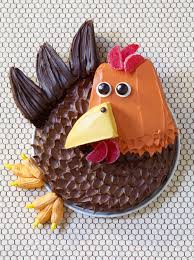
Thinking about the work in progress you’re embroiled in (be it a novel, an article, an essay, or directions on how to make a giant rooster shaped cake)

rooster cake2
Join me next time when I explain how writers are masters of procrastination. Like, looking up images for rooster cake.

I want you to write down what you hope to accomplish with this particular work. We’re talking end game stuff here. What do you want the people reading your work to walk away with afterwards?

Example 1:

Say you’re working on an article about the wage disparity in large corporations.

Take ten to fifteen minutes and write what outcome you want to see as a result of your article. How do you want people to see your subject of the story? How can you make them identify with the people involved? Is it to educate? To change policy? Do you want to give them the tools to make changes, or just to think about it in a new light and in a way that encourages discussion?

Once you know the end goal, it will affect how you write the story.


For novelists a mission statement is integral to developing a relationship with your reader via your characters.

Example 2:

I want my readers to identify with a cranky, semi-violent spirit, haunting an old seaside house and fall in love with him. I want my readers to feel the sting of being trapped, and the power of love to soften hurt.


Writing about what you want to write will actually help you know what you need to learn in order to accomplish this mission statement.


So here’s your job this week:

  • Write a short mission statement for your work in progress or your next work.
  • Share it with someone (accountability bitches)
  • Where is the next, imagined destination of this work?
  • If you have time—study some of your old work, and see if you can write a mission statement for them—what did you learn from each?
  • If you have time—think of your favorite articles, books, masterpieces and see if you can decipher what the mission statement was for them.

Oye, so much work. Don’t make me crack a whip.

Again, feel free to share. I love hearing about your purpose in writing and remember that sharing that will help to manifest your goals!

Next week we’re dipping into some heavy creative work to balance out all of this business side.


Take care!

New Beautiful Stuff


Welcome back to The Beautiful Stuff!

It’s been a few weeks so I wanted to offer my sincerest thanks my readers out there for having patience while I took a little break from the blog. It was a perfect time to reset the old creative battery, try out a few new avenues, and make the new (and hopefully attainable) goals for the beginning of the next decade.


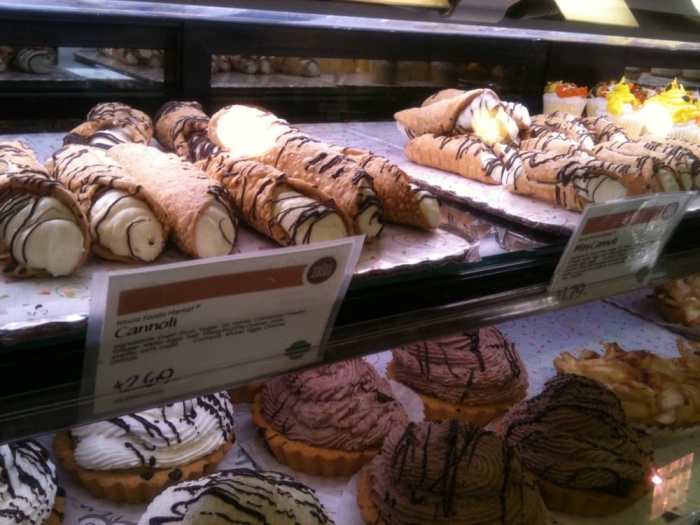
Last decade-turn I was stupid-big with my second baby and can’t recall much except I got winded a lot and had a really big problem with Whole Foods two-bite cannolis.

cannoli.jpg
I think I had at least a hundred two-bites in that last trimester…that’s two hundred bites

The baby turned out to be an amazing individual who is turning her first decade this year. Needless to say, back then I wasn’t thinking of the significance of a new ten years. I was thinking about potty training the oldest and trying not to tumble over while tying my shoes with a mouthful of cannolis.

But now here I am, in a less-rounded ten years and more in control of my mental faculties (still not so much control in the sweets department, but I’d be boring without SOME imperfections) and ya’ll are getting new and improved writing tools, inspiration, and help in the coming year.

First and foremost, (drum roll please) at the end of this month I’m launching The Beautiful Stuff’s first ever poetry anthology, entitled “No Small Things”.

I’ve been working hard over the holidays to get it organized, edited, and prepped. I must say, this is a beautiful little book with some amazingly talented writers contributing. I will give you updates on its release, book signing information, local stores who will be carrying it, how to get a copy if you aren’t local. If you are a writer or even just an avid reader interested in providing feedback and reviews for the book, please contact me and I’ll hook you up with a free copy.

Secondly, on Thursdays instead of the VerseDay you’ve grown accustomed to, I will be offering mini workshops; aptly named The Beautiful Writers Workshop, to get your creative juices flowing. If you’ve been inspired enough to write something you’d like to share, I will be offering a Monthly Writer Showcase, where you can promote your work, give a short bio, and/or provide a guest blog with any useful information you might have or want to share.

The Tuesday blog will move to only bi-monthly and will be more focused on The Beautiful Stuff of human existence outside of writing.

So there you go.

Recap for those of you who are cleansing and are a little foggy:

  • “No Small Things: The Beautiful Stuff 2020 Poetry Anthology” is out at the end of this month
  • Thursdays will feature The Beautiful Writers Workshop– free craft exercises to help break up the monotony and spark some inspiration.
  • Monthly Writer Showcase: Contact me if you’re interested in contributing!
  • Normal blog will be every other week on Tuesday and will center around The Beautiful Stuff of life.

If you’re in the middle of a learning new, healthier habits, I wish you good luck. If you’ve decided you’re just fine as is and aren’t changing a thing, I say good on you and keep on keeping on.

See you Thursday.

(By the way, The Beautiful Writers Workshop totally constitutes a valid excuse for buying new pens and pencils—you’re welcome.)

Challenges, Fears, and What it Means to Tackle NANOWRIMO

Can you feel it in the air? The tingle of excitement in the tips of every writer’s fingers? The antici—–

–pation of the challenge and the reward? The insane gauntlet thrown down to write the better part of a novel in the short span of 30 days? I feel it in a new way. A frightening way.

For the first time since I started participating, I’m wondering if this might be the year that I fail.

It’s probably no surprise for those of you who follow the blog that I’ve been a little…down… lately. And with that comes a starkly lowered self-esteem. Add in a dash of mental block and creative fizzle and I’m having a hard time believing I will have enough clout to make it through 1700 words per day and finish a victor.

So what do I do? Not try at all? Shelve it for this year and treat myself with gentleness? I’m all for self-care, but I gotta be honest, lately I’ve been giving myself a little too much grace. I’ve been allowing myself an out from writing in every basket of laundry, sudoku puzzle, floor mopping, and random ten minute cat nap (that’s a nap with my cat on the couch) I can find. I’ve been so ‘busy’. But the truth is, it’s because I’m afraid to face the blank page that sits inside my head lately. I’m so certain it will end up a blank page on my screen that I’ve let the fear and disappointment of that possibility keep me from writing at all.

After all, if I don’t try I can’t fail, right? Ergo, if I don’t sign up for NANOWRIMO (National Novel Writing Month) I can’t fail at it. Plus…what will it do to me in my delicate mental state? To face such frustration and probable defeat?

The dark voice says it will break me. It says it will keep me from ever writing again, it will unhinge me. It will rob me of time better spent napping and such.

But there’s this other me that’s been trapped inside with the dark and she’s having a real teeth-grinding, fist-clenching, stand-up moment.

She says we can. She says she’s not afraid of a blank page, and she’s not worried that there aren’t any more ideas left in me. She says she knows people and characters, she knows struggle and strife, and the harsh realities of human frailty. She says there’s another novel in there, locked away behind the dark and she wants to flip the switch and shed some light on the subject.

You see, self-care is not just about bubble baths and indulging in your psychotic cat’s demand for a nap at ten in the morning. Sometimes, self-care is about knowing what you love and not letting yourself give it up when things get tough. Sometimes the deadline and the challenge is a sense of purpose in disguise that we gift to ourselves. The pursuit of your happiness is, quite possibly, one of the most important things you can do and not just for yourself, but for everyone who loves you.

So here it is, writers. If I can drag my ass to the computer and invest in my work (and myself) every day for a paltry 1667 words, then you don’t have an excuse not to. We’re all busy. We’re all tired. We’re all at a loss for ideas. The world around us doesn’t make it easy to dream. It’s loud and impatient. It’s riddled with worries and doubts, and problems bigger than any of us can solve on our own. But if we all start by investing in our art, in rising to the challenge, in reclaiming our power and self-belief, then we will become better people. And better people make a better world.

So go do something amazing. If you’ve never NANOWRIMO-ed before, check out their website to learn the rules here:

National Novel Writing Month

Most cities and states have local chapters for the event that will organize meetings, writing sprints, coffee, happy-hours and all sorts of other social stuff to keep you encouraged and give you a clan to check in and commiserate with.

Or if you’re more of a solitary beast, like myself, you can get tips and inspiration emailed to you, or join on-line forums in your underoos. Once you sign up you get a nifty author page where you can log your words per day and check on your progress (this is HONESTLY one of the best motivators for me. Nothing like a swanky bar graph to get a girl all excited about blowing the curve, you know what I mean? Wow, that sounded pretty naughty…not sorry.)

The beauty of this event is that it teaches you to establish a writing habit, and shows you that even when you only have a few minutes here and there in your day, if you dedicate them to writing you CAN complete a novel in a month. And that makes all of those excuses for not finishing your work in progress kind of null.

Maybe you’re ready, maybe you’re not. Either way…do it. You don’t have to tell anyone if you don’t want to. Of if that’s what motivates you, give the world a daily tally to keep you honest. You don’t have to write the next best seller and you don’t have to finish the story. The only thing you need is to do is dedicate the time to your magnificent imagination.

I originally thought I’d be putting The Beautiful Stuff blog on hold during this month since I’ll be otherwise ocupada…but after thinking it through, I will continue to write to you. I’ll let you know my progress, I’ll ask you questions about yours. I’ll offer advice as we get started, how to continue the momentum, how to get through the doldrums (shit yeah, that’s totally a real thing and it happens around week three) and how to finish strong, catching every last minute to cruise into the 50,000 word goal.

Then we’ll celebrate. With cat naps, or champagne, or a good cry in the shower, you know…whatever it is you need to unwind.

To inspire you further I offer this:

One lucky reader who takes a minute to let me how the process is going either via email or comment on the blog, will receive a congratulatory package after your awesome accomplishment with all kinds of goodies, including a signed copy of “Rise: An Anthology of Change” a beautiful little book of stories and poems about the power and folly of change and the human condition. Look at the pretty cover:
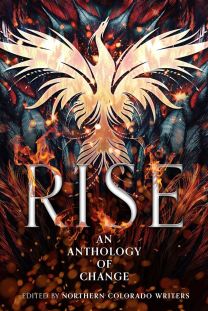
Rise Anthology


Take a deep breath writer, start brainstorming some ideas or dust off ones you’ve shelved for too long. Saturday we begin a new chapter, a new book, a new start.
 

On Poetry

Okay, I know.

I’m a novelist. And believe you me, I’ll be getting into some hard-core, novel-in-a-month advice the next couple weeks, but until then….let’s talk about poetry.

(BECAUSE I KNOW YOU’RE ALL PREPARING SOME AWESOME POEMS TO SEND MY WAY TO BE CONSIDERED FOR A GUEST BLOG, RIGHT? STOP SHIFTING UNCOMFORTABLY AND SEND ME THOSE VERSES. I’m really quite lovely and so excited to read your stuff. I’m a big, snuggly, softy posing as a hard-nosed writer.)

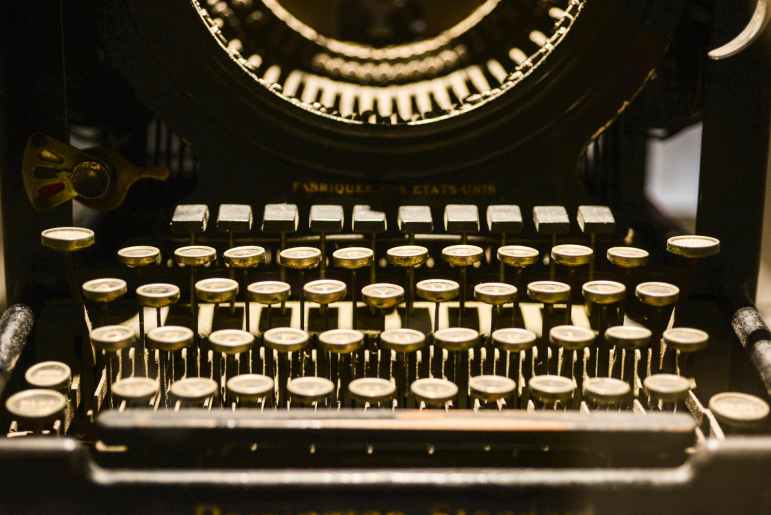
black vintage typewriter
Photo by Pixabay on Pexels.com

Long before I wrote novels, I was a poet. In retrospect, I’m kinda amazed at how easily I could fill a page with stanza after stanza.  It took time to develop, but the poems progressed from what would rhyme to what would bleed just the right color.  My poetry led to some hurtful, terrible and cathartic things on the page.  Words were raw and emotional in ways I never knew they could be.

Each one of those poems pulls me back to the time and events that they were borne from.  I remember the exact person that inspired each.  I can sometimes even remember the exact night they were written.  That’s powerful stuff.

Words, in their inherent singularity, are powerful. One word can command meaning, history, and intention just by its existence on the page. Words can change and shape how we experience our human existence throughout time.

Knee-deep in a novel, it becomes a challenge to capture the same essence I once had in writing poetry.  I’m too used to telling a story in pages, not lines. Heavy worded and filled with the need to explore each step of a character’s journey, I can sometimes lose the contrite honesty of being a woman of few words.

Whether you write fiction or non-fiction, novels or short stories, practicing poetry is an excellent skill for all writers.  It will improve the preciseness of your writing.

How do you say the most with the fewest?

Here are some exercises (that’s right you beautiful, wordy bastards, I’m giving you homework) to help you boil the most important elements of an idea down into its thickest, richest concentration.

Throw some words down from this exact moment of your existence and make each one count.

Do it fearlessly, because there’s no judgment between you and the page.

Send it to me, or don’t but keep it and use it to understand your skill and how you can grow even further in your art.

*Describe the chair you’re sitting in in six words.  Try four.  How about two?

*Describe the person in your chair (yes that’s you—maybe it’s two of you—I don’t judge) in six words.  Try four.  How about two?

*Describe the best day of your life in six words or less:

*Describe the worst:

Last Call

Okay, Y’all.

This is that golden hour, wherein if you want a chance at something, you’d better stand up and grab it.

You know those moments– those deciding moments that can change the course of our lives for better or worse. That instant you have to take hold of an opportunity, say yes to that job, kiss that girl, let go of that dream, grab hold of another.

Today is the final call for poetry submissions for the 2019 Beautiful Stuff Poetry Anthology: “No Small Things”. I’ve already gathered an amazing collection of beautiful stuff and am only looking for a few more slots to fill.

While this isn’t as life-changing as a new job or as thrilling as a kiss, it can be a launching place to your belief in yourself and your work. It can be the one step closer to your dream. It could be the declaration, anonymous or not, you’ve always wanted to write to that girl, or the world at large. A lightening of the weight in your soul, so to speak.

So take a chance. I’ve made it a safe place to land. Submit your poetry via these guidelines and see where this last call can take you. Submissions will close December 1, 2019. The anthology’s expected release date is January of 2020.

Here’s the boring part:
Poems may not exceed 80 lines, must be previously unpublished (unless if it was on authors own website), and must be the original work of the author. Please send all submissions to: sereichert@comcast.net, or via The Beautiful Stuff website: (https://thebeautifulstuff.blog/contact/) with the subject line “VerseDay Submission Last Call”.

Please include the title of your poem, your name, and a short bio in the body of your email. You may submit as many times as you would like and up to three poems per email, but please no repeated work sent. If your work is a simultaneous submission please let me know.

There is no fee for submitting.

Every submission will be read and, if selected, the author will be notified of the date of their poem’s publication on The Beautiful Stuff. Promotional links will be provided to make it easier to spread the word about your poetry.

Poets selected for the anthology will receive a free copy of the finished book and the option to purchase more at a discounted rate.

You may email me or message me via Facebook with any questions or concerns you have about the contest rules and submissions.

That’s the long and the short of it. So send me something good. Give me guts and heart, all the dark and light of your thoughts. I look forward to reading your work!

Priority

Hello writers and readers. I hope you all enjoyed a long weekend and had some time to yourselves for writing or exploring your creativity. I have been balancing the new school schedule as well as social engagements, old-dog vet appointments, and enrichment programs for my kiddos. I’ve been logging extra miles in preparation for the Colorado Ragnar Relay and juggling the details of 12 individuals coordinating 36 hours of their lives together.

What I haven’t been doing is writing.

Or editing.

Or even brainstorming.

It doesn’t bode well for a blogger who touts being a writer to not write. So what does one do, when life around her seems to sap every moment? She prioritizes and shakes off some of the unimportant to feed her soul. After all, that’s what I’m always preaching to you fine people to do, right? I can’t very well tell you how to walk the road while I muck around in the ditch.

So I’m back to the computer this week, setting up some goals for the year. My 40th trip around the sun should have something monumental yes? Besides my body falling apart and gravity being especially cruel on all my jiggly bits? I need something uplifting to balance it all out. So I’m making lists and culling the overgrown herd of obligatory adulting.

We all get overwhelmed and distracted with life and let our time to write, or to paint, or knit or whatever it is that feeds our bigger brain get kicked off the schedule. My hope is that we understand how empty that missing piece leaves us and work to fill it back in again.

As this is my case, I will only be contributing to this blog four times a month (2 blog posts, 2 VerseDays) in an effort to put more of my time towards my novels and the new Poetry Anthology coming out in the Spring.

I’m not sure who will miss my weekly thought purges, but rest assured, I will still be darkening your door, just a smidge less.

Please feel free to send me your poetry or flash fiction, I’ve extended the deadline to December 31st for inclusion into the poetry anthology, “No Small Things”. Even if you’ve contributed before, I’d love to hear more. Thanks for your time and consideration!

Until next week, go work on your stuff! I want to know your time isn’t being wasted and that we’re all doing well by ourselves and our passions. Reach out to me, if you do have a spare moment, and let me know what you’ll be doing to prioritize your creativity in the next few months!

Love ya,

Sarah

Em-Dash It All: The Changing and Fluid Nature of Grammar

Hello my little writer friends. It’s not often I jump of the creative train to offer you some solid advice on the science of writing, but I thought I’d give your philosophical pathways a break. Hopefully, unlike your sophomore English teacher, this won’t put you to sleep.

I’m a creative; a bit of a butterfly girl if you will, and my concern and study of the correct comma or punctuation usage is akin to my concern and study of the HOA Regulations. And while my garden grows amuck and wild like fairies planted it, it also makes for some unsightly overgrowth.

Some forms of writing can take more license. Poetry is a perfect example of this. There is also a funky new emergence of non-traditional work coming out of some literary journals that plays with time, space, language and form like Shyamalan played with screenwriting. So for those forms not all the rules will apply.

For the rest of us, who’s audience doesn’t want the jolt of unexpected grammar holes, it’s important that we keep up on the latest grammatical trends in the business.

“Wait! Grammar trends? But grammar doesn’t change! I memorized all of those rules from Mr. Cloyd, I KNOW how to use proper form!”

I hate to be the one to break it to you, but we’re friends and I have only your best interests at heart, so here it goes.

Some grammatical rules always apply. I had started a list but it was getting too long so  I’m doing a total cop out and referring you to the ignanamous Daniel Scocco and his blog: Grammar 101. 

Even with this base, writers and editors have started to understand the importance of language as a living being. As time and modes of communication change and flow, so do the ways in which writers share their stories. I’m not here to judge whether or not the Oxford Comma is valid (totally valid), I’m here to let you know that writing well and clearly without the distraction of poor sentence structure remains your goal.

I tend to think of changes in grammar as happening like a Paris fashion show. All of these bigwig editors get together at giant conferences and spend hours drooling over the next newest trends in the industry. Whether it be hyphenation changes or comma usage, there’s always something that top-selling writers (oof, was I supposed to hyphen that?) or literary savants are playing with that make it more acceptable (even standard) for the rest of us to do as well.

Sometimes these changes are a direct result of what’s happening in the English language in it’s spoken form. After all, your modern-day hero isn’t going to yell out, “I shan’t do it!” or “Have you a moment?”. Jane Austen didn’t have the word “bromance” to describe Mr. Darcy’s and Mr. Bingly’s long standing friendship. We are experiencing a trend towards more passive voice as well as a heavier usage of the progressive form of verbs (‘they speak’ vs. ‘they are speaking’).

The changes I most want you to pay attention to are those that the industry is accepting as standard. Such as the single-space after a period vs. double space (as Chicago crooned, it’s a hard habit to break).

Lucky for us, in this world of mobile grammar, tools have arisen to help. Grammar checking software is like having an on call editor, standing by as you write to alert you of any mishaps. They’re getting reasonable in price and better with each year. Most are updated to reflect industry standards. Check out Grammarly, WhiteSmoke, ProWritingAid, Ginger Online, and LanguageTool just to name a few.

If you aren’t ready to download something yet, here are a few more resources that I’ve bookmarked on my own laptop.

The Punctuation Guide

The Blue Book of Grammar and Punctuation

The Chicago Manual of Style

I know it’s a vast, ever-changing sea out there, but stay strong little writer.

You ought not worry.


Because A Dog Can’t Eat Your Virtual Homework…

All right, friends and neighbors, the homework I assigned last week is only due for me. You can send me your 0-1000 word story/poem from the prompt: “Write about something you left behind by accident and/or Write about something you left behind on purpose” anytime between now and September 1st.

Remember, you not only get featured on the blog, you get a free set of my steamy romance novels signed by me and braggin’ rights. So get me those entries, send them to the contact info on this site.

In the spirit of being a good example, I’m including not only a flash fiction piece but also a poem. Because prompts are expandable, remember I said that. Be creative. Hell, you know what? If you have a photo that you feel might fit with this prompt, send that in too! I’d love to see it…In fact, today’s photo was a result of said inspiration.

Get out there, get writing. Here’s my homework (you’re welcome to print it out and grab a red pen but you can’t send it back…)


Hyde-Park-London

Hyde Park


I left your scarf on a park bench

The sun came out

It was too warm


I pulled at it, slipped it down one side of my neck,

Set it beside my tea

And went back to the newspaper


The orb blazed brighter

Dropping my mind

into a haze of preoccupation


I tossed my cup in the bin

Tucked the paper under my arm

Fled the barrage of summer


And came home

Without your memory

hanging around my throat


That’s how you finally forget,

I suppose

Letting go happens when you’re least expecting


In the heat of a Tuesday afternoon,

On a bench in Hyde park

With a mind full of other things


Besides the tender hands that first placed it

In a sodden field,

blanketed with rain


The sun came out

It was too warm

I left you on a park bench.


Part The Second: The flashing fiction bit…


Diamond Trees Don’t Root Like Potatoes

So finely honed was the veiled disappointment in her face that I didn’t even need to look to know it was there.

“I’m sorry,” I shrugged over the potato peeler and the growing pile of gritty brown scraps beneath it.

“I just can’t believe you lost it!” her pitch rose and startled me.

My mom’s passive aggressiveness was legendary. She didn’t wield a battle-axe; she used a scalpel. She didn’t say outright what she meant; she kept the grudge seething for decades. That’s how the poison worked in our family. The curse of material prestige, the “what we owned” owning us. The things handed down like shackles being snapped into place.

“I said I was sorry,” I muttered. “It was an accident.”

In the way digging a hole and burying something akin to nuclear waste beneath an old billboard welcoming folks to Beautiful Bonnie Bay, Minnesota was an accident. Oops, I tripped and fell into a purposeful purge. Maybe a black little tree of greed would grow up from the seed. The idea was both ridiculous and frightening.

“She told me not to leave it to you until you were older! I should have held on to it,” she wiped the sweat from her forehead, and resumed her agitated pacing from pot to oven.

“No, you shouldn’t have,” I whispered.

“What?” Pacing stopped. “What did you say?”

Her new direct approach was something I attributed to the magic of the hated object lying beneath three feet of dirt and unable to inflict its venom. It could’ve been that she was just really…really pissed. That was okay, because at least she was being honest.

“I said,” I turned wielding the starchy peeler like an accusing finger. “That you shouldn’t hold on to it. To any of it, Mom.”

“What do you mean by that?”

“She spent years holding all these ‘treasures’ over your head, just like her mother did to her and probably hers before…making sure you stayed in line if you wanted to inherit–”

“That’s not true!” she shouted.

“She poisoned you!” I blurted out into the room still ringing with the echo of her voice. “She poisoned you into believing all those things were your worth! That they were her love. And you had to earn them, and that she could take them away just like that!” The snap of my fingers startled her like a coma patient waking.

“I don’t… know what–” she sputtered and took hold of the counter with fingers clenching.

“You deserved loved from her. You deserved better! You are worth so much more than a broach, or a set of dishes, or a closetful of linens. And you’ll always have my love, no matter what you give me, even if it’s just the time you spend yelling at me over a piece of cut rock. I’ll love you! ‘N you never have to buy it, or earn it. It’s just there.”

It would have been customary for one or both of us to turn away or huff off to a different room where we’d place the grudge dutifully on our shoulders. But she came to stand beside me, facing out into the kitchen and catching her breath, slowing into calm.

I picked up the half-naked potato and finished his delicate undressing so he could join his skinny-dipping friends in the pot.

Mom sighed while her eyes closed out the room and her mind reread every cursive note attached to every object filling the boxes in the attic.

I leaned the warmth of my hip against hers and listened to the jangle of sharp metal over thick skin. Finding the white tenderness, separate from all the dirt, gave me appreciation for the rugged beauty of rooted things, and the glimmer of hope for a barren ground above the broach’s final resting place.


Homework

Oh, you’re in for it now.

Listen, sometimes I get down to the dirt of it all and give you the best writing advice I’ve got and all you have to do is sit back and absorb my witty information dumps.

But I’ve got a case of summer boredom and am itching for something different. Something a little more…interactive. So, today, instead of me expunging on the benefits of plot arcs and character development, or raking you through the coals of The Chicago Manual of Style, we’re gonna play.

I say “play”. You might say homework.

Pota-toe. Potaah-toe.

Here’s the rules. I’m going to give you a writing prompt. You send me your 200-1000 word result. It can be fiction, nonfiction, prose or in poetry form, written in chocolate pudding, or Latin (or in Latin, in chocolate pudding)…the possibilities are all before you.

I’ll choose a winner, send you a set of my signed novels, and feature your story on the blog with all the bragging rights that come along with it. Cool?

And because, I’d never ask you to do something that I wouldn’t do myself, I’ll be featuring my ‘homework’ on next week’s regular Tuesday blog.

So…you see, writers that suffer together…give each other awkward, virtual high fives afterwards? Drink heavily and question the purpose of their existence? I vote the first one.

Because I’m feeling generous, I’ll even give you two options to choose from.


Here’s your homework:


Write about something/one that got left behind by accident.

or

Write about something/one that got left behind on purpose.


On your marks….get set…


Kats n’ Dogs: The Importance of Conflict In Writing

I live in a veritable menagerie of animal and child chaos. Now, we’re down by one basset just this last year and it’s been more quiet without our Bailey girl, but her brother still manages a good ugly face when the cat garners more attention than he thinks she should. Yet she keeps insisting that he enjoys her arching-cat rub beneath his saggy jowls, calico tail flicking into his cataract plagued eyes.

He secretly does.

Until he sees us watching.

Then he’s all bark and tiny overbite snaps at the air above her.

“Knock it off, I don’t like it. I don’t like you.”

But we know better.

It got me thinking about conflict and what makes it work in our novels and stories.

We all know the basics of conflict as it pertains to our writing. That it needs to be between our main character and some other source (i.e. a person, technology, the weather, the government, their past etc.). That it drives the character to escape, succeed, fail, run (to or from) all important story climax points that keep the reader engaged.

But when I think of this kind of conflict, I think about writing romance.

Ok, look away and or stop reading if you think this has nothing to do with your historical fiction on the Prussian War…but I’ve only got a few more words left and it may give you a little insight.

Sometimes the conflict comes in the not wanting to want what we want. It comes when two characters rub each other the wrong way, precisely because it’s kind of the right way and they both hate admitting it. Two characters (leads in your story, no matter what their gender or sexual orientation) who get riled up by the other are usually, in some way, riled up about how much they don’t hate them despite knowing they should.

patrick and kat2

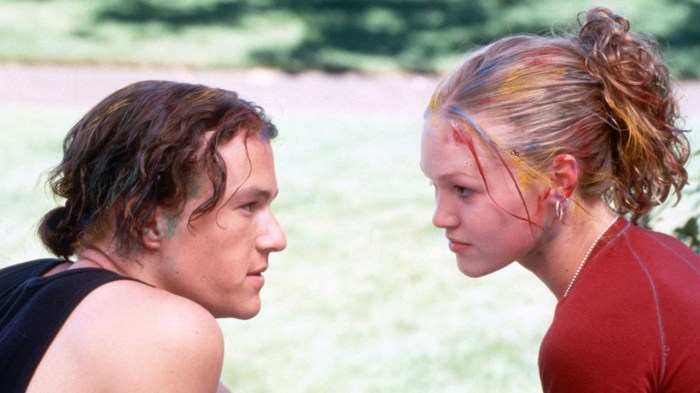
One of the best examples of this is Kat’s final speech in 10 Things I Hate About You. (I GET that its from a teenage snippy version of ‘Taming The Shrew’ but bear with me because that movie is actually quite brilliant and the principal is a romance novelist who spends a great deal of the movie looking for synonyms to the word “penis”).

It is a play on the beloved Shakespearean 141st Sonnet, beginning with “In faith, I do not love thee with mine eyes…” and underscores this principle of why not wanting to love someone can be the most powerful motivator of behavior and conflict.

“I hate the way you talk to me
And the way you cut your hair
I hate the way you drive my car
I hate it when you stare

I hate your big dumb combat boots
And the way you read my mind
I hate you so much that it makes me sick
It even makes me rhyme

I hate the way you’re always right
I hate it when you lie
I hate it when you make me laugh
Even worse when you make me cry

I hate the way you’re not around
And the fact that you didn’t call
But mostly I hate the way I don’t hate you
Not even close, not even a little bit, not even at all.”

It’s in the breaching of walls, the naked vulnerability, and the human exposition that binds us as readers to the character, and makes us fall just as hard as they do.

You may not have swooning shirtless people with wind machines in the background, mussing their perfectly golden locks, while they embrace ecstatically, but I bet that you have a character that you want your reader to root for. And that means creating conflict that resonates with the deeper tendrils of human emotion hidden beneath the layers of caustic comebacks and snide remarks.

Your conflict doesn’t have to drive your character into the arms of their reluctant beloved, it just has to drive them into the hungry hands of your readers.

Happy Writing!