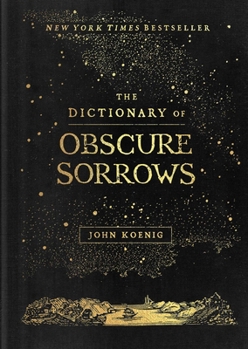
“Idlewild” from “The Dictionary of Obscure Sorrows” by John Koenig

Let’s learn a new word, kids.

When I found this lovely book, I wanted to share it with everyone I loved. Then I realized that I’m a complete nerd and blossoming basket case, and not everyone finds language and expression of pin-point emotions so fascinating as I do. But if you do like those things, check it out. Today we’re going to be talking about idlewild. But first, a word or two about sorrow.

The word sadness originally meant “fullness”, from the same Latin root satis (which gives us satisfaction and sated). Not so long ago, to be sad meant to be filled with the intensity of an experience. Or as an empath, I like to call it every, normal day. Sadness was not a malfunction of your brain’s “joymaking” machine, it was a state of awareness. The ability to take all of life in, the joy and grief. Today we tend to think of sadness as only the absence of hope, or simply-put despair. I think I prefer the idea that sadness or sorrow is more of an over-filling of emotion, a realization that everything is fleeting, all moments are once-in-a-lifetime, and that you care about something enough to let it into your tender heart.

Photo by Nirmal Rajendharkumar on Pexels.com

And now, let’s talk about “idlewild“

The book describes idlewild as feeling grateful to be stranded in a place where you can’t do much of anything–sitting for hours at an airport gate, train station, or back of a car enroute. This temporary alleviation of the burden to be doing something can often free up your brain to do whatever it wants to do. Most noticeably, daydream, a past time many of us no longer feel the freedom to do. (From Idelwild, the original name of JFK International Airport in New York).

I decided on this word because I knew it would make some of us cringe over our coffee cups. What do you mean, sit and do nothing? How does one feel grateful for not being productive, as society so often demands of us? Precisely the reason, my friend, why this occurrence is so important. Especially for creatives.

Listen I’m the first to admit that I find being strapped into a plane, train, or automobile as one of the most productive experiences for me and my writing. Let’s face it, when there’s no laundry, or pets, or children, or cleaning, or appointments, etc that need taken care of, and I’m stuck unmoving for a few hours, it’s the perfect ‘butt-in-chair” time a busy writer needs. But recently I’ve found, especially after a few writing slumps, that sometimes the mind just needs to do nothing. Nothing productive I mean. It needs to be silly. It needs to stare across the landscape and wonder. It needs to wander to destinations that don’t have meanings or books attached to them. No futures or pasts. It needs to think about strange what ifs and in the same moments let them go like clouds passing overhead.
Photo by ilia Afsharpoor on Pexels.com

This freedom to let your silly little neurons, memories, knowledge banks, and disconnected oddities play on the same unoccupied playground is one of the best things you can do for yourself. It not only helps in future creativity and problem solving but it’s like giving your brain a recess from all the relentless details and doomscrolling in the day. I’ve honestly found that I enjoy staring off into space and playing thought leap-frog much more than being drawn into that annoying little screen always selling me hormone supplements and bondage wear? (Listen, I don’t have to explain my algorithm to anyone)

So whether you write, or paint, or sing, or…build buildings or teach five-year-olds, I encourage and prod you a bit to practice idlewild this week. In the waiting rooms, the bus rides, the elevator, the pick-up line. Instead of reaching for your phone, stare off into the distance and pull back the curtains to what your mind has wondered about lately. Not to do lists, or what you should be doing, but noticing the color of the horizon, or counting the trees in the painting your dentist hung up, or making up strange and humorous character situations about the people on your bus. Find a little wild in your idleness.

See you next week.
Em-Dash It All: The Changing and Fluid Nature of Grammar

Hello my little writer friends. It’s not often I jump of the creative train to offer you some solid advice on the science of writing, but I thought I’d give your philosophical pathways a break. Hopefully, unlike your sophomore English teacher, this won’t put you to sleep.

I’m a creative; a bit of a butterfly girl if you will, and my concern and study of the correct comma or punctuation usage is akin to my concern and study of the HOA Regulations. And while my garden grows amuck and wild like fairies planted it, it also makes for some unsightly overgrowth.

Some forms of writing can take more license. Poetry is a perfect example of this. There is also a funky new emergence of non-traditional work coming out of some literary journals that plays with time, space, language and form like Shyamalan played with screenwriting. So for those forms not all the rules will apply.

For the rest of us, who’s audience doesn’t want the jolt of unexpected grammar holes, it’s important that we keep up on the latest grammatical trends in the business.

“Wait! Grammar trends? But grammar doesn’t change! I memorized all of those rules from Mr. Cloyd, I KNOW how to use proper form!”

I hate to be the one to break it to you, but we’re friends and I have only your best interests at heart, so here it goes.

Some grammatical rules always apply. I had started a list but it was getting too long so  I’m doing a total cop out and referring you to the ignanamous Daniel Scocco and his blog: Grammar 101. 

Even with this base, writers and editors have started to understand the importance of language as a living being. As time and modes of communication change and flow, so do the ways in which writers share their stories. I’m not here to judge whether or not the Oxford Comma is valid (totally valid), I’m here to let you know that writing well and clearly without the distraction of poor sentence structure remains your goal.

I tend to think of changes in grammar as happening like a Paris fashion show. All of these bigwig editors get together at giant conferences and spend hours drooling over the next newest trends in the industry. Whether it be hyphenation changes or comma usage, there’s always something that top-selling writers (oof, was I supposed to hyphen that?) or literary savants are playing with that make it more acceptable (even standard) for the rest of us to do as well.

Sometimes these changes are a direct result of what’s happening in the English language in it’s spoken form. After all, your modern-day hero isn’t going to yell out, “I shan’t do it!” or “Have you a moment?”. Jane Austen didn’t have the word “bromance” to describe Mr. Darcy’s and Mr. Bingly’s long standing friendship. We are experiencing a trend towards more passive voice as well as a heavier usage of the progressive form of verbs (‘they speak’ vs. ‘they are speaking’).

The changes I most want you to pay attention to are those that the industry is accepting as standard. Such as the single-space after a period vs. double space (as Chicago crooned, it’s a hard habit to break).

Lucky for us, in this world of mobile grammar, tools have arisen to help. Grammar checking software is like having an on call editor, standing by as you write to alert you of any mishaps. They’re getting reasonable in price and better with each year. Most are updated to reflect industry standards. Check out Grammarly, WhiteSmoke, ProWritingAid, Ginger Online, and LanguageTool just to name a few.

If you aren’t ready to download something yet, here are a few more resources that I’ve bookmarked on my own laptop.

The Punctuation Guide

The Blue Book of Grammar and Punctuation

The Chicago Manual of Style

I know it’s a vast, ever-changing sea out there, but stay strong little writer.

You ought not worry.


Writer vs. Idioms


Biting the Dust and Chewing the Fat: A Word About Idioms


My daughter is learning about idioms in school. With new eyes on them, these expressions and figures of speech can range from all-out ridiculous to so over used that we barely notice them. Keep your eyes open, I’m about to idiom all over this place.


The conversation with my daughter got the ball rolling in my head, thinking about the idioms that pepper my own work. Writing coaches and how-to books tell you constantly to watch out for these little story killers, and with good reason. They dull your dialogues. They’re cliche, they’re drab, and boring and are the written word equivalent to a speaker saying ‘um’ and ‘uh’. Idioms are skipped over by the reader’s eye because they are so common as fixtures of language and culture. In other words, they’re time and space wasters.

bath-splashing-ducks-joy-162587.jpeg
Photo by Pixabay on Pexels.com

Now, I don’t want to steal someone’s thunder or throw the baby out with the bathwater because sometimes idioms can be useful. Occasionally a specific phrase used in dialogue can denote or solidify where your character comes from or give us insight into their personality.


Saying ‘that dog won’t hunt’ or that someone ‘doesn’t know shit from Shinola’ (oh, and ‘please excuse my French’) are phrases one expects from a certain region or even generation. But unless it is something your character is at home saying, or that paints them in more vibrant colors to the reader, avoid them like the plague. After all, do we really need to swing a cat in a room to see if it’s big enough to do so?


It’s hard to cull the herd of idioms in our language; to make our work more precise and original, but it is part of fighting the good fight. When editing, ask yourself if the line has a double meaning. Ask if it’s the best possible way to say what you mean. If it’s an obvious idiom, what could you use instead? Does it contribute to the scene and charm of the moment, or distract from it?


So don’t beat around the bush or cry over spilt milk. When the ball is in your court and you’re back to the drawing board, remember; although idioms can be a cloud with a rare silver lining, it is always better to hit the nail on the head and kick overused phrases to the curb.


Now, if I can get the use of the Oxford comma right and stop double spacing after periods, I may just level the playing field.


If it’s not one thing…it’s another.


What are some of your common (or favorite) over-used expressions?