Write What You Love

Today I’m talking about two pitfalls many writers fall into. First, the desperate search for the holy grail of what’s on fleek (do they say that anymore?) or ‘trending’. And secondly, the pursuit of higher literary fiction as the only respectable way to claim ‘writer’ status.

It’s no secret that trends play a big role in what kinds of books get produced and published. Like some kind of secret surfing spot, the waves that peak are often unpredictable and by the time you get your board out into the fray, the ride has already passed.

In the same manner, when writers take it upon themselves to invest in their education with an MFA program or something similar, they are put into a strange and high-walled box of what constitutes ‘worthwhile’ literary fiction.

When, as writers, we are so desperate for that publishing contract, agent, representation, royalty check—or whatever your goal may be—we often forgo our ‘pet projects’ to work on something that will sell or is more ‘meaningful’ aka digestible by a higher caliber of reader.

These are pitfalls and I’m going to tell you why.

  1. No one can predict trends. No one. In an excellent class, taught by Todd Mitchell, he talked about a controlled experiment wherein three groups were kept isolated (online) and given the same songs to listen to, vote on, dissect, and judge. In every group, a different song was chosen to be ‘best’. In every group, when one song started to get more votes, strange herd-like mentality propelled it further. Bottom line, people will choose at random and marketing departments of publishing companies don’t represent the whole palette of readers in the world. Writing to trends, especially if it’s not something you love or are invested in, is a waste of your talent and time.
  2. MFA programs are great at exposing you to a range of writers, styles, perspectives and technique. I highly recommend if you have the money and time, to pursue one. But you don’t need a higher degree to become a better writer. Also, having an advanced degree will not guarantee you will be published. The main focus of an MFA program is to get you to finish a novel, a whole project. In the process, it will look down its nose at genre fiction, light-reads, and non-literary fluff. Which may lead you to believe that kind of writing is not worth your time. Even if you enjoy it. Even if most readers prefer a lighter, easier book for at least some (if not all) of their reading time.

So what do we do? Well…I’m going to offer you the best advice I’ve ever gotten.

Write what YOU love.Trends can’t be trusted and you won’t write with heart and fire if the subject doesn’t drive you. The world only needed one Hemingway. What the world is severely lacking is your book. Written your way. I’m not saying you can throw out good writing, grammar, decent editing and the one-two punch of great plot and snappy characters. I’m saying if you love your pet project about ghosts on a mission to save their grandchildren from mutated vampire bats, but you try to write a theory-deep mind fuck about 21st century American Existentialism, because you think it will be more impressive—nothing will go well.

Writing without heart, without passion, will feel empty to readers. AND it will discourage and squelch your flame…and a writer without fire inside will sputter to ash.

So write what you love.

When it’s done, you’ll be excited about it, you will nurture it…it will be easier to promote and share because you believe in it. And it won’t matter who else picks it up or loves it, because it’s already loved. Even if it doesn’t ‘make it’ by industry standards, you win because you have created something that brought you joy. Approaching your project with love puts positivity into the universe and it tends to circle back around. With every project you do with maniacal joy and persistent love, you’ll build the confidence in your work and your purpose as a writer, which is the beauty of creating as a whole. And it leads to miraculous things.

So get out there…without worrying about the current trend or if you’ll hit the sweet spot of American capitalistic consumption. Create what you love to create. That’s success.
Poetry 8-5-21

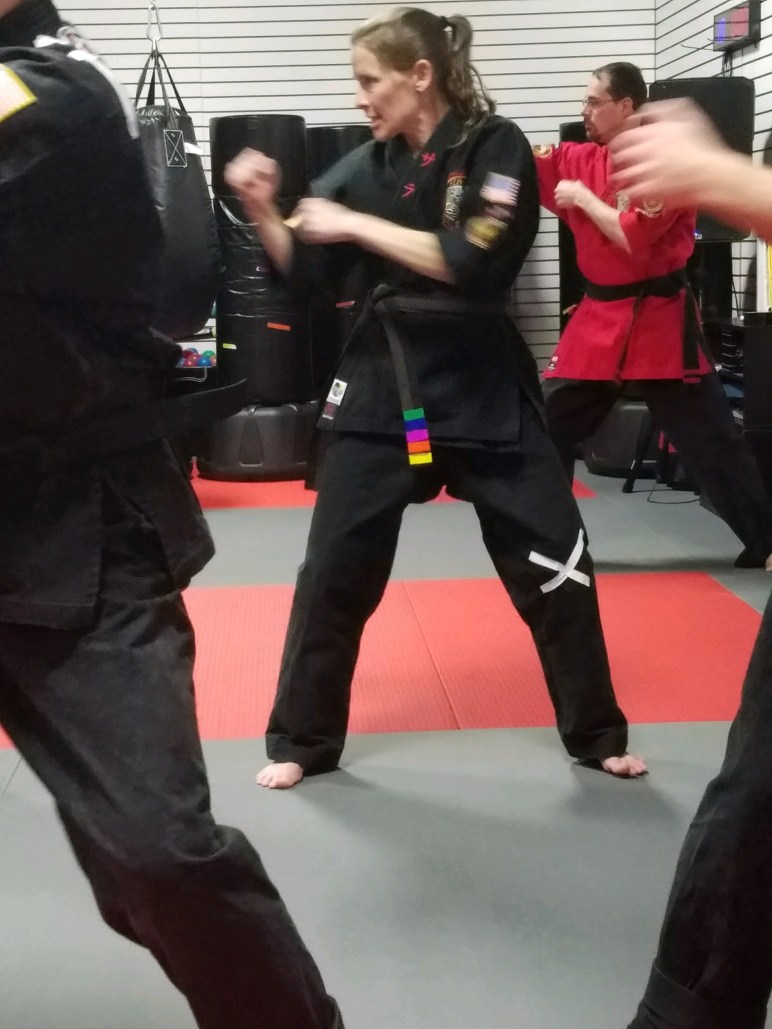
Good morning, readers. Today, I’m about to head into my second night of pre-testing for my 2nd Degree Black Belt in Kenpo Karate. Odds are at the time this post runs, I will be brain deep in trying to prepare, sore from the previous night’s test, and blinking vacantly over my first cup of coffee. I would offer, to my future self and to all eyes reading this, a heart-felt reminder:

You are capable of things you can’t even imagine. You are brilliant and resilient. Don’t ever stop fighting for yourself and the things you want. Self doubt happens to us all, but it’s an insult to your capacity for achievement. So instead of reacting to challenge with doubt, ask yourself this instead: WHAT IF I CAN?

DO NOT SHRINK YOURSELF TO FIT INTO SMALL EXPECTATIONS.

also… take a nap, whenever you get a chance. You’re only as strong as the rest you give yourself

Good skill to all of you out there, in all of your endeavors.

And now, this:

Not Myself of Late

I am long away from the girl I once knew.
The embodiment of all that was light
and acquiescing 
Annihilated beneath weighted skies.
Mired in confused need,
heart floundering in dark embankments.

I dig it from the muck; 
calm it’s fluttering gasps.
brush away the silt
	It’s ok... It’s alright now
we know what we have to do.


I'd let the world upend me.
I let it through the open door
An idea, a hush of doubt
Embedded into my soil.
Tender but steadfast seedling.

I forgot 
myself.

Forgotten that its all just shadow
Borne from the reflections of hurt.
A chemical reaction, unchecked.
I was dry underbrush,
And it, just a catalytic match.

But now
I am the fire.
I am all heat and 
nothing less than utter devastation.
I don’t need suggestive darkness
to know that I am bright.


Finding Sanctuary in Times of Change

Photo by Andrew Beatson on Pexels.com

Times of transition are like hurricanes. Confusing, loud, messy and intense. There is uncertainty and a sense of powerlessness that directly affects our peace and sanctuary. Some of us deal with the changes with decidedly more grace than others. Some are rocked off their foundations, never to be the same again.

The point is that no one is safe from change. And why the hell would you want to be?

Change is the great motivator. It is the one unequivocal trait of the progression of human life. Without it we are stagnant lumps. Change breeds invention and new ideas, it sparks, hopefully, encompassing understanding and empathy. Compassion even.

What happens though, when we have too much change? When we are in a constant state of upheaval. When everything in life is a transition?

It is proven that children who suffer chronic instability (experiencing transitions so often that instability becomes their norm) can suffer from toxic stress.  

Toxic stress increases the risks of several physical and social problems including but not limited to increased risk for cancer and diabetes, heart, lung, and liver disease, increased risk for smoking, drug abuse, suicide, teen pregnancy, sexually transmitted disease, domestic violence and depression.

While a normal amount of stress can be good (it stimulates healthy growth, promotes resilience, and helps us to learn coping mechanisms), constant stress and insecurity in our lives actually causes the body great physical and psychological harm.

The effects are more pronounced in children but adults are not immune. Just ask the millions of people living with high blood pressure, depression, cardiac disease etc. We are in over our heads.

So how do we balance the change and transition? How do we grow and push our boundaries without breaking apart our safety net?

Balance seems a cop-out idea. Of course balance (*eye roll*). That’s like asking “how do I write a novel” and some smart ass saying “Just sit down and write”.

True…but too general. Writing, like balance, is not a one size fits all idea. What is balanced for me is way too much for someone else. One woman’s six, 50,000 word romances a year is another’s one 38,0000 word novel every seven.

How do we find our balance? How do we find the right amount of change? I think the answer lies in retaining sanctuary in our lives. Now I’m not talking humpy-backed bell swingers walled up inside the cathedral, sanctuary. I’m speaking of it on a more personal and sometimes mental level.

Are you safe in your own mind? Do you have a place to go, in your brain, where you can let go, remember to breathe, where your shoulders can drop away from your ears and you can feel at peace? Or is it all hell-fire and disaster, 24/7 from the moment you wake from stress-induced nightmares to the moment you’re knocking yourself out with Melatonin just to escape?

We all need peace. We all need change. How much of each is dependent on who you are.

One person may be content taking 15 credit hours, while raising a family of six and working part time for the PTA. Another may be perfectly happy chiming into an online forum on bee-keeping once a week and counting her reading in hours not minutes. One person may be at home living from a suitcase, jet-setting to all parts of the world for a story and a perspective never gleaned. Another may never leave their childhood hometown and yet still maintain contentment in the smaller world around them.

I’m not here to tell you how much change to accept. I’m here to tell you to accept some change. Pursue some change. But if you find that all you do is change, and you can’t recognize yourself or the people you love anymore, then it’s time to come back home.

Use that one word…what is it? Shoot, I’m not very good at this word, though I’m learning to let my lips form it’s simple monosyllabic music…it’s… NO. The word is NO. If you’re genteel you may even tack on a “Thank You” at the end.

NO is a great place to start. No I do not want to go to that party. No, I do not want to volunteer sixteen hours a week when I’m barely getting my chapters written. No I don’t have time to bake seventy-two cupcakes for the basket-weaving club…would you take a donation instead?

Conversely…don’t forget your YES button in the gleeful mania of refusing. Yes, I would love to meet you for coffee, it’s been too long! YES I would love to take a weekend class in basket weaving. YES, it would be an honor to help out for five hours a week. YES, I’ll go to Italy with you, tall-dark-and-handsome stranger…(*guffaw* still waiting for that one to come around).

You know you best. If you aren’t sleeping. if you’ve bitten your nails to the nubs and can feel the bonds of your family life deteriorating. If you’ve sacrificed what you’ve loved to do what you “should” for too long, then its time to take a long hard look at your hurricane and find a graceful exit from the storm.

If you’re still in a dead end job because you’re too afraid to throw caution to the winds of the hurricane blowing outside, do yourself and everyone who loves you a favor and chase that storm. Live a little for goodness sake. We only go get so much time! Don’t waste it wishing for something better, when you are perfectly capable of hunting down the something better and taking it back to your sanctuary.

Poetry 5-20-2021

Photo by Keenan Constance on Pexels.com

Lost Things

Of all the things

I miss the most

it must be the weightless

loss of care.

The summer’s days,

kicked out of walls

adventures lived

and dreams built

out of coffee cans

and warped two by fours.

Of all the things

I miss the most,

it’s the softness

of a first kiss

the anticipation and yearning

before politics

or power plays

muddled the field

and made every touch of passion

a pawn on a game board.

something to be won

something to be earned.

something lost.

Of all the things

Photo by Kristina Paukshtite on Pexels.com

I miss the most,

It must have been their tiny hands

wrapped around my finger

and the sleepy warmth

of their heads tucked

into my shoulder

we were safe there,

just the three of us.

Before the world came down on them

with screens and images

of unreachable ideals

skipping meals and

pinching skin.

Of all the things

I miss the most

It was feeling

like the world was someplace

magical and filled

with potential for

the good

the better

the brighter future ahead.

Before the dark gray blanket

covered my eyes

and suffocated all

dawning hope

A Writer’s Summer Reading List

Photo by Element5 Digital on Pexels.com

Stephen King once mentioned that if you, as a writer, didn’t have time to read, then you didn’t have time to write. Even more recently, at the closing remarks of this year’s NCW writing conference (https://www.northerncoloradowriters.com/) I was reminded by the incomparable Teresa Funke (https://www.teresafunke.com/) that writers who read shouldn’t consider that time ‘wasted’ or a guilty pleasure. Every book we read teaches us something about the craft, our own voice as writers, and provides us with inspiration and information that will be useful in our own projects.

So, as the warmth of lazy days approaches (ha ha–just kidding, if you’re a parent, summers aren’t ever lazy), I’ve compiled a list of books that may be of interest to writers, as well as some good-ol-fashioned brain candy. Let’s be honest, no one wants to spend their summer vacation slogging through a MFA reading list–gag me. The books below should be helpful AND entertaining. Each has been selected because it offers insight to the craft of writing or has brilliant use of good writing…or it’s just plain fun to read.

  1. “On Writing: A Memoir of The Craft” Stephen King: I read this one every year. He’s down to earth, helpful, at times hard-assed, and others vulnerable. A beautiful book.
  2. “The Kick-Ass Writer: 1001 Ways to Write Great Fiction, Get Published, and Earn Your Audience” Chuck Wendig: Holy shit snacks… If you haven’t followed Chuck Wendig’s blog (http://terribleminds.com/ramble/blog/)or read ANY of his books, you need to rethink where your life is heading. Part heart-felt genius, part sacrilegious savant, “Kick-Ass” is a fun and mildly irreverent romp through the derelict world of writing and I can’t love the man’s sense of humor or talent more.
  3. “The Invisible Life of Addie LaRue” V.E. Schwab: I told you it wasn’t all about writing manuals. This book is poetically beautiful, curious and heart wrenching. It’s a little tragic, a little romantic, and has just enough magic realism to make you feel like you’re cheating on your homework by reading it. Schwab also does a beautiful job transitioning through time, space, and POV.
  4. “Zen in the Art of Writing: Releasing the Creative Genius Within You” Ray Bradbury: I’d like to think, because we share a birthday, some of his playful brilliance will soak into my brain by some sort of weird Zodiac osmosis…hasn’t happened yet. This book is full of good advice, and assurances that the writing mind is not meant to be ‘normal’ and also that writing what we love, even if it’s labeled as low-brow or ‘not literary’ is more important than trying to get our books into an MFA program. As Bradbury says: “I have never listened to anyone who criticized my taste in space travel, sideshows or gorillas. When this occurs, I pack up my dinosaurs and leave the room.”
  5. “Save The Cat: The Last Book on Screenwriting You’ll Ever Need” Blake Snyder. Is it the last book on screenwriting I’ll ever need? Probably not. But even if you’re not a screenwriter this book has good information about story beats, plotting, character development and writing a story that audiences (your readers) will both love and be satisfied with. On a side note, if you’ve ever wanted to write a book that may someday transition to film, this is a great book to check out in understanding the process of writing a compelling story that live audiences will love.
  6. “Bursts of Brilliance for a Creative Life” Teresa R Funke. https://www.teresafunke.com/ This book is not just a boost of energy and inspiration, it’s a good ‘life skills’ book. We all need to know that our ideas matter, that it is possible to pursue our dreams and find the time to make them a reality, but this book offers helpful insights on how to do it and why it’s so imperative that we do. Teresa is not only a brilliant author but an amazing, down-to-earth, and kind human who has enough experience in the world of writing to know what she’s talking about.

Well, there you have it. I hope you get to read some of these this summer. If you don’t, I encourage you to pick up a few books in your genre and a few outside of it. See what you can learn. Even–try something out of your scope of practice (Non-fiction/Fiction) and see how the other half lives. Something is to be gained from every page we take in. Happy reading out there!

Guest Poet: Bethany Beeler

Good morning, Beautiful Readers! Today’s blog and poem come to us from the incredibly talented Bethany Beeler. https://www.bethanybeeler.com/. Please enjoy an in-depth look at why poetry offers us intense and true experience, in an angel’s breath of time and, as Beeler so eloquently says, “poems are your and my experience of a unique and intimate moment that can’t be replicated

I would love to see some discussion on this blog so shoot me your comments and questions. Also, look forward to enjoying some of Bethany’s poetry in The Beautiful Stuff’s new anthology “Wilderness of Soul“, out next Fall.

Here’s a little more about Bethany and where you can find her work:

Author of North Street Book Prize Finalist, How to NOT Know You’re Trans., and artist, Bethany A. Beeler was born and raised in the Pittsburgh, PA area. After college, she settled in Texas for the next 37 years with her wife Pamalyn, raising three children, and mayoring the city of Krum, TX. She’s been a professor, teacher, and tech writer. Her work has been published in The Twinbill.

Links

Website – https://www.bethanybeeler.com/

Amazon Author Page – http://amazon.com/author/bethanybeeler

Facebook – https://www.facebook.com/BeautifulBuddhaBethanyBeeler/

Medium – https://medium.com/@beautifulbuddha

Twitter – https://twitter.com/bethany_beeler

Instagram – https://www.instagram.com/beautiful_buddha_bethany_b/

Goodreads – https://www.goodreads.com/

Another Kiss


Goddess fingernail moon over pines,
Crepe myrtle early
Bloom. Huntress
Belt, chaste and fair, Hekate
Gift and swoon. Thrush song’s
Dark, creeping
Cold
Grips my soul. Walk apace,
Venture, snap,
Brittle face, I
Take her lavender
Kiss, lips trembling. I
Sing silent, sibilant, unsated heart, hand in
Nest, breast aflame, this

(Nipple spark)
Touch too wet,
Soft. I
Hush, her hand awash in
Me, greet, guide, hold, caress, I
Burst, dripping
Star and comet, quasar and
Dust, fecund harvest,
Birdsong lush in night of
Morn and noon. She takes
Me home too soon to sleep in
Parted lips, hastening another
Kiss.

In The Alphabet Versus the Goddess , Leonard Shlain says that “written words and images are
entirely different ‘creatures.’ Each calls forth a complementary but opposing perceptual
strategy.” He’s wrong in two ways—words and images are not merely complementary but are
abstractions of a deeper reality, which, of course, also means they aren’t in opposition at all.
That deeper reality is experience, which is neither an abstraction nor a material thing but an
event that is life itself. Nowhere do we better see the wholeness of which image and word are but
facets than in poetry. Poems are liminal moments of experience. If novels can be likened to
movies and short stories to snapshots, poems are not even the camera flicking on; they’re the
threshold between “on” and “off,” an event that can’t be filmed or recorded but experienced only.
We don’t observe poems. We live them.

In poetry, words cease to be signifiers but image things themselves, and images cease to be
“like” anything but word experience itself. When I write a poem, I’m both aware of and
oblivious to being watched. The absorber of a poem is eavesdrops on the speaker’s
liminal/threshold experience. I am not the speaker of my poems, but we couldn’t eavesdrop on ​
that speaker without me as the poet and you the voyeur. I hope you feel the same about poems
you write and ones you take in. Whether composed or received, poems are your and my
experience of a unique and intimate moment that can’t be replicated. The quality of your and my
experience and the event you and I consummate is more unique than you and I are individually.
Here, in this moment, at this doorway, we meet in a way we’ll never meet again, even upon
repeat couplings. Ours forever, it can’t be taken away.

So what is “ours” about “Another Kiss”? I love words sounding to me without my thinking about
them. I want their thud, slither, or hiss to knell me and you without their having to “mean
something.” Simply put, I try to make words “image” experience for you and me.
That being said, consciously or not, I don’t choose just any words to thud, slither, or hiss us.
Those chosen words image a river of cultural and personal significance for you and me. In a
poem, we step into a river that was there before us, caresses us right now, and will tug us after.
But you and I change its course. For the better. In a way no one alone, nor any other pairing of
persons can recreate.

But I want us to recreate, too. And “Another Kiss” is as sensual a poem as they come. I
swallowed this night, wooed by plants, scents, breezes, stars. I invite you to seduce the event, as
the event. For you and I are the event. Enjoy.

Guest Poetry: Jennifer Lockwood George

Ya’ll, I’m super excited to feature this next artist. Not only is she a beautiful writer, and a wonderful person, but the poetry she sent me is some of the most sensual, melodic, and moving work I’ve read in a while (AND anyone who knows my novels, knows I have a particular longing in my heart for Mainers). Please enjoy and feel free to share!

Our beloved poet, Jennifer Lockwood George comes to us from the coast of Maine, where she teaches writing to college freshmen who live in little Zoom boxes with their names in the corners. She graduated with her MFA in Creative Writing from the University of Southern Maine in 2019. Her work has appeared in The Kankakee Daily Journal, Muse, Stonecoast Review, and The Ginger Collect. Her novella was published serially in The Silver Pen’s Youth Imagination online literary magazine. She has also been a guest writer on the Celebrities in Disgrace blog.


Photo by Bryan Geraldo on Pexels.com

And Then Nothing Happened

You pretended your English was terrible.
You asked me to stay
to sort out your syntax,
to smooth your eager consonants
and soften the accent
that told stories you would never pronounce.

I would not correct the music that came from your lips.

You wanted me to turn grammar into an aria.
You leaned closer as I sang each conjugation.

I pretended I wouldn’t give my right arm
to hear you play the piano,
but I could have spent forever watching you
coax desire from ivory and wood.

I wanted to hear you recite Lizst
with your eyes closed,
tilting your chin upward in rapture
tightening your jaw at the climax,
rosé wine tinting your cheeks at the final decrescendo.

You taught me scales and finger positions.

We were forbidden liquor; neither of us would drink.

You called my name as I left your studio.
My coat was on.

You offered me wine.
The notes you poured flowed over the piano keys
and onto the floor, flooding the room,
rising from my feet,
to my ankles, then my knees.

My vision blurred.
My coat became a drunkard’s snare,
my purse strap a bond I could not escape.

I fought against your concerto,
fought not to sway
fought not to dive into the flow
fought not to ask you to pour more.

I could not reach the door;
Music’s brazen kiss had backed me against the wall—

Until your fingers collapsed on themselves
and you forgot how the rest of the song went.

Your cheeks were pink.
I forgot to breathe.

I almost recited the entire thesaurus for you.

Poetry 4-8-21

Today is my mom, (Christine Wickstrom’s) birthday, so before I get all poetic on your asses, let us take a moment:

Dear Mom:

Here’s to another trip around the sun with the woman who loved, fed, raised, and let me survive my teenage-hood. You’re a spiritual whirlwind, a passionate crusader, the raucous laughter I hear in my own voice, and the sturdy rock on which I was built. Also, sorry for using the word ‘asses’ up there…and again just now. Have a lovely day, take naps, eat good food, enjoy the sunshine and the new dawn of spring. I love you to the moon and back again.

And now, this:

Photo by Felix Mittermeier on Pexels.com
Old Soul

They used to say, 
over coffee cups
behind her turned back
that she was an old soul

Even at six
when she struggled to sit pious
in pews too hard for anything
but retribution

Or dreamed beside lazy rivers
in tall, cool grass
feet barefoot and setting roots
in worship of the bigger gods

An old soul, she thought, was
used, misused, tarnished
and dented
worn thin like soles 
on the bottom of shoes

She thought her soul 
looked like beaten leather
unfairly pocketed
and scarred with use

Everyone else got a new one
right out of the box
the day they were born
the 'new soul' smell still clinging 
smooth, shiny, glowing 
with kinetic possibility

But what choice did she have?
Old was far better than none.

Six turned to sixteen
and all the years blended 
in hues of decisions
and roads taken

the ones where she felt,
memories walked beside her
and footsteps recalled 
and every where felt like home
in far off rooms of her old soul.

Sixteen to thirty
and on to forty
and on, and on
and her dented soul carried
tears and laughter 
just as well as any other

better

Because new souls, she learned,
were breakable and brittle
they faltered in storms and
dented at the slightest strike

In the same span of years
the glittering glow of the new
was thin like a grocery store bag, 
plastic urban jellyfish, aimless 
and at the whim of every breeze that blew

But old souls
are stalwart souls

They grounded roots
feet in dirt and 
sturdy branches rising.
Fingers tasting every flavor of life
without being swayed to break.

Old souls have lived it all before
and are wise to the ways
of errant breezes and
the fickle affections of years.

Old souls, she learned, came back
loved and experienced once more,
into only those vessels 
strong enough to carry them.


Submissions, Rejections, and Moving On

I feel like this is a post I’ve probably written before, in one manner or another. But the truth is, that if you’re a writer, actively seeking to publish your work and/or build up your resume (let’s call it a ‘platform’), you’re going to have to deal, at some point in your process, with rejection. Hell, humans in general have to deal with it in all facets of our lives, and as we mature and gain experience we learn (or don’t learn) how to cope with it and move on.

*I should add a disclaimer: I’ve seen it happen, on the rare occasion that someone’s first draft of their first novel gets picked up by a publisher, right away. I’m happy for those few among us, but they are very rare outliers. The exceptions. The kid that blew the curve in class. And since they’re probably not in ‘need’ of writing advice–they can go on with their charmed lives. This post is for the rest of us*

A rejection letter for our artistic work (the meat of our souls if you will) is often harder to take than getting passed over for a promotion or shot down by that guy at the club (or wherever a person tries to pick up someone–I’ve been out of that game for many moons). Writing is, in many cases, a work of heart. And it takes guts and faith, and an ounce of reckless stupidity to throw it out into the world for other people to read (judge, pick apart, mock, etc.) So when we put our (he)art on the line and it’s returned with a swift and almost cutting “thanks but no thanks” it can often feel like we’re getting a red pen mark right through our soul. They didn’t like it. They don’t like me.

So here’s where I tell you the few things I’ve learned. Not just about in dealing with rejection but also how to submit in ways that will expand your confidence and the chances that your work will be seen and appreciated.

I could pound out a bunch of statistics on how many times major publishers rejected some of our favorite and prolific authors. I could tell you that some of those authors when into their thirties and forties (even fifties) without ever finding success in the industry, and I could give you a sunshine-up-your bottom pep talk about not giving in.

But I’m here to help. And I don’t believe in false praise, false hope, or anything false when it comes to finding the system that works for you. What I will tell you is this:

1.) Rejection is important to our growth and the quality of our work.

And there’s a blade thin line artists walk. Where the sting and wound of rejection can, in fact, topple us over and we may never rise again. It happens. All the time. So, when you think about being a writer—I want you to think hard about this one truth—

Your work will be rejected. Your words and ideas, your stories and the depths of your heart on page, will be thrown back at your feet and declared unwanted. But here’s the secret. It does not matter if they believe in your work. It doesn’t matter if they find it worthy. All that matters, is that you believe.

Your work is not you. So your novel was rejected and, if you were lucky (yes—lucky I said) they gave you some scathing or tepid advice about why. I’m willing to bet the editors did not say “You’re shoes are dumb and your breath smells like coffee farts. Oh, and your momma was a Clydesdale.” And if they did—that editor was having a really shitty day and you should send them some flowers—back on point. You are not your work. Rejection of your work is not a measure of your worth as a person or as a writer. Everything in life that we want to get better at, takes practice, and the best practice includes mistakes and their inherent lessons. Your work is not perfect, but it is changeable. You are not perfect, and you don’t have to be. Rejection of your work means you are out there, in the business building a better story and standing behind it. Don’t take it personally.

If they do offer you any advice, cutting or kind, PLEASE respond with a heartfelt thank you for their time in helping you become better. Assure them that you’ll consider their input and try again as guidelines allow.

And your mother doesn’t look like a Clydesdale.

But she’s a pretty momma.

2.) Submitting your work gets easier.

I remember the first few poems, short stories, and novels that I submitted, and it felt like sending my babies out into a wild cavern full of hungry wolves. It was heart wrenching to wait and equally devastating to hear that they’d been torn apart and spit out. But, with the aforementioned advice on rejection I’ve learned that a rejection notice isn’t a ticket to give up and stop trying. It’s one opinion, it’s one grade, it’s one lesson. And there are too many more to try to waste the time fretting over the one.

So, keep trying–submit like a goddamn machine. Schedule it, prioritize it, research possible avenues for your work. Put aside time each week to find the right places for your voice. Record where you’ve submitted, when, the cost, the call-back date, and the work (this is especially important if no simultaneous submissions are part of the rules *see #3 below*). The more you submit, the wider the net you cast, the more likely you are to catch something. Don’t keep submitting to the same publisher/agent/journal/paper, with the same story/novel/poem/essay and expect different results.

3.) Read the Damn Guidelines and Follow Them As Though Your Life Depended On It.

Seriously, my pen pals, I cannot stress it enough. It irks the hell out of me to have a beautifully written story in a waste pile because you didn’t take the time to read the requirements, word count, genre, or editor’s rules. Sometimes one of the biggest filters any job/class/test/editor uses is the simple test of if the candidate can follow directions. So don’t be the douche that thinks you’re above jumping all the hoops. Show them respect by following the details. Then wow them with your work.

4.) Take the small wins

I don’t care if your local church newsletter published your tuna casserole recipe (how Minnesotan of you, Sarah!) or you had a haiku featured on a blog, or had a guest editorial in a nationally ran newspaper. Take it! Enjoy it, and pat yourself on the back. These are the small steps that help you understand that your perseverance leads to good things and eventually, bigger things. Don’t go resting on your church cookbook laurels though. Celebrate and get back to work.

5.) Think about your endgame and plan accordingly

There are a lot of readers in the world (Hell, I’m one! I know you’re one!) which means there are eyes and minds out there for every story. Whatever your endgame is for your writing, decide early. Are you doing this to build a platform for future projects? Are you submitting because you love that particular journal? Is it for the love of your story? Or is it for profit or prestige. TO BE CLEAR: NEITHER OF THOSE ARE WRONG. But the path to each will be greatly different. So steer your submitting towards what you want to be when you grow up, whether that’s a world-wide best selling author, a respected indie poet, or someone who’s work affects even just one other person.

Well–That’s all I’ve got this month for advice on submitting. Do it prolifically. Don’t take rejection personally. Stay true to your voice and purpose as a writer and author.

Until next week. Happy Writing.

Poetry 2-25-21

Gentle reminder that I’m still accepting submissions for “Wilderness of Soul: The Beautiful Stuff Poetry Anthology 2021”. Check out the website for details and contact me with any questions.

And now… this.

The Poet

 Write me a poem about love
 that doesn’t end 
 in the breaking of hearts
 the rending of souls
 once sewn together in trust.
  
 Write me a sonnet
 where all affection
 is requited
 a balanced scale
 love gained and returned.
  
 Write me an ending
 not wrought with cages
 and dungeons of guilt
 and sharp glass
 and bloodlines on wrists.
  
 Write me a poem about love,
 that doesn’t end.
 Where every morning 
 breaks in brilliant hues of 
 hope, patience,
 passion divine.
  
 I cannot,
 I will not 
 replies the poet
 For I only write 
 in truths.