The Beautiful Writers Workshop #25: Submitting Your Poetry

Good morning poets, writers, daydreamers and those who’ve accidentally stumbled onto my blog. Welcome. Grab a seat and a cup of coffee.

I’m starting off today’s post with some poetry submissions that came in over the last two weeks. I want to commend all the poets who send me their work. On a site like mine, where no profit is made, the art I share and display is for the soul and seeks to create a connection between us all. It means a great deal to me, especially in these days of separateness, to have someone answer back from the darkness with pieces of their lives that have moved them.

The second portion of this blog will have a run down of helpful tips (f*&k yeah! another bullet list!) on submitting your poetry for publication or competitions as well as a list of respected journals, websites, and independent magazines that are currently accepting submissions.

Please enjoy the poetry first. Roll it over in your brain and let it affect you.

From a small foam couch by a wide still

morning spreads hummingbird wings

and hovers above sweet shared generosity of

green breath, fragrant openings berries rounding

toward giftable ripe.

In my hand a letter of

urgent pleas, a photo of a severed head, defaced, a supine body.

i hear the cries of the killers’ children

starved of homeland, thirsty for water

not weighted by toxic sludge, in the

mourning touches and silent vigil—those who

gather to hold the immensity of loss and betrayal

together, whose hearts beat slow and whose long

trunks touch, mourner to mourner, connecting.

In my head echoes a question the letter refuses

to ask. Who buys this ivory?

Earnest groups patrol for poachers and

arrest sellers and confiscate poached evils, but

those with money enough to buy have

clout enough to hide or we allow them

to remain hidden behind lavish excesses

of endless kinds, hiding the sickness they carry

behind false fronts of our own contrived desires—

convinced that their perceived ease is our only goal.

In the pain of this poem is not where

i want to be this morning. In the dusty

Mara waiting for rain, waiting for humanity

to remember where we came from, where

we can again live whole and connected

among kin of all kinds who know us

as worthy of being mourned, i feel

the touch of sensitive trunk on my streaked cheek.

In my breath can i carry this song

of our truth—our birthright wealth? In my

heart can a scent of love spend the only

currency that matters? With my strong legs

i can embrace the work, celebrate the work, of

releasing our aspiration to laziness, so that

in my cupped hands, i can gather ripe fruits

to carry to all who hunger.

sid sibo

What I Didn’t Say

What I didn’t say

was that I was not sorry,

That you deserved

every faltering and bold moment

I loved you

What I didn’t say

was the space between notes

and the harbinger of changes

that I hadn’t heralded yet

All the words I did not speak

Still bitter on my tongue

And in their place

A thousand sorrys

I did not mean

I am not sorry

for my heart tremors

erotic night dreams

and the wicked way my hands scraped skin

I am not sorry

For falling, impetuous and blind

into the volcanic mess of you

The stifling and choking cloud

Heat of resistance

burning around

a cold,

locked heart

I am not sorry for sacrificing

my heart cells
to the lost cause of you and yours

You can have them,

the cardiac muscle and hardest working fibers

What I didn’t say

is that

you can take them all

You need them more than I do.

Elliana Byrne

Non attachment

I’ve been preaching to my mind

In forced moments of stillness,

When images of you surface

Non attachment.

Nothing really exists.

Least of all you

Least of all me.

Nothing is permanent.

Ever changing

Ever moving

To hold on is to suffer.

i am not attached.

i am not in need.

You are nothing.

And everything.

As everything is nothing and

Nothing is in the everything.

So even though you may

have seemed my everything

You are, as all, just nothing.

Just Neo’s spoon.

And I know now

There is no spoon.

So it can bend and move,

Or cease to exist.

There is no you.

No me.

No this,

No words you gave

Or thoughts you implanted.

There’s nothing but the breath

And the heat within me

Forging in time,

mine of universal light

Perfect harmony

And maybe this is the way I let you go.

Because you are the

Regret of my past

The ill-placed hope of my future

And all I really have…

Is the empty now.

Thanks for reading through all of those beautiful journeys into humanity. Now, I present to you a short and sweet bulleted list of tips for submitting your work:

  • Do your research: There’s nothing worse than sending your erotic, atheist, non-trad poem to a Christian Journal looking for pieces to be read aloud at their yearly conference. Know the journal/mag/contest you are submitting to. Try to write or match up a poem that fits what they’re looking for or at least the general “flavor” of their publication.
  • Be respectful and follow the guidelines: Every submission has guidelines. Read them. Follow them. If it seems like jumping through hoops is a waste of your time, thinking of sending out 35 submissions that don’t even qualify. That’s a waste. Most guidelines can be found on the website beneath or within the “Submissions” page.
  • Make sure your work is complimentary and tight: If you send out a group (3-5) poems it will help to have the poems compliment one another in some way, so the tone is not too disruptive but it also shows the depth of your writing skill. Also. EDIT. I know poetry is a bit free form and we can play with spellings and words to make things interesting, but don’t play it that way if you really just didn’t feel like spell checking.
  • Keep a Log of your submissions: If you use Submittable (and many contests, journals and mags do), it will track who you’ve sent work to, when, and how much the fee was if applicable. This not only helps you keep on budget but it allows to see where your work is and query or move on if no responses are given with the appropriate time frame. If you don’t want to go that route, you can make a spreadsheet in Excel, or keep a notebook with the date submitted, the publisher/journal, the poem(s) sent, the expected response time, entry fee, and anything else that you feel like creating a column for.
  • Don’t be afraid or discouraged by rejection: I’ve known poets who submit over 700 times a year and maybe get only five to ten poems published. I’m not nearly that ambitious but it helps to know that its just part of the game, and is not necessarily a reflection of your work so much as it is a matter of odds.
  • Know your ownership rights: Some forums will require that they have the sole publishing rights for a certain amount of time, meaning you can’t put it on your website or shop it around, even to local or smaller works. Be sure that you are okay with their terms of publication.
  • Start Small: Ya’ll I’m not even joking. One of the biggest secrets to publishing is to not throw your heart into the cauldron of huge publishing factories. Not only will your work get lost in the endless entries from around the globe, but it may not get into readers’ hands in the same way you wrote it. Do yourself a favor and research local magazines, niche magazines (think Erotic Atheist Digest?), local writing groups, and small literary presses. While they can be more discerning in some respects, they also carry the torch of being outliers that appreciate the art in a more grassroots way.

Well…holy smokes this might be one of my longest posts but, I did also promise you some good starting points for sending out your work. So, big breath in, you’re in the home stretch.

  • Thrush Journal
  • 8poems
  • 32poems
  • Rattle
  • FreezeRay
  • Ghost City Review
  • Barren Magazine
  • Little Death Lit
  • Palette Poetry
  • Wildness Journal
  • Androit Journal
  • Frontier Poetry
  • Winter Tangerine

Don’t forget to search local college/university literary journals, local publishing companies or poetry groups, and independent journals. Don’t be afraid to, every once in a while, send your stuff to bigger places too. The Harvard Review and Poetry Magazine as well as The New Yorker usually also accept submissions.

Until next week! Happy Writing!
The Beautiful Stuff Writers Workshop #22: The Ugly of Starting Over

Hey Kids. Listen, last week I got on a soap box. I’m not even slightly sorry nor is this an apology, but I understand that the purpose of this blog is mostly about writing with a little bit of “living with beautiful intention” sprinkled in. Last week was more about living with beautiful intention and we can all use more of that in this day and age.  

Now, back to writing. Full disclosure: Inappropriate language will follow, so hold on to your knickers.

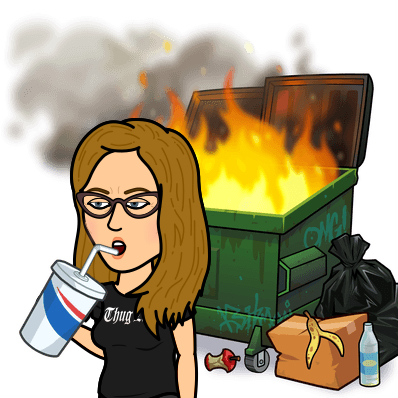
I’ve been working on a novel (to be honest, I’ve been working on about six of them because I have a problem seeing things through to the end six times out of ten). But this one in particular, I wrote, edited, re-edited, edited again, rewrote, edited, and re-edited all 97,000 words multiple times, always adjusting it with every rejection letter and well-deserved bit of advice. A month ago I wanted to throw it into a dumpster and burn the mother fucker to the ground. I wanted to delete it from my hard drive, the cloud, completely wipe the piece of shit off of the face of the earth. After all those years. After all that work.

It made me so mad that I couldn’t get it right and that it always felt lukewarm that I wanted to quit novel writing all together.

So I killed it. I put it in a file that, I shit you not, I called “The Piece of Shit Series That Will Never Get Published Because It’s Fucking Awful” and left it for a few months while I figured out how to rent a dumpster and get my hands on some gasoline.

Then, like any good writer, I stewed. I festered over it. I fumed.

I hate wasting time. I hate wasting words and effort.

So instead of sending it out yet again to die in some slush pile…or deleting it completely, I started a new document called “What I hate about this book” and I sat on the proverbial therapists couch and let loose all the things that I knew weren’t working and all of which were my fault as a novice writer (I started this thing even before my Fixing Destiny books). I ripped it apart, above and beyond what I heard from outside sources.

Then…at the bottom of the page I wrote, “Is it even worth saving? Is there anything about this story that you love? If you could rewrite these characters, if you could change this plot now, knowing what you know, living what you have lived, what would you make different?”

The next two pages I laid it out. If I had free-reign (ha ha ha, silly writer, that’s your piece of shit you DO have free-reign!) I would change that girl so she wasn’t such a sniveling idiot. I would make her stand up and leave. I’d give her a bigger threat to face on her own. I’d make her tougher. I’d make that boy of hers not be such a fucking mess. She’s already had to clean up enough messes.

Etc.

Now, I’m starting to like these characters. They’ve gone from wet mops to warm bread dough, bubbling with potential and depth…but still not as formed as I would like.

And here’s what I discovered after getting real and hard with myself (whoo…that sounds naughty). I can write and edit a piece of…er…work… a million times, but if I don’t really love the characters, the story won’t follow. I have to believe in them. I have to love and hate them. Not just have them on a page to hold space while the weak plot tries to build a book around them.

This week, I encourage you to take a scene that’s not working, a novel, a short story, a poem…whatever it is that’s sticking in your craw lately, and get brutal. Be fucking horrible to the work and to your part in it. Own your shit-fest and stop tip-toeing around it. The first step to fixing a problem is admitting you have one. The next step is tearing it down to the foundation of what you’re trying to do, and building it up better, stronger, more beautiful.

Don’t be afraid. You have free-reign writer, to change, to destroy, to rebuild. And if you find, after tearing it apart that there is nothing that can save it, that you don’t have any love for the idea or characters, get yourself some gasoline and a dumpster. Because those horrible little projects that we don’t love enough to stick with will only serve as anchors that tie us to mistakes we need to move past.

Re-write or destroy, but don’t stay stagnant with your writing, or it may just cripple your creativity until you never pick up a pen again.

The Beautiful Writers Workshop #21: The Keeper Shelf

Happy Thursday, writers! Today we’re jumping right into the craft of writing and, more to the point, how the books we read influence and inspire us. Many of us know that to be a better* writer, we must spend a lot of time reading good books.

 *I’ve heard it said many times that if you want to write well, you must devote an equal if not greater time reading, especially within your genre. I have mixed feelings on this. Yes, reading good work in your genre can be important to how you formulate story, find inspiration, and learn. But if you are doing it solely from the perspective as a writer, it can also cause you to lose a bit of that magic we call your ‘voice’. And, don’t misunderstand, I LOVE TO READ. But I will often lose myself in a good book (Thanks a bunch Chuck Wendig, you beautiful beast of a writer) to the extent that I use up most of my ‘free time’ and close the cover in a self-made brain fog, where in I can’t find my laptop let alone write something coherent. So I guess what I’m saying is: Balance.

Today, I want to talk about what you read and in particular your “Keeper Shelf”.

Ladies and Gentleman Hectic Eclectic (Part 1)

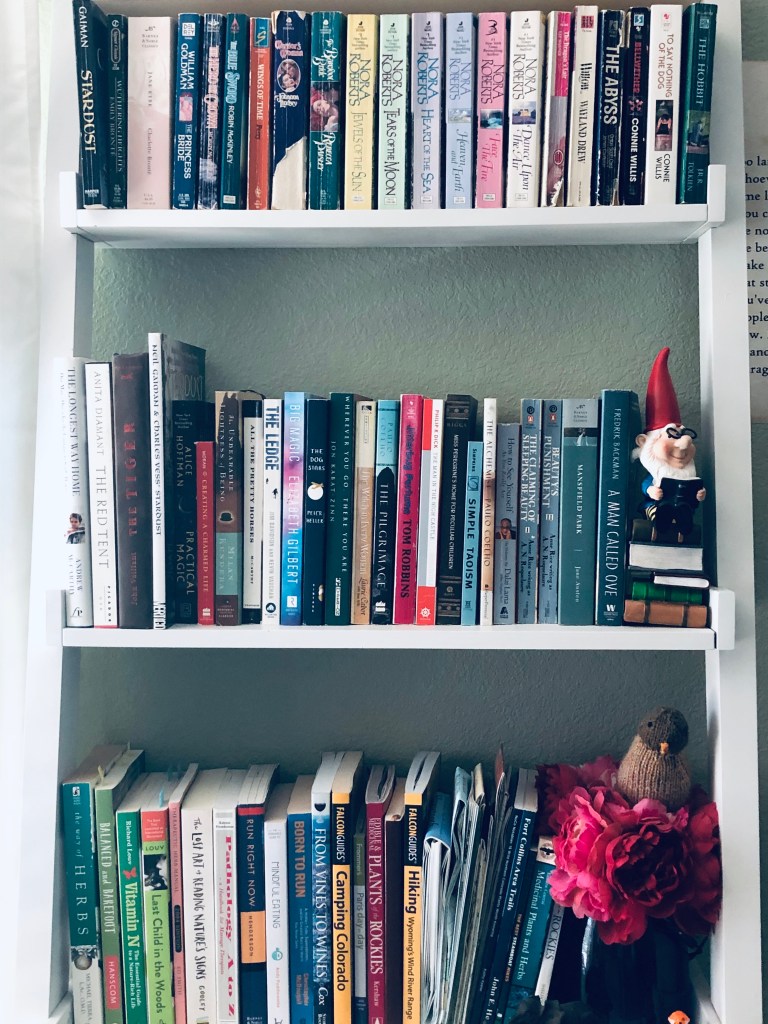
All of us have a “Keeper Shelf”, I’m sure of it. These are the books and stories that we love so much we can’t bear to part with them. They have somehow touched us, shaped us, hit that chord deep inside that makes us want to read them over and over again. This shelf is unique for each person and what’s lovely about your Keeper Shelf is that you’ve chosen these books because something about them worked so intrinsically well that you keep coming back, even when you know how it ends. These are the best ‘how to’ manuals we have as writers.

Hectic Eclectic (Part Deux). Ballerinas next to Deadpool (thanks April Kramer), a dash of Xian Terra cotta warrior and an empty bottle of what my father said was part of his worst college experience. Oh…and some of my all time favorite books. High brow.

This week, I want you to take an introspective look at an area you are struggling with in your own novel/work. For some of us, that might be dialogue. It might be story arc, it might be how best to show (not tell) emotion, character quirks, climax, scene setting, you name it. At least one of those authors on your keeper shelf has nailed a concept that you are struggling with. Once you identify what you’re trying to accomplish with a story, scene, or character, I would love you to take another look at one of your ‘faves’ that did it right.

Read, re-read, dissect it, pull it apart and diagram it on post-it notes…

“Ah, she doesn’t say Mel is sad…she makes the sky cloud over—even the setting turns dark—and  Mel misses breakfast for the third time because she can’t pull herself out of bed, and her eyes hurt, and her mom won’t stop asking her if she’s all right.”

“Ah—I can see these characters care about each other because they can pick on tender parts in their banter and only love each other more for it.”

“She leaves every chapter with a tiny cliffhanger…that’s why I can’t put it down.”

“He’s made Nessie so human and imperfect, by all the things she does despite of her internal dialogue, he makes her a hero that feels personal.”

You get the idea. It is the sincerest form of flattery and honor to use someone’s work to make yours better. Obviously, I’m not advocating for plagiarism; you will and should write your own story, but if another author’s work helps you see the difference between what works and what doesn’t, then utilize their book as a tool to get you there.

You have shelve(s) of Master’s Classes right in your own home so go through some of your old favorites and pull out the things those writers are doing to connect with you as a reader so you can do the same with your own readers.

Constant and continual improvement in our writing craft is essential to success. Because someday, we all hope that a reader gets to the last page of our book, closes the cover, puts it up on that top shelf in their library, and says, “That’s a keeper.”

The Beautiful Writers Workshop #19: Writing Your Truth

In the midst of a nation undergoing painful and necessary growth, I’m happy to have you joining me here today.

If you follow my writings and my blog, you know where I stand on the issue and I want to take a moment to urge every white person in this country to re-examine their own lives, understand the privileges they have, and really start opening your hearts, minds, and ears to listen to People of Color.

Keep your mouths shut and listen.

It isn’t about you. It isn’t about your guilt, it isn’t about how it makes YOU feel. It isn’t about arguing your way out of the discomfort. It’s about anyone and everyone who has had to limit themselves out of fear, who was held back or down because of the color of their skin. Listen, work to understand and ask what you can do to be the most effective in fighting alongside them. Let’s start working towards a country and nation where we are all free to walk down the street, drive our cars, go out for ice cream, go out for a jog without being pursued, punished, incarcerated or killed.

Now, in line with that, I wanted to talk about a program that I had planned to start this summer with a beautiful human and social organizer, Queen (you may remember the piece on her son Dontré. If you haven’t read it, please do: “Weapons Used Against Me”)

Queen and I had envisioned a free writing workshop for disadvantaged youth and others in the community who’s voices were constantly being silenced or marginalized. The idea was to encourage and teach them how to find their true voice (outside of influence), to tell their story, in their truth and have a safe place to do so. A place where it wasn’t about the moderator’s discomfort, or what could or could not be said. A place for them to find power in their own purpose. Then, how to take those words and get them noticed. How to be heard in a world that is too used to turning away when something makes it uncomfortable. I had hopes of finding publishers for their work, and if nothing else sponsoring publishing of their work myself with all proceeds going back to the participants.

Then COVID came along and sort of blew it all to hell. But, I’m in contact with Queen and will find a way, in the next coming months, to bring the workshop back to the table. Because writing things down matters. Because putting emotion, thought, and personal truth down in words on paper immortalizes the truth of you and your place in time. And the more voices we listen to, the bigger the truth we find.

Today’s exercise is about finding your voice. And that can be scary as hell. We humans can harbor some pretty dark shit in our souls. We hold on to traumas like moths in a closet that we’re afraid to let out. But they slowly eat away at everything we own. We shrug and say “It’s okay, it’s no big deal how I feel, how I felt, how I survived…”

Humans, it is a big deal. It matters and you matter. So write it down.

Write down what you’re feeling about today’s social climate. About your own feelings about racism, what you notice in yourself at the bridging of the topic, what you wish for, what you hate about yourself, what you love. What can you change? What will you change?

I will keep you updated on the progress of the class and how you can participate, contribute, or spread the world to people who may need this kind of therapeutic and power-restoring practice.

Normally I’d say “Happy Writing” but today I’ll leave you with this.

Write in Truth.

The Beautiful Writers Workshop #18 Writing Challenges: Why Word Counts and Time Limits Work

Today’s blog will be short as I’m embarking on a new writing challenge brought to me by the fantabulous people over at Zombie Pirate Publishing. Not only is it a genre that I have yet to dabble in, but the subject has to involve a planet I know relatively little about.

What madness would possess me? Well…I don’t like boxes. I don’t like to be put into one, and I don’t like to contain anyone else in one. I think we were gifted free-will for a purpose. I also believe that it’s a lot more fun to participate in life than it is to sit on the sidelines, stuck inside some box somebody once, a long time ago, put you in.

So while I’m busy researching space travel and alternate dimensions and typical characteristics of rebellions, I encourage you, sometime this summer, to find a writing challenge that pushes you outside of your comfort zone and into that strange and beautiful place of self-awareness.

You see, until we’re faced with a challenge, we never really know what we are capable of. If we are always comfortably in our box, we assume those lines around us won’t bend; that the walls can’t be broken. Challenge brings change, and with it a casting off of limits. When we break through walls/limits we come to understand how amazingly capable we really are, and then realize how much our excuses have held us back.

I believe in every single one of you. I believe you can write 15,000 words in seven days, edit it, and submit it for consideration in a publication. I believe you will finish a 50,000 word novel in a month. I believe these things because I’ve seen it happen. Because I’ve done it. And I’ll keep doing it, especially in times when my tank is empty and I start to question my worth. Because I know I am capable…deep down. I just need reminding. We all do.

Writing challenges not only force us to sit our asses in the chair and knock our procrastination methods to the curb, they also show us how much we can actually write when we focus. Sitting for thirty minutes on a good stint will sometimes give me 1,500 words. (This doesn’t account for the editing which probably will drop a third of that). The point is, when you know you don’t have the time to second guess or organize your sock drawer, you give yourself the freedom to just write the damn book.

And, sad as it may seem, sometimes that’s all we need; permission.

Go and write. Look into the Zombie Pirate Publishing site, check out local groups in your area. I did an amazing one a year or two ago for the Rocky Mountain Writers that lasted one weekend and garnered 12,000 words. One of the most fun novellas I’ve ever written and my first foray to action/spy-fi (yes…spy-fi. It’s a genre I just now made up. Copyright.)

That’s it…that’s all I’ve got. No fun pictures or anything. I’m on a mission now, I ain’t got time for that. I gotta make up some swinging character names and decide how genetic mutations might let someone breath H2 and He.

Go find a mission. If you can’t find one, make one. Give yourself a time limit, and a word count and make it a little more than you think you can handle. Hell, make it a lot more than you think you can handle and watch how you surprise yourself.

I’ll be back next week with a full report of how often I found myself crying in the closet and banging my head against the wall for comfort.

Until next time, kids, happy writing.

The Beautiful Writers Workshop #16: High Emotion Words

…did no one else start singing Whitney Houston after that title?

“I get so emotional baby, every time I think of yoouooouu…”

No?

Well then go back to bed, get up again, and rethink your life.

Whitney
I don’t know why I like it…but I just do.

Today we’re getting off the poetry train (thank god, we thought it would never end!!!–ungrateful louts) and getting back into other aspects of writing, specifically word choice.

Now, I guess you could argue that this is related to poetry but right now I want you to think about words in terms of the emotions they convey and why using the wrong word can lead to either a tepid response in your reader or just plain confusion.

This is a good time to bring up the death traps of “very”, “really” and any “-ly” word you tend to over use. Chances are if you are using one of these precursors or the dangling adverb-maker, there is a better word out there for the emotion you are trying to evoke.

(He wasn’t very sorry. He was contrite, remorseful, ashamed. She wasn’t very pretty. She was luminous, stunning, bonnie or even fetching if you feel somewhat Scottish)

Remember, your ultimate goal is not to have your book or story be the one that readers want pick up because it’s an apt substitute for melatonin. You want them to not be able to put the book down, unless they need an emotional respite from the roller coaster you sent them on. So your word choice, in addition to being like an arrow to a bullseye, needs to light up hard or intense emotions in their brains.

I’m going  to offer an important disclaimer…I’ll even go so far to say as it’s imperious. Just like eating cake every day for every meal, or riding twenty rollercoasters back to back to back, too much of a good thing is NOT a good thing. When you overuse these impactful words, they start to over power the reader’s ability to keep up, in addition to that, you start to sound like a goddamn narcissistic douche bag.

“Watch me word, Underlings! Witness the power of my supreme expression of the English language! Cower to my mighty thesaurus and the power of my underused MFA!”

scholar
Sure, but it keeps him from licking his balls.

ahem…you get the idea. Overuse of ‘heavy’ or ‘flowery’ language will disenchant your readers and come across as dishonest (i.e. fake like a Kardashian’s talent).

Take a scene from your current book and highlight or “find” all of your adverbs and precursors. You don’t have to replace them all but particularly (yes thats a -ly word) pay attention to the ones that describe meaningful or pivotal scenes, where you want the reader to feel what your character feels.

Jane wasn’t very sad. She was decimated. Desmond wasn’t very angry, he was enraged. Katelyn wasn’t very happy she was glowing with a newfound sense of hope.

There you go. That’s your job for this week. Oh, and here are a list of heavy-emotion words if you need a little help. If you find one or two inspirational, meaty if you will, find a home for them in your work, where appropriate.

Positive:

Jubilant, elated, ecstatic, contented, serene, vivacious, encouraging, blissful, pleased, enchanted, warm, sunny, joyful, anticipation, admiration, exquisite, graceful, delighted, amused, amiable, dazzling, mesmerizing, captivating, invigorating, splendid, charming

Negative:

Oppressive, sardonic, overbearing, irritated, obnoxious, disgruntled, disenchanted, distressed, miserable, sadistic, resentful, aggravated, sour, crippling, debilitating, horrified, heavy, loathing, disgust, desperate, contempt, brutal, bloody, flawed

Others:

Evenhanded, indifferent, passive, apathetic, secretive, secular, pious, composed, awestruck, mysterious, ambivalent, horrified, pragmatic, cautious, accepting, reserved, pensive, vigilance, ancient, delicious, feeble, solemn, famished, puzzling, complicated, massive, skeletal, tremendous, efficient


The Beautiful Stuff Writers Workshop #15: Poetry and An Easy-Sleazy Exercise

As we are in the last week of National Poetry month I have a couple to share from last week’s exercises before we get into some fun little distractions from your current pandemic confusion.

But first…some Verse…


LESSONS


The children must be taught

But why?

So they can “grow up”?

So they can feed this horrible and unequal shipwreck of a country?

This continuous machine that steals their joy

and forces them into tiny boxes of pre-approved paths?

Paths that continue to feed the privileged?

who ride, like great white kings, on the backs of former dreamers?

Dreamers forced to live on the crumbs of cake that fall

from their slovenly white jowls?

The children MUST be taught

A new lesson.

A new way…the way of their heart.

The way their soul already knows.

The way that shouts out,

“You don’t get to tell me what my potential is–

You don’t get to standardize my worth by tests and deficient wages.”

The lesson of straightening spines

To topple the oligarchy from their shoulders

and down into the mud, to take their turn in wallowing.

Lessons must be learned.

The children must be taught.


–J. McLaughlin (Fort Collins, CO)


And from Miss Elliana (past contributor) :


IMBALANCE


And so it is,

Not one damn word in my head,

While the world rolls and sways,

Constantly tipping the balance point

Now to humanity

Now to the hungry gnash of teeth.

And I can’t remember the last words I said to you.

I can’t remember if

I was human that night

Or gnashing.

I must have felt the full and oceanic spectrum

all the love

and the hate

desire

and regret

Heart and mind, a mirror of the worldly indecision.

I like to imagine I was kind.

Even though I’m well aware,

of the splendid mess I am

for that boy.

A stammering, uncontrolled fool.

But these are stammering, uncontrolled and

foolish times.


–Elliana Byrne (Boulder, CO)


Finally, because I cannot ask you to do something that I wouldn’t do myself I decided to experiment with storytelling/dialogue in poetry:


TRUTH


“The truth–“she breathed. “The truth is that love changes.

In ways we don’t expect when we first fall.

It grows and festers, or it cools and softens.

It recedes and fades.

Sometimes it aches,

like a bone that healed wrong.”


His thought crashed out loud.

Thick skinned rhino parting reeds.

“How did you love me?”


Heavy stillness settled

Hot, lazy, savanna swelter

hanging over, waterhole dried.

Air so thick, she could cut it

With the truth.


“The festering, aching way.”

And, since it’s still Poetry Month…here’s some ideas to squeeze in a few more exercises in the art for this last day of April!

You’re welcome.

  1. Write about something that will always be out of reach (everything from the cookie jar to the corner office)
  2. Write a poem where each line/sentence is about each day of a week (maybe last week, maybe an alternate universe week)
  3. What does your favorite color taste like?
  4. What it feels like when you don’t belong in a group of others. (do you want to belong or are you trying to stay an outcast? Play with the difference in those emotions.)
  5. Start the first line of your poem with a word or phrase from a recent passing conversation between you and someone you don’t know. (it can be a simple, “how’s your day going?” from the clerk at the grocery check out line, or more intrusive like a “Have you found Jesus?” concern from a person on your front door step. Maybe it’s the “It’s called a blinker, jackass!” you hear from behind you in traffic (back in the day when we sat in traffic).

Happy Writing!


The Beautiful Stuff Writers Workshop #14: Poetry: The Quarrel with Ourselves

“We make out of the quarrel with others, rhetoric, but of the quarrel with ourselves, poetry.” –William Butler Yeats


I cannot believe it’s taken me nearly all month to remember that it is, in fact, National Poetry Month. I think I may have skimmed over something in the deluge of news clips and overthought, under-edited articles that pervade my cyber space, but in a world where days blend together, I nearly missed it.

You know what coming next, don’t you?

Oh,I’m not being lazy! It’s good practice!

And its more a matter of economy–I’ve got end-of-school projects due and a Black Belt Progress check this week, and therefore, my plate is a little full. So this week your exercise is simple. Go outside, mask it up if you find yourself in a bustling park, of course, but if it’s a deserted early morn, breathe the un fettered air, allow a scrap of paper and pen to tag along with you.

Take ten minutes of just being aware of the moment. What do you see? What do you hear? What do you feel? What do you smell? Use these observations and notice how they filter and affect the thoughts already on your mind. Have a quarrel with yourself and see what arguments emerge. What solutions? What epiphanies?

Then go find yourself a favorite place to sit and write me a poem.

I was going to give you some restrictions but I think we’ve all had enough of those. Any length, any form, rhyming or blatantly against, iambic pentameter–why the f%*k not? Limerick or Odyssey, dark or light, whatever is on the tip of your brain, no matter how sharp or dull.

Send them along, and let me know if you want me to include them in the weeks to come.

I’ll craft one as well.

Happy Writing!

Reflections of Pandemic (Reblog): Nothing But Time (and a few expletives)

Hello writers and readers…so by today…wait, what day is it?

Fuck if I know.

I don’t know the last time I took a shower, or ate something that wasn’t in the carb family. I do know that this debacle has taught me I can’t have bourbon on an empty stomach without severe physical, emotional, and social consequences.

So, what day is it?

It’s today.

Today you may have some time on your hands. Or…on the other hand (ha–see what I did there? Clever girl) you may not have a concept of time anymore so that last sentence is moot point. In any case, you have time to read this, ergo, you may have time to write a little bit and if there’s one thing you should definitely be doing these days, it’s writing.

So let’s be like frogs and hop to it…

(Yep…I said that. Shit, dude, I don’t know, I’m in a weird place, I think it comes from not wearing real pants for three weeks and giving up alcohol…)

Last week I encouraged you to journal throughout this strange, disconnected/connected world we’re in.

Example:

(Sometimes I think it would be easier to be all the way disconnected. Enough of this social teasing and lamenting not getting to hang out. (Introverts are adjusting well, except that all the people who normally leave our lairs during the day for school and work are now part…of…our…lairs…permanently. Thus the pajamas, and carbs, and sparkling water). And while we’re breaking apart some falsehoods about the benevolent humanity bandied about on-line, a pox on the trolls that come out on NextDoor to shame neighbors they no longer have to face in person for walking past them momentarily, within five feet instead of six. They’re just trying to get out of their lairs with their lair-lings before someone ends up in a shower curtain, so chill the fuck out)

Ahem…back on topic.

Assuming you are journaling, keep at it.

Every day on this wild ride is a different day and the elation and hope of one moment are just as important as the desolation and dark of the next. Write it all down.

But if you find you have some of ‘today’ left this week, I want you to write a short fiction piece and here are your topics to choose from:

1.) Write about the first year following an epidemic. If you’re a non-fiction writer, fill it with facts and likelihoods. Inspirational/psychological/self-help, write what you think the world will have learned (if anything). Dystopian/pirate/sci-fi–this is your moment to shine, baby. The point of view can be from one character, a country, or even from the perspective of a tree, street, animal…whatever paints your wagon.

2.) If you’re tired as fuck of thinking about epidemics, and fear, and empty toilet paper shelves, and the loud shouting voices on every screen you turn on… write a short story about a person who decides to spend a year of their life alone in the woods (a la Walden, if you will) What magic can be found in that solitude? What darkness? What does lonely mean to your character? Is it peaceful or is it exile? Write it from your POV, or pick a character you’re already working with…whatever slays your dragon.

I’m not talking long here, 5,000 words tops.

Happy Writing.

It’s Thursday.

The Beautiful Writers Workshop: #10

I know it’s been a couple of weeks and I don’t expect this blog post is going to wow anyone or cause massive social change. It may not even get read, after all, I’m not here to give you the latest updates and numbers and calamity that’s been shouting, ceaselessly, in our faces for the last few weeks.

I’m here to tell you I’m not ok. As my friend sid says, my “give-a-shitter” is effectively broken and I haven’t been able to write much of anything. I swing from anxiety for my parents and at-risk loved ones to rebellious trips to the grocery store for an onion and a bottle of shampoo.

It shouldn’t make sense that I’m not writing, I have so much time, right? So much freedom to not go out and just hang in my pajamas. An introvert should be ecstatic that she no longer has to find excuses to not attend social obligations. But this introvert is also distrustful of the institution that has so easily taken the choice. This introvert has gone from someone who had at least a few hours alone time in the day for free-thinking, to someone who is a full-time-stay-at-home-mom-teacher-comforter-researcher-scientist-gym teacher-housekeeper-spanish teacher-stoic-source-of-calm who feels inadequate at all of it and obligated to keep being the ideal citizen. I should be able to thrive under any condition you put me in and raise a fine bunch of kids while doing it.

But I’m not thriving. Not creatively. Not in any way.

I sit down, in front of screen or page and the ideas that I know are bundled up inside feel trapped, covered by a very particular sense of gray and a heavy blanket of anxiety. I don’t have the luxury of this time. Shouldn’t I be planning a lesson or getting my kids out for a walk, or writing some cheery optimistic chalk bullshit on my neighborhood sidewalks so we don’t forget ‘we’re in this together!” Of course we’re in this together, we’ve got no other choice. It’s like walking into a prison and have some lemon-sunshine blond smile with perfect teeth and giggling “Welcome to Camp! We’re gonna have loads of fun! Just go with it! Oh, and if you complain you’re a vile piece of shit who doesn’t care about your neighbors! Here’s your pajamas and a set of sidewalk chalk!”

Overall, its as if my mind is holding in all of this beautiful stuff, interesting threads of story and plot in its sweaty, clenched hands and it looks at the world shouting the same repetitive rhetoric around, shrugs and says, “why bother?” Then pretty soon those ideas fade under the weight of gray around them. Until they disappear completely and all that’s left is the repetitive rhetoric.

So this lesson has no title. It has no direction. Except to say this, these are strange and harrowing times. You can argue there is hope in the social solidarity we are forming from six-feet away. But something feels off about this and I don’t know how the history of it will be written. So, I’m journaling every day. Words others will probably never see. Thoughts that can be as dark and complex or stupid and shallow as I need them to be on that particular day.

So that’s your assignment for the remaining weeks of this thing. Journal. The thoughts, fears, anxieties, joys (if you can find them good for your sunshine-blond soul), that change in every moment with the wobble of this event. Someday you may come back to it, read and remember. Or you may chose to burn it and hope never to go back to the person you were in those moments of dark. History is going to be written from these events, don’t let theirs be the only version.

Oh, and get outside. Its the only thing that’s saved me from some severe physical/mental damages (minor ones are still fair game). It’s actually quite pleasant when you can catch nature on her own.