I’m normally a prolific writer. Like…I can put down 2,000 words plus a day when I have time and am in the middle of the glorious magical lapse, where time ceases to exist and there is only writing. But of late, that space is hard to find.
Now, to be fair to myself, I did just get done with a big project for my writing organization as well as helping to put on a conference. The kids are home right now, and there have been a lot of to-do’s in life. All of those excuses aside, when I sit down to write, it’s less a raging waterfall and more a sad little trickle, if it happens at all.
At the beginning of this year, coming off a year of publishing five books, I told myself that the main goals of the year would be learning and teaching. I would take classes, I would teach classes and give my brain a break from the writing, and especially, editing aspect of what I do–at least in terms of publishing goals. But I think I did myself a disservice.
By not writing consistently, at least a little everyday on various projects, I think I’ve lost some neuro pathways. I’m having a hard time with my focus, with my word count, and with that magical blossoming of new ideas. But is that all? Because I’m pretty fucking loopy these days. Like can’t concentrate, I’m tired all the time, I’m crabby (granted the world is a shitfest currently), and often depressed.
This is where the post gets a little weird, but I encourage people (men, women, and everyone between and along the spectrum) to stick with it.
Let’s talk about perimenopause. (Ew! I know, but shut up and listen) Brain fog is real, ya’ll. It also means night sweats and if those don’t keep you awake, the random brain and body signals being sent will. Less sleep equals…even more brain fog. I’m struggling to find balance, and focus, even though I haven’t changed any of my normal dietary, exercise, or life practices. All this to say, sometimes, life and biology don’t work with us. Sometimes we have to find new pathways and methods to do what we love.
Right now I’m researching it. I’m trying to eat healthy, let myself rest when I’m tired, and (despite also still teaching and learning this year) I’ve started writing again. A small, simple and sweet little book that’s not requiring too much investment as of yet, because I need to keep practicing, but I also need to keep it enjoyable, and not too convoluted for the brain cells that are already fighting strange hormone dips and tricks.
I know I’ll get through this, I’m looking into therapies and other things that can be done. Because I’m committed to managing my health and I’m committed to my creativity. Even if that means (as a woman and isn’t it ALWAYS the case) I have to work a little harder to find that balance. I’ll keep writing, a little each day. I’d rather be stuck in the traffic going slowly in the right direction, then pull of the road and never get back on.
Take care out there kids, and bring a fan. It’s going to get hot randomly.
I’m not going to lie, I’ve been a busy bee of late, and I’ve got plenty on my plate to make me feel justified when I rehash an old blog, especially if it still fits with what I’d like to talk about.

This, being July and smack dab in the middle of the Writing Conference Season (I’m not sure if that should be a capitalized title, but it seems like an event so…I’m going with it) I thought it would useful to budding writers out there to go over some conference basics as well as some advice that has really helped me get the most out of them. This also being a totally new era, I’ve added some modifications to reflect our new Zoom/Teams lifestyles (not NEARLY as cool as a Rock n’ Roll lifestyle).

So, let’s get into the meaty goodness of writer’s conferences and why you should strive to attend at least one a year.


How do you choose which one to attend?

•	Firstly, most conferences, at least since the pandemic, have had to switch to some type of online format or perhaps online-in person hybrid to make accommodations for safety. So, the good news is, you may not have to shell out so much for travel expenses as they can be taken from the comfort of your home. Bad news is that you’ll still be at home and all the challenges that can go along with it. I’ll touch more on that later on.

•	If you are anything like me, you’re wealthy in creativity but strapped for cash. One of the biggest deciding factors, for me, is the cost of the conference, along with which classes, speakers, and agents will be there. Getting to pitch to an agent, or multiple agents for publishers specific to your genre is a boon. Classes that are not just interesting but will help expand your craft are also good factors to consider.

•	Some conferences are genre specific and if you are a comfort-hugging archetype who doesn’t flirt around outside your style and subject matter, then definitely consider something specifically geared to your genre. The Romance Writers of America used to host in fun and far-off lands like…San Diego and…New York City…*le sigh* Genre specific conferences are awesome if you’re looking to polish skills or start out in a new genre that you don’t normally write in. Don’t be afraid to flirt a bit (outside of your genre, that is *wink)

•	If you’re stuck deciding between two, look at the courses offered, the speakers presenting, and if they are offering pitch sessions, especially agents suited to your work. Pick the one that gives you the most opportunity for growth and stretches your creative and ambitious goals.

How do I get the most out of my conference?

•	Here’s what I’ve learned. Plan ahead but be flexible.

Conferences don’t just start the minute you pin that snazzy name badge on your seldom-used dress clothes (or, via online conferences, log in with only dress clothes on your upper half). They start the year before, during writing when you self-reflect on the issues you have with your WIP, your style, your grammar, or even the steps you want to take next. If you have trouble with dialogue but are a whiz at plotting out the perfect story arc, then use your conference to build up your weak points. Even if it means stepping out of your comfort zone. Which leads me to my next point:

•	Sit it on at least one session that is outside of your genre, comfort zone, or even interest.

Look, conferences can be amazing experiences but if you’ve been through sixteen hours of various takes on the query letter or trying to perfect your memoir pitches, you’re not growing as much as you could be. Why do athletes cross train? Why does an engineering major still have to take social science classes? Because learning about the realm outside yourself will make you better in all aspects of your work. Try a sci-fi world-building class or screenwriting. I guarantee, you will get something new out of it that will help your project and your craft.

•	Push your limits.

Talk to people you wouldn’t normally, share your story, your success, and your pitfalls. This is an awesome opportunity (I’m talking to you little introvert) to commiserate, vent, and rejoice in the craft you love so much. Pitch your novel, article, or story. Talk to the larger-than-life keynote speaker (here’s a hint: every single one of them I’ve had the pleasure to meet has been the kindest, most down-to-Earth and supportive writer). Come away feeling like the weekend/day was an experience that has changed you in some fundamental way.

How do I not get overwhelmed?

•	For goddess’ sake, take a break in the midst of it all. I’m the worst at this. I’m a classic victim of; “I paid the money and I’m going to hit every single class. I will volunteer, pitch, hit up the speakers at the dinner table, and stuff every bit of information into my head until explodes!” Then by day two, nothing makes sense in my mind, words are blurry, I’m not sure what my name is, and I’m crying into a self-made mashed-potato tower, while wearing Underoos on my head that clearly are not my own.

Take the breaks between sessions or even forgo a session and find a quiet corner or go for a walk outside. You need it to recharge, allow time to absorb the information and be refreshed for the next round. This is especially true for online conferences! Take the computer to different rooms (if they’re still quiet) or outside if available, take walks in between sessions, take eye and body breaks (look far off for a spell, or ‘rest’ your eyes away from the screen, get up and stretch as often as available). Its’ almost like interval training—the space between, the recovery is what sets you up for the next round, so take it.


•	If you are pitching to an agent or editor, polish the shit out of that thing beforehand. Take your pitch to your critique group, your friends, random people on the street before the conference and learn how to deliver it with confidence and clarity. Know your story, your characters, and your plot, inside and out. That first page should sing the sweetest siren’s song anyone has ever heart and lure the tepid agent from the afternoon lunch lull into something exciting they want to read more of. The more you practice your pitch, the more it will feel like a conversation with a good friend instead of an interview.

•	If you are pitching, don’t be intimidated by the agent or editor. Remember they are people. They are there, specifically, to talk to you. To hear your story. To find the next big thing. Most of them are also just like you…they may even be wearing Underoos and like mashed potatoes. The point is, it’s okay to be nervous, but don’t go in assuming they relish the idea of shooting you down. Be polite and always thank them for their time and any advice they have to give.

•	Sleep before. Sleep after. Eat nutritious food, take walks outside whenever you can, and watch the caffeine and the booze. Free coffee stations are like crack for me (or conversely at home for online conferences—having my own espresso machine) and cash bars are a tempting mistress at the end of a long, people-filled day. But you’ll have things to do the next day and Underoos will stay safely tucked in if you can avoid that third cocktail.

To conclude, I’d like to share one of the best lessons I’ve learned from conferences.

For every conference I attend, I add a layer to the writer in me. That is to say, through the people I meet, the classes I take, and the lectures I attend, I learn more about the craft. How, and when, and why, and what and all the technical attributes that come along with the delicate balance of creativity and grammatical science. But more than just the sum of these limitless parts, I learn a greater whole.

The whole that is me as a writer.

And in doing so, I’ve learned how to enjoy myself more at these kinds of functions by listening to my body, my brain, and my growing years of experience.

Back in the day, I would be hand-cramping from the steady stream of notes at each session. I would be tumbling from one to the next, chugging down coffee between in hopes to keep my energy up so I wouldn’t miss a thing. I would strategically place myself at the agent’s table who I wanted to garner the literary affections of. I would, in essence, be the adult version of my grade-school brown-nosing self.

Something happened one year, while at the meet and greet “networking” event. I found myself long past my emotional and mental boundary and crossing all lines of my introvert nature, to garner the attention of at least a few more experts in the field. I was mentally exhausted, untethered and I felt like I was on emotionally shaky ground. I realized after a long day of learning and being ‘on’ that I didn’t want to be there.

I didn’t understand my limits or that honoring them was at the core to being successful at a conference (and let’s face it, in life)

I thought I could talk it all day, learn it all day, do it all day. Nerding on a pro-level is a quintessential part of who I am. I loved hearing about other projects much more than I like talking about my own and reveled in the creativity and ingenuity of my fellow conference goers.

But…the more stories I heard, the more classes I took, the more advice I tried to apply—the less sure I became of my ability. The more tired I got, the more flustered I became, the wearier my mind, the less information I could process.

Until everything was just noise and words.

Then I learned a secret.

You don’t have to throw yourself under a bus to catch it.

Knowing your limits is not just useful in this particular scene. Knowing your limits is useful for all humans. And it comes with age and the ability to let go of unrealistic expectations.

During a few of my sessions, even as I listened to the speaker, I listened to myself. If I was inspired to write; I let myself write.

If the iron was hot, I struck while in the moment, abandoning the mad scribble of notes.

Did I miss a little of the presentations? Sure, but in the midst of other brilliant minds and the energy they impart, in the middle of shutting out the rest of the world, the heart and brain start to do this funny little dance and learn to play again.

Inspiration doesn’t always happen at the opportune times. You have to write when the words are ready and when the heart is open. Conferences have given my heart a doorway, an acceptance into writing what often builds up behind all my carefully constructed walls.

In years past, I’ve forced myself to jump the hurdles of social interaction and witty conversation until late hours, when all I really wanted was to wander off to a quiet room and take a nap.

I had to make it OK for myself to listen to that want, in order to get the most out of my time at conferences. These events open pathways, but only when we’re not too busy to see them. If we are embroiled in getting the most out of every single planned moment of the time, then we may miss the real lesson.

Creativity is like a river and if you fully submerged you’ll easily drown. You’ll miss the beauty of the ride, the view, and the sounds.

So, know yourself, Writer. Do the things that you know work for you. Let the river of creativity, carry you, but always leave yourself plenty of breathing room to be inspired.
Sometimes I like to pick up random notebooks, lying around my desk (there are several) and crack open the pages like looking in a dusty box in the attic. No reference to when or where it was last filled and sealed. Sometimes I find pieces of myself that had scribbled themselves on pages. Once out of my brain, I forgot about them. Sometimes I recognize that girl, shining on the page. Sometimes I long to be her. Sometimes, I am sad for her. Here’s a relic from a random ‘box’. (I should really put dates on these things)
Celestial
Oh, the lengths of letting go I've undergone This sun rises and sets and entire worlds are made and destroyed stars I once thought I revolved around, sure that chaos would run the darkness if ever I left their orbit sputter and fade into nothing
Because the power of a world is the power that I give it The fire of a sun springs from My well The light in the dark is borne in My heart It did not exist before me It will die without me and so it goes ever in the throes of change
So I'm not breathing life into any more poisonous coals they can suffer and wane in the cold of my celestial shadow in the passing of their time and the Rebirth of mine
they will revolve around Me as I am the center they are just cold rocks, caught in my gravity I care not, I notice not if they stick around or become lost and distant sedimentary trash pulled away from me by their own faulted inertia
I’ve been thinking about this for a long time. And I’m not sure if its an American Capitalism (should be capitalized right?) thing, or a global disease but…at what point did we stop valuing art and creation if it wasn’t…profitable?
I’m an anthropologist at heart. It started when I couldn’t put down the Clan of the Cave Bear series at 12 and continued on through college and my degree, and until…well, yesterday when I read a really cool article about a new Neanderthal skeleton that was recently reconstructed…why does it matter?… well…”Anthropology encourages us to extend our perspectives beyond familiar social contexts to view things from the perspectives of others”. Where was I? Oh yes…art. Humans and art. Do you know how long we’ve been creating art? Paintings on walls, carvings from stone, beadwork, intricate clothing, papyrus, plays (both tragic and humorous…), STORYTELLING…
The point is, humans were born with divine mental capacity. And it extends in times of plenty and scarcity to provide sustenance in a form of mental fulfillment. Then…I dunno…hustle culture happened? Capitalism happened? 1970’s parents started scoffing over martinis that so-and-so’s son wanted to be an *gasp* artist…and what a dreadful shame? That someone would chose to create new and innovative and truthful things over…stamping letters and creating spreadsheets? Because…well…art has no… no money in it.
These birthing pains gave way to an entire generation of people who were forced to work at acceptable jobs and “dabble” in art. Which gave way to people “hustling” in their art and marketing the shit out of their soul’s best guess of humanity, to make it ‘real’ by turning a dollar sign. This is where we are. Art has been reduced to…a commodity. And if it doesn’t sell…it isn’t worthwhile…
There are countries that don’t charge artists taxes. Did you know that? That if they’re producing art (writing, painting, illustration, music, etc.) they are exempt from the toil of paying their country extra money. Why? In America that would never fly! Why should they be off the hook
Let me ask you…What do you do in your free time?
You don’t work more. You don’t put out more spreadsheets, or call more clients, or cut more hair, or take an extra shift for fun…you read. You…go to museums…you watch plays…you visit the botanical gardens… you go to a movie. These little “acts of joy” sometimes even keep you from jumping off a bridge. They inspire your mind, they take you out of the daily grind and…hustle.
…is that not of value? Does feeding your soul not count as a necessity?
I’m on a soap box, I get it. You’ve probably stopped reading. But in case you haven’t, please consider
…humanity has survived and thrived because we have had more than just survival to aim for. There is joy and purpose to feast off of. Art makes life. In the event of an apocalypse… could you even imagine not trying to save the art, the books, the music… the decadent history (and prehistory) of the humanistic howls into the universe that scream… “we are here and we feel”?
What is there to appreciate beyond it? Art brings us together, it connects us, it’s a shared experience and a deeper rooted truth than almost any paycheck. And yet…it has been reduced to: how many followers, how much in royalties, how many people ‘liked’ it, how many people went to your show, what the script writer made and if they have potential for more (we don’t pay if you don’t have at least three seasons)…
I beg of you, if you have funds in the strapped and dystopian financial climate that is America now… support your artists. They don’t even have to be me. Just…find something that you love, that moves you and…tell the artist, write them, speak to them, throw some money their way. Remind them…They are important. They are the story up on the wall of a cave…that proves a defiant resistance to the endless march of time. The voice in the dark, the color in the black and white that speaks; we are here.
We were here.
Art matters. And the only people telling you it doesn’t, are the people that cannot profit from it.
Yeah, I did just title this blog that…No, I’m not sorry. Yes, I hope that song plays in your head all day. Yes, it may seem “Ludacris”. Yes, I did just make a dad joke out of it. No, you can’t get a refund, this shit is free.
This is actually a post from a couple of years ago, but oddly enough, I’m headed up tonight to the Wyoming Writers Conference again. And again, I’ll be pitching. So I’ve tweaked a few things but the advice remains solid. I hope it can help you.
Now, on to the blog
This week, tonight actually, I’ll be pitching a novel to a publishing company at the Wyoming Writers Conference in Casper, Wyoming. I know that this should be something I do at least every year but with the past couple of years spent in catching up and starting new jobs, and my creativity taking a giant dump of late, I haven’t had the drive, material, or need to throw myself into the ring.
But, by strange happenstance, the novel that I started at last year’s WWConference in Laramie, turned out to be one of my favorite books. Its a strange blossoming feeling of re-reading it and having it punch me in the gut and make me laugh-cry. I could independently publish it. But…the past years have taught me, that there’s no shame in rejection or in throwing your heart in the ring, especially when you really believe in something you’ve created. So I slammed the breaks down and took a breath. A pause. A consideration. That if the story was “Well written, with a voice we really like” that maybe I should give it another tour around the pasture before sending it out, on my own.
So here I am again, years later, still sweaty palmed, reading and re-reading, and choking on my elevator pitch and changing it a dozen times to get the most depth of the story in the fewest words. And it’s exhausting. The sudden surge of trepidation inspired me go through some of my notes from previous classes and books on pitching. And here’s what I have to offer:
Agents and publishers are human beings. They’ve probably slept horribly, are sore and uncomfortable from sitting, have heard a lot of story ideas, and are probably thinking about the cash bar. Just like you. So don’t treat them like a god up on Olympus by cowering or waving tribute in their faces. Be kind, be polite, and use some of your allotted time to treat them with dignity and respect. They’re there because they love reading and want to find a good story.
Tell them why you love your story. Yes, yes, the general plot, genre, main character and conflict…but what is it about your book that fills your heart. Why do you find a reason to read and re-read it? What were some of the best compliments you receive from your beta readers. Human beings respond to enthusiasm and genuine admiration. Otherwise, we’d never watch baseball. Moving on.
Be organized. Have a synopsis ready, bring a query letter and your business card. It’s been a long day for them and you; stories might start running together and they may need a gentle reminder what the 4:55 pm pitch was.
Be open to suggestions and critique. Whoof, this one is hard, right? After all, we just gushed about what we love in our book. While you love it (or hate it depending on how many goddamn times you’ve had to read it and rewrite it) it is also a good time, before you sit down at that table, to think of your fledgling story like a kid going off to college. Its stepping out into the world to be made better, smarter, stronger. It has a lot to learn, so let it be open to becoming something more and living up to its potential. It isn’t a reflection on you as a parent, it’s a starting point for even more amazing results to come.
Follow up. I’ve sat in the pitch sessions where every agent gave me their card and asked for ten pages. I thought I was a goddamn genius and that they’d be engaged in a bidding war over my book within weeks. Um…hate to ruin the ending there but THAT didn’t happen. Sometimes agents are required by the conferences they attend to receive a certain number of pitches. Sometimes an agent is mildly interested and looking for something to pad up their own resume. Sometimes they’re just bust-ass tired and like a parent giving in and handing their kid a remote cause they just can’t listen anymore, they pass along their card with a defeated…”stay in touch”. That being said, if it happens, act as though it’s the bidding war situation, not the tired parent. Send them what they asked for, in the format they asked for it in, and be respectful with your letter. ALWAYS INCLUDING: your name, that you met at ‘such and such conference’ and that they requested your pages. If you can, PLEASE include some other more personal detail. “It was fun talking to you about your dog, Jasper” (write that kind of thing down on their business card) but don’t make it too personal “I hope your rash has cleared up.” (that’s creepy)
After it’s all said and done a pitch session is like any other interaction introverts dread. You have to talk, somewhat excitedly, about something you love and worked hard on, and thereby risk rejection and public shaming. But please remember that the person sitting across from you is also probably an introvert (or works with a lot of them) and just wants you to tell them a good story.
Good luck out there, and if you’ll be in Casper this weekend for the conference I’d love to sit down and chat about pitches, your book, all the wonderful things we’re working on. Happy writing.
It’s a strange world out there kids. Even if you live under a rock, its hard to ignore all of the things that are currently affecting our lives and world. Massive super cell tornados, vapid and un-checked streaming information, rights being taken away, innocents being bombed, people starving, other’s rolling in stupid amounts of money…its enough to make a conscious person’s head spin.
And mine has been spinning for awhile. And then, even with all of the big picture stuff, looming, you still have to do something about your own, micro world. Your family, your job, your community, your life. Doesn’t it all seem a little too much to anyone else? I worry that if I shrink the world down, I won’t take action when I can to help others. I worry if I get to caught up in the overwhelming outside world, I’ll forget the good I can do with the people I love, closest to me. I’m, as Bilbo once said, too little butter scraped across the bread.
I’m at a retreat this week, helping to keep the thing running smoothly and encouraging this great group of writers in attendance and we’ve been at the mercy of some pretty terrible weather the last three days. The hikes and quiet world-expanding I’d hoped for haven’t happened. I’m shrunken down into my room, my group, and my work and I’m trying to not pull a Jack a la “The Shining”. We can hear our crazy louder and more clear when we’re forced into the silence.
Watching so many of my fellow writers getting work done, and having epiphanies, and making progress has been such a joy. But its also frustrating, because despite being here, and away from the rest of the world, I still feel stuck. I guess when the trap is your own head, it doesn’t matter how much you change the scenery. I’m making lists and doing a lot of the ‘safe’ work of editing and administrative to-dos. I’ve written a few poems. I’ve taken notes on classes. But what I haven’t done is gotten lost in the beautiful alpha state of writing and it’s something that always sweeps me up at a retreat.
Maybe there’s too much responsibility. Maybe I’m just not in the right head space. Maybe there’s a stress level, worrying about everyone and everything else besides my writing. All I know is that I will spare myself some time today and look forward in my own life. Make a list if need be (virgos love lists) of what I need, going forward to recapture my sense of purpose. Not just in writing. But in life.
I hope that you spare yourself some space in the middle of this crazy world today, and do the same. Could you imagine if we all woke up tomorrow, renewed and ready to make this world a little better?
Sometimes on this blog I talk about writing. Sometimes, I talk about books and poetry, and creativity. I’m going to dip my toes in deeper waters this week, and I hope you’ll join me. I’ve been reading some really interesting books lately. Some of them fiction, some of them philosophy, but all exploring different aspects of perspective, experience, and this strange little existence we’re all trapped in.
Particularly, I’d like to talk about transcendence. Seems pretty hippy-dippy, yeah? Like only those on a first name basis with insanity or theistic religion (one and the same?) may reach this state. Those have been the acceptable formats to use in our ‘modern’ and indifferent current culture to reach transcendence. But what if, every human has the capacity to reach it? And why would we?
Well, ironically, I’m going to ask you how detached you are from technology these days. (I get it, you’re reading this blog–I appreciate your momentary attachment to my words, I hope they do you more good than harm). In our society, indifference, disconnect, and relativism have all formed a trifecta of creating a malaise of ingratitude and apathy. Whoa! Big words, nerd, tone it down…
Okay, so we live in a virtual world most of the time, rarely face to face. We are disconnected from the smaller, more real worlds of our surroundings. When we are face to face, we’re bombarded with the cultural effects of making EVERYTHING meaningful and important so that, nothing really is. We are more concerned with being seen than being known. We contain our worth in ‘like’ counts and ‘views’. We’re overwhelmed with information, but often that information is sensationalized and skewed, so the depth with which it affects us if often akin to a kiddie pool full of mostly piss…. What I’m saying is that our world has shortened our attention spans and hardened our hearts. And that’s a poor state to be in if you want to experience transcendence.
Why do we need to? We don’t. We could live our whole lives without having it. Some of us will. But as a creative, a writer, and a person who gives a damn about the world, transcendence translates to the interconnection of ideas and thought, the loss of self, the exaltation and delight of being truly present in a moment AND simultaneously interconnected with all moments. It helps writers and artists see connections and solve problems. It’s like having both hemispheres of your brain working at the same time.
In the modern world, people are addicted to the feelings of transcendence (joy, exaltation, elation, ecstasy, a disconnect from their lives) and many find it… often through drugs, or alcohol, or falling in love on repeat. Constantly punching tickets for these roller coasters of chemical highs, and depressive lows…Short term gains with long term consequences. It’s the equivalent of taking the gondola up the mountain but not really appreciating the view at the top the same way someone who climbed the mountain does.
See, transcendence (the magical lapse, the alpha state, the eureka moment, the disconnect from our small selves) comes from putting in time. Time on your craft, investment in your art. It comes after working through problems, working past failures and over obstacles. It means letting go of your ego in favor of discipline, to have intense attentiveness to the world around you (not an easy thing to do in the era of the internet), patience, and observation…curiosity. Hands on work, and hours in the seat. It certainly can’t come if AI is writing your story for you.
It probably comes as no surprise that, in our era of entitlement, transcendence is rarely a thing experienced. No one wants to work hard enough to the point that the work becomes the ease. And the process becomes, in itself, a meditation. Building a bridge between our analytical brain and our inspirational intuition takes time, and practice. It takes silence, and contemplation. It takes noticing the world around you. And this isn’t just experienced in writing or artistic endeavors. As a martial artist I’ve understood that its only through intense repetition, years of practice, curiosity and humility on the floor do I attain precise and sharp motion when it is called upon. (Slow to flow, flow to speed, speed to power, power to grace.)
So how do we recapture it? How do we overcome the indifference and work towards this genuinely life-altering experience? I urge you to take pause from the instantaneous solutions and gratifications in your life. Climb more mountains. Do things the hard way. Stop thinking that focused time is a waste, and give yourself a gift of singular-tasks. Don’t give up when things are muddy or unclear. Don’t be afraid to fail, but go on, steadily up that mountain. Practice your craft, even when it means writing your synopsis or your back cover blurb, or that query letter…those are part of the journey. When you skip things, you miss out on more neural connections. More neural connections will lead to “Aha!” moments. Use your goddamn brain and don’t let the screen think for you. Get out of your echo chambers. Meet new people. Take an unrelated class. Read something you wouldn’t normally.
Why bother? Because human experience and potential is fading, right before our eyes. It’s being replaced by a strange and candy-coated lie. A shadow of what we are capable of. Our lives are being played out behind filtered photos and 25 second reels. And that life experience is no place to create from. Dig deeper. Give a damn about your short and beautiful trip. Make it count.
I hope that this blog finds you well and in good health. Over the weekend, I acquired a…virus? And what had planned to be an ambitious weekend, filled with a long-run in preparation for a half-marathon, finishing up my latest Vella, and reworking my two-act play, became the sad potato of me huddled in bed. I don’t get sick often. Certainly not the kind of sick that forcibly dunks me beneath the unconscious depths of two-hour naps. I get frustrated when my body does this. At one point, I even took my laptop to bed, determined that I could let my body rest and my mind could still function.
Brains don’t like fevers. That’s what I’ve learned. And the longer and stronger that fever, the less coherent I was. My brain got frustrated with me. It quickly became apparent, right before I was knocked in the head by the flu-fairy with a large sleepy stick, that nothing I wrote in that state would be worth a damn. So…I put my life aside and gave myself the permission to sleep.
Sounds silly, huh? Just sleep when you need to sleep, you don’t need “permission”! But when you’re a mom, and a woman, and a go-getter, and a do-er…it’s about the hardest thing in the world to grant yourself. Especially to do it guilt free. I lost space and time and the kids were just fine. The laundry still got done, the world did not fall apart. How little grace we give ourselves to rest, I thought, in between workshops of unconsciousness.
Know the best part? Besides the tripped out dreams (holy revisiting of homework-being-late paranoia)? I realized how much I really fucking love sleep. I realized how little of it I actually get in my day to day. I realized that I average about 4 hours a night. And that’s maaaaaybe not enough. I realized that after a day of sleeping, the twenty minutes of writing I did get at night was a lot easier to do.
So here’s my advice for the week. Don’t discredit sleep as a writer and a creative. You may be a super lark or a tenacious night owl, but if you’re not getting in the repair work that only sleep can do, not only will you likely catch more colds, but your brain won’t be its wrinkliest. And a wrinkly brain is a…is a…where was I going with this? *checks temp…feels sleepy* The point is, rest helps you rebuild, it also lets your brain play and take a few hours off of the stupid demands of reality. Play for a brain, translates to creativity and more writing for us.
I’m going to go blow my nose and take a nap. Take care of yourselves and I’ll *yawn, sniffle* see you next week.
Hello, gentle writer, thanks for surviving that title up there…ahem. Let’s chat, shall we?
I suppose it goes without saying that after you’ve written your book and streamlined it into a gleaming beacon of fine-as-hell storytelling, you could easily stop reading this blog. You may even wish you could. But there is one more thing I’m going to need you to do…
Resist the urge to tuck that book safely away in a drawer.
Unless of course, all you want for your book is for it to sit on the dusty shelves of your den and no other eyes need apply. That’s cool.
We probably didn’t want to read it anyway, right? Your story? The shining soul child of your imagination and hard work? The obsession that’s kept you awake at night and in the zombie zone of blank-eyed stares over your cornflakes, morning after morning, while your brain builds the magnificent steel girdle of plot and your vibrant right hemisphere stretches the skin of detail and beauty across the iron bones to make something quite unique and amazing. Nah…We don’t want to see that. Who would?
Were you able to pick up on that sarcasm? It’s tricky in Cambria 12 font to really capture the essence of my meaning. Here, allow me be to be perfectly direct.
Show me your work! (Channeling Cuba Gooding Jr.—“Show me the Story!”)
It’s quite possibly the hardest thing you’ll ever do (even harder than killing your darlings? Why yes, even harder than that!) Being a writer is a parade of progressively harder choices and leaps of faith…but then again, so is life… hang on to your self-help hats here, she’s getting deep.
Yeah, it is scary. Because we’ve learned well by this point in our lives that when we put so much love and heart into our work it’s gut-wrenching to hand it over to someone who can’t possibly understand the grit and soul we put into it. They might misinterpret. They might not ‘get’ it. They might declare us wrong, or awful, or in desperate need to change our dreams.
Nobody wants to face that possibility. You are not alone in this fear. And let’s face facts; there are jerks out there. Legit, bonafide A-holes. Those that are quick to cut down creative efforts (especially when they get to hide behind the curtain of anonymity in some trolling-Wizard-of-Oz’s mother’s basement.) They LOVE to give a good criticism, because of their own fears of failure and are stung by the twinge of jealousy when someone else is bold and brave enough to create and share.
It’s a sad state of affairs but your work can become fresh meat for the slathering-mouthed, teeth-gnashers of the world.
You Are Not Alone. You aren’t the first they’ll try to tear down, and you certainly won’t be the last.
Do it anyway.
Why? Why torture yourself? Because, there are good people out there. People who love stories and story-tellers. People who understand it’s a process and that when you come to them with open pages and hearts, that they are taking on a mantle of trust. Trust that they will be kind, but honest. That they will work WITH you to make the story better. They will point out things you’ve been too close to see. They will point out things they think could use clarification. They will show you the loosened bolts and torn canvas so you can repair your creation. They will point out the beauty, the grace, the delicate details that gave them shivers or tears and it will embolden your spirit to fight for your creature.
Sharing your book is a monumentally important part of finishing your book. It will teach you what you didn’t know about your writing. It will teach you what works, and what needs work.
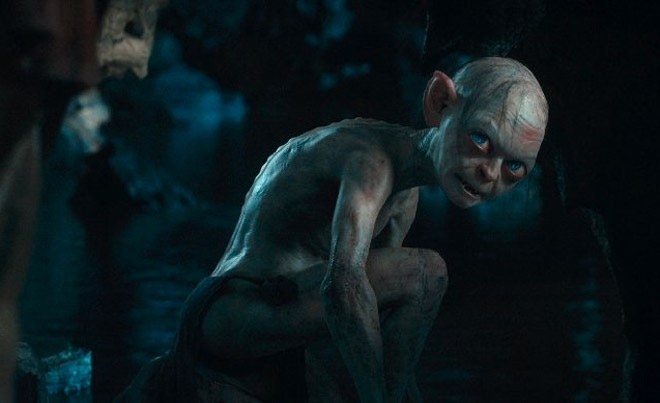
My challenge to you, frightened artist cowering over your pages like a hunched Gollum in the dark defending a scarred band of metal, is to offer up your precious. The beauty and the joy of creating are in the sharing.
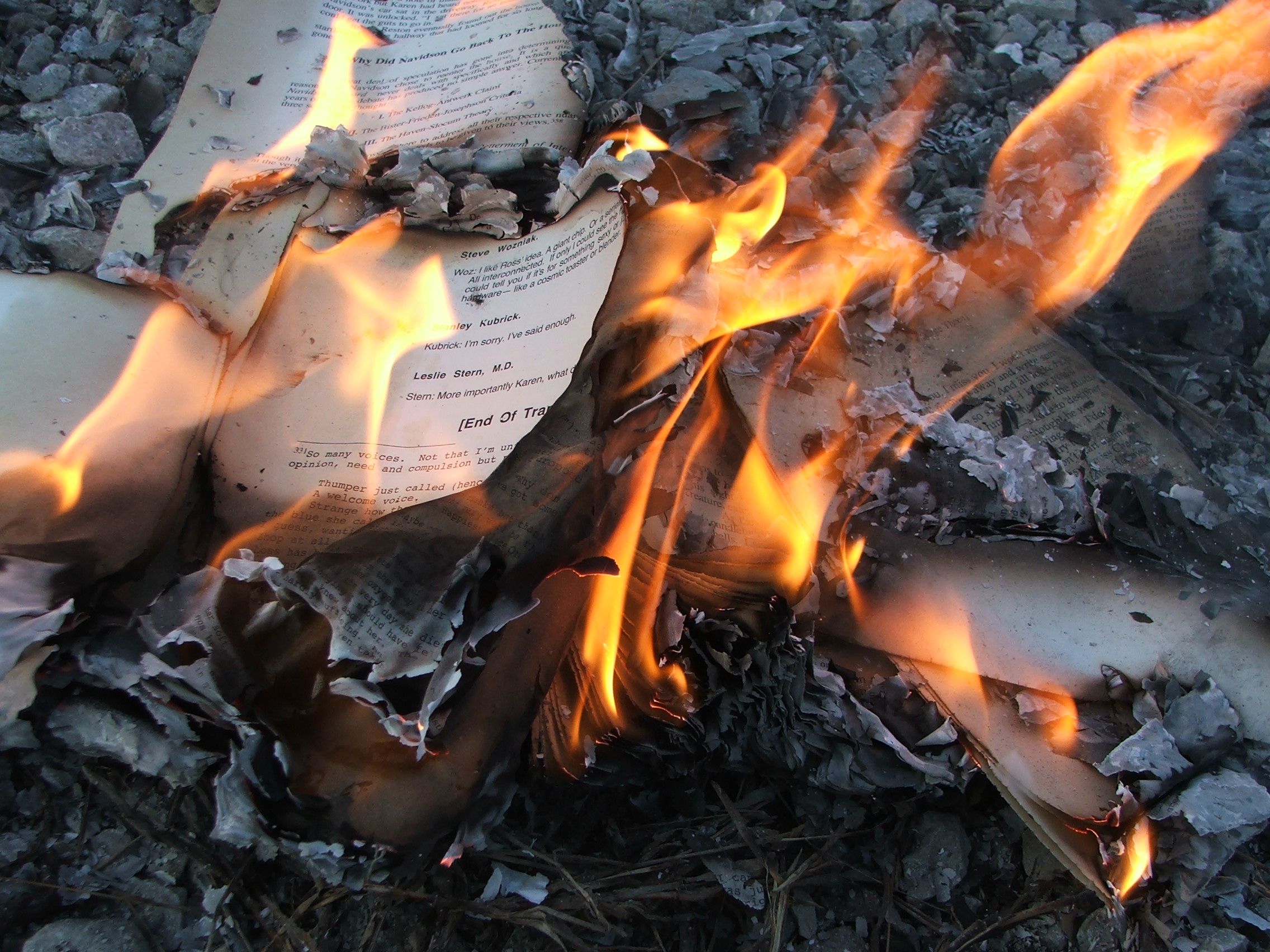
I’ve had my cut of criticisms, hard and dirty. Mean. Some of them made me wonder if the person had even read my writing or just made assumptions based on my genre and lack of MFA gilding. I’ve wanted to take match and tinder to 8 years worth of my life on the front lawn while screaming profanities in the general direction of certain publishing houses. But I didn’t. I cooled down and let myself say these words to my disgruntled brain.
“What are they seeing? What is slowing my writing/impairing my message? What can I change while still being true to my work?”
Opening the wound is to lay your ego out on the ground beside your creature and do the work that needs to be done. This is not an actual child. It’s an idea. And all good ideas can always get better.
Find a group of friends. Start there. Start with those that love you. Move up to those that think you’re decent enough, but aren’t afraid to tell you what they think. Give it to a few discerning hard-asses. Each step along the way, refining and tweaking, without giving up your voice or the elements that make your writing yours. No one can take that, nor should you let them.
So that’s it. The third and nearly final part of this series. Next week I’ll wrap it all up with a handy and bulleted (we all know you love the bullet lists) list of how to query your work to someone who can serve as a gateway into the realm of publishing.
Good luck, kiddo. And if all else fails and you don’t know where to turn with your work, send it to me or another writer you trust. Nobody knows the soul struggle better than your own kind.










 Sarah Reichert Author