Making the Most Out of Your Retreat

Hey writer and fellow creative friends. Wherever you are on your artistic journey, I hope you’ve considered the benefits of joining or participating in a retreat. Now, retreats can range from the ridiculously expensive, to renting a room at the shady looking motel three miles away. Some have classes or workshops, some have yoga or hiking mixed in, some are just straight up writing time.The point is to get out of your normal space, away from your normal routine, and spend that time focusing on your work. So whether you’ve broken the bank to jet set off to the French Riviera or you’re on your way to a twin room at the Motel 6, these tips can help you get the most out of that time. I even put it in a nifty little bullet list.

  • Be Prepared (Mentally):
    • One of the best tips I have, is to make yourself a list, before you go, detailing what you want to do, or get out of the retreat. Are you hoping to network and make connections? Are you aiming for a certain word count, or project completion? List out the major goals, then leave space (I’ll tell you why later on)
    • Be realistic but also a shade optimistic. Know your average, everyday word count and think about doubling or tripling it. You’ll have more time and less outward distractions and setting that goal will keep you on track. By making it a little challenging you’ll push yourself just enough. Even if you don’t hit the goal, you will get farther than if you’d been too ‘reasonable’.
    • Bring multiple or at least a couple different things to work on. The hours can become tedious and you might want to switch it up to stay fresh and motivated.
    • As a mom, and working mom, a strange thing happens the first few hours of being alone at a retreat. I get this thing I call “care-giver paralysis”. In the absence of doing for others, I can’t remember what to do with just myself. Understanding that this feeling will come, and I’ll have some listlessness helps me to remember to ease into the weekend with some journaling, or shorter projects.
  • Be Prepared (Physically):
    • The practical side of things is that you’re going to be away from home. But not on a typical vacation. So remember to bring your goal list, paper, pens, notebooks, journals, your laptop and charger…the basic tools of your trade. Make them your favorites or the one’s you’ve been ‘saving’ for something special. This is something special.
    • Plan for the environment: If you’re poolside or in the mountains, bring the proper clothing and footwear. You won’t be holed up in your room the whole time (I’ll explain more on that later). If there are dinners or classes, if it could be cold, or hot, try to think in layers. If its just writing, pack lots of comfortable clothing. Sunblock, hats and mittens. Bear spray or Mosquito spray?
    • Sleep aids- especially if sharing a room. I’m talking about eye covers, ear plugs, and headphones (not a rubber mallet if your roommate snores). Anything you need to get a good night’s rest.
    • Any special dietary needs/wants that the place won’t be able to provide.
    • Water bottle, medication, and bathroom necessities. Nothing is worse than being dehydrated and/or not having a toothbrush. Big and little comforts will make a huge difference.
    • Business cards. Holy shit, I can’t tell you how many times I’ve forgotten this one. Even if you’re just there to write, exchanging info with your fellow retreat members is great. You’ll be surprised how much you learn from one another in that time.
    • Tech that you need, none that you don’t. You’ll need brain breaks, you’ll probably want to check in with family once or twice, you may need a laptop. You probably don’t need your gaming system, and be careful of your social apps. This is a time for connecting with yourself and your art, not the 7 billion people of the world.
  • Be Flexible:
    • You’re going to have a goal list. You’re probably going to stray from it. That’s alright
    • There may be days when the word count fizzles or the scene doesn’t play out like you want. That’s okay.
    • There may be a project you exceed expectations on, and another you barely touch. That’s alright.
    • You may accidentally sleep in, or need a nap, or get caught up in conversations. These are good things.
    • Retreats are a balance of getting your work done, and taking care of yourself, which leads me to…
  • Schedule in Self-Care:
    • Bring along comfort. Your favorite pillow, blanket, clothing, music. Whatever it is that helps you feel relaxed and at home.
    • Take naps. You’re little brain is going to be working extra hard. It’s going to be focusing for hours and working through the plot holes and dialogues you’ve been avoiding. Schedule in time for naps, early bed times, or meditation on your goal list.
    • Take advantage of the outdoors. (Unless your Motel 6 is in a shady part of the city–then try to grab a Lyft to a safer part) Go for a hike or walk every couple of hours. Sit outside stare off into the far away for awhile. Your eyes and brain will thank you. Also schedule in brain breaks on your list.
    • Bring any nutritional or necessary snacks. I need coffee in the morning. I need tea before bed. I need fresh fruit and veg. I like hydration mix and the occasional bourbon on ice (not together, that would be gross) I want my Little Debbie brownies and my twizzlers. These little joys will keep your spirits up in the middle of the tough work.
    • Exercise, Mediate, Drink lots of Water, and take warm showers. All good things and breaks away from the intensity.
    • Skimping on self care will make you less productive and more likely to burn out. Nobody wants a mushy brain half way through.
  • Assess and Recalibrate:
    • After its all over, if you’ve got a drive home, or a flight…take some time to reflect. What went well? What was a challenge? What did you wish you had? What did you bring that you could have left home?
    • How did your goal list go? Did you overshoot? Did you get distracted, and by what?
    • How do you feel physically and mentally and how can you make sure that the next retreat leaves you feeling accomplished without being overwhlemed.

Well, there you go. I’m open to hearing if you have any other advice in the comments below. I’ll be heading a retreat next week, so if you’ll be there, I hope we can make it a great experience. If you can’t be there, I’ll be hosting another one in the fall with the Writing Heights Writers Association and I’ll let you know the details as they’re finalized. Until then, Happy Writing.

Community and The Introvert Writer

So, I’m being ambitious and getting a few of my blogs written while at the Writing Heights Writers Association Fall Retreat, in beautiful Grand Lake, Colorado. (We’ll be updating soon for our Spring Retreat) And I’m reminded…that I actually like being around people. Not all people mind you. But writer’s are a special sect and I want to talk about them.

I’ve been a part of a lot of different groups. Martial artists, anthropologists, archaeologists, massage therapists, pilots, refinery workers, landscape crews, teachers…and they all have their own little micro cultures and ways of communicating, but being around other writers is something kind of special.

For one, and this is something I never knew I needed…no one bats an eye if you wander off from a conversation to sit down and write. AND while you’re writing, no one comes up behind you to ask a question, interrupt or disrupt you. There’s a solemn air about someone sunken into the process and not only do you find the peace to pursue it in these moments, but you can actually feel a beautiful, uplifting energy of minds at work. That’s one of the biggest reasons retreats have always worked for me. Even as the facilitator of this particular one, I’m given grace to work on my projects and supported in doing so.

Secondly, no one coming to these retreats is a stranger to the biggest issues that plague us all. Fears, imposter syndrome, frustrations, the bane of feeling blocked and the uncertainty of where to go when we do finish. The feelings that someone is always more successful, someone is always writing more… We are all in the battle, and see each other. That level of understanding and grace gives you a blanket of comfort so that those lows don’t feel insurmountable.

So, this is a friendly reminder, no matter what you write, no matter where you are in the process or the struggle, get yourself a group of writers. You don’t have to meet every week, you don’t have to always talk writing (some of the best conversations we’ve had here were on the complexities of life, of parenting, of ecology and wildfires, and…the anatomical measure of a moose) and you don’t have to share your work. But you will know you’re not alone, and that someone is rooting for you and your words. And that, my friend, is priceless.

Going Back to School: How Writers Benefit from Classes, Conferences, and Trainings

Photo by Katerina Holmes on Pexels.com

There are plenty of ways to keep your skills sharp as a writer. Last week, I covered the conference season and this post will be similar in that I’m going to give you some online resources for improving your writing skill, developing a business or marketing plan, and helping to boost your creativity. Just like conferences, a writer can easily blow their budget by trying to train themselves into success. My goal is to offer you a spectrum of options with the caveat that classes can show you how to write better, give you pointers on the business side of things and offer marketing advice, inspire new ideas, and improve your editing. About the only thing they can’t do is write your book for you.

The Long Haul:

MFA/MA Programs: These programs (Master of Fine Arts and Master of Arts) are advanced, graduate degrees that can help to help your overall exposure to the big picture of writing (MA tends to focus more on Literature and less on writing, MFA can be broken down into Creative Writing, Journalism, Linguistics, etc). In these programs you will learn pretty much everything, from plot and structure, to dialogue and character development, to grammar and editing. It will take two years at least, and the cost averages out to about $38,000, not counting room and board. You’ll read an enormous amount of material. You’ll probably complete a novel or collection as part of your thesis. Not a horrible way to go, but studies are showing that the cost of MFA programs are often not paid back in employment afterwards so–carefully think through that one.

Online Writing Courses:

A number of reputable online courses and classes are now offered through various writing groups, professional/successful authors, and university departments. The courses are less intensive than a MFA and can often be done at your convenience. They cost a lot less (some are even free) and you can often pick and chose the ones that will benefit you the most. Here’s a small list courtesy of softwaretestinghelp.com:

  1. Wesleyan University Creative Writing Specialization
  2. Gotham Writers Online Writing Classes
  3. Reedsy Learning Courses
  4. Udemy Creative Writing Courses
  5. edX Creative Writing Courses
  6. FutureLearn Creative Arts and Media Writing Courses
  7. OpenLearn Creative Writing
  8. SkillShare Online Creative Writing Classes
  9. Emory Continuing Education Creative Writing
  10. Universal Class
  11. Writers.com Online Writing Courses
  12. Masterclass Creative Writing Classes

Conferences, Seminars, Retreats

Feel free to refer back to my other post: https://thebeautifulstuff.blog/2021/04/01/a-word-or-several-about-writing-conferences/)

I’m going to offer this plug one more time, because I truly believe in this conference and because it’s completely hybrid, you can attend from anywhere in the world, participate, and get the benefits without the travel costs, having to get dressed up, or use a public restroom–winner, winner, chicken dinner. Register for this one:

WHWA Writing Conference

For this area of your continuing education I’ll ask that you explore seminars (mini conferences, or a series of five or more classes on one topic, like Novel Writing) and retreats in your area. I’m sure there are beautiful, far-flung retreats in tropical islands that are also available, but with travel restrictions, lack of funds, and a busy life outside of writing, those may not always be attainable, so do a little research closer to home. Some of my favorite retreats and seminars have been offered through Writing Heights Writers Association at a very fair cost and are conveniently located. It also helps my sense of altruism to know I’m giving my money into a local organization that turns around and helps other writers in my area.

Retreats tend to fall into two categories, those with classes/seminars and free-write time, and those with simply free-writing time, punctuated with social hours. You may wonder how effective three or four days, stuck in a lodge, with nothing but time spent writing can be as beneficial as say, a whole weekend of conference classes. Well, young writer, let me elaborate.

Classes, conferences and seminars are excellent resources for enhancing your writing and helping you learn technique as well as opening up your mind to the business side of things–just like I mentioned above. And, just like I mentioned above, they can’t write a book for you. Only you and time can do that. As a mother of two busy kids, with a couple of side gigs, and a whole household to run–I don’t always have time to write. Somedays I’m lucky to get 20 minutes in. So to have four days, uninterrupted by children, husbands, dogs, laundry, volunteering, teaching, or grocery shopping, cleaning, and yard work, just focused on my writing is priceless. I’ve finished novels in that time. I’ve written four months of blog posts and edited entire series. I’ve barreled through plot holes that I thought I could never find solutions to.

The truth is, when there’s nothing else to pull your procrastination strings, you can get some shit done. PLUS, its immensely helpful to be surrounded by other writers while they’re “in the zone”. There is an inexplicable energy that catches you up when you’re surrounded by other souls and brains focused on their art and passion. Plus there’s usually some socializing/decompression hours at the end of the day to give yourself respite.

Okay–that seemed like a lot of info and I don’t want to bore you to tears. Check out some of the ideas above this week for taking yourself back to school. When we invest in our writing, it becomes less the pipe dream, and more of an attainable goal. Good luck out there, writers. Keep me posted on your progress or if you’ve found some great retreats, classes, and resources yourself!

Ode To The Trail

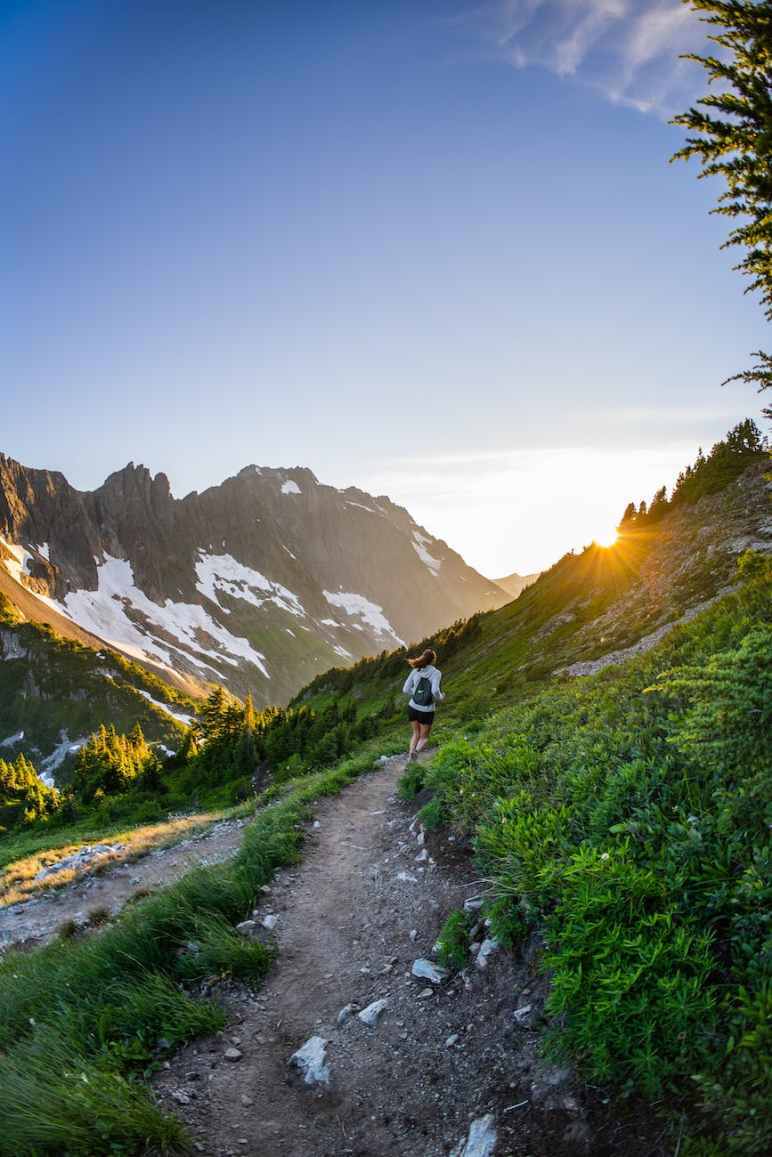
In the spirit of this monumental week (bookending the days with a mountain writing retreat and probably the death of me by trail marathon on Saturday) I give you a short and sweet look at what trail running will do for a soul and what we can learn from a steady state of being present. Enjoy.

Nothing about trail running is easy.  I mean, sure for some skinny running-all-his-life-young-mountain-goat type it’s probably a walk in the park.   But for me, aging-used-to-flat streets-and-shady-neighborhoods, its one of the most challenging things I’ve done.  I like running.  I like hiking.  I hate combining the two.  Not just because it is difficult but it takes the worst parts of both and combines them. 

Running down a sidewalk in the cool and quiet morning is a practice in meditation for me.  My mind can wander; it can go over plot lines or character traits, dialogues and settings.  It can breeze over life’s complicated spider webs of responsibilities and desires.  Hiking up a rocky and single-tract trail, in the middle of the beautiful and chaotic dance of nature, stopping to smell the sun soaked dirt and hear the clicking of bugs as they dodge past your ear is good for the primal soul within.

But when you combine the two, your mind cannot wander.  It must remain focused, because the speed of your journey is encumbered and dangerous, riddled with rocks and snakes and jagged-reaching branches.  You cannot look around beyond the future path of your feet because you will surely falter. Your feet are twisted and tripped and if you aren’t living solely in that specific moment of forward motion, you could end up rolling down a yucca spiked hill and planting face-first in the delicate sharp tear-drops of cactus.

Trail running is hard, not just because of the altitude, or the climbing, or the sheer terror of descending down rocky terrain at a speed that threatens my control.  It’s hard because it forces me to live in a specific moment.  I can only look ahead briefly, I cannot plan the next mile, only the next footfall.  It is hard.  But it’s also a brilliant lesson in staying focused in the moment you are in. 

Very often I get ahead of myself, even more so, I falter back into the past.  It’s comforting to go back in my mind to the places I’ve been and the people I knew.  Its exciting to imagine where I will go in the future, and easy to build it into much bigger dream than attainable.  But to live in the now, with what I have to work with and what lies directly on my path makes me get out of my head and truly live.  And that, my friends, is hard.