Poetry 5-26-2022

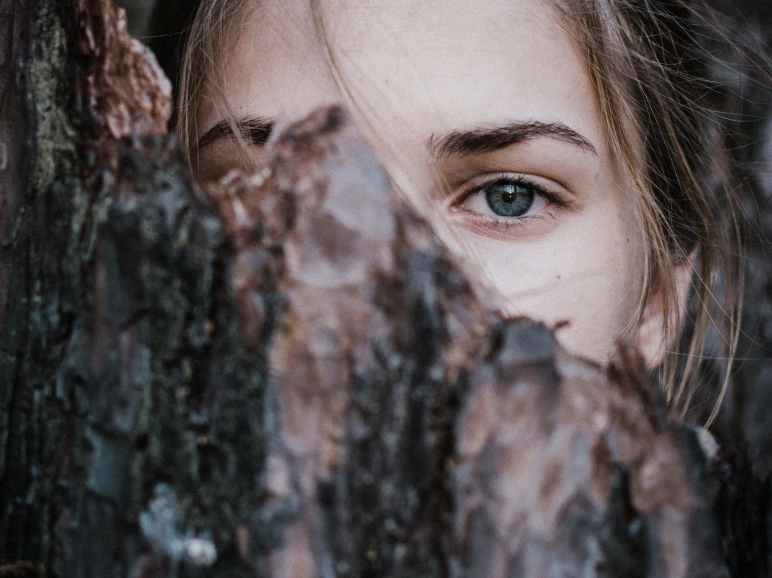
Photo by Nothing Ahead on Pexels.com

Today’s poem is something from a few years back that I unearthed in the midst of looking for some pieces to critique during this year’s Wyoming Writers Conference. It’s a little rough. But that’s how gems are found. I’ve reworked it but I’m going to leave it a little raw. Because I remember that’s how I felt writing it. The rain outside today only compounds a lot of the heavy things in my heart these days. They are days of muffled creativity and the feeling that my bones are too old to carry the weight. I hope the sky clears soon.

The Fall

I was brought down in that muted moment

like the silent space a can leaves

between kicks, down the street.

It was the heart beat of a city,

neon blood pulsing

and breathing subway grates,

the singular misstep down an open shaft

It was the knowing better

but doing anyway

angels not caring enough

to stop your steps up her stairs

It was in the hundred and four seconds

you had the chance to say no

and the hundred and five choices

that still led to yes.

It was the biggest fissure

earth shaking chasm,

opening wide two halves

of a tender young heart

a canyon whose sides would never meet again

making me the proud owner

of a man-made monstrosity,

gifting me my first ticket

to lay broken at the bottom of a choice

I didn’t make.

That’s where I fell

my introduction to the dark

a swift kick down the street

denting my tin as I landed

only to be launched up,

fall down

again

and again.

My Random Summer Reading List

I know it’s been said that a writer must read a lot in order to write well.

This was probably said by someone whose only job was to write. It was definitely not written by a mom who works two extra jobs in addition to writing and parenting. I know that time is limited. And although I LOVE to read, I also know that it sometimes takes a back seat to the ‘have-to’ list that is my life. So I would amend that you should read as often as you can. And it doesn’t have to be grand, sweeping novels of classical literature. Reading articles (well written and somewhat brain stimulating), short stories, poetry, or flash fiction all count.

Being what it is, when I get to sit down and read a book, I will often fall into lighter genres of fiction, usually, with a preference for romance, suspense, psychological thrillers, fantasy and urban fantasy, speculative, some sci fi, and a dash of historical fiction. That’s not to say I don’t read non-fiction. But I tend to reserve those books for book club invites and I’m not too proud to say there are some of those I never finished.

So, in thinking about reading, I’d like to offer you some good rules for every writer to follow when it comes to the limited time you have.

  • You should always have three different books on your nightstand at all times.
    • Something you love (by genre or author)
    • Something that challenges you (out of your genre, or tougher content)
    • Something that broadens your knowledge base or improves your craft.
  • Take a book along whenever you
    • have more than five minutes to wait
    • are traveling, anywhere
    • want to feign being ‘busy’ in the company of people you’d rather not talk to.
  • When you find yourself dreading a book, not because it’s challenging to your beliefs or makes you similarly uncomfortable, but because it’s nauseatingly boring or poorly written…stop reading it and move on. Life is too short to waste reading time on something that doesn’t bring you joy or positive change

So, now that you have a good reference for how to choose a book and how to get it written, here’s a list of books I’ve recently finished reading or are on my nightstand. I encourage you to be eclectic and curious when you chose your books, but always have something familiar for the nights when you need the comfort of an author or genre you’re familiar with.

Check these out:

In the category of craft/professional development:

  1. Bursts of Brilliance for a Creative Life by Teresa R. Funke
  2. Breakthrough: How to Overcome Doubt, Fear, and Resistance to Become Your Ultimate Creative Self by Todd Mitchell
  3. Write Naked by Jennifer Probst
  4. Ed Parker’s Encyclopedia of Kenpo by Ed Parker
  5. Seishin Shuyo: Mental Training in Traditional Martial Arts by Jimmy Lockett
  6. The Trail Runner’s Companion by Sarah Lavender Smith

For something that challenges/stretches my worldview and brains:

  1. Killers of The Flower Moon: The Osage Murders and the Birth of the FBI by David Grann
  2. Rising Strong by Brené Brown
  3. White Fragility by Robin DiAngelo
  4. How to See Yourself as You Really Are by the Dalai Lama
  5. TransQuality by Bethany Beeler
  6. Ornkey: A Historical Guide by Caroline Wickham Jones

In the category of somethings I love:

  1. Mr. Tender’s Girl by Carter Wilson (all of his books thus far have been phenomenal)
  2. The Miriam Black series by Chuck Wendig (again, a smart, beautiful writer, with a heavy dose of IDGAF bravado)
  3. Bravely by Maggie Stiefvater (haven’t read yet, but looking forward to it)
  4. The Silent Patient by Alex Michaelides (I couldn’t put this one down)
  5. The Gallaghers of Ardmore Trilogy by Nora Roberts (both of these series are ones I could reread every year)
  6. The Three Sisters Island Trilogy by Nora Roberts

Well, there you have it. Go forth and spend some of these beautiful days, beneath the shade of a tree, losing yourself in the written word. Voracious readers (in the time they have to give) make better writers.

The Power of “What If?”

I know that I’ve written before about bolstering our creativity by keeping open minds concerning the direction our stories, characters, and plots can take. But in a world that can sometimes feel like a dark cloud over new ideas I think it’s important to revisit the power of a positive “What If?” in the way we approach our roadblocks.

We’ve all been in the middle of a down time in our writing and creativity. I know there are people out there that will preach that writer’s block does not really exist and you’re just procrastinating, or not wanting to put the work in.

While it is true that you’ll never write anything if you don’t actually sit down and write, trying to pour out a story (whether its 500 words or 100,000) from an overloaded, overworked, and over stimulated brain can be like trying to jam a king-sized sleeping bag into a twin sized sack. You know what I’m talking about.

There’s not enough room.

Some of the blocks taking up space may include fear (of failure and/or success), self-doubt, and perfectionism. These show up like the ghost in a Scooby Doo episode, unmasked to reveal depression, anxiety, imposter syndrome, and even ADHD.

So you’ll never hear me say that writer’s block doesn’t exist (and if I have claimed that before, I retract it). I believe that the inability to create can have very real sources that we sometimes need a dynamic team of teenage detectives in an ugly van to suss out.

Today, I’d like you to apply the two-word question to those moments of stifled creativity and see what happens.

Here’s an example:

“I have a novel, nearly complete, but you can’t figure out how to end it. It’s been on my laptop for a month and it’s driving me insane but every scenario in my head doesn’t ‘feel’ quite right, so I’m just not writing any ending at all.”

Why, that’s not a werewolf! It’s that dirty landowner PERFECTIONISM (who runs a floating crap game called FEAR).

By asking ourselves what we’re really afraid of, what’s really so hard about the situation (I don’t want to write the WRONG ending, none of the endings are GOOD ENOUGH) we can face the fear directly and start asking what if….

What if you took one hour each day to write three separate endings, for each of the different possibilities you have? Unattached to the novel, a separate document. Call it exploratory research. I would bet dimes to dollars that you’ll find one that is the BEST for your novel, and feel much more capable of completing the next project on deck.

Here’s another one.

“I haven’t written any new poems in over a week, I don’t feel creative, I don’t have any ideas. I can’t find the RIGHT words. I have submissions due, I can’t focus, and I can’t even remember how to write a good poem. I’m not a poet.”

Say, that’s not a two headed mummy! It’s the motel owner’s shady uncle ANXIETY and his henchman DEPRESSION. Your brain is overworked and can’t focus, you feel like there’s nothing new in the world to write about, or worth writing about. With a trace of PERFECTIONISM, and a dash of IMPOSTER SYNDROME, this combination puts an end to possibilities before they can even reach your brain.

What if you spent ten minutes outside? Find a tree, flowering bush, cloud, roly-poly, something not man made, and focus on it for ten solid breaths in and out. Don’t look at anything else, don’t think about anything else, don’t draw your attention away from that one object. How does it move, how is the light hitting it, how long has it been there, what color is it, does it smell, does it have a taste, what’s it made of?

Not only will being outside and remembering to breathe help you to relax and curb some of those anxious and depressive feelings, but you’ll realign yourself with the beauty of noticing the small things. And details bring poetry to life. Then sit down, in the grass, and write something, no more than a page, about what you felt, what you saw, what you took in through all of those sentences. Repeat, with anything. Human, animal, mineral, place, time, concept. The possibilities are endless.

Last one, best one.

“I can’t write a synopsis! It’s so detailed and I can’t possibly boil down my entire novel into a few pages. I wouldn’t know where to start, and what’s the point, no one will take my novel anyway!”

Oh, my little defeatist, that’s not a man-eating robot, why it’s nothing but the cranky heiress SELF-DOUBT dressed up in a spray painted, cardboard box!

Look, not every writer is birthed knowing how to write a synopsis. In fact, absolutely none of them are (I think they are, however, birthed with an extra gene carrying the appreciation of ‘old-book’ smell and a tendency towards adverb-overuse and caffeine addictions) We all had to research it, take a class on it, and put in the work including probably a dozen revisions along the way.

You can find a great resource for how to write one here:

https://blog.reedsy.com/how-to-write-a-synopsis/

If you’re an plotter, a synopsis is easier. You have it all typed up somewhere, so work off your outline and put aside a time-specific block to work on it and only it. If you’re a pantster, may God have mercy on your immortally, unorganized soul, because it is fucking hard to do. Same thing though, set aside an afternoon (or two) with a start and end time and write it out like you would a copy of Cliff Notes

Add something enjoyable to the completion (extra coffee or old books?) to make the goal a little sweeter to reach. Have someone who doesn’t know your book read the synopsis (yes, it should give away the ending, no, don’t worry if Janet in Accounting knows how it ends). They can let you know if it’s easy to follow without being overwhelming.

Self-doubt, fear, perfectionism, anxiety and depression are not final resting places for your writing (or other creative endeavors). They’re road blocks brought on by your own expectation and unrealistic standards. The best advice I can give you about “What If” is to ask yourself, in the face of rejection, frustration, and doubt…

What if you can? What if you can write that book? What if you could write three poems in an hour? What if you can send your pitch, synopsis, and novel out by the end of the week?

What If, when used properly, can be the precursor to hope.

So give yourself hope. Give yourself a choose-your-own-adventure. Give yourself a good what iffing.

That got weird. You know what I mean.

Self-Editing (It’s Not Just for Polite Conversation)

I’ve read a lot of books on this topic, scoured blogs, took any and every class I could at conferences and workshops on the matter, but I always still feel like there’s vast room for improvement when it comes to editing your own work.

Part of the reason is that it’s incredibly hard after writing, rewriting, and rewriting again (times a thousand) to edit all of those words. Not because we’re narcissistic megalomaniacs and don’t think there’s anything wrong with our novel, but because there’s a true phenomenon that happens in our brains as we read (and re read, and re read again) our own work.

The human brain is complex and the way it takes in and interprets stimuli from outside is a complicated and delicate dance. If we were to notice every single thing in our world, we wouldn’t be able to exist in it. The noise, the colors, the sound, the smells are so varied and ever present that our brains would be in a constant state of interpretation that would cause us to vomit, or pass out. Or both. (Which is one of the reasons so many people on the spectrum can have a difficult time coping with crowded, noisy, overstimulating places). As a result, we tend to soften the edges of a lot of information, block it out, or keep it in the peripheral of our consciousness, allowing our brains to make up a great deal of what we take in, through context.

It can be the same as when we edit. We tend to be in a taking-things-for-granted-because-I-read-it-so-many-times-before haze. We coast over the words and retell ourselves the story we already know in our heads, rather than focusing on what is actually on the page.

You, the author who created this magnificent book, know what it’s supposed to say, you know what you meant when you wrote it. So in your brain, when your eyes pass over the words, it will fill in the missed words, ignore the double ones, and forgive the dangling participles because in your brain, it’s reading correct. Very rarely do we ever approach our own work as a completely new reader. It’s practically impossible to do.

Does that mean we shouldn’t edit? Fuck no. Unless you’re incredibly rich and can afford an editor to take your first draft to your final over the course of 9 rewrites. And if you are that author, why the hell are you reading this blog? This is for the poor, struggling authors who are trying to procrastinate their own editing by reading my blog. Not for big money-bag writers who bang out twenty political spy thrillers a year because they have a nanny, and a cook, and a dog walker, and a personal shopper, and a house cleaner…

Where were we—ah yes, self-editing. Here are some of the biggest tips that have helped me produce a much better final version (before I send it in to an editor for the one or two rounds I can afford).

  • Take it line by line, sentence by sentence. Is the structure sound? Does it make sense? Is it passive? Is it clear who is doing the action, who is in control of the perspective? Is there a random “pineapple” thrown in at the end of a paragraph?
  • Read it out loud. When all else fails, read it cover to cover, out loud. That’s when I find most of my mistakes. Or, if you’re not into that (or you live with people who aren’t into listening to you and by people, I mean cats) at least read aloud the passages, paragraphs and parts that feel awkward or over the top.
  • It’s not too late to kill some darlings. I have been known to cut out scenes/sentences/dialogue, in my final rounds that I knew didn’t belong but I clung to them like a freezing poor boy on the wreckage of the Titanic. Save them in a different file, but if you know in your heart it’s there to stroke your ego at your brilliant wordage but it’s not doing the story any good then show some humility and axe it.
  • Check your tense, check your POV, be consistent in those little things because they make a HUGE difference on whether or not your reader can follow the story and isn’t frustrated trying to do so.
  • Print it out. You can get a good deal at local or national printing companies (my local FedEx cashier knows me and it is so heartening every time she asks “new book?” and hands me the brown box of hope). Double sided, nothing fancy, cheapest version possible will still only set you back about $30 for a 250 page book. You will see things in ink that you cannot see on the screen, guaranteed.
  • Get a Beta reader or twelve. Yeah, it’s not really self-editing, but it’s part of the process that will help bring new eyes to your work. And usually it’s a low cost way to get a ‘real readers’ perspective on your work.

All right, that’s all I’ve got. Good luck out there. Don’t think this bullet list will take the place of a good professional round of editing, but it should help in your process. And maybe it can even help turn your first drafts into better drafts.

Flash Fiction: A Raccoon, A Traffic Jam, and Another Call for Submissions

Mornin’

As promised, I’ve thrown together a couple of flash fiction pieces that I’ll be running in the next couple of weeks. Before we get into the fantasy, I want to give you a reminder that submissions are still be accepted for The Beautiful Stuff’s 2022 Anthology, “A Beautiful Twist”. Here are the details (the short version for folks like me with a minor attention span)

  • Dates: January 28th to September 16th
  • Winners notified September 19th 2022
  • Publication Date: TBA Early November
  • Submission guidelines: Short stories (2000-5000 words), Flash Fiction (200-1000 words), Poetry (up to 5 poems allowed per submission), novel excerpts (up to 3000 words), Personal Essays (up to 2000 words). Non fiction, fiction, speculative fic, western, sci-fi, fantasy, romance, erotica, historical, hysterical, time jumping primates, talking frogs, brains in jars, and ANY combination thereof. Submissions translated to English are preferred. Contest is open to domestic and international writers but awards will be paid in US dollars. Please submit your work as an attachment to your email which will be a lovely cover letter about you (name, email, your submission title, brief bio). Email subject line should read BEAUTIFUL TWIST SUBMISSION_name. The submission file (please use .doc, .docx, or another Word friendly format) should be the title of your submission and your last name i.e. “Merry Krampus-Reichert”
  • Top 3 submissions will earn prizes as follows: 1st–$30, 2nd–$20, 3rd–$10 paid via PayPal or Venmo (or check if need be). Runners up will be published in the anthology with a chance to compete in the Colorado Book Awards.
  • You may submit in multiple formats, multiple times (ie poems and flash, or novel excerpt and essay) but each submission must be in a separate email.
  • PLEASE DO NOT submit anything that has been previously published or that you no longer own the rights to. Simultaneous submissions are absolutely fine but LET ME KNOW if your work gets accepted elsewhere as soon as possible.
  • Prohibited subject matter includes: overtly violent or gruesome content that does not further the story, non consensual sexual acts, racist/homophobic/misogynistic/hate filled writing, violent or hurtful actions against children or animals, and anything that judges, stereotypes, or seeks to harm another human being based on their human being-ness.

Whew! Send in your stuff. I’m excited to read it. And now this:

FLASH 1: Raccoons and Moving On

“This is your fault.”

“Mine? How is this even remotely my fault?”

“You wanted to have the dinner party in that stupid farm to table place. With a stupid glamping theme. In the stupid middle of a stupid field!”

“Why is everything I do stupid?” he fired back. She glared over the dinner napkin pressed to her cheek and pulled away the bloodied cloth to show him, once again, the angry gashes that had undone the beauty of her Botox.

“This for one!” She put the cloth back on the wound and crossed her other arm in front of her low cut dress. The ER was always busy this time of the week, but she’d never had to wait for anything, and especially not with the general public, so it seemed even worse.

“I mean—the food wasn’t bad. The whole evening could have been worse.”

“Worse? Mark? Really? How could it possibly have been worse? A goddamn raccoon tried to take my face off!”

“You tried to pet it!”

“I was trying to scoot it out of the tent! Brought in by your ‘not bad food’ buffet!”

“Well, I mean, it was out in the woods. So technically, it was just like having a neighbor come over for dinner.”

“You’re a goddamn idiot.”

Mark laughed. He laughed so hard he doubled over. Hooting until tears came to his eyes.

“Wha—why are you laughing?”

“Just—the way your face looked when that little guy came at you! Eyes wide and—” he gasped for air between chuckles, “and shrieking like a banshee.”

“I want a divorce,” she yelled.

“I know you do. That’s why I planned the evening! To try and start to mend things.” At this he stopped laughing. “But I realized I can’t mend the past. I can only look at the future.”

She grumbled. “What does that mean anyway?”

“I’ve been seeing someone.”

“What?”

“She’s a park ranger, actually. The one that recommended the venue?”

“Are you out of your goddamn mind?”

“I probably won’t be once the papers get signed. Look, here’s your ride.” She failed to even notice as the nurse came to her with a wheelchair and an exasperated look.

“The doctor can see you now, Mrs. Sinclair.”

“Oh, it’s just Ms.” Mark corrected before helping to move his near catatonic wife, soon to be ex-wife, into the dingy wheelchair and watched it disappear with a squeaking tirade down the hall.

FLASH 2: The Longest Light

At first he didn’t notice when the light hadn’t changed. Louis could always find an excuse to look at his phone, play a quick game of Candy Crush, or text that hot little thing from accounting. He just figured it was a long light.

But it turned into an excruciatingly long light. Three games in and an unanswered tawdry text about how he’d like to ‘spread sheet’ with her, he finally looked up and found that the light had not changed. In fact, nothing had changed. Louis put down his phone and looked over at the driver in the lane next to him. Sipping her coffee. He watched for a good thirty seconds. Still sipping. He looked up towards the person in front of him.

The guy had been reaching into his back seat, not moving since they’d stopped.

“What the—“? Louis paused to adjust his radio, but the same note was still playing. The same long C. Echoing through frozen airwaves. Louis turned off the stereo and got out. That’s when the light would change right. Isn’t that how it always worked? But it remained, stuck on red.

The street was lit in the garish tone of a sun that had seemed to stop. No shadows moved. No sounds of tires against asphalt. No wind blew. He looked up into the sky and caught a strange dark shape. He thought it was a plane, tiny and glacially moving across the sky. But it wasn’t moving.

And it wasn’t a plane. Louis closed his door and looked closer at the pigeon, suspended in mid-air. His heart hammered against his chest, the only beat in the city. He looked at the woman in the car next to him, the drivers in the opposite lanes. Everyone, like some strange flash mob in reverse, was holding perfectly still.

“Hey!” Louis yelled, angry in his fear. “Hey, what’s the big deal! Move your car!” He jogged up to the first car in the lane. A woman, bags beneath her eyes, white knuckling the steering wheel and glazed over stare into the quiet nothing. In the backseat, a toddler, with his face red and sweaty mouth open in a silent and unending scream, clutching an empty applesauce packet in one hand and a sodden blankie in the other.

“What’s the big idea? What is this?” He pounded on her window with a force that have been loud enough to wake the dead. It did not wake her. Louis went from car to car, with the same method and the exact same reaction. Nothing moved.

The world was frozen in time and he was the only one outside the loop. Louis dove back into his car and grabbed his phone. Candy Crush was now dormant, he tried tapping on his messages but nothing budged. As if the moment his hands put it down, it too became frozen. A cold shiver shot up Louis’ spine and he spun in a circle.

“Knock it off! Whatever this is! It’s not funny anymore!” When the strangled universe refused to reply Louis took off down the street, looking for any sign of life, in a world without.

It would be the longest thirty years of his life.

Call For Submissions 2022 Anthology: “A Beautiful Twist”

Good morning, readers and writers. I can’t believe we’re already one trip around the sun from last year’s submissions call! The previous years have resulted in two wonderful poetry anthologies with a variety of contributors across the globe. This year, I’m changing things up.

The theme for this year is “A Beautiful Twist”. I will be looking for work that surprises and delights, causes a reader to pause and do a double take if you will. For instance, some of my own work will be myths retold in modern times (what if Bacchus was a recovering alcoholic, or Snow White was a dominatrix?) For poetry, think about a split between how it begins and how it ends. You start out thinking its about love but turns out to be about laundry. Twist a fairytale, turn over old paradigms and genre expectations, dust off any speculative fiction because that’s a goldmine for twists. Surprise me. Surprise yourself. Give yourself freedom to dabble in the ridiculous.

Photo by rikka ameboshi on Pexels.com

Below you’ll find the details for the anthology, submission guidelines, and publishing dates. Please follow the guidelines. They exist for a reason…mostly to make sure I don’t pull my hair out whilst trying to read and format them. You are always more than welcome to contact me via this website with questions (Please use subject line: QUESTION ANTHOLOGY 2022). Some changes this year will include the length and type of content I’m accepting, and a monetary prize for the top three entries, as well as publication. Good skill to all of the writers out there, newbies and old hats.

SUBMISSION GUIDELINES

  • Dates: Submission will open January 28th and will run until September 16th
  • Winners will be notified September 19th 2022
  • Publication Date: TBA Early November
  • Submission guidelines: The Beautiful Stuff will be accepting, short stories (2000-5000 words), Flash Fiction (200-1000 words), Poetry (up to 5 poems allowed per submission), novel excerpts (up to 3000 words), Personal Essays (up to 2000 words) all centered around the theme. I’m pretty lenient as far as genre. I will accept non fiction, fiction, speculative fic, western, sci-fi, fantasy, romance, erotica, historical, hysterical, time jumping primates, talking frogs, brains in jars, and ANY combination thereof. Submissions translated to English are preferred. Contest is open to domestic and international writers but awards will be paid in US dollars. Please submit your work as an attachment to your email which will be a lovely cover letter about you (name, email, job, what you write, what you love to do, your submission’s title, and the secret of life–haha, just kidding we all know its 42). Email subject line should read BEAUTIFUL TWIST SUBMISSION_name (not just ‘name’–use your name). The submission file (please use .doc, .docx, or another Word friendly format) should be the title of your submission and your last name i.e. “Merry Krampus-Reichert”
  • Top 3 submissions will earn prizes as follows: 1st–$30, 2nd–$20, 3rd–$10 paid via PayPal or Venmo (or check if need be). Runners up will be published in the anthology with a chance to compete in the Colorado Book Awards.
  • You may submit in multiple formats, multiple times (ie poems and flash, or novel excerpt and essay) but each submission must be in a separate email. You can copy and paste your cover letter…I’m not going to make you rewrite that thing, they’re a pain in the ass.
  • PLEASE DO NOT submit anything that has been previously published or that you no longer own the rights to. I can’t even begin to process the legalities, so just don’t. Don’t double dip. Simultaneous submissions are absolutely fine but LET ME KNOW if your work gets accepted elsewhere as soon as possible.
  • Prohibited subject matter includes: overtly violent or gruesome content that does not further the story, non consensual sexual acts, racist/homophobic/misogynistic/hate filled writing, violent or hurtful actions against children or animals, and anything that judges, stereotypes, or seeks to harm another human being based on their human being-ness. I’m cool with erotica done tastefully and along the lines of the theme. I’m also cool with expletives if they fit the character and scene and you’re not just using them like a 7th grade boy to look cool. Cool?

Well, that’s it! Start writing! Hopefully this will provide you the experience and drive to get some submitting done. Let me know if you have any questions. I will contact you to let you know your submission has been received and as we get near to September 16th I will keep you in the loop about your submission’s place in the anthology.

I’m so flippin’ excited to read your stuff. Truly. Don’t leave me hanging.

Photo by Suzy Hazelwood on Pexels.com

Diversity in Fiction: Crafting Characters Respectfully

I’m not one to go seeking out hot-button issues, but the truth is when we don’t address underlying, systemic problems of all the ‘isms’ in our culture (from government programs, to housing applications, to writing fiction–) they continue to hold power over and harm other human beings. So, I’m discussing today how we, as writers, can be not only sensitive to the characters we create but the effects of their existence on our world. After all, stereotypes exist because we fail to see them in all the subtle ways they permeate our lives. As ethical and compassionate people, we should work towards burning down those untruths as much as possible, even in our own work.

I’m not going to stand on a soap box and preach without starting with myself. I’ve probably, in my ignorant and un-learned past, created characters that simplified the complexities of a human into certain traits. I’ve tried not to. I tried to craft my characters as strong, independent and powerful, more tuned to their personalities than their physical traits. But there were still subtle things, I wasn’t even aware of at the time, that filtered from my limited white experience. As I look into rewriting this character, I am constantly questioning how I can do better.

We all should. We owe it to the character, to the reader (and to the world) to examine our writing and go forward with an eye to our own hidden (and not so hidden) biases or ideas.

The best advice I can give you is to strip yourself of any cloak of magnanimous “equality”. Start by reading some real, hard to stomach, but necessary soul-exploring books on the complexities of race and gender equality, the reason systemic problems exist, and how we can best eradicate them. Talk to people from every background, attend classes, lectures, and forums, open discussions of others’ experiences. Do it with an open heart, and a willingness to accept your part in the system. Have the dedication to do something about it.

When we are invested in writing characters different from ourselves (race, gender, religion, sexuality, age etc) one of the best things we can do is RESEARCH. In the expansiveness of the Internet, so much good information, written by diverse voices, can be found. The ones most important (and really the only viable ones) are those written in their own voice, about their own experience.

I also encourage you to talk to as many other people of all walks of life as you can. (And not just to research for your work…do it for the benefit of your humanity and compassion.) While I DO NOT advocate for you turning your ‘one black friend’ into your go-to for all questions about a diverse, varied and culturally rich part of our world (it’s not their job or duty to educate you), don’t shy away from respectful and honest conversations that come up, especially when they happen from immersing yourself in different situations and events from a standpoint of open mindedness and learning.

Above all, when you are writing diverse characters DON’T, for the love of god, assume that by describing their skin color/religion/orientation that you’ve described their character in total. DON’T stereotype them. DON’T include diverse characters just for the sake of checking off a box.

DO make them unique to their upbringing, their experience, and their situation. DO describe all of your characters equally and in rich and expansive ways.

I’ve always believed that good storytelling is universal. And in our connected and dynamic world, it would be a shame to only write one kind of person. But care for your characters and the people they may or may not represent. Here are some good resources that may help:

Good luck and don’t be afraid. Just be respectful, compassionate, and educated.

Lessons From The Year

It was a goal heavy year. I talked briefly a few weeks ago about how to set up your own yearly goals in a manageable way, but today I want to talk about you. That’s right…not some bullet list on a webpage or a chart of tick-them-off boxes. I want to talk about the beautiful human on the other side of the screen. Stop looking over your shoulder, it’s you. I mean you.

Now maybe I know you, personally. Maybe we’ve never met. The point is, I think you’re amazing. You may not believe me. It’s okay. I’ve talked A LOT about not believing everything you read…and my words are no different. So allow me to offer proof.

This year has been tough. Hell, the last two have been a raging dumpster fire…for nearly everyone who wasn’t making a personal rocket ship to go play Spaceman Spiff while countless other humans suffered in poverty, starvation, and lack of medical care on the Earth. No wonder they were so anxious to leave for ten minutes and show how awesome it is to have money… but I digress…

The point I’m trying to make is that you’ve survived 100% of all your worst days.

A moment of silence for 2021...

At the start of a new year we have a tendency to look back (sometimes like Indian Jones on the destructive explosions of warplanes and tanks going over cliffs, shaking on torn knees, dirty, bent, beat to hell, and wondering how we survived, still clinging to our favorite hats) and worry that the next year will only be worse—Nazis, aliens…Shia LaBeouf—it could get a lot worse.

But it could get a whole lot better.

And we have some say in that. Now, we don’t always have a say in the bigger things of the world. I’ll never change the inequality of women or be able to change the mind of every little girl who’s been told, (like her mother and her mother before her…and so on) that being skinny is the height of desirability and beauty.

Photo by Daria Obymaha on Pexels.com

But I can shift the way I speak around my daughters. I can shift the way I talk to my friends (and speak up for them when they cannot speak well of themselves). I can shift the way I talk to myself.

I can’t fight capitalism. But I can support companies that  pay their workers a living wage. I can’t change lobbyists, or billionaires, or any number of corrupt, societal ruining forces. But I can lend a helping hand. I can volunteer. I can protest. I can stand up and use my voice, I can vote…

When we look at the battles ahead of us in this new year, let us pick ones we can charge into wisely. And please, for the love of mental health, let us start with the ones in our own heads.

The direction of your life, the ability to lift yourself above old and destructive habits has everything to do with how you speak to yourself. Your voice is the only one in your head 24/7. Your body is the only one you live in. Your voice, your mind, your heart, your body—every single one of those things is beautiful. Every one of them is enough. And they (read: you) deserve to be taken care of, loved, and respected.

So when we look into this new year, I only ask that you change one thing.

I want you to change how you talk to yourself. Be bigger than what the world wants you to be. Take up space and use that space to spread compassion and acceptance. Be outspoken with your understanding, your need for justice, and most of all, be outspoken with love.

Life is short. This could be the first year of a long and beautiful rest-of-your-life.

It could be your last year on Earth.

You simply do not know, so spend it with your heart and passions in mind. Draw and hold boundaries where they need to be and do not apologize for cutting out the people who are hurtful or refuse to acknowledge that you are enough. Speak well of yourself. Speak kindly to yourself. Accept every soul-bump as part of being beautifully human. Don’t be cruel, but take no bullshit.

We humans–we’re a beautiful mess. Falling in and out of love, drunk on passion and enthusiasm one minute, and stumbling into the gutter of disappointment the next. I say, just do your best, little human. Until you know better, then do the better. Be kind to yourself, be kind to others. But don’t give away your light and energy to people who don’t appreciate and return it.

It’s just that simple. And just that complex. It’s just. that. human.

Stay safe until the new year and beyond.

Reflections on Goal Setting

When I first took a class on goal planning for writers last year, the intention was to create an environment and a year where I carved out space for my writing as I would a career. Now, as we reach the end of another year (yeah, I hate to tell you, but its only a few hours away) I wanted to take the time to look back and let you know what worked, what didn’t, and what I could do better next time. Not so much a bragging post, this is more to offer you ideas of your own on how to pursue your writing career without feeling too overwhelmed.

Every great endeavor seems impossible while you’re standing at the base of it, wondering how best to begin. But journeys are not made in great leaps and bounds, they are made by singular footfalls, one in front of another. Maybe your goal is to finish your novel, memoir, poetry book, cookbook and have it ready for publication by December next year. That’s a huge leap when you’re staring at an empty page.

I’ll be the first to admit, I’m not a planner when it comes to the creative process of my writing. I don’t outline in detail, I don’t diagram, and I sure as hell don’t employ computer programs to chart the course of my books…but–being the little virgo-seque, organizational lovin’ nerd I am, I do like a set plan for how I get from blank page to finished book.

So rather than try to eat this whole goal at once, try taking little bites. I realize it seems over simplified, but what what worked best for me was breaking down my goals by first naming the end result I wanted, then thinking about the benchmarks I needed to meet every three months to make it happen. Then I broke it down further, to what I needed to do every month to meet those benchmarks, and finally what I needed to do every week so that it was manageable within my life.

In example, I wanted to submit at least 55 pieces of work this year. That meant that every month I needed 4 to 5 submissions, or one + a week. It’s hard to think of 55 poems out for submission all at once. I don’t think I would have been able to feel capable. But one submission, every week was something I couldn’t find an excuse not to do.

I wanted to finish editng three novels and have them ready for publication. I didn’t try to cram them all into a month. I broke it down to 3-6 chapters a week, which gave me about four rounds of in-depth editing for each, including a Beta reading round.

Having defined goals in mind is essential, allowing yourself room to wiggle when life gets complicated (because life always does) is just as important. That’s why at every quarter, in my planner, I would write down a day to reassess. What was working? What wasn’t? What could I let go of? What was I ahead on? It helped me understand my work habits and held me accountable to myself more than just a post-it of ideas on the first of January.

When life got complicated, overwhelming, and sometimes down right depressing, I gave myself room to let go of what I no longer deemed as important (I didn’t read 100 books this year, but made it through about 15–plus 12 read-throughs of my own novels). I reprioritized the schedule so that the things most important to me (family) would have first dibs on my time and used what I had left to do my best.

Even while giving yourself grace, don’t give yourself the excuse to quit. I find, no matter what the task, if I’ve set a deadline on a particular project, I will almost always finish it on time or before. Having a date to work with helps boost the sense of urgency and makes you delete social media from your phone so you aren’t wasting even one minute that you could be writing/practicing/editing/researching/submitting.

So that’s pretty much it. Because I love you (of course I do!) here’s an easy bullet list reference:

  • Set defined, obtainable goals. Pick anywhere from 1-5, but don’t go crazy. You’re only human.
  • Break them down by quarter, month, week, even day if need be.
  • Schedule rewards for meeting your goals on these timelines.
  • Allow yourself room to drop/add/readjust if something isn’t working. The journey won’t go anywhere if you’re passed out on the side of the trail with exhaustion.
  • Set defined dates for benchmarks and completion of the steps toward your goal. In other words: Give yourself ‘Due Dates’.
  • Make sure you understand your “WHY”. Why are you doing this? What are you seeking? Is it fame? Closure? Justification? The “Why” is never wrong, and you will need to return to it when things get tough.
  • Set your goals and break down the schedule you’ll need a week to two before the start of the New Year. Nobody wants to wake up New Year’s Day and try to muddle through big plans. Start thinking about it now and give yourself time to figure out what’s obtainable and most desired.

Well, I’m done talking. I appreciate you giving this blog a look over and hopefully getting the gears turning about your goals for this new year ahead. Drop me a line and let me know what you’re planning to do (this is a good exercise in accountability–if you’ve told someone you’re gonna, its an extra source of drive when you don’t feel up to it.)

Happy Writing.

Poetry 12-09-2021

What Am I Made Of

The ghosts of hearts unfairly broken 
haunt me relentlessly
my own among their wreckage
and the ones still alive 
they kick down, through the floorboards of my brain
and reverberate
in the pit of my stomach

Ghosts of lovers
who loved me too much
those I rolled eyes at, 
and turned away from, 
to crawl for miles on bloodied knees
and claw at the departing feet
of those who did not love me enough.

Ghosts of the friends I picked apart
like the vulture's beak to carrion
and become angry when they
no longer fed me

Ghosts of friends who disappeared
into the ether of life
and forgot they were 
my solid ground

I think I'm made up of ghosts 
all vapor and energy
nothingness roaming
empty of touch
devoid of breath
but heavy,
oh so heavy
in soul.