Word(s) of the Month: Lacrimae Rerum

In a slight deviation from last month, I’m looking through a different book by Robin Devoe. “Dictionary of the Rare, Creative, and Beautiful” is a book with strange and beautiful words but also “cool-sounding names from history, poetry et alia“. There are some fascinating and funny examples in this book (take for example: Brandolini’s Law or the BS asymmetry principle which states that the amount of energy needed to refute bullshit is an order of magnitude bigger than that needed to produce it. AKA every day of Trump Administration en toto.)

Today though, we’re going to talk about lacrimae rerum which at first sounded like some kind of yarn art that you do over and over… ha. hahahahahaa… See my past post on malapropisms if you have a hard time understanding what my weird little brain does. But no. This is not a rerun of macramé. This is something much sadder.

Lacrimae rerum is latin for: the inherent tragedy or sadness of human existence; literally: tears of things.

The inherent sadness of our existence. The undeniable knowledge that is taught to us by almost every world religion, and made concrete with every scientific revelation. We are impermanent. And most of the the little time we have in our conscious, physical existence is plagued with suffering. Not just physical suffering of a body that springs up in painful-bone growth ways, but also begins to decay and hurt as we age. Add to that the inevitable pain of wanting things and people (to stay the same, to have, to love, to pay attention to etc.) and not ever really having them. Suffering is caused by wanting, desiring, and never being able to have in perpetuity. Because there is also the universality of change. Everything will always change. So we can never really hold on to anything.

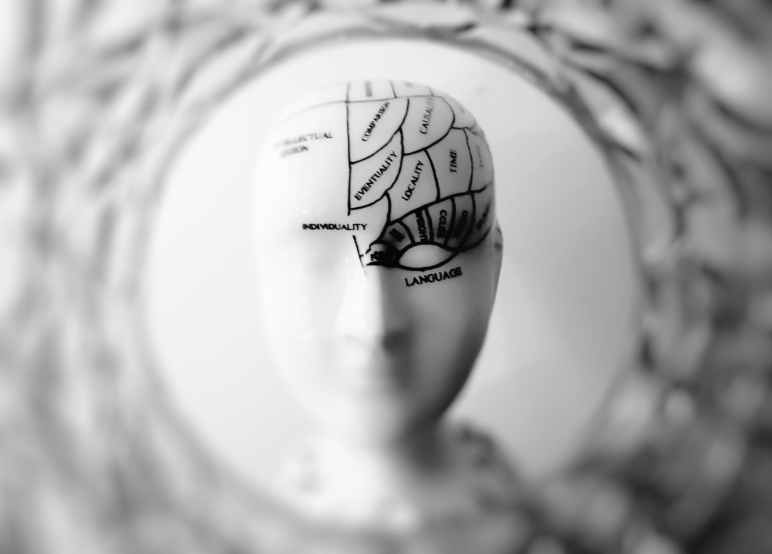
Along with that, there is a certain sadness in knowing our own mortality. While it can be a great driving force to experience and live our lives more fully, it can also leave us feeling regretful that we don’t have more time or perhaps have ‘squandered’ said time on ‘unworthy’ pursuits. It has yet to be proven or disproven whether any other animal on Earth has consciousness of it’s own death, and what that means in terms of its very existence being snuffed out. We do know that some animals practice rituals around death, and even grieve. But do they see in themselves, the ending of it all? Do they wonder if there’s something afterwards? What a horrible price to pay for such big and beautiful brains, am I right?

When we think of inherent anything, I feel like it’s short sighted to believe that there is only one inherent emotion. I have seen too many humans with inherent joy at their existence, to think that it’s all just sadness. Perhaps when the phrase was coined, it came about to explain the great tragedies of the time and of the stage. Perhaps it was to bring us all back down a notch and remember our sadness. Hey, you kids! Stop eating, drinking, and being merry! Have you forgotten tomorrow we die? Focus on worthy pursuits so your one wild life is not lived in vain! Or some such nonsensical mashup of ancient Greece and Mary Oliver.

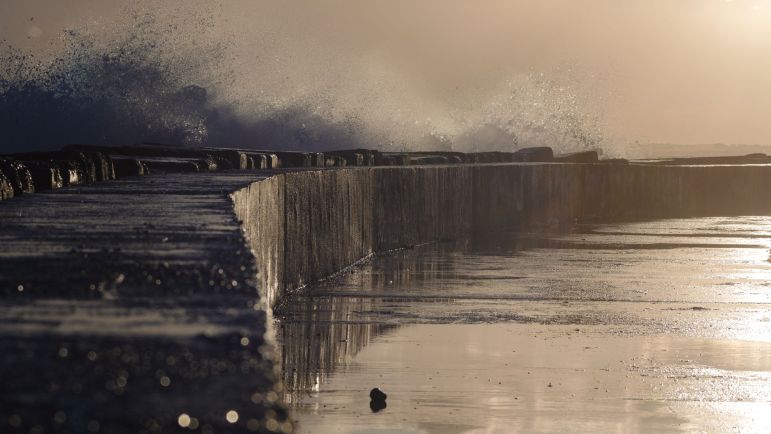
But perhaps being aware (all this goddamn awareness) of our inherent sadness…our bone-deep tragedy of loss, of disappointment, of death, is the ocean we must build seawalls against in order to actually live. Don’t get me wrong, we all deserve a good ‘woe-is-me’ fainting on the couch moment. And I’m a huge proponent of painfully hard, cathartic crying once in a blue moon, but what if we can build a sturdy wall to stand on amidst it all. A rampart against the pounding waves, and ever rising and falling tides, to watch the swells from? If our hearts and brains (those stupid, beautiful, big brains) were meant to be awash in tragedy, then I believe we were also built to notice, accept, and eventually find beauty in the tears of all our things. We grieve because we love. We fight against losing, because we love. We miss, we pine, we ache, because we love. So maybe the great sadness of things is really our funny little human hearts constantly saying; ‘this is beautiful to feel this sadness. This is beautiful because it means I care. This hurt is beautiful because I would not and do not cry over what I do not care for. This is beautiful because a lifetime of loss comes from a lifetime of loving. Of being in love with the inherent act of living. Of knowing it is short. Of knowing we will lose. Of still wanting to love despite it all.

So…as you go about your day, and you find yourself down from some unavoidable loss, or tearing up over something tragic, and you start to think of the great lacrimal sea of sadness inside of you, I hope that you find the purpose in it all to still smile. Life is a beautiful, tragic, heartbreaking, enigmatic ride that no one prepares you for, and no one can tell you how to do properly. Except to love it. In all its joy. And especially in all its sadness.

Finding Your Why to Handle Your How

Hey kids. It’s been an interesting couple of weeks. From a near breakdown (I have a blog on that I’m trying to work the courage up to post) to a long and quiet return to my roots, to the challenging journey into sobriety, I feel like I’m walking a strange and wobbly tightrope. Teetering between okay and falling to my death.

So here’s what I’ve been doing. Reading. And writing. And planning classes. Struggling with knitting and walking my dog, giving back to my writing community in any way I can, and being present for my kiddos. I sometimes have to make myself do the things, and fight to keep the engine running. I’m keeping my hands and my heart busy and I know that’s not always the way to healing. But its a way to keep living, and right now…that’s got to be my only focus. Living. Hanging on, by full-arm embrace or bloodied fingernails.

Let’s go back to the reading part.

I’ve been going thoughtfully through Viktor Frankl’s Man’s Search for Meaning. (I know– ‘Human’s’ search would be better, but I’m giving him grace, because I know he means us all). And it’s full of interesting and useful psychological studies and logotherapy as a means to find focus. But there’s this theme that’s been popping up, that he derives from Nietzsche, and that is when a person has a why, they can bear almost any how. And that even when we suffer, we can create of our suffering a purpose. That the suffering itself is a reason. And moving from there, we must think about our own personal meaning of life not only in total, but in every moment. Individual to us. Because without it, it doesn’t take much to drop us into a pit of despair and self-sabotage. What is our Why? Why do we exist, beyond what’s just pleasurable. What purpose do we serve in this moment and in the future?

He told stories of men in the concentration camps he was in, and their death and survival seemed to correlate (barring outside, violent factors) with whether or not they felt they had a purpose and a focus. When we have a why, we make the how possible. That when we lose hope, we start to disintegrate. More than just personal will and physical strength, it is the belief that we still have work to do.

I’m really not certain of my exact and ultimate why. I’m not sure that’s the point, and on the path to healing I’m granting grace to myself.

So instead I try to find a why in every moment. I eat better to keep my brain chemicals balanced. I work out to help my healing heart and feel strong. I kiss my children and hold them to make as many memories as I can. I write, even on days I feel drained because some days that’s when the truest thoughts come out. Some days I can only deal with one why. Some days I have the vision for all of the whys at the top of a mountain and I keep up steps towards them. Some days rest is my why….

I have important why’s in my life. Two of them to be sure, who walk on two legs and call me Bro (this generation’s affectionate ‘mom’) But beyond that (because as we know, everything in life changes and grows and evolves and we are not in homeostasis, we are in a constant state of morphing) what is buried in my own soul, the one thing I will take with me from point alpha to point omega, is not always clear. (Did I just mix German philosophers and Greek lettering systems? Maybe…it’s late.)

I could say writing, but its more than that, isn’t it? Because writing is storytelling, and storytelling is communication, and communion with other humans, and touching an empathetic center that says, I see you. I am you. I understand fear and love and the need to belong, and I will sit with you in all of these moments. Maybe it’s not so lofty and introspective as that. Perhaps its just kindness. Human compassion. Love. Who knows, that’s a 6 hour drive by yourself kind of question.

Ultimately, I find some why in every day. All the better if it lights even the smallest flame in an otherwise dark world.

What’s yours? Beyond the physical or environmental. Beyond your skill or your education. What drives you to wake up in the morning? To get up. To keep putting on pants and brushing your teeth.

Think about it this week. What’s your Why? What will make any how bearable?

Leaps of Faith, and Other Stupid Ideas

Friends, I’m taking off tomorrow morning at 3 a.m. That’s three in the goddamn morning. All because, on a whim built by the impending doom of middle age, bouts of deep depression, and a general lack of self-preservation, I decided it would be a “fun” idea to sign up to fill a vacant spot on a random Ragnar Trail Relay team one short month ago.

I’m not sure if I was thinking it would count towards training inspiration, an escape from my day to day, or if it stemmed from some kind of deep-seated desire to find an adventurous death, but whatever the case—I’m soon to be on my way up the mountain, for a trying 30 hours and 15+ miles of no sleep, altitude climbs, rough single track, and hanging out in a sweaty tent with 7 other people I don’t really know. (They’re mostly comprised of lovely nurses and good-hearted runners, so I will be in capable hands, even if I try to die by wild animal attack.)

While I’m in some ways dreading the experience, there is a part of me that understands that this challenge, while unnecessary and possibly adding to my overall stress, is something of value.

My life of late has been…tumultuous. It’s been a rough day… since about 2020… and personal conflicts and their responding growth have come at a cost to the security I once felt with my place in the world. I’m in a state of upheaval and I honestly don’t know what next year, next month, or even next week will look like.

Sometimes, when we undergo these painful growth spurts it can feel that we’re a little lost in the world. As Paul Simon once sang. Nothing is different but everything has changed. Oceans and Mountains

Part of us is still lagging behind in our old ‘knowns’, part of us has been thrown into a blender of new and frightening possibilities. We are, as a species, not designed to stay stagnant. Challenges, hardships, changes, and losses are elements of the journey that test our ability to adapt and grow. If we don’t…we’re doomed to stay immobile an maybe what’s worse, risk living half a life. You should really watch this movie…

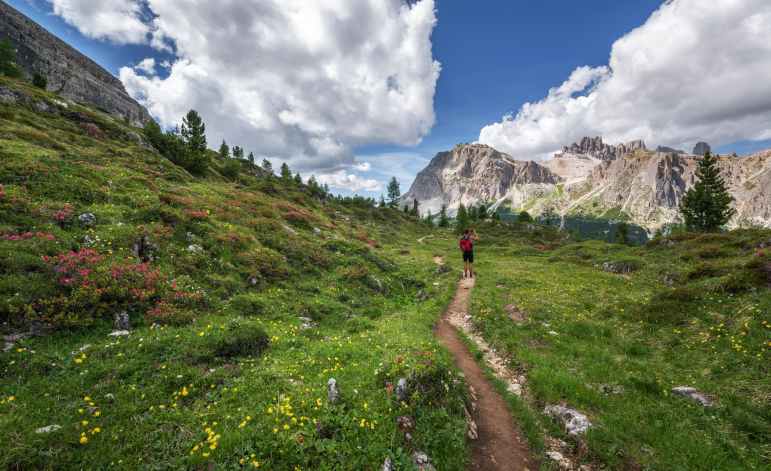
When you only get 76 years, 42 starts feeling like a decline to the end. A sharply steep trail, in the dead of night that only seems to drop faster, the farther we go down. Rocks slipping under our feet, scrub tearing at our ankles, and the out of control realization that nothing we do, really matters. We’re all headed to the bottom.

So the question then becomes, do we stay stagnant and let the gravity of life take us down the hill, a complacent body rolling over cactus and sharp stone? Or do we try to stand in the midst of the pull. Control the hill so the hill doesn’t control you?

Now, I’m a bit free-wheeling, and I’ll never tell you to try to control things in life outside of your power. The hill is there, you’re going down it. The path has rocks you can’t see until they’re tripping your toes, and falls that will scar and scare you. But you can control your legs, how you view those rocks, and perhaps most importantly, how you rise after you fall. (I prefer cursing, gritting my teeth, a bit of healthy anger, a good laugh at myself, and continuing on)

The thought occurs to me that one of the reasons I signed up for this crazy race…might have been to remind myself of how strong I am. Of how many mountains I have climbed, and how many falls I’ve survived. A good dose of suffering can sometimes bring out the heart that has been shuttered for too long. Maybe in every aching footstep, is a starlit night. Maybe in every scraped knee and bruised elbow, is a view you’d never have seen if you didn’t choose to fight your way up that hill. Maybe it’s not a good death I’m looking for, but a better life.  And maybe, just maybe, I’ll find it, on a dark starlit night, beneath a blazing sun, alone but still supported, on the long and distant trail. Find Your Heart

The Beautiful Writers Workshop #9: Mental Floss

My daughter and I recently had an interesting discussion due to a class assignment on mental health concerning OCD, depression, and various other mental challenges. Trying to explain some of the behaviors and levels of severity made me think about my own quirks and habits that can be both positive and bordering on detrimental.


Creativity comes with certain mental “flourishes” that often translate into some pretty tortured souls out there, creating brilliant works of art, whether it be through paint, words, sculpture or music. In fact, I think society tends to think one almost must be tortured in some way to create.

I was listening to an interesting podcast with Florence, from Florence and The Machine, and along with her brilliant Scottish accent I was captivated by her story of alcoholism and how she used to think she had to drink to be creative. That she had to suffer, and to be spiraling down to really get to the good stuff of the soul and write music that mattered.

But then she sobered up and realized that it actually got easier to write without the heavy chained idea that suffering is the only way to make meaningful art.

It got me to thinking about how we can turn the chaos inside, into something beautiful by not fearing it. By not suppressing it or numbing it. By accepting the quirk that is you.

It’s like the person with OCD who uses their energies to post-it the hell out of an outline instead of writing “All work and no play makes Jack a dull boy,” five-hundred times.

It’s all about how we use our quirks.

This week’s workshop is about finding your quirk. I don’t just want the strange dance you do when you walk through a spiderweb kind of quirk. I want the chronic kind. The one that makes you desperate for a piece of wood to knock on when the slightest terrifying thought crosses your mind. Or that makes you have to park in the same spot at the grocery store, every time.

Write a bit about your quirk, then go a level deeper and see what comes up. Why do you think you do it? Do you remember when it started? What fear drives it? What desire does it fulfill or captivate inside of you?

How can you shift it to work towards your advantage in your life and in your writing?

If you can’t think of anything, can you use your quirk IN writing as a character trait and follow how it changes your character’s life, behavior, and relationships. Write a poem about it and get past the grizzle and into the bone, or find the ridiculous humor of it to laugh at.

Self-reflection isn’t always easy and we often discover things we didn’t know were hiding in there. You aren’t required to share, but allow yourself to hurdle over the fear and discomfort to know thyself a bit better. Turn your downward spirals into whirlwind of thought and brilliance. See you next week.