The Beautiful Writers Workshop: Novelty #1: Why in the Hell do I Need to Worry about Plot?

Can you believe I couldn’t think of a more creative title? Me neither. Some days are like that. Remember, this is geared towards beginning writers, so most of you long-in-the-tooth novelists may not get the same bang for your buck. But…there are a lot of sexual innuendoes. You’re welcome, or Sorry.

Today, I’m pushing through and rehashing an old, but viable post. Remember? Before the fucking world turned upside down and Elon Musk became president with Absolute Power? Yeah…those were good times. Let’s not dwell, you can call your congress person again (you’re calling right?) and attend those protests (you’re attending right? This IS the time to be the MOST KAREN you can KAREN–see below for my favorite emoji of the species) after this short and entertaining jaunt into PLOT. We’re getting into the meat and potatoes of writing a novel, and this kind of thing needs space. So, without further ado…

What is Plot and Why is it Important?

All right, I get it, it’s a dumb question, we’re all writers and we all KNOW that plot is the basic structure and story of your novel. It is the idea. The “what happened”, and why, and “what’s going to happen next” of any decent story. I’m not trying to dumb it down for you. But the true test of a good plot lies in the simplicity of answering those questions.

Now, you can have books that are character driven (an event happening TO a person, or BECAUSE OF a person). And you can have books that are historical non-fiction, based on one specific moment in time or occurrence. The PLOT of your book expands more than just beyond an event (otherwise The Hunger Games would have been maybe 50 pages long). The plot is the premise or sequence of events. Some novels will follow a very specific order of events that are common to their genre, or as we like to call them tropes. Tropes comes from the Greek Tropos define as “turn, direction, way” and refers to common, recognizable elements or sequences of events.

Many genre specific tropes (I almost prefer ‘formulas’) are embraced by the audience and even expected. Examples include: “the hero’s journey”, “enemies to lovers”, “small towns”, “cold cases”, “missing persons”, “AI gone wrong”, “fairy tale retelling”. But if almost every novel follows a plot formula how is it #1, that readers don’t get bored and #2 that you tell an original story that hasn’t been done before.

It’s an interesting dilemma on the part of a writer. We know which formulas work in fiction and straying from them often makes a plot fall apart or leaves a reader angry or unsatisfied at the end.
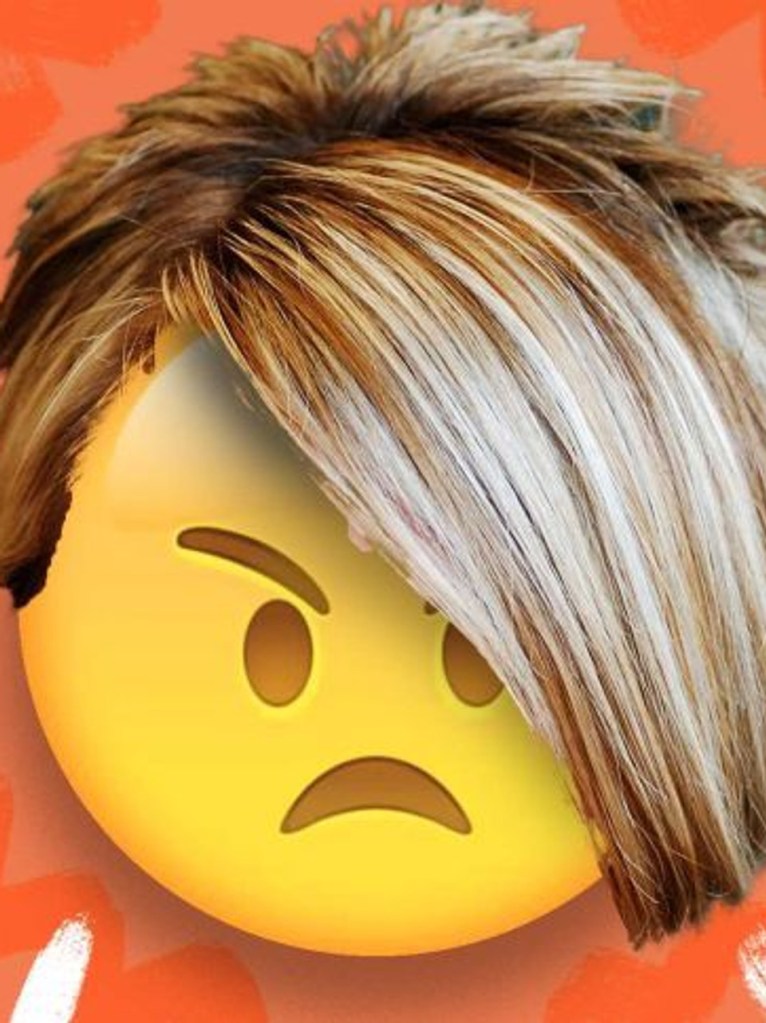
(She’s gonna want to talk to your manager)

But how do we follow commonalities in plot structure and still make it a fun, captivating, and surprising journey for our readers? The answer my friends, lies your ability as a writer to do five things: (Fuck Yeah! A bullet list!)

  • Begin with a unique event or crisis. This comes back to the “scan the headlines” exercise I’ve had you do before. A lot of weird shit goes down in the world. A lot of undercover, shady AF stuff too. Use it as a springboard, to your “what happens then/if” story building.
  • Tie the reader to your character (through love or hate) and make their reactions to events unique or contrary to the norm. (ie a cheerleader who fights vampires. A small town farm boy who becomes a powerful Jedi. A teenager who comes into supernatural powers without the maturity to handle them and doesn’t use them to download free porn–come on….or *snicker* cum on? Oof, sorry. Uncalled for. Please keep reading, I’ll behave.) Character building will come later in this series but if you create unique ones, their actions will create new takes on formulas.
  • Use honed writing technique to build tension for climaxes. Yikes, that sounds dirty and here I promised to be good. Tension is one key to making a story more than just series of events. So much of this depends on your voice and writing style. But the big take away here is about risk. Making the risks personally huge for your character, and even the world at large, will keep the plot fresh and drive it forward.
  • Play with the number and intensity of climaxes (story arcs). I think I’ll start using story arcs (some prefer ‘beats’) because every time I type climaxes I can’t stop giggling. Ok. Story arcs are BIG deals in your plot. Think of these as door ways, crisis-points at the top of your arc, that your character has to move through in order to get closer to what it is they want/need. Once they hit that doorway, or crisis point, they can’t go back. A serious change has occurred either in the setting or with-in the character and they must move forward. Next blog will be all about these arcs so I won’t go into much more detail here.
  • Consider using unexpected but intelligent twists. The best movies and books I can think of that do this are: “The Sixth Sense”, “Fight Club”, “Gone Girl”, “Mind Hunters”. What better way to shake up an audience than by having them accept one reality for the entirety of the story, only to show them the true reality at the end.

All right, so there are some tips for building an effective plot that carries readers throughout the book. My advice to you this week, is to explore various tropes and patterns, especially those in your genre. Turn a piece of paper (landscape-style) and write out the typical pattern of your story, then overlay events and characters of your proposed idea. See how they match up, see if you have enough tension building scenes, just play around with it. I’m not much of a plotter myself, but even I will do a general outline to keep myself on track and make sure I’m building a solid plot.

Next time, more on story arc, how to climax well (*snork*), and end satisfied (*hahahahaha). Until Thursday, happy writing.

New Horizons and Old Loves

Life, man… It is a perpetual state of change. In fact, one of the only certainties about life is that it will change. And humans are no different than any other oxygen breathing, carbon-based sack of stardust. The world changes. We change with it, whether consciously or not. We discover things we didn’t know (I hope) we learn and make different choices (also—I hope and that they are in positive directions). We take hurt and either learn to heal or use it as a weapon on the other stardust sacks near us. We find excuses to fall back into bad habits, or reasons to springboard into better ways of living. We are a constant swirl of contradictions and brilliance.

As a beginning writer, I always thought I’d write the same kind of book for my whole life. Because I loved love. And I loved romance. And I enjoyed participating in the happily ever after of a good swoon-worthy book. But as the world evolves so do we, and I am no different. This is not to say that romance is some basic-bitch level writing, it absolutely is not. Romance is hard to pull off (sexual pun completely intended) in a way that is both believable and reaches for something we all wish we had. Its maddening and beautiful and some of my favorite books are still romances.

Back to my evolution.

It didn’t take me long to realize that while I love romance…it wasn’t the genre that fascinated me. The trouble began (I feel like this is one of those old 1960’s “don’t let this happen to you” videos in health class) probably when I started genre hopping like a vagabond onto railway cars in whatever direction the tracks were going. Just anywhere but here. I was thinking about how and why I seemed easily distracted into forays of genre crossing, experimental writing, and odd formats…And I just figured it out.

I’m a character follower. I can’t stick to a genre because my storytelling is like a puppy out on a walk that wants to jump on and follow every new person home. I want to stick my noses in their crotches and find out where they’ve been. Ok. That—that analogy went too far.

The point is… People interest me. Characters interest me. Whether I’m watching them pirate a space ship, imagining them breaking up the scar tissue of a thoroughbred horse, or fear for them as they get possessed by the spirit they’re hot for. I’m curious about people. How they live, how they deal, how they fail. How they love… what they love. How they keep on keeping on and manage to use their big old squishy hearts towards better ends. Or bitter ends.

So I guess I don’t stray too far from love. But I like the depth of how love incorporates itself into our lives, whether its romantic or not. Knowing this about me feels like untying a corset, a big breath in, a cutting of old ideas binding me into “what kind” of writer I am.

I’m a character writer.

Which means I can write poetry, or gay romance. I can write socially conscious plays, or epic space farmer odysseys. I can write song lyrics or philosophical observations on love and meaning (but I repeat myself). I can write about characters because I love and respect each of them. I care about them. I am curious about them. I am compassionate for them. I can be the journalistic eye that follows character and changes the world and myself through their experiences.

This year I’m wrapping up some older projects (urban fantasy-erotic-trilogy based on the legends of Norse and Scottish mythology? Yes please…Genetic killing machine learns she has a conscious? Don’t mind if I do… A time traveling, hot as hell gay romance between two of my new favorite characters? My heart is all a-twitter… A literary first person POV exploration of grief, loss, and how we let go without losing our hearts? My soul didn’t know my brain could write like that…)

But I’m also hopping on new rail cars. Tentatively, 2 plays covering everything from the cost of pro-life legislation on a micro level and the oft-ignored life ruination of the high school to prison pipeline for black youth, a book of erotic poetry, and exploring my horror side with short fiction. It’s all a little ethereal and unsettled yet, but I see the stardust of potential, tossed out in the frozen dark of space, lying in wait for a gravitational pull to gather it into new universes.

Oh, and signed up for another fucking marathon so…that was stupid. That stardust seed is a cackling massive black hole I should have clicked away from instead of looking at the price and going… “Hey! That’s a cheap way to suffer immensely.” I bet I could have paid somebody less to take a bat to my knees, with the same outcome…but here we are. Eternally hopeful and stubborn.

So here’s to new endeavors, in your writing and your life. Open up that perspective a little wider and let some of the stardust in. But keep love…at the heart of your universe.

Crossing Genres

Good morning! Well, its been an exciting few weeks with book releases and readings, and promoting the hell out of my stuff. I’m so excited to get back to actual writing, and talking about writing. Today, in collaboration with the fine folks at The Writing Forge, I’m going to talk about crossing genres, both as an author and also within singular books.

For more check out this podcast: “Look Both Ways Before Crossing Genres

So, what does it mean to be a cross-genre writer? Well, it’s more prolific than you might think. Very rarely does an author stick to one genre alone for the entirety of their lives (I was going to say career but I’ve never actually known a ‘retired’ writer. We write up until the day we shuffle off the mortal coil as far as I know). Nora Roberts writes romance but she also crosses over into Mysteries as J.D. Robb. J.K. Rowling went from YA fantasy to Adult Fiction, Anne Rice has written everything from Vampires to DomSub, to Christianity. Hell, even James Bond’s creator, Ian Flemming wrote “Chitty Chitty Bang Bang”. So the better question is not should you become a cross-genre writer but when and how.

Photo by Wallace Chuck on Pexels.com

Writing in multiple genres can be done in one of two ways. By switching genres completely by novel or story, or by incorporating multiple genres into one project. Let’s start with the first.

So, let’s say you’ve been churning out kids books for the last ten years and you’re ready to jump into something new. You’re an established name in the genre, with a following (let’s dream big while we’re dreaming). Yay for you! But how do you go about the transition seamlessly?

First, know the genre you’re getting into. Mysteries don’t follow the same plot points or tropes as kids books (wait, do they?) Read as many mysteries as you can, gain a good understanding of typical tropes and character types for your new genre. Discover what you like and what you don’t, what works, and what doesn’t. This way, you’ll be ready to write a mystery that will appeal to the die-hard fans of the genre and hopefully make your work more acceptable.

Second, if you’re established in one genre and are jumping the creek into another, you may want to try a pen name. When people know you for a certain story/genre type, they’re going to follow you. But maybe they don’t want to read your new blood spatter fest to their 8 year old. So, establish a new name for your new genre. (J.D. Robb, A.N. Roquelaure, etc.)

However…if you are a sci-fi writer and you’re dabbling in fantasy, this is a smaller jump and you can probably keep your name. Those followers you have will probably be more lenient and accepting of your next adventure, and if you can take an established base on a new adventure all the better.

What would be the benefit of writing in multiple genres in this way? I’m so glad you asked. Here’s a bullet list.

  • Its a great way as an author to diversify your writing, get your work into different venues, and expand your base of readers
  • It can help beat boredom of following the same tropes/patterns over and over
  • It will help grow your skills as a writer. Romance writers know dialogue and relationships, Fantasy writers know word building, Horror writers know suspense. All of these skills can be honed and developed to the betterment of all your writing.
  • It makes you hard to pin down and undefinable. Frankly, I don’t like being put in a box. Yeah I write romance, I also write speculative fiction, suspense, sci-fi, and erotica. I dabble in poetry, and sink into human interest non-fiction. Don’t you put your labels on me.
Photo by anouar olh on Pexels.com

Now Let’s talk about utilizing multiple genres in a single novel/story/project.

Its slippery slope. Genre fans are genre fans for a reason. They like the predictability. They like knowing where the story is going and that it will end in a certain way. Mixing up loved tropes, taking side quests, and tripping the hero on his journey might lose you some fans. And genre fans are a huge base. I’ve even turned off a couple of readers because some of my romances were not ‘sweet’ enough. They were a little too dark for the genre. And that’s a risk I took by telling a grittier story in a genre that likes to stay flowery.

BUT the benefits to writing this way, are that you can incorporate elements of storytelling that best suit your characters and the story itself. I wrote a science fiction novel set on the rings of Saturn with time/space wormholes, and a heavy nod to literary poets. It had elements of religion, and romanticism, and social commentary, all in the midst of blaster fire and moonglass blade fights. It was one of my favorite stories to write and one of my best recieved and I think that’s because sometimes a story is just too big to fit in one genre.

Sometimes your story, is more like life. A daring, romantic, mysterious, fantasy western set in modern day suspense-filled and poetic semi-reality. And its interesting and unpredictable in spaces, and comforting and ties up well in others. And that’s why knowing the elements of each genre is important and can boost your plot line into something quite magical.

Crossing genres is, all in all, a great way to improve your writing and your reach. Knowing your audience, and understanding the different and distinct elements of your genres will help you do it in a successful and enjoyable way. I hope that you all give it a chance and let me know how your forays go.

The Human Genre


We’re not only defined by what we chose to do in our lives, but how we do it. We are categorized by outward and inward perceptions, each of us, akin to novels, and are thusly classified into genres.


Ah, she’s a romantic mystery with a dash of humor.

That guy over there is a political intrigue, with a splash of old school patriarchy.

Ah, she’s a pushy self-help, peppered with self-righteousness and a healthy pinch of praise-Jesus.

That lady over there is a bitter cozy mystery with a hint of post-menopausal lack of fucks to give.


We are defined by the things we do. We’re put into categories by people we know, and by companies that gather our data. Even when we don’t ask for it, we’re given a neat little label. And sometimes, when we’re overloaded and overworked, we start using that label as our only sense of self, as we desperately try to remember our purpose… And sometimes, we use those labels as a scapegoat for our less-than-desirable behaviors.


I’ve been trying to meditate every day and have been working through a series on my app (yeah, look at me, getting all tech-savvy with an app to help me reconnect with my humanness…seems oxymoronic) about acceptance, depression, letting go, and stress management.


One recurring phrase I hear is: You are not your thoughts or your feelings.


This is a hard concept to grasp.

Humans are this odd mishmash of biology and higher neuronic thought processes. I mean on one of our great ape-grasping hands we’re barely getting used to this hairless bipedal thing, on the other hand we’re philosophical, heavy in the head, braining entities who, when left to our own devices will overthink ourselves into a coma.

Maybe there’s a fear that if we disconnect to our thoughts then we won’t know who we are.

Maybe we fear we’ll lose the basis of our existence if we let go of the ideas and feelings tethering us down.


But this is not so.


You see, thoughts and emotions change. All the time. And the reason humans become so miserable is that we tie ourselves to them, try to define ourselves by them. Then we are less apt to let them go, especially when they hold the addictive qualities of self-spiraling sadness and anger. We feel sad. We are sadness. We feel anger. We’re angry humans.

Conversely, when we are happy or elated and the emotion passes, as it will with the natural ebb and flow of life, we cling to it desperately and feel like something’s gone wrong when its tying us down.

Should we let go of happiness. No. Should we reject sadness and admonish ourselves for anger? Absolutely not. Be in the moment, with the emotion, understand it is a feeling, acknowledge it and let it go. You’re all that’s left.


Just as we aren’t tied to labels; we are not one genre, we are all genres.


Why is it important that we understand this?


Two reasons:


If we are boxed in to what the world has categorized us as, to our labels, we won’t know we can change. We become stagnant and perpetuate behaviors that are detrimental to our happiness and the benefit of humanity.


Secondly: We will feel trapped. And trapped animals lose the will to live. Without will, without passion, we cannot create, we cannot solve, we cannot continue to thrive in the world.


So how do we escape?


Here’s the dirty little secret:


I’m not entirely sure.


I think it has something to do with opening your mind to new ideas, allowing yourself to be different, to change the things about your life you don’t want to be a part of anymore, without guilt or self blame, and to let go of the idea that you are the personification of your thoughts and feelings.


You can be anything. Or just some things.


Or nothing at all.


Cross genres. Explore. Maintain your free will. While those that seek to control will tell you, free will is our greatest vice as human beings, that it causes us to make decisions that don’t align with status-quo, religious concepts, or dictator-imposed law and thus brings about the downfall of society, this is not the case.


There’s a reason the Dark Ages happened.


Free will, your ability to change, to move, to think differently are vital to not just survival but your purpose in life.


So what genre are you today?