Writing with Purpose

Good morning, loves. I’ve been trying to read more lately. Everything from scientific studies on stress response, to the humor of philosophy, to the life and struggles of Van Gough, to a naughty Priest with a BDSM kink…ahem. I’m well rounded like that? And I find the more curious I am of all these very different genres, the more I start to think about my own writing.

It’s not uncommon for humans (writerly ones or not) to start to feel deflated, stuck, and more going through motions than genuinely living. We, especially in the corporation that is America, are caught up in a terrible kind of rat race (including plagues, famines, lack of health care, underpaid and overworked) and it can feel that most of our days are spent drudging through. From one task to the next, one have-to to another. Its universal in our culture.

So, because I’m an absolute book dragon, I am also reading an interesting book from the 1950s called “Words to Live By”. I’d found it in my grandparents cabin last year and have taken to reading a ‘chapter’ here and again when I’m feeling stuck. The caveat of course is that this is an old book, with some entries being incredibly biased, a little too religious, and some conforming painfully to the unhealthy standards of the time. But, because I’m an information whore, I like to read them and filter out what’s good about them.

The one I recently read was about purpose. And how we can get caught up living a very drab, unfulfilled life. The trick, the author wrote, was to live as if one of your heroes/heroines was watching. To live in such a way that the people coming after you had something to look up to, to aspire to. And I kind of think this is brilliant, because it doesn’t necessarily mean that you have to do something great or large or be someone well-known or famous. It could just mean that you are a living example. You create a set of standards. You are influential to both good and bad ends. And you never know, who will be watching.

As writers, I hope that we approach our purpose in two ways. One, that we stay true to what we write. Meaning, we write what we love and we don’t cater or cow to the demands of the market. Also, this means that we invest in our writing by constantly questioning it and striving for the best possible book/poem/essay/article we can write and genuinely care about its quality.

And two, that we use our voices to entertain, educate, encourage, and uplift. Our words matter. Even if in a hundred years we’ll all be gone, our words will survive beyond us. So make them good words. Make them loving and careful words. Make them beautiful and true. Make them words that someone reading your book 75 years later doesn’t have to mentally edit or dismiss for lack of understanding and compassion. Do your best. When you learn something new or know better than you did, do better than you did. Find purpose in the fact that your hero/heroine is watching you, (even if its just your parent, or a teacher, or your kids) and make your writing and your regular life, worth admiring.

Backstory: The Sum of Our Parts

Hey kids! Today I thought I’d settle back into a little bit of craft. For those of you who are beginning writers, I hope this will be of use. For those of you who are super-sonic, advanced, best-selling writers…what in the hell are you doing reading my blog? Don’t you have launch parties to go to and movie studios to schmooze? As I consider myself a perpetual beginner in all things, I will continue as if this is something you still need work on, because I do.

Backstory…ah yes, all the shit that happened to your character before they land on the page of your novel. All of those pesky details that readers don’t necessarily need to sift through (100000 words or so?) but that are essential to why your character behaves the way they do, why they are where they are, and what fatal flaw we are hoping they fix. So how do we, as writers, weave the important details in without dumping large, boring, sagas of backstory on our readers? Here’s a fine bullet list:

  • WRITE IT OUT, BUT DON’T PUT IT IN: One of the best practices you can do is write out all those long, sweeping, historical scenes in a separate document. It helps you get to know your character better and to be able to write them from a place true to their history. That document doesn’t have to be seen by anyone else, think of it as writing an entry on your character in wikipedia to be able to better write them authentically on the page. Backstory details will have an easier and more organic presence that way.
  • CONSIDER YOUR GENRE: Some genres (Literary, YA, Regency Romance) tend to have more personal historical details, and if the main goal of the genre is a transition from the past to the present or future (coming of age, hero’s journey) then the past will play a bigger role and more time can be devoted to it. Readers in these genres expect as much.
  • MOTIVATION: Everybody has a WHY. If the motivation is obvious (he’s a cop because he believes in justice) it requires no backstory. If, however, they’re in a role or position that seems to clash with their personality or values we need to know a bit about how and why they got there. (She’s a cop because her father was killed on the job by a dirty partner and now she wants to ferret out the current Commissioner).
  • BE SELECTIVE TO ENHANCE THE FLAWS: If your main character arc is about how a closed down hunk learns to love again, then we need to know why they closed down in the first place. You don’t need to know he was the captain of the rugby team unless his heart was broken by a fellow player. Stick to the details that caused their flaw, or reveal something important about their values and personality that are essential for their evolution, or are the defining handicaps that keep them failing.
  • BE BRIEF: In this case, a hint is as good as a paragraph/chapter. Some of the best backstory is the kind that is interwoven, seamlessly within a paragraph. Related to the current events but powerful in its small punch. “When he asked if she wanted a peppermint mocha she scrunched up her nose. She hadn’t liked the scent since her grandmother had insisted she rub peppermint lotion on her feet every night. ‘No thanks, just a latte,” she said.” Here we see that she had to take care of her grandmother and it wasn’t pleasant. Young people in positions like that have a heavy sense of duty and often resentment. We learn this from one line about grandma feet.
    • If you struggle with how to shrink it down, see the above bullets for the most important details and boil those down further. Ultimately it’s about practice and thinking about how your own brain works; how certain smells can bring up memories, or being in a car reminds you of a trauma, etc.
  • IF IT’S GOT TO BE LONG: Okay, I get it, sometimes exposition is too important to the motivation, character flaw, and story to get cut down. So here’s some rules of thumb, if it has to be longer:
    • It better be full of gasp-worthy events
    • Write it in beautiful sweeping prose and be addressing a literary audience that doesn’t mind a good wander.
    • Make it hilariously funny

Well, there you go. I hope this helped give you a little boost on how to interweave backstory into your work. Good luck on your writing and next week I’ll have some announcements about the big ol’ month of September and what fun things are going down.

A Little Something…

Hello friends, writers and readers.

I hope this week finds you getting back into the swing of things and finding a groove. Whether that’s winding down summer and getting ready for fall, or getting your kiddos back into school, I hope you’re finding some time to rebalance, and recenter. I’ve got a little teaser for a book I’ve been working on this year. I thought it might be a change from the poetry I normally offer and maybe a preview of a book that will hopefully be coming out within the next year.

Enjoy!

No Words After I Love You: Excerpt

““I’ve never believed in God, but I believe even less now. If there ever was a God, then it was her. My planets revolved around her and the world did not deserve the warmth of her star. None of us deserved her.” Don knows I mean him; the great idiot has to know. I hang my head, chance a glance at the crowd, blurred through eyes that are viciously crying, despite my resolution to be angry over sad. “God doesn’t deserve her either.”

That’s all. That’s all I can get out and not point my finger at Don and his treacherous heart. How dare he ruin the last testament to my wife, even if I didn’t want to be here. How dare he show up and mourn a woman who was mine? I sit down next to my father who clears his throat and in it, speaks a volume of reprimands.

Denouncing God in front of the entire church on such a sacred day such as this, Charles?

“Add it to my tab, Dad,” I whisper beneath my breath.

The flurry doesn’t stop, and I think I sign some paperwork, and I collect the ashes, which were to be separated and scattered, between New York and Georgia. Both urns come home to the apartment, where a good old-fashioned wake has been dictated by my late bride. A wake.

Wakes are for Catholics, I’d said. She shrugged in her robe and took my chin in her hand.
They always seem like fun, is what she had said.

Of her own funeral, she wanted it to…seem fun. She wanted wine and music and dancing and laughing. I have the wine. I think Meg did that. Meg ordered the food too…It’s all here, and so is the endless trail of well-wishers, face after face. Graceless, awkward patting of my shoulder from nearly all. Gina was the hugger. They are not sure what to do with me.

The only thing that’s not here is Meg and I look at every new face that enters the apartment, every milling sheep as though she’s snuck in. Where in the hell is that girl? Maybe it’s my brain, trying to distract from my grief, but it’s got me worried. I haven’t talked to her since that morning when she asked me where to put the flowers after the service. I said I didn’t care. She said she thought she could donate them…

I said God could shove them up his ass. She said she was too short to reach, but she’d see what she could do…I unexpectedly smile in the middle of someone else’s story.

Where is Meg? Did she get left at the church? Left by the people she loved, once more? Orphaned again?
Two hours into the malicious and introvert nightmare, and the endless parade of people (thankfully Don must have taken my not-so-subtle hint and had the mind to stay away) is starting to quiet.

Meg walks in. I watch, from the kitchen as she sneaks through the front door, as if she’s trying to slip in without opening another wound. Her nose is pink and her eyes are watery from the cold. Or maybe its the grief.

She hangs up her scarf and that old threadbare coat. She pauses to say hello to my father, as if he deserved her softness. She’s walking through, not a soul recognizing the plainness of her, the very un-Broadway nature of Meg, in her simple black dress, probably the only one she owns, and probably only because Gina helped her find it. She gives people that awkward, tight-lipped smile that one offers in these situations, perhaps a handshake or a fluttering pat on the shoulder. But no words are exchanged.

My God, but she’s given me something to focus on. Poetry in her plainness, an anchor in this stormy sea.
I can tell she doesn’t want to be here. I can tell she knows she doesn’t belong.

I feel like she might try to sneak out. Give me some awful excuse tomorrow, like she was there but missed me in the hustle bustle of it all. But I can’t let that happen. Because she needs to know…she’s not abandoned. Someone notices. Gina begged me to notice her. As she passes the kitchen I reach out and take her wrist in my hand. It’s small and just the act of wrapping fingers around her bones halts her world.

I always think Meg is so much bigger, but she pulls easily into my arms and I’m just as startled as she is. The kitchen is quiet and I’m not sure why I react like such a desperate man, thinking she might leave. I’m not sure what to do now, with Meg so close. I cannot account for the grief in me. I am desperate. For any normalcy. For someone not in the business. Someone who…knows me.

“Where have you been?” I hiss.

“The park?”

My heart shoots up into my throat. The smallness of her wrist and how easily I was able to kidnap her into the kitchen makes me overpour in worry.

“By yourself?”

“I couldn’t—” she pauses and looks into my face. “I didn’t think you’d notice.”

“Didn’t think I’d notice? That you weren’t here?” Words come out of my mouth. I’ve been regulating all day. I can’t regulate with Meg.

“You’ve got a lot of people here and more socializing than I know you want to do. I didn’t want to be one more obligation for you.”

Martin, one of my favorite horn players from the pit of many a show-stopper, steps into the kitchen for another sandwich. He gives Meg an awkward, tight-lipped smile, and pats my shoulder lightly, before he leaves. My brain refocuses into the tired vulnerability, unguarded in her.

“Don’t leave me alone.”

“You’re not alone, everyone is here,” she points out.

“They’re here for her—” I ache. I look towards the sounds of laughter and stories in the next room over. In this sea, I am alone.

“I’m here for you,” Meg says and puts both of her hands on either side of my face. I look into her eyes, a quiet shore. I feel my face pinch up like I’m going to cry and that stupid girl, throws her arms around my waist and holds me. Buries her face in my chest, so I can cry and not be watched. She holds me so tight.
Like someone who loves you holds you. Without reserve, without any awkward pause, without worry for societal rules or false conclusions. I’m stunned into accepting. When was I last hugged? Hugged like a Midwestern girl hugs? Warm and close and like two hearts are trying to reach each other through the cage of ribs between. Never.

She smells like cold air and the traces of someone smoking on a park bench, and shampoo that’s soft and flowery. I could push her away and berate her for being stupid and sentimental. But my body sinks into the warmth. Fuck, I need a hug. A real one. Does she need it as badly as I do?

I put my arms around the smallness of her. I don’t know how tightly she needs this and I know I shouldn’t care, so I just hug her like I want to hug, and she shivers and I shiver back and I feel the tears welling up between us, a great lava flow started from an earthquake. I run my hands through her hair, and hold her tragic little brain next to my heart.

“My girl,” I whisper and catch myself.

Who’s girl? Which girl?

It demands an answer and I have to decide. “She was my girl.”

The grief flies its middle finger to my stoicism and Meg is so warm and close and just so…there…that I start to cry. And I don’t know what to do, so I just let it go. She’s whispering her anguish, I’m sorry, I’m sorry, I’m so sorry over and over like Meg was responsible for the treacherous cells or the decade long affair, or the loss of everything I thought was true. As if she was putting that on her plainly dressed shoulders.

Comfort in her warmth starts to feel like betrayal. I think she feels it too. I sniff and pull away. I’m too confused to have her so close. I’m too far into the middle of my grief, I’m bound to make poor choices. I can’t look at her in case any part of this ache is still in my eyes. She tries to look at me but I pat her shoulder like Martin patted mine. Awkwardly. Boundaries thrown up in defiance. I need to get out of this kitchen. Into a crowd where I can be unseen again. I pause and hand her a box of Kleenex before I go. I hear her sniff and pull out a couple before blowing her nose in a very…moose-like manner.

The honking of it brings the first tickle of a laugh I’ve felt in days.”

The Simplicity of Practice

I can’t tell you how much of my life I overthink. From what a friend has said, to what the scowl my daughter is giving me means, to the side eye my dog throws at me and the head shaking the man in the car next to me offers when I’m belting out Blink-182 lyrics… I overthink it all. I overthink every decision (but if I have a bagel without the egg I’m going to be hungry, if I brush my teeth now they’ll just get dirty because I want one more cup of coffee, but if I don’t brush them now, it might not happen today…) You see what I mean?

So when I’m given (or read, or listen to) writing advice, I tend to do the same. I over calculate how many chapters I should be writing a month to finish a book in a quarter. I’m diagraming the hell out of my character’s backstory (after a pantster first draft that feels too tepid). I’m getting lost looking at internet trends, publishing tips, and marketing plans… And so much of these grand ideas, sparked by advice to help in the long run (some don’t) but what they for sure do, is take up time. And invested time like that isn’t just the physical hours but the mental energy that it takes to process it all. Less mental energy means…less writing (or less quality in the writing?)

Recently, I read this great article on the timeless tidbit of: “just write”.

I mean, admittedly, it’s kind of a breath of fresh air. Simple. Not complicated. Correct. To be a writer, to finish your novel/story/project, you must actually write it. So…just write.

But it’s also oversimplified. If writing were just that easy, every person who’s ever come up to me and said “I’ve always wanted to write a book” or “I’ve started a novel but I can’t seem to finish it” would have oodles of books written. Wants made into dids. I mean, “just write” makes it sound like all we really have to do is sit down, the words will come, the knowledge will be there and the novel will march through beginning, middle, and end without fail or hiccup.

But writing isn’t simple. It’s akin to playing an instrument, and doing it well. Anyone can pluck the strings of a guitar. Anyone can thunk on the piano keys, but it takes more dedication, thought, and skill to actually play a song, none the less write one. But the practice is the road towards a better song.

So, as this pretty smart writer guy said, we should instead “Practice Writing.”

Practice Writing. It is better, no? You’re still doing the writing thing, but it comes with the lightened atmosphere of it being something continually tried and worked for, something offered, reworked, and perfected, but never perfect. Something we find joy in, while still being committed to the process of it.

And it helps me not over think it. Because every sentence, scene, poem, blog, or chapter I indulge in, is a practice, and a learning opportunity, but not a commitment to perfection. And just like an instrument, through trial and error, and time spent, we writers will get better and better. So, I beg you to go forth, and practice your writing today. Whether it’s 2000 words, or 20. Every plunking of the keys counts towards learning the complete song. Every word, every thought, every rambling blog post, is a writer in the making.

What’s The Deal, Brain?

I’m normally a prolific writer. Like…I can put down 2,000 words plus a day when I have time and am in the middle of the glorious magical lapse, where time ceases to exist and there is only writing. But of late, that space is hard to find.

Now, to be fair to myself, I did just get done with a big project for my writing organization as well as helping to put on a conference. The kids are home right now, and there have been a lot of to-do’s in life. All of those excuses aside, when I sit down to write, it’s less a raging waterfall and more a sad little trickle, if it happens at all.

At the beginning of this year, coming off a year of publishing five books, I told myself that the main goals of the year would be learning and teaching. I would take classes, I would teach classes and give my brain a break from the writing, and especially, editing aspect of what I do–at least in terms of publishing goals. But I think I did myself a disservice.

By not writing consistently, at least a little everyday on various projects, I think I’ve lost some neuro pathways. I’m having a hard time with my focus, with my word count, and with that magical blossoming of new ideas. But is that all? Because I’m pretty fucking loopy these days. Like can’t concentrate, I’m tired all the time, I’m crabby (granted the world is a shitfest currently), and often depressed.

This is where the post gets a little weird, but I encourage people (men, women, and everyone between and along the spectrum) to stick with it.

Let’s talk about perimenopause. (Ew! I know, but shut up and listen) Brain fog is real, ya’ll. It also means night sweats and if those don’t keep you awake, the random brain and body signals being sent will. Less sleep equals…even more brain fog. I’m struggling to find balance, and focus, even though I haven’t changed any of my normal dietary, exercise, or life practices. All this to say, sometimes, life and biology don’t work with us. Sometimes we have to find new pathways and methods to do what we love.

Right now I’m researching it. I’m trying to eat healthy, let myself rest when I’m tired, and (despite also still teaching and learning this year) I’ve started writing again. A small, simple and sweet little book that’s not requiring too much investment as of yet, because I need to keep practicing, but I also need to keep it enjoyable, and not too convoluted for the brain cells that are already fighting strange hormone dips and tricks.

I know I’ll get through this, I’m looking into therapies and other things that can be done. Because I’m committed to managing my health and I’m committed to my creativity. Even if that means (as a woman and isn’t it ALWAYS the case) I have to work a little harder to find that balance. I’ll keep writing, a little each day. I’d rather be stuck in the traffic going slowly in the right direction, then pull of the road and never get back on.

Take care out there kids, and bring a fan. It’s going to get hot randomly.

A Word (or Several) About Writing Conferences

Photo by Pixabay on Pexels.com
I’m not going to lie, I’ve been a busy bee of late, and I’ve got plenty on my plate to make me feel justified when I rehash an old blog, especially if it still fits with what I’d like to talk about.

This, being July and smack dab in the middle of the Writing Conference Season (I’m not sure if that should be a capitalized title, but it seems like an event so…I’m going with it) I thought it would useful to budding writers out there to go over some conference basics as well as some advice that has really helped me get the most out of them. This also being a totally new era, I’ve added some modifications to reflect our new Zoom/Teams lifestyles (not NEARLY as cool as a Rock n’ Roll lifestyle).

So, let’s get into the meaty goodness of writer’s conferences and why you should strive to attend at least one a year.


How do you choose which one to attend?

• Firstly, most conferences, at least since the pandemic, have had to switch to some type of online format or perhaps online-in person hybrid to make accommodations for safety. So, the good news is, you may not have to shell out so much for travel expenses as they can be taken from the comfort of your home. Bad news is that you’ll still be at home and all the challenges that can go along with it. I’ll touch more on that later on.

• If you are anything like me, you’re wealthy in creativity but strapped for cash. One of the biggest deciding factors, for me, is the cost of the conference, along with which classes, speakers, and agents will be there. Getting to pitch to an agent, or multiple agents for publishers specific to your genre is a boon. Classes that are not just interesting but will help expand your craft are also good factors to consider.

• Some conferences are genre specific and if you are a comfort-hugging archetype who doesn’t flirt around outside your style and subject matter, then definitely consider something specifically geared to your genre. The Romance Writers of America used to host in fun and far-off lands like…San Diego and…New York City…*le sigh* Genre specific conferences are awesome if you’re looking to polish skills or start out in a new genre that you don’t normally write in. Don’t be afraid to flirt a bit (outside of your genre, that is *wink)

• If you’re stuck deciding between two, look at the courses offered, the speakers presenting, and if they are offering pitch sessions, especially agents suited to your work. Pick the one that gives you the most opportunity for growth and stretches your creative and ambitious goals.

How do I get the most out of my conference?

• Here’s what I’ve learned. Plan ahead but be flexible.

Conferences don’t just start the minute you pin that snazzy name badge on your seldom-used dress clothes (or, via online conferences, log in with only dress clothes on your upper half). They start the year before, during writing when you self-reflect on the issues you have with your WIP, your style, your grammar, or even the steps you want to take next. If you have trouble with dialogue but are a whiz at plotting out the perfect story arc, then use your conference to build up your weak points. Even if it means stepping out of your comfort zone. Which leads me to my next point:

• Sit it on at least one session that is outside of your genre, comfort zone, or even interest.

Look, conferences can be amazing experiences but if you’ve been through sixteen hours of various takes on the query letter or trying to perfect your memoir pitches, you’re not growing as much as you could be. Why do athletes cross train? Why does an engineering major still have to take social science classes? Because learning about the realm outside yourself will make you better in all aspects of your work. Try a sci-fi world-building class or screenwriting. I guarantee, you will get something new out of it that will help your project and your craft.

• Push your limits.

Talk to people you wouldn’t normally, share your story, your success, and your pitfalls. This is an awesome opportunity (I’m talking to you little introvert) to commiserate, vent, and rejoice in the craft you love so much. Pitch your novel, article, or story. Talk to the larger-than-life keynote speaker (here’s a hint: every single one of them I’ve had the pleasure to meet has been the kindest, most down-to-Earth and supportive writer). Come away feeling like the weekend/day was an experience that has changed you in some fundamental way.

How do I not get overwhelmed?

• For goddess’ sake, take a break in the midst of it all. I’m the worst at this. I’m a classic victim of; “I paid the money and I’m going to hit every single class. I will volunteer, pitch, hit up the speakers at the dinner table, and stuff every bit of information into my head until explodes!” Then by day two, nothing makes sense in my mind, words are blurry, I’m not sure what my name is, and I’m crying into a self-made mashed-potato tower, while wearing Underoos on my head that clearly are not my own.

Take the breaks between sessions or even forgo a session and find a quiet corner or go for a walk outside. You need it to recharge, allow time to absorb the information and be refreshed for the next round. This is especially true for online conferences! Take the computer to different rooms (if they’re still quiet) or outside if available, take walks in between sessions, take eye and body breaks (look far off for a spell, or ‘rest’ your eyes away from the screen, get up and stretch as often as available). Its’ almost like interval training—the space between, the recovery is what sets you up for the next round, so take it.


• If you are pitching to an agent or editor, polish the shit out of that thing beforehand. Take your pitch to your critique group, your friends, random people on the street before the conference and learn how to deliver it with confidence and clarity. Know your story, your characters, and your plot, inside and out. That first page should sing the sweetest siren’s song anyone has ever heart and lure the tepid agent from the afternoon lunch lull into something exciting they want to read more of. The more you practice your pitch, the more it will feel like a conversation with a good friend instead of an interview.

• If you are pitching, don’t be intimidated by the agent or editor. Remember they are people. They are there, specifically, to talk to you. To hear your story. To find the next big thing. Most of them are also just like you…they may even be wearing Underoos and like mashed potatoes. The point is, it’s okay to be nervous, but don’t go in assuming they relish the idea of shooting you down. Be polite and always thank them for their time and any advice they have to give.

• Sleep before. Sleep after. Eat nutritious food, take walks outside whenever you can, and watch the caffeine and the booze. Free coffee stations are like crack for me (or conversely at home for online conferences—having my own espresso machine) and cash bars are a tempting mistress at the end of a long, people-filled day. But you’ll have things to do the next day and Underoos will stay safely tucked in if you can avoid that third cocktail.

To conclude, I’d like to share one of the best lessons I’ve learned from conferences.

For every conference I attend, I add a layer to the writer in me. That is to say, through the people I meet, the classes I take, and the lectures I attend, I learn more about the craft. How, and when, and why, and what and all the technical attributes that come along with the delicate balance of creativity and grammatical science. But more than just the sum of these limitless parts, I learn a greater whole.

The whole that is me as a writer.

And in doing so, I’ve learned how to enjoy myself more at these kinds of functions by listening to my body, my brain, and my growing years of experience.

Back in the day, I would be hand-cramping from the steady stream of notes at each session. I would be tumbling from one to the next, chugging down coffee between in hopes to keep my energy up so I wouldn’t miss a thing. I would strategically place myself at the agent’s table who I wanted to garner the literary affections of. I would, in essence, be the adult version of my grade-school brown-nosing self.

Something happened one year, while at the meet and greet “networking” event. I found myself long past my emotional and mental boundary and crossing all lines of my introvert nature, to garner the attention of at least a few more experts in the field. I was mentally exhausted, untethered and I felt like I was on emotionally shaky ground. I realized after a long day of learning and being ‘on’ that I didn’t want to be there.

I didn’t understand my limits or that honoring them was at the core to being successful at a conference (and let’s face it, in life)

I thought I could talk it all day, learn it all day, do it all day. Nerding on a pro-level is a quintessential part of who I am. I loved hearing about other projects much more than I like talking about my own and reveled in the creativity and ingenuity of my fellow conference goers.

But…the more stories I heard, the more classes I took, the more advice I tried to apply—the less sure I became of my ability. The more tired I got, the more flustered I became, the wearier my mind, the less information I could process.

Until everything was just noise and words.

Then I learned a secret.

You don’t have to throw yourself under a bus to catch it.

Knowing your limits is not just useful in this particular scene. Knowing your limits is useful for all humans. And it comes with age and the ability to let go of unrealistic expectations.

During a few of my sessions, even as I listened to the speaker, I listened to myself. If I was inspired to write; I let myself write.

If the iron was hot, I struck while in the moment, abandoning the mad scribble of notes.

Did I miss a little of the presentations? Sure, but in the midst of other brilliant minds and the energy they impart, in the middle of shutting out the rest of the world, the heart and brain start to do this funny little dance and learn to play again.

Inspiration doesn’t always happen at the opportune times. You have to write when the words are ready and when the heart is open. Conferences have given my heart a doorway, an acceptance into writing what often builds up behind all my carefully constructed walls.

In years past, I’ve forced myself to jump the hurdles of social interaction and witty conversation until late hours, when all I really wanted was to wander off to a quiet room and take a nap.

I had to make it OK for myself to listen to that want, in order to get the most out of my time at conferences. These events open pathways, but only when we’re not too busy to see them. If we are embroiled in getting the most out of every single planned moment of the time, then we may miss the real lesson.

Creativity is like a river and if you fully submerged you’ll easily drown. You’ll miss the beauty of the ride, the view, and the sounds.

So, know yourself, Writer. Do the things that you know work for you. Let the river of creativity, carry you, but always leave yourself plenty of breathing room to be inspired.


Life and a Bit of Poetry

I have to be honest. I didn’t get a post written this week. I’m actually surprised I’m even getting it done the day of. But if nothing else, I believe it’s consistency that builds skill, trust, and a life in total. So here’s a slap-dash post.

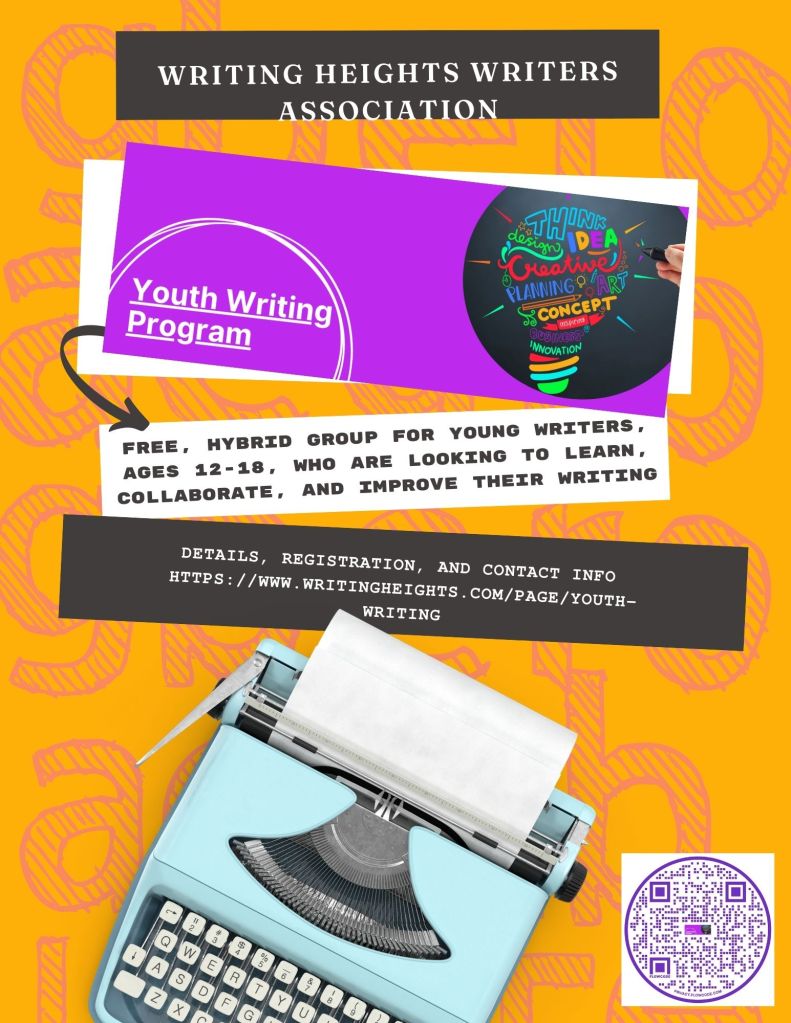
First, I’ve been truly busy this week working on a labor of love: The 2024 Writing Heights Youth Anthology (Name to be revealed soon!) I’m the Youth Coordinator and every month I plan out a lesson and writing prompts and load my heart up with lots of joy and compassion to teach a free class to teenagers about writing. We have about 15 in person and virtual students and the class varies in size depending on the stresses of school and life and other activities. But the work and I are always there (see above about consistency)

So far, the group has put together nearly a hundred pages of poetry, prose, fiction and non fiction pieces about life from their perspectives and stories from their imaginations. And its pretty damn good, if I do say so. Along the way, they’ve learned how to explore different modes of writing, critiquing and editing and what it means to communicate with each other and the world. This anthology is about more than just their first publishing credit, and getting paid for words. It’s about trusting in their voices, and learning that speaking up and speaking out is one of the greatest tools they will ever have to change their world and lead their own unique and beautiful lives.

That being said, I struggle with formatting and arrangement so… the majority of my time has been in trying to get each font just right, within the proper margins, and editing those pesky lines a few more times. The book should be out in July and I’ll let you know when the big release date is. Until then, if you’re interested in donating anything to the organization, you can contact Amy or Jess at director@writingheights.com . It’ll help us offset the costs of publishing, make sure the kids are paid for their hard work, and get the good word out about the program.

Now, I’ve gotta go try to make a table of contents *shudder*. Here’s some poetry.

Reluctant Hope

Every morning I wake
with a shuddering light of hope
in my chest

Weary from the day before
denied sustenance and light in kind
Yet, somehow...
I still wake with it

It strikes me as foolish
to hold on to this frail bird of a thing
in the dark cavern of my chest
neighbor to the empty heartbeats
that pump sanguine rivers
to heavy limbs

Still, she settles there
a stray who found warmth
on an otherwise rough
and dirty-guttered street

And when my eyes open
she blinks too
pulls my granite limbs up
like stringed fingers to a puppet
and whispers
a wind through grasses
from far away shores
of better days
That today
today
this day
will be better

Shuddering, flickering,
a loose bulb swinging in a dark room
making an arched smile as she dances
we'll make today better

When Art Becomes A Business

I’ve been thinking about this for a long time. And I’m not sure if its an American Capitalism (should be capitalized right?) thing, or a global disease but…at what point did we stop valuing art and creation if it wasn’t…profitable?

Photo by Pixabay on Pexels.com

I’m an anthropologist at heart. It started when I couldn’t put down the Clan of the Cave Bear series at 12 and continued on through college and my degree, and until…well, yesterday when I read a really cool article about a new Neanderthal skeleton that was recently reconstructed…why does it matter?… well…”Anthropology encourages us to extend our perspectives beyond familiar social contexts to view things from the perspectives of others”. Where was I? Oh yes…art. Humans and art. Do you know how long we’ve been creating art? Paintings on walls, carvings from stone, beadwork, intricate clothing, papyrus, plays (both tragic and humorous…), STORYTELLING…

Photo by toshihiko tanaka on Pexels.com

The point is, humans were born with divine mental capacity. And it extends in times of plenty and scarcity to provide sustenance in a form of mental fulfillment. Then…I dunno…hustle culture happened? Capitalism happened? 1970’s parents started scoffing over martinis that so-and-so’s son wanted to be an *gasp* artist…and what a dreadful shame? That someone would chose to create new and innovative and truthful things over…stamping letters and creating spreadsheets? Because…well…art has no… no money in it.

These birthing pains gave way to an entire generation of people who were forced to work at acceptable jobs and “dabble” in art. Which gave way to people “hustling” in their art and marketing the shit out of their soul’s best guess of humanity, to make it ‘real’ by turning a dollar sign. This is where we are. Art has been reduced to…a commodity. And if it doesn’t sell…it isn’t worthwhile…

There are countries that don’t charge artists taxes. Did you know that? That if they’re producing art (writing, painting, illustration, music, etc.) they are exempt from the toil of paying their country extra money. Why? In America that would never fly! Why should they be off the hook

Let me ask you…What do you do in your free time?

You don’t work more. You don’t put out more spreadsheets, or call more clients, or cut more hair, or take an extra shift for fun…you read. You…go to museums…you watch plays…you visit the botanical gardens… you go to a movie. These little “acts of joy” sometimes even keep you from jumping off a bridge. They inspire your mind, they take you out of the daily grind and…hustle.

…is that not of value? Does feeding your soul not count as a necessity?

I’m on a soap box, I get it. You’ve probably stopped reading. But in case you haven’t, please consider

…humanity has survived and thrived because we have had more than just survival to aim for. There is joy and purpose to feast off of. Art makes life. In the event of an apocalypse… could you even imagine not trying to save the art, the books, the music… the decadent history (and prehistory) of the humanistic howls into the universe that scream… “we are here and we feel”?

What is there to appreciate beyond it? Art brings us together, it connects us, it’s a shared experience and a deeper rooted truth than almost any paycheck. And yet…it has been reduced to: how many followers, how much in royalties, how many people ‘liked’ it, how many people went to your show, what the script writer made and if they have potential for more (we don’t pay if you don’t have at least three seasons)…

I beg of you, if you have funds in the strapped and dystopian financial climate that is America now… support your artists. They don’t even have to be me. Just…find something that you love, that moves you and…tell the artist, write them, speak to them, throw some money their way. Remind them…They are important. They are the story up on the wall of a cave…that proves a defiant resistance to the endless march of time. The voice in the dark, the color in the black and white that speaks; we are here.

We were here.

Art matters. And the only people telling you it doesn’t, are the people that cannot profit from it.

Move, Pitch, Get Out the Way

Yeah, I did just title this blog that…No, I’m not sorry. Yes, I hope that song plays in your head all day. Yes, it may seem “Ludacris”. Yes, I did just make a dad joke out of it. No, you can’t get a refund, this shit is free.

This is actually a post from a couple of years ago, but oddly enough, I’m headed up tonight to the Wyoming Writers Conference again. And again, I’ll be pitching. So I’ve tweaked a few things but the advice remains solid. I hope it can help you.

Now, on to the blog

This week, tonight actually, I’ll be pitching a novel to a publishing company at the Wyoming Writers Conference in Casper, Wyoming. I know that this should be something I do at least every year but with the past couple of years spent in catching up and starting new jobs, and my creativity taking a giant dump of late, I haven’t had the drive, material, or need to throw myself into the ring.

But, by strange happenstance, the novel that I started at last year’s WWConference in Laramie, turned out to be one of my favorite books. Its a strange blossoming feeling of re-reading it and having it punch me in the gut and make me laugh-cry. I could independently publish it. But…the past years have taught me, that there’s no shame in rejection or in throwing your heart in the ring, especially when you really believe in something you’ve created. So I slammed the breaks down and took a breath. A pause. A consideration. That if the story was “Well written, with a voice we really like” that maybe I should give it another tour around the pasture before sending it out, on my own.

So here I am again, years later, still sweaty palmed, reading and re-reading, and choking on my elevator pitch and changing it a dozen times to get the most depth of the story in the fewest words. And it’s exhausting. The sudden surge of trepidation inspired me go through some of my notes from previous classes and books on pitching. And here’s what I have to offer:

  1. Agents and publishers are human beings. They’ve probably slept horribly, are sore and uncomfortable from sitting, have heard a lot of story ideas, and are probably thinking about the cash bar. Just like you. So don’t treat them like a god up on Olympus by cowering or waving tribute in their faces. Be kind, be polite, and use some of your allotted time to treat them with dignity and respect. They’re there because they love reading and want to find a good story.
  2. Tell them why you love your story. Yes, yes, the general plot, genre, main character and conflict…but what is it about your book that fills your heart. Why do you find a reason to read and re-read it? What were some of the best compliments you receive from your beta readers. Human beings respond to enthusiasm and genuine admiration. Otherwise, we’d never watch baseball. Moving on.
  3. Be organized. Have a synopsis ready, bring a query letter and your business card. It’s been a long day for them and you; stories might start running together and they may need a gentle reminder what the 4:55 pm pitch was.
  4. Be open to suggestions and critique. Whoof, this one is hard, right? After all, we just gushed about what we love in our book. While you love it (or hate it depending on how many goddamn times you’ve had to read it and rewrite it) it is also a good time, before you sit down at that table, to think of your fledgling story like a kid going off to college. Its stepping out into the world to be made better, smarter, stronger. It has a lot to learn, so let it be open to becoming something more and living up to its potential. It isn’t a reflection on you as a parent, it’s a starting point for even more amazing results to come.
  5. Follow up. I’ve sat in the pitch sessions where every agent gave me their card and asked for ten pages. I thought I was a goddamn genius and that they’d be engaged in a bidding war over my book within weeks. Um…hate to ruin the ending there but THAT didn’t happen. Sometimes agents are required by the conferences they attend to receive a certain number of pitches. Sometimes an agent is mildly interested and looking for something to pad up their own resume. Sometimes they’re just bust-ass tired and like a parent giving in and handing their kid a remote cause they just can’t listen anymore, they pass along their card with a defeated…”stay in touch”. That being said, if it happens, act as though it’s the bidding war situation, not the tired parent. Send them what they asked for, in the format they asked for it in, and be respectful with your letter. ALWAYS INCLUDING: your name, that you met at ‘such and such conference’ and that they requested your pages. If you can, PLEASE include some other more personal detail. “It was fun talking to you about your dog, Jasper” (write that kind of thing down on their business card) but don’t make it too personal “I hope your rash has cleared up.” (that’s creepy)

After it’s all said and done a pitch session is like any other interaction introverts dread. You have to talk, somewhat excitedly, about something you love and worked hard on, and thereby risk rejection and public shaming. But please remember that the person sitting across from you is also probably an introvert (or works with a lot of them) and just wants you to tell them a good story.

Good luck out there, and if you’ll be in Casper this weekend for the conference I’d love to sit down and chat about pitches, your book, all the wonderful things we’re working on. Happy writing.

Standing at Attention

Hello Writers…

I came across this blog from a few years ago. I no longer am blessed to teach Martial Arts (due to some pretty awful happenings at my former dojo and a level of patriarchal bullshit I can’t even dive into right now). But I’ve been teaching a lot this year about creativity and this blog struck me as something that fell in line with the concept. So, without further ado…

Today I’m talking about kids. Particularly the three to eight crowd whom I typically work with in my karate classes. You see, this week is testing week.

It’s the exciting hours when those little bright-eyed darlings bound out on the floor (hopefully remembering to potty first and bow before crossing the threshold of the mats) to ‘earn’ their brand new belt and no doubt bragging rights the next day.

Now heading the school’s instruction team is a stoic former Marine and a stalwart of rules and order on the floor. Absolutely excellent in the face of a rowdy teen or an unsure adult in need of the structure and control.

Absolutely useless and frustrated in the face of the giggling, juggling mass of pent up life force.

And testing time is rarely different.

Though the potential for their future of order and restraint is glimpsed (and I suppose that’s why they come to the school in part) some of the instructors will roll their eyes at the still inadequate control. Meanwhile, I stand in the back and lament the beauty of their childhood being chipped away.

I was told repeatedly that “the Dragons class will eat you alive”. Both male instructors said so, shaking their heads and trying to bury the horrors of such a war. I nodded, in that reassuring way you do when someone has no idea.

Son (I call them son because I’m grow’d up over them by a few good years), I’m a mom. And on top of that, I’m a mom that actually enjoyed the ages of my daughters when I had to staunch nose picking while watching them ping-pong off the couch and sing “Let It Go” at the top of their lungs. Every day. All day. Seven days a week, most nights, and EVERY vacation.

So when those little bouncy balls landed on line tonight, wiggling in their gis until their belts untied themselves, and the jaws of less-seasoned warriors clenched, I glowed. I smiled. I adored and doted on.

Want to know why?

One of the greatest beautiful moments in life is when the life in us cannot be contained in man-made illusions of order. It’s in the misdirection and distraction. It’s the exuberance and unconditional love. It’s all that we lose as we age, either by the weights of life tying us down, or from being told repeatedly to stand straight and stop wiggling.

Ok. I understand that order has to exist. Ask any of the poor souls on I-25 while the uninformed attempt to merge. We do have to learn order and self-control. Or everyone would just live on cake and would never go to work, and we’d get into fights and stray from our taxes… I’m not saying that order isn’t important.

But order imposed on a mind still fluttering like a million startled butterflies in a sunny meadow, is like trying to…well, catch a million startled butterflies in a sunny meadow. At some point. You need to just let go and enjoy the ride and the sunlit flash of pure color. Keep them safe, keep them engaged, and love every odd-ball story and uncontrolled giggle.

I hope you realize by now, that I’m not just talking about kids here. Think about the people in your life, and what it would mean if we all encouraged, especially the adults in your life (You TOO reader), to barrel through it all with a bit more frivolity and joy.

Sometimes we’ve been so long from those two things, that we’ve forgotten how. It’s not so hard to find your way back. Here are some things that may help:

Go barefoot in the grass

Dig for worms, put them back in the garden.

On the way to your car from the grocery store, work up a good speed and hop on the back of your grocery cart…ride it all the way to the car.

Say no. To them. To yourself…to every “how to be perfect” blog or article you read.

Read the comics first and throw the rest of that shit away.

Go for a bike ride with your kids around the block and name your bike like the noble steed it is.

Tell a dirty joke.

Laugh at dirty joke.

Laugh at a fart.

Fart (and pull the covers over your spouse’s head so that they may truly enjoy it…if your marriage is really meant to last it won’t matter. If it matters well…then I’m going to let you think about that for awhile)

Belch in front of your kids, and follow it with a “Holy cow! That was awesome!”

Grab a bowl of lucky charms and watch some cartoons (Teen Titans is my fav these days).

Wiggle

Dance

Sing “Sweet Caroline” LOUDLY out your car window at the stop light. Those who don’t join in or at least smile are to be pitied.

Never say no when a child wants a hug.

Always kneel down to meet them, their perspective is so much better anyway.

Tell people you love them.

Tell them you love them without needing it to mean anything more than just what it is.

Move on.

Forget.

Someday, remember just the good bits, fondly.

You see, kids and older people get what we’ve forgotten. That the beauty of life comes from the dancing in chaos, not the standing still on line.

Still, go potty before you try the standing still…it does help the wiggles.