I’m at the last day of Writing Heights yearly Spring Workshop and Retreat. It’s been a wonderful two days filled with classes, writing time, collaborations, critiques, and conversation. Normally, I don’t do much talking or reaching outside of my happy little home-body shell, so these types of events are rare and sometimes anxiety fueled.
But when you agree to take leadership of something, you don’t really have the option to sit back and let someone more extroverted take over. I believe that living a decent life has more to do with stepping outside of your comfort than constantly seeking it. And the beauty of it is that the uncomfortable and large becomes like a warm sweater and an intimate evening. I’ve been to a lot of conferences and retreats, but somehow its this group that always feels like coming back home.
If this retreat has taught me anything, its that there are so many beautiful, intelligent, thoughtful and worthy voices in this world that need to be heard. It has taught me that art is not dead, that hope is not lost, and that we are all standing on the edge of something extraordinary. To know we are not alone in the struggle, to know that someone is rooting for us to continue on, and that words still matter maybe even more than ever is enough to lift any downtrodden heart out of the mud. Separate, we are all each a powerful story waiting to be told. Together we are an ocean of love, a battlefield of strength, a universe of humanity, and the unshakeable faith that something greater will be found in the connection to this beautiful tapestry of human consciousness.
My advice to you is this. Live your life with a sense of urgency (not anxiety) and purpose. Live as if you knew you didn’t have forever to waste. Do the thing. Today. Write the words, finish the poem, read it out loud. The love of writing, of learning, and seeing new perspectives is a rising tide against ignorance and hate. The world needs you now. We must not falter.
Thank you to my amazing writers (yes I’ve claimed you as mine, like a momma duck keeps all her littles safely close) to the teachers who helped me by offering their knowledge and expertise, their warm hearts and belly laughs. I hope if you’re a writer, reading this, then you find a way to meet us in the mountains next time. Bring your heart and all your words.
Next retreat is October 16-19th in Winter Park, CO. Find out more HERE
To be exact, they were what I would deem a “nightcrawler”. On my rainy walk, with my rescue dog River, and her distaste for the wet (I think it’s the pit bull in her mix) we encountered the large under-dweller, struggling against the asphalt. I watched for a moment. Remembering, that as a child growing up in a dry state (Wyoming), we rarely saw worms that size. If ever you did, was a good omen to gardeners and those were the ones you never took fishing. I bent down lower than my 45 year old knees liked and gently picked up its twisting body, and placed them gently in my palm where it squirmed for freedom, even from a small safety. The rain poured down around us and I let myself feel all of the tickling, wriggling, slightly slimy motion of a life in peril. I took them tenderly towards the grass and out of the space where tomorrow’s sun on the blacktop would bake them, and set them down.
“There you go buddy, good luck.” I said and a woman walking her dog on the sidewalk, moved carefully away from me.
Why don’t we care for things anymore? When did we become so crass? How is it we have become too busy to save even the smallest of consciousnesses? I’ve been thinking a great deal about ‘modern’ life these days, and how less like actual life it feels. “Life” is suddenly something we are fed, by those who control the information. Life is on screens, and filtered to be pretty, it’s reductive, or ridiculous. Competitive and unrealistic. It’s shallow and degrading. When was the last time you held something in your hand that was real? A worm? Your child’s hand? Dirt from your garden? A pen? An apple? Someone you loved (known or in secret) arms wrapped tight and trying to stop time, just for a minute? When did you notice last, a being in struggle? Did you stop? Did you help?
I no longer want to be part of an unreal world. I don’t have years to waste on anything not authentic. What is the point? If I only have so many days, why would I spend them sucked into an algorithm? I want to hear my friend’s voices. I want to read their handwriting. I want to see them across a table or next to me on a walk. I don’t want to be force fed advertising, and told that I need wrinkle cream. As though the natural progression of my body is not something to rejoice in and enjoy. I don’t want to be told in spiraling doom scroll what this world amounts to in the number of likes or angry faces it has. Watch the volley of hatred and hurtful ignorance between neighbors be slung around like poisoned arrows. See artists reduced to fodder for machines, and the brainwashing of it all being NECESSARY, take us over, as though we have no choice in the matter. How can we really justify, as artists, “needing” a platform that abuses and misuses our hard work? I can’t. I never had any big hopes of making it in the industry anyway, so I’m not going to keep buying into a system of false promises, while it robs me of my creativity and passion.
We haven’t always been this way. Don’t you remember?
I know I will miss out. Your faces, your lives, the beauty of your progression in the world. I will not see you. I won’t get to laugh at your memes or comfort you in times of loss. But I will think of you. Just because I’m not there, posting weird writing shit, or poetry, or my bastard of a cat…I am here, thinking about you. Whether we’ve been friends since the fourth grade, or you just joined my writing group, or you read my books, or you gave birth to me…I love you. You don’t need the algorithm to tell you that. You don’t need Facebook as a go-between to keep us connected. I’m here. Loving you. Hoping good things for you. Wishing you a day better than you thought it would be, every day. Each one of you. No likes necessary.
I feel a bit like Neo. Taking the pill. To wake back up to what is real. And it’s scary. And I don’t know if I’ll just be forgotten. Maybe I will. But I suppose the hearts that forget me, I never really had residence in to begin with. Today’s the last day and I’m a little scared. The connection it offered was wonderful, the addiction it’s brought me to and the worry it sustains, is not healthy. For any of us. Here’s where you can find me:
Address (I love letters and will send you one if you provide a return address): NCW, 4128 Main St, #144, Timnath, Colorado 80547
I hope I see you in the real life. I hope you find the balance you need. I hope you don’t give in to the idea that you’re data points and not a living, breathing, squirming, fighting, good-omen of humanity. I won’t be there anymore, but I’ll be around.
Photo by Grafixart_photo Samir BELHAMRA on Pexels.com
Hey writer and fellow creative friends. Wherever you are on your artistic journey, I hope you’ve considered the benefits of joining or participating in a retreat. Now, retreats can range from the ridiculously expensive, to renting a room at the shady looking motel three miles away. Some have classes or workshops, some have yoga or hiking mixed in, some are just straight up writing time.The point is to get out of your normal space, away from your normal routine, and spend that time focusing on your work. So whether you’ve broken the bank to jet set off to the French Riviera or you’re on your way to a twin room at the Motel 6, these tips can help you get the most out of that time. I even put it in a nifty little bullet list.
Be Prepared (Mentally):
One of the best tips I have, is to make yourself a list, before you go, detailing what you want to do, or get out of the retreat. Are you hoping to network and make connections? Are you aiming for a certain word count, or project completion? List out the major goals, then leave space (I’ll tell you why later on)
Be realistic but also a shade optimistic. Know your average, everyday word count and think about doubling or tripling it. You’ll have more time and less outward distractions and setting that goal will keep you on track. By making it a little challenging you’ll push yourself just enough. Even if you don’t hit the goal, you will get farther than if you’d been too ‘reasonable’.
Bring multiple or at least a couple different things to work on. The hours can become tedious and you might want to switch it up to stay fresh and motivated.
As a mom, and working mom, a strange thing happens the first few hours of being alone at a retreat. I get this thing I call “care-giver paralysis”. In the absence of doing for others, I can’t remember what to do with just myself. Understanding that this feeling will come, and I’ll have some listlessness helps me to remember to ease into the weekend with some journaling, or shorter projects.
Be Prepared (Physically):
The practical side of things is that you’re going to be away from home. But not on a typical vacation. So remember to bring your goal list, paper, pens, notebooks, journals, your laptop and charger…the basic tools of your trade. Make them your favorites or the one’s you’ve been ‘saving’ for something special. This is something special.
Plan for the environment: If you’re poolside or in the mountains, bring the proper clothing and footwear. You won’t be holed up in your room the whole time (I’ll explain more on that later). If there are dinners or classes, if it could be cold, or hot, try to think in layers. If its just writing, pack lots of comfortable clothing. Sunblock, hats and mittens. Bear spray or Mosquito spray?
Sleep aids- especially if sharing a room. I’m talking about eye covers, ear plugs, and headphones (not a rubber mallet if your roommate snores). Anything you need to get a good night’s rest.
Any special dietary needs/wants that the place won’t be able to provide.
Water bottle, medication, and bathroom necessities. Nothing is worse than being dehydrated and/or not having a toothbrush. Big and little comforts will make a huge difference.
Business cards. Holy shit, I can’t tell you how many times I’ve forgotten this one. Even if you’re just there to write, exchanging info with your fellow retreat members is great. You’ll be surprised how much you learn from one another in that time.
Tech that you need, none that you don’t. You’ll need brain breaks, you’ll probably want to check in with family once or twice, you may need a laptop. You probably don’t need your gaming system, and be careful of your social apps. This is a time for connecting with yourself and your art, not the 7 billion people of the world.
Be Flexible:
You’re going to have a goal list. You’re probably going to stray from it. That’s alright
There may be days when the word count fizzles or the scene doesn’t play out like you want. That’s okay.
There may be a project you exceed expectations on, and another you barely touch. That’s alright.
You may accidentally sleep in, or need a nap, or get caught up in conversations. These are good things.
Retreats are a balance of getting your work done, and taking care of yourself, which leads me to…
Schedule in Self-Care:
Bring along comfort. Your favorite pillow, blanket, clothing, music. Whatever it is that helps you feel relaxed and at home.
Take naps. You’re little brain is going to be working extra hard. It’s going to be focusing for hours and working through the plot holes and dialogues you’ve been avoiding. Schedule in time for naps, early bed times, or meditation on your goal list.
Take advantage of the outdoors. (Unless your Motel 6 is in a shady part of the city–then try to grab a Lyft to a safer part) Go for a hike or walk every couple of hours. Sit outside stare off into the far away for awhile. Your eyes and brain will thank you. Also schedule in brain breaks on your list.
Bring any nutritional or necessary snacks. I need coffee in the morning. I need tea before bed. I need fresh fruit and veg. I like hydration mix and the occasional bourbon on ice (not together, that would be gross) I want my Little Debbie brownies and my twizzlers. These little joys will keep your spirits up in the middle of the tough work.
Exercise, Mediate, Drink lots of Water, and take warm showers. All good things and breaks away from the intensity.
Skimping on self care will make you less productive and more likely to burn out. Nobody wants a mushy brain half way through.
Assess and Recalibrate:
After its all over, if you’ve got a drive home, or a flight…take some time to reflect. What went well? What was a challenge? What did you wish you had? What did you bring that you could have left home?
How did your goal list go? Did you overshoot? Did you get distracted, and by what?
How do you feel physically and mentally and how can you make sure that the next retreat leaves you feeling accomplished without being overwhlemed.
Well, there you go. I’m open to hearing if you have any other advice in the comments below. I’ll be heading a retreat next week, so if you’ll be there, I hope we can make it a great experience. If you can’t be there, I’ll be hosting another one in the fall with the Writing Heights Writers Association and I’ll let you know the details as they’re finalized. Until then, Happy Writing.
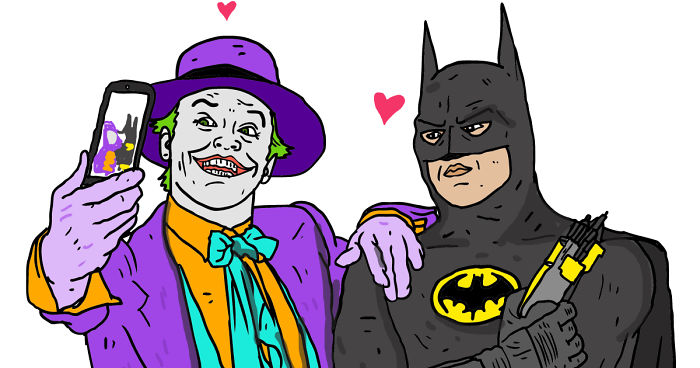
(image respectfully borrowed from Nick Cocozza’s amazing “selfies” series)
F*&k yeah, I just copied and pasted another great blog I wrote on Character (sorry for using F*&k in the first sentence, Mom). But if you haven’t followed me from the start you might have needed a reminder and I needed to work on some other projects. So… Ladies and Gents, enjoy Part Deux of Character.
From the dark, cavernous recesses of the author’s twisted mind springs forward all sorts of nasty and derelict creations.
Okay, that’s a touch overdramatic.
Frankly most writers will begin by creating a story from people they know or have read about. Sometimes we do it without even realizing it. Characters and personality traits that we admire, or equally cringe at, stay with us in that sometimes-twisted-but-always-magical realm of our subconscious. Realism in characters is important because it adds to their believability and with that, their ability to connect with our readers.
Why is it so important to connect your character to your reader?
We are a society of channel flippers, of instant gratification lovin’, drive-thru eatin’, convenience hounds. We have the attention spans of goldfish. If you can’t connect your readers to your character through the common ground of sympathetic and universal traits they will put your book down. And often, when a book lands on the nightstand, it never gets picked up again.
I shudder to think how many amazing stories were lost to the underside of the coffee table.
If your reader can’t identify with your character in even some small way, they will cease to care about that character and will not follow them, no matter how interesting the story is. The human element is very important.
So along with grabbing them from the beginning with an interesting and challenging first scene, you must hold your reader to a character that they care about, either because they relate to them, or because they are fascinated by their darker side. Their traits and foibles make your readers want to know what’s going to happen to them next. And that keeps them reading.
In the ignorance of youth, I used to think that my character could be anything and do anything. They could be perfect because I was building their world and I could make them flawless. They could be smart, and athletic, and beautiful, always saying and doing the right thing, always in control of their situation and aware of their future. (In the business we call these characters “Mary-Sue”s or “Sunshine Sallys”).
Snooze-o-rama and eye-roll Central.
Nobody, and I mean NOBODY, wants to read about some pristine person who’s practically perfect in every way.
For one, we don’t need perfection rubbed in our face. We get enough from the glaring social media machine. Secondly, a character that always says the right things, does the right things, and looks like a supermodel is not challenged and if they are, they do not fail. Characters that never fail are unrealistic, which means they cannot relate to the nerdy girl in her frumpy sweater and ripped jeans, curled up with your book (Yep, that’s me I just described). And what happens when that person doesn’t relate? The book is given a good chuck over the shoulder with a hearty ‘Good riddance’.
So make your characters dirty. Make them tarnished and worn. If they have to be beautiful, make them fundamentally broken somehow inside. If they are self-assured and intelligent, give them an outward physical challenge that hinders them. When a reader sees your character fail, they see the humanity within their own failures. More importantly, when they see them overcome the faults that stall their growth, they feel hopeful for their own path. They follow that character. They root for that character.
*In an amendmentto this section, I would like to say, due to the overwhelming lack of Mary-Sue characters these days, they’re actually a bit of a phenomenon. So, if you must create a Mary-Sue, own the hell out of it. Make them so staggeringly perfect that its almost comical…or otherwise interesting. Think of the person with extraordinary good luck, that can’t do wrong, even when they try.*
As a beginner writer it’s tempting to live out the life you wish you had in your pages, and it’s okay to write those ideas down. But keep those rarities for yourself. When it’s time to write an amazing story for the world, give the reader a character they can root for.
This advice is straightforward for developing the protagonist’s character traits. But it’s equally important to give this attention to your antagonist.
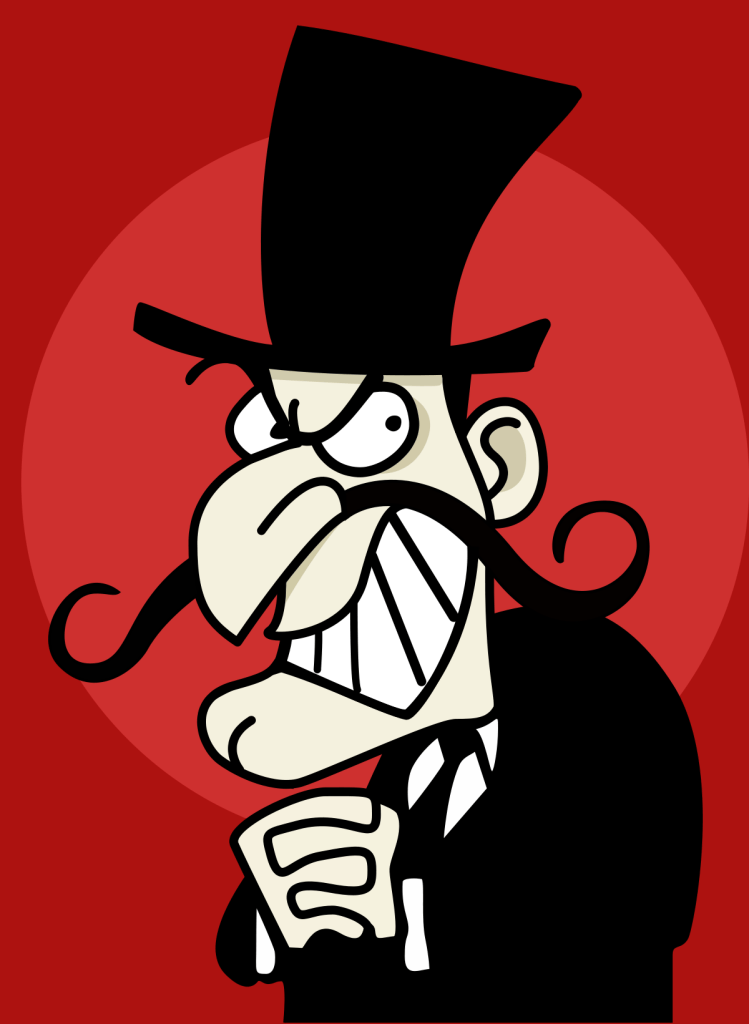
Something tells me this guy has rope, a damsel, and a train to catch
No ‘good guy’ is all good, and no ‘bad guy’ is all bad. Even the worst ‘bad guy’ has to have reasoning in his actions. They must have something that drives them, and it has to be something we can understand on our basic human level, even if we don’t agree with it.
Having even a slight sympathetic response to an antagonist builds tension between the characters and gives your reader the nail-bite reaction. The opposing forces both come from places that can seem justified and ‘right’ in their position, which makes the battle all the more important on both sides and the outcome so much more brutal or celebratory.
This week’s exercise is to take a hard look at your characters. Do they have some baseline, deep-rooted faults? Are these faults causing interesting and plot-driving stumbling blocks? Are they loveable, and a little bit annoying? Are they dangerous, but still broken?
If you find that they’re not engaging enough, throw in a life-changing event into their past and rewrite them based on their new fault. Divorce, fire, murder, car accident, illness, or the loss of loved one can be good ideas to play with. Take away one of their defining traits and replace it with its opposite. Nothing you play with is set in stone, it’s just a way to grow your character’s depth and help you to know them better.
If you’re looking for a good reference, one of my favorite books on the subject is Writer’s Guide to Character Traits by Linda N. Edelstein, PH.D Writer’s Guide to Character Traits.
Good luck out there, kiddos. I’d love to hear if this helped you out and how!
Good morning, writers! And a happy morning to you (or afternoon, or evening, whenever you tumbled out of bed–or back into it and are catching up on your bloggers). This week, in exploration of the novel, we’ll be talking characters.
I’m telling you now, because contrary to some reports out there, I’m not a complete idiot. A while back I did a decently in-depth study of character and I’m using a lot of that for this post. After all–the quicker I get the blogging part done, the quicker I can get back to my own novel and the characters I’m currently developing.
So without further ado– recycled Character Development:
Since character development is one of my favorite aspects of writing and I thought I’d pay homage to it’s process in a two part post.
So first, let’s address where characters come from.
I’ve had characters come to me in dreams (day or night), sometimes they’re inspired by true stories from news that I trip across. Sometimes they spring from hazy memories of a childhood friend, or the curious behavior of the neighbor across the street who steals decorative rock from the common area and smuggles it away in her purse. Any one adept at studying human nature and observing their fellow human beings can get inspiration simply from watching what our nutty human brethren do (and don’t do) in the course of their day.
Often, though never in their entirety, I write from people I know. By this I mean people I know both casually and intimately are good places to start for characters.
Although real people can help jumpstart the process, they rarely become the character in the final draft, and here’s why.
For one, it would be creepy (and, depending on the story and topic, possibly slanderous) to write about an actual person from your life, unless it is a memoir of said person and they are asking you for your help. Ethically, a writer looking to publish or share their work with the world must adhere to certain rules of respect and common decency concerning using the likeness of other people. That being said, you can (and should) borrow personality traits, history, and physical attributes that enhance your character’s believability, without putting someone’s life down, verbatim, on your page.
Secondly, even when based on someone you may know, something magical will inevitably happen when you put a ‘real’ person on a page and shove them into a conflict (the driving force of your story). Under the demands of a proper story arc, the character you began with will be forced to shift and evolve into someone else. You don’t know how your character will behave in an apocalyptic dystopia and the situations and decisions that they are faced and make will be a magical combination of what the author dreams up spontaneously, the character’s history and what the author needs them to do to move the story forward.
For example, Joe Smith may start off looking like your high school biology teacher but if you write him exactly as he was, including is normal day to day, your audience will be too bored to stick with his story.
Now, if you put the body of an alien in the school science lab’s freezer next to the dissected frogs, Joe Smith, your old biology teacher will automatically become way more interesting. And as he does, he will move away from the real person you started with and morph into a different character. A man of his own, alien-hiding, design.
They double-dog dared him.
A writer can tweak, correct, enhance and play with personality types, turning one, real-world person into a completely different but still realistic character. But it’s important to keep the relatable aspects of the initial ‘muse’, including the physical attributes that you can describe in realistic detail, or the personality types that can be explored in depth from a place of personal interaction.
What can be left behind are names, exact and undeniable physical description (don’t be a creeper) and any ‘boring’ or typical parts that may be cliché or expected. The character will change to be their own person with the natural progression of their role and development within your story.
The other method of character development is to begin with a story and let your mind follow the natural path of who lives it. This is one part plot-driven creation and one part spontaneous combustion.
An atomic bomb goes off, a virulent disease hits the population, a train switches tracks, a car runs through an intersection, an alien shows up in a freezer.
Start with an event and ask yourself; who would it affect most? Who stands to lose or gain the most? Who is equipped to deal with the situation? More interestingly, who is least able to cope with it and how do they survive?
Characters will find their way into your mind. They may look and act like someone you know or they may have a mind of their own. As a writer you will find that as your plotline advances the character will become less and less your creation and more a product of their history combined with their destiny.
We all have these personalities in our heads that sit dormant on the shelves until something shakes them loose. Most writers, (yes, I’m saying it) are a little bit schizophrenic. We are geniuses of introspection and observation. Humans are interesting and a good writer will watch and learn from their interactions how to build characters that could be a best friend or a worst enemy in their reader’s own world. They talk to us as we write their paths, they argue when we move too far away from their true reactions. They trip us up by throwing random but necessary bits of history our way that we hadn’t considered for the bigger picture. It’s maddening and magical all at once.
Next time we’ll talk about developing intricate characters and some tips I’ve picked up along my journey to make them somebody your reader’s will root for, love, and hate. Until then, take a few minutes today to think about some characteristics that you love and loathe in human beings and think about why they draw your attention.
Make a list of character traits that are interesting in both beneficial and detrimental ways.
Also, feel free to write or comment about your favorite characters, and if you’ve ever found yourself ‘accidently’ writing about someone from real life. Next time we’ll have an exercise on character development and I look forward to your responses!
Good Thursday to you, Writers. I hope you have a brand-spankin’ new plot started in your head from Tuesday. Moving from that amazing raw material I’m going to tickle your inner plotting nerd and give you a ‘graph’ of sorts to help you with organize a killer storyline.
-I love tickling nerds–
Last time we discussed ways to help create a basic plot for your novel idea, today we’re going to outline the beats, or arcs, of that story. If you remember from my handy-dandy, bulleted list on Novels, I list Arcs as being an important element. While this blog does cover some of the theory, I will do a more in depth look at crafting an arc that creates the perfect amount of tension.
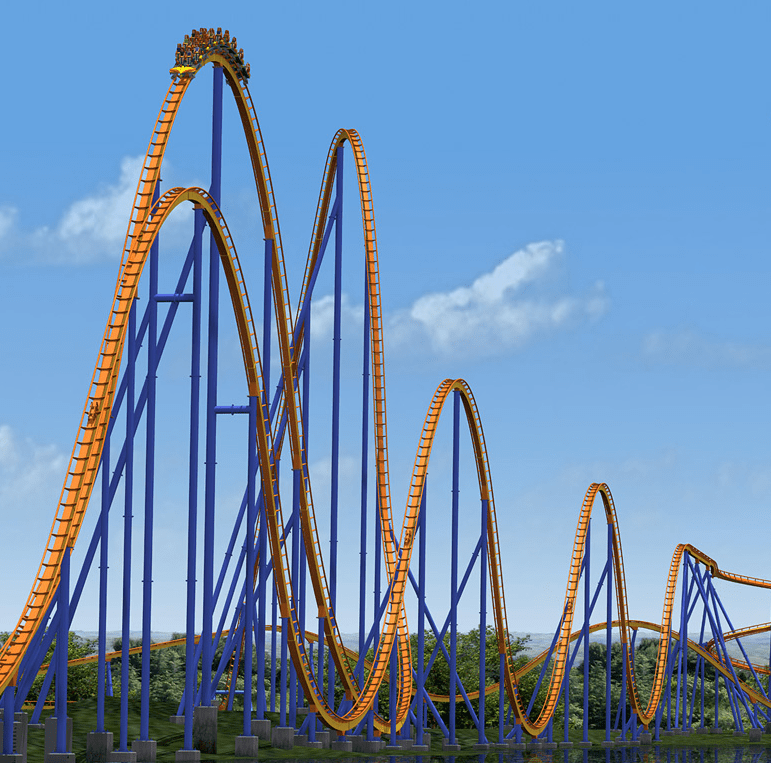
Back to plot. Some of the best stories follow a pattern, or what I like to think of as a rollercoaster of ever-rising stakes.
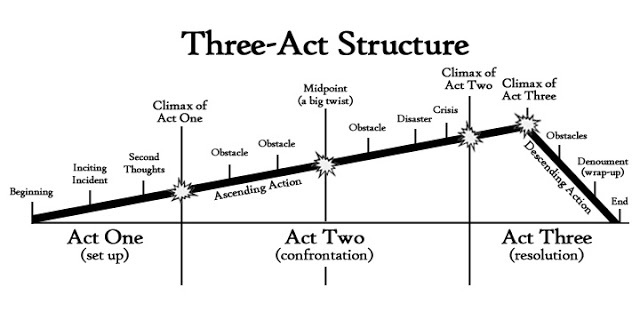
Most plots can be split into three acts. The Set Up (beginning), The Conflict (middle), and The Resolution (ending). Each of these acts should have some defined crisis or event which is like a doorway your character passes through and must either change, fight, or overcome more trials until they find resolution. I found this nifty diagram from David Harris Kline’s “Structure Lesson #2: The Three Act Structure” ( http://www.writers-for-writers.com/2017/11/08/structure-lesson-2-three-act-structure/)
As you can see the beginning has to hook the reader into a specific event, starting point, or character problem. Here’s where you introduce your character and show us who they are, what they want, what they are facing. Throw in some foreshadowing and Bam! You just met a small-town farmer from Tatooine.
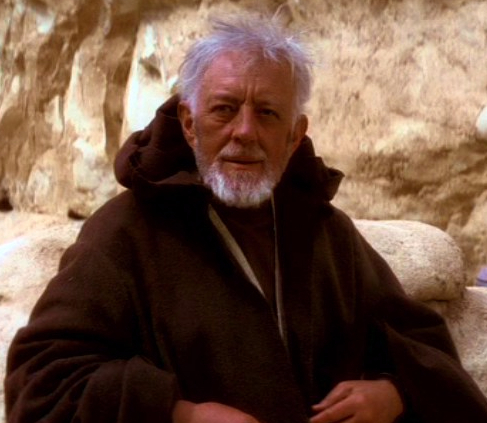
Act II comes with something that disrupts their normal day to day. (Holy shit, this droid has an important message from the Rebellion!) The character is forced to make a choice (wipe the droid’s memory or try to get the message to old Ben).
Real, live image of me during quarantine.
The middle, as most of us know, can be a bitch to write. This is where the dreaded doldrums hit. The quagmire. The swamp of eternal despair. I’m not going to get too deep into that swamp today except to say that this is where plotting can really help build a bridge across the muck and help your character get to that final, defining climax. This bridge is paved with different obstacles and trials that keep the action and the tension going through out. (Scruffy looking nerfherders and tough-ass princesses, oh my!)
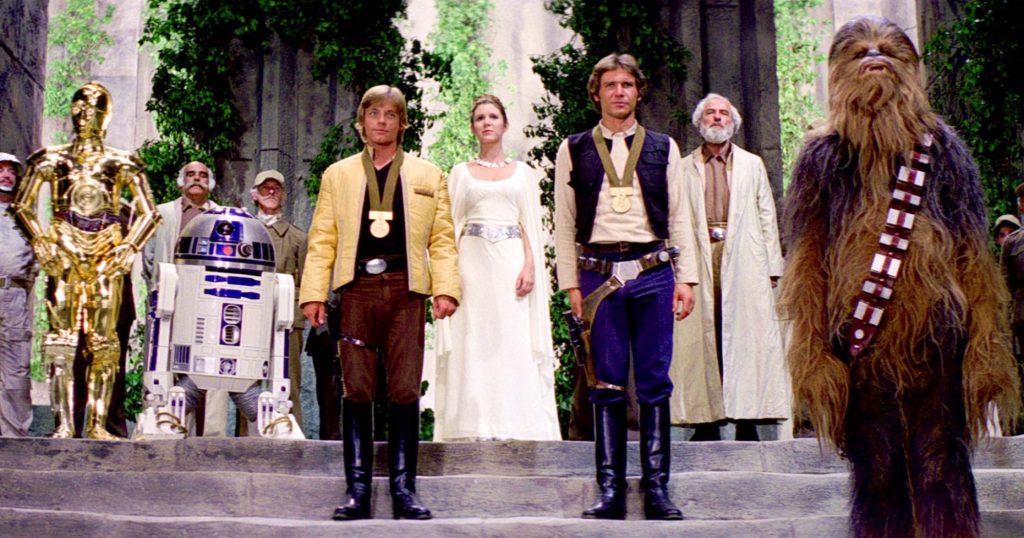
Then, finally, as our hero/ine comes through that final climax (for better or worse) we witness their transformation or acceptance of who they are or what they need to do . The final act is where you tie up your loose ends and give the audience the resolution they’re seeking. Like giving a Wookie a medal.
Wait a goddamn minute…where’s Chewie’s medal?
Well, that’s pretty much all I wanted to cover on plot for this time around. Next week we’ll be talking about one of my absolute favorite aspects of writing: Characters.
Until next week, diagram your plot, think about what events, scenes or characters you can inject to get those bursts of conflict. Think about what your character wants and what obstacles stand in the way of that. How does overcoming them move them/change them for the next bump in the road?
Good luck out there, and may the Force be with you.
I’ve been participating in my own little poetry month challenge in an effort to get back into the swing of the art. For one, it’s a managable way for me to be able to write something every day, even in the chaos of my to do list. For two, I think it’s been very cathartic in helping me work through some of the things landing in my life (and all of our lives right now). The rage inside me finds a place on the page so I can clear a more rational path. The sadness gets to have its moment too, so I can move past the emotion and focus on how best to use my empathy. You don’t have to be good at it to write poetry. You just have to write it.
Poems written by daylight are hopeful, funny creatures not yet domesticated by the world shackled by the weight of unbearable odds
Poems written in the high-sun hours are words through clear eyes not yet burning with the fire of thousands of thoughts, words read, millions of stitches placed across the wound of our burning, tumultuous world
Poems written when I've still got time in the day are different I haven't properly fucked anything up yet there is still hope that I may not I'm a glowing human goddess for whom possibilities still exist
Poems written by daylight seem hopeful and clear unweighted and resilient but they are not me not in total It is the reticent dark, the weary and mistake-riddled soul sitting in the deep weighted night, still choosing to pick up the pen who is truly the poet.
Can you believe I couldn’t think of a more creative title? Me neither. Some days are like that. Remember, this is geared towards beginning writers, so most of you long-in-the-tooth novelists may not get the same bang for your buck. But…there are a lot of sexual innuendoes. You’re welcome, or Sorry.
Today, I’m pushing through and rehashing an old, but viable post. Remember? Before the fucking world turned upside down and Elon Musk became president with Absolute Power? Yeah…those were good times. Let’s not dwell, you can call your congress person again (you’re calling right?) and attend those protests (you’re attending right? This IS the time to be the MOST KAREN you can KAREN–see below for my favorite emoji of the species) after this short and entertaining jaunt into PLOT. We’re getting into the meat and potatoes of writing a novel, and this kind of thing needs space. So, without further ado…
What is Plot and Why is it Important?
All right, I get it, it’s a dumb question, we’re all writers and we all KNOW that plot is the basic structure and story of your novel. It is the idea. The “what happened”, and why, and “what’s going to happen next” of any decent story. I’m not trying to dumb it down for you. But the true test of a good plot lies in the simplicity of answering those questions.
Now, you can have books that are character driven (an event happening TO a person, or BECAUSE OF a person). And you can have books that are historical non-fiction, based on one specific moment in time or occurrence. The PLOT of your book expands more than just beyond an event (otherwise The Hunger Games would have been maybe 50 pages long). The plot is the premise or sequence of events. Some novels will follow a very specific order of events that are common to their genre, or as we like to call them tropes. Tropes comes from the Greek Tropos define as “turn, direction, way” and refers to common, recognizable elements or sequences of events.
Many genre specific tropes (I almost prefer ‘formulas’) are embraced by the audience and even expected. Examples include: “the hero’s journey”, “enemies to lovers”, “small towns”, “cold cases”, “missing persons”, “AI gone wrong”, “fairy tale retelling”. But if almost every novel follows a plot formula how is it #1, that readers don’t get bored and #2 that you tell an original story that hasn’t been done before.
It’s an interesting dilemma on the part of a writer. We know which formulas work in fiction and straying from them often makes a plot fall apart or leaves a reader angry or unsatisfied at the end.
(She’s gonna want to talk to your manager)
But how do we follow commonalities in plot structure and still make it a fun, captivating, and surprising journey for our readers? The answer my friends, lies your ability as a writer to do five things: (Fuck Yeah! A bullet list!)
Begin with a unique event or crisis. This comes back to the “scan the headlines” exercise I’ve had you do before. A lot of weird shit goes down in the world. A lot of undercover, shady AF stuff too. Use it as a springboard, to your “what happens then/if” story building.
Tie the reader to your character (through love or hate) and make their reactions to events unique or contrary to the norm. (ie a cheerleader who fights vampires. A small town farm boy who becomes a powerful Jedi. A teenager who comes into supernatural powers without the maturity to handle them and doesn’t use them to download free porn–come on….or *snicker* cum on? Oof, sorry. Uncalled for. Please keep reading, I’ll behave.) Character building will come later in this series but if you create unique ones, their actions will create new takes on formulas.
Use honed writing technique to build tension for climaxes. Yikes, that sounds dirty and here I promised to be good. Tension is one key to making a story more than just series of events. So much of this depends on your voice and writing style. But the big take away here is about risk. Making the risks personally huge for your character, and even the world at large, will keep the plot fresh and drive it forward.
Play with the number and intensity of climaxes (story arcs). I think I’ll start using story arcs (some prefer ‘beats’) because every time I type climaxes I can’t stop giggling. Ok. Story arcs are BIG deals in your plot. Think of these as door ways, crisis-points at the top of your arc, that your character has to move through in order to get closer to what it is they want/need. Once they hit that doorway, or crisis point, they can’t go back. A serious change has occurred either in the setting or with-in the character and they must move forward. Next blog will be all about these arcs so I won’t go into much more detail here.
Consider using unexpected but intelligent twists. The best movies and books I can think of that do this are: “The Sixth Sense”, “Fight Club”, “Gone Girl”, “Mind Hunters”. What better way to shake up an audience than by having them accept one reality for the entirety of the story, only to show them the true reality at the end.
All right, so there are some tips for building an effective plot that carries readers throughout the book. My advice to you this week, is to explore various tropes and patterns, especially those in your genre. Turn a piece of paper (landscape-style) and write out the typical pattern of your story, then overlay events and characters of your proposed idea. See how they match up, see if you have enough tension building scenes, just play around with it. I’m not much of a plotter myself, but even I will do a general outline to keep myself on track and make sure I’m building a solid plot.
Next time, more on story arc, how to climax well (*snork*), and end satisfied (*hahahahaha). Until Thursday, happy writing.
Good morning writers, authors, editors or accidental guests.
I’m trying to find more efficient ways to work this year and I found this old series in my back catalog. Now, I teach writing and support writers for a living but I think these little nuggets of advice (free) are actually still pretty good and relevant. So starting today, and for every Second Thursday on my Blog, I’ll be offering a little writing advice.
I call it the The Beautiful Writers Workshop, based on the quote from Ray Bradbury about filling your cup and letting all of the beautiful stuff pour out. This year-long journey is about developing your craft through exercises in creativity, editing techniques, inspirational prompts, and building the framework for your writing career.
Some of the blogs will inspire. Some blogs will lean more to the technical side of writing. But whatever the monthly topic, you can be assured of two things:
You’ll have a prompt or exercise to help develop your writing (and the opportunity to share it)
I’ll try to keep it spicy enough to be enjoyable.
So let’s get rolling! I searched through nearly all of my favorite books on writing for a perfect topic for our first lesson together but the truth is, there are just too many (good and bad) ideas out there.
So I’m going to start simple and ease you in gently to this process.
If you’re here you are either interested in writing, or are already doing it and are looking for something to add to your tool box. In order to appeal to all levels today’s workshop is centered on the basic purpose of your writing.
Below are a few questions that I’d like you to read, think about, and journal down your answers to. You can share them, you can keep them secret, but DO WRITE THEM DOWN.
Something amazing happens when we write down goals and steps to reaching them. The process becomes manageable; the goals become real. It’s one of the many beautiful and powerful attributes of writing.
Without judgement or discouragement, and being as direct as possible: what is the ultimate, lifetime goal you have for your writing?
What can you do to kick start this goal in the next 12 months? (hint: where do you need to start, where do you need to grow most for the big picture)
Is this yearly goal attainable? WHY OR WHY NOT?
Of your reasons from #3, think about the fears, limitations or concerns that formed these reasons. Name them. What do you foresee keeping you from moving forward on this yearly goal?
Of the fears, limitations and concerns, what are the possible solutions or actions you can take to eliminate them? (hint: each limitation/fear/concern gets its at least one action you can take to overcome it)
If you have a planner or calendar, write down one weekly goal (eliminating distractions, word count requirement, number of submissions out, editing, classes etc) that will help overcome the hurdles you have to your writing.
Looking at these weekly goals, find specific and measured times you have to dedicate to their success and write them down.
Okay, that’s it! I know, it’s a little dry but when building a house you have to have a solid foundation first or none of the pretty architecture above it will survive. So build your foundation, know where you’re coming from and next week we’re going to talk about:
Mission Possible: Drafting your Writing Mission Statement
(that sounds super boring but it will help writer’s across the spectrum. I promise!)