The Beautiful Writers Workshop #29: The Short Story

Hello! Welcome back to The Beautiful Stuff and todays’ introduction to the well-known and prolific format we all suffered through in high school English.

Ladies and Gents: The Short Story

Don’t get me wrong, I say ‘suffered’ now because everything when you’re a teenager that entails any sort of responsibility not of your choosing is, to some degree, “suffering”. I mean, I could write for hours, holed up in my room, gladly passing the day. But ask me to read a short tome by O. Henry and I’d give you an eye roll and heavy sigh that would have rivaled the most put-upon martyr. Looking back, I actually really liked those stories. I remember dissecting them, studying the elements, and learning what made them so powerful.

Thank you, Joyce for “The Most Dangerous Game” and mining deep into the dark hearts of men. Hats off to the master of short story, E.A. Poe and his “Tell-Tale Heart” among at least a dozen others that gave me a healthy love of the spine-shiver. Shirley Jackson’s “The Lottery” was my first taste of apocalyptic fiction. I’m sure you’ve had similar experiences and I urge you to go back over those old favorites and see what you notice at a different age/stage of life.

The Short Story is actually lumped in with Flash Fiction and Micro fiction and is defined by a word count of 5,000 to 10,000. Some even dip down to the 1,000 range, occasionally they’ll touch 15,000. But in general, anything above that (30,000-60,000) is considered a novella. I’m giving it its own blog because the short story is a beautiful place to start if you are just beginning your path in writing. It’s not overwhelming but it will allow you to practice a lot of the bigger elements of story-telling. It requires a certain amount of frugality with words and demands a tight story arc which are good practices to hone before embarking on a novel-length piece.

What’s the difference from flash fiction? Well, in flash fiction you are looking at a snap shot of a moment; a defining moment, a quirky flash in the pan. In a short story you have more wiggle room for character development and the ability to tell a complete story.

Why’s that important you ask? Wow, you always come up with so many good questions!

Character development is important in short stories, because often it is the character that drives these stories. That doesn’t mean you get to expunge for 3,000 words on the finer details of Joe Doe’s eleventh grade algebra class. It means you have the opportunity to create a connection to the reader by showing who Joe is using his reactions to the situations presented.

How do you do this most effectively?
Photo by moein moradi on Pexels.com

Well, as in novels, you have to know your character. I once wrote a short story about a woman who’s husband left her on her 50th birthday for a younger woman. I got to know Jane Pearce so well, that I often think there’s a little bit of herself still residing in me. The part that snaps out of her doting-housewife haze and burns the mother-fu$^ing house to the ground, collects the insurance money, and retires to Italy under a new name. The point is, if you don’t know what drives your character then you risk wasting time and words on a vignette that should be tight.

What else do we need to know?
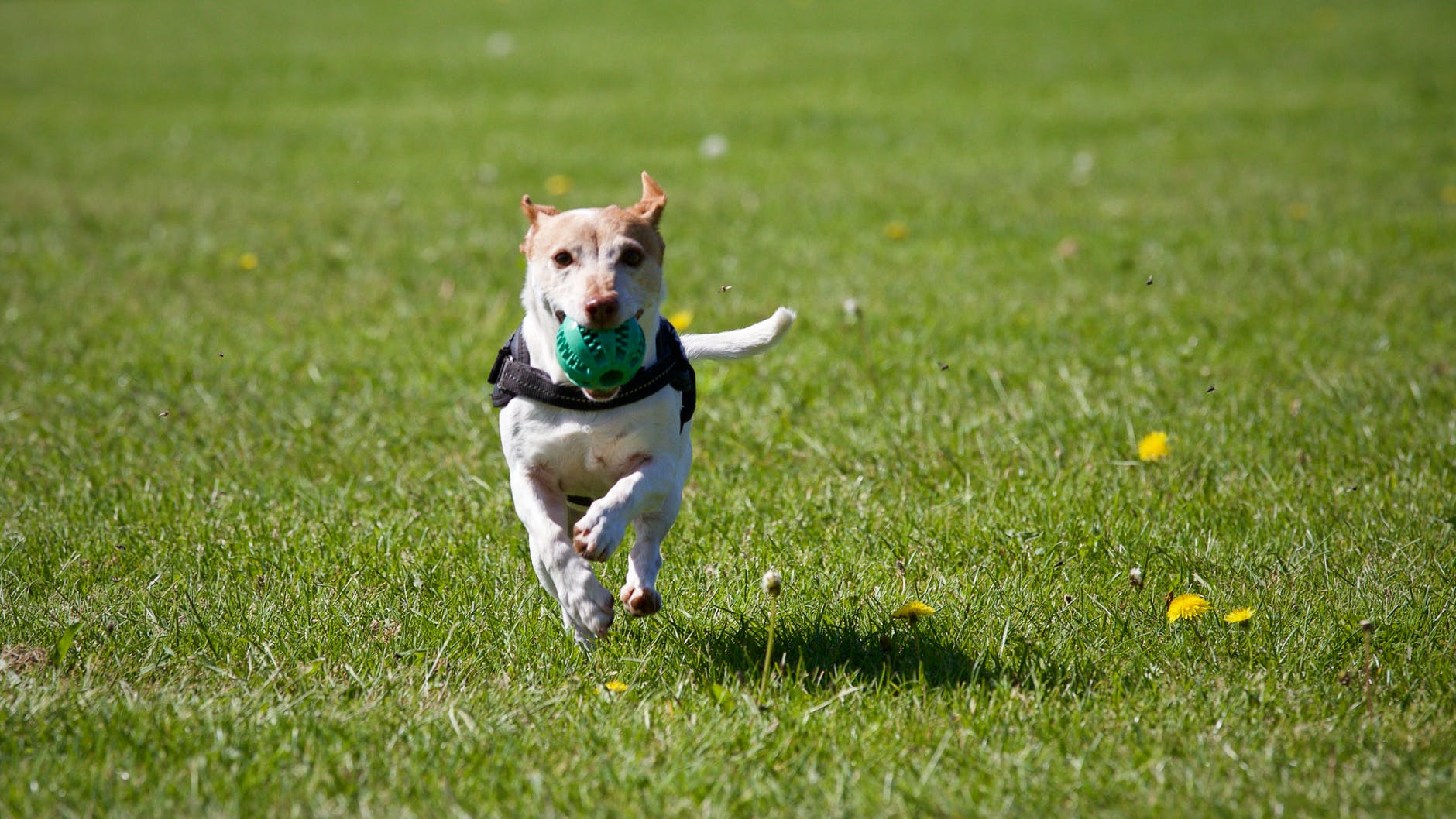
Death follows a Terrier on a Mission.
Photo by Matthias Zomer on Pexels.com

Well, you need an extraordinary event. A divorce out of the blue. A airship landing in the parking lot of the 7-11. A dog running down the street with a human leg in its mouth. A car crash, a panic attack, an island event where humans are hunted, a lottery to see who’ll be stoned to death. A body buried beneath the floorboards…something. Something that forces our beloved (or be-hated? is that a word? why isn’t it?) character into some tough decisions that make them CHANGE AND GROW. Yes. This can be done in the short span of 7,000 words.

You may, if you’re so plottingly inclined (in my head that sounded very judgmental, I apologize to all of my plotters out there), outline your short story to arrange it with the proper story beats, valleys and arcs necessary. Or, if you’re a slob like me, you can just start with the event and your character and see what madness ensues. Just be conscious this is a finite clip, not the 6-hour extended director’s cut.

I could, literally, go on for thousands of more words about the art of the short story, but I know you have some kitten videos to watch and probably a pants-less Zoom call to get on, so… I’m going to end this first blog (there will be others) with a good starting point for my beautiful writers out there.

The hardest part of the short story, for myself and other writer’s I’ve talked to, is finding a smashing good idea to write about. For this week, I’d like you to try one or both of these exercises and come up with, at minimum, 10 potential short story ideas. If you have the time, pick one or two and try your hand at a short story.

For the first exercise, I would like you to pick up a copy of your local newspaper (or scroll through it online) and seek out interesting or strange headlines that deserve a bigger story. The body pulled out of the river with no fingers. The discovery of pesticide residue in kindergarten playgrounds. Whatever catches your eye. Find a notebook, write down one or two lines on each and keep going. Don’t stop to write the story just yet. Let your beautiful brain simmer.

Secondly, I would like you to take a prolific historical/fictional or not character and ask “what if”. What if Henry Melville had been a modern day fisherman. What if Lizzy Borden had been a nursing home attendant? What if Buddy Holly had survived the plane crash? What if Donald Trump was really an alien? (ok, that one’s not so far of a reach)

Get freaky with it, twist history a little and see what interesting plot ensues. Thanks for playing today. Share your results and ideas, if you like and we’ll be back next week with more on the Short Story!

Happy Writing.
The Beautiful Writers Workshop #21: The Keeper Shelf

Happy Thursday, writers! Today we’re jumping right into the craft of writing and, more to the point, how the books we read influence and inspire us. Many of us know that to be a better* writer, we must spend a lot of time reading good books.

 *I’ve heard it said many times that if you want to write well, you must devote an equal if not greater time reading, especially within your genre. I have mixed feelings on this. Yes, reading good work in your genre can be important to how you formulate story, find inspiration, and learn. But if you are doing it solely from the perspective as a writer, it can also cause you to lose a bit of that magic we call your ‘voice’. And, don’t misunderstand, I LOVE TO READ. But I will often lose myself in a good book (Thanks a bunch Chuck Wendig, you beautiful beast of a writer) to the extent that I use up most of my ‘free time’ and close the cover in a self-made brain fog, where in I can’t find my laptop let alone write something coherent. So I guess what I’m saying is: Balance.

Today, I want to talk about what you read and in particular your “Keeper Shelf”.

Ladies and Gentleman Hectic Eclectic (Part 1)

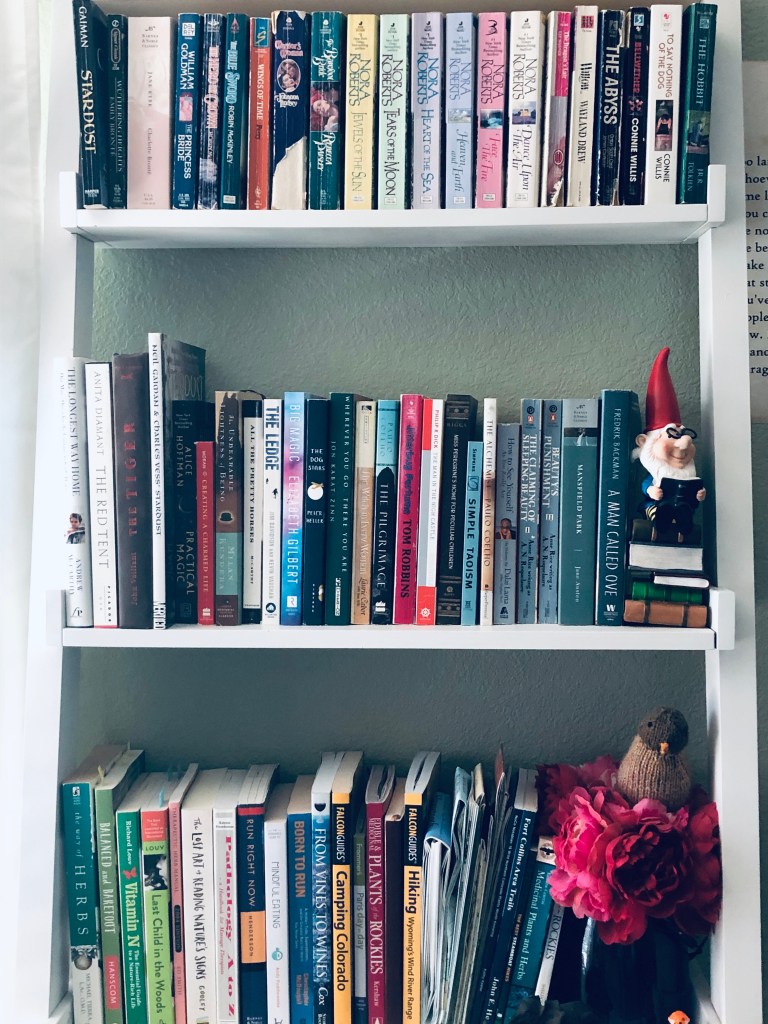
All of us have a “Keeper Shelf”, I’m sure of it. These are the books and stories that we love so much we can’t bear to part with them. They have somehow touched us, shaped us, hit that chord deep inside that makes us want to read them over and over again. This shelf is unique for each person and what’s lovely about your Keeper Shelf is that you’ve chosen these books because something about them worked so intrinsically well that you keep coming back, even when you know how it ends. These are the best ‘how to’ manuals we have as writers.

Hectic Eclectic (Part Deux). Ballerinas next to Deadpool (thanks April Kramer), a dash of Xian Terra cotta warrior and an empty bottle of what my father said was part of his worst college experience. Oh…and some of my all time favorite books. High brow.

This week, I want you to take an introspective look at an area you are struggling with in your own novel/work. For some of us, that might be dialogue. It might be story arc, it might be how best to show (not tell) emotion, character quirks, climax, scene setting, you name it. At least one of those authors on your keeper shelf has nailed a concept that you are struggling with. Once you identify what you’re trying to accomplish with a story, scene, or character, I would love you to take another look at one of your ‘faves’ that did it right.

Read, re-read, dissect it, pull it apart and diagram it on post-it notes…

“Ah, she doesn’t say Mel is sad…she makes the sky cloud over—even the setting turns dark—and  Mel misses breakfast for the third time because she can’t pull herself out of bed, and her eyes hurt, and her mom won’t stop asking her if she’s all right.”

“Ah—I can see these characters care about each other because they can pick on tender parts in their banter and only love each other more for it.”

“She leaves every chapter with a tiny cliffhanger…that’s why I can’t put it down.”

“He’s made Nessie so human and imperfect, by all the things she does despite of her internal dialogue, he makes her a hero that feels personal.”

You get the idea. It is the sincerest form of flattery and honor to use someone’s work to make yours better. Obviously, I’m not advocating for plagiarism; you will and should write your own story, but if another author’s work helps you see the difference between what works and what doesn’t, then utilize their book as a tool to get you there.

You have shelve(s) of Master’s Classes right in your own home so go through some of your old favorites and pull out the things those writers are doing to connect with you as a reader so you can do the same with your own readers.

Constant and continual improvement in our writing craft is essential to success. Because someday, we all hope that a reader gets to the last page of our book, closes the cover, puts it up on that top shelf in their library, and says, “That’s a keeper.”

The Beautiful Stuff Writers Workshop #14: Poetry: The Quarrel with Ourselves

“We make out of the quarrel with others, rhetoric, but of the quarrel with ourselves, poetry.” –William Butler Yeats


I cannot believe it’s taken me nearly all month to remember that it is, in fact, National Poetry Month. I think I may have skimmed over something in the deluge of news clips and overthought, under-edited articles that pervade my cyber space, but in a world where days blend together, I nearly missed it.

You know what coming next, don’t you?

Oh,I’m not being lazy! It’s good practice!

And its more a matter of economy–I’ve got end-of-school projects due and a Black Belt Progress check this week, and therefore, my plate is a little full. So this week your exercise is simple. Go outside, mask it up if you find yourself in a bustling park, of course, but if it’s a deserted early morn, breathe the un fettered air, allow a scrap of paper and pen to tag along with you.

Take ten minutes of just being aware of the moment. What do you see? What do you hear? What do you feel? What do you smell? Use these observations and notice how they filter and affect the thoughts already on your mind. Have a quarrel with yourself and see what arguments emerge. What solutions? What epiphanies?

Then go find yourself a favorite place to sit and write me a poem.

I was going to give you some restrictions but I think we’ve all had enough of those. Any length, any form, rhyming or blatantly against, iambic pentameter–why the f%*k not? Limerick or Odyssey, dark or light, whatever is on the tip of your brain, no matter how sharp or dull.

Send them along, and let me know if you want me to include them in the weeks to come.

I’ll craft one as well.

Happy Writing!

Reflections of Pandemic (Reblog): Nothing But Time (and a few expletives)

Hello writers and readers…so by today…wait, what day is it?

Fuck if I know.

I don’t know the last time I took a shower, or ate something that wasn’t in the carb family. I do know that this debacle has taught me I can’t have bourbon on an empty stomach without severe physical, emotional, and social consequences.

So, what day is it?

It’s today.

Today you may have some time on your hands. Or…on the other hand (ha–see what I did there? Clever girl) you may not have a concept of time anymore so that last sentence is moot point. In any case, you have time to read this, ergo, you may have time to write a little bit and if there’s one thing you should definitely be doing these days, it’s writing.

So let’s be like frogs and hop to it…

(Yep…I said that. Shit, dude, I don’t know, I’m in a weird place, I think it comes from not wearing real pants for three weeks and giving up alcohol…)

Last week I encouraged you to journal throughout this strange, disconnected/connected world we’re in.

Example:

(Sometimes I think it would be easier to be all the way disconnected. Enough of this social teasing and lamenting not getting to hang out. (Introverts are adjusting well, except that all the people who normally leave our lairs during the day for school and work are now part…of…our…lairs…permanently. Thus the pajamas, and carbs, and sparkling water). And while we’re breaking apart some falsehoods about the benevolent humanity bandied about on-line, a pox on the trolls that come out on NextDoor to shame neighbors they no longer have to face in person for walking past them momentarily, within five feet instead of six. They’re just trying to get out of their lairs with their lair-lings before someone ends up in a shower curtain, so chill the fuck out)

Ahem…back on topic.

Assuming you are journaling, keep at it.

Every day on this wild ride is a different day and the elation and hope of one moment are just as important as the desolation and dark of the next. Write it all down.

But if you find you have some of ‘today’ left this week, I want you to write a short fiction piece and here are your topics to choose from:

1.) Write about the first year following an epidemic. If you’re a non-fiction writer, fill it with facts and likelihoods. Inspirational/psychological/self-help, write what you think the world will have learned (if anything). Dystopian/pirate/sci-fi–this is your moment to shine, baby. The point of view can be from one character, a country, or even from the perspective of a tree, street, animal…whatever paints your wagon.

2.) If you’re tired as fuck of thinking about epidemics, and fear, and empty toilet paper shelves, and the loud shouting voices on every screen you turn on… write a short story about a person who decides to spend a year of their life alone in the woods (a la Walden, if you will) What magic can be found in that solitude? What darkness? What does lonely mean to your character? Is it peaceful or is it exile? Write it from your POV, or pick a character you’re already working with…whatever slays your dragon.

I’m not talking long here, 5,000 words tops.

Happy Writing.

It’s Thursday.

New Beautiful Stuff


Welcome back to The Beautiful Stuff!

It’s been a few weeks so I wanted to offer my sincerest thanks my readers out there for having patience while I took a little break from the blog. It was a perfect time to reset the old creative battery, try out a few new avenues, and make the new (and hopefully attainable) goals for the beginning of the next decade.


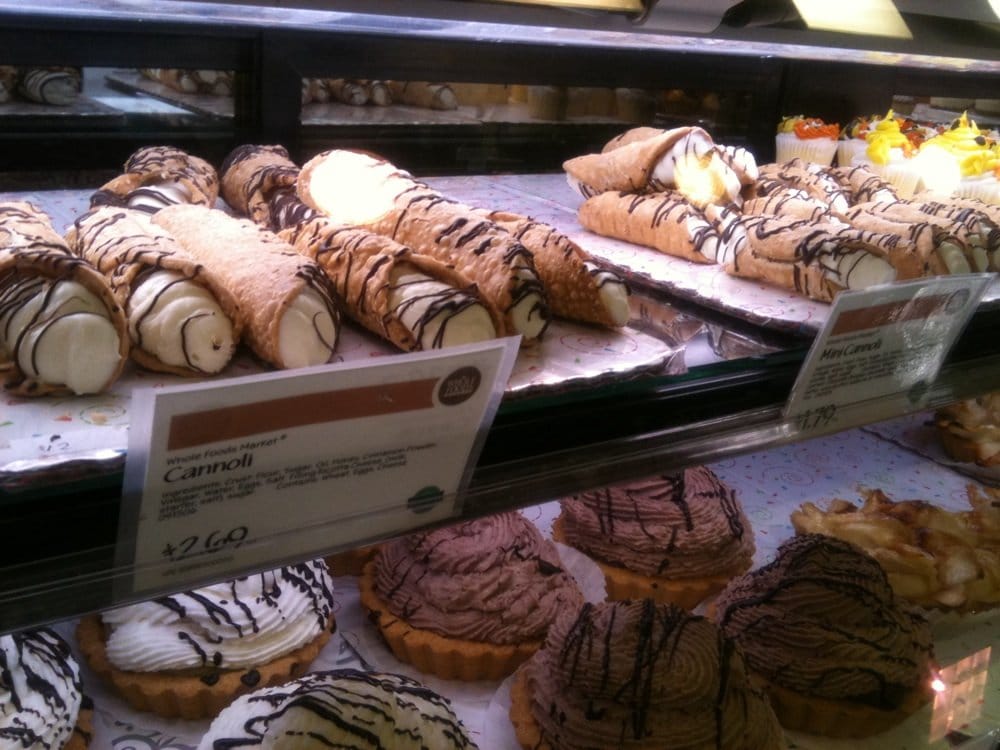
Last decade-turn I was stupid-big with my second baby and can’t recall much except I got winded a lot and had a really big problem with Whole Foods two-bite cannolis.

cannoli.jpg
I think I had at least a hundred two-bites in that last trimester…that’s two hundred bites

The baby turned out to be an amazing individual who is turning her first decade this year. Needless to say, back then I wasn’t thinking of the significance of a new ten years. I was thinking about potty training the oldest and trying not to tumble over while tying my shoes with a mouthful of cannolis.

But now here I am, in a less-rounded ten years and more in control of my mental faculties (still not so much control in the sweets department, but I’d be boring without SOME imperfections) and ya’ll are getting new and improved writing tools, inspiration, and help in the coming year.

First and foremost, (drum roll please) at the end of this month I’m launching The Beautiful Stuff’s first ever poetry anthology, entitled “No Small Things”.

I’ve been working hard over the holidays to get it organized, edited, and prepped. I must say, this is a beautiful little book with some amazingly talented writers contributing. I will give you updates on its release, book signing information, local stores who will be carrying it, how to get a copy if you aren’t local. If you are a writer or even just an avid reader interested in providing feedback and reviews for the book, please contact me and I’ll hook you up with a free copy.

Secondly, on Thursdays instead of the VerseDay you’ve grown accustomed to, I will be offering mini workshops; aptly named The Beautiful Writers Workshop, to get your creative juices flowing. If you’ve been inspired enough to write something you’d like to share, I will be offering a Monthly Writer Showcase, where you can promote your work, give a short bio, and/or provide a guest blog with any useful information you might have or want to share.

The Tuesday blog will move to only bi-monthly and will be more focused on The Beautiful Stuff of human existence outside of writing.

So there you go.

Recap for those of you who are cleansing and are a little foggy:

  • “No Small Things: The Beautiful Stuff 2020 Poetry Anthology” is out at the end of this month
  • Thursdays will feature The Beautiful Writers Workshop– free craft exercises to help break up the monotony and spark some inspiration.
  • Monthly Writer Showcase: Contact me if you’re interested in contributing!
  • Normal blog will be every other week on Tuesday and will center around The Beautiful Stuff of life.

If you’re in the middle of a learning new, healthier habits, I wish you good luck. If you’ve decided you’re just fine as is and aren’t changing a thing, I say good on you and keep on keeping on.

See you Thursday.

(By the way, The Beautiful Writers Workshop totally constitutes a valid excuse for buying new pens and pencils—you’re welcome.)

Homework

Oh, you’re in for it now.

Listen, sometimes I get down to the dirt of it all and give you the best writing advice I’ve got and all you have to do is sit back and absorb my witty information dumps.

But I’ve got a case of summer boredom and am itching for something different. Something a little more…interactive. So, today, instead of me expunging on the benefits of plot arcs and character development, or raking you through the coals of The Chicago Manual of Style, we’re gonna play.

I say “play”. You might say homework.

Pota-toe. Potaah-toe.

Here’s the rules. I’m going to give you a writing prompt. You send me your 200-1000 word result. It can be fiction, nonfiction, prose or in poetry form, written in chocolate pudding, or Latin (or in Latin, in chocolate pudding)…the possibilities are all before you.

I’ll choose a winner, send you a set of my signed novels, and feature your story on the blog with all the bragging rights that come along with it. Cool?

And because, I’d never ask you to do something that I wouldn’t do myself, I’ll be featuring my ‘homework’ on next week’s regular Tuesday blog.

So…you see, writers that suffer together…give each other awkward, virtual high fives afterwards? Drink heavily and question the purpose of their existence? I vote the first one.

Because I’m feeling generous, I’ll even give you two options to choose from.


Here’s your homework:


Write about something/one that got left behind by accident.

or

Write about something/one that got left behind on purpose.


On your marks….get set…