Just For Today…

Hello writers, readers, and fellow stardust-filled meat suits,

This is a friendly and short reminder that this is the only day you have.

Yesterday is gone. Tomorrow is not promised. Today is what we get. This day, this hour, this minute, this breath. I hope you are up, ready to face it with a sense of calm purpose. What will you do today?

Not sure where to start? Here’s how I do:

  • Move your body: Go for a walk, do a little yoga, take a run or a bike ride, lift something heavy, find the quiet repetition of a lap pool, beat the hell out of a boxing bag. Whatever the motion, be grateful for the body you’ve been given and love it.
  • Write something. Anything. A grocery list, 2000 words on your next novel, a poem, an essay, a letter to your mom…a lunch box note. Put hand to paper (or keys) and share a bit of your soul out into the world.
  • Read something. Take in a few new ideas, challenge your knowledge, tease your curiosity. Learn something new, then sit for a minute and think about that something new. Can you related it to something you knew or thought before.
  • Breathe. Slowly. In and out. Do nothing but breathe, for at least three breaths, at least three times a day.
  • Eat good food. Whatever that means for you. I’m not talking latest diet fads or what you ‘should’ eat. But what’s good to you, your soul, your happiness, and your sense of fulfillment. If its green and leafy all the better, if its all crunch and salt, so be it. But let it bring you joy.
  • Devote time to your purpose. Maybe that’s writing. So sit down and write. Maybe that’s your current job, buckle down and find gratitude in the work. Maybe that’s taking care of someone else, find fulfillment in that. But give focused time to your passion, and your goals.
  • Do one thing…anything, not for yourself. Help a neighbor, take a grocery cart back, help a coworker with a project, give a ‘yes’ to something that lightens the load of another. Send a note, donate to charity, drop off food at the food bank, hold the damn door, offer a compliment. Say thank you and please. It really takes so little to be kind. So do that. In any way, big or small, that you can.
  • Rest. Maybe it’s a moment to stare off into space, or to do a puzzle, or to lay down with your snoring dog for twenty minutes. But rest. We’re not machines and its in those quiet times that our brain processes all the stuff we’re doing.
  • Tell someone you love them, or appreciate them, are rooting for them, or that they are important to you. Whatever and to whomever…tell them now. This is your only day.
  • Spend time with the people and places you love the most. At least a little time. Be present with them. Make a memory. Make it count. Make them laugh.
  • Laugh. The greatest punchline to human existence is that, despite all of our struggling, our toiling and effort, none of it really matters. We are an absurd little glitch in a vast and uncaring, infinite universe. We are ridiculous and short-lived, so find humor in all that you can. Because laughter is a bit of a middle finger to the whole pointless play, and at least by laughing, you’re enjoying the flash-in-pan ride.
  • Love. You can chose a lot of things in life. You can choose to get ahead, you can choose to keep it simple, you can choose to pull back or spring forward, you can make choices for your life and your goals. You can choose to hate someone and extend that. You can choose to love. It is our greatest power and our greatest folly that we get to choose how we radiate into the world. I ask that you choose love. Love your fellow humans. Love your planet and your world. Extend grace. Live compassionately as though that was an unending resource (it is). Forgive. Let go. This is your only day, so just for today, choose to love.

Try the list, then go to bed. And then…when and if (and I hope it’s when and not if) you wake up in the morning, be excited and ready because you get to do it all over again. Just for today.

Backstory: The Sum of Our Parts

Hey kids! Today I thought I’d settle back into a little bit of craft. For those of you who are beginning writers, I hope this will be of use. For those of you who are super-sonic, advanced, best-selling writers…what in the hell are you doing reading my blog? Don’t you have launch parties to go to and movie studios to schmooze? As I consider myself a perpetual beginner in all things, I will continue as if this is something you still need work on, because I do.

Backstory…ah yes, all the shit that happened to your character before they land on the page of your novel. All of those pesky details that readers don’t necessarily need to sift through (100000 words or so?) but that are essential to why your character behaves the way they do, why they are where they are, and what fatal flaw we are hoping they fix. So how do we, as writers, weave the important details in without dumping large, boring, sagas of backstory on our readers? Here’s a fine bullet list:

  • WRITE IT OUT, BUT DON’T PUT IT IN: One of the best practices you can do is write out all those long, sweeping, historical scenes in a separate document. It helps you get to know your character better and to be able to write them from a place true to their history. That document doesn’t have to be seen by anyone else, think of it as writing an entry on your character in wikipedia to be able to better write them authentically on the page. Backstory details will have an easier and more organic presence that way.
  • CONSIDER YOUR GENRE: Some genres (Literary, YA, Regency Romance) tend to have more personal historical details, and if the main goal of the genre is a transition from the past to the present or future (coming of age, hero’s journey) then the past will play a bigger role and more time can be devoted to it. Readers in these genres expect as much.
  • MOTIVATION: Everybody has a WHY. If the motivation is obvious (he’s a cop because he believes in justice) it requires no backstory. If, however, they’re in a role or position that seems to clash with their personality or values we need to know a bit about how and why they got there. (She’s a cop because her father was killed on the job by a dirty partner and now she wants to ferret out the current Commissioner).
  • BE SELECTIVE TO ENHANCE THE FLAWS: If your main character arc is about how a closed down hunk learns to love again, then we need to know why they closed down in the first place. You don’t need to know he was the captain of the rugby team unless his heart was broken by a fellow player. Stick to the details that caused their flaw, or reveal something important about their values and personality that are essential for their evolution, or are the defining handicaps that keep them failing.
  • BE BRIEF: In this case, a hint is as good as a paragraph/chapter. Some of the best backstory is the kind that is interwoven, seamlessly within a paragraph. Related to the current events but powerful in its small punch. “When he asked if she wanted a peppermint mocha she scrunched up her nose. She hadn’t liked the scent since her grandmother had insisted she rub peppermint lotion on her feet every night. ‘No thanks, just a latte,” she said.” Here we see that she had to take care of her grandmother and it wasn’t pleasant. Young people in positions like that have a heavy sense of duty and often resentment. We learn this from one line about grandma feet.
    • If you struggle with how to shrink it down, see the above bullets for the most important details and boil those down further. Ultimately it’s about practice and thinking about how your own brain works; how certain smells can bring up memories, or being in a car reminds you of a trauma, etc.
  • IF IT’S GOT TO BE LONG: Okay, I get it, sometimes exposition is too important to the motivation, character flaw, and story to get cut down. So here’s some rules of thumb, if it has to be longer:
    • It better be full of gasp-worthy events
    • Write it in beautiful sweeping prose and be addressing a literary audience that doesn’t mind a good wander.
    • Make it hilariously funny

Well, there you go. I hope this helped give you a little boost on how to interweave backstory into your work. Good luck on your writing and next week I’ll have some announcements about the big ol’ month of September and what fun things are going down.

The Simplicity of Practice

I can’t tell you how much of my life I overthink. From what a friend has said, to what the scowl my daughter is giving me means, to the side eye my dog throws at me and the head shaking the man in the car next to me offers when I’m belting out Blink-182 lyrics… I overthink it all. I overthink every decision (but if I have a bagel without the egg I’m going to be hungry, if I brush my teeth now they’ll just get dirty because I want one more cup of coffee, but if I don’t brush them now, it might not happen today…) You see what I mean?

So when I’m given (or read, or listen to) writing advice, I tend to do the same. I over calculate how many chapters I should be writing a month to finish a book in a quarter. I’m diagraming the hell out of my character’s backstory (after a pantster first draft that feels too tepid). I’m getting lost looking at internet trends, publishing tips, and marketing plans… And so much of these grand ideas, sparked by advice to help in the long run (some don’t) but what they for sure do, is take up time. And invested time like that isn’t just the physical hours but the mental energy that it takes to process it all. Less mental energy means…less writing (or less quality in the writing?)

Recently, I read this great article on the timeless tidbit of: “just write”.

I mean, admittedly, it’s kind of a breath of fresh air. Simple. Not complicated. Correct. To be a writer, to finish your novel/story/project, you must actually write it. So…just write.

But it’s also oversimplified. If writing were just that easy, every person who’s ever come up to me and said “I’ve always wanted to write a book” or “I’ve started a novel but I can’t seem to finish it” would have oodles of books written. Wants made into dids. I mean, “just write” makes it sound like all we really have to do is sit down, the words will come, the knowledge will be there and the novel will march through beginning, middle, and end without fail or hiccup.

But writing isn’t simple. It’s akin to playing an instrument, and doing it well. Anyone can pluck the strings of a guitar. Anyone can thunk on the piano keys, but it takes more dedication, thought, and skill to actually play a song, none the less write one. But the practice is the road towards a better song.

So, as this pretty smart writer guy said, we should instead “Practice Writing.”

Practice Writing. It is better, no? You’re still doing the writing thing, but it comes with the lightened atmosphere of it being something continually tried and worked for, something offered, reworked, and perfected, but never perfect. Something we find joy in, while still being committed to the process of it.

And it helps me not over think it. Because every sentence, scene, poem, blog, or chapter I indulge in, is a practice, and a learning opportunity, but not a commitment to perfection. And just like an instrument, through trial and error, and time spent, we writers will get better and better. So, I beg you to go forth, and practice your writing today. Whether it’s 2000 words, or 20. Every plunking of the keys counts towards learning the complete song. Every word, every thought, every rambling blog post, is a writer in the making.

A Word (or Several) About Writing Conferences

Photo by Pixabay on Pexels.com
I’m not going to lie, I’ve been a busy bee of late, and I’ve got plenty on my plate to make me feel justified when I rehash an old blog, especially if it still fits with what I’d like to talk about.

This, being July and smack dab in the middle of the Writing Conference Season (I’m not sure if that should be a capitalized title, but it seems like an event so…I’m going with it) I thought it would useful to budding writers out there to go over some conference basics as well as some advice that has really helped me get the most out of them. This also being a totally new era, I’ve added some modifications to reflect our new Zoom/Teams lifestyles (not NEARLY as cool as a Rock n’ Roll lifestyle).

So, let’s get into the meaty goodness of writer’s conferences and why you should strive to attend at least one a year.


How do you choose which one to attend?

• Firstly, most conferences, at least since the pandemic, have had to switch to some type of online format or perhaps online-in person hybrid to make accommodations for safety. So, the good news is, you may not have to shell out so much for travel expenses as they can be taken from the comfort of your home. Bad news is that you’ll still be at home and all the challenges that can go along with it. I’ll touch more on that later on.

• If you are anything like me, you’re wealthy in creativity but strapped for cash. One of the biggest deciding factors, for me, is the cost of the conference, along with which classes, speakers, and agents will be there. Getting to pitch to an agent, or multiple agents for publishers specific to your genre is a boon. Classes that are not just interesting but will help expand your craft are also good factors to consider.

• Some conferences are genre specific and if you are a comfort-hugging archetype who doesn’t flirt around outside your style and subject matter, then definitely consider something specifically geared to your genre. The Romance Writers of America used to host in fun and far-off lands like…San Diego and…New York City…*le sigh* Genre specific conferences are awesome if you’re looking to polish skills or start out in a new genre that you don’t normally write in. Don’t be afraid to flirt a bit (outside of your genre, that is *wink)

• If you’re stuck deciding between two, look at the courses offered, the speakers presenting, and if they are offering pitch sessions, especially agents suited to your work. Pick the one that gives you the most opportunity for growth and stretches your creative and ambitious goals.

How do I get the most out of my conference?

• Here’s what I’ve learned. Plan ahead but be flexible.

Conferences don’t just start the minute you pin that snazzy name badge on your seldom-used dress clothes (or, via online conferences, log in with only dress clothes on your upper half). They start the year before, during writing when you self-reflect on the issues you have with your WIP, your style, your grammar, or even the steps you want to take next. If you have trouble with dialogue but are a whiz at plotting out the perfect story arc, then use your conference to build up your weak points. Even if it means stepping out of your comfort zone. Which leads me to my next point:

• Sit it on at least one session that is outside of your genre, comfort zone, or even interest.

Look, conferences can be amazing experiences but if you’ve been through sixteen hours of various takes on the query letter or trying to perfect your memoir pitches, you’re not growing as much as you could be. Why do athletes cross train? Why does an engineering major still have to take social science classes? Because learning about the realm outside yourself will make you better in all aspects of your work. Try a sci-fi world-building class or screenwriting. I guarantee, you will get something new out of it that will help your project and your craft.

• Push your limits.

Talk to people you wouldn’t normally, share your story, your success, and your pitfalls. This is an awesome opportunity (I’m talking to you little introvert) to commiserate, vent, and rejoice in the craft you love so much. Pitch your novel, article, or story. Talk to the larger-than-life keynote speaker (here’s a hint: every single one of them I’ve had the pleasure to meet has been the kindest, most down-to-Earth and supportive writer). Come away feeling like the weekend/day was an experience that has changed you in some fundamental way.

How do I not get overwhelmed?

• For goddess’ sake, take a break in the midst of it all. I’m the worst at this. I’m a classic victim of; “I paid the money and I’m going to hit every single class. I will volunteer, pitch, hit up the speakers at the dinner table, and stuff every bit of information into my head until explodes!” Then by day two, nothing makes sense in my mind, words are blurry, I’m not sure what my name is, and I’m crying into a self-made mashed-potato tower, while wearing Underoos on my head that clearly are not my own.

Take the breaks between sessions or even forgo a session and find a quiet corner or go for a walk outside. You need it to recharge, allow time to absorb the information and be refreshed for the next round. This is especially true for online conferences! Take the computer to different rooms (if they’re still quiet) or outside if available, take walks in between sessions, take eye and body breaks (look far off for a spell, or ‘rest’ your eyes away from the screen, get up and stretch as often as available). Its’ almost like interval training—the space between, the recovery is what sets you up for the next round, so take it.


• If you are pitching to an agent or editor, polish the shit out of that thing beforehand. Take your pitch to your critique group, your friends, random people on the street before the conference and learn how to deliver it with confidence and clarity. Know your story, your characters, and your plot, inside and out. That first page should sing the sweetest siren’s song anyone has ever heart and lure the tepid agent from the afternoon lunch lull into something exciting they want to read more of. The more you practice your pitch, the more it will feel like a conversation with a good friend instead of an interview.

• If you are pitching, don’t be intimidated by the agent or editor. Remember they are people. They are there, specifically, to talk to you. To hear your story. To find the next big thing. Most of them are also just like you…they may even be wearing Underoos and like mashed potatoes. The point is, it’s okay to be nervous, but don’t go in assuming they relish the idea of shooting you down. Be polite and always thank them for their time and any advice they have to give.

• Sleep before. Sleep after. Eat nutritious food, take walks outside whenever you can, and watch the caffeine and the booze. Free coffee stations are like crack for me (or conversely at home for online conferences—having my own espresso machine) and cash bars are a tempting mistress at the end of a long, people-filled day. But you’ll have things to do the next day and Underoos will stay safely tucked in if you can avoid that third cocktail.

To conclude, I’d like to share one of the best lessons I’ve learned from conferences.

For every conference I attend, I add a layer to the writer in me. That is to say, through the people I meet, the classes I take, and the lectures I attend, I learn more about the craft. How, and when, and why, and what and all the technical attributes that come along with the delicate balance of creativity and grammatical science. But more than just the sum of these limitless parts, I learn a greater whole.

The whole that is me as a writer.

And in doing so, I’ve learned how to enjoy myself more at these kinds of functions by listening to my body, my brain, and my growing years of experience.

Back in the day, I would be hand-cramping from the steady stream of notes at each session. I would be tumbling from one to the next, chugging down coffee between in hopes to keep my energy up so I wouldn’t miss a thing. I would strategically place myself at the agent’s table who I wanted to garner the literary affections of. I would, in essence, be the adult version of my grade-school brown-nosing self.

Something happened one year, while at the meet and greet “networking” event. I found myself long past my emotional and mental boundary and crossing all lines of my introvert nature, to garner the attention of at least a few more experts in the field. I was mentally exhausted, untethered and I felt like I was on emotionally shaky ground. I realized after a long day of learning and being ‘on’ that I didn’t want to be there.

I didn’t understand my limits or that honoring them was at the core to being successful at a conference (and let’s face it, in life)

I thought I could talk it all day, learn it all day, do it all day. Nerding on a pro-level is a quintessential part of who I am. I loved hearing about other projects much more than I like talking about my own and reveled in the creativity and ingenuity of my fellow conference goers.

But…the more stories I heard, the more classes I took, the more advice I tried to apply—the less sure I became of my ability. The more tired I got, the more flustered I became, the wearier my mind, the less information I could process.

Until everything was just noise and words.

Then I learned a secret.

You don’t have to throw yourself under a bus to catch it.

Knowing your limits is not just useful in this particular scene. Knowing your limits is useful for all humans. And it comes with age and the ability to let go of unrealistic expectations.

During a few of my sessions, even as I listened to the speaker, I listened to myself. If I was inspired to write; I let myself write.

If the iron was hot, I struck while in the moment, abandoning the mad scribble of notes.

Did I miss a little of the presentations? Sure, but in the midst of other brilliant minds and the energy they impart, in the middle of shutting out the rest of the world, the heart and brain start to do this funny little dance and learn to play again.

Inspiration doesn’t always happen at the opportune times. You have to write when the words are ready and when the heart is open. Conferences have given my heart a doorway, an acceptance into writing what often builds up behind all my carefully constructed walls.

In years past, I’ve forced myself to jump the hurdles of social interaction and witty conversation until late hours, when all I really wanted was to wander off to a quiet room and take a nap.

I had to make it OK for myself to listen to that want, in order to get the most out of my time at conferences. These events open pathways, but only when we’re not too busy to see them. If we are embroiled in getting the most out of every single planned moment of the time, then we may miss the real lesson.

Creativity is like a river and if you fully submerged you’ll easily drown. You’ll miss the beauty of the ride, the view, and the sounds.

So, know yourself, Writer. Do the things that you know work for you. Let the river of creativity, carry you, but always leave yourself plenty of breathing room to be inspired.


A Super Secret Guide to Finishing Your Damn Book. Part Deux: Seeing The Bigger Picture

Bonjour!

I’m so glad you decided to come back.

How was last week?

Did you separate the amoebic tendrils of your technological parasites long enough to remember how to write, free-style? Did you get hand cramps? Keep it up, before you know it, you’ll be cleaning and jerking 7,000 words a week, vocabularian veins popping out all over the place.

For this week we’re going to zoom ahead to the future; to the cumulation of all your writing efforts and the massive chunk of story sitting in front of you. All of those beautiful words you’ve poured into a pile are just waiting for the dexterous hand of a good story teller.

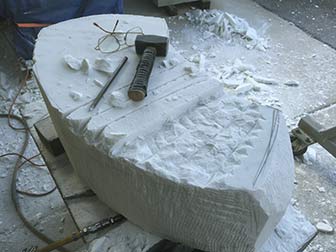
Your rough draft is like a thousand pound hunk of stone. If you want to get all “Americana” on it, you could even say its akin to a 100 pound ‘pat’ of butter. Yeah, let’s go with butter.

The rough material has potential. Your story has energy and power. But if you were to send in a stick of butter to the Iowa State Fair judging committee, they’d probably to one of three things: write you a scathing review for wasting their time; send it back and write a scathing review for wasting their time; or batter it, deep fat fry it, and send their thanks for the mid-morning snack.

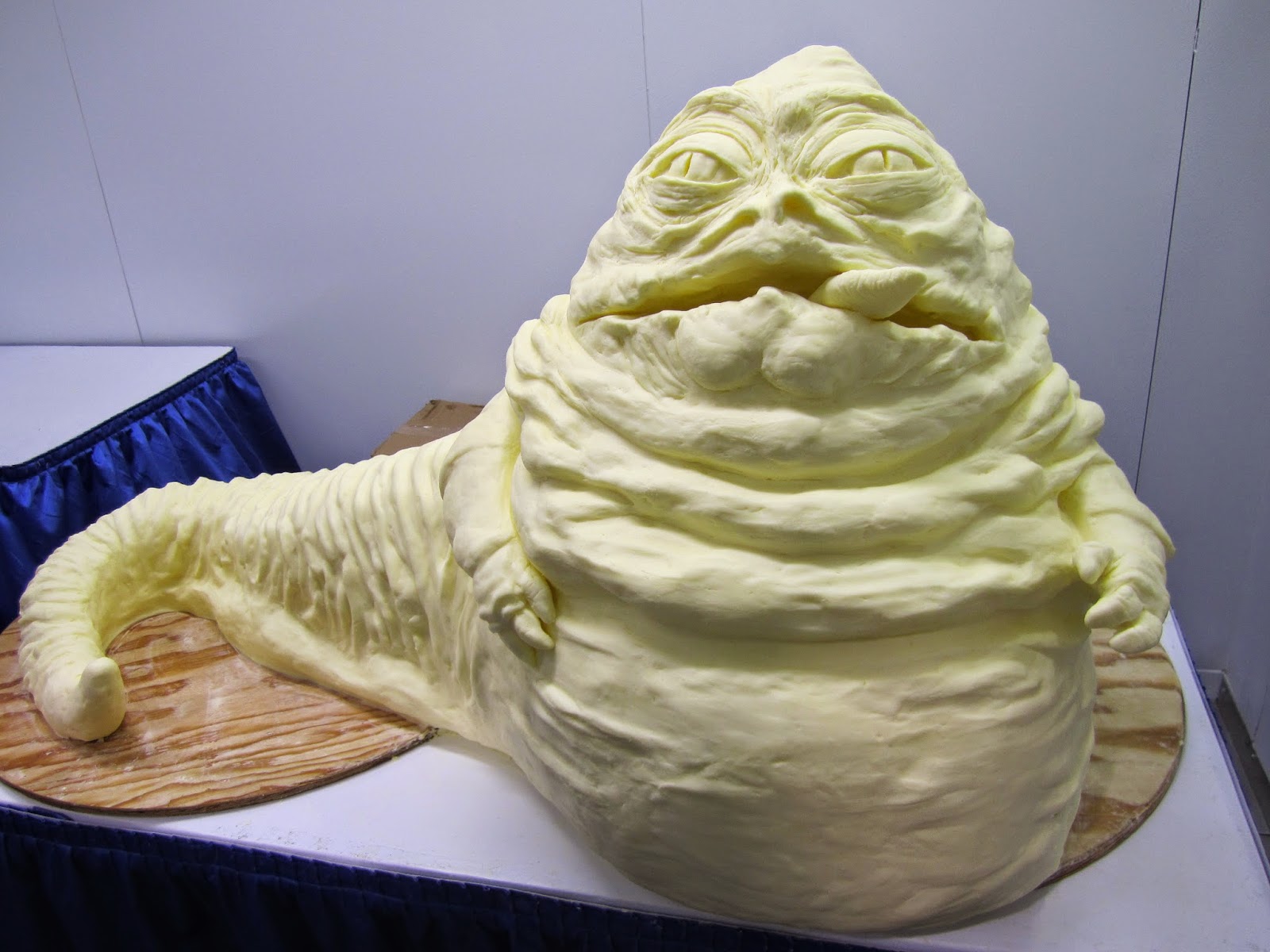
jabba butter
Jabba the Butt(er). No? Come on. You have no idea how many hours I spent looking at butter sculpture.

Your book, your words, your ideas deserve better. If you loved it enough to write it, then love it enough to shape it into the best it can be. And by that I mean…learn to edit your work properly. This week’s true secret to finishing your damn book is something you won’t hear from a lot of writers and here it is:

Being a great writer is 20% writing. and 267% editing. Shut up, I’m not good a public math. Seriously though, when you get your ass in that chair and throw all the good and bad down, and your mind learns to work in the space and time you give it to create, you can really accumulate a massive amount in a short period of time. But the art of writing, the finesse, the je ne sais quoi, if you will, lies in the ability to edit that beautiful mess into a story that captivates.

Que voulez-vous dire?

How does this magic happen, you might ask? If you’ve been around in the writing game for any amount of time, you’ve had the old adage banged into your skull over and over “Kill your darlings, Kill your darlings…” Yes…yes Maestro Faulkner, whatever you ask!

What does that really mean? Well–*le sigh*–it means you as a dreamer, a wordsmith, a lover of story and character…you, creator…must become a destroyer. A hard, eagle-eyed machine; disconnected from the rapport you’ve built over the years with your characters. You must let go of the personal angst, pain, and joy you’ve brought into the world enough to see its true potential. You have to take that beautiful hunk of marble (or butter) and break the rough and useless parts away to reveal the true work of art beneath.

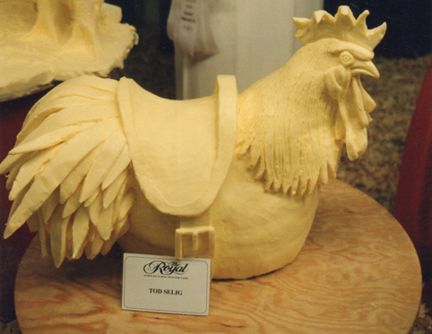
buttered saddled cock
Yep…that’s a giant butter cock with a saddle. You. Are. Welcome. (By the way, ‘giant butter cock’ is now trademarked. By me.)

Oh, Mon Dieu!  (which literally translates to OMD—OMD Becky, regarde ses derrière!)

The practice of “Killing your Darlings” is meant to make you understand that editing is hard. That letting go of the phrases and pieces of your novel that you love, when they are distractions to the story and its flow, can be the best thing you do. Cut. Cut deep. Cut the subconscious catch phrases and passivity. Give your readers a stronger character by making them the center of the action; by putting the reader in their shoes. Stop telling us everything. Cull the useless, the distracting, the stuffy, the monologues and head hopping. Give us the moonlight glinting off of window panes.

Take that lump and make it into something where details pull double-duty and every word counts. Line by line, strike out that which does not serve purpose or cause emotion to rise in the chest. Because even the most indescript lump of butter can turn into something quite magnificent when given the time and attention it deserves.

angelic butter
Sweet, Angelic Milk Fat.

Next week…after all of you hoodlums have taken a hard look at your work and gutted it to buttery perfection, we’ll take a look at what you can do next to get that silky minx out into the world.

Until then, keep writing. Drop me a line. Tell me how you’re doing.

Does anyone really want a giant baguette right now?


A Super Secret Guide to Finishing Your Work In Progress. Part 1: Technology vs. Creativity

Hey there, writer? Whatcha doin’? Surfing the Internet? Caught up in some devilishly clever blog post that has promised to give you the secrets of the craft in one easy-to-read, bulleted list with some fancy-schmancy graphics?


I see you.


I’m glad you’re here, actually, I DO have some important advice in this my first lesson on finishing your work in progress.


Get off the Internet and back to your writing, you filthy animal.


Ok…wait! Not right now…just hear me out. I promise, I’ll be brief (500 words or so…Look! Only 420 left! 418…)


Fewer things deter the creative process like the multi-faceted distractions we face in our interconnected world. The phone, social media, the addictive thumbs-up ‘likes’ and sympathetic sobbing emojis. Constant information streams into our overworked, underfed brains; the lies, the truth, the barrage of sight and sound that, when boiled down, amounts to so much nothing. So much noise.

So shut it down.

That’s it.

That’s all. Part 1, in a neat little nutshell. Expand? Ok, but only because you asked…

Do you want to write more? Then disconnect. Grab a pen and paper and sit your ass on a park bench or in a coffee shop with your phone and laptop “conveniently” left at home.Stop Wasting Time


“But…but I can’t just write! I won’t be able to spell check or word count (320 left) or research the typical milk production of a Nubian goat in April!”


First of all, my little perfectionist, rough drafts don’t need to be spell checked the moment words hit paper (shocking, right?)


Secondly, one page of average handwriting has about 250 words give or take. You’re welcome.


Third (ly?), you sound like someone who could use my patented “Blah Blah” technique to avoid distraction in the middle of your writing flow.

Not familiar? Well, don’t search it on line (Jesus, haven’t you been listening to me?) It’s a secret I share with only my closest creative misfits, lucky you.

When you don’t know a factual detail of some part of your scene, insert the words “Blah Blah” into the space and move on.

Image result for images eye roll


Did you—did you just roll your eyes at me?  Watch it…I will mom voice you so hard…

Observe:

“Victoria knew that the Nubians would produce at least blah blah of milk next month, giving her blah blah bars of homemade soap to sell.”

It also works if I’ve forgotten a secondary character’s name but know that scrolling back to find it will dry up the good stuff that’s pouring out:

“ ‘You’re a handful,’ Mr. Blah Blah said and scowled over the drag pole fence.”

Don’t fiddle with your flow. Let the unnecessary lay in wait and avoid the pitfall of jumping on the Internet to do some ‘quick research’ which will curtail your thought process and take you away from your work (16 hours of baby-goats-in-pajamas-videos later and I’ve forgotten evil exists in the world. Good for sleep, bad for fleshing out antagonists.)

When the creative dust has settled into a beautiful, uninhibited outpouring of ingenuity go back and find your ‘blah blahs’ (they stick out like sore typos, especially being ‘repeat’ words) and you can designate a specific, allotted time to research and check them.


There it is.

But in my forty or so words left, I should give you at least one bullet (I believe I promised it somewhere up there.)

  • More than just in your writing, consider disconnecting in your life. Be present in the world around you, not face down in a screen. Your writing will be better. Your life will be better. Power down for at least an hour a day. No phone, no television, no laptop, no screen. Live through your eyes, your ears… all those messy, beautiful human senses your mother worked so hard to make for nine months. Notice the vibrancy of color in nature, the way wind feels against your cheek. Listen to your own breath. Taste your food. Powerful writing comes from living with powerful intention.


Ok, now you can leave me. I apologize for surpassing the mark. What can I say? I didn’t want to mess with my flow.

Go work on your book. Your poem…your passion. Come back and let me know how it’s going.

I’m signing off for the day, but I’ll get back to you when my creative dust settles.

Writing Frequently Asked Questions

Given how heavy last week’s blog was, I thought I might lighten it up a bit. In the course of my career, as soon as people know I’m a writer, I’ve gotten a lot of questions, ranging from the concerned “What did your parents do to you?” to the outright rude, “Oh, so what restaurant do you bus tables at?” But some are genuine and interested.

I’ve picked out a few questions not just to give you my personal answers but as a way to think about your own journey as a writer and why having the answers to some of them is important, whether you get asked or not.

Writers Frequently Asked Questions:

How do you come up with your ideas?

I dunno man. It’s part magic and part just paying attention. Sometimes it’s a character from my childhood that I want to reformulate and expand upon. Sometimes I’m watching a nature show on octopods and flip the station to an expo on genetic research. I will say this for the good writers I know. Ideas are everywhere, and it’s all about paying attention to why each story, article, factoid, or fungi is interesting and how they could be moreso. Even though tropes and genres rarely change, the situations, characters, and actions are an endless pool of inspiration.

I’ve written about space captains and cowboys, Krampus’ nephew and Bacchus as a modern-day AA member. I’ve written about a nurse with OCD and a child who was the reincarnation of Peter Pan… Ideas are everywhere. Go on line, find prompts. Read the newspaper. Watch people. Read. Think about what makes a good story—a character you care about, an impossible situation, high stakes, dynamic growth. And give your brain down time to think and daydream (walking the dog, in the shower, at your kid’s soccer game—don’t look at me like that it’s okay to zone out for those once in a while too). Play with the What-If and don’t self limit.

Also—buy a small notebook and a pen (or you could use your phone, ugh) and write down things you notice, articles that were interesting, conversations you overhear, even the strangest ideas from out of nowhere. You never know…

How many hours do you write a day?

Pshhh… Listen, if all I needed to do in a day is write, I’d probably say at least 4 to 5 hours or more. But I don’t know any of us who don’t have some other job, a family, or otherwise adultish tasks to complete. So, I’m going to be completely honest and watch die-hard writing theorists gasp in shock.

Somedays I don’t write at all.

*gasp! How does she even call herself a writer!?*

Somedays I’m so plagued with class planning and familial obligations and oh-my-god-whats-growing-in-the-bathroom-sink, and teaching, and making dental appointments that I don’t get to sit down at my computer until late in the evening when my brain is effectively mush.

But it’s not always about the quantity.

Because sometimes on those nights, in the span of twenty minutes before bed, I can bang out three or four solid pages. Sometimes I only stare bleary eyed at what I wrote earlier in the week. The point is, it isn’t about the hours and hours of singularly devoted time you put in. It’s about concentrating and working with focus for every minute you do get and making it impactful over time.

So—on average in a week, I maybe write 1-2 hours a day. If you factor in editing and rewrites and marketing and advertising my stuff, that probably gets bumped up to about 3. It’s not as much as some…but for now, it’s what I have to work with and I capitalize on all the moments I can.

What are you working on now?

I’m not like other writers. I’m a goddamn, flighty scatterbrain. So my answer is…complicated *wheels out an old chalkboard packed full of a complex theory, diagrams, and stick figures*.

At any given moment I’ve got multiple projects and I’ll tell you why.

Because I get bored. And sometimes I’m tired. (hahahahaha—ah…that’s funny because I’m ALWAYS tired)

I’m not saying I can’t sit down, focus, and write a novel, end to end in about a month. I can. I have. I usually reserve all of November to do that. Or on projects with co-authors as there are expectations and deadlines to meet.

For me, having multiple projects that I enjoy helps to keep me engaged and inspired and lets me cater my writing to the state of my life that day.

Maybe I only have twenty minutes. So I write a poem, or submit a poem. Or both

Maybe I have an hour, but I’m not feeling very fictional—I work on my weekly blog or catch up on emails from other writing projects. Or get a solid chunk of editing done.

Maybe I have an uninterrupted afternoon, I’ve been daydreaming about my characters and what I can do to torture them…I’ll bust out a few chapters on my novel.

Being a writer is a career best done when diversified.

One, we learn how to write better when we give ourselves more variety.

Two, we will burn out less often when we can take breaks from something that’s got us stuck—AND, AND AND…sometimes being able to put down ‘stuck’ projects and work on something else will lead to that magical AHA moment of unstuckness, because your brain has stepped back and can look at it without so much intensity.

Three, in terms of getting paid? You might love your novel, but its your magazine articles that are paying for your PB and J’s while you wait for the next publisher to realize how amazing you are (and you are amazing)…so have something more lucrative if you want.

Four, I hate to say it, but marketing, editing, and submitting count as writing. It’s the new and best chance way to really make it as a writer these days.

So—what am I working on?

3 novels: one in first edits with a cowriter, one is the first in my new urban fantasy/romance series—heavy rewrites but mostly formulated, one is my Kindle Vella romance that I’m writing, frighteningly, chapter by chapter (I’ll plan that out better next time)

A weekly Blog post

3-5 Poems a week

The new Beautiful Stuff anthology

1-2 Submissions a week (leading to new poetry and flash fiction pieces)

Edits for some accepted short stories

Soon: Edits for my first novel coming out with 5 Prince Publishing

You make any money at that?

No.

Not at all.

After editing, marketing, and website fees are factored in, I’m actually, constantly, in a hole. In fact, I love writing so much, I started working a part time job just to afford it.

But this is important to know about yourself as a writer. Why do you write? For the money? Because there are ways to do that—freelance, magazine articles, content writing, textbook editing. But you should also know that getting published right away, with a good book deal and royalties is not common. It isn’t impossible but you’re going to have to work for it.

My suggestion is to write because you love it. Because if you do that, and you throw it out into the world to see if it lands with someone, and it doesn’t get picked up, then at least you loved what you did, enjoyed what you made, and created something that was meaningful. And that’s not nothing.

If you don’t enjoy it and try to meet a trend, or publish some MFA tome that you hated every minute of, I honestly believe that the chances of it ‘landing’ and being picked up, are less.

Stories with heart and passion behind them, are just better stories.

Do you get writer’s block?

I go back and forth about those two little words. Yes, I believe that writers can get blocked. but I prefer to call it “Life Blocked”.

Writing doesn’t get blocked. We block ourselves. We get in our own way. Life gets in our way. The other worries, concerns, judgments, conflicts, and comparisons surrounding us get in our way. The writing is always there, just waiting to come out. It’s not beyond our reach. Until we put up walls of insecurities and excuses in our own path.

Somedays the inspiration isn’t there. Write anyway (see my answer from above about switching up projects, doing something that is still writing but not what’s got you puzzled). Somedays you are burnt out. Take a day off. Watch stupid movies. Take a nap. Keep your hands off the computer until you’re gnashing to get back to putting words down. Writers forget that inspiration is always there, you just sometimes have to clear out the path before it will flow. That might mean writing that scene you’ve been dreading until it turns into one of your favorites. Or sitting in the chair, writing the worst shit you’ve ever written nonstop for thirty minutes via a timer until you realize that it’s not all bad and that you were just afraid admitting that we all write shitty stuff sometimes.

Don’t believe in writer’s block. Believe in normal human emotion and limitation, give yourself grace but don’t give yourself excuses.

Where can I find your work?

Always know this answer and, if possible, have a card with your info on it. You can find my work on Amazon, libraries, in some journals and newspapers as well as on my website. www.sarahreichertauthor.com (and yes, get a website)

How do you finish a book, I just can’t!

How do people climb Mt. Everest? How do people raise children? How do people retire comfortably after 45 years of work?

One step at a time. Always forward. Never giving up. Pause if you need, catch your breath, remember why you’re putting in the work, eyes on that distant horizon and keep moving. You will get stuck. You will want to quit. There will be stories you do have to quit or rewrite completely. Just don’t stop writing. One page a day. One sentence. Six chapters. It doesn’t matter. People who don’t finish their books have let the world win. They let their doubt win. They let the aspect of editing and cutting out what wasn’t working win. They let the fear of finishing a book and what that might mean for expectations on them win.

Don’t let fear or hard work stop you. Just write. Because you love it. Because you love the character. Because you love the journey. Because you love being lost in that world. When it gets hard, shift course, skip over the dark and come back after you’ve written through some light. There are a million ways to quit. But there are at least as many to persevere. Find what makes you keep going and do that.

Opportunities, Potential, and Failure

I’m winging today’s post. It’s due tomorrow and I really didn’t have a direction to head (did I mention I lost my blog ‘plan’ for the year–there will be a lot of winging it in the next couple of months). So today, I wanted to talk about opportunity, our own potential, and reframing failure.

What do all of those things have to do with writing? So very much.

Whether you write for the love and fun of it, for yourself, for a small base of fans, for your dog, or for millions of avid readers, we are all engaged in a delicate balance of these three elements. Let’s take a look at them from a writerly perspective.

Opportunities

As a writer, or artist of any sort, when you decide to commit to your craft for whatever end result, you should look at ways to not just get those words in, but to improve them, challenge your writing’s boundaries, and explore different dimensions. Examples of creating and pursuing opportunities include:

  1. Submitting your work to journals, newsletters, publishers, or any other outside source for consideration.
  2. Signing up for classes, workshops, critique groups, retreats and conferences
  3. Writing outside of your genre or comfort zone as an exploration (you can do this concurrently with the two suggestions above)
  4. Sign up to give talks, open mic nights, teach a class (adult, young adult, children) about what you do know that would be helpful for other writers/artists.

The key to opportunity is to not limit yourself by your own doubt. You may see a dozen different submission calls, or invitations to teach or whatever, but if you’re constantly thinking your work won’t be good enough, your experience not deep enough, then you won’t ever put yourself out there. And the fact is, opportunities are rarely about stumbling into the ‘right place/right time’, they are usually more about putting yourself in the right place and the right time (creating and fostering the glints of opportunity you do find). So don’t limit your potential with self doubt. You never know what you’re capable of until you step up and try. That leads us to:

Potential

I’ll tell you the only real thing I know about human potential. It’s limitless.

Often times we are held back by our beliefs, our history, our trauma and our fears. Any thing ever in our life that told us we were not good enough, undeserving, or powerless, seeps in and builds little walls inside our brain. And we often think that once we reach those walls, that we are at the end of our capabilities. Reframing how you think about your potential is the key to opening up new roads. How do you reframe? Well, I guess first you have to set your sights on something without killing it.

How often do we tell ourselves, “I can’t do that”, “That’s impossible”, “That won’t work” even before we let ourselves think through the logistics? Probably a lot. Now–I’m not saying that EVERYTHING is possible. We can’t time travel (yet) and change mistakes from our past (why would you want to?). We can’t/shouldn’t aim for goals that hurt or destroy others. I’m saying in the field of your writing, you have no idea what you’re capable of.

So find out what drives you, what you want, what you dream of and write it all down (you’re a writer after all). Follow it up with small and manageable goals that move you forward, a little each day. This is the way we get over those walls. By building a ladder, one rung at a time, by destroying the wall, one brick at a time. Stay constant, stay consistent. And remember that self-doubt is an insult to your potential. If you want something, if you’re willing to work for it, then you deserve it and are capable of having it.

Well, that little pep talk was kind of exhausting let’s move on to my favorite of the three.

Failure

Failure! Fuck yes. Failure is my favorite and I’ll tell you why. Because failure means you were reaching for something better, something impossible, something unlikely and unsure. Failure means you stepped past your line of ‘acceptable risk’ and went rogue. Failure means you believed in something strongly enough to leap over that wall blocking your way. Failure is never a failure.

I’m already 102 submissions into my 100 rejections in a year challenge. Before I started this challenge, every rejection letter I got was a tiny little knife in the heart. A potential dream killer, a step closer to hanging up my pen and getting a real job. But you come to learn a few things:

  1. Failure is rarely fatal. (Ok–there is a disclaimer that you can totally fail something and end up killing yourself, so let’s not get into any discussions of Evil-Knievel stunts) Getting a rejection letter, even the worst and harshest one imaginable, will not kill you. But it may just teach you something.
  2. Failure teaches us. Failures aren’t setbacks as long as we learn something from them. Look I’ve had this kooky little story that I love, rejected like 40 times. Which tells me that even though I love it, there is something missing or needing cleaned up about it. I’m learning what makes a better story every time I write and send out a ‘less-good’ story. I learn that I can tweak and re-read and edit and cut out what doesn’t work. I learn to send it to the right markets. I learn to follow the submission guidelines. I learn that maybe my freak-flag is too much for some. Maybe it’s not enough for others.
  3. Repeated failure is a lesson book that you can take with you. In writing, especially, you learn what works and what does not. In life it is the same. And we gain these lessons and this experience from exploring and creating the opportunities for ourselves.

And just like that, I brought it full circle. Opportunity, Potential, Failure–rinse and repeat.

Go out there today and find or make an opportunity. Submit someplace new. Query an agent. Finish that novel. Get through that hard scene. None of these things need to be pretty or perfect. But they do need to get done.

Like this blog post.

2nd Person POV: You Are the Great White Whale of Perspective

Your name is Ahab but you ask the crowd to call you Ishmael. You are the outcast. A man with a singular determination that will destroy your life one league at a time. One sharp harpoon, rusty tipped after another; giant nails in the coffin of your sanity. You spend your life in pursuit of an enemy, who stole your leg, the ghost of which pains you every night, mocks you, like the monster’s great white smile…

I’ve talked about perspective before but today, I wanted to get more into the elusive and cagey fellow that lies between the literary popular 1st, and the genre popular 3rd. This is the perspective one rarely writes a novel in (though it has been done) but can pack a powerful punch when building emotional investment in your reader.

Let’s talk about “you“. That is…the 2nd Person POV.

What you may not know is 2nd person POV is often used as a more intimate alternative to 1st person. It almost feels like a narrator is putting the reader in the middle of the action and making them the lead while they hold their hand through the journey.

But why is it so treacherous?

Well, the grammar alone can be strange, and redundant. On top of that, it is easy to fall into heavy and long-winded monologuing from this perspective and forget that your novel/book/story, must also contain those vial elements of setting, other characters, dialogue, and plotline

(If you ever want to see how it’s done right, I encourage you to check out Bright Lights, Big City by Jay McInerney: link)

So why do we bother using it? Well, like anything good and worthwhile in life, storytelling should evolve, it should test boundaries and experiment with ways to bring readers into our little worlds. In addition to that, 2nd person POV is a beautiful way to break up a scene by adding suspense, asking bigger picture questions, and engaging our readers on a more personal level.

It is an effective tool for removing a reader from a difficult situation while still keeping them interested. If your subject matter is ethically challenging (drug abuse, violence, non-conforming ideals) putting the scene or story in 2nd allows for the author and the reader to put you in the shoes of the person going through the questionable behavior. It’s a way to show the humanity behind bad decisions or the person in the crime, rather than being removed and judgmental towards the material presented.

If we see, third-hand, a man using cocaine in a bathroom we will make all kinds of judgements, but when the writer says something like,

“You promised yourself this would be the last hit, the one-way ticket to get you back to where you needed to be in your circle of friends. After all, those friends are the only family you have. What’s one little white line? They are cheering you on from behind and it feels like being on top of the world for that one brief inhale.”

2nd person POV is a beautiful way to get inside the characters head and making you the character at the same time.

2nd person is also great for allowing the writer to break a bit of the fourth wall and talk to a reader directly. Which can be fun, and strange but like I said, experimenting brings us to new ideas about how writing can affect us and our readers.

One of my favorite ways to use 2nd person POV is in a broader sense of humanity. I utilize it occasionally in poetry when dealing with universal ideas of loss, scarcity, war, hardship, joy, birth and death. Authors can tell the story we all are a part of and bring clarity and consciousness to larger metaphysical concepts and philosophy.

This method is often employed in passages scattered throughout a 3rd or 1st person POV novel, as a character telling a larger-picture story or asking a question that begs for more introspection.

If you’d like to give it a try remember: Avoid long monologues, stick to the action (just like any good writing), and don’t forget to do the work of writing (dialogue, scenes, sensory info). Also, start small, poetry, flash, short stories are a great venue for experimenting.

Converting current WIP (works in progress) or parts of them into 2nd can help you suds out the emotion you’re trying to hook the reader with as well as give you a fresh perspective on a character or scene that is simply not working.

Good luck out there.

Remember this Saturday (7/30), Episode 5 (“The Rainstorm”) of Westbury Falls will be available on Kindle Vella (link)

The Power of “What If?”

I know that I’ve written before about bolstering our creativity by keeping open minds concerning the direction our stories, characters, and plots can take. But in a world that can sometimes feel like a dark cloud over new ideas I think it’s important to revisit the power of a positive “What If?” in the way we approach our roadblocks.

We’ve all been in the middle of a down time in our writing and creativity. I know there are people out there that will preach that writer’s block does not really exist and you’re just procrastinating, or not wanting to put the work in.

While it is true that you’ll never write anything if you don’t actually sit down and write, trying to pour out a story (whether its 500 words or 100,000) from an overloaded, overworked, and over stimulated brain can be like trying to jam a king-sized sleeping bag into a twin sized sack. You know what I’m talking about.

There’s not enough room.

Some of the blocks taking up space may include fear (of failure and/or success), self-doubt, and perfectionism. These show up like the ghost in a Scooby Doo episode, unmasked to reveal depression, anxiety, imposter syndrome, and even ADHD.

So you’ll never hear me say that writer’s block doesn’t exist (and if I have claimed that before, I retract it). I believe that the inability to create can have very real sources that we sometimes need a dynamic team of teenage detectives in an ugly van to suss out.

Today, I’d like you to apply the two-word question to those moments of stifled creativity and see what happens.

Here’s an example:

“I have a novel, nearly complete, but you can’t figure out how to end it. It’s been on my laptop for a month and it’s driving me insane but every scenario in my head doesn’t ‘feel’ quite right, so I’m just not writing any ending at all.”

Why, that’s not a werewolf! It’s that dirty landowner PERFECTIONISM (who runs a floating crap game called FEAR).

By asking ourselves what we’re really afraid of, what’s really so hard about the situation (I don’t want to write the WRONG ending, none of the endings are GOOD ENOUGH) we can face the fear directly and start asking what if….

What if you took one hour each day to write three separate endings, for each of the different possibilities you have? Unattached to the novel, a separate document. Call it exploratory research. I would bet dimes to dollars that you’ll find one that is the BEST for your novel, and feel much more capable of completing the next project on deck.

Here’s another one.

“I haven’t written any new poems in over a week, I don’t feel creative, I don’t have any ideas. I can’t find the RIGHT words. I have submissions due, I can’t focus, and I can’t even remember how to write a good poem. I’m not a poet.”

Say, that’s not a two headed mummy! It’s the motel owner’s shady uncle ANXIETY and his henchman DEPRESSION. Your brain is overworked and can’t focus, you feel like there’s nothing new in the world to write about, or worth writing about. With a trace of PERFECTIONISM, and a dash of IMPOSTER SYNDROME, this combination puts an end to possibilities before they can even reach your brain.

What if you spent ten minutes outside? Find a tree, flowering bush, cloud, roly-poly, something not man made, and focus on it for ten solid breaths in and out. Don’t look at anything else, don’t think about anything else, don’t draw your attention away from that one object. How does it move, how is the light hitting it, how long has it been there, what color is it, does it smell, does it have a taste, what’s it made of?

Not only will being outside and remembering to breathe help you to relax and curb some of those anxious and depressive feelings, but you’ll realign yourself with the beauty of noticing the small things. And details bring poetry to life. Then sit down, in the grass, and write something, no more than a page, about what you felt, what you saw, what you took in through all of those sentences. Repeat, with anything. Human, animal, mineral, place, time, concept. The possibilities are endless.

Last one, best one.

“I can’t write a synopsis! It’s so detailed and I can’t possibly boil down my entire novel into a few pages. I wouldn’t know where to start, and what’s the point, no one will take my novel anyway!”

Oh, my little defeatist, that’s not a man-eating robot, why it’s nothing but the cranky heiress SELF-DOUBT dressed up in a spray painted, cardboard box!

Look, not every writer is birthed knowing how to write a synopsis. In fact, absolutely none of them are (I think they are, however, birthed with an extra gene carrying the appreciation of ‘old-book’ smell and a tendency towards adverb-overuse and caffeine addictions) We all had to research it, take a class on it, and put in the work including probably a dozen revisions along the way.

You can find a great resource for how to write one here:

https://blog.reedsy.com/how-to-write-a-synopsis/

If you’re an plotter, a synopsis is easier. You have it all typed up somewhere, so work off your outline and put aside a time-specific block to work on it and only it. If you’re a pantster, may God have mercy on your immortally, unorganized soul, because it is fucking hard to do. Same thing though, set aside an afternoon (or two) with a start and end time and write it out like you would a copy of Cliff Notes

Add something enjoyable to the completion (extra coffee or old books?) to make the goal a little sweeter to reach. Have someone who doesn’t know your book read the synopsis (yes, it should give away the ending, no, don’t worry if Janet in Accounting knows how it ends). They can let you know if it’s easy to follow without being overwhelming.

Self-doubt, fear, perfectionism, anxiety and depression are not final resting places for your writing (or other creative endeavors). They’re road blocks brought on by your own expectation and unrealistic standards. The best advice I can give you about “What If” is to ask yourself, in the face of rejection, frustration, and doubt…

What if you can? What if you can write that book? What if you could write three poems in an hour? What if you can send your pitch, synopsis, and novel out by the end of the week?

What If, when used properly, can be the precursor to hope.

So give yourself hope. Give yourself a choose-your-own-adventure. Give yourself a good what iffing.

That got weird. You know what I mean.