Tomorrow I’m hosting an in person writing event at The Gilded Goat in Fort Collins. If you’re in the area, you can register for it at Writing Heights. It’s free, but it will cost you two hours of your otherwise worrisome Friday night, and give you back a lightness in your heart. For a couple of hours we’ll enjoy playing around with ridiculous prompts, and find a flow, hopefully working on things we couldn’t during the week and all in a supportive and loving space. Even if you can’t join us, I hope that you can try the practice out yourself (write ten of the weirdest sentences you can think of: i.e. “A family’s toilet goes on strike” and follow it with abandon). I hope you can find out something fun, disturbing, and original in your own brain and spark some new projects. You clever writer, I bet they will be fabulous.
This week, in order to give your creative noodle a break, I thought I’d switch more to the editorial aspect of writing. Specifically, the sound of our writing and what it means for our readers.
Whether it’s poetry meant to be read aloud, stumbling through your first chapter at a promotional event, or having your book read by a parent to their child, the flow and sound of your “writing voice” matters and reading it out loud changes a lot about what you can only see on the page.
So, let’s talk about the benefits of using oral…
Okay. Sorry, that was the fifteen-year-old boy part of my brain thinking he’s clever.
Ahem.
Apologies.
This exercise doesn’t take much effort and is an easy way to edit a work in progress that may be in its final stages of completion. Or, if you’re a poet, this is by far the best way to gauge the power and purpose of your work.
Print out a chapter of your novel, a poem, or a short story (I suppose you can use your device or laptop—the girl who loves the feeling of paper between her fingers sighs to the encroaching dominance of technology).
Then read that piece out loud either to yourself or to your unwilling cat.
*note: It isn’t that your cat doesn’t like your work, I’m just saying cats don’t, in general, like anything that doesn’t meet their own needs, and writing that does anything but pay homage to their divinity, tends to fall short in their demographic. (Photo by Pixabay on Pexels.com)
If you don’t have an audience, I encourage you to use a mirror.
Read vibrantly, read purposefully, read with intonation and depth. Meet your eyes in that mirror and feel the story, the dialogue; that stanza of hard cutting thought.
You will start to hear your particular voice emerge and you will also find editorial errors that are invisible during the brash sweep of only eyes without the mouth getting involved.
So, get your mouth involved (*snicker* *snort*)
Oh man… come on!
I think I’ll stop there for the week.
Go read your stuff out loud. Make marks on the paper (or device) where you notice inconsistencies, mistakes, or ‘not right’ words.
Change them, adapt them, smooth them out. It’s already good, just make it a little better.
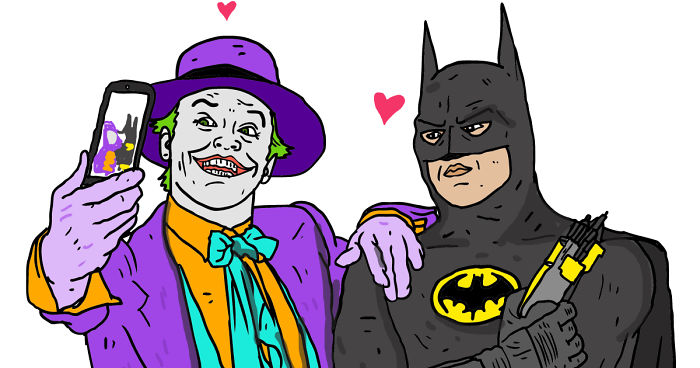
(image respectfully borrowed from Nick Cocozza’s amazing “selfies” series)
F*&k yeah, I just copied and pasted another great blog I wrote on Character (sorry for using F*&k in the first sentence, Mom). But if you haven’t followed me from the start you might have needed a reminder and I needed to work on some other projects. So… Ladies and Gents, enjoy Part Deux of Character.
From the dark, cavernous recesses of the author’s twisted mind springs forward all sorts of nasty and derelict creations.
Okay, that’s a touch overdramatic.
Frankly most writers will begin by creating a story from people they know or have read about. Sometimes we do it without even realizing it. Characters and personality traits that we admire, or equally cringe at, stay with us in that sometimes-twisted-but-always-magical realm of our subconscious. Realism in characters is important because it adds to their believability and with that, their ability to connect with our readers.
Why is it so important to connect your character to your reader?
We are a society of channel flippers, of instant gratification lovin’, drive-thru eatin’, convenience hounds. We have the attention spans of goldfish. If you can’t connect your readers to your character through the common ground of sympathetic and universal traits they will put your book down. And often, when a book lands on the nightstand, it never gets picked up again.
I shudder to think how many amazing stories were lost to the underside of the coffee table.
If your reader can’t identify with your character in even some small way, they will cease to care about that character and will not follow them, no matter how interesting the story is. The human element is very important.
So along with grabbing them from the beginning with an interesting and challenging first scene, you must hold your reader to a character that they care about, either because they relate to them, or because they are fascinated by their darker side. Their traits and foibles make your readers want to know what’s going to happen to them next. And that keeps them reading.
In the ignorance of youth, I used to think that my character could be anything and do anything. They could be perfect because I was building their world and I could make them flawless. They could be smart, and athletic, and beautiful, always saying and doing the right thing, always in control of their situation and aware of their future. (In the business we call these characters “Mary-Sue”s or “Sunshine Sallys”).
Snooze-o-rama and eye-roll Central.
Nobody, and I mean NOBODY, wants to read about some pristine person who’s practically perfect in every way.
For one, we don’t need perfection rubbed in our face. We get enough from the glaring social media machine. Secondly, a character that always says the right things, does the right things, and looks like a supermodel is not challenged and if they are, they do not fail. Characters that never fail are unrealistic, which means they cannot relate to the nerdy girl in her frumpy sweater and ripped jeans, curled up with your book (Yep, that’s me I just described). And what happens when that person doesn’t relate? The book is given a good chuck over the shoulder with a hearty ‘Good riddance’.
So make your characters dirty. Make them tarnished and worn. If they have to be beautiful, make them fundamentally broken somehow inside. If they are self-assured and intelligent, give them an outward physical challenge that hinders them. When a reader sees your character fail, they see the humanity within their own failures. More importantly, when they see them overcome the faults that stall their growth, they feel hopeful for their own path. They follow that character. They root for that character.
*In an amendmentto this section, I would like to say, due to the overwhelming lack of Mary-Sue characters these days, they’re actually a bit of a phenomenon. So, if you must create a Mary-Sue, own the hell out of it. Make them so staggeringly perfect that its almost comical…or otherwise interesting. Think of the person with extraordinary good luck, that can’t do wrong, even when they try.*
As a beginner writer it’s tempting to live out the life you wish you had in your pages, and it’s okay to write those ideas down. But keep those rarities for yourself. When it’s time to write an amazing story for the world, give the reader a character they can root for.
This advice is straightforward for developing the protagonist’s character traits. But it’s equally important to give this attention to your antagonist.
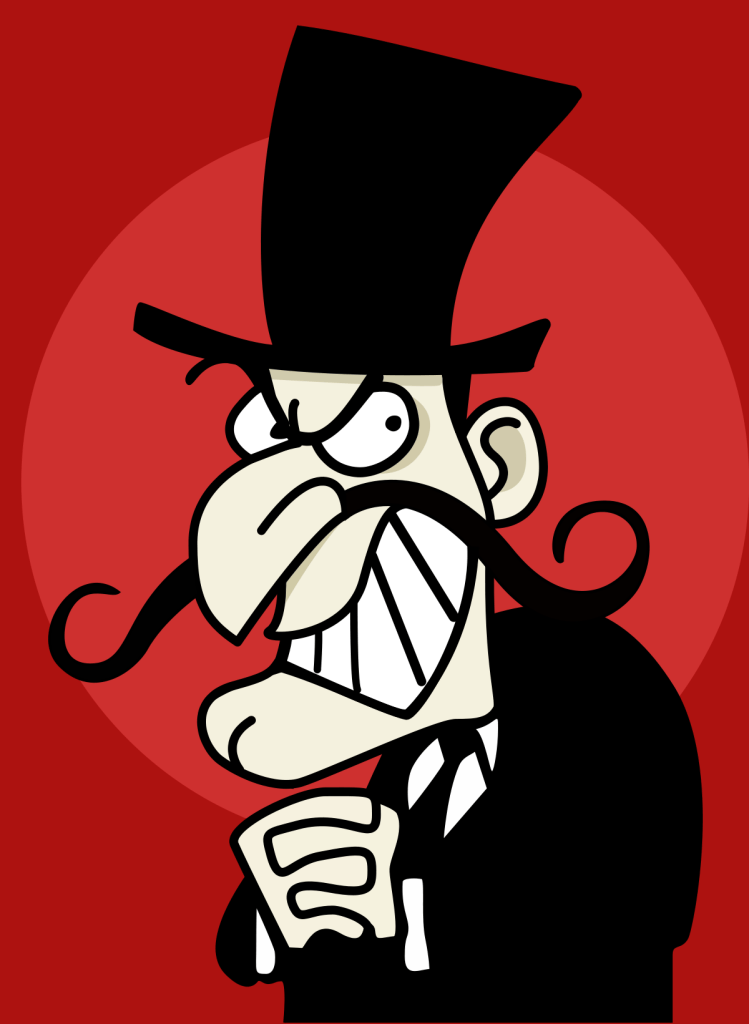
Something tells me this guy has rope, a damsel, and a train to catch
No ‘good guy’ is all good, and no ‘bad guy’ is all bad. Even the worst ‘bad guy’ has to have reasoning in his actions. They must have something that drives them, and it has to be something we can understand on our basic human level, even if we don’t agree with it.
Having even a slight sympathetic response to an antagonist builds tension between the characters and gives your reader the nail-bite reaction. The opposing forces both come from places that can seem justified and ‘right’ in their position, which makes the battle all the more important on both sides and the outcome so much more brutal or celebratory.
This week’s exercise is to take a hard look at your characters. Do they have some baseline, deep-rooted faults? Are these faults causing interesting and plot-driving stumbling blocks? Are they loveable, and a little bit annoying? Are they dangerous, but still broken?
If you find that they’re not engaging enough, throw in a life-changing event into their past and rewrite them based on their new fault. Divorce, fire, murder, car accident, illness, or the loss of loved one can be good ideas to play with. Take away one of their defining traits and replace it with its opposite. Nothing you play with is set in stone, it’s just a way to grow your character’s depth and help you to know them better.
If you’re looking for a good reference, one of my favorite books on the subject is Writer’s Guide to Character Traits by Linda N. Edelstein, PH.D Writer’s Guide to Character Traits.
Good luck out there, kiddos. I’d love to hear if this helped you out and how!
Good morning, writers! And a happy morning to you (or afternoon, or evening, whenever you tumbled out of bed–or back into it and are catching up on your bloggers). This week, in exploration of the novel, we’ll be talking characters.
I’m telling you now, because contrary to some reports out there, I’m not a complete idiot. A while back I did a decently in-depth study of character and I’m using a lot of that for this post. After all–the quicker I get the blogging part done, the quicker I can get back to my own novel and the characters I’m currently developing.
So without further ado– recycled Character Development:
Since character development is one of my favorite aspects of writing and I thought I’d pay homage to it’s process in a two part post.
So first, let’s address where characters come from.
I’ve had characters come to me in dreams (day or night), sometimes they’re inspired by true stories from news that I trip across. Sometimes they spring from hazy memories of a childhood friend, or the curious behavior of the neighbor across the street who steals decorative rock from the common area and smuggles it away in her purse. Any one adept at studying human nature and observing their fellow human beings can get inspiration simply from watching what our nutty human brethren do (and don’t do) in the course of their day.
Often, though never in their entirety, I write from people I know. By this I mean people I know both casually and intimately are good places to start for characters.
Although real people can help jumpstart the process, they rarely become the character in the final draft, and here’s why.
For one, it would be creepy (and, depending on the story and topic, possibly slanderous) to write about an actual person from your life, unless it is a memoir of said person and they are asking you for your help. Ethically, a writer looking to publish or share their work with the world must adhere to certain rules of respect and common decency concerning using the likeness of other people. That being said, you can (and should) borrow personality traits, history, and physical attributes that enhance your character’s believability, without putting someone’s life down, verbatim, on your page.
Secondly, even when based on someone you may know, something magical will inevitably happen when you put a ‘real’ person on a page and shove them into a conflict (the driving force of your story). Under the demands of a proper story arc, the character you began with will be forced to shift and evolve into someone else. You don’t know how your character will behave in an apocalyptic dystopia and the situations and decisions that they are faced and make will be a magical combination of what the author dreams up spontaneously, the character’s history and what the author needs them to do to move the story forward.
For example, Joe Smith may start off looking like your high school biology teacher but if you write him exactly as he was, including is normal day to day, your audience will be too bored to stick with his story.
Now, if you put the body of an alien in the school science lab’s freezer next to the dissected frogs, Joe Smith, your old biology teacher will automatically become way more interesting. And as he does, he will move away from the real person you started with and morph into a different character. A man of his own, alien-hiding, design.
They double-dog dared him.
A writer can tweak, correct, enhance and play with personality types, turning one, real-world person into a completely different but still realistic character. But it’s important to keep the relatable aspects of the initial ‘muse’, including the physical attributes that you can describe in realistic detail, or the personality types that can be explored in depth from a place of personal interaction.
What can be left behind are names, exact and undeniable physical description (don’t be a creeper) and any ‘boring’ or typical parts that may be cliché or expected. The character will change to be their own person with the natural progression of their role and development within your story.
The other method of character development is to begin with a story and let your mind follow the natural path of who lives it. This is one part plot-driven creation and one part spontaneous combustion.
An atomic bomb goes off, a virulent disease hits the population, a train switches tracks, a car runs through an intersection, an alien shows up in a freezer.
Start with an event and ask yourself; who would it affect most? Who stands to lose or gain the most? Who is equipped to deal with the situation? More interestingly, who is least able to cope with it and how do they survive?
Characters will find their way into your mind. They may look and act like someone you know or they may have a mind of their own. As a writer you will find that as your plotline advances the character will become less and less your creation and more a product of their history combined with their destiny.
We all have these personalities in our heads that sit dormant on the shelves until something shakes them loose. Most writers, (yes, I’m saying it) are a little bit schizophrenic. We are geniuses of introspection and observation. Humans are interesting and a good writer will watch and learn from their interactions how to build characters that could be a best friend or a worst enemy in their reader’s own world. They talk to us as we write their paths, they argue when we move too far away from their true reactions. They trip us up by throwing random but necessary bits of history our way that we hadn’t considered for the bigger picture. It’s maddening and magical all at once.
Next time we’ll talk about developing intricate characters and some tips I’ve picked up along my journey to make them somebody your reader’s will root for, love, and hate. Until then, take a few minutes today to think about some characteristics that you love and loathe in human beings and think about why they draw your attention.
Make a list of character traits that are interesting in both beneficial and detrimental ways.
Also, feel free to write or comment about your favorite characters, and if you’ve ever found yourself ‘accidently’ writing about someone from real life. Next time we’ll have an exercise on character development and I look forward to your responses!
Good Thursday to you, Writers. I hope you have a brand-spankin’ new plot started in your head from Tuesday. Moving from that amazing raw material I’m going to tickle your inner plotting nerd and give you a ‘graph’ of sorts to help you with organize a killer storyline.
-I love tickling nerds–
Last time we discussed ways to help create a basic plot for your novel idea, today we’re going to outline the beats, or arcs, of that story. If you remember from my handy-dandy, bulleted list on Novels, I list Arcs as being an important element. While this blog does cover some of the theory, I will do a more in depth look at crafting an arc that creates the perfect amount of tension.
Back to plot. Some of the best stories follow a pattern, or what I like to think of as a rollercoaster of ever-rising stakes.
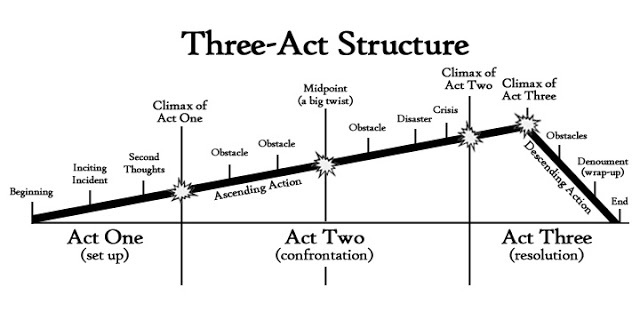
Most plots can be split into three acts. The Set Up (beginning), The Conflict (middle), and The Resolution (ending). Each of these acts should have some defined crisis or event which is like a doorway your character passes through and must either change, fight, or overcome more trials until they find resolution. I found this nifty diagram from David Harris Kline’s “Structure Lesson #2: The Three Act Structure” ( http://www.writers-for-writers.com/2017/11/08/structure-lesson-2-three-act-structure/)
As you can see the beginning has to hook the reader into a specific event, starting point, or character problem. Here’s where you introduce your character and show us who they are, what they want, what they are facing. Throw in some foreshadowing and Bam! You just met a small-town farmer from Tatooine.
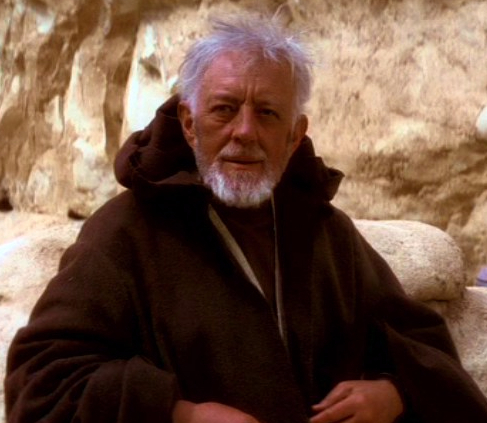
Act II comes with something that disrupts their normal day to day. (Holy shit, this droid has an important message from the Rebellion!) The character is forced to make a choice (wipe the droid’s memory or try to get the message to old Ben).
Real, live image of me during quarantine.
The middle, as most of us know, can be a bitch to write. This is where the dreaded doldrums hit. The quagmire. The swamp of eternal despair. I’m not going to get too deep into that swamp today except to say that this is where plotting can really help build a bridge across the muck and help your character get to that final, defining climax. This bridge is paved with different obstacles and trials that keep the action and the tension going through out. (Scruffy looking nerfherders and tough-ass princesses, oh my!)
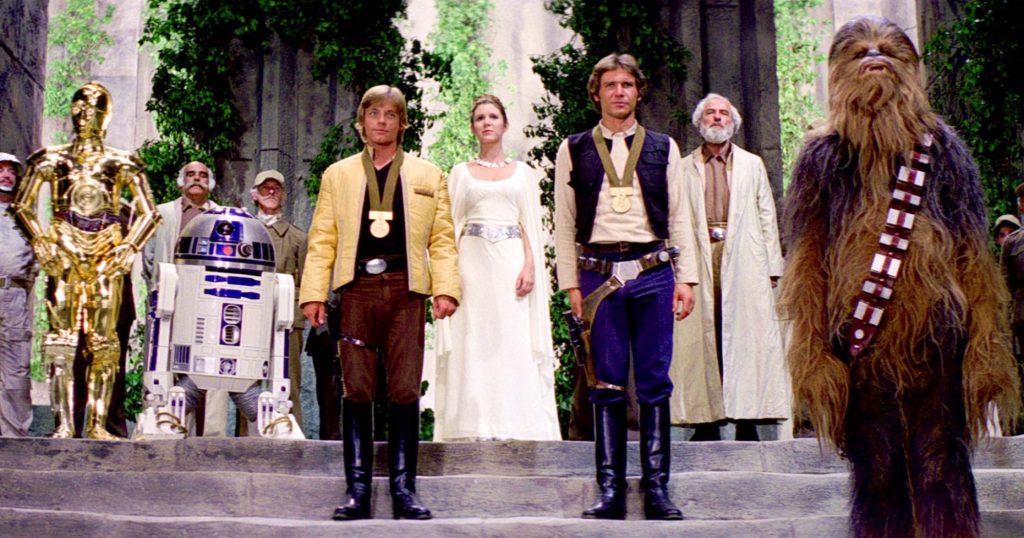
Then, finally, as our hero/ine comes through that final climax (for better or worse) we witness their transformation or acceptance of who they are or what they need to do . The final act is where you tie up your loose ends and give the audience the resolution they’re seeking. Like giving a Wookie a medal.
Wait a goddamn minute…where’s Chewie’s medal?
Well, that’s pretty much all I wanted to cover on plot for this time around. Next week we’ll be talking about one of my absolute favorite aspects of writing: Characters.
Until next week, diagram your plot, think about what events, scenes or characters you can inject to get those bursts of conflict. Think about what your character wants and what obstacles stand in the way of that. How does overcoming them move them/change them for the next bump in the road?
Good luck out there, and may the Force be with you.
Can you believe I couldn’t think of a more creative title? Me neither. Some days are like that. Remember, this is geared towards beginning writers, so most of you long-in-the-tooth novelists may not get the same bang for your buck. But…there are a lot of sexual innuendoes. You’re welcome, or Sorry.
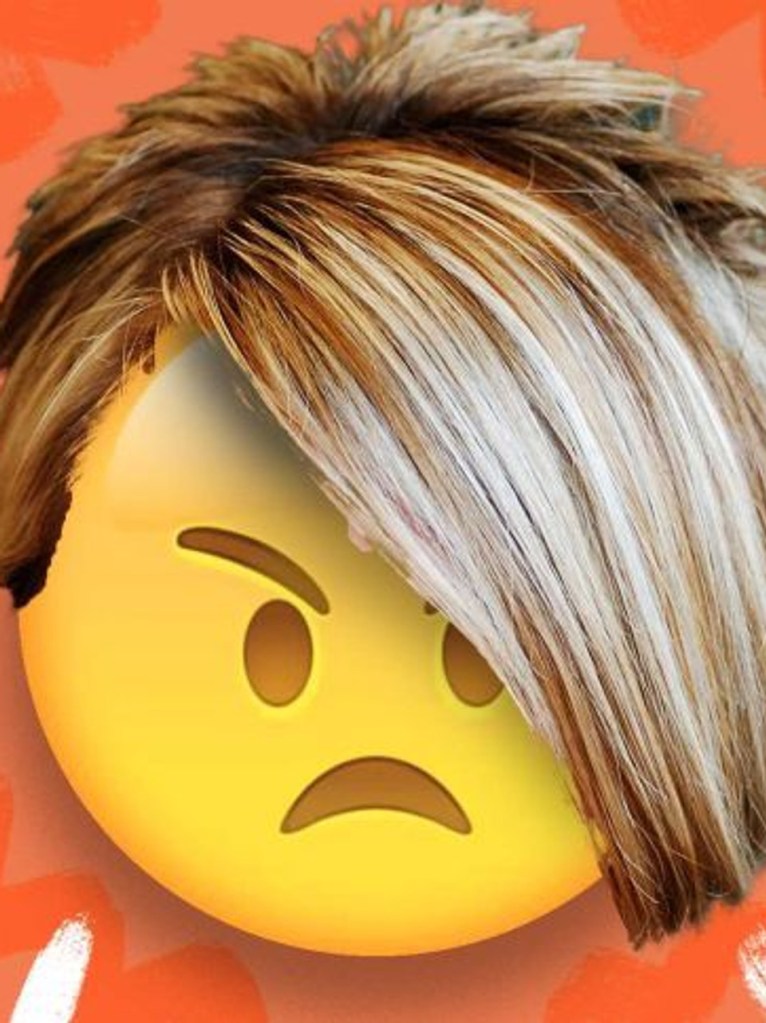
Today, I’m pushing through and rehashing an old, but viable post. Remember? Before the fucking world turned upside down and Elon Musk became president with Absolute Power? Yeah…those were good times. Let’s not dwell, you can call your congress person again (you’re calling right?) and attend those protests (you’re attending right? This IS the time to be the MOST KAREN you can KAREN–see below for my favorite emoji of the species) after this short and entertaining jaunt into PLOT. We’re getting into the meat and potatoes of writing a novel, and this kind of thing needs space. So, without further ado…
What is Plot and Why is it Important?
All right, I get it, it’s a dumb question, we’re all writers and we all KNOW that plot is the basic structure and story of your novel. It is the idea. The “what happened”, and why, and “what’s going to happen next” of any decent story. I’m not trying to dumb it down for you. But the true test of a good plot lies in the simplicity of answering those questions.
Now, you can have books that are character driven (an event happening TO a person, or BECAUSE OF a person). And you can have books that are historical non-fiction, based on one specific moment in time or occurrence. The PLOT of your book expands more than just beyond an event (otherwise The Hunger Games would have been maybe 50 pages long). The plot is the premise or sequence of events. Some novels will follow a very specific order of events that are common to their genre, or as we like to call them tropes. Tropes comes from the Greek Tropos define as “turn, direction, way” and refers to common, recognizable elements or sequences of events.
Many genre specific tropes (I almost prefer ‘formulas’) are embraced by the audience and even expected. Examples include: “the hero’s journey”, “enemies to lovers”, “small towns”, “cold cases”, “missing persons”, “AI gone wrong”, “fairy tale retelling”. But if almost every novel follows a plot formula how is it #1, that readers don’t get bored and #2 that you tell an original story that hasn’t been done before.
It’s an interesting dilemma on the part of a writer. We know which formulas work in fiction and straying from them often makes a plot fall apart or leaves a reader angry or unsatisfied at the end.
(She’s gonna want to talk to your manager)
But how do we follow commonalities in plot structure and still make it a fun, captivating, and surprising journey for our readers? The answer my friends, lies your ability as a writer to do five things: (Fuck Yeah! A bullet list!)
Begin with a unique event or crisis. This comes back to the “scan the headlines” exercise I’ve had you do before. A lot of weird shit goes down in the world. A lot of undercover, shady AF stuff too. Use it as a springboard, to your “what happens then/if” story building.
Tie the reader to your character (through love or hate) and make their reactions to events unique or contrary to the norm. (ie a cheerleader who fights vampires. A small town farm boy who becomes a powerful Jedi. A teenager who comes into supernatural powers without the maturity to handle them and doesn’t use them to download free porn–come on….or *snicker* cum on? Oof, sorry. Uncalled for. Please keep reading, I’ll behave.) Character building will come later in this series but if you create unique ones, their actions will create new takes on formulas.
Use honed writing technique to build tension for climaxes. Yikes, that sounds dirty and here I promised to be good. Tension is one key to making a story more than just series of events. So much of this depends on your voice and writing style. But the big take away here is about risk. Making the risks personally huge for your character, and even the world at large, will keep the plot fresh and drive it forward.
Play with the number and intensity of climaxes (story arcs). I think I’ll start using story arcs (some prefer ‘beats’) because every time I type climaxes I can’t stop giggling. Ok. Story arcs are BIG deals in your plot. Think of these as door ways, crisis-points at the top of your arc, that your character has to move through in order to get closer to what it is they want/need. Once they hit that doorway, or crisis point, they can’t go back. A serious change has occurred either in the setting or with-in the character and they must move forward. Next blog will be all about these arcs so I won’t go into much more detail here.
Consider using unexpected but intelligent twists. The best movies and books I can think of that do this are: “The Sixth Sense”, “Fight Club”, “Gone Girl”, “Mind Hunters”. What better way to shake up an audience than by having them accept one reality for the entirety of the story, only to show them the true reality at the end.
All right, so there are some tips for building an effective plot that carries readers throughout the book. My advice to you this week, is to explore various tropes and patterns, especially those in your genre. Turn a piece of paper (landscape-style) and write out the typical pattern of your story, then overlay events and characters of your proposed idea. See how they match up, see if you have enough tension building scenes, just play around with it. I’m not much of a plotter myself, but even I will do a general outline to keep myself on track and make sure I’m building a solid plot.
Next time, more on story arc, how to climax well (*snork*), and end satisfied (*hahahahaha). Until Thursday, happy writing.
Hey! You’re in the homestretch, and whether that is a cause for rejoicing or a cause for panic, it’s still your last week. Below are some thoughts. Remember to send me your email along with comments and stories about how its gone so far, what you’ve learned, what helped, what didn’t, what you’d do differently, or if you’d ever do it again. I’ll put your email into a drawing for a Writer Care Package, stuffed full of lots of useful goodies that every writer needs.
Here’s your final week pep talk.
Good morning!
For those of you who’ve been following me through the month of November, this marks the final installment of surviving NANOWRIMO (National Novel Writing Month). I’ve been flowing with a life-stages theme, and had intended to title this week “Retirement” but the thing with NANO is that only some of us will spend the last week resting and reaping the rewards of a month packed with hours of dedication to your project. A lot of us will find this final week to be the last, desperate attempt to finish.
So this brief post is for those who are struggling through the last four to five days to make up those words, or at least push to do what they can.
I hope, more than anything, and even above the lofty goal of 50,000 words, that you are still trying. That you haven’t given up. That you have built a habit of writing so that you don’t feel complete in your day unless you’ve spent at least some time on your work.
Because, that’s the whole point. This month is more about teaching us to prioritize our lives to include our writing first (or at least at the top of the to-do list) and to know that we CAN accomplish great things when we give it the time and love it needs. It’s more about building the habit of writing than it is about reaching the specific goal.
So often in our lives we self-limit. So often we are told it can’t be done, we can’t, the work is too great, the effort pointless. So often we are told that struggle won’t be worth the outcome. But those voices and those opinions fail to factor in that it is not just the outcome that is rewarding. The end result is not all we are working for. Its the journey in getting there.
When we challenge ourselves, the bigger reward lies in the struggle. New ventures, hard and thankless work, and lofty goals teach us how to plan, how to plot, how to push ahead when we simply don’t feel like it or when others around us question or scoff at the ideas before us. Challenges shine a light on how amazing and resilient we are so that, no matter the outcome, we learn what we are capable of. And once we know what we are capable of, the bonds of doubt weaken and we begin to believe that if we can write a novel in a month, we can edit it, publish it, write another, and another, and another. And if we can write a book we can take a class, or teach a class. We can climb a mountain, we can travel across the world. We can do anything we set our minds to.
We can.
You can.
You’ve only got a few days left in this month and I BELIEVE THAT YOU CAN do anything you’ve set out to do. You are amazing. You are imperfectly perfect and there’s no one in the world who can finish this month the way you will.
Deep breath, writer. Don’t let the home stretch scare you. Let the struggle instead be your gift and one which you are grateful to work through. You can. You will.
It is that magical time of year again. That time where my blog posts get shorter, the house falls into disarray, and herd of cats goes unfed (not true, if it’s one thing that can take me away from my writing, its the screaming protest of two obviously starving felines).
National Novel Writing Month is upon us. In four days time, I hope you’ll be joining me on a journey of creativity, self discovery, and frustrating obstacles to overcome. Much like a marathon, NANOWRIMO is not just a test of the word count, but a test of your mental fortitude. As in years past, I will be offering a short blog each week to help inspire you through the process.
But this week, I want to help you get ready.
First, commit to the process. It’s daunting. It’s scary. It’s a mountain of words to conquer and so many people won’t even type the first ten. But it is also absolutely doable. It is within your reach, and you can accomplish it with a little hard work and determination.
Once you’ve decided to join me on the journey, go to this website: www.nanowrimo.org and register. The website has come a long way in recent years and provides opportunities to connect to local groups, online communities, offers articles and tips, fun little badges to click on as a way to motivate you, places to download your own inspiration (photos, pinterest boards, and playlists), and encouragement for every stage. Answer some of the questions, create a profile, and just set it up as detailed or as sparsely as you want.
Next, and I would recommend this, whether you’ve been plotting and daydreaming about this novel for years or the idea just hit you yesterday morning on the toilet…make yourself a rough outline. If you’re not sure how-search outline or plotting on my blog website and it will take you to some great articles on how to get started. I recommend at least breaking your novel into three arcs and giving a general timeline of what happens within each. This will give you direction if and when you start to falter.
Next, look at your schedule and decide when your most optimal times for writing are, and put it on your outlook or calendar as a ‘meeting’ or ‘appointment’. Don’t let it get taken over. Reserve the time so you and your family/work partners know you will be busy.
Make sure you take creative breaks (reading, watching a show, painting, whatever) and physical breaks (walks, runs, stretching and yoga, naps etc) to keep your brain fresh and engaged and your body from being too stiff or jittery.
Stock up on snacks, coffee/tea, and water. Stay hydrated and healthy, and if all you have time wise for writing is night, make sure that you’re still giving yourself plenty of time to sleep. All in all, it’s only 1667 words a day you need to write. But some days it will feel more like 1,600,000, so do what you can to control the outside forces and story blocks that might make the process harder.
That’s your homework for the next four days. Get prepped. Get ready. Get set to go. You’ve got this.
Hey kids, just a quick little catch up blog to let you know some things going down, and give you a heads up for some events. Also–A poem.
First, a huge thank you to Bookmarked Literary Festival in Lander, Wyoming. The organizers, sponsors, and community made it such a memorable and fun event. It’s a beautiful thing when readers and writers can come together and share their joy of literature and their support for all voices. I was so impressed by the participating writers and poets and the new voices and fresh perspectives I heard.
If you don’t have a festival like this in your town, talk to your librarians and local writers. Now, more than ever, we need people who love books and the people who believe in reading them instead of banning them. No one who ever banned a book, in the history of the world, was on the right side of things. And as writers and readers, it’s our duty to protect the free flow of ideas to be written and words to be read. Free will gives everyone a choice as to what they read, we have no right to take away the choice of someone else.
Um…what else? Oh! I have some books coming out!
Composing Laney It should be up for presale soon and book signing dates will be forthcoming. I also have a new saccharine holiday short called Rewriting Christmas with Kerrie Flanagan. If you like Hallmark and a bit of my snark, you’ll probably like it. I’ll be posting the cover reveal soon on that one. I have a new Vella out The Three Hearts of Eve which is a quick-reading adventure into the perils of genetics, assassins, and free will. It’s about to heat up, so don’t miss out. And remember the first three are free!
As always you can find my other novels, poetry anthologies and writings here on the site, at Amazon, Barnes and Noble, and 5 Prince Publishing.
The LAST thing to announce is that my Youth Writing group will be participating in an Anthology due out in 2024. These talented kiddos are learning the ropes from writing to publishing and everything in between. If you know a youth who wants to be a writer (or is one), between the ages of 12-17+, send them the link here: WHWA Youth Writers. We’re still in need of entries for the anthology that will be published in May or late June. All writers will be paid for accepted submissions, and any proceeds from book sales will go directly back into the youths’ writing group for supplies, trips, and conference fees. It’s free to sign up with the youth program and there are no requirements except to enjoy the writing and be kind to one another.
Whew!
And now… Poetry
You Needn't

You needn't worry about me anymore
I'm quite moved on
without you

I've folded up my broken heart
and stuffed it in a drawer
with all my too tight sweaters
and kindergarten art work

things once mine
that do not fit any more

You needn't try to pretend we are friends
or play my sympathies
with your most recent tragedy

I've washed those away
with the news of your betrayal

down the drain they spiraled
to settle in the dark and moldy pipes
where such sympathies belong

You needn't worry for me anymore
I am an empty vessel
properly left to collect dust
on someone else' shelf

a picture of once beautiful,
chipped and worn
and waiting for something worthy
to fill me up again.
I’m not one to go seeking out hot-button issues, but the truth is when we don’t address underlying, systemic problems of all the ‘isms’ in our culture (from government programs, to housing applications, to writing fiction–) they continue to hold power over and harm other human beings. So, I’m discussing today how we, as writers, can be not only sensitive to the characters we create but the effects of their existence on our world. After all, stereotypes exist because we fail to see them in all the subtle ways they permeate our lives. As ethical and compassionate people, we should work towards burning down those untruths as much as possible, even in our own work.
I’m not going to stand on a soap box and preach without starting with myself. I’ve probably, in my ignorant and un-learned past, created characters that simplified the complexities of a human into certain traits. I’ve tried not to. I tried to craft my characters as strong, independent and powerful, more tuned to their personalities than their physical traits. But there were still subtle things, I wasn’t even aware of at the time, that filtered from my limited white experience. As I look into rewriting this character, I am constantly questioning how I can do better.
We all should. We owe it to the character, to the reader (and to the world) to examine our writing and go forward with an eye to our own hidden (and not so hidden) biases or ideas.
The best advice I can give you is to strip yourself of any cloak of magnanimous “equality”. Start by reading some real, hard to stomach, but necessary soul-exploring books on the complexities of race and gender equality, the reason systemic problems exist, and how we can best eradicate them. Talk to people from every background, attend classes, lectures, and forums, open discussions of others’ experiences. Do it with an open heart, and a willingness to accept your part in the system. Have the dedication to do something about it.
When we are invested in writing characters different from ourselves (race, gender, religion, sexuality, age etc) one of the best things we can do is RESEARCH. In the expansiveness of the Internet, so much good information, written by diverse voices, can be found. The ones most important (and really the only viable ones) are those written in their own voice, about their own experience.
I also encourage you to talk to as many other people of all walks of life as you can. (And not just to research for your work…do it for the benefit of your humanity and compassion.) While I DO NOT advocate for you turning your ‘one black friend’ into your go-to for all questions about a diverse, varied and culturally rich part of our world (it’s not their job or duty to educate you), don’t shy away from respectful and honest conversations that come up, especially when they happen from immersing yourself in different situations and events from a standpoint of open mindedness and learning.
Above all, when you are writing diverse characters DON’T, for the love of god, assume that by describing their skin color/religion/orientation that you’ve described their character in total. DON’T stereotype them. DON’T include diverse characters just for the sake of checking off a box.
DO make them unique to their upbringing, their experience, and their situation. DO describe all of your characters equally and in rich and expansive ways.
I’ve always believed that good storytelling is universal. And in our connected and dynamic world, it would be a shame to only write one kind of person. But care for your characters and the people they may or may not represent. Here are some good resources that may help:
Hello! Thanks for taking the time to catch up with the blog in the middle of one of your (hopefully) busiest writing months. At this point your mind set is probably so swayed to creating that reading outside of your work in progress is a lot like talking to another adult after being seeped in toddler-speak non-stop all week.
I know that your time is precious so I’ll keep it short and sweet. (Like me, ya’ll)
The second week of NANOWRIMO is all about elaborating on, fleshing out, and developing your baby. Last week we talked about the excitement of new love, the honeymoon stage of writing, if you will. This week is about the baby you’ve made and what that means for not just your writing, but your life for the next seven to ten days.
I know a lot of you are parents, and though it may have been awhile since you’ve spent the midnight hours rocking teary-eyed cherub back to sleep, chances are you remember the sacrifice of time and autonomy for the good of the future. This week is not much different for the NANOWRIMO process. You are starting to see the commitment involved and how the expectations you may have had in the beginning are often dashed by the realities.
Because children don’t always behave the way you think they will. Characters show unexpected traits and say things that throw your dynamic out of whack like dropping the f-bomb at Christmas dinner with Grandma, or asking you for “boob!” loudly in a store.
Settings and plot lines stall with the same debilitating frustration as trying to get a two-year-old into shoes because you’re late for the doctor appointment and you haven’t showered in three days, and you ate cold, leftover mac n cheese for breakfast and you’re not sure if that’s their diaper that smells or the dog…
Keeping on top of the little fires that come up isn’t easy but I encourage you to set a flexible schedule (it works with kids; it works with writing). Give yourself two hours ideally but really whatever you have is fine. Leave half for just writing. Leave the other half to fix plot holes, develop your character’s personalities and backgrounds, build on your story arc, and brainstorm solutions for things that are cropping up as you pour ever more work into the novel. Look at it like doing the groundwork of, feeding, changing, and burping for half of it, and the other half cuddling, coloring, singing, and playing.
A well rounded “story” is equal parts meeting the basic needs and getting to play in the creation of it.
Good luck out there. Nap when it naps, grab a shower while your computer backs up. Drink some coffee and prep for the long nights. Remember the bigger picture. Novels and babies are investments in the future. The work, and love, and committed care you invest now will lead to rewarding results in both your story, your characters, and your craft.
Oh…and get a decent meal. You can’t run on PB&J crusts and half eaten apples forever.













 Sarah Reichert Author