Creativity and The Writer: Part 2

Hey kids. If I hadn’t mentioned it before, a lot of what I’m talking about this week (and last) I learned from a great class at the Wyoming Writers Conference a couple of weeks ago with William Missouri Downs, a screen and play writer with years of amazing experience. If you have the chance, check out his work. His class has been on replay in my mind so I thought I’d share the good stuff.

Last week we did a little basic housekeeping when you’re trying to foster a more creative life. This week, we’re going to go a bit deeper into what creativity is and why, sometimes, it can be hard to grasp.

First of all, creativity is not something you’re generally born with. There maybe certain individuals who seem to have an easier time being creative, but for the most part, anyone can become more creative. Because, at the root of creativity, is the ability to open your mind to new possibilities and new solutions, and that starts with a few things:

  1. Be curious…about everything. Read articles and blogs on anything that grabs your interest. Give yourself space to wonder and research, even if it’s about the mating habits of the Pygmy Sherbert Moth of Southern Cambodia. Learning about different and strange things will actually help your brain spark ideas and forge connections that you might not have before.
  2. Learn how to concentrate. It seems counter intuitive that creatives are able to sit and focus for long periods of time (maybe its that stereotype of the flighty artist, flitting around the room on several projects) but being able to concentrate, uninterrupted, leads to alpha states which leads to ‘flow writing’. And it also keeps you working at a problem until a reasonable solution is found. Think of it as mental stamina, and we all could use more of that.
  3. Set aside time for your art and PROTECT YOUR SOLITUDE. I don’t think more needs to be said, except that it also means being able to be alone, and creating boundaries (even with the people you love) to protect your writing space. When people in your life ask what they can do to help, be honest and ask for alone time to write and create.
  4. Look for options long after others have given up on a problem. Explore all angles and possibilities. Even the ridiculous and absurd solutions–find those and play, because one thing may lead to another, to another, eventually to the right thing. Whether it’s a plot hole, or a crisis resolution, be open to the strange and impossible. Being stuck is an opportunity to do something different, to get your head completely out of the box.
  5. Take chances and accept failure as part of the process. Failures lead to knowledge and knowing you will fail means you take every opportunity as a chance to learn more about what works and what doesn’t without judging it or yourself too much. Safety is not a place you learn anything.
  6. Have several different interests. Yes you’re a writer. But you’re also a yogi, or a bat tamer, or a bee keeper or a circus performer. Spend time learning and growing in as many places as you can. We should all actually strive to be Jacks and Janes of All Trades. After all, the whole saying is that “a jack of all trades is a master of none, but oftentimes better than a master of one.” This goes back to making those strange and creative connections between things and solving problems outside of the normal lanes of knowledge.
  7. Be persistent, write every day without fail. Meet your deadlines (other people’s or self-imposed), without fail. Yes, yes, I know there’s a lot of writing advice out there. And some people don’t write everyday and they’re perfectly happy and successful. I think writing everyday is not so much a direct line to your success in the field, so much as it’s an investment in yourself and a way to give back to your time, your space, and your own sanity.

There are plenty of exercises you can find in books and online to help boost your writing creativity but the habits above will help you cultivate a lifestyle where your brain can do what it was born to. And that’s, create.

Be willing to throw outrageous suggestions and ideas up on your board and not make judgements. Free flow new ideas out on a page without looking back as they land. Then give yourself an hour or a night and come back to it. Even if none of them seem viable, they may lead to different avenues that will be your next great idea.

Well, that’s the short, short version. I hope you have a creative week and feel free to email me here on the site if you have any questions or just want to chat about writing.

Good luck.

Creativity and The Writer: Part 1

Feels like that could equally say, “Beauty and The Beast”. So many ideas of what creativity is exist. Is it limited by IQ? Is it genetic? Does it only happen at given times or is it always on the bench, waiting to be put into play? Do some people have more of it? Does it dry up?

Often, as a writer, I’ve asked myself all of these. At times she has felt like a constant companion, whispering ideas and daydreams into my ear. At times, it feels like I’m alone in the middle of a lifeless desert, not an idea or a breath to take. When the good is good, ah they high it brings. When she’s nowhere to be found, there’s not a deeper low. And sometimes it feels like some writers are blessed with a giant bag of it, that they can’t possibly use in one lifetime, while mine is just an empty plastic bag, with a hole in the bottom.

I know many things, physically, can affect your creativity so I’m going to start there. Here are some basics you ought to know:

  1. You need sleep. Sure, sleep deprivation can give you some really interesting half-cocked (i just wanted to use that word) ideas. But they’re rarely fully formed enough to make much out of, especially once you’re coherent enough. Get sleep. Your brain needs it to problem solve, and that’s a HUGE factor in being creative.
  2. Don’t treat your body like a circus tent. Eat good foods, vegetables, lean and clean protein, drink water, watch the sugar and the processed foods. Limit the caffeine (see sleep more). Vitamins, nutrients, and minerals all help to keep your synapses firing correctly and your brain clear.
  3. Cut back the Alcohol. I’m not ashamed to say I struggle with this one. Its in my genes, and I have to be very conscious about it. I’m actually taking steps towards sobriety. One glass of wine softens my brain enough to let go of my anxiety and words seem to come easier. But I’m not the kind of person who can stop at one glass usually. Because if one feels good…two would be great right? And why not a third? And pretty soon you can’t even see straight and the brilliant ideas of last night that you scribbled down are incoherent the next morning. Creativity works better with Clarity.
  4. Exercise. Might surprise you to know that the old brain needs oxygen to function. How does it get that? Through our vascular system. Want to have a healthier vascular system? Exercise. Not only does it increase your oxygen level and hit you up with a tasty dose of endorphins, it gives your muscles, joints, and tendons a lot of love and attention. I don’t care how you do it, (bike, run, walk, lift, yoga, pilates, belly-dancing, martial arts) just do it, at least 30 minutes a day. Bonus points for doing it outside.
  5. Take time away from your screens. This one is going to lead into part 2. We are an overstimulated bunch of hairless monkeys. My goddess, did they do a number on us the day social media was invented. Here’s a little hit off a fake feeling of mattering. Now get twenty thousand of them a day while you scroll through nothing but recirculated and watered down ideas. Nothing original, nothing too insightful, and please feel free to stay in your designated echo chamber. I truly believe these systems, algorithms, AI and the entire corporate conglomerate of Meta is one of THE BIGGEST creativity killers ever known to humans.

So, that’s the beginning, taking care of the basic human needs that create an environment conducive to creativity. Think of it like a garden. You can’t grow anything in a dry and poisoned patch of dirt. It needs all the good stuff to begin a healthy bunch of ideas. Next week, we’ll talk about a little more about what creativity is and what it is not, and you’ll get another good list of ways to cultivate it and use it in all aspects of your life.

Happy writing!

Listening to Our Characters

Good morning dear readers and writers. First, may I offer a huge thank you for all the comments and encouragement I received from the last post. Writer’s know what it is to get bogged down in the process, and no one is better at pulling you up from that dark, dusting off the weight of the little failures that cling to your shoulders, and giving you a gentle but determined shove back up on the road. So thank you for your advice and encouraging words. They mean a lot.

Between that last blog and this one, I was lucky enough to take Todd Mitchell’s workshop on Creativity. I’d been to a few of his classes but this one seemed serendipitous. I knew I needed to start writing again, a novel. A big project to immerse myself in, and I have a beautiful trio sort of dangling between first draft and not quite done currently on my computer. I love the second book, and that’s obvious by how close to done it is. The third, similarly has pulled me in and I’m enjoying working through the rough patches. But the first. Ah…the first. Kind of the keystone in a series…well…it’s a piece of shit.

And it took me a while to really figure out why during rewrites last year. The main character had somehow taken on the dreaded Susie Sunshine persona (probably because the concept of her was born many years ago.) So, I put her through a character-lift (like a facelift but for imaginary people without faces yet). She got a spanking new name and I roughed up her edges. But nothing in the story seemed to make sense and it felt like trying to force an incorrect puzzle piece into a million different holes that did not fit. What in the hell was wrong with her? I knew what she needed to do and the plot and arc of the book was solid.

But I didn’t believe she was the woman to live it. And I was stuck.

And then Todd said something about struggling with a novel for years until he finally sat down and wrote a letter to his main character and asked him “What is it you want me to know? What’s your story? What am I not seeing?”

For the average human reading this post, I’ve just solidified in your head what absolute insanity writers possess. What do you mean you ask your characters? You created them. You know them. That’s your brain.

But the brain is a tricky place, silly non-writer. It’s vast, and expansive and it has a million rooms we’ve never even found the doors to, let alone explored. And sometimes, characters and answers lay behind those doors. And the only way to access them is to stop trying to force the answer. (I’m planning a post on Alpha State writing so hanging in for that one). Answers com only when we calm the hell down, and sit quietly outside the door, letting go of our ego and our need to tell the story, and just listen to their story.

Sounds crazy. Absolutely, bat-shit, bonkers.

And it totally works.

I put on a meditative playlist, took some deep breaths and focused on her name. Her new name. Her newly rough edges. And I sat, with my back to her door and took some deep breaths. I closed my eyes and started typing. And I didn’t question or stop, or allow myself to think of what she was saying. I just listened to her.

Here’s what it looked like:

Hey Dani,

Hey Sarah.

So, I’ve been struggling with you.

Yeah, I know.

I want to create you

You can’t create me. I just am.

So who are you?

Wrong question

What is it you want me to know? What am I missing about you?

I’m dark.

You began so light and perfect

That’s not how the world works. Not for babies abandoned, babies with parents like mine.

What does that mean? Who are you?

I am Danika Brennen. I was left at a fire station as a baby. An orphan.

Who left you there?

A pregnant vagabond, disowned. My mom

Who was she?

An member of the High Guard,

kicked out

Are you ***’s daughter?

No, I’m Loki’s.

holy shit.

Now, I’m not going to give everything away, but that last thing she said…that was an answer I didn’t know until I let her talk to me. And it’s an answer that I can write a book from. That will help me, help her navigate through this story…to a better place. To a life she deserves. As dark as she thinks she is.

It’s crazy right? But talk to any fiction writer and I guarantee they’ve had some kind of experience with their characters talking to them, to each other, offering unwanted suggestions or criticism along the way. And yes, they’re all in our heads. But I think as humans we underestimate the expansive reach of our brains and neural capacity.

I mean what if they’re not just our consciousness, what if they’re wavelengths in a much bigger plane of existence that we’ve only just started to understand. The wavelengths and dimensions that only open to us, When we listen.

The Power of “What If?”

I know that I’ve written before about bolstering our creativity by keeping open minds concerning the direction our stories, characters, and plots can take. But in a world that can sometimes feel like a dark cloud over new ideas I think it’s important to revisit the power of a positive “What If?” in the way we approach our roadblocks.

We’ve all been in the middle of a down time in our writing and creativity. I know there are people out there that will preach that writer’s block does not really exist and you’re just procrastinating, or not wanting to put the work in.

While it is true that you’ll never write anything if you don’t actually sit down and write, trying to pour out a story (whether its 500 words or 100,000) from an overloaded, overworked, and over stimulated brain can be like trying to jam a king-sized sleeping bag into a twin sized sack. You know what I’m talking about.

There’s not enough room.

Some of the blocks taking up space may include fear (of failure and/or success), self-doubt, and perfectionism. These show up like the ghost in a Scooby Doo episode, unmasked to reveal depression, anxiety, imposter syndrome, and even ADHD.

So you’ll never hear me say that writer’s block doesn’t exist (and if I have claimed that before, I retract it). I believe that the inability to create can have very real sources that we sometimes need a dynamic team of teenage detectives in an ugly van to suss out.

Today, I’d like you to apply the two-word question to those moments of stifled creativity and see what happens.

Here’s an example:

“I have a novel, nearly complete, but you can’t figure out how to end it. It’s been on my laptop for a month and it’s driving me insane but every scenario in my head doesn’t ‘feel’ quite right, so I’m just not writing any ending at all.”

Why, that’s not a werewolf! It’s that dirty landowner PERFECTIONISM (who runs a floating crap game called FEAR).

By asking ourselves what we’re really afraid of, what’s really so hard about the situation (I don’t want to write the WRONG ending, none of the endings are GOOD ENOUGH) we can face the fear directly and start asking what if….

What if you took one hour each day to write three separate endings, for each of the different possibilities you have? Unattached to the novel, a separate document. Call it exploratory research. I would bet dimes to dollars that you’ll find one that is the BEST for your novel, and feel much more capable of completing the next project on deck.

Here’s another one.

“I haven’t written any new poems in over a week, I don’t feel creative, I don’t have any ideas. I can’t find the RIGHT words. I have submissions due, I can’t focus, and I can’t even remember how to write a good poem. I’m not a poet.”

Say, that’s not a two headed mummy! It’s the motel owner’s shady uncle ANXIETY and his henchman DEPRESSION. Your brain is overworked and can’t focus, you feel like there’s nothing new in the world to write about, or worth writing about. With a trace of PERFECTIONISM, and a dash of IMPOSTER SYNDROME, this combination puts an end to possibilities before they can even reach your brain.

What if you spent ten minutes outside? Find a tree, flowering bush, cloud, roly-poly, something not man made, and focus on it for ten solid breaths in and out. Don’t look at anything else, don’t think about anything else, don’t draw your attention away from that one object. How does it move, how is the light hitting it, how long has it been there, what color is it, does it smell, does it have a taste, what’s it made of?

Not only will being outside and remembering to breathe help you to relax and curb some of those anxious and depressive feelings, but you’ll realign yourself with the beauty of noticing the small things. And details bring poetry to life. Then sit down, in the grass, and write something, no more than a page, about what you felt, what you saw, what you took in through all of those sentences. Repeat, with anything. Human, animal, mineral, place, time, concept. The possibilities are endless.

Last one, best one.

“I can’t write a synopsis! It’s so detailed and I can’t possibly boil down my entire novel into a few pages. I wouldn’t know where to start, and what’s the point, no one will take my novel anyway!”

Oh, my little defeatist, that’s not a man-eating robot, why it’s nothing but the cranky heiress SELF-DOUBT dressed up in a spray painted, cardboard box!

Look, not every writer is birthed knowing how to write a synopsis. In fact, absolutely none of them are (I think they are, however, birthed with an extra gene carrying the appreciation of ‘old-book’ smell and a tendency towards adverb-overuse and caffeine addictions) We all had to research it, take a class on it, and put in the work including probably a dozen revisions along the way.

You can find a great resource for how to write one here:

https://blog.reedsy.com/how-to-write-a-synopsis/

If you’re an plotter, a synopsis is easier. You have it all typed up somewhere, so work off your outline and put aside a time-specific block to work on it and only it. If you’re a pantster, may God have mercy on your immortally, unorganized soul, because it is fucking hard to do. Same thing though, set aside an afternoon (or two) with a start and end time and write it out like you would a copy of Cliff Notes

Add something enjoyable to the completion (extra coffee or old books?) to make the goal a little sweeter to reach. Have someone who doesn’t know your book read the synopsis (yes, it should give away the ending, no, don’t worry if Janet in Accounting knows how it ends). They can let you know if it’s easy to follow without being overwhelming.

Self-doubt, fear, perfectionism, anxiety and depression are not final resting places for your writing (or other creative endeavors). They’re road blocks brought on by your own expectation and unrealistic standards. The best advice I can give you about “What If” is to ask yourself, in the face of rejection, frustration, and doubt…

What if you can? What if you can write that book? What if you could write three poems in an hour? What if you can send your pitch, synopsis, and novel out by the end of the week?

What If, when used properly, can be the precursor to hope.

So give yourself hope. Give yourself a choose-your-own-adventure. Give yourself a good what iffing.

That got weird. You know what I mean.

NANOWRIMO Week Two: Here Comes a Writer With a Baby Carriage

Hello! Thanks for taking the time to catch up with the blog in the middle of one of your (hopefully) busiest writing months. At this point your mind set is probably so swayed to creating that reading outside of your work in progress is a lot like talking to another adult after being seeped in toddler-speak non-stop all week.

I know that your time is precious so I’ll keep it short and sweet. (Like me, ya’ll)

The second week of NANOWRIMO is all about elaborating on, fleshing out, and developing your baby. Last week we talked about the excitement of new love, the honeymoon stage of writing, if you will. This week is about the baby you’ve made and what that means for not just your writing, but your life for the next seven to ten days.

I know a lot of you are parents, and though it may have been awhile since you’ve spent the midnight hours rocking teary-eyed cherub back to sleep, chances are you remember the sacrifice of time and autonomy for the good of the future. This week is not much different for the NANOWRIMO process. You are starting to see the commitment involved and how the expectations you may have had in the beginning are often dashed by the realities.

Because children don’t always behave the way you think they will. Characters show unexpected traits and say things that throw your dynamic out of whack like dropping the f-bomb at Christmas dinner with Grandma, or asking you for “boob!” loudly in a store.

Settings and plot lines stall with the same debilitating frustration as trying to get a two-year-old into shoes because you’re late for the doctor appointment and you haven’t showered in three days, and you ate cold, leftover mac n cheese for breakfast and you’re not sure if that’s their diaper that smells or the dog…

Keeping on top of the little fires that come up isn’t easy but I encourage you to set a flexible schedule (it works with kids; it works with writing). Give yourself two hours ideally but really whatever you have is fine. Leave half for just writing. Leave the other half to fix plot holes, develop your character’s personalities and backgrounds, build on your story arc, and brainstorm solutions for things that are cropping up as you pour ever more work into the novel. Look at it like doing the groundwork of, feeding, changing, and burping for half of it, and the other half cuddling, coloring, singing, and playing.

A well rounded “story” is equal parts meeting the basic needs and getting to play in the creation of it.

Good luck out there. Nap when it naps, grab a shower while your computer backs up. Drink some coffee and prep for the long nights. Remember the bigger picture. Novels and babies are investments in the future. The work, and love, and committed care you invest now will lead to rewarding results in both your story, your characters, and your craft.

Oh…and get a decent meal. You can’t run on PB&J crusts and half eaten apples forever.

The Beautiful Writers Workshop: Novelty #7– Setting

Photo by James Wheeler on Pexels.com

Good morning! So, here we are. Working our way through the bulleted list on Novel Writing. Today is about setting, but before I build up that world, I would like to remind you:

Keep in mind, there are many intricacies to writing a novel. It can’t all be learned in 7 points. Or 25. Or even 100. Most novelists have one or two ‘starter’ novels that never see the light of day. Because the process of writing a complete novel is, in itself, the real lesson of what does and doesn’t work. Until you do it, write it, fight through it, you won’t truly grasp which elements are most important, and how to get through the problems that you will inevitably face.

Now–on to Setting.

Setting is the world where your characters live, where the plot takes place and what influences those major themes. Setting includes physical space (mountains, city, country, house, street, etc), time period (modern day, future, Elizabethan England), multiplied by fiction and non-fiction (3050 space opera set on a distant planet versus 1944 Italy during the Second World War).

Photo by Miriam Espacio on Pexels.com
Photo by Pixabay on Pexels.com

I am a firm and staunch believer that setting is, itself, integral as a character in your story. Setting will dictate so much of your novel. The physical and temporal surroundings of your characters limit or promote certain behaviors, patterns of speech, choices, and opportunities. The setting, say a creepy old house on the coast of Maine, can even be a character itself, lending an influential factor to the events that play out. (Wouldn’t be the same if Destiny Harrison had moved into a swanky new apartment in L.A.)

My first piece of advice for setting is that if it is someplace or some time you aren’t personally familiar with, do a shit-ton (yes, that’s a real measurement) of research. If you can (time-machines not withstanding) visit the place, the area. Get a feel for it. Even better, do it in the season or hour that takes place in your novel.

If you have a scene on the harbor at dawn, your description will be more apt if you’ve been on a harbor at dawn. If you’ve never seen the bursting yellow of aspens in October, it’s hard to capture the exact shade of gold against the pinion green.

Secondly, when building the world of your novel, utilize all the senses. How does the sunlight break over the mountain? In dusty, slow waves or in a brilliant flash? Does the air feel crisp on the tongue or heavy with heat? What do you hear? This all goes hand in hand with showing the audience, not telling. Jack didn’t feel the heat of the fire. The fire seeped beneath his skin.

Thirdly, when you approach setting it is VITAL to find the balance between description and information dump. A common mistake (in my humble opinion) in even the most prolific writer, is to go on a little too long building the “world moment” to the point the reader is bogged down or the pace slows. Now, I understand, that some novels require a good solid understanding of their worlds (often if it’s unfamiliar to the reader– ie a sci-fi/fantasy or historical fiction). But, if you can manage, feed these tidbits to the reader throughout. Think snacking not gorging. Offer what is relevant, what moves or enhances the scene, or gives hints or important clues for later on in the book, then draw back and let the audience digest it.

Setting is a great place to build imagery, be a little poetic, and really put your reader in the middle of your novel. Similarly, sometimes the most simple of descriptions can be effective so don’t overwhelm with too long or heavy paragraphs.

Make it a living, breathing entity of the book, something that becomes part of the whole in a way that is inseparable from the action, characters, dialogue and voice.

Photo by stein egil liland on Pexels.com

This week, look at your work in progress, pick out a particularly rough scene and ask yourself what’s going on with the setting. How can it influence or help your characters actions? Look at your longer paragraphs, are there moments where your readers might be caught in a deluge of description? Boil it down to the instrumental aspects of setting. What tone does it overlay? Does that enhance the other pieces?

Okay. Good luck out there. Let me know how it goes.

The Beautiful Writers Workshop #29: The Short Story

Hello! Welcome back to The Beautiful Stuff and todays’ introduction to the well-known and prolific format we all suffered through in high school English.

Ladies and Gents: The Short Story

Don’t get me wrong, I say ‘suffered’ now because everything when you’re a teenager that entails any sort of responsibility not of your choosing is, to some degree, “suffering”. I mean, I could write for hours, holed up in my room, gladly passing the day. But ask me to read a short tome by O. Henry and I’d give you an eye roll and heavy sigh that would have rivaled the most put-upon martyr. Looking back, I actually really liked those stories. I remember dissecting them, studying the elements, and learning what made them so powerful.

Thank you, Joyce for “The Most Dangerous Game” and mining deep into the dark hearts of men. Hats off to the master of short story, E.A. Poe and his “Tell-Tale Heart” among at least a dozen others that gave me a healthy love of the spine-shiver. Shirley Jackson’s “The Lottery” was my first taste of apocalyptic fiction. I’m sure you’ve had similar experiences and I urge you to go back over those old favorites and see what you notice at a different age/stage of life.

The Short Story is actually lumped in with Flash Fiction and Micro fiction and is defined by a word count of 5,000 to 10,000. Some even dip down to the 1,000 range, occasionally they’ll touch 15,000. But in general, anything above that (30,000-60,000) is considered a novella. I’m giving it its own blog because the short story is a beautiful place to start if you are just beginning your path in writing. It’s not overwhelming but it will allow you to practice a lot of the bigger elements of story-telling. It requires a certain amount of frugality with words and demands a tight story arc which are good practices to hone before embarking on a novel-length piece.

What’s the difference from flash fiction? Well, in flash fiction you are looking at a snap shot of a moment; a defining moment, a quirky flash in the pan. In a short story you have more wiggle room for character development and the ability to tell a complete story.

Why’s that important you ask? Wow, you always come up with so many good questions!

Character development is important in short stories, because often it is the character that drives these stories. That doesn’t mean you get to expunge for 3,000 words on the finer details of Joe Doe’s eleventh grade algebra class. It means you have the opportunity to create a connection to the reader by showing who Joe is using his reactions to the situations presented.

How do you do this most effectively?

Photo by moein moradi on Pexels.com

Well, as in novels, you have to know your character. I once wrote a short story about a woman who’s husband left her on her 50th birthday for a younger woman. I got to know Jane Pearce so well, that I often think there’s a little bit of herself still residing in me. The part that snaps out of her doting-housewife haze and burns the mother-fu$^ing house to the ground, collects the insurance money, and retires to Italy under a new name. The point is, if you don’t know what drives your character then you risk wasting time and words on a vignette that should be tight.

What else do we need to know?

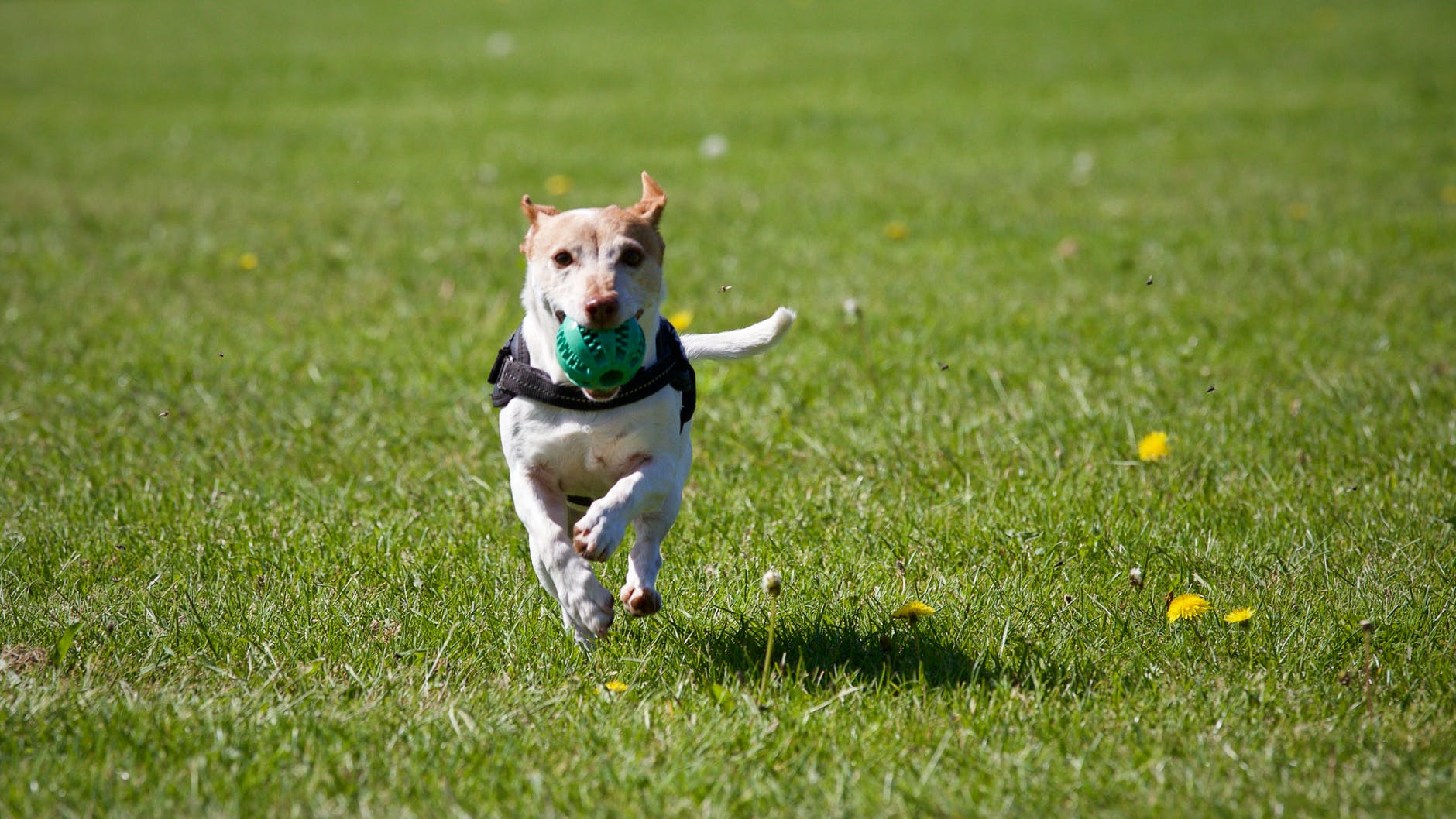
Death follows a Terrier on a Mission.
Photo by Matthias Zomer on Pexels.com

Well, you need an extraordinary event. A divorce out of the blue. A airship landing in the parking lot of the 7-11. A dog running down the street with a human leg in its mouth. A car crash, a panic attack, an island event where humans are hunted, a lottery to see who’ll be stoned to death. A body buried beneath the floorboards…something. Something that forces our beloved (or be-hated? is that a word? why isn’t it?) character into some tough decisions that make them CHANGE AND GROW. Yes. This can be done in the short span of 7,000 words.

You may, if you’re so plottingly inclined (in my head that sounded very judgmental, I apologize to all of my plotters out there), outline your short story to arrange it with the proper story beats, valleys and arcs necessary. Or, if you’re a slob like me, you can just start with the event and your character and see what madness ensues. Just be conscious this is a finite clip, not the 6-hour extended director’s cut.

I could, literally, go on for thousands of more words about the art of the short story, but I know you have some kitten videos to watch and probably a pants-less Zoom call to get on, so… I’m going to end this first blog (there will be others) with a good starting point for my beautiful writers out there.

The hardest part of the short story, for myself and other writer’s I’ve talked to, is finding a smashing good idea to write about. For this week, I’d like you to try one or both of these exercises and come up with, at minimum, 10 potential short story ideas. If you have the time, pick one or two and try your hand at a short story.

For the first exercise, I would like you to pick up a copy of your local newspaper (or scroll through it online) and seek out interesting or strange headlines that deserve a bigger story. The body pulled out of the river with no fingers. The discovery of pesticide residue in kindergarten playgrounds. Whatever catches your eye. Find a notebook, write down one or two lines on each and keep going. Don’t stop to write the story just yet. Let your beautiful brain simmer.

Secondly, I would like you to take a prolific historical/fictional or not character and ask “what if”. What if Henry Melville had been a modern day fisherman. What if Lizzy Borden had been a nursing home attendant? What if Buddy Holly had survived the plane crash? What if Donald Trump was really an alien? (ok, that one’s not so far of a reach)

Get freaky with it, twist history a little and see what interesting plot ensues. Thanks for playing today. Share your results and ideas, if you like and we’ll be back next week with more on the Short Story!

Happy Writing.

The Beautiful Writers Workshop #20: Finding Romance in a Time of Disconnect

The world is a tense place right now and I know I’m not the only one who’s been suffering with a busy and worried mind. These days, these times, these overcrowded houses, and insecurities about the future don’t make for good bedfellows and it’s not just artists who are suffering.

A recent study revealed that fewer people are having sex. Especially in the younger age groups. A combination of the world’s current crises, economic disparity, job loss, women’s fears of sexual violence, and a general unease about the current “hook up” culture have left a great many of us feeling as though sex just isn’t worth all the hullabaloo. (Clear sign that people aren’t getting enough play time between the sheets is the uptake in old-timey language like “hullabaloo”, “horse feathers”, “fiddle faddle”, wisenheimer”, “canoodling” and “shenanigans”)

So, what better time for yours truly to have signed up for an online Romance Writers Conference this weekend, brought to us by the lovely folks at The Wordsmith Institute. Despite feeling a little ‘meh’ about love in general, my hope is that it will ignite some latent ideas that will help me finish the two or three novels that have just been sitting like cold leftovers in my fridge.

 (I should eat that before it goes bad, but I’m just not feeling like all that fiddle-faddle. I’ll make a quesadilla.)

I’m not sure how many of my writing clan out there dabbles in romance or what your current feelings are on the matter, but I think that when we are faced with a world in such serious and important chaos, the idea of a little escapism should not be dismissed too lightly. Passion comes in many forms, and when we stoke the fires of one form, we help to ignite the others. A passionate life is not just in the pursuit of justice, it is in the pursuit of love and happiness as well. And a good romance novel will follow this pursuit.

So, for today’s exercise, whether or not you write romance, I would like you to try your hand at a touch of eroticism (there’s a double meaning in there). I’m not suggesting you sit down and write your tawdriest letter to Penthouse. I don’t want to know about girth or the overused metaphors of trembling phalluses or ‘moist’ orifices. (Yuck, I think I just grossed myself out).

I want you to find the eroticism in the small details, objects, places, memories. Eroticism is more than just what you think of when you see an eggplant emoji.

Awe, they’re canoodling! (Photo by Dainis Graveris on Pexels.com)

Take your time, focus on the minute details of moments. The way a finger plucks a grape from the vine, or how a callus feels against the small of your back. Focus on the path of a rain droplet down a leaf, the low blood-warming rumble of thunder, the smell of skin warmed by sunshine. The juice of a mango running down your wrist.

Write about those moments and observations, as if it were the world teasing you.

What makes them sensual? What makes your breath quicken?

If you need more direct inspiration, here are some great suggestions from Natalie Goldberg’s “Writing Down the Bones”:

  1. What makes you hot?
  2. Name all the sexual fruits you know? What makes them so?
  3. What do you crave when you are in love?
  4. What is the most erotic part of your body? (and please, be creative, we all know the obvious ones—reach for something more interesting—well, not literally…or yes literally–what do I care what you do in the privacy of your own home? I support however you process).
  5. Write the body as a landscape.
  6. What do you connect with? (physicality, music, touch, words: think of this similarly as how you learn. Visually, orally, auditory, by doing, by reading?)
  7. Do you remember the very first time you felt desire? When was the first time you felt erotic?

Okay! There you go, something fun to get out of the world for a minute. I hope it helps to boost your writing if not your mood. Maybe your cohabiter will even benefit from these shenanigans. As Monty Python so eloquently said: “wink, wink, nudge, nudge”.

The Beautiful Writers Workshop #18 Writing Challenges: Why Word Counts and Time Limits Work

Today’s blog will be short as I’m embarking on a new writing challenge brought to me by the fantabulous people over at Zombie Pirate Publishing. Not only is it a genre that I have yet to dabble in, but the subject has to involve a planet I know relatively little about.

What madness would possess me? Well…I don’t like boxes. I don’t like to be put into one, and I don’t like to contain anyone else in one. I think we were gifted free-will for a purpose. I also believe that it’s a lot more fun to participate in life than it is to sit on the sidelines, stuck inside some box somebody once, a long time ago, put you in.

So while I’m busy researching space travel and alternate dimensions and typical characteristics of rebellions, I encourage you, sometime this summer, to find a writing challenge that pushes you outside of your comfort zone and into that strange and beautiful place of self-awareness.

You see, until we’re faced with a challenge, we never really know what we are capable of. If we are always comfortably in our box, we assume those lines around us won’t bend; that the walls can’t be broken. Challenge brings change, and with it a casting off of limits. When we break through walls/limits we come to understand how amazingly capable we really are, and then realize how much our excuses have held us back.

I believe in every single one of you. I believe you can write 15,000 words in seven days, edit it, and submit it for consideration in a publication. I believe you will finish a 50,000 word novel in a month. I believe these things because I’ve seen it happen. Because I’ve done it. And I’ll keep doing it, especially in times when my tank is empty and I start to question my worth. Because I know I am capable…deep down. I just need reminding. We all do.

Writing challenges not only force us to sit our asses in the chair and knock our procrastination methods to the curb, they also show us how much we can actually write when we focus. Sitting for thirty minutes on a good stint will sometimes give me 1,500 words. (This doesn’t account for the editing which probably will drop a third of that). The point is, when you know you don’t have the time to second guess or organize your sock drawer, you give yourself the freedom to just write the damn book.

And, sad as it may seem, sometimes that’s all we need; permission.

Go and write. Look into the Zombie Pirate Publishing site, check out local groups in your area. I did an amazing one a year or two ago for the Rocky Mountain Writers that lasted one weekend and garnered 12,000 words. One of the most fun novellas I’ve ever written and my first foray to action/spy-fi (yes…spy-fi. It’s a genre I just now made up. Copyright.)

That’s it…that’s all I’ve got. No fun pictures or anything. I’m on a mission now, I ain’t got time for that. I gotta make up some swinging character names and decide how genetic mutations might let someone breath H2 and He.

Go find a mission. If you can’t find one, make one. Give yourself a time limit, and a word count and make it a little more than you think you can handle. Hell, make it a lot more than you think you can handle and watch how you surprise yourself.

I’ll be back next week with a full report of how often I found myself crying in the closet and banging my head against the wall for comfort.

Until next time, kids, happy writing.

The Beautiful Writers Workshop #16: High Emotion Words

…did no one else start singing Whitney Houston after that title?

“I get so emotional baby, every time I think of yoouooouu…”

No?

Well then go back to bed, get up again, and rethink your life.

Whitney
I don’t know why I like it…but I just do.

Today we’re getting off the poetry train (thank god, we thought it would never end!!!–ungrateful louts) and getting back into other aspects of writing, specifically word choice.

Now, I guess you could argue that this is related to poetry but right now I want you to think about words in terms of the emotions they convey and why using the wrong word can lead to either a tepid response in your reader or just plain confusion.

This is a good time to bring up the death traps of “very”, “really” and any “-ly” word you tend to over use. Chances are if you are using one of these precursors or the dangling adverb-maker, there is a better word out there for the emotion you are trying to evoke.

(He wasn’t very sorry. He was contrite, remorseful, ashamed. She wasn’t very pretty. She was luminous, stunning, bonnie or even fetching if you feel somewhat Scottish)

Remember, your ultimate goal is not to have your book or story be the one that readers want pick up because it’s an apt substitute for melatonin. You want them to not be able to put the book down, unless they need an emotional respite from the roller coaster you sent them on. So your word choice, in addition to being like an arrow to a bullseye, needs to light up hard or intense emotions in their brains.

I’m going  to offer an important disclaimer…I’ll even go so far to say as it’s imperious. Just like eating cake every day for every meal, or riding twenty rollercoasters back to back to back, too much of a good thing is NOT a good thing. When you overuse these impactful words, they start to over power the reader’s ability to keep up, in addition to that, you start to sound like a goddamn narcissistic douche bag.

“Watch me word, Underlings! Witness the power of my supreme expression of the English language! Cower to my mighty thesaurus and the power of my underused MFA!”

scholar
Sure, but it keeps him from licking his balls.

ahem…you get the idea. Overuse of ‘heavy’ or ‘flowery’ language will disenchant your readers and come across as dishonest (i.e. fake like a Kardashian’s talent).

Take a scene from your current book and highlight or “find” all of your adverbs and precursors. You don’t have to replace them all but particularly (yes thats a -ly word) pay attention to the ones that describe meaningful or pivotal scenes, where you want the reader to feel what your character feels.

Jane wasn’t very sad. She was decimated. Desmond wasn’t very angry, he was enraged. Katelyn wasn’t very happy she was glowing with a newfound sense of hope.

There you go. That’s your job for this week. Oh, and here are a list of heavy-emotion words if you need a little help. If you find one or two inspirational, meaty if you will, find a home for them in your work, where appropriate.

Positive:

Jubilant, elated, ecstatic, contented, serene, vivacious, encouraging, blissful, pleased, enchanted, warm, sunny, joyful, anticipation, admiration, exquisite, graceful, delighted, amused, amiable, dazzling, mesmerizing, captivating, invigorating, splendid, charming

Negative:

Oppressive, sardonic, overbearing, irritated, obnoxious, disgruntled, disenchanted, distressed, miserable, sadistic, resentful, aggravated, sour, crippling, debilitating, horrified, heavy, loathing, disgust, desperate, contempt, brutal, bloody, flawed

Others:

Evenhanded, indifferent, passive, apathetic, secretive, secular, pious, composed, awestruck, mysterious, ambivalent, horrified, pragmatic, cautious, accepting, reserved, pensive, vigilance, ancient, delicious, feeble, solemn, famished, puzzling, complicated, massive, skeletal, tremendous, efficient