Living in Abundance

I love this word. Abundance. Say it to yourself. Abundance. It feels full and heavy, it feels like satiation and potential. I love when my yoga teacher tells me to widen my stance, when bending forward to make space for my Abundance. It feels like a loving way to approach what we have, and to be content in our space.

As a creative, abundance is not something we may consider. In fact, if there’s anything a writer is good at, it’s practicing the fear of Abundances counter point; scarcity. Scarcity says that there won’t be a next idea. There won’t be a next poem or painting or song. Scarcity says you better hang on to this project and keep working on it, because it’s the only one you have. Scarcity will tell you lies of the well inside you, drying up. That once you expend so many words, there will be no more. Once you complete this idea, that will be the end of your road and maybe your career. So hang on, greedily to that idea, to that brilliant book proposal, that one perfect poem. It could be stolen or critiqued apart, or lost. Best to hold it close to you, where it maintains a certain pristine quality. Your precious.

The funny thing about scarcity, and abundance, is that they are both self- fulfilling states of being. When we hold on to one idea, one book, one poem…our hands are useless to catch more, to reach for more, to hold more. I know, its scary. To think that this might be your last, great idea. To let it go, either out into the world, or back into the drawer for a later date. It might feel (especially when you have been working on the same novel or project for years) that this is it. All you will ever be. All you will ever write. The great American novel, never to be surpassed. Perhaps you worry you’ll never write anything as good again ( I feel that, acutely friends) But I’m here to tell you from experience, that its a good time to look at it from a different perspective.

You see, your creativity and your potential to make more art, pursue different stories, write more…it’s endless. It is a bottomless well of energy. And even after we’re gone, the things that we put into the world spark more ideas, and more stories, so really…think of your writing and creativity as a river, not a stagnant pool. When you dam it up, from fear, from worry (I’ll never write another poem this good, my novel isn’t ‘ready’) stagnation will occur. It is the only idea (ie water) in your pond. Letting it go, releasing that barrier, putting it out, submitting it, allows the water to flow freely again.

Creativity, in this way, is abundant. It is a river that we dip our hands into and grasp the ideas that come our way, play with them, run with them, drink them in (don’t drink river water, please, giardia–Beaver Fever–is real) and then when its time, let them go down stream and sit along the banks for the next one to come along. And it will come.

How do we let go? We let others see it, we make the best changes we can and throw it out into the world. Be conscious that once you let it go, its a bird flown from the nest. It might come back to visit, but you are no longer it’s home, it belongs to the world now and you have a big beautiful space (time and mental playground) for the next hatchling.

I’ve used so many metaphors in this thing, I think I got lost myself. Rivers, birds, abundance. Always abundance. You have it. You have room for all the beautiful things in your brain and those that haven’t been found yet. So let go of the fear that you’ll dry up. Loosen your hands around your one great idea so you can embrace the potential of you.
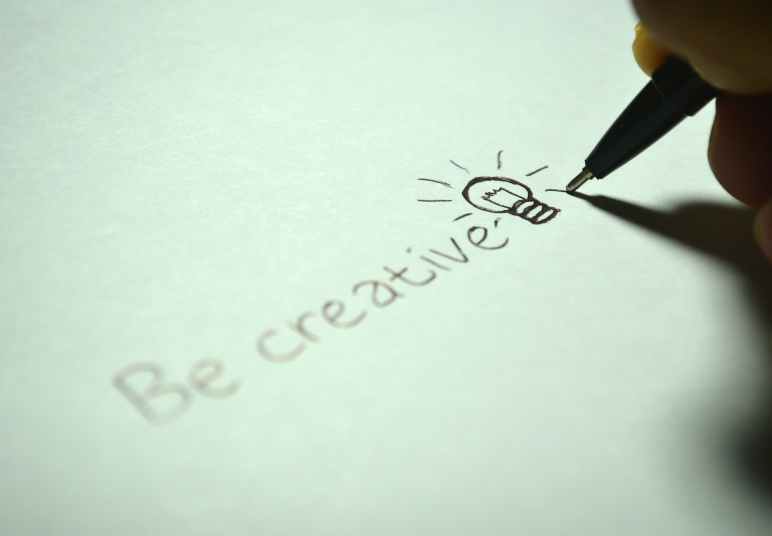
Creativity and The Writer: Part 2

Hey kids. If I hadn’t mentioned it before, a lot of what I’m talking about this week (and last) I learned from a great class at the Wyoming Writers Conference a couple of weeks ago with William Missouri Downs, a screen and play writer with years of amazing experience. If you have the chance, check out his work. His class has been on replay in my mind so I thought I’d share the good stuff.

Last week we did a little basic housekeeping when you’re trying to foster a more creative life. This week, we’re going to go a bit deeper into what creativity is and why, sometimes, it can be hard to grasp.

First of all, creativity is not something you’re generally born with. There maybe certain individuals who seem to have an easier time being creative, but for the most part, anyone can become more creative. Because, at the root of creativity, is the ability to open your mind to new possibilities and new solutions, and that starts with a few things:

  1. Be curious…about everything. Read articles and blogs on anything that grabs your interest. Give yourself space to wonder and research, even if it’s about the mating habits of the Pygmy Sherbert Moth of Southern Cambodia. Learning about different and strange things will actually help your brain spark ideas and forge connections that you might not have before.
  2. Learn how to concentrate. It seems counter intuitive that creatives are able to sit and focus for long periods of time (maybe its that stereotype of the flighty artist, flitting around the room on several projects) but being able to concentrate, uninterrupted, leads to alpha states which leads to ‘flow writing’. And it also keeps you working at a problem until a reasonable solution is found. Think of it as mental stamina, and we all could use more of that.
  3. Set aside time for your art and PROTECT YOUR SOLITUDE. I don’t think more needs to be said, except that it also means being able to be alone, and creating boundaries (even with the people you love) to protect your writing space. When people in your life ask what they can do to help, be honest and ask for alone time to write and create.
  4. Look for options long after others have given up on a problem. Explore all angles and possibilities. Even the ridiculous and absurd solutions–find those and play, because one thing may lead to another, to another, eventually to the right thing. Whether it’s a plot hole, or a crisis resolution, be open to the strange and impossible. Being stuck is an opportunity to do something different, to get your head completely out of the box.
  5. Take chances and accept failure as part of the process. Failures lead to knowledge and knowing you will fail means you take every opportunity as a chance to learn more about what works and what doesn’t without judging it or yourself too much. Safety is not a place you learn anything.
  6. Have several different interests. Yes you’re a writer. But you’re also a yogi, or a bat tamer, or a bee keeper or a circus performer. Spend time learning and growing in as many places as you can. We should all actually strive to be Jacks and Janes of All Trades. After all, the whole saying is that “a jack of all trades is a master of none, but oftentimes better than a master of one.” This goes back to making those strange and creative connections between things and solving problems outside of the normal lanes of knowledge.
  7. Be persistent, write every day without fail. Meet your deadlines (other people’s or self-imposed), without fail. Yes, yes, I know there’s a lot of writing advice out there. And some people don’t write everyday and they’re perfectly happy and successful. I think writing everyday is not so much a direct line to your success in the field, so much as it’s an investment in yourself and a way to give back to your time, your space, and your own sanity.

There are plenty of exercises you can find in books and online to help boost your writing creativity but the habits above will help you cultivate a lifestyle where your brain can do what it was born to. And that’s, create.

Be willing to throw outrageous suggestions and ideas up on your board and not make judgements. Free flow new ideas out on a page without looking back as they land. Then give yourself an hour or a night and come back to it. Even if none of them seem viable, they may lead to different avenues that will be your next great idea.

Well, that’s the short, short version. I hope you have a creative week and feel free to email me here on the site if you have any questions or just want to chat about writing.

Good luck.

Creativity and The Writer: Part 1

Feels like that could equally say, “Beauty and The Beast”. So many ideas of what creativity is exist. Is it limited by IQ? Is it genetic? Does it only happen at given times or is it always on the bench, waiting to be put into play? Do some people have more of it? Does it dry up?

Often, as a writer, I’ve asked myself all of these. At times she has felt like a constant companion, whispering ideas and daydreams into my ear. At times, it feels like I’m alone in the middle of a lifeless desert, not an idea or a breath to take. When the good is good, ah they high it brings. When she’s nowhere to be found, there’s not a deeper low. And sometimes it feels like some writers are blessed with a giant bag of it, that they can’t possibly use in one lifetime, while mine is just an empty plastic bag, with a hole in the bottom.

I know many things, physically, can affect your creativity so I’m going to start there. Here are some basics you ought to know:

  1. You need sleep. Sure, sleep deprivation can give you some really interesting half-cocked (i just wanted to use that word) ideas. But they’re rarely fully formed enough to make much out of, especially once you’re coherent enough. Get sleep. Your brain needs it to problem solve, and that’s a HUGE factor in being creative.
  2. Don’t treat your body like a circus tent. Eat good foods, vegetables, lean and clean protein, drink water, watch the sugar and the processed foods. Limit the caffeine (see sleep more). Vitamins, nutrients, and minerals all help to keep your synapses firing correctly and your brain clear.
  3. Cut back the Alcohol. I’m not ashamed to say I struggle with this one. Its in my genes, and I have to be very conscious about it. I’m actually taking steps towards sobriety. One glass of wine softens my brain enough to let go of my anxiety and words seem to come easier. But I’m not the kind of person who can stop at one glass usually. Because if one feels good…two would be great right? And why not a third? And pretty soon you can’t even see straight and the brilliant ideas of last night that you scribbled down are incoherent the next morning. Creativity works better with Clarity.
  4. Exercise. Might surprise you to know that the old brain needs oxygen to function. How does it get that? Through our vascular system. Want to have a healthier vascular system? Exercise. Not only does it increase your oxygen level and hit you up with a tasty dose of endorphins, it gives your muscles, joints, and tendons a lot of love and attention. I don’t care how you do it, (bike, run, walk, lift, yoga, pilates, belly-dancing, martial arts) just do it, at least 30 minutes a day. Bonus points for doing it outside.
  5. Take time away from your screens. This one is going to lead into part 2. We are an overstimulated bunch of hairless monkeys. My goddess, did they do a number on us the day social media was invented. Here’s a little hit off a fake feeling of mattering. Now get twenty thousand of them a day while you scroll through nothing but recirculated and watered down ideas. Nothing original, nothing too insightful, and please feel free to stay in your designated echo chamber. I truly believe these systems, algorithms, AI and the entire corporate conglomerate of Meta is one of THE BIGGEST creativity killers ever known to humans.

So, that’s the beginning, taking care of the basic human needs that create an environment conducive to creativity. Think of it like a garden. You can’t grow anything in a dry and poisoned patch of dirt. It needs all the good stuff to begin a healthy bunch of ideas. Next week, we’ll talk about a little more about what creativity is and what it is not, and you’ll get another good list of ways to cultivate it and use it in all aspects of your life.

Happy writing!

The Beautiful Writers Workshop #9: Mental Floss

My daughter and I recently had an interesting discussion due to a class assignment on mental health concerning OCD, depression, and various other mental challenges. Trying to explain some of the behaviors and levels of severity made me think about my own quirks and habits that can be both positive and bordering on detrimental.


Creativity comes with certain mental “flourishes” that often translate into some pretty tortured souls out there, creating brilliant works of art, whether it be through paint, words, sculpture or music. In fact, I think society tends to think one almost must be tortured in some way to create.

I was listening to an interesting podcast with Florence, from Florence and The Machine, and along with her brilliant Scottish accent I was captivated by her story of alcoholism and how she used to think she had to drink to be creative. That she had to suffer, and to be spiraling down to really get to the good stuff of the soul and write music that mattered.

But then she sobered up and realized that it actually got easier to write without the heavy chained idea that suffering is the only way to make meaningful art.

It got me to thinking about how we can turn the chaos inside, into something beautiful by not fearing it. By not suppressing it or numbing it. By accepting the quirk that is you.

It’s like the person with OCD who uses their energies to post-it the hell out of an outline instead of writing “All work and no play makes Jack a dull boy,” five-hundred times.

It’s all about how we use our quirks.

This week’s workshop is about finding your quirk. I don’t just want the strange dance you do when you walk through a spiderweb kind of quirk. I want the chronic kind. The one that makes you desperate for a piece of wood to knock on when the slightest terrifying thought crosses your mind. Or that makes you have to park in the same spot at the grocery store, every time.

Write a bit about your quirk, then go a level deeper and see what comes up. Why do you think you do it? Do you remember when it started? What fear drives it? What desire does it fulfill or captivate inside of you?

How can you shift it to work towards your advantage in your life and in your writing?

If you can’t think of anything, can you use your quirk IN writing as a character trait and follow how it changes your character’s life, behavior, and relationships. Write a poem about it and get past the grizzle and into the bone, or find the ridiculous humor of it to laugh at.

Self-reflection isn’t always easy and we often discover things we didn’t know were hiding in there. You aren’t required to share, but allow yourself to hurdle over the fear and discomfort to know thyself a bit better. Turn your downward spirals into whirlwind of thought and brilliance. See you next week.

Roller Coast

Writers, man.

We live deliciously. And when I say that, I mean that we often tend towards the magnificence of highs and lows. I’ve always been more partial to the belief that artists, musicians, writers, poets and the like tend to live life on the shorter wave-length side of things.

Imagine life as a string. We all get the same length of string. Pin it down to one side of the desk. Now, give it a nice, soft undulation of a small lake and see where it lands. That’s a good example of a typical life.

Take another string, same length, same starting point, and make those undulations like the waves of the ocean, impressive highs and catastrophic lows.  The ocean string runs out far before the lake string. This is the life of a creative.

Does that mean we die sooner? Not necessarily. In some extreme cases (think Janis Joplin, Jim Morrison or Jimi Hendrix) death was aided in his cause by the use of drugs or alcohol. But it begs the question, why do such creative geniuses seem to expire sooner?

I have an unsupported theory that living in a creative mind isn’t easy. Often, it’s a discombobulated place, filled with wild fantasy, grim darkness, and a dash of bipolar tendencies. The fantastical neurons are on overdrive and move in spiraling thought storms that are often uncontrollable or at best frustratingly elusive.

That’s not an easy brain to live in.

We may scoff at Hemingway’s whiskey or Stephen King’s cocaine but it’s hard to make quick judgments when we’ve all had to deal with voices in our heads, characters doing whatever-the-damn-well-they-want, plot failures and to top it off, the cycles of elation and rejection that line this path we’ve chosen (willingly or not).

Writing can be hard on the heart.

We get diagnosed with depression, anxiety, panic attacks, emotional disorders or other mental health issues. And I’m prone to believe that part of that comes from a society and educational system that values the boxed in test score measures than the immeasurable brain power involved in creative and critical thinking.

When we’re standing at the precipice of throwing our work into the world, firing out the query letters, calling editors and agents, pitching novels, or even entering contests, the mountains of hope and valleys of despair can be wretched chemical surges that amplify the already swirling thunderstorms in the creative mind.

No wonder we are driven to seek out the numbing magic of fermented fruit or dried poppy milk. We’re seeking to elongate the valleys and peaks.

Unfortunately for the human body, those distractions are just that…distractions. Bandaids over too deep a wound.

My point is this, writer, creator, artist with vividly full skull… you are a colorful, magical, beautiful soul, who’s gift comes at the cost of a little sanity. You will see things and know things the world at large is not ready to see or know.

They may call you a dreamer.

But you’re not the only one.

Surround yourself with people who get it. Who know when you need to pontificate in unruly and unrelated thought strings out loud once in awhile, and who understand when you want to stay quietly tucked into a corner avoiding eye contact. You know… other vividly full skulls.

Find your weirdos and keep each other on the gentle undulation side of things, so that when your mind and talent have created in the frothing whirlwind, you can bring your ideas, books, poems, articles, and novels, to the world while standing on solid ground.

When you are in the fire of creating, let it burn.

Then cull your flames with rest, and good food, and time away so that you have the fuel to burn for a long, long, long time to come.