Retreats, Writers, and the Greater Sum

I’m at the last day of Writing Heights yearly Spring Workshop and Retreat. It’s been a wonderful two days filled with classes, writing time, collaborations, critiques, and conversation. Normally, I don’t do much talking or reaching outside of my happy little home-body shell, so these types of events are rare and sometimes anxiety fueled.

But when you agree to take leadership of something, you don’t really have the option to sit back and let someone more extroverted take over. I believe that living a decent life has more to do with stepping outside of your comfort than constantly seeking it. And the beauty of it is that the uncomfortable and large becomes like a warm sweater and an intimate evening. I’ve been to a lot of conferences and retreats, but somehow its this group that always feels like coming back home.

If this retreat has taught me anything, its that there are so many beautiful, intelligent, thoughtful and worthy voices in this world that need to be heard. It has taught me that art is not dead, that hope is not lost, and that we are all standing on the edge of something extraordinary. To know we are not alone in the struggle, to know that someone is rooting for us to continue on, and that words still matter maybe even more than ever is enough to lift any downtrodden heart out of the mud. Separate, we are all each a powerful story waiting to be told. Together we are an ocean of love, a battlefield of strength, a universe of humanity, and the unshakeable faith that something greater will be found in the connection to this beautiful tapestry of human consciousness.

My advice to you is this. Live your life with a sense of urgency (not anxiety) and purpose. Live as if you knew you didn’t have forever to waste. Do the thing. Today. Write the words, finish the poem, read it out loud. The love of writing, of learning, and seeing new perspectives is a rising tide against ignorance and hate. The world needs you now. We must not falter.

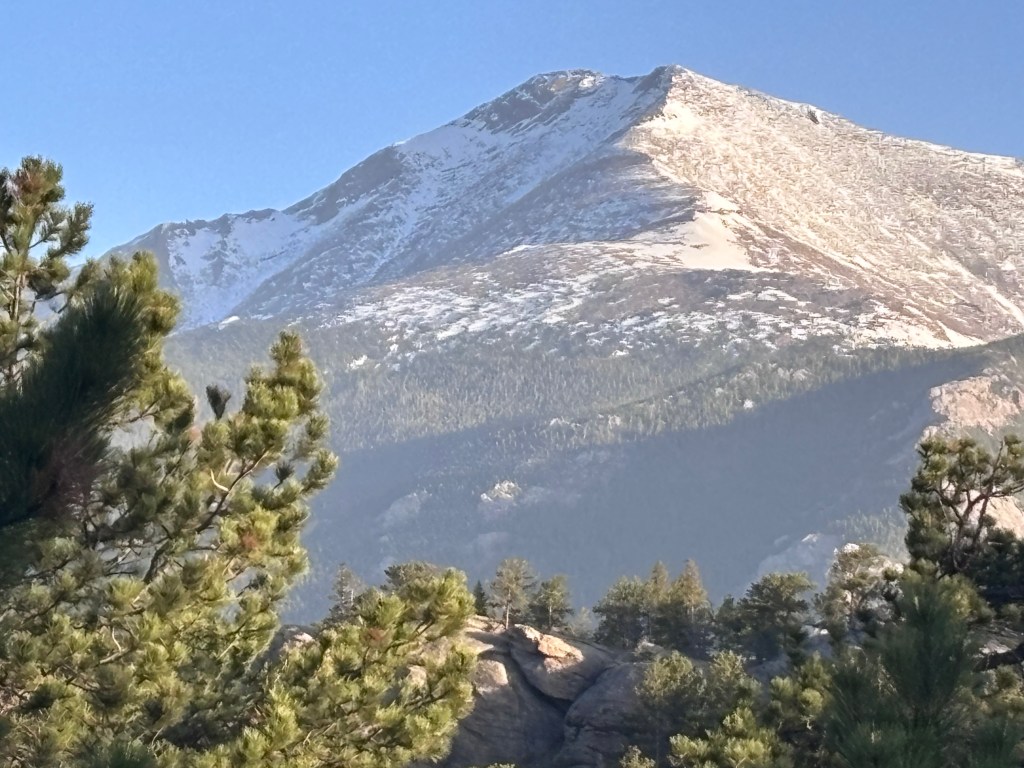
Thank you to my amazing writers (yes I’ve claimed you as mine, like a momma duck keeps all her littles safely close) to the teachers who helped me by offering their knowledge and expertise, their warm hearts and belly laughs. I hope if you’re a writer, reading this, then you find a way to meet us in the mountains next time. Bring your heart and all your words.

Next retreat is October 16-19th in Winter Park, CO. Find out more HERE

From Beneath A Pile of Tissues

Good morning, Gentle writers.

I hope that this blog finds you well and in good health. Over the weekend, I acquired a…virus? And what had planned to be an ambitious weekend, filled with a long-run in preparation for a half-marathon, finishing up my latest Vella, and reworking my two-act play, became the sad potato of me huddled in bed. I don’t get sick often. Certainly not the kind of sick that forcibly dunks me beneath the unconscious depths of two-hour naps. I get frustrated when my body does this. At one point, I even took my laptop to bed, determined that I could let my body rest and my mind could still function.

Brains don’t like fevers. That’s what I’ve learned. And the longer and stronger that fever, the less coherent I was. My brain got frustrated with me. It quickly became apparent, right before I was knocked in the head by the flu-fairy with a large sleepy stick, that nothing I wrote in that state would be worth a damn. So…I put my life aside and gave myself the permission to sleep.

Sounds silly, huh? Just sleep when you need to sleep, you don’t need “permission”! But when you’re a mom, and a woman, and a go-getter, and a do-er…it’s about the hardest thing in the world to grant yourself. Especially to do it guilt free. I lost space and time and the kids were just fine. The laundry still got done, the world did not fall apart. How little grace we give ourselves to rest, I thought, in between workshops of unconsciousness.

Know the best part? Besides the tripped out dreams (holy revisiting of homework-being-late paranoia)? I realized how much I really fucking love sleep. I realized how little of it I actually get in my day to day. I realized that I average about 4 hours a night. And that’s maaaaaybe not enough. I realized that after a day of sleeping, the twenty minutes of writing I did get at night was a lot easier to do.

So here’s my advice for the week. Don’t discredit sleep as a writer and a creative. You may be a super lark or a tenacious night owl, but if you’re not getting in the repair work that only sleep can do, not only will you likely catch more colds, but your brain won’t be its wrinkliest. And a wrinkly brain is a…is a…where was I going with this? *checks temp…feels sleepy* The point is, rest helps you rebuild, it also lets your brain play and take a few hours off of the stupid demands of reality. Play for a brain, translates to creativity and more writing for us.

I’m going to go blow my nose and take a nap. Take care of yourselves and I’ll *yawn, sniffle* see you next week.

Camp NaNoWriMo 2023

Hello writers.

I don’t know if you are suffering the lull of longer days and stifling summer heat. Maybe this is your season and you’ve got no complaints. Whether your basking in the golden glow or changing your third sweaty bra of the day with a curse, I have a little challenge to keep you motivated even when the lethargy of July hits hardest.

You all know I’m a huge fan of November’s novel writing challenge, but this is the first year I’ll be participating in their Camp NaNoWriMo. The organization offers two camps each year (April and July) to help keep writers inspired throughout the calendar months. The camps, however, offer a little reprieve from the high-word count pace of November. The rules are simple, during camp months you get to set any word count goal you want and are allowed to work towards any project. Say you have a first draft that you’re ready to get cleaned up, through the camp conversion chart you can estimate how many ‘words’ you would get through your editing endeavors. Or say you want to get a jump start on a new Vella project (ahem–I’m working on it!) you could put out a goal of twenty episodes at 1,000 words a piece and as long as you’re logging your progress towards that, you’re nailing the challenge.

I realize you don’t have much time to prep, like you might in October, but I think the beauty of this challenge is that it’s a lot more lackadaisical and banging out a simple outline or bullet list of your goals might be just enough to get you started. Begin with a project in mind, pick a reasonable word count, page count, or chapter goal (reasonable means it has to still be a challenge, so don’t slack off–but don’t discourage yourself with something you can’t reach in a month–especially with kids at home) and pin it up by your work space to keep yourself honest and inspired.

As the youth coordinator for Writing Heights Writers Association, I’ll be creating a group for my teens to participate. It’s a much lower pressure contest and still has a lot of the same benefits, mainly building good writing habits along with some fun swag at the end. If you’re interested, or you know a writer who could benefit from a little mid-summer pick-me-up, visit their website: Camp NaNoWriMo and register today.

Hit me up here or on social media and let me know what you’re project is and if you’d like to connect via the organization’s site. I’ll also be running some virtual write ins during the month.

Creativity and The Writer: Part 1

Feels like that could equally say, “Beauty and The Beast”. So many ideas of what creativity is exist. Is it limited by IQ? Is it genetic? Does it only happen at given times or is it always on the bench, waiting to be put into play? Do some people have more of it? Does it dry up?

Often, as a writer, I’ve asked myself all of these. At times she has felt like a constant companion, whispering ideas and daydreams into my ear. At times, it feels like I’m alone in the middle of a lifeless desert, not an idea or a breath to take. When the good is good, ah they high it brings. When she’s nowhere to be found, there’s not a deeper low. And sometimes it feels like some writers are blessed with a giant bag of it, that they can’t possibly use in one lifetime, while mine is just an empty plastic bag, with a hole in the bottom.

I know many things, physically, can affect your creativity so I’m going to start there. Here are some basics you ought to know:

  1. You need sleep. Sure, sleep deprivation can give you some really interesting half-cocked (i just wanted to use that word) ideas. But they’re rarely fully formed enough to make much out of, especially once you’re coherent enough. Get sleep. Your brain needs it to problem solve, and that’s a HUGE factor in being creative.
  2. Don’t treat your body like a circus tent. Eat good foods, vegetables, lean and clean protein, drink water, watch the sugar and the processed foods. Limit the caffeine (see sleep more). Vitamins, nutrients, and minerals all help to keep your synapses firing correctly and your brain clear.
  3. Cut back the Alcohol. I’m not ashamed to say I struggle with this one. Its in my genes, and I have to be very conscious about it. I’m actually taking steps towards sobriety. One glass of wine softens my brain enough to let go of my anxiety and words seem to come easier. But I’m not the kind of person who can stop at one glass usually. Because if one feels good…two would be great right? And why not a third? And pretty soon you can’t even see straight and the brilliant ideas of last night that you scribbled down are incoherent the next morning. Creativity works better with Clarity.
  4. Exercise. Might surprise you to know that the old brain needs oxygen to function. How does it get that? Through our vascular system. Want to have a healthier vascular system? Exercise. Not only does it increase your oxygen level and hit you up with a tasty dose of endorphins, it gives your muscles, joints, and tendons a lot of love and attention. I don’t care how you do it, (bike, run, walk, lift, yoga, pilates, belly-dancing, martial arts) just do it, at least 30 minutes a day. Bonus points for doing it outside.
  5. Take time away from your screens. This one is going to lead into part 2. We are an overstimulated bunch of hairless monkeys. My goddess, did they do a number on us the day social media was invented. Here’s a little hit off a fake feeling of mattering. Now get twenty thousand of them a day while you scroll through nothing but recirculated and watered down ideas. Nothing original, nothing too insightful, and please feel free to stay in your designated echo chamber. I truly believe these systems, algorithms, AI and the entire corporate conglomerate of Meta is one of THE BIGGEST creativity killers ever known to humans.

So, that’s the beginning, taking care of the basic human needs that create an environment conducive to creativity. Think of it like a garden. You can’t grow anything in a dry and poisoned patch of dirt. It needs all the good stuff to begin a healthy bunch of ideas. Next week, we’ll talk about a little more about what creativity is and what it is not, and you’ll get another good list of ways to cultivate it and use it in all aspects of your life.

Happy writing!

Listening to Our Characters

Good morning dear readers and writers. First, may I offer a huge thank you for all the comments and encouragement I received from the last post. Writer’s know what it is to get bogged down in the process, and no one is better at pulling you up from that dark, dusting off the weight of the little failures that cling to your shoulders, and giving you a gentle but determined shove back up on the road. So thank you for your advice and encouraging words. They mean a lot.

Between that last blog and this one, I was lucky enough to take Todd Mitchell’s workshop on Creativity. I’d been to a few of his classes but this one seemed serendipitous. I knew I needed to start writing again, a novel. A big project to immerse myself in, and I have a beautiful trio sort of dangling between first draft and not quite done currently on my computer. I love the second book, and that’s obvious by how close to done it is. The third, similarly has pulled me in and I’m enjoying working through the rough patches. But the first. Ah…the first. Kind of the keystone in a series…well…it’s a piece of shit.

And it took me a while to really figure out why during rewrites last year. The main character had somehow taken on the dreaded Susie Sunshine persona (probably because the concept of her was born many years ago.) So, I put her through a character-lift (like a facelift but for imaginary people without faces yet). She got a spanking new name and I roughed up her edges. But nothing in the story seemed to make sense and it felt like trying to force an incorrect puzzle piece into a million different holes that did not fit. What in the hell was wrong with her? I knew what she needed to do and the plot and arc of the book was solid.

But I didn’t believe she was the woman to live it. And I was stuck.

And then Todd said something about struggling with a novel for years until he finally sat down and wrote a letter to his main character and asked him “What is it you want me to know? What’s your story? What am I not seeing?”

For the average human reading this post, I’ve just solidified in your head what absolute insanity writers possess. What do you mean you ask your characters? You created them. You know them. That’s your brain.

But the brain is a tricky place, silly non-writer. It’s vast, and expansive and it has a million rooms we’ve never even found the doors to, let alone explored. And sometimes, characters and answers lay behind those doors. And the only way to access them is to stop trying to force the answer. (I’m planning a post on Alpha State writing so hanging in for that one). Answers com only when we calm the hell down, and sit quietly outside the door, letting go of our ego and our need to tell the story, and just listen to their story.

Sounds crazy. Absolutely, bat-shit, bonkers.

And it totally works.

I put on a meditative playlist, took some deep breaths and focused on her name. Her new name. Her newly rough edges. And I sat, with my back to her door and took some deep breaths. I closed my eyes and started typing. And I didn’t question or stop, or allow myself to think of what she was saying. I just listened to her.

Here’s what it looked like:

Hey Dani,

Hey Sarah.

So, I’ve been struggling with you.

Yeah, I know.

I want to create you

You can’t create me. I just am.

So who are you?

Wrong question

What is it you want me to know? What am I missing about you?

I’m dark.

You began so light and perfect

That’s not how the world works. Not for babies abandoned, babies with parents like mine.

What does that mean? Who are you?

I am Danika Brennen. I was left at a fire station as a baby. An orphan.

Who left you there?

A pregnant vagabond, disowned. My mom

Who was she?

An member of the High Guard,

kicked out

Are you ***’s daughter?

No, I’m Loki’s.

holy shit.

Now, I’m not going to give everything away, but that last thing she said…that was an answer I didn’t know until I let her talk to me. And it’s an answer that I can write a book from. That will help me, help her navigate through this story…to a better place. To a life she deserves. As dark as she thinks she is.

It’s crazy right? But talk to any fiction writer and I guarantee they’ve had some kind of experience with their characters talking to them, to each other, offering unwanted suggestions or criticism along the way. And yes, they’re all in our heads. But I think as humans we underestimate the expansive reach of our brains and neural capacity.

I mean what if they’re not just our consciousness, what if they’re wavelengths in a much bigger plane of existence that we’ve only just started to understand. The wavelengths and dimensions that only open to us, When we listen.

Edit Somber: Part II

Today, I’m rerunning a blog from a couple of years ago. It’s interesting that I’m yet again in the editing process…and oddly enough, it’s the same book. Only it’s not the same book. This book is much better. It has grown from a gangly little ugly duckling, into a less gangly, slightly less ugly, near-adult swan. Ok, that makes it seem like it hasn’t improved, which doesn’t say much for my first foray into editing it. But it has. This round of edits comes from an incredibly talented and experienced editor from the publisher the book was picked up by. So, it has progressed, and it goes to show, that every book can always be better.

But, after a few hours of starting the first round of collaborations, I realized that old habits concerning editing for writers, can be hard to break. While I know my bugaboos, and I’m infinitely better at accepting constructive advice and putting aside my writerly pride, than I once was, it can still feel daunting when faced with all of those track changes remarks. I’m here to remind you, in this process to don’t give in when it gets daunting. Don’t give in to pride, when what you’re being told makes sense. So, without further ado, here’s a little piece on editing.

EDIT SOMBER

Nope, that’s not a typo. You’ve all heard the adage (or if you’re a writer worth their Peter DeVries salt you have…)

“Write drunk, Edit sober.”

I’m not going to recommend you write drunk. You can… It’s totally possible, and more often than not, highly amusing the morning after. Unlike the headache you’ll be nursing.

DeVries’ meaning was simpler. Write with abandon, in love, fervent and without inhibition. Lower your boundaries and kiss the words you wouldn’t normally, dance with phrases you’d been afraid to hold in your arms. Grab the lampshade of crazy plot twist and wear that son-of-a-bitch as a hat while you twirl through the story.

But in the morning…edit like you’re highly regretful and aiming to pinpoint every mistake you’d made the night before so as to never repeat the debauchery again. Be remorseful. Be judgemental, and like the Spanish Inquisition, show no mercy.

I’m in, let’s say the twelfth round of editing on my WIP. A round that was inspired by a recent submission editor’s advice. This time I’m proceeding with a more somber attitude, one that knows I wrote it, in part, like a drunken idiot and now have dropped my ego enough to be receptive to the advice.

Never before have I been so close to getting a traditional publishing contract for one of my books. Part of this is due to a more polished product (it’s not my first rodeo…or book kids), a more general genre and subject (why do people shy away from paranormal romances and hot ghost sex?), and, I like to think, a cute, relatable plot that’s just enough dark to be interesting.

So, I’m buckling down and doing what I was told to help get this baby off the ground. I’m about thirty pages in and catching some of the ‘problems’ that were brought to my attention. But as I work, I have a concern:

How much of myself and my voice am I taking out of this thing to appeal to the personal likes/dislikes of one editor.

So we come back to somber. Serious. Earnest. Grave. Unsmiling.

Sometimes there are hoops we have to jump through to get to where we want to go. Sometimes we have to shelve our pride and ego and be willing to see past what we love about our work to what could be better.

How do we make sure it’s not just some dime-store novella like the fifty other ones on the shelf? How do I make sure, with all the dead darlings lying beside my computer, that its still my story?

I don’t know those answers exactly, but I’ll tell you what I do know.

I know my characters and the way they react to situations and each other. And where my grammatical prowess may be lacking, I will always stay loyal to them first. When the critique is centered on prepositions or wordy description, I can be earnest in cutting it clean. And not only will my story be stronger, it will be easier to read…hopefully to the point where hands don’t want to let go of it until they finish “just one more chapter”.

So my advice for this week is this:

Take good advice from people in the industry who know when it comes to the technical mishaps of your work. Take the advice to tighten your writing from people who have to spend hours of their lives sifting through the slushiest of slush piles.

But always keep true to the drunken passion of your story that made your heart dance and giggle while it awkwardly pulled that plot line in for a kiss. Keep your story’s heart, but don’t be afraid to pluck it’s wayward eyebrows and wipe its nose.

Good luck, in whatever step you are of your process. Editing, writing, or contemplation of either.

Happy writing, kids!

IMG_7942

Writer; Know Thyself

Today’s blog comes to you from a second-floor hotel room after a full and productive day of classes at the 2019 Northern Colorado Writers Conference. The second floor is also hosting the attendees of the Brewery Collectable Club of America, so this humble blogger has witnessed some interesting trade deals in the world of rare Colt 45 paraphernalia.

On to my point:

For every year I attend the NCW Conference, I add a layer to the writer in me. That is to say, through the people I meet, the classes I take, and the lectures I attend, I learn more about the craft. How, and when, and why, and what, and all the technical attributes that come along with the delicate balance of creativity and grammatical science. But more than just the sum of these limitless parts, I learn a greater whole.


The whole that is me as a writer.


And in doing so, I’ve learned how to enjoy myself more at these kinds of functions by listening to my body, my brain, and my growing years of experience.


Back in the day, I would be hand-cramping from the steady stream of notes at each session. I would be tumbling from one class to the next, chugging down coffee between in hopes to keep my energy up so I wouldn’t miss a thing. I would strategically place myself at the agent’s table who I wanted to garner the literary affections of. I would, in essence, be the adult version of my grade-school, brown-nosing self.


Then…Something happened last year, when I drug myself to the meet and greet “networking” event, long past my emotional and mental boundary and crossing all lines of my introvert nature, to garner the attention of at least a few more experts in the field, I stood on very shaky ground. I spilled my drink, I felt like crying,


I didn’t want to be there.


I hated that I hated being around other writers. Which seems a terrible thing to say, but bear with me.


I didn’t know I had a limit to writing.


I thought I could talk it all day, learn it all day, do it all day. I could go to class for days!!! Nerding on a pro-level is a quintessential part of who I am. I loved hearing about other projects much more than I like talking about my own and reveled in the creativity and ingenuity of my fellow conference goers.


But…the more stories I heard the more I questioned if I was doing enough. The less sure I became of my ability. The more tired I got, the more flustered I became, the wearier my mind, the less information I could process.


Until everything was just noise and words.


Then I learned a secret.


(come closer…closer…)


You don’t have to throw yourself under a bus to catch it.


Knowing your limits is not just useful in this particular scenario. Knowing your limits is useful for all humans in many aspects of our lives. It comes with age and the ability to let go of unrealistic expectations.


During a few of my sessions, even as I listened to the speaker, I listened to myself. If I was inspired to write; I let myself write. If \the iron was hot, I struck while in the moment, abandoning the mad scribble of notes for the mad scribble of thoughts.

Did I miss some parts of the presentations? Sure, but in the midst of other brilliant minds and the energy they impart, in the middle of shutting out the rest of the world, the heart and brain start to do this funny little dance and learn to play again.

Inspiration doesn’t always happen at the opportune times. You have to write when the words are ready and when the heart is open. And the presenters this year gave me more than a notebook full of query-letter tips or copy-editing tricks. They gave my heart a doorway, an acceptance into writing what often builds up behind all my carefully constructed walls. And in stumbling and unorganized prose/poetry form I filled over ten pages of free-form when it was all said and done.

In years past, I’ve forced myself to jump the hurdles of social interaction and witty conversation until late hours, when all I really wanted was to wander off to a quiet room and take a nap.

So this year, after a relaxing dinner and a fabulous keynote speaker, I said goodbyes to new and dear friends and retired to my room for quality pajama time and a little writing.

I reserved a room, not so I wouldn’t have to drive the five miles home, but because I knew I would need quiet alone time to decompress after a long day of people and ideas, and focus on my own personal craft and projects I love.

I know when my mind is best, and after 8 pm is not that time. That’s my repose time. I had to make that OK for myself in order to get the most out of my time.

Conferences, classes, and meet ups like these open pathways, but only when we’re not too busy or overwhelmed to see them. If we are embroiled in getting the most out of every single planned moment of the time, then we may miss the real lesson. Creativity is like a river and if you fully submerged, yourself, you’ll easily drown. You’ll miss the beauty of the ride, the view, and the sounds.

So, know yourself, Writer. Do the things that you know work for you. Let the river of creativity, carry you, but always leave yourself plenty of breathing room to be inspired.