Tomatoes and Monotasking

What’s that? Sarah’s finally on her way on that downward slide into mental frailty? Well, maybe but stick with me for the ride because this is about a skill writers, and all of us really, can use in our lives.

Are you a multitasker? Do you pride yourself on all of the plates you keep spinning on any given day? the piles of paperwork, the busy-bee like hoping you do from one to another and back again. All energy and anxiety, and burnt out by the end of each day? Yep. It’s the standard American state. We never wear just one hat, we never do just one job. We never sit still.

Photo by Thirdman on Pexels.com

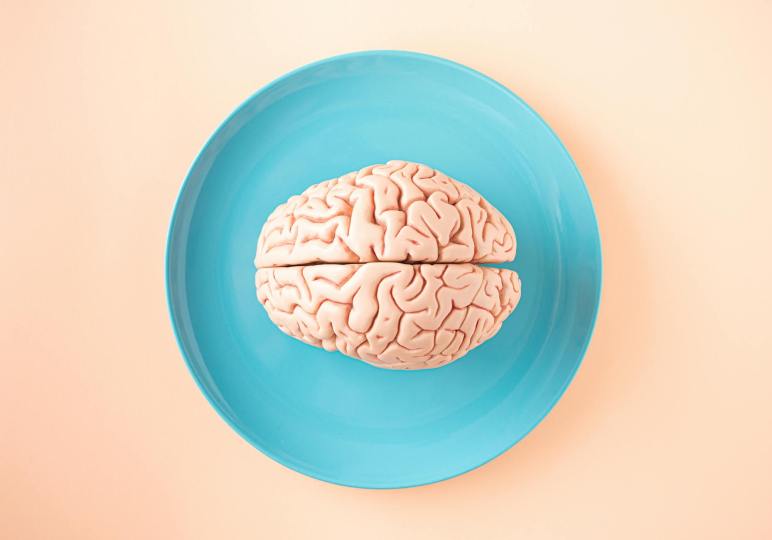
So let’s talk about what’s happening with multitasking. You’re not actually doing multiple things at once, your brain is cool, but it ain’t that cool. The truth is that you’re task-switching. Focusing in short bursts of time on one thing, only to move to another before you can fully complete, appreciate, or solve the task you’re on. The real kicker to this is that it’s actually not very efficient, and it can lead to poorly done work, distraction, not finishing, and feeling like everything you did that day was half-assed. And it was. Or…half-brained.

What in the hell does it have to do with tomatoes? Ah, yes, excellent question. Now that we know that multitasking is actually hurting our brains and productivity, I want you to think about monotasking. That is, just as you would think…working on mononucleosis. No. Just kidding. It’s working on one thing at a time.

*gasp* But how will I accomplish it all?

Well, first of all, remember, you don’t have to accomplish it all. Society, work, culture, pressures, none of it is actually real. These are concepts and constructs we’re controlled by so…prioritize first. Pick 5 things. 5 goals for the day or week and if the rest of your ‘to do’ list doesn’t support or contribute to those 5 things, then feel free to drop them to the side. Now you have a paired down and necessary list. Ta. Fucking. Da.

But what about the tomatoes?! Right, right, I’m getting to it. So now that you have your goals, instead of bouncing from one to another and back again, we’re going to try a little technique called Pomodoro. What’s that you ask?

Why it’s Italian for “Tomato”.

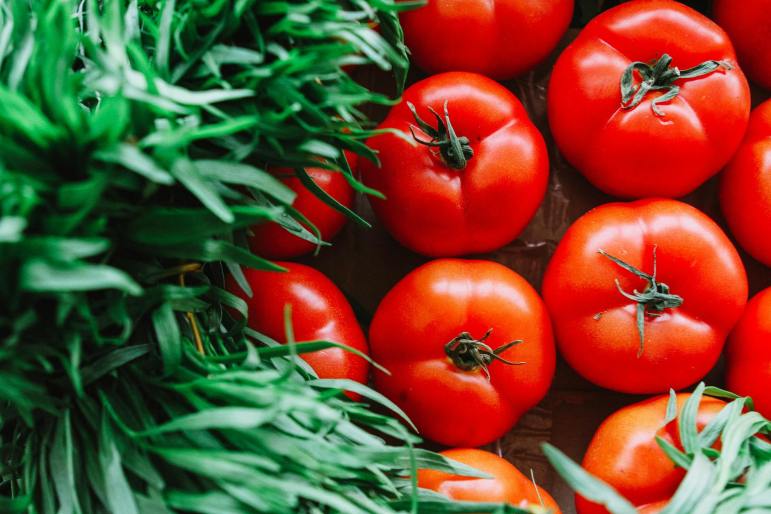
Photo by Miguel u00c1. Padriu00f1u00e1n on Pexels.com

This technique was created by Francesco Cirillo who initially used the tomato-shaped timer in his kitchen to keep tabs on his productivity. And it goes a little something like this:

  • Choose a task, get prepped for it.
  • Set a timer for 10, 20, or 25 minutes (if this is new, start with ten, if you’ve got mad focus skills, you can work your way up to 50, but no more than that). You can use your phone (away from your desk) the microwave, an alarm clock, an hour glass…It doesn’t need to be a tomato timer. But how fun if it were.
  • Sit down, sans your distractions (put the phone in another room), and work on the task at hand. Just that task. Whether that’s writing, or bill paying, or marketing, or physical therapy.
  • Don’t quit, don’t stop, don’t task switch, until that little ‘tomato’ sings the song of it’s people.
  • Take a five minute break, stretch, move your body, throw some laundry in the washer, play with the dog, get a glass of water, meditate, do some breathing exercises…whatever gives your brain a break.
  • Reset your timer, and start on the next (or same) task for another chunk of time.

The Pomodoro Technique is more than just a nifty way to manage your time, but it gets your brain into the habit of focus, and with focus (especially for us writers) comes flow state. Flow state is that lovely area where we become engrossed (don’t like that word) in our work and our characters and the rest of the world melts away. Its good for your endorphins, it’s good for your writing, and it’s good for you.

Plus, the small breaks between actually serve another purpose by helping your mind “consolidate” what you’ve been working on. Neural consolidation is an actual thing wherein, after learning or working on something, taking a break will allow your brain to rest, think, and forge new neural pathways so you’ll actually absorb and save the information you’ve worked on. See? The brain is cool.

I’ve been doing this now for a while and I’ve realized that on the days I try to multitask, I get less done and feel more frustrated. But 30-40 minutes of concentrated time, actually equates to a lot more quality work getting done and me being able to give the focus and time to each task like it deserves. I also feel more relaxed and accomplished at the end of the day, instead of flustered and overstimulated.

Give it a shot and let me know how it works out for you.
Ah, Buckle This…A Pantser’s Guide to Buckling Down and Plotting

They say we are divided, us wily writers. Those creative fluffs that let the words burn through them and damn the story arc consequences until the laborious editing process. Those starched-collar spreadsheet architects that engineer the life out of a story until it can be laid out like a mathematical equation. Two ends of a long spectrum encompassing how we all go about writing our stories.

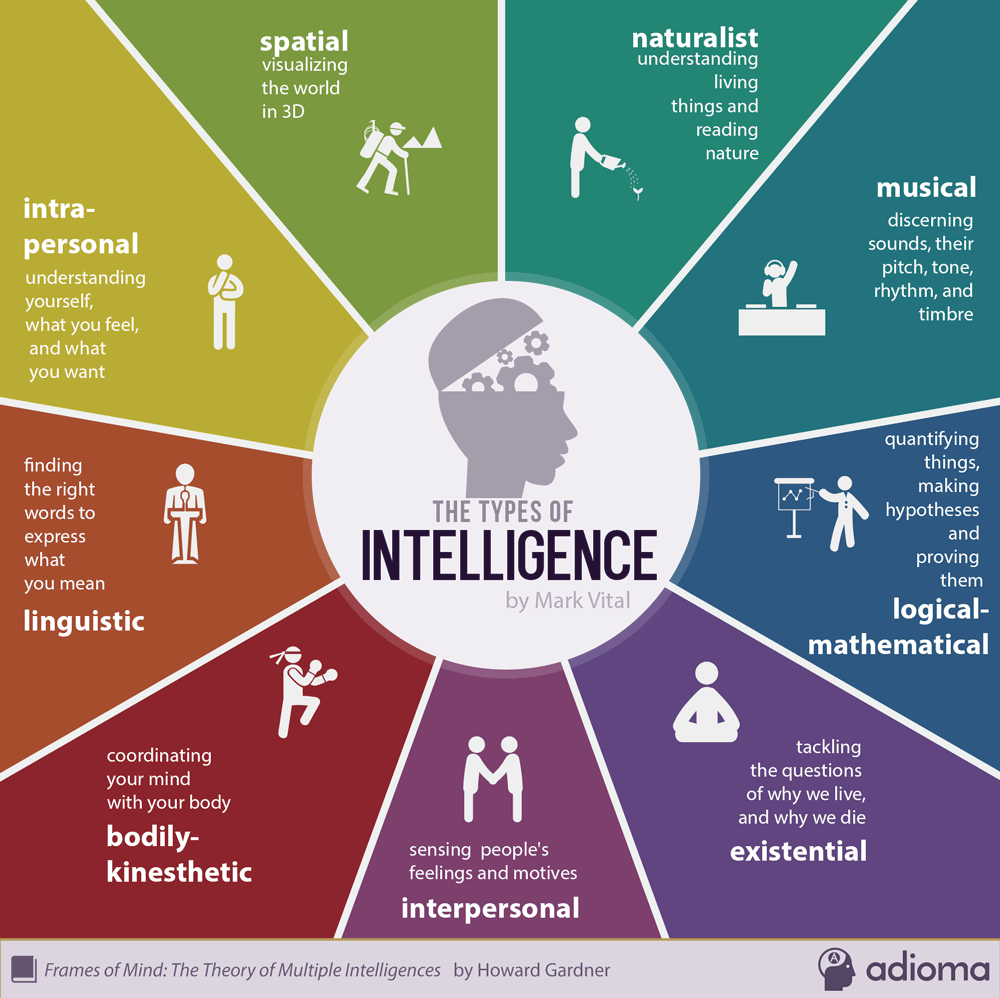
Whether you’re on your first novel, your seventieth short story, or your tenth attempt at nailing flash fiction, we all have a style that suits our particular intelligence. When I use that word, intelligence, I’m not talking IQ scores or any other accepted standardized measure of smarts. I’m talking about the way we each learn and create. Some of us are spacialists. Some of us are naturalists. Some of us are mathematicians. Some of us are socialis–uh…well not ‘socialists’ in the negative way that gets a bad wrap these days…social butterflies? We all have strengths in different areas of “smarts”. (pssst–check out the cool infographic from blog.adioma.com–based on Mark Vital’s work. If you have an extra minute, look through it and see where your head’s at)

HOWEVER, each one of us–and I’m making this assumption because you’re reading a writing blog–are gifted with some level of literary intelligence. Storytelling. Weaving words. Building worlds with letters. So let’s start on that common ground and get to know why plotting out your story, no matter how fly-by-the-seat-of-your-pants-writer you are, will help free up brain space for better writing and save you a literal shit ton of time in editing.

I’m a pantser. I’ve always been that way. It’s a creative deluge in my brain on many days. Hundreds of thousands of words, hundreds of characters, plots galore. ALSO– at least six unfinished nearly full length novels, countless ‘story-starts’ as I call them, and plots that have fizzled simply because the fire burned itself out when it hit the cliff of not having a plan.

If you are on my side of the spectrum, how do we avoid the graveyard of fizzled projects, laying stagnant on our lap tops?

Well, we simply need to learn to buckle down.

OK, OK, COME BACK!

No one shuts off Billy Idol

Jesus, I’m not some pastor dad from a bad 80’s movie, trying to tell you to shut off the Billy Idol and get a real job.

I’m just saying, as we mature as writers we can still have fun, and be responsible (I feel like a “The More You Know”, “after school special” moment coming on) to our stories and characters.

When I say buckle down, I’m thinking more in terms of a roller coaster. The buckles keep you secure while the ride still thrills and delights.

Here’s how I balance out my willy-nilly need to write untethered and the reader’s need to have structure (yes–reader’s need structure…what happens on the roller coaster is fun, but they don’t want to fall to their deaths on the first loop-d-loop)

  1. When you get your idea (character, plot, situation etc): Write the hell out of it. I always think of them as scenes. I imagine situations or characters that play out in my head and I just write without self-editing the movie in my head. this can be a couple of pages, up to even 10-15 pages of material. Once I feel, like this story/character has potential and I want to know more about them, that I want to invest book-length time and effort into them, I then…
A River Sleeps Through It.
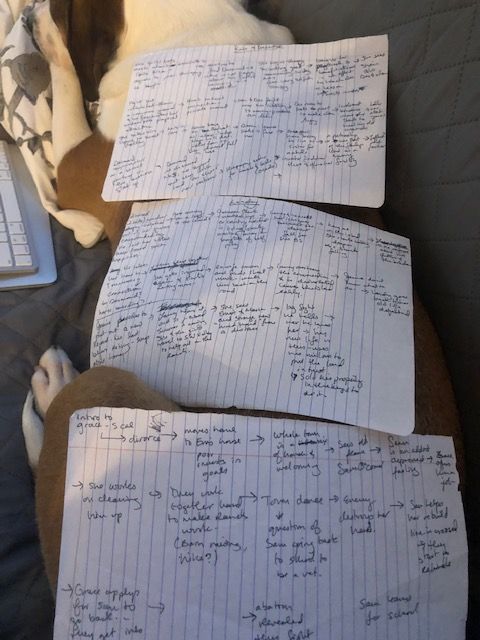
  1. Create a loose story-line. Usually on an informal notebook page, turned sideways. Some people use graphics and spreadsheets. I know myself. If I started doing that it would turn into flashbacks of Anthropological Research Methods and my only C paper…ever… ew, statistics David. That would take all the joy from it for me. Like strapping into a roller coaster with seven belts and having the cart inch along at a safe three-mile-an-hour speed. Don’t fence me in, Excel.
  2. The story line doesn’t have to be crazy detailed. But it should have an act structure. Sure, I could dictate (*snicker* dic-tate) that it be a hard-line three act structure with appropriate crises and resolution points. But some stories require more, (rarely less). If you went through step one above, chances are you have a pretty good idea of at least the beginning and end. You know what your character wants and if they get it or not. The tricky bit is in the center and that brings us to this…
  3. Plotting is important because it will help you get through the doldrums of the middle, where most novels go to die. Having some definite ideas about how crisis points build, where and when they come to a head, and how your character changes afterwards will help you know what to write next to keep the story moving in the right direction. Within that outline, is still a great abundance of wiggle room, so don’t get caught up in specifics when you draft your outline.

Well, I think that that’s all I’m going to torture you with today. You might find, by starting with this simple diagram you feel more comfortable elaborating on it, adding plot points, character transition moments, and secondary or series arcs into it. Good luck out there, pantser. Buckle up, writers. It’s one hell of a ride.

Photo by Dana Cetojevic on Pexels.com

Big, Weird News

Well, shit. I don’t know how to say this but, I sort of did a thing. A thing I’m not sure if I’ll regret or not. Or if it will destroy my life, my writing and my sanity. But… remember last week’s post? No? Go back and read it, I’ll wait….

Okay, so now that we’ve established that the heart is a weird and dumb critter who regularly drives us off of cliffs, the big, weird news is that I went ahead and veered my Studebaker straight off the cliff into taking over the Director position and ownership of Writing Heights Writers Association. Yep. I’m soon to be in a position of authority and that’s…the stupidest thing I’ve ever heard of.

But the fact is, my heart did it. Because I love this group. I love it’s members and its potential, and the things it can do for writers, in their struggles and grief and in their times of triumph. Because I believe in writing and I believe in writers. And I couldn’t see it fizzle and die out. And I’m definitely not guaranteeing it will thrive or even survive, but I made the choice based on a tenement I hold pretty close to my heart. It comes down to something I spoke of last weekend at the RMFW Colorado Gold Conference (I hope you made it) about Fear.

I have to credit a good friend with a phrase I heard in one of his lectures. Safety is not a place we learn anything. You could keep your Studebaker on the road, safely from one point to the next, never look around, never make a pitstop, and be the same damn person you were when you left as when you arrive. It is by throwing ourselves into the stupid and weird, and impossible that we grow. That we learn. That we discover. And what in the hell is life for, if not to discover?

I can’t run it the same way anyone else did before me. I’m not a smooth operator, I don’t have vast amounts of clout or money, or talent for that matter, (haha). But I’ve got this jabberwocky heart of mine. That’s a little wild, and a little goofy, and all about joy and puppy-like enthusiasm. All gnashing of teeth and snickering of snacks. Too full of love to ever make exactly the right decision. Sometimes it can’t even make the most practical one. But safety is not a place we learn anything. Practicality is a tether we’re given to remain docile.

So in the coming months I’m going to be gearing up to take over (starting officially in January). I’ll be trying to learn about processes, current issues facing writers, networking, and taxes and community building and all that wonderful and horrible stuff that nobody taking classes or going on retreats will have to think about. I’m going to think of my writers and my amazing team first, and my comfort second. I’m going to do my best to keep the heart of this thing wild, but filled with enough love and compassion to be reliable. I may be reaching out to some of the amazing and beautiful people I know to ask for advice and warnings. I’ll probably need to lean on friends until I find my balance.

All I really need to do now, is to make sure there are some good plotters on my side, to keep me from pantsing this thing into the ground. Stay tuned, and we’ll go on this ride together. Maybe we’ll even learn something.

Just For Today…

Hello writers, readers, and fellow stardust-filled meat suits,

This is a friendly and short reminder that this is the only day you have.

Yesterday is gone. Tomorrow is not promised. Today is what we get. This day, this hour, this minute, this breath. I hope you are up, ready to face it with a sense of calm purpose. What will you do today?

Not sure where to start? Here’s how I do:

  • Move your body: Go for a walk, do a little yoga, take a run or a bike ride, lift something heavy, find the quiet repetition of a lap pool, beat the hell out of a boxing bag. Whatever the motion, be grateful for the body you’ve been given and love it.
  • Write something. Anything. A grocery list, 2000 words on your next novel, a poem, an essay, a letter to your mom…a lunch box note. Put hand to paper (or keys) and share a bit of your soul out into the world.
  • Read something. Take in a few new ideas, challenge your knowledge, tease your curiosity. Learn something new, then sit for a minute and think about that something new. Can you related it to something you knew or thought before.
  • Breathe. Slowly. In and out. Do nothing but breathe, for at least three breaths, at least three times a day.
  • Eat good food. Whatever that means for you. I’m not talking latest diet fads or what you ‘should’ eat. But what’s good to you, your soul, your happiness, and your sense of fulfillment. If its green and leafy all the better, if its all crunch and salt, so be it. But let it bring you joy.
  • Devote time to your purpose. Maybe that’s writing. So sit down and write. Maybe that’s your current job, buckle down and find gratitude in the work. Maybe that’s taking care of someone else, find fulfillment in that. But give focused time to your passion, and your goals.
  • Do one thing…anything, not for yourself. Help a neighbor, take a grocery cart back, help a coworker with a project, give a ‘yes’ to something that lightens the load of another. Send a note, donate to charity, drop off food at the food bank, hold the damn door, offer a compliment. Say thank you and please. It really takes so little to be kind. So do that. In any way, big or small, that you can.
  • Rest. Maybe it’s a moment to stare off into space, or to do a puzzle, or to lay down with your snoring dog for twenty minutes. But rest. We’re not machines and its in those quiet times that our brain processes all the stuff we’re doing.
  • Tell someone you love them, or appreciate them, are rooting for them, or that they are important to you. Whatever and to whomever…tell them now. This is your only day.
  • Spend time with the people and places you love the most. At least a little time. Be present with them. Make a memory. Make it count. Make them laugh.
  • Laugh. The greatest punchline to human existence is that, despite all of our struggling, our toiling and effort, none of it really matters. We are an absurd little glitch in a vast and uncaring, infinite universe. We are ridiculous and short-lived, so find humor in all that you can. Because laughter is a bit of a middle finger to the whole pointless play, and at least by laughing, you’re enjoying the flash-in-pan ride.
  • Love. You can chose a lot of things in life. You can choose to get ahead, you can choose to keep it simple, you can choose to pull back or spring forward, you can make choices for your life and your goals. You can choose to hate someone and extend that. You can choose to love. It is our greatest power and our greatest folly that we get to choose how we radiate into the world. I ask that you choose love. Love your fellow humans. Love your planet and your world. Extend grace. Live compassionately as though that was an unending resource (it is). Forgive. Let go. This is your only day, so just for today, choose to love.

Try the list, then go to bed. And then…when and if (and I hope it’s when and not if) you wake up in the morning, be excited and ready because you get to do it all over again. Just for today.

Writing with Purpose

Good morning, loves. I’ve been trying to read more lately. Everything from scientific studies on stress response, to the humor of philosophy, to the life and struggles of Van Gough, to a naughty Priest with a BDSM kink…ahem. I’m well rounded like that? And I find the more curious I am of all these very different genres, the more I start to think about my own writing.

It’s not uncommon for humans (writerly ones or not) to start to feel deflated, stuck, and more going through motions than genuinely living. We, especially in the corporation that is America, are caught up in a terrible kind of rat race (including plagues, famines, lack of health care, underpaid and overworked) and it can feel that most of our days are spent drudging through. From one task to the next, one have-to to another. Its universal in our culture.

So, because I’m an absolute book dragon, I am also reading an interesting book from the 1950s called “Words to Live By”. I’d found it in my grandparents cabin last year and have taken to reading a ‘chapter’ here and again when I’m feeling stuck. The caveat of course is that this is an old book, with some entries being incredibly biased, a little too religious, and some conforming painfully to the unhealthy standards of the time. But, because I’m an information whore, I like to read them and filter out what’s good about them.

The one I recently read was about purpose. And how we can get caught up living a very drab, unfulfilled life. The trick, the author wrote, was to live as if one of your heroes/heroines was watching. To live in such a way that the people coming after you had something to look up to, to aspire to. And I kind of think this is brilliant, because it doesn’t necessarily mean that you have to do something great or large or be someone well-known or famous. It could just mean that you are a living example. You create a set of standards. You are influential to both good and bad ends. And you never know, who will be watching.

As writers, I hope that we approach our purpose in two ways. One, that we stay true to what we write. Meaning, we write what we love and we don’t cater or cow to the demands of the market. Also, this means that we invest in our writing by constantly questioning it and striving for the best possible book/poem/essay/article we can write and genuinely care about its quality.

And two, that we use our voices to entertain, educate, encourage, and uplift. Our words matter. Even if in a hundred years we’ll all be gone, our words will survive beyond us. So make them good words. Make them loving and careful words. Make them beautiful and true. Make them words that someone reading your book 75 years later doesn’t have to mentally edit or dismiss for lack of understanding and compassion. Do your best. When you learn something new or know better than you did, do better than you did. Find purpose in the fact that your hero/heroine is watching you, (even if its just your parent, or a teacher, or your kids) and make your writing and your regular life, worth admiring.

What’s Up This Month?

Wow, I’m so glad you asked. I’d love to say, I’ll be doing a lot of fall gardening, hiking to my heart’s content, writing in hoodies with hot tea and snuggling into the fall. Unfortunately, its still hot as balls here, and a writer’s work is never done. So none of that will transpire (though I may sneak away for a hike). Below are some links on where I’ll be, what I’ll be doing, and some cool books, events and classes I hope you’ll check out. Not to sound altruistic, but its not all about me here…

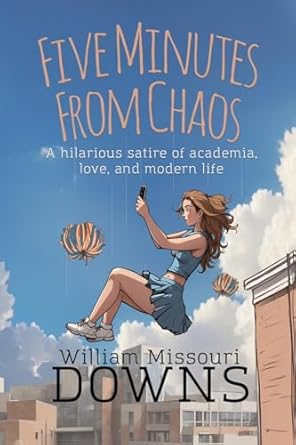
One of my favorite people in the whole world is releasing his first novel today (September 5th). William Missouri Downs is a delightful, ingenious writer. He’s been a play and screen writer for many years and this is his first foray into fiction. And let me tell you…its fucking brilliant. If you like humor, philosophy, and quick, fun, laugh-out-loud scenes, you won’t be disappointed. You can get your own copy of it here: 5 Minutes From Chaos

My first Youth Writer’s meeting happens on September 14th. The group meets once a month but in the next year we’ll be bringing in some stellar guest speakers and doing a lot more to help the members get writing time in and promote their work. If you know of a youth (12-18) who loves to write but who’s creativity is constantly being smooshed flat by diagraming sentences in English class, send them my way. Nothing but uneducated, free-wheeling writing going on here. It’s in person and virtual and FREE. Check it out here: Youth Writing WHWA

I’m taking my oldest daughter on a college visit to New York state. I don’t want to pressure her, but I’m really hoping she likes The University of New York Fredonia, because one of my bestest friends works there in the English department. I’ll actually get to see her while I’m in town, and this lady Rebecca Cuthbert, is a writer you should get to know. Her work is brilliant, dark, smart, delicious and spine tingling. I just love it. Her newest books and releases can be found here: Rebecca Cuthbert

I’ll be helping to host some of the events with Writing Heights Writer’s Association, so if you want more information on a great group that will help you better your writing skill and offer you a wonderful support system of other writers who really get it, check them out here: WHWA

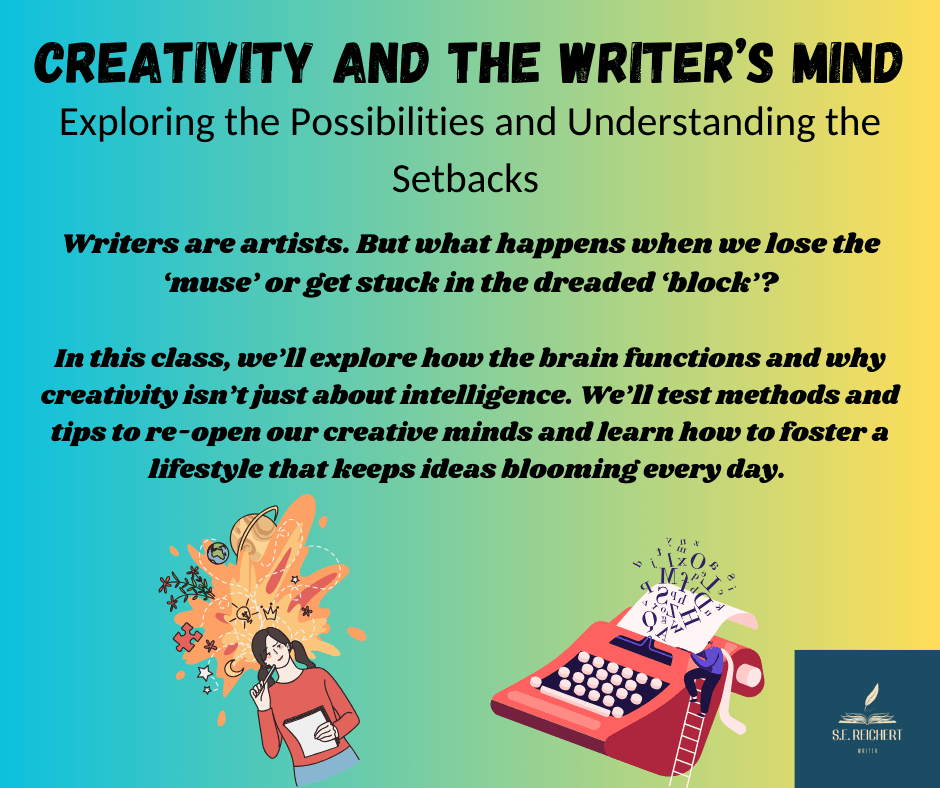
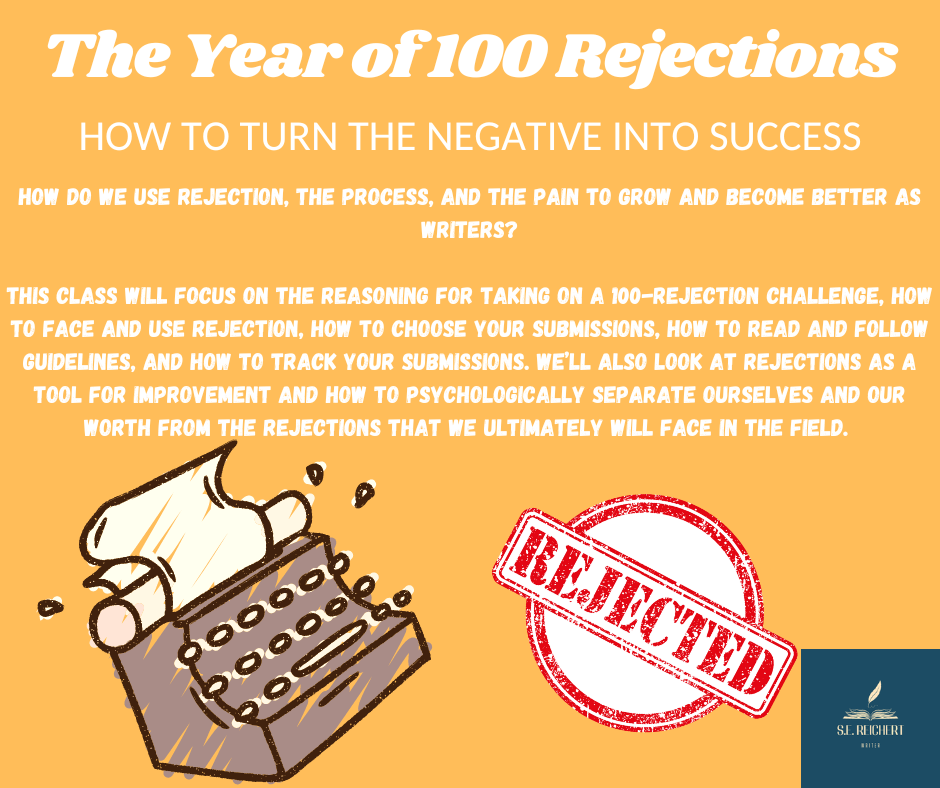
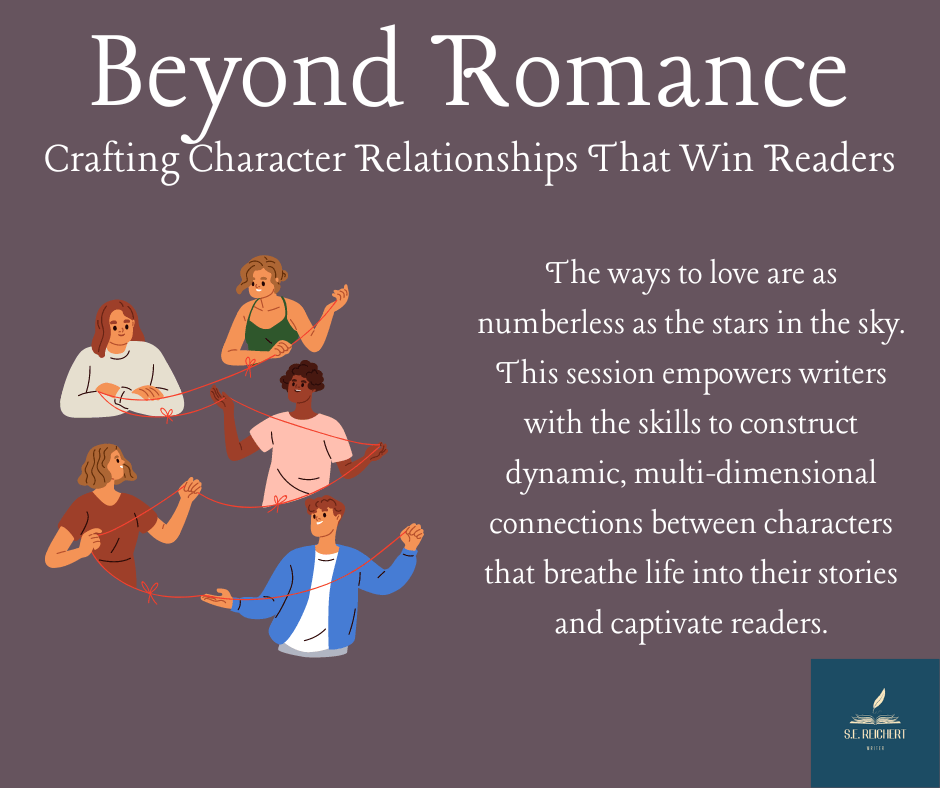
Finally, I’ll be attending the Rocky Mountain Fiction Writer’s Colorado Gold Conference at the end of the month and I’m all atwitter over it. Nervoucited? Excitous? I’ll be teaching the classes shown below at the event and trying to cram going to as many more as I can. The presenters are amazing, the content offered is awesome and I’m just gearing up to writer-geek out. Here’s the link if you want to register, because I would LOVE to see you there: RMFW Gold Conference.

Well, that’s it (as though all of this isn’t going to run me ragged) I hope that you find something cool to do with the month and I hope I get to see you sometime. Take care!

Backstory: The Sum of Our Parts

Hey kids! Today I thought I’d settle back into a little bit of craft. For those of you who are beginning writers, I hope this will be of use. For those of you who are super-sonic, advanced, best-selling writers…what in the hell are you doing reading my blog? Don’t you have launch parties to go to and movie studios to schmooze? As I consider myself a perpetual beginner in all things, I will continue as if this is something you still need work on, because I do.

Backstory…ah yes, all the shit that happened to your character before they land on the page of your novel. All of those pesky details that readers don’t necessarily need to sift through (100000 words or so?) but that are essential to why your character behaves the way they do, why they are where they are, and what fatal flaw we are hoping they fix. So how do we, as writers, weave the important details in without dumping large, boring, sagas of backstory on our readers? Here’s a fine bullet list:

  • WRITE IT OUT, BUT DON’T PUT IT IN: One of the best practices you can do is write out all those long, sweeping, historical scenes in a separate document. It helps you get to know your character better and to be able to write them from a place true to their history. That document doesn’t have to be seen by anyone else, think of it as writing an entry on your character in wikipedia to be able to better write them authentically on the page. Backstory details will have an easier and more organic presence that way.
  • CONSIDER YOUR GENRE: Some genres (Literary, YA, Regency Romance) tend to have more personal historical details, and if the main goal of the genre is a transition from the past to the present or future (coming of age, hero’s journey) then the past will play a bigger role and more time can be devoted to it. Readers in these genres expect as much.
  • MOTIVATION: Everybody has a WHY. If the motivation is obvious (he’s a cop because he believes in justice) it requires no backstory. If, however, they’re in a role or position that seems to clash with their personality or values we need to know a bit about how and why they got there. (She’s a cop because her father was killed on the job by a dirty partner and now she wants to ferret out the current Commissioner).
  • BE SELECTIVE TO ENHANCE THE FLAWS: If your main character arc is about how a closed down hunk learns to love again, then we need to know why they closed down in the first place. You don’t need to know he was the captain of the rugby team unless his heart was broken by a fellow player. Stick to the details that caused their flaw, or reveal something important about their values and personality that are essential for their evolution, or are the defining handicaps that keep them failing.
  • BE BRIEF: In this case, a hint is as good as a paragraph/chapter. Some of the best backstory is the kind that is interwoven, seamlessly within a paragraph. Related to the current events but powerful in its small punch. “When he asked if she wanted a peppermint mocha she scrunched up her nose. She hadn’t liked the scent since her grandmother had insisted she rub peppermint lotion on her feet every night. ‘No thanks, just a latte,” she said.” Here we see that she had to take care of her grandmother and it wasn’t pleasant. Young people in positions like that have a heavy sense of duty and often resentment. We learn this from one line about grandma feet.
    • If you struggle with how to shrink it down, see the above bullets for the most important details and boil those down further. Ultimately it’s about practice and thinking about how your own brain works; how certain smells can bring up memories, or being in a car reminds you of a trauma, etc.
  • IF IT’S GOT TO BE LONG: Okay, I get it, sometimes exposition is too important to the motivation, character flaw, and story to get cut down. So here’s some rules of thumb, if it has to be longer:
    • It better be full of gasp-worthy events
    • Write it in beautiful sweeping prose and be addressing a literary audience that doesn’t mind a good wander.
    • Make it hilariously funny

Well, there you go. I hope this helped give you a little boost on how to interweave backstory into your work. Good luck on your writing and next week I’ll have some announcements about the big ol’ month of September and what fun things are going down.

A Little Something…

Hello friends, writers and readers.

I hope this week finds you getting back into the swing of things and finding a groove. Whether that’s winding down summer and getting ready for fall, or getting your kiddos back into school, I hope you’re finding some time to rebalance, and recenter. I’ve got a little teaser for a book I’ve been working on this year. I thought it might be a change from the poetry I normally offer and maybe a preview of a book that will hopefully be coming out within the next year.

Enjoy!

No Words After I Love You: Excerpt

““I’ve never believed in God, but I believe even less now. If there ever was a God, then it was her. My planets revolved around her and the world did not deserve the warmth of her star. None of us deserved her.” Don knows I mean him; the great idiot has to know. I hang my head, chance a glance at the crowd, blurred through eyes that are viciously crying, despite my resolution to be angry over sad. “God doesn’t deserve her either.”

That’s all. That’s all I can get out and not point my finger at Don and his treacherous heart. How dare he ruin the last testament to my wife, even if I didn’t want to be here. How dare he show up and mourn a woman who was mine? I sit down next to my father who clears his throat and in it, speaks a volume of reprimands.

Denouncing God in front of the entire church on such a sacred day such as this, Charles?

“Add it to my tab, Dad,” I whisper beneath my breath.

The flurry doesn’t stop, and I think I sign some paperwork, and I collect the ashes, which were to be separated and scattered, between New York and Georgia. Both urns come home to the apartment, where a good old-fashioned wake has been dictated by my late bride. A wake.

Wakes are for Catholics, I’d said. She shrugged in her robe and took my chin in her hand.
They always seem like fun, is what she had said.

Of her own funeral, she wanted it to…seem fun. She wanted wine and music and dancing and laughing. I have the wine. I think Meg did that. Meg ordered the food too…It’s all here, and so is the endless trail of well-wishers, face after face. Graceless, awkward patting of my shoulder from nearly all. Gina was the hugger. They are not sure what to do with me.

The only thing that’s not here is Meg and I look at every new face that enters the apartment, every milling sheep as though she’s snuck in. Where in the hell is that girl? Maybe it’s my brain, trying to distract from my grief, but it’s got me worried. I haven’t talked to her since that morning when she asked me where to put the flowers after the service. I said I didn’t care. She said she thought she could donate them…

I said God could shove them up his ass. She said she was too short to reach, but she’d see what she could do…I unexpectedly smile in the middle of someone else’s story.

Where is Meg? Did she get left at the church? Left by the people she loved, once more? Orphaned again?
Two hours into the malicious and introvert nightmare, and the endless parade of people (thankfully Don must have taken my not-so-subtle hint and had the mind to stay away) is starting to quiet.

Meg walks in. I watch, from the kitchen as she sneaks through the front door, as if she’s trying to slip in without opening another wound. Her nose is pink and her eyes are watery from the cold. Or maybe its the grief.

She hangs up her scarf and that old threadbare coat. She pauses to say hello to my father, as if he deserved her softness. She’s walking through, not a soul recognizing the plainness of her, the very un-Broadway nature of Meg, in her simple black dress, probably the only one she owns, and probably only because Gina helped her find it. She gives people that awkward, tight-lipped smile that one offers in these situations, perhaps a handshake or a fluttering pat on the shoulder. But no words are exchanged.

My God, but she’s given me something to focus on. Poetry in her plainness, an anchor in this stormy sea.
I can tell she doesn’t want to be here. I can tell she knows she doesn’t belong.

I feel like she might try to sneak out. Give me some awful excuse tomorrow, like she was there but missed me in the hustle bustle of it all. But I can’t let that happen. Because she needs to know…she’s not abandoned. Someone notices. Gina begged me to notice her. As she passes the kitchen I reach out and take her wrist in my hand. It’s small and just the act of wrapping fingers around her bones halts her world.

I always think Meg is so much bigger, but she pulls easily into my arms and I’m just as startled as she is. The kitchen is quiet and I’m not sure why I react like such a desperate man, thinking she might leave. I’m not sure what to do now, with Meg so close. I cannot account for the grief in me. I am desperate. For any normalcy. For someone not in the business. Someone who…knows me.

“Where have you been?” I hiss.

“The park?”

My heart shoots up into my throat. The smallness of her wrist and how easily I was able to kidnap her into the kitchen makes me overpour in worry.

“By yourself?”

“I couldn’t—” she pauses and looks into my face. “I didn’t think you’d notice.”

“Didn’t think I’d notice? That you weren’t here?” Words come out of my mouth. I’ve been regulating all day. I can’t regulate with Meg.

“You’ve got a lot of people here and more socializing than I know you want to do. I didn’t want to be one more obligation for you.”

Martin, one of my favorite horn players from the pit of many a show-stopper, steps into the kitchen for another sandwich. He gives Meg an awkward, tight-lipped smile, and pats my shoulder lightly, before he leaves. My brain refocuses into the tired vulnerability, unguarded in her.

“Don’t leave me alone.”

“You’re not alone, everyone is here,” she points out.

“They’re here for her—” I ache. I look towards the sounds of laughter and stories in the next room over. In this sea, I am alone.

“I’m here for you,” Meg says and puts both of her hands on either side of my face. I look into her eyes, a quiet shore. I feel my face pinch up like I’m going to cry and that stupid girl, throws her arms around my waist and holds me. Buries her face in my chest, so I can cry and not be watched. She holds me so tight.
Like someone who loves you holds you. Without reserve, without any awkward pause, without worry for societal rules or false conclusions. I’m stunned into accepting. When was I last hugged? Hugged like a Midwestern girl hugs? Warm and close and like two hearts are trying to reach each other through the cage of ribs between. Never.

She smells like cold air and the traces of someone smoking on a park bench, and shampoo that’s soft and flowery. I could push her away and berate her for being stupid and sentimental. But my body sinks into the warmth. Fuck, I need a hug. A real one. Does she need it as badly as I do?

I put my arms around the smallness of her. I don’t know how tightly she needs this and I know I shouldn’t care, so I just hug her like I want to hug, and she shivers and I shiver back and I feel the tears welling up between us, a great lava flow started from an earthquake. I run my hands through her hair, and hold her tragic little brain next to my heart.

“My girl,” I whisper and catch myself.

Who’s girl? Which girl?

It demands an answer and I have to decide. “She was my girl.”

The grief flies its middle finger to my stoicism and Meg is so warm and close and just so…there…that I start to cry. And I don’t know what to do, so I just let it go. She’s whispering her anguish, I’m sorry, I’m sorry, I’m so sorry over and over like Meg was responsible for the treacherous cells or the decade long affair, or the loss of everything I thought was true. As if she was putting that on her plainly dressed shoulders.

Comfort in her warmth starts to feel like betrayal. I think she feels it too. I sniff and pull away. I’m too confused to have her so close. I’m too far into the middle of my grief, I’m bound to make poor choices. I can’t look at her in case any part of this ache is still in my eyes. She tries to look at me but I pat her shoulder like Martin patted mine. Awkwardly. Boundaries thrown up in defiance. I need to get out of this kitchen. Into a crowd where I can be unseen again. I pause and hand her a box of Kleenex before I go. I hear her sniff and pull out a couple before blowing her nose in a very…moose-like manner.

The honking of it brings the first tickle of a laugh I’ve felt in days.”

The Simplicity of Practice

I can’t tell you how much of my life I overthink. From what a friend has said, to what the scowl my daughter is giving me means, to the side eye my dog throws at me and the head shaking the man in the car next to me offers when I’m belting out Blink-182 lyrics… I overthink it all. I overthink every decision (but if I have a bagel without the egg I’m going to be hungry, if I brush my teeth now they’ll just get dirty because I want one more cup of coffee, but if I don’t brush them now, it might not happen today…) You see what I mean?

So when I’m given (or read, or listen to) writing advice, I tend to do the same. I over calculate how many chapters I should be writing a month to finish a book in a quarter. I’m diagraming the hell out of my character’s backstory (after a pantster first draft that feels too tepid). I’m getting lost looking at internet trends, publishing tips, and marketing plans… And so much of these grand ideas, sparked by advice to help in the long run (some don’t) but what they for sure do, is take up time. And invested time like that isn’t just the physical hours but the mental energy that it takes to process it all. Less mental energy means…less writing (or less quality in the writing?)

Recently, I read this great article on the timeless tidbit of: “just write”.

I mean, admittedly, it’s kind of a breath of fresh air. Simple. Not complicated. Correct. To be a writer, to finish your novel/story/project, you must actually write it. So…just write.

But it’s also oversimplified. If writing were just that easy, every person who’s ever come up to me and said “I’ve always wanted to write a book” or “I’ve started a novel but I can’t seem to finish it” would have oodles of books written. Wants made into dids. I mean, “just write” makes it sound like all we really have to do is sit down, the words will come, the knowledge will be there and the novel will march through beginning, middle, and end without fail or hiccup.

But writing isn’t simple. It’s akin to playing an instrument, and doing it well. Anyone can pluck the strings of a guitar. Anyone can thunk on the piano keys, but it takes more dedication, thought, and skill to actually play a song, none the less write one. But the practice is the road towards a better song.

So, as this pretty smart writer guy said, we should instead “Practice Writing.”

Practice Writing. It is better, no? You’re still doing the writing thing, but it comes with the lightened atmosphere of it being something continually tried and worked for, something offered, reworked, and perfected, but never perfect. Something we find joy in, while still being committed to the process of it.

And it helps me not over think it. Because every sentence, scene, poem, blog, or chapter I indulge in, is a practice, and a learning opportunity, but not a commitment to perfection. And just like an instrument, through trial and error, and time spent, we writers will get better and better. So, I beg you to go forth, and practice your writing today. Whether it’s 2000 words, or 20. Every plunking of the keys counts towards learning the complete song. Every word, every thought, every rambling blog post, is a writer in the making.

What’s The Deal, Brain?

I’m normally a prolific writer. Like…I can put down 2,000 words plus a day when I have time and am in the middle of the glorious magical lapse, where time ceases to exist and there is only writing. But of late, that space is hard to find.

Now, to be fair to myself, I did just get done with a big project for my writing organization as well as helping to put on a conference. The kids are home right now, and there have been a lot of to-do’s in life. All of those excuses aside, when I sit down to write, it’s less a raging waterfall and more a sad little trickle, if it happens at all.

At the beginning of this year, coming off a year of publishing five books, I told myself that the main goals of the year would be learning and teaching. I would take classes, I would teach classes and give my brain a break from the writing, and especially, editing aspect of what I do–at least in terms of publishing goals. But I think I did myself a disservice.

By not writing consistently, at least a little everyday on various projects, I think I’ve lost some neuro pathways. I’m having a hard time with my focus, with my word count, and with that magical blossoming of new ideas. But is that all? Because I’m pretty fucking loopy these days. Like can’t concentrate, I’m tired all the time, I’m crabby (granted the world is a shitfest currently), and often depressed.

This is where the post gets a little weird, but I encourage people (men, women, and everyone between and along the spectrum) to stick with it.

Let’s talk about perimenopause. (Ew! I know, but shut up and listen) Brain fog is real, ya’ll. It also means night sweats and if those don’t keep you awake, the random brain and body signals being sent will. Less sleep equals…even more brain fog. I’m struggling to find balance, and focus, even though I haven’t changed any of my normal dietary, exercise, or life practices. All this to say, sometimes, life and biology don’t work with us. Sometimes we have to find new pathways and methods to do what we love.

Right now I’m researching it. I’m trying to eat healthy, let myself rest when I’m tired, and (despite also still teaching and learning this year) I’ve started writing again. A small, simple and sweet little book that’s not requiring too much investment as of yet, because I need to keep practicing, but I also need to keep it enjoyable, and not too convoluted for the brain cells that are already fighting strange hormone dips and tricks.

I know I’ll get through this, I’m looking into therapies and other things that can be done. Because I’m committed to managing my health and I’m committed to my creativity. Even if that means (as a woman and isn’t it ALWAYS the case) I have to work a little harder to find that balance. I’ll keep writing, a little each day. I’d rather be stuck in the traffic going slowly in the right direction, then pull of the road and never get back on.

Take care out there kids, and bring a fan. It’s going to get hot randomly.