The Beautiful Writers Workshop: Week #6 Character Development


Good Morning! Quick announcement for those of you following such things. The Beautiful Stuff Poetry Anthology of 2019-2020, “No Small Things” will be released this coming Monday the 17th of February! Appropriately just past Valentine’s Day. That means you can buy it for a belated gift, because everyone knows the actual day is just a commercial driven, chocolate and sex-fest. (if it were just a chocolate and sex-fest, without the commercialism, I’d be totally for it.)

But a stunning book of poetry is the gift that keeps on giving.

Stay tuned for pictures, samples, and book giveaways happening this month and thru March. Also, be on the lookout for a book signing to happen this Spring in Fort Collins. I will let you know the date and place as it solidifies.

AND NOW THIS:

First off, where in the hell are your haiku’s?

None? Psh…cowards.

Okay, here’s a few from some brave souls out there.

Miss. Elliana Byrne from Boulder, Colorado sent me this lovely and thought worthy collaboration of five.

He said, I can’t help

With all your mental raving

You’ll have to sort it


He said, I was sweet

A juicy peach to bite, hard

But I talk too much


He said, breathe deeply

When I’m not so insecure,

He might give a fuck.


He said, I wouldn’t

Not with you, and your baggage

Stacked higher than sin.


They all want to taste

But none want to swallow me.

Jagged edge sweetness


Here are a few of my own in “honor” of the upcoming holiday.


1.

Silence stole my heart

You are gone, and I am lost

You were my constant.


2.

February lies

In drifts of heart-shaped candy

All love is false hope.


3.

Mechanical heart

Pumping without feeling love

Empty valves digress.


4.

She carried it well

Cancer of melancholy

consumed heart tissue.


There’s no time limit on these exercises and no order so if you want to send me anything from The Beautiful Writer Workshop, feel free.


NOW, ON TO THIS WEEK’S BEAUTIFUL STUFF:

This week’s exercise is short and sweet (not 17 syllables short, you’ll need some time on this one.)

Take ten to thirty minutes (together or in pieces) and pick either one of your favorite characters from a work in progress OR a favorite character from an already published book.

Write their backstory.

Where were they born? What was the name of the hospital? What time of day was it? What were they like in kindergarten? Did they run track or dole out drugs in high school? What’s their most defining internal characteristic? What strange thing do they do when they think they’re alone? What’s the worst thing about them, external or internal? What’s the best?

If you’ve already done this, then kudos to you. The writer that knows their character will have a much easier time telling their story. If you haven’t done it, get on it!

If you don’t have a character of your own, pick one of your favorite characters from literature (or dime-store novels, it doesn’t matter) and rewrite them as the anti-hero/opposite and be sure to have the backstory of why they turned out that way.

What defining moment in their life changed it all?

Okay. Go. You don’t have to send anything in on this one, but keep in it your file for your WIP. If you like it and find it helpful, do a similar exercise with the other characters in your book/novel/short story. Even the “sidekicks”. Everybody’s got a story.

Until next week, Happy Writing.
 

The Beautiful Writers Workshop #5: Haiku, can you?

Good Thursday morning, writers! I hope your week has been productive and your mental coffers are overflowing with ideas.

Today I’m going to be featuring some awesome first lines from the “Ten First Lines” exercise, as well as a few of my own. But first, down to business.

I realize we aren’t all poets here. I know that some of you have more the mind for long and involved stories. But, sometimes when time is limited a quick little scribble of something is better than nothing at all. Often, I find that these little scraps of creativity can lead me to a good short story or even get me over a plot problem in something I’m working on.

So today, your exercise is to experiment with the dreaded 9th grade (probably earlier nowadays) assignment of writing 2 to 3 haikus, alternately and if you are of the mind, you may write limericks (but no pilfering the dirty ones that still remain stuck in your head long after algebra has disappeared).

If you need a refresher, the haiku is a form of poetry, originated in Japan, following a syllabic structure in three lines. 5, 7, 5.

example:

“A World of Dew” by Kobayashi Issa

A world of dew,

And within every dewdrop

A world of struggle.

(Hey, wait, that first line only has 4, Sarah!)

Yep, that’s the thing, sometimes poets will play with the rule as long as they stay in the general confines of brevity for big ideas. such as this:

“In a Station of the Metro” by Ezra Pound

The apparition of these faces in the crowd;

Petals on a wet, black bough.

If we make a break after ‘apparition’ it works in format, but Ezra’s point was to keep that flow of the first 12 syllables of ideas all together.

So, see?
It’s not so rigid as your English school marm might have made it out to be. We’re adults, we can play.

Give me some good ones and I’ll share mine next time.

Speaking of sharing…here are some fantastic lines, the first two from our good friend and down right amazing human being, sid sibo:

  • It’s frickin’ hard to turn the page on a petroglyph story panel.
  • Stars brushed their gleaming fangs and the air itself glittered with frigid crystals.
  • WorkEatSleep was no life at all, not for a black rhinoceros, her skin slicked with ancient dust from a glorious continent.

No matter how you spin it, that lady is brilliant.

Here’s a few bites of the odd from my own homework:

  • My inflatable kiddie pool was infested by porcupines, high off my neighbors discarded edible gummies.

  • The toy monkey clapped at my ability to darn my own socks, still on.

  • Two, bonded-for-life redtails mocked her and her single membership gym card.

Okay. That’s all for today.

Go haiku.

Hell…if you’re a romantic, work on something for your significant other early before that made up holiday hits us next week.

OH AND…

LOOK FOR AN ANNOUNCEMENT HERE FOR THE RELEASE DATE OF “NO SMALL THINGS, A BEAUTIFUL STUFF POETRY ANTHOLOGY 2020” NEXT WEEK!!!!

(I’m so exited I could join those porcupines.)


The Beautiful Writers Workshop Week #3: Ten Ridiculous First Lines

As promised, here is this week’s workshop in form of a creativity drill. No stuffy mission statements or essays on the purpose of your writing and future endeavors in the field. Just good ol’ fashioned prompting. Enjoy!

Writing can often become stagnant. Let’s face it, we are caught in the grooves of our lives and sometimes a fresh idea is hard to come by. Even if we do stumble upon it, someone else has inevitably done it before and we’re left with the blank-page-stare, wondering if we’ll ever have that audacious lightning bolt that will shock the world awake with its brilliance.

I’ve been reading a little bit of Russell Edson’s short work and he has the most fascinating way of taking something mundane and jolting the reader with the unexpected. Edson would sit down at his typewriter and belt out ten first lines, no editing, just start chasing whatever strange little tail of a thought was dangling just out of reach in his brain:

“A man wants an airplane to like him”

Or

“A husband and wife discover that their children are fakes”

Or

“The household toilet wants to be loved and leaves when it isn’t”

What came of these lines is ridiculous and beautiful and like nothing I’ve ever read.

And that’s your FUN assignment for the week:

Write ten ridiculous lines

Pair things that don’t go, give life to the inanimate, sauté a hat, use the perspective of a floor or the voice of a garden snail. Make a shoelace dance round a fire at Burning Man. I don’t care; just be extraordinary.

Bonus: Take your favorite one or two lines and whip out a flash fiction piece (500 words tops).

Go play. Send me your favorites, don’t let them sit, face down on your desk, not bringing joy.

The Beautiful Writers Workshop: Week 2- Mission Possible: Drafting A Writing Statement

Read that title, again would you?


I know, right?! SNOOZEFEST!!!

I promise, this isn’t going to be as painful as it sounds and it might be one of the most useful tools you have when it comes to guiding your writing. A writing mission statement turns vague hopes for an outcome into solid ideas and language.

So what is it that you want your writing to do?

Last week I asked you to compose some answers to questions about your writing in hopes that you can expand on those answers in the coming weeks and use them in addition to our exercises to flesh out your writing career.

From those answers, you should have written down aspirations for what you wanted to accomplish in a year, month, week, etc, and the small manageable goals that can get you there.

This is a little different.

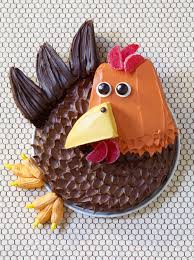
Thinking about the work in progress you’re embroiled in (be it a novel, an article, an essay, or directions on how to make a giant rooster shaped cake)

rooster cake2
Join me next time when I explain how writers are masters of procrastination. Like, looking up images for rooster cake.

I want you to write down what you hope to accomplish with this particular work. We’re talking end game stuff here. What do you want the people reading your work to walk away with afterwards?

Example 1:

Say you’re working on an article about the wage disparity in large corporations.

Take ten to fifteen minutes and write what outcome you want to see as a result of your article. How do you want people to see your subject of the story? How can you make them identify with the people involved? Is it to educate? To change policy? Do you want to give them the tools to make changes, or just to think about it in a new light and in a way that encourages discussion?

Once you know the end goal, it will affect how you write the story.


For novelists a mission statement is integral to developing a relationship with your reader via your characters.

Example 2:

I want my readers to identify with a cranky, semi-violent spirit, haunting an old seaside house and fall in love with him. I want my readers to feel the sting of being trapped, and the power of love to soften hurt.


Writing about what you want to write will actually help you know what you need to learn in order to accomplish this mission statement.


So here’s your job this week:

  • Write a short mission statement for your work in progress or your next work.
  • Share it with someone (accountability bitches)
  • Where is the next, imagined destination of this work?
  • If you have time—study some of your old work, and see if you can write a mission statement for them—what did you learn from each?
  • If you have time—think of your favorite articles, books, masterpieces and see if you can decipher what the mission statement was for them.

Oye, so much work. Don’t make me crack a whip.

Again, feel free to share. I love hearing about your purpose in writing and remember that sharing that will help to manifest your goals!

Next week we’re dipping into some heavy creative work to balance out all of this business side.


Take care!