Santa, Hippy Jesus, and The Importance of Choosing Joy

It’s that time of year when we are faced with a choice that defines our humanity. The choice to either believe in the light of the season in all the forms it takes and spread our own joy to illuminate the shortened days, or the choice to be a petty and divisive jerk and shit on other people’s beliefs.

Don’t be petty and shitty, not any time, but especially not this time of year.

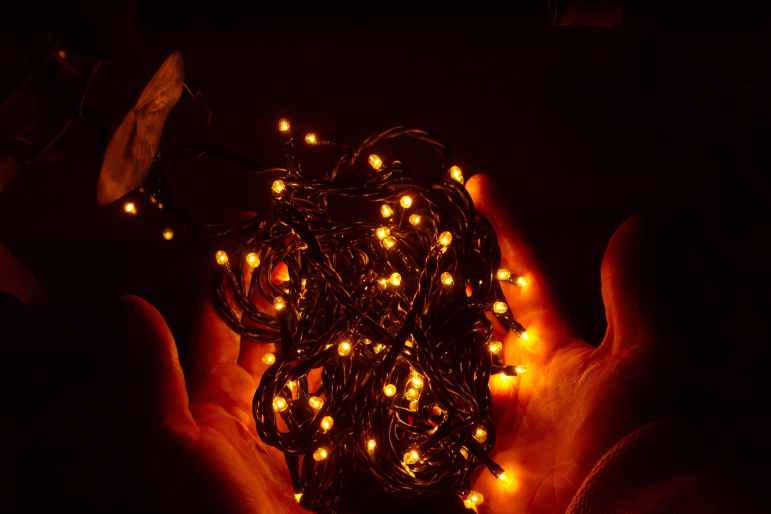
The world is dark enough as it is.

Be good to each other.

Psst… if you’re looking for a way to be good, especially after you read this tear-jerking post then click on this link and spread some joy:

uspsoperationsanta.com

And now, grab a tissue and enjoy…

Dear Madelyn and Delaney…

I hear there have been some questions at school and amongst your friends, about if Santa Claus is real.

There comes a time, in most kids lives, when they are taught to grow up and out of what some adults call “silly, fanciful, daydreams.” And so adults and peers will go about destroying everything that even whiffs of magic, and work hard to wipe away every ounce of stardust from the eyes of children who believe.

To this I say…Shut your mean-hearted pieholes, you wankers. (And anyone who hasn’t, at some point in their existence, called a middle schooler a wanker is probably lying. Let’s face it, middle school is not our finest hour as humans.)

I’m willing to bet that these are the same little judgmentalists that gave you sideways glances for not attending a church (particularly one of a Christian persuasion).

These are the people who will say it’s obviously impossible for a generous old guy to deliver presents to kids one night of the year, while simultaneously cherishing and accepting the “fact” that a deity impregnated a virgin and their child wiped away the entirety of sin in the world…

…uh…
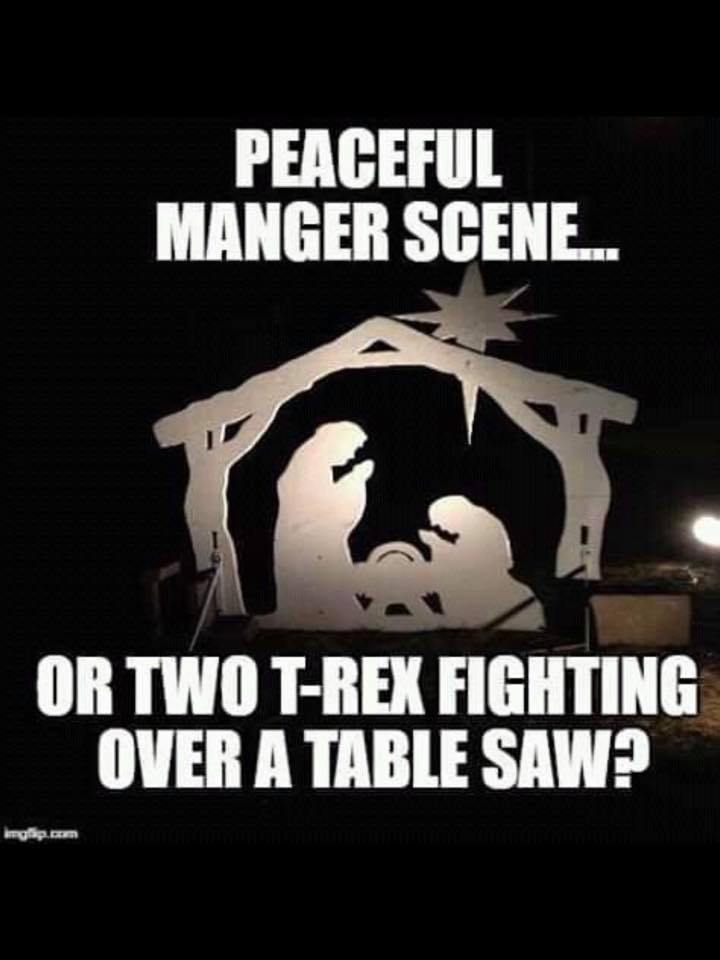
nativity

If they can suspend reality and base their lives around the idea of (albeit a cool),hippy/demigod, is it such a stretch to believe in a jolly old elf that spreads the ideals of generosity and selfless giving for just one day?

I won’t touch your demigod hippy if you don’t touch my fat guy in a red suit.

jesus-santa-bff
I bet Jesus calls him St. Bro-cholas.

I refuse to lose my stardust. (As Anne Shirley would say; I refuse to be poisoned by their bitterness.)

You want to know if there is magic? If Santa is real?

Here’s what I know…

Santa is real and magic exists.

How can I be sure?

I’m here aren’t I? You’re here, yes? We’re all here.

We were sprung from the unlikely combination of a chemical lottery and dumb, cosmic luck. We went on to survive hundreds of thousands of years of evolutionary death traps.

If that’s not magical, what is?

Here’s what I also know.

There are two types of people in the world.

Those that destroy joy, and those that spread it.

I KNOW that it does no harm to believe in something better, more beautiful, and magical in our lives (Hippy Demigod or Santa Claus).

I KNOW, it does no harm to fill our eyes with wonder and joy in the midst of the darkest day of the year.

I KNOW, it does no harm to hope and anticipate.

I KNOW, it does no harm to walk into these short cold days with elation in our hearts.

And I KNOW this:

what a horrible, dark and sad world it must be for those that seek to take away such light; those who disbelieve and ridicule others who hold magic in their heart.

It does harm to take someone’s joy.

It does harm to smother the fire of giving and generosity.

It does harm when we seek to oppress the light of selflessness in a world so dark.

I KNOW this; each one of us chooses what we believe.

We choose what we fill our hearts with and in a world that can be so gloomy and wretched, why would you want to fill your heart with anything that would make it even more so?

I choose to believe.

I believe in Santa Claus and I believe in magic.

I believe that there is light in the darkest of times. And I believe that the joy that radiates from hearts that hope, and love, and give, is more real than any hot air getting blown around by a bunch of self-conscious, hormonal, dying-to-fit-in middle schoolers.

Now listen: I can’t decide for you what you believe, but neither can they.

So you choose.

Embrace the joy, be the magic, and light up the dark… or reject the lot of it and wipe the stardust from your eyes.

As for me and my heart; I choose joy.

I choose to believe.

REMEMBER! CHECK OUT THIS SITE AND DO SOME GOOD THIS HOLIDAY SEASON:

uspsoperationsanta.com

red and white ceramic santa claus figurine
Photo by Ylanite Koppens on Pexels.com

The Moment of Pay Off

Every year I learn something new from participating in National Novel Writing Month. This year was no different. This year, I learned that sometimes, the project you think is a total loss, is reborn into something amazing with a little time and added experience.

The story idea that I began the month with was an old short story I wrote before my children were born. That’s probably 14 years ago people. Nearly a generation. I don’t know what drove me to pick it up again. I actually don’t know what drove me to keep it. But there it was on my computer—converted from an older version of Word, ratty and thin, barely holding ink on a page.

I’d seen the file, hanging on the end of my groupings of files like an unwanted 41st wheel, always in my peripheral. There’s that really odd one. Yeah, the one I wrote when I was in massage school? All about the herbalist turned witch. The one where I was still clinging to my Anthropology degree and geeking out over the prehistory of Scotland and Norse invasions? The one with the Mary Sue characters that fell flat on the page and fit too perfectly into every stereotype a 20-something inexperienced writer would believe?

Some of you may be asking why I didn’t just start a new project. Some of you are probably wishing I’d just get to the point, since you’re reading this out of a strange sense of obligation.

Well, when I went into a blank document for this year’s challenge, with 2020 hanging like a wet and heavy blanket over my body, squelching (yeah, I used the word squelching—don’t judge me—that’s the kind of word that needs to be brought back into the vernacular) any creative fire that might ignite, I just didn’t feel like I could accomplish the goal. I needed a buffer. A little boost. Something I wasn’t tired of working on, something not always shouting in my face to finish it…

Something in my peripheral.

And there it was—over there in that file innocuously labeled “Scot1”.

On to my point—

Knowing it was a shitty short story didn’t dissuade me. Because, somewhere in my brain, I knew there was potential. And the only reason I knew that, was because (and here’s the point) in 14 years of writing I’ve learned stuff.

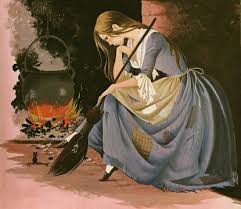
Ah, here reposes the introverted house slave–bereft of even her rodent companions.

Since I wrote the story, I’ve taken numerous classes, conferences, and workshops, on everything from plotting and character development, to crossing genres and writing fight scenes. I’ve taken classes on editing and how not to write. I’ve written some novels. I’ve done a lot of hard cutting. I’ve explored different genres and played around with suspense techniques and “aha” moments. So when I saw this shabby little house-maid in the cinders of the proverbial fireplace, I looked past the soot and rags and saw the potential beneath, not because I’m all-knowing about what would work, but because I had learned, through investing in my craft, what didn’t work about it.

And maybe more importantly, that it could be changed.

So, what was lesson number one? Trust in the process of investing in yourself as a writer. Admit you don’t know it all, and that others have good advice to give. Soak all the information in, approaching each class or workshop as a beginner, no matter how many years you’ve been writing.

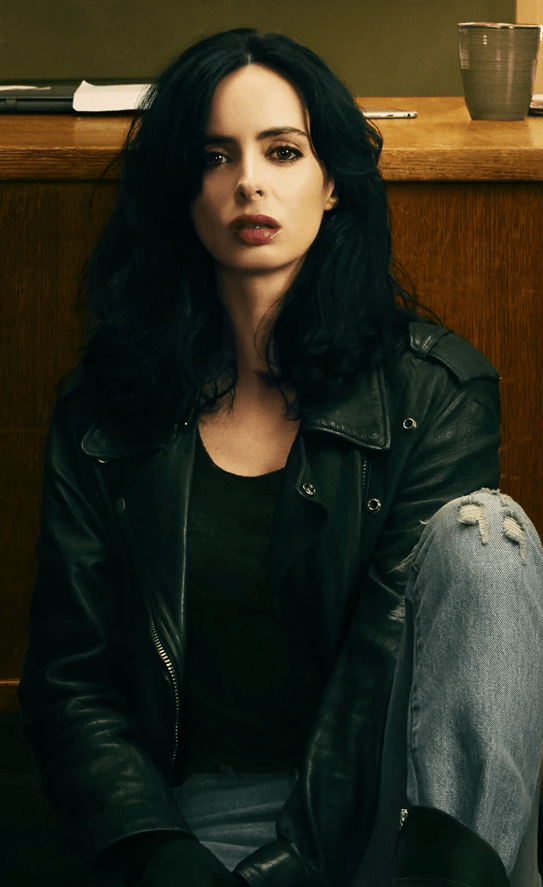
With knowledge, even the worst story can be made better. Knowledge also loosens the hold of fear that sometimes keeps us from progressing. Knowing how to cut and change becomes less heart-wrenching with the perspective of a better finished product. Knowing what makes a more interesting character, learning to take some of the polish off the Mary Sue, and turn her into more of a Jess Jones.

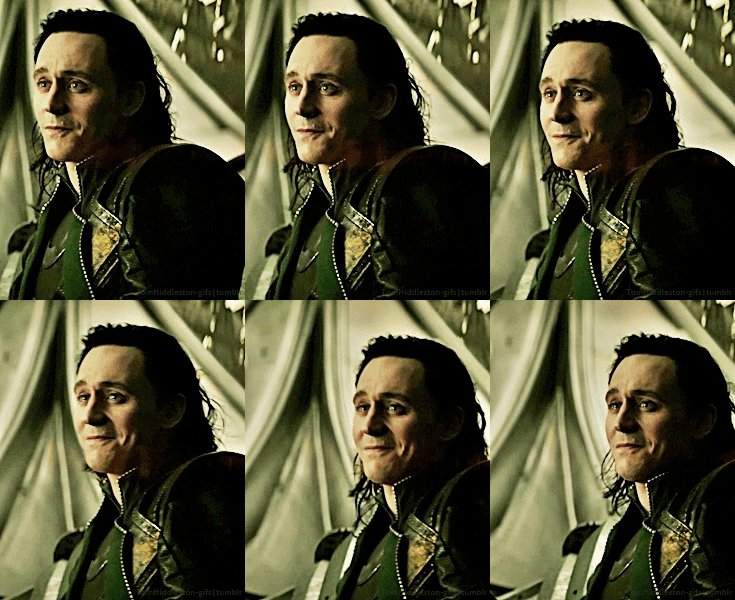
You can take a Snidely Whiplash and turn him more into…well…

When you give yourself the gift of knowledge, the list of what you can do breaks the boundaries of what you can’t.

Sometimes…you may even discover doorways that will bring over characters from other beloved series you’ve written…

Ladies and Gents–have a little Faith.

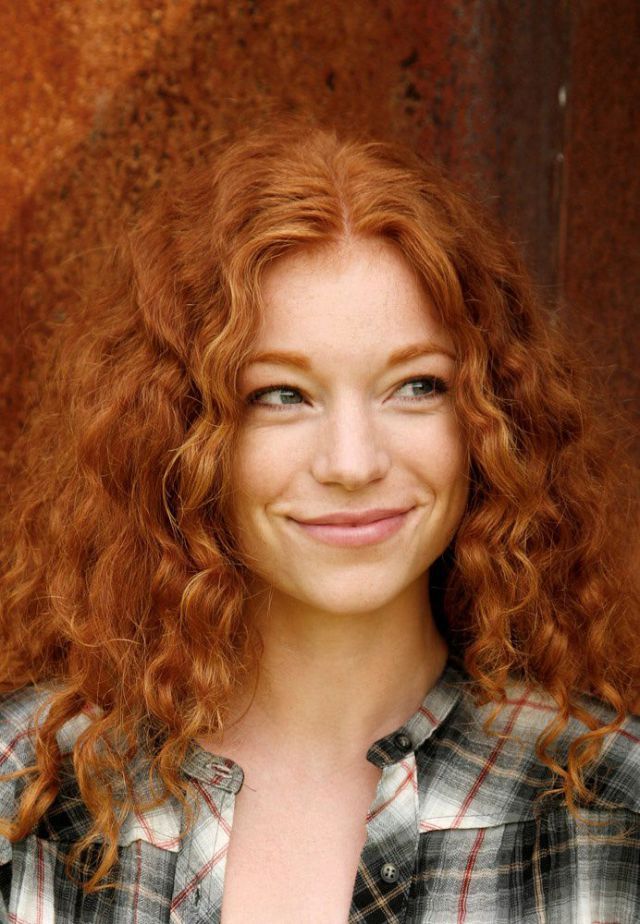
So there you go—look forward to a future magical realism/Norse mythology mix up with a delicious little love triangle, and the potential for a new generation of crooked smiles and bouncy red curls.

The Best Gift

As we move away from November, closer to the shortest and darkest day of the year, I can feel a collective sigh round the country. This year has been unlike any other, and although some of the turmoil is behind us, a mountain still looms in front of us. We aren’t even out of the proverbial woods on many of the disruptive and soul-shaking happenings of 2020.

COVID is still raging, probably more so because of the holiday season.

Racial Injustice is still scarring and poisoning our society.

The rich are getting richer (glad to see the stock market is so healthy while 1 in 3 American school-age children are suffering from food insecurity—are we still calling that kind of shit a ‘win’ for the economy?) The poorer are falling into depths of poverty they can’t begin to rise from.

The world’s still burning and flooding. Freezing and drying up in ever intensifying waves, destroying entire habitats and species within shortening periods of time.

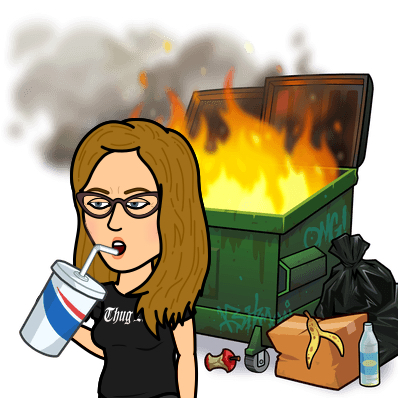
Did I come here to remind you of the dumpster fire caught in a tornadic shit storm that is our world? No, I did not.

I came here to remind you that you are a vessel of light.

I came here to remind you of your potential to shine even in the face of unsurmountable difficulty and hardship.

I came here to remind you that your attitude, actions, and struggles matter and can make a difference.

Am I preaching to go forth and be a Pollyanna, ray-of-delight-and-positivity, spreading goodness and sunshine to the masses so that they can catch your optimism like gonorrhea on spring break?

No. Jesus Christ, no. Certainly not.

Look, we’re all reeling. We’re all coming up out of the dark of our own prisons. We’re all trying to find balance.

I’m just asking you, in the gloom and confusion of your current state, to get out of your own head for a goddamn minute. Get out of your own misery and extend your hand. Haven’t we been marinading in our own suffering long enough? I’m saying take a break—go marinate in someone else’s—(ew David, that’s gross).

Here—let me try that again—

Do something for someone else. Donate a little more if you can (be it time, money, or resources). Bring your elderly neighbor groceries or offer to put up their holiday lights. Send care packages or thank you notes to your local hospital for the doctors and nurses who are worn thin. Call your mom. Call your best friend. Hell, call your best friend from high school. (Just–don’t call your ex—nobody needs extra shit in an already rampant shit storm). Patronize your local businesses for the holidays and take out.

Photo by Pixabay on Pexels.com

None of that appealing? Not feeling THAT altruistic? Ok, feed the birds outside, especially on cold days. Spend ten extra minutes playing with your dog (but don’t break your foot—Christ Joe, do I need to pack you in bubble wrap?) or be ignored by your cat, more often…perhaps at a closer distance. Read your kids an extra story. Hug them twice as long as you normally do.

Still not ‘up’ for that challenge?

Then at least wear your goddamn mask, wash your hands, and give people space. Stay home if you’re sick. Respect people’s level of comfort—do not call it unfounded or fearful if they choose to be cautious. Call it a civic duty to keep others safe and to not create more hardship to our front-line workers and medical professionals. Being a good citizen, respecting others, and  thinking about the well-being of our fellow humans should never be seen as fearful.

That’s what being a light is about. Thinking about someone other than yourself. And that, my friends is the best gift you can give.

If you can do that…just one or two of those things, I guarantee something amazing will happen. The world won’t just look a little brighter. It will BE brighter. You will feel it in the center of your chest. You’ll start to see the world as a series of choices, opportunities, to glow a little warmer. To spread more joy. And I can’t think of a world more in need of the simple, small acts of kindness. No Pollyanna pigtails and sunshine yellow dress required. (Unless you already have the outfit and bitch you look fine in it—then rock that shit).

Go on now—get out of here and do something with your codger-ly, huff-ly, badger-ly self. Be a reluctant light if you have to. But be one.

Validation

Good Thursday to you, writers and readers. Apologies for missing last week’s blog. I could leave it at that. I could lie and say I was too busy. I could pad the truth and say I was feeling a ‘bit down’. But part of the problem with mental health awareness in this country is that we too often lie or lie by omission about it.

Last week I didn’t post a blog because I was recovering from an anxiety attack and suffering a depressive episode.

Wednesday, I couldn’t hold a solid thought in my head. I couldn’t eat. I couldn’t predict when or how the next overwhelming wave of worry and tears would hit me. By Thursday, I felt like I had the emotional hangover of the century. The kind that leaves you with a raging headache. The kind that leaves you feeling empty and raw. Like you couldn’t bear to be touched, or spoken to, or even think of stringing together two sentences.

My anxiety was at a peak when I tried to voice my concerns and fears about the current state of our world. Some friends stepped all over themselves to shout out unsolicited advice, barrage me with guilt for not having hope and a sunny disposition. Tsk-ing their tongues at me for not being happy.

“Just smile” and “We’re all in this together” and all that bullshit.

If I had said I had cancer no one would tell me to take an Advil to cure it. No one would say I needed to re-examine my perspective to stop it’s growth. Yet, there it was, my virtual conclave shouting back all the answers I never asked for, simply because it helped assuage their own consciences. So that they’d feel as if they’d done their part to ‘help’ a friend in need.

And it got me thinking. About social media. About our current world. About what we do in our lives these days, as people, but also as artists, to find validation. See, I wasn’t looking for validation or rainbows or sunshine. I was looking for someone who was really listening, who was overthinking as deeply as I was. Who wanted more than a sound byte or click bait. Someone looking for a real conversation about our current addiction to opinions like ours. To admit that we’ve become so divisive that people are threatening others with guns, and running others over with cars, and all manner of horrible things because our individual perceptions of the ‘truth’ have been spoon fed to us by opposing sides in a virtual (read: NOT REAL) buffet of horseshit.

I’m not saying the truth doesn’t exist. I’m saying if you really want it, you have to make a concerted effort to seek it out. Know the perils of conspiracy theories and understand how to spot them, understand why they work on the delicate human psyche. Know that if something reads as degrading or judgmental of one side or the other, that it’s probably more opinion than fact and you need to get to the basic source of that pile of horseshit, not just take it at face value.

Where was I?

Validation.

Yep. So we get on the FaceBook and the Twitters and we read the sites and clips that these super-smart algorithms have determined make us salivate the most, and they keep feeding us the sugary Captain Crunch of news until we’re so assured of our ‘rightness’ that anyone not complying with our view is a contagious carrier of the ‘wrongness’. Then its only a matter of time before someone is whipped up into a frenzy and runs their car through a crowd of peaceful protesters or shoots someone with a MAGA hat, or shuts themselves into an oval-shaped office, a la totalitarian coup style, crying like a toddler about voter fraud.

Sounds like we’re ALL just a bunch of sheep. But why?

Well, darlin’, these systems are smart as fuck. These systems are designed to be addictive. They’re designed to validate our existence, our beliefs, our lives and choices. My God that like button is a sweet hit of virtual cocaine. The ‘heart’ and ‘care’ emojis? Ecstasy, baby. Someone out there LOVES you.

What in God’s name does it have to do with the writers and artists among us?

Well, as you know I’d left all that bullshit for awhile and was actually more calm and centered for it. I only recently returned because I wanted to have a space for my author platform. Because, and this is the professional side of this post, you HAVE TO have an online presence to write. Or at least that’s what we’re told. You HAVE TO build up an audience. You HAVE TO market yourself. Sell yourself. Get a following, if you ever hope to ‘make it’ as a writer. This is a new world. If you can’t roll with the changes, you’re destined to be left behind. You’ll never sell any books the old way, idiot!

What do you want to do? Just write?

Just write.

Just write?

Because you love it. Because you…never…started writing for the profit…you just liked to write….

Wait…you liked to write?

See it’s all a big system. We spend so much of our energy, our time, our lives, our hearts, trying to forge these connections in a world that–by all intents and purposes, DOESN’T REALLY EXIST. We base our worth on likes. On followers. On the number of hits our website gets. And then wonder why we feel so empty and disconnected and never quite enough.

I’m off social media; for reals. You may still see a profile pic pop up across the Internet-o-sphere, but you won’t find my content behind it. My website contract ends in February. I’m not sure I’ll renew it. I started my platform because I was told I had to, in order to reach more readers.

Do I want people to read my work? Sure, if they enjoy it…if it feeds their soul and serves their happiness, absolutely.

Do I want to expose too-big-for-its-own-good heart and threaten my well being to do that? No. Not anymore. I want to write. My time is finite. I will not be around forever. When I’m gone, my books, my poetry, my writing, will all remain. My Facebook account will be deactivated. I will stop being worthwhile to their algorithm when I’m dead. But what I write, what I put on paper will carry on (if anyone still reads books by then).

I urge you to examine your life. Examine your addictions. Do you control the content of your life, or is it being controlled for you? Is that content controlling how you live your life? What you believe?

Blog posts here will continue until February. I’ll be re-running old favorites as well as interjecting some poetry here and there. I already paid for the year, I might as well use it to share the things I love.

Take care. Really…I mean that. Take care of yourself. Your real-life, human self. You are one of one. You’re more than just 1’s and 0’s in a giant marketing scheme. Go be a real-life human. Do real-life human things. Walk outside, go for a run, read a book, write something, nap, work, make love, eat amazing food–and don’t post a goddamn thing about it to anyone else. I assure you, it still happens even if your social media sites don’t hear about it.

Happy living.

Poetry, Humanity, Gravel and Gold.

Listen Kids. We’ve been going hard at it now for the past few months all about writing theory, types of writing, how to write, what to write, and on and on and on and on…

Today is the last Thursday before the election and it has been a crazy past few months. To that end, I would like to offer you a little bit more of the Beautiful portion of The Beautiful Stuff.

There are no exercises to do, no work-in-progress to compare and tweak.

No Bullet Lists

Just a poem or two I wrote while camped out in the Rocky Mountains for a few days, re-evaluating my writing and, in part, my life.

I hope you find repose in the next week or two. I hope you weigh what is good, and just, and right for all of our citizens. I hope you vote with the conscience of someone who cares for their fellow human beings and all of our quality of life. I hope you vote.

When it’s done I hope you can let the last few years of hatred and divisiveness go. Put it down. Reach across the chasm that was created by small-minded men seeking to destroy unity and human decency. Those who grew their power by pitting us against one another.

I hope you can find rest. I hope you can find beauty. I hope you find your voice and you use it to stand up against injustice, stand up for your fellow human beings, and stand together against hatred.

Photo by Lisa Fotios on Pexels.com

Here it is. Poetry

More Gravel Than Gold

I hope that heaven’s streets,

are more gravel than gold.

That the armaments are granite peaks

and the angels’ song,

quaking aspen.

I hope that heaven’s throng is more full

of friends than the righteous.

That the memories of Grandma’s hands

will be photos regained in focus.

I hope that heaven is made of home

more porch swing and creek than opulent spire.

That they’re waiting to hear my tires in the driveway

and they’ll rush out with soapy hands

warm hugs

and how was the drive?

I hope that heaven’s streets

are more gravel than gold

And we’ll meet there together

on the porch, beside the hush of river,

telling tales of the journey in.

The Beautiful Writers Workshop: Novelty #8–Talk To Me Goose…or Dialogue

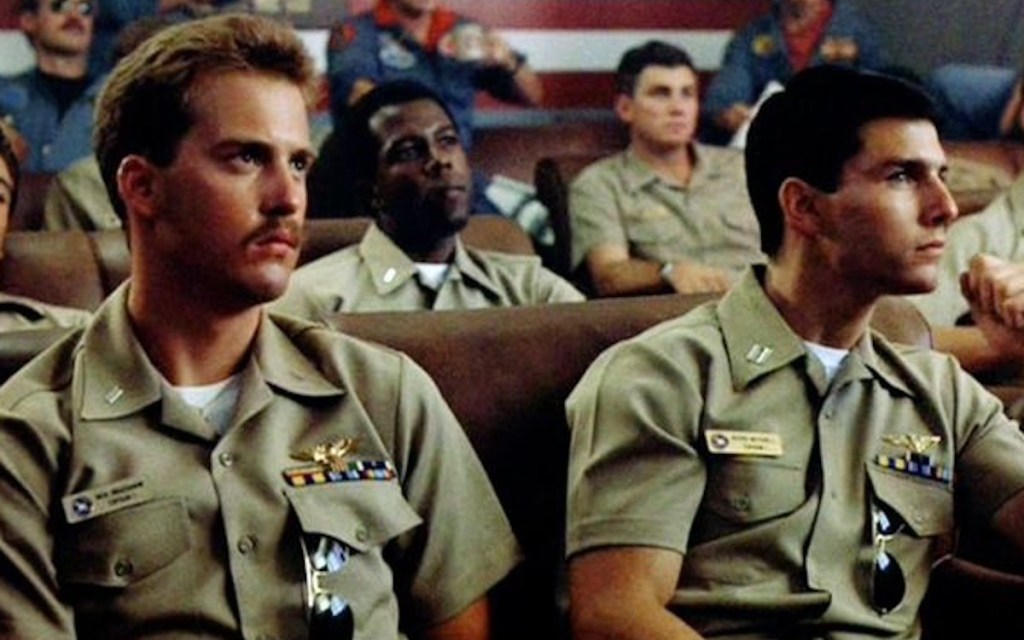
All right, listen. Top Gun did not have the best dialogue. At all. Like…not even remotely. BUT… I liked the headline so deal with it.

Today in the blog we’re talking about…well, your characters talk. Affectionally known as Dialogue. Writing dialogue like any aspect of your novel is an art, and one that will allow you to not only reveal character traits and all of those ‘shown’ details, it will also drive your plot. If you’re good at it, it will help your reader to know your character better and *gasp* if you have a flair for it, will provide extra entertainment. I’m a HUGE fan of witty banter when it’s appropriate. I’m a HUGE fan of letting dialogue tell the reader how two characters feel about each other.

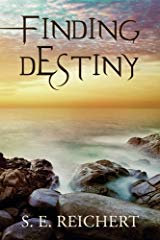
Take this little gem from “Finding Destiny”: Hank and Daniel are two of my favorite characters to create a scene with. They’re brothers and love each other deeply. But they’re brothers, so that love is shown in obnoxious teasing. Take a gander–

“Everything OK?” Hank asked after an uncomfortable amount of silence.

“Yeah, I just… I just have this gala thing to go to for the university in a couple of days and, I… I’m supposed to bring someone.” Daniel paused and looked at Hank.

Hank took a moment to swallow. Then he batted his eyelashes and waved his hand in front of his face.

“Oh! I’m just so thrilled you’d ask!” he shrieked in a falsetto voice. “Oh! You’re so dreamy!”

Daniel threw a piece of bacon at him and laughed. “Not you, jackass.”

“What about Maggie?”

Daniel shook his head.  “Maggie and I don’t really—”

“Do anything that requires clothes and public places?” Hank raised his eyebrow.

“We sort of haven’t seen each other since the once…” Daniel’s voice trailed off. He still didn’t feel exactly right about what had happened between him and Maggie, or how Destiny had witnessed the start of their one-night stand.

“No wonder she’s been shooting nasty glances at me the last few weeks,” Hank chuckled into his coffee.

Daniel sighed in exasperation. “I was going to ask you…if you’d mind…if I took Destiny.”

Hank inhaled his biscuit and started coughing. His face turned red and his eyes welled up. He looked sideways at his brother as he pounded his chest with his fist.

“Destiny?” Hank wheezed.

“Yeah.”

“Destiny Harrison?”

“Yes,” Daniel said, annoyed.

“Red hair, tall, drawly, hates-your-guts Destiny Harrison?” Hank took a drink of coffee to clear his throat.

“Yes, Henry! That Destiny.”

Hank held up his hand.

“First of all, there’s no need to call me Henry. Second, I thought you hated her, too. But mostly, why in the hell do you think I’d mind? She and I aren’t…like that.”

“Well, I didn’t know! You spend a lot of time with her. And I don’t exactly hate her. I just—” Daniel sat forward in his frustration and loss for words and looked out the window.

“Well, we only spend so much time together because neither one of us has a life outside of the shop.” Hank stopped with his coffee halfway to his mouth. “How embarrassing is it that I just admitted that?”

“It was pretty pathetic.”

“Yeah.”

“So?  Do you think she’ll go with me?”

Hank shook his head in bewilderment. “I don’t know, Danny. What about that ‘hating you’ part?”

Daniel remained silent and watched out the window. What about that?  He thought of her warm body pressed to his in the fervent moment of thanks. He thought of her shapely breasts beneath the nightgown, and the smell of her. The shyness of her kiss. The way she had gotten snippy when Maggie had stayed over. Hank paused at the unusual look of self-doubt on his big brother’s face.

“I think if you could get her in a dress, she’d do all right. Assuming she did say yes,” Hank said.

“Yeah,” Daniel said, displaced.

“Maybe if you ask her nicely…you know, not like you?” Hank said.

“What the hell does that mean?”

“Well, you know…come down off of your high horse. Just a bit. And stop being such a surly son-of-a-bitch!”

“You sound like her now.”

“I’m just saying that a little honest humility and admiration goes a long way.”

Daniel stayed quiet. Humility wasn’t really his thing. He wasn’t very good at admiration, either.

Hank continued. “And if she says no, I can rock a strapless like you would not believe, girlfriend.” Hank snapped in the air and winked.

Daniel threw his biscuit at his brother with a laugh. “Shut up.”

So, we get to see some deeper dimension here, with Daniel’s secret insecurities, his blossoming interest in Destiny as well as Hank’s affection for them both. We set up for a minor climax (asking Destiny on the date) as well as establish the risk involved. All while doing it with a sense of humor.

The import aspects to remember in writing dialogue are below (been a while since I bullet listed for you)

  1. Dialogue needs to be real. By that I mean if it is forced (for the purpose of info-dumping), contrived (how convenient to drop that info into conversation even though they had no other reason to talk…), or sounds like an outside narrator suddenly taking over your character’s body (Hey! Where did their drawl and/or British accent go?) your reader is gonna know. So make it a conversation.
  2. As mentioned above, keep your character’s in their character. If they don’t normally say much, save the monologuing for others or some big reveal moment. Many a time I’ve had to edit a dialogue because I saw too much of me in there. Tricky me, trying to steal the conversation. This comes with knowing your character and what they would or would not say.
  3. If the dialogue doesn’t do any of the magical things listed, (furthering plot, character development, information snacks etc) and its just in there to fill space or act as a buffer don’t be afraid to cut it.
  4. Read your dialogues out loud! It’s the only way you’ll know for sure that they sound real and authentic to your characters and to the story. This is also a great way to catch mistakes and to ensure dialect and vernaculars are in place.
  5. Don’t be afraid to use abbreviations and slang if it’s true to how your character talks. Destiny Harrison said “ain’t” a lot. Spell check hates “ain’t”. Doesn’t matter what the spell checker wanted, she ain’t changing for it.
  6. I could give you a spiel here about dialogue tags (ie ‘he said’, ‘she yelled’) after your character’s speak. I’ve heard both sides. In my kids’ writing classes they are encouraged to use something other than ‘said’ to liven the action, express the tone, etc. In my adult-y writing classes, I’ve been told to cut the flowery bullshit and stick with ‘said’. The idea being that if your writing is good enough, the tone and character already established, the reader will read the dialogue in the feeling intended. My advice? I don’t like either of these approaches. Sometimes a simple ‘he said’ works, sometimes, I get bored as shit with that and when my characters talk in my head, they rarely just ‘say’ stuff. I may err more on the side of the flowery therefore, but I don’t do it so much that very ‘please pass the butter’ moment is fraught with tension.

Okay. That’s it for dialogue today.

I think…(she said with a gasp), that might even be the end of our writing series on the Novel! (she yelled?) I’ll check in on that and get back to you next week. Until then, go over your dialogues, check their authenticity and tone. How can you make them better? More real human-like? Read them aloud, don’t ALWAYS listen to your spell checker. Write. Write Write. Good luck out there. See you soon.

The Beautiful Writers Workshop: Novelty #7– Setting

Photo by James Wheeler on Pexels.com

Good morning! So, here we are. Working our way through the bulleted list on Novel Writing. Today is about setting, but before I build up that world, I would like to remind you:

Keep in mind, there are many intricacies to writing a novel. It can’t all be learned in 7 points. Or 25. Or even 100. Most novelists have one or two ‘starter’ novels that never see the light of day. Because the process of writing a complete novel is, in itself, the real lesson of what does and doesn’t work. Until you do it, write it, fight through it, you won’t truly grasp which elements are most important, and how to get through the problems that you will inevitably face.

Now–on to Setting.

Setting is the world where your characters live, where the plot takes place and what influences those major themes. Setting includes physical space (mountains, city, country, house, street, etc), time period (modern day, future, Elizabethan England), multiplied by fiction and non-fiction (3050 space opera set on a distant planet versus 1944 Italy during the Second World War).

Photo by Miriam Espacio on Pexels.com
Photo by Pixabay on Pexels.com

I am a firm and staunch believer that setting is, itself, integral as a character in your story. Setting will dictate so much of your novel. The physical and temporal surroundings of your characters limit or promote certain behaviors, patterns of speech, choices, and opportunities. The setting, say a creepy old house on the coast of Maine, can even be a character itself, lending an influential factor to the events that play out. (Wouldn’t be the same if Destiny Harrison had moved into a swanky new apartment in L.A.)

My first piece of advice for setting is that if it is someplace or some time you aren’t personally familiar with, do a shit-ton (yes, that’s a real measurement) of research. If you can (time-machines not withstanding) visit the place, the area. Get a feel for it. Even better, do it in the season or hour that takes place in your novel.

If you have a scene on the harbor at dawn, your description will be more apt if you’ve been on a harbor at dawn. If you’ve never seen the bursting yellow of aspens in October, it’s hard to capture the exact shade of gold against the pinion green.

Secondly, when building the world of your novel, utilize all the senses. How does the sunlight break over the mountain? In dusty, slow waves or in a brilliant flash? Does the air feel crisp on the tongue or heavy with heat? What do you hear? This all goes hand in hand with showing the audience, not telling. Jack didn’t feel the heat of the fire. The fire seeped beneath his skin.

Thirdly, when you approach setting it is VITAL to find the balance between description and information dump. A common mistake (in my humble opinion) in even the most prolific writer, is to go on a little too long building the “world moment” to the point the reader is bogged down or the pace slows. Now, I understand, that some novels require a good solid understanding of their worlds (often if it’s unfamiliar to the reader– ie a sci-fi/fantasy or historical fiction). But, if you can manage, feed these tidbits to the reader throughout. Think snacking not gorging. Offer what is relevant, what moves or enhances the scene, or gives hints or important clues for later on in the book, then draw back and let the audience digest it.

Setting is a great place to build imagery, be a little poetic, and really put your reader in the middle of your novel. Similarly, sometimes the most simple of descriptions can be effective so don’t overwhelm with too long or heavy paragraphs.

Make it a living, breathing entity of the book, something that becomes part of the whole in a way that is inseparable from the action, characters, dialogue and voice.

Photo by stein egil liland on Pexels.com

This week, look at your work in progress, pick out a particularly rough scene and ask yourself what’s going on with the setting. How can it influence or help your characters actions? Look at your longer paragraphs, are there moments where your readers might be caught in a deluge of description? Boil it down to the instrumental aspects of setting. What tone does it overlay? Does that enhance the other pieces?

Okay. Good luck out there. Let me know how it goes.

The Beautiful Writers Workshop Novelty #6: “The Kid’s Got Style”

Good evening, my little writing gnomes. This evening I’m writing from the NCW’s writing fall writing retreat in Estes Park, Colorado. Firstly, if you’ve never taken a weekend, or a few days, to do nothing but devote time to your craft, I highly recommend you give it a try. When you aren’t weighed down by laundry, school emails, or cat’s randomly vomiting out food that they didn’t apparently feel like chewing, you can actually get a lot of things done.

We’ll talk more about that in a later blog. Today…it’s all about STYLE.

Style isn’t regaled to only novel writing. Every author has a voice. This is not the Point of View, as we discussed last week. A voice is an author’s particular way of writing. If you want to look at the extremes, you could compare the works of F. Scott Fitzgerald to those of Ernest Hemingway. Contemporaries and acquaintances (it’s argued if they were actually friends) they shared a propensity for two things, drinking and good writing. Beyond that, they had incredibly different voices. Hemingway was a man’s man, bull-fighting, womanizer. Fitzgerald was more introspective, a romantic, one might say. And their voices showed it and affected readers differently.

This quote hangs above my desk:

“For what it’s worth: it’s never too late or, in my case, too early to be whoever you want to be. There’s no time limit, stop whenever you want. You can change or stay the same, there are no rules to this thing. We can make the best or the worst of it. I hope you make the best of it. And I hope you see things that startle you. I hope you feel things you never felt before. I hope you meet people with a different point of view. I hope you live a life you’re proud of. If you find that you’re not, I hope you have the courage to start all over again.”

― Francis Scott Fitzgerald

Before you move on…read that again. Can’t you feel him speaking to you? Can’t you feel a hand on your shoulder or even a hand on your back (as one of my favorite inspirational women says: https://www.christinedercole.com/s/) encouraging you to take action, to not be dissuaded?

In contrast:

“You expected to be sad in the fall. Part of you died each year when the leaves fell from the trees and their branches were bare against the wind and the cold, wintery light. But you knew there would always be the spring, as you knew the river would flow again after it was frozen. When the cold rains kept on and killed the spring, it was as though a young person died for no reason.”

― Ernest Hemingway

First–did anyone else notice what POV he just used? Come on…it was only a week ago. The dreaded 2nd and he, as always, did an amazing job. Listen, in my humble opinion, Hemingway was kind of a giant misogynistic ass, but he could write a fine damn sentence, and his work cut through your skin like wind on a cold February day. But notice the colder, darker tone. The harshness.

The difference between those two is not in their brilliance. It’s in the feeling they evoke, and to me, that’s what your voice is. A writer cannot help but leave a trace of themself on the page. It’s probably why my heroines curse, or why setting to me feels like it always needs a bit of poetry–utilizing the senses to accentuate.

I’m a bit more Fitzgerald than I am Hemingway…But I’m all Sarah. And you are all you.

STYLE is what makes your story, even if it fits a trope or a formula, unique. Because no one is you. No one has your experiences, your vernacular (why you might say wa-r-sh instead of wash, or creek instead of cr-ic-k), your vocabulary, your turn of phrase, your tone.

I’ve tried to read ‘popular’ authors that I just couldn’t stand because they made a point to turn every sentence into a dictionary-induced game of look-up-the-word or strayed too far from the point. I’ve read simple shorts that didn’t use a word over 15 letters long that left me with chills and turning the page hungrily.

It’s not in the size, its in your style (remember I said that fellas).

So… I don’t have much to elaborate on here. I can’t train you to write in your own voice. You just have to write and see what comes of it. Are you poetic? Are you straightforward? Are you humorous? Do you tend to sink into the gray dark, or do you lift up towards the light? When you write are you telling the story to an audience, or to a friend? Every day may be different for each of us, but in total, your ‘voice’, your STYLE, is the way you tell a story.

So, look over your work in progress, short stories or poems you’ve written, and try to feel out what your voice sounds like. It’s hard to do this, so feel free to enlist the help of outsiders (friends, family, book groups, critique groups).

You will know your voice when you hear it.

Stay true to it, because if you ever try to write in someone else’s, your story–your work, will suffer.

We can’t all be Hemingway. Please, God…don’t let us all be Hemingway. We need Plaths and Fitzgeralds. We need Rowlings and Brookses. We need it all. The whole spectrum of style.

So get out there and write true to yours.

The Beautiful Writers Workshop: Novelty #5: Point of View

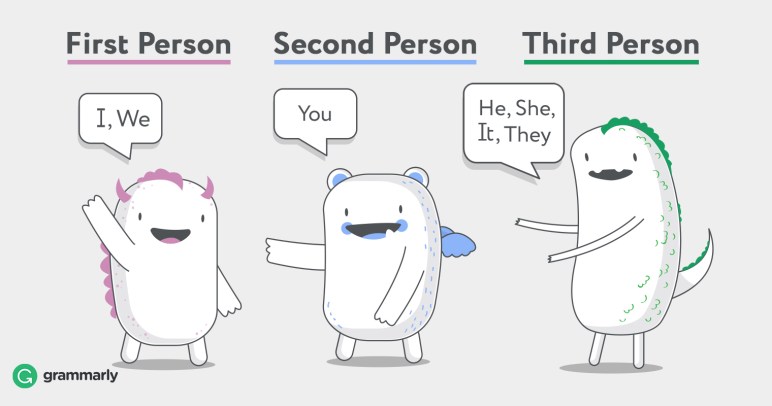
Thank you to the beautiful people at Grammarly for this awesome little image of Point of View.

Whilst (I love using that word) typing up the title today I realized, that all of these blogs on novel writing can also be used in other aspects of your writing. Short stories, flash fiction, non fiction, and even poetry all contain aspects of plot, character, and point of view. In a novel, however, consistency of your point of view is crucial for keeping your reader snuggly in your world. Shifts in POV can cause confusion or jar them out of the story.

So today, we’re going to briefly discuss the typical types of POV as well as which ones are most effective to use.

For the budding writer, I’ll lay down some foundation.

Point of View is basically who is telling the story.

In First-Person POV, then the action is happening to the person telling the story (the narrator is the main character). Here, a writer uses “I/We” mostly while only using “he/she/they” as outward observations. They can tell you what they see, feel, hear, know, etc, but they can’t tell you what anyone else sees, feels, hears, or knows. The best way to show those things are through action and dialogue AND by having faith in the reader to understand by your clues the general idea.

Second-Person is the red-headed step child of writing POV. I’m sorry. I said it. Second person uses “you” and “your” and they narrator speaks directly to the reader. “You were amazed. You’d never seen a chicken with five legs.” They make you part of the story. I suppose some of my blogs have been in 2nd person, non-fiction informative may utilize this POV. I’ve never used this in a short story or my fiction but occasionally it creeps into my poetry. In fiction, it’s very difficult to do well. (“Bright Lights, Big City” by Jay McInerey, “The Sweetheart” by Angelina Mirabella, “The Night Circus” by Erin Morgenstern)

Third-person is an outside narrator telling the story from a distance (she/he/they). When it gets closer in (think into the characters’ heads) it’s called third-person omniscient. Third-person is popular with light fiction, serial romance, cozies, beach reads, sci-fi, fantasy etc. The tricky part of this POV is being able to stay focused on one character at a time. If the story dictates it (two or three main characters) I will switch POV in Third by chapter, possibly by section, but never by paragraph or within the same scene.

We discussed each typical type, but how do you know which one is best for you? Well, part of this comes down to your writing style. When you write, are you the character? Are you in their mind, in the arena, in the pilot’s seat? Or are you observing them, building the world around them and telling them what you see from above? Are you walking them through the story, a sort-of inward conscience to their journey? Which genre is your story? What’s the purpose of the story?

All of these factors can make writing in the right POV harrier than my old math teacher at the swimming pool (Hey! Take the sweater off before you get in–oh…wait…sorry!) Some genres are more lenient as to how much you can change or shift the point of view. Some genres really do best when one specific POV is used.

Take memoir for example. This type of storytelling should be first person, past-tense. Period. That’s your story, it happened to you. You are telling it.

Now, romance novels can dance on the edge of third-person, third-person omniscient, or first-person.

Most contemporary fiction these days is first-person (think Hunger Games) or if you’re feeling fancy, 2-person, first-person (look at Gone Girl–a book told in first by two different main characters–very clever)

I am wont to say that sci-fi and fantasy tend to be third person, due to the world building that has to occur. But it can be done marvelously in first as well (check out “The Martian” which tickles both first and third).

The important part about POV (especially when working with third) is that you stick to a strong, non-passive-voiced point of view that stays in its lane.

Check this out:

“You’re such a selfish prick!” Jill yelled and slammed her fist into the table upsetting the spoons. She’d had enough of his late nights at the track and the dwindling bank account.

Bob jumped back at the sound. His heart fell to his gut and he felt like crying. He couldn’t believe he’d lost their honeymoon money. He was only trying to double up on the winnings so they could have a bigger trip.

Jill paced the room in a fury. How could he? After she had been saving for months and months so they could go away…

Yowza. For one–this is a lot of information dumping out on your reader. You can’t describe your main character’s (Jill) thoughts and feelings about Bob and then in the next paragraph have Bob spring into an inner dialogue on his thoughts and feelings about her. It’s called head hopping and it confuses the readers. Only a few really talented authors can make this happen and not lose the reader (I’m looking at you Nora Roberts).

Don’t cause a ruckus. If the character you are writing for (be it third or first) isn’t a goddamn mind reader then don’t describe things they wouldn’t know.

If you want the reader to have the information, you show through body language and dialogue.

“You’re such a selfish prick!” Jill yelled. “I can’t believe you blew our savings at the tables!” She slammed her fist into the table and knocked over the cup of spoons.

Bob hung his head and swallowed. His voice trembled. “I’m sorry.”

“Sorry? Sorry doesn’t even begin–“
“I was only trying to–” Bob started.

“It doesn’t matter!” she yelled. “You don’t get another chance to make this better!”

Here, the reader has enough information to gather how Bob feels without dropping us into his head.

Ok. Whew! Speaking of info dumps, huh? Take a minute to absorb all of that. Think about your story, what you’re trying to do, who you’re trying to follow, and how you want to bring the reader along. If you’re writing short stories, experiment with all the types of POV. I’ve only written a few things in first and its very powerful, but for some reason, it’s very hard for me. My comfort is in Third-Omniscient, but as in all things in life, we have to push our comfort zones to be better. So…push your zones, get uncomfortable.

Pick a POV per project and stick with it.

Until next week. Happy writing!