I’ve been attempting the challenge of writing a poem every day in October. They’re not all amazing, but some of them land in places I didn’t even know I had.
Birdhouse
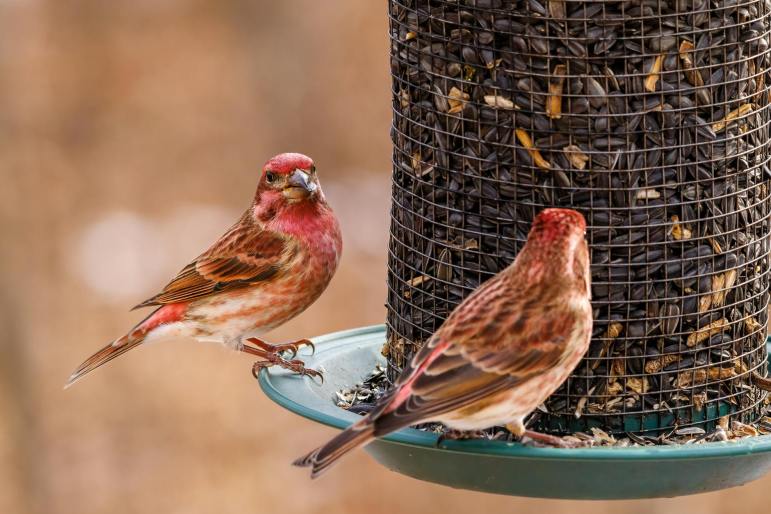
I put a birdhouse up, next to my window I like to watch the lithe lightness of their bodies Bright colors and whisper bones Harbingers of Spring, Survivors of Winter sharp-beaked truth sayers forever in love with the dawn I like to watch them, hop and flutter in tree branches and shadowed gardens such a pure, simple existence I wanted to give them a home
But none have come to nest and I am wondering now, if it isn't my fault maybe I am too much heavy dark and granite bones I am the decay of Fall cold graves beneath snow, soft lips full of lies to myself and the ones I love forever lost in some night
Perhaps I am a treacherous black hole that they cannot call neighbor Still I will wait
They say we are divided, us wily writers. Those creative fluffs that let the words burn through them and damn the story arc consequences until the laborious editing process. Those starched-collar spreadsheet architects that engineer the life out of a story until it can be laid out like a mathematical equation. Two ends of a long spectrum encompassing how we all go about writing our stories.
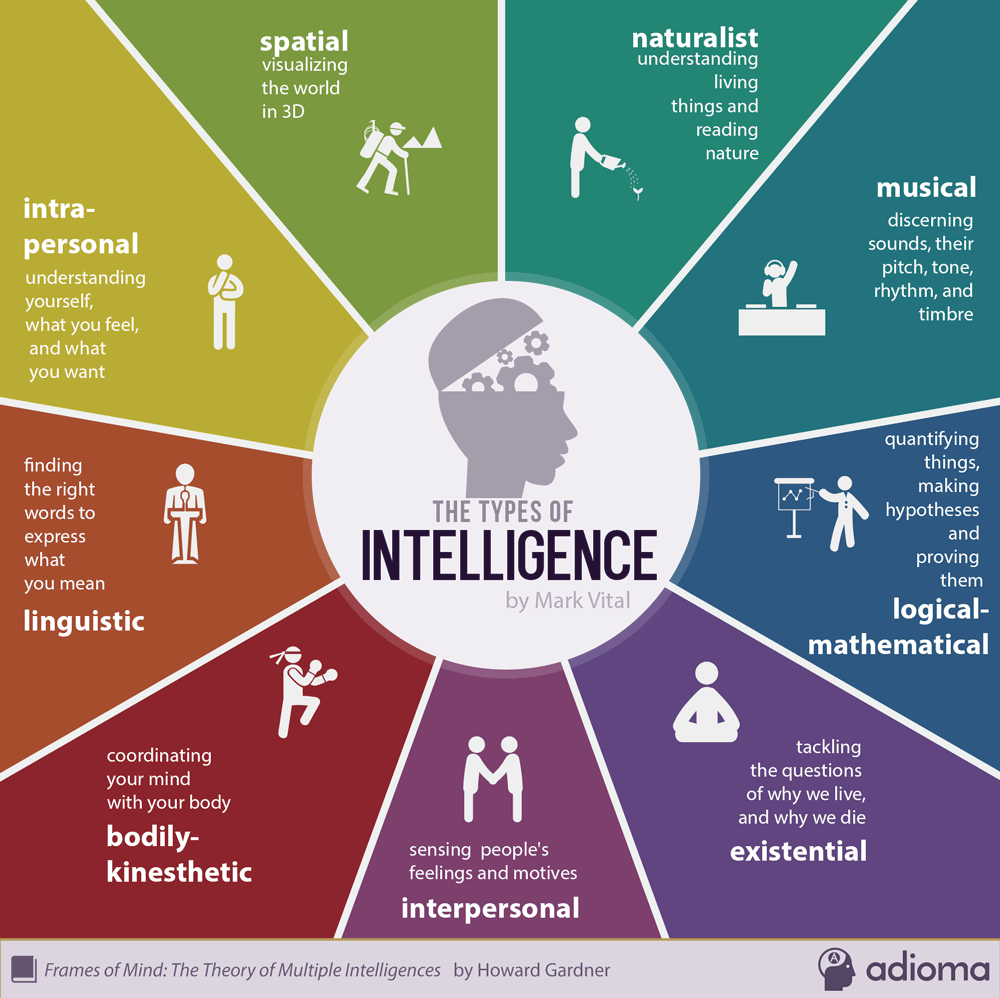
Whether you’re on your first novel, your seventieth short story, or your tenth attempt at nailing flash fiction, we all have a style that suits our particular intelligence. When I use that word, intelligence, I’m not talking IQ scores or any other accepted standardized measure of smarts. I’m talking about the way we each learn and create. Some of us are spacialists. Some of us are naturalists. Some of us are mathematicians. Some of us are socialis–uh…well not ‘socialists’ in the negative way that gets a bad wrap these days…social butterflies? We all have strengths in different areas of “smarts”. (pssst–check out the cool infographic from blog.adioma.com–based on Mark Vital’s work. If you have an extra minute, look through it and see where your head’s at)
HOWEVER, each one of us–and I’m making this assumption because you’re reading a writing blog–are gifted with some level of literary intelligence. Storytelling. Weaving words. Building worlds with letters. So let’s start on that common ground and get to know why plotting out your story, no matter how fly-by-the-seat-of-your-pants-writer you are, will help free up brain space for better writing and save you a literal shit ton of time in editing.
I’m a pantser. I’ve always been that way. It’s a creative deluge in my brain on many days. Hundreds of thousands of words, hundreds of characters, plots galore. ALSO– at least six unfinished nearly full length novels, countless ‘story-starts’ as I call them, and plots that have fizzled simply because the fire burned itself out when it hit the cliff of not having a plan.
If you are on my side of the spectrum, how do we avoid the graveyard of fizzled projects, laying stagnant on our lap tops?
Well, we simply need to learn to buckle down.
OK, OK, COME BACK!
No one shuts off Billy Idol
Jesus, I’m not some pastor dad from a bad 80’s movie, trying to tell you to shut off the Billy Idol and get a real job.
I’m just saying, as we mature as writers we can still have fun, and be responsible (I feel like a “The More You Know”, “after school special” moment coming on) to our stories and characters.
When I say buckle down, I’m thinking more in terms of a roller coaster. The buckles keep you secure while the ride still thrills and delights.
Here’s how I balance out my willy-nilly need to write untethered and the reader’s need to have structure (yes–reader’s need structure…what happens on the roller coaster is fun, but they don’t want to fall to their deaths on the first loop-d-loop)
When you get your idea (character, plot, situation etc): Write the hell out of it. I always think of them as scenes. I imagine situations or characters that play out in my head and I just write without self-editing the movie in my head. this can be a couple of pages, up to even 10-15 pages of material. Once I feel, like this story/character has potential and I want to know more about them, that I want to invest book-length time and effort into them, I then…
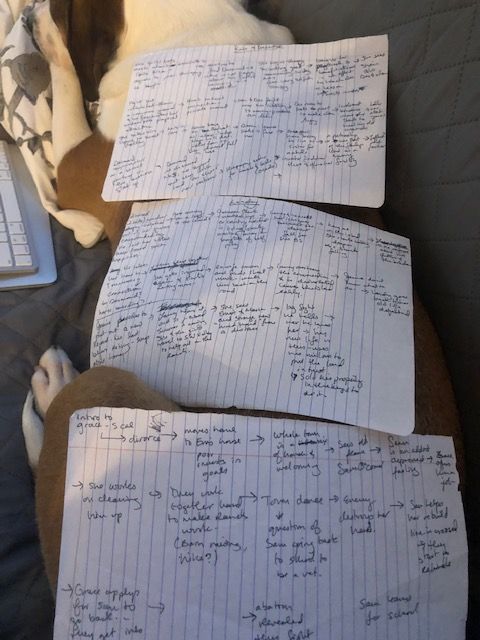
A River Sleeps Through It.
Create a loose story-line. Usually on an informal notebook page, turned sideways. Some people use graphics and spreadsheets. I know myself. If I started doing that it would turn into flashbacks of Anthropological Research Methods and my only C paper…ever… ew, statistics David. That would take all the joy from it for me. Like strapping into a roller coaster with seven belts and having the cart inch along at a safe three-mile-an-hour speed. Don’t fence me in, Excel.
The story line doesn’t have to be crazy detailed. But it should have an act structure. Sure, I could dictate (*snicker* dic-tate) that it be a hard-line three act structure with appropriate crises and resolution points. But some stories require more, (rarely less). If you went through step one above, chances are you have a pretty good idea of at least the beginning and end. You know what your character wants and if they get it or not. The tricky bit is in the center and that brings us to this…
Plotting is important because it will help you get through the doldrums of the middle, where most novels go to die. Having some definite ideas about how crisis points build, where and when they come to a head, and how your character changes afterwards will help you know what to write next to keep the story moving in the right direction. Within that outline, is still a great abundance of wiggle room, so don’t get caught up in specifics when you draft your outline.
Well, I think that that’s all I’m going to torture you with today. You might find, by starting with this simple diagram you feel more comfortable elaborating on it, adding plot points, character transition moments, and secondary or series arcs into it. Good luck out there, pantser. Buckle up, writers. It’s one hell of a ride.
I can’t tell you how much of my life I overthink. From what a friend has said, to what the scowl my daughter is giving me means, to the side eye my dog throws at me and the head shaking the man in the car next to me offers when I’m belting out Blink-182 lyrics… I overthink it all. I overthink every decision (but if I have a bagel without the egg I’m going to be hungry, if I brush my teeth now they’ll just get dirty because I want one more cup of coffee, but if I don’t brush them now, it might not happen today…) You see what I mean?
So when I’m given (or read, or listen to) writing advice, I tend to do the same. I over calculate how many chapters I should be writing a month to finish a book in a quarter. I’m diagraming the hell out of my character’s backstory (after a pantster first draft that feels too tepid). I’m getting lost looking at internet trends, publishing tips, and marketing plans… And so much of these grand ideas, sparked by advice to help in the long run (some don’t) but what they for sure do, is take up time. And invested time like that isn’t just the physical hours but the mental energy that it takes to process it all. Less mental energy means…less writing (or less quality in the writing?)
Recently, I read this great article on the timeless tidbit of: “just write”.
I mean, admittedly, it’s kind of a breath of fresh air. Simple. Not complicated. Correct. To be a writer, to finish your novel/story/project, you must actually write it. So…just write.
But it’s also oversimplified. If writing were just that easy, every person who’s ever come up to me and said “I’ve always wanted to write a book” or “I’ve started a novel but I can’t seem to finish it” would have oodles of books written. Wants made into dids. I mean, “just write” makes it sound like all we really have to do is sit down, the words will come, the knowledge will be there and the novel will march through beginning, middle, and end without fail or hiccup.
But writing isn’t simple. It’s akin to playing an instrument, and doing it well. Anyone can pluck the strings of a guitar. Anyone can thunk on the piano keys, but it takes more dedication, thought, and skill to actually play a song, none the less write one. But the practice is the road towards a better song.
So, as this pretty smart writer guy said, we should instead “Practice Writing.”
Practice Writing. It is better, no? You’re still doing the writing thing, but it comes with the lightened atmosphere of it being something continually tried and worked for, something offered, reworked, and perfected, but never perfect. Something we find joy in, while still being committed to the process of it.
And it helps me not over think it. Because every sentence, scene, poem, blog, or chapter I indulge in, is a practice, and a learning opportunity, but not a commitment to perfection. And just like an instrument, through trial and error, and time spent, we writers will get better and better. So, I beg you to go forth, and practice your writing today. Whether it’s 2000 words, or 20. Every plunking of the keys counts towards learning the complete song. Every word, every thought, every rambling blog post, is a writer in the making.
I’m not going to lie, I’ve been a busy bee of late, and I’ve got plenty on my plate to make me feel justified when I rehash an old blog, especially if it still fits with what I’d like to talk about.

This, being July and smack dab in the middle of the Writing Conference Season (I’m not sure if that should be a capitalized title, but it seems like an event so…I’m going with it) I thought it would useful to budding writers out there to go over some conference basics as well as some advice that has really helped me get the most out of them. This also being a totally new era, I’ve added some modifications to reflect our new Zoom/Teams lifestyles (not NEARLY as cool as a Rock n’ Roll lifestyle).

So, let’s get into the meaty goodness of writer’s conferences and why you should strive to attend at least one a year.


How do you choose which one to attend?

•	Firstly, most conferences, at least since the pandemic, have had to switch to some type of online format or perhaps online-in person hybrid to make accommodations for safety. So, the good news is, you may not have to shell out so much for travel expenses as they can be taken from the comfort of your home. Bad news is that you’ll still be at home and all the challenges that can go along with it. I’ll touch more on that later on.

•	If you are anything like me, you’re wealthy in creativity but strapped for cash. One of the biggest deciding factors, for me, is the cost of the conference, along with which classes, speakers, and agents will be there. Getting to pitch to an agent, or multiple agents for publishers specific to your genre is a boon. Classes that are not just interesting but will help expand your craft are also good factors to consider.

•	Some conferences are genre specific and if you are a comfort-hugging archetype who doesn’t flirt around outside your style and subject matter, then definitely consider something specifically geared to your genre. The Romance Writers of America used to host in fun and far-off lands like…San Diego and…New York City…*le sigh* Genre specific conferences are awesome if you’re looking to polish skills or start out in a new genre that you don’t normally write in. Don’t be afraid to flirt a bit (outside of your genre, that is *wink)

•	If you’re stuck deciding between two, look at the courses offered, the speakers presenting, and if they are offering pitch sessions, especially agents suited to your work. Pick the one that gives you the most opportunity for growth and stretches your creative and ambitious goals.

How do I get the most out of my conference?

•	Here’s what I’ve learned. Plan ahead but be flexible.

Conferences don’t just start the minute you pin that snazzy name badge on your seldom-used dress clothes (or, via online conferences, log in with only dress clothes on your upper half). They start the year before, during writing when you self-reflect on the issues you have with your WIP, your style, your grammar, or even the steps you want to take next. If you have trouble with dialogue but are a whiz at plotting out the perfect story arc, then use your conference to build up your weak points. Even if it means stepping out of your comfort zone. Which leads me to my next point:

•	Sit it on at least one session that is outside of your genre, comfort zone, or even interest.

Look, conferences can be amazing experiences but if you’ve been through sixteen hours of various takes on the query letter or trying to perfect your memoir pitches, you’re not growing as much as you could be. Why do athletes cross train? Why does an engineering major still have to take social science classes? Because learning about the realm outside yourself will make you better in all aspects of your work. Try a sci-fi world-building class or screenwriting. I guarantee, you will get something new out of it that will help your project and your craft.

•	Push your limits.

Talk to people you wouldn’t normally, share your story, your success, and your pitfalls. This is an awesome opportunity (I’m talking to you little introvert) to commiserate, vent, and rejoice in the craft you love so much. Pitch your novel, article, or story. Talk to the larger-than-life keynote speaker (here’s a hint: every single one of them I’ve had the pleasure to meet has been the kindest, most down-to-Earth and supportive writer). Come away feeling like the weekend/day was an experience that has changed you in some fundamental way.

How do I not get overwhelmed?

•	For goddess’ sake, take a break in the midst of it all. I’m the worst at this. I’m a classic victim of; “I paid the money and I’m going to hit every single class. I will volunteer, pitch, hit up the speakers at the dinner table, and stuff every bit of information into my head until explodes!” Then by day two, nothing makes sense in my mind, words are blurry, I’m not sure what my name is, and I’m crying into a self-made mashed-potato tower, while wearing Underoos on my head that clearly are not my own.

Take the breaks between sessions or even forgo a session and find a quiet corner or go for a walk outside. You need it to recharge, allow time to absorb the information and be refreshed for the next round. This is especially true for online conferences! Take the computer to different rooms (if they’re still quiet) or outside if available, take walks in between sessions, take eye and body breaks (look far off for a spell, or ‘rest’ your eyes away from the screen, get up and stretch as often as available). Its’ almost like interval training—the space between, the recovery is what sets you up for the next round, so take it.


•	If you are pitching to an agent or editor, polish the shit out of that thing beforehand. Take your pitch to your critique group, your friends, random people on the street before the conference and learn how to deliver it with confidence and clarity. Know your story, your characters, and your plot, inside and out. That first page should sing the sweetest siren’s song anyone has ever heart and lure the tepid agent from the afternoon lunch lull into something exciting they want to read more of. The more you practice your pitch, the more it will feel like a conversation with a good friend instead of an interview.

•	If you are pitching, don’t be intimidated by the agent or editor. Remember they are people. They are there, specifically, to talk to you. To hear your story. To find the next big thing. Most of them are also just like you…they may even be wearing Underoos and like mashed potatoes. The point is, it’s okay to be nervous, but don’t go in assuming they relish the idea of shooting you down. Be polite and always thank them for their time and any advice they have to give.

•	Sleep before. Sleep after. Eat nutritious food, take walks outside whenever you can, and watch the caffeine and the booze. Free coffee stations are like crack for me (or conversely at home for online conferences—having my own espresso machine) and cash bars are a tempting mistress at the end of a long, people-filled day. But you’ll have things to do the next day and Underoos will stay safely tucked in if you can avoid that third cocktail.

To conclude, I’d like to share one of the best lessons I’ve learned from conferences.

For every conference I attend, I add a layer to the writer in me. That is to say, through the people I meet, the classes I take, and the lectures I attend, I learn more about the craft. How, and when, and why, and what and all the technical attributes that come along with the delicate balance of creativity and grammatical science. But more than just the sum of these limitless parts, I learn a greater whole.

The whole that is me as a writer.

And in doing so, I’ve learned how to enjoy myself more at these kinds of functions by listening to my body, my brain, and my growing years of experience.

Back in the day, I would be hand-cramping from the steady stream of notes at each session. I would be tumbling from one to the next, chugging down coffee between in hopes to keep my energy up so I wouldn’t miss a thing. I would strategically place myself at the agent’s table who I wanted to garner the literary affections of. I would, in essence, be the adult version of my grade-school brown-nosing self.

Something happened one year, while at the meet and greet “networking” event. I found myself long past my emotional and mental boundary and crossing all lines of my introvert nature, to garner the attention of at least a few more experts in the field. I was mentally exhausted, untethered and I felt like I was on emotionally shaky ground. I realized after a long day of learning and being ‘on’ that I didn’t want to be there.

I didn’t understand my limits or that honoring them was at the core to being successful at a conference (and let’s face it, in life)

I thought I could talk it all day, learn it all day, do it all day. Nerding on a pro-level is a quintessential part of who I am. I loved hearing about other projects much more than I like talking about my own and reveled in the creativity and ingenuity of my fellow conference goers.

But…the more stories I heard, the more classes I took, the more advice I tried to apply—the less sure I became of my ability. The more tired I got, the more flustered I became, the wearier my mind, the less information I could process.

Until everything was just noise and words.

Then I learned a secret.

You don’t have to throw yourself under a bus to catch it.

Knowing your limits is not just useful in this particular scene. Knowing your limits is useful for all humans. And it comes with age and the ability to let go of unrealistic expectations.

During a few of my sessions, even as I listened to the speaker, I listened to myself. If I was inspired to write; I let myself write.

If the iron was hot, I struck while in the moment, abandoning the mad scribble of notes.

Did I miss a little of the presentations? Sure, but in the midst of other brilliant minds and the energy they impart, in the middle of shutting out the rest of the world, the heart and brain start to do this funny little dance and learn to play again.

Inspiration doesn’t always happen at the opportune times. You have to write when the words are ready and when the heart is open. Conferences have given my heart a doorway, an acceptance into writing what often builds up behind all my carefully constructed walls.

In years past, I’ve forced myself to jump the hurdles of social interaction and witty conversation until late hours, when all I really wanted was to wander off to a quiet room and take a nap.

I had to make it OK for myself to listen to that want, in order to get the most out of my time at conferences. These events open pathways, but only when we’re not too busy to see them. If we are embroiled in getting the most out of every single planned moment of the time, then we may miss the real lesson.

Creativity is like a river and if you fully submerged you’ll easily drown. You’ll miss the beauty of the ride, the view, and the sounds.

So, know yourself, Writer. Do the things that you know work for you. Let the river of creativity, carry you, but always leave yourself plenty of breathing room to be inspired.
I wrote this blog nearly 6 years ago, before COVID-19, before the Black Lives Matter movement gained ground, before the staggering abuse of power from one of the most self-interested presidents we have had went full on “tear gas peaceful protesters so they don’t get in the shot of my photo op” crazy.
In the original version I was careful to try and not alienate readers with use of politics. Re-reading it now, after what we’ve all been through since the soon-to-be-dictator fucked our Justice System and took the foundations out of our democracy, I’m resubmitting it with more balls. (I never understood why “having balls” was equated with being tough. We all know those things can’t even withstand a little nut tap without shriveling into a vomit inducing pity party. They should really say “grow a vagina” or “have a uterus” those things can, as Betty White once said, “take a pounding”. Anyway—on to the point.) I’m submitting this with more ovaries.
Independence in our country used to mean the freedom to pursue our dreams. But now we’re finally opening our eyes to the fact that not everyone has the same opportunities for this pursuit. Discrimination based on race, the disparity between economic status, and various other homophobic, misogynistic, and white-power-driven stereotypes are collars that keep a majority of this nation underfoot and away from an “American Dream”. It was always really just a concept reserved for the continuation of power for those already in possession of it.
Here’s what I had to say so many years ago, adapted to call out the injustice I should have been brave enough to speak against before.
“Independence”
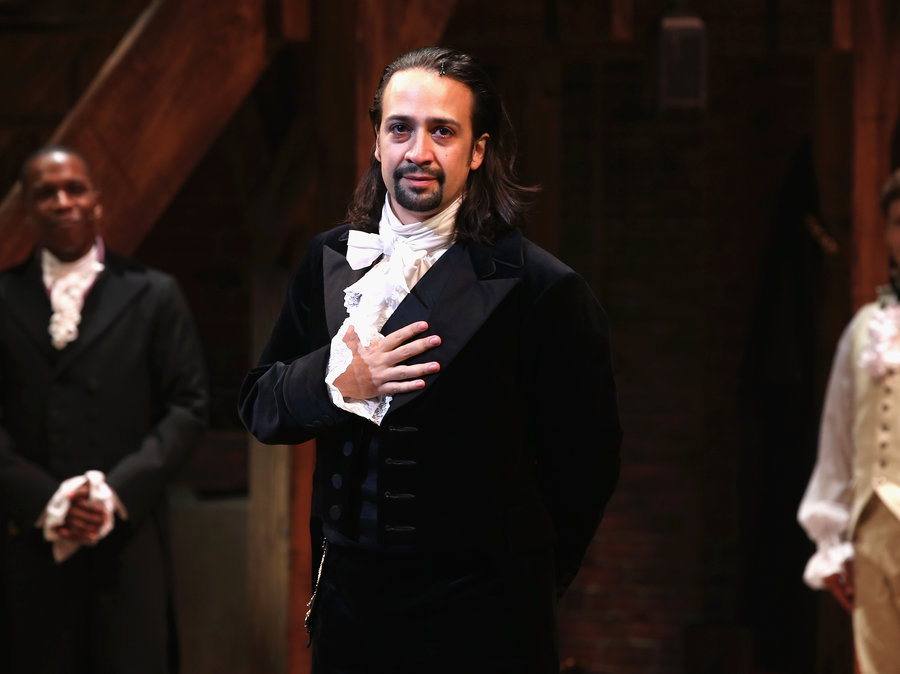
I’ve been listening to the “Hamilton” soundtrack, catering to my daughters’ obsession of the rhythmic and addictive lyrics. I realize there’s some language in it that many would deem inappropriate. But being a lover of all language and knowing my kids’ ability to differentiate between words used for flavoring and appropriate alternatives for mixed company, I don’t shy away from it. Because more important than a few f-bombs is the fact that they love it, and by loving it, they are learning from it.
I love it too. I love that this amazingly talented writer and performer (hats off to you, Lin-Manuel Miranda), took an overlooked story and breathed life and passion into for a new generation with quick-witted writing that tied the past with present day issues including but not limited to the fact that this country wasn’t built by white landowners but on the backs of the enslaved people they held captive for generations.
Hamilton is a snapshot of history and a reminder of the grit it took for our country to break free of tyranny. But that was only from a monarchy, unfair taxes, and regulations not suited for a free nation. We face so many more complex problems now, but at the root of our biggest challenges, is the imbalance of power and the very real threat of an un-punishable dictator taking the wheel and making sure all of his corrupt yes men have their day.
If ever there was a time to break free of the tyranny in our government and economic systems, this is it.
When did we stop thinking that revolutions didn’t work? When they shackled us all with overpriced living and underpaid wages? Was it when they lulled us into a sense of complacency by screaming that ‘real patriots’ never questioned their government? Was it when they told us what we could and couldn’t do with our own bodies? Was it when they defied the FIRST Amendment by posting a religious document in public schools, shoving Christianity down every students’ throat, while telling them what they could and couldn’t read in public libraries?
Does anyone else not think this is a direct remake of that old 1940’s hit, “Nazi, Germany”?
We should all strive to remember the past. When we don’t, we stop being on guard for the behaviors and situations that can lead to tragic ends in our own country. Germans were frogs in tepid water that did not notice they were being boiled alive as Hitler slowly and with great persuasive rhetoric (almost like a reality star) turned up the heat and murdered 6 million people. We are frogs in a simmering pot, people.
For the last decade we’ve been idle as a nation, allowing forgiveness for “jokes” that weren’t funny, shrugging off policies that bullied our allies, and looked away at the practice of placating dictators who held their own people beneath their boots. We allowed the highest court in the nation to be bought with favors and promises of power in return for Presidential Immunity and stripping half our population of their rights for body autonomy.
Some of you rolled our eyes. Some of you applauded. Some of you tried to justify his inability to understand complex foreign policy and economic issues by saying he was an outsider. (That’s like saying the intern you hired was given a roomful of mentors and material to study up on for the job and then shrugging when he runs the skid steer into a pile of propane tanks while smoking and jerking off, sans a mask, and shouting “I don’t need you idiots! I know exactly what I’m doing!”)
We are living beneath a new threat of the same old dissonant administration that seeks to divide us as a nation. and WE NEED TO REALIZE THAT WHEN ONE PERSON IN POWER DISENFRANCHISES ENTIRE GROUPS BASED ON THEIR GENDER, RACE, RELIGION, OR ECONOMIC STATUS IT SETS US BACK AS A NATION AND BURNS TO THE GROUND ANY FALSE CLAIM WE HOLD THAT ALL PEOPLE ARE CREATED EQUAL IN OUR ‘GREAT’ NATION.
In addition: The wealthiest in this nation are playing an old and tired game of making you believe its the poor, the immigrants, the non-Christians who are taking your jobs and wrecking this country, because the sure-fire way to keep in power is to fill your constituents with fear and best if its fear of the “other”. Two birds with one stone and all that…
HEAVEN FORBID, WE ALL REALIZED WHO THE REAL ENEMY TO OUR FREEDOM AND HAPPINESS WAS AND DECIDED WE SHOULD RISE UP AGAINST THEM.
On this day, I want you toconsider what it means to you to have independence.
Think about this country. Think about what makes you proud of it (if there’s anything anymore.)
We were a bunch of ragtag rebels once. Who burned things and refused to be taxed without representation. Who stood up to an upper ruling class who didn’t give two shits about us. Our country was built on the riots of people who had enough of injustice. That’s why the FIRST amendment of our constitution guarantees the right to protest. Because for all the stupid ways those first founders screwed up, at least they recognized that a country full of free and empowered people is stronger than those kept under the shiny shoe of a narcissistic dictator.
Revolutions rarely take a day. They are years in the making, with sacrifices of blood and lives. Revolutions are not free. There is a cost to rise up against the powers that seek to tie us, bind us, use our one precious lifetime for their own gain.
I could tell you to sit back, relax, enjoy the barbecues and hot dogs, slather your standard American body down with potato salad and jump into a kiddie pool filled with Bud Light (*or some “truly” American beer that wouldn’t advocate for human rights?*) while waving sparklers from every available appendage…but I won’t.
Today I’m going to tell you to remember the past, remember the fight. Remember there are things worth standing up for and things don’t change unless you rise up and change them.
Free yourself from the fear, trepidation, and self-doubt that keeps you from standing up for the rights of every man, woman, all-those-between, and child in this country. We are Americans and we stand together against the forces that seek to keep any one of us down.
Rise up.
Don’t give away your shot.
Be young, scrappy, and hungry, and take back your life, your country, your Supreme Court and the principles that sparked revolution and never give up the fight to win freedom for all of us to pursue happiness.
Yeah, I did just title this blog that…No, I’m not sorry. Yes, I hope that song plays in your head all day. Yes, it may seem “Ludacris”. Yes, I did just make a dad joke out of it. No, you can’t get a refund, this shit is free.
This is actually a post from a couple of years ago, but oddly enough, I’m headed up tonight to the Wyoming Writers Conference again. And again, I’ll be pitching. So I’ve tweaked a few things but the advice remains solid. I hope it can help you.
Now, on to the blog
This week, tonight actually, I’ll be pitching a novel to a publishing company at the Wyoming Writers Conference in Casper, Wyoming. I know that this should be something I do at least every year but with the past couple of years spent in catching up and starting new jobs, and my creativity taking a giant dump of late, I haven’t had the drive, material, or need to throw myself into the ring.
But, by strange happenstance, the novel that I started at last year’s WWConference in Laramie, turned out to be one of my favorite books. Its a strange blossoming feeling of re-reading it and having it punch me in the gut and make me laugh-cry. I could independently publish it. But…the past years have taught me, that there’s no shame in rejection or in throwing your heart in the ring, especially when you really believe in something you’ve created. So I slammed the breaks down and took a breath. A pause. A consideration. That if the story was “Well written, with a voice we really like” that maybe I should give it another tour around the pasture before sending it out, on my own.
So here I am again, years later, still sweaty palmed, reading and re-reading, and choking on my elevator pitch and changing it a dozen times to get the most depth of the story in the fewest words. And it’s exhausting. The sudden surge of trepidation inspired me go through some of my notes from previous classes and books on pitching. And here’s what I have to offer:
Agents and publishers are human beings. They’ve probably slept horribly, are sore and uncomfortable from sitting, have heard a lot of story ideas, and are probably thinking about the cash bar. Just like you. So don’t treat them like a god up on Olympus by cowering or waving tribute in their faces. Be kind, be polite, and use some of your allotted time to treat them with dignity and respect. They’re there because they love reading and want to find a good story.
Tell them why you love your story. Yes, yes, the general plot, genre, main character and conflict…but what is it about your book that fills your heart. Why do you find a reason to read and re-read it? What were some of the best compliments you receive from your beta readers. Human beings respond to enthusiasm and genuine admiration. Otherwise, we’d never watch baseball. Moving on.
Be organized. Have a synopsis ready, bring a query letter and your business card. It’s been a long day for them and you; stories might start running together and they may need a gentle reminder what the 4:55 pm pitch was.
Be open to suggestions and critique. Whoof, this one is hard, right? After all, we just gushed about what we love in our book. While you love it (or hate it depending on how many goddamn times you’ve had to read it and rewrite it) it is also a good time, before you sit down at that table, to think of your fledgling story like a kid going off to college. Its stepping out into the world to be made better, smarter, stronger. It has a lot to learn, so let it be open to becoming something more and living up to its potential. It isn’t a reflection on you as a parent, it’s a starting point for even more amazing results to come.
Follow up. I’ve sat in the pitch sessions where every agent gave me their card and asked for ten pages. I thought I was a goddamn genius and that they’d be engaged in a bidding war over my book within weeks. Um…hate to ruin the ending there but THAT didn’t happen. Sometimes agents are required by the conferences they attend to receive a certain number of pitches. Sometimes an agent is mildly interested and looking for something to pad up their own resume. Sometimes they’re just bust-ass tired and like a parent giving in and handing their kid a remote cause they just can’t listen anymore, they pass along their card with a defeated…”stay in touch”. That being said, if it happens, act as though it’s the bidding war situation, not the tired parent. Send them what they asked for, in the format they asked for it in, and be respectful with your letter. ALWAYS INCLUDING: your name, that you met at ‘such and such conference’ and that they requested your pages. If you can, PLEASE include some other more personal detail. “It was fun talking to you about your dog, Jasper” (write that kind of thing down on their business card) but don’t make it too personal “I hope your rash has cleared up.” (that’s creepy)
After it’s all said and done a pitch session is like any other interaction introverts dread. You have to talk, somewhat excitedly, about something you love and worked hard on, and thereby risk rejection and public shaming. But please remember that the person sitting across from you is also probably an introvert (or works with a lot of them) and just wants you to tell them a good story.
Good luck out there, and if you’ll be in Casper this weekend for the conference I’d love to sit down and chat about pitches, your book, all the wonderful things we’re working on. Happy writing.
I came across this blog from a few years ago. I no longer am blessed to teach Martial Arts (due to some pretty awful happenings at my former dojo and a level of patriarchal bullshit I can’t even dive into right now). But I’ve been teaching a lot this year about creativity and this blog struck me as something that fell in line with the concept. So, without further ado…
Today I’m talking about kids. Particularly the three to eight crowd whom I typically work with in my karate classes. You see, this week is testing week.
It’s the exciting hours when those little bright-eyed darlings bound out on the floor (hopefully remembering to potty first and bow before crossing the threshold of the mats) to ‘earn’ their brand new belt and no doubt bragging rights the next day.
Now heading the school’s instruction team is a stoic former Marine and a stalwart of rules and order on the floor. Absolutely excellent in the face of a rowdy teen or an unsure adult in need of the structure and control.
Absolutely useless and frustrated in the face of the giggling, juggling mass of pent up life force.
And testing time is rarely different.
Though the potential for their future of order and restraint is glimpsed (and I suppose that’s why they come to the school in part) some of the instructors will roll their eyes at the still inadequate control. Meanwhile, I stand in the back and lament the beauty of their childhood being chipped away.
I was told repeatedly that “the Dragons class will eat you alive”. Both male instructors said so, shaking their heads and trying to bury the horrors of such a war. I nodded, in that reassuring way you do when someone has no idea.
Son (I call them son because I’m grow’d up over them by a few good years), I’m a mom. And on top of that, I’m a mom that actually enjoyed the ages of my daughters when I had to staunch nose picking while watching them ping-pong off the couch and sing “Let It Go” at the top of their lungs. Every day. All day. Seven days a week, most nights, and EVERY vacation.
So when those little bouncy balls landed on line tonight, wiggling in their gis until their belts untied themselves, and the jaws of less-seasoned warriors clenched, I glowed. I smiled. I adored and doted on.
Want to know why?
One of the greatest beautiful moments in life iswhen the life in us cannot be contained in man-made illusions of order. It’s in the misdirection and distraction. It’s the exuberance and unconditional love. It’s all that we lose as we age, either by the weights of life tying us down, or from being told repeatedly to stand straight and stop wiggling.
Ok. I understand that order has to exist. Ask any of the poor souls on I-25 while the uninformed attempt to merge. We do have to learn order and self-control. Or everyone would just live on cake and would never go to work, and we’d get into fights and stray from our taxes… I’m not saying that order isn’t important.
But order imposed on a mind still fluttering like a million startled butterflies in a sunny meadow, is like trying to…well, catch a million startled butterflies in a sunny meadow. At some point. You need to just let go and enjoy the ride and the sunlit flash of pure color. Keep them safe, keep them engaged, and love every odd-ball story and uncontrolled giggle.
I hope you realize by now, that I’m not just talking about kids here. Think about the people in your life, and what it would mean if we all encouraged, especially the adults in your life (You TOO reader), to barrel through it all with a bit more frivolity and joy.
Sometimes we’ve been so long from those two things, that we’ve forgotten how. It’s not so hard to find your way back. Here are some things that may help:
Go barefoot in the grass
Dig for worms, put them back in the garden.
On the way to your car from the grocery store, work up a good speed and hop on the back of your grocery cart…ride it all the way to the car.
Say no. To them. To yourself…to every “how to be perfect” blog or article you read.
Read the comics first and throw the rest of that shit away.
Go for a bike ride with your kids around the block and name your bike like the noble steed it is.
Tell a dirty joke.
Laugh at dirty joke.
Laugh at a fart.
Fart (and pull the covers over your spouse’s head so that they may truly enjoy it…if your marriage is really meant to last it won’t matter. If it matters well…then I’m going to let you think about that for awhile)
Belch in front of your kids, and follow it with a “Holy cow! That was awesome!”
Grab a bowl of lucky charms and watch some cartoons (Teen Titans is my fav these days).
Wiggle
Dance
Sing “Sweet Caroline” LOUDLY out your car window at the stop light. Those who don’t join in or at least smile are to be pitied.
Never say no when a child wants a hug.
Always kneel down to meet them, their perspective is so much better anyway.
Tell people you love them.
Tell them you love them without needing it to mean anything more than just what it is.
Move on.
Forget.
Someday, remember just the good bits, fondly.
You see, kids and older people get what we’ve forgotten. That the beauty of life comes from the dancing in chaos, not the standing still on line.
Still, go potty before you try the standing still…it does help the wiggles.
Today is my daughter’s 14th birthday. She’s been through a lot. She’s still going through it. She’s one of the strongest, smartest, most thoughtful humans I know, and the world has put pressures on her she should have never had to carry. We can’t protect our kids from everything, but we can stand with them in the fire. This one’s for you kiddo.
Bigger
I’m taking you out on the trail today to see if we both can heal one step one stitch to close the gaping hole the chasm between our beats
I’m taking you away from the screams and screens and all the voices of a maddening world always telling you to be smaller
I’m bringing you into the bigger world like I brought you in 11 years ago back to the light and the breath and the love and the truth that you never have to lose to gain
I’m taking you out on the trail in the early morning hush You and I away from a million voices Screaming we are not enough whispers to pinch skin and hollow out our souls to lose the weight, to be less, be smaller, be gone. disappear.
If we must disappear then let’s do it together let us lose ourselves in dirt tracks and aspen quakes and forget the other world exists
Let’s make it smaller.
I’m taking you out on the trail to gain back what you have lost to heal one step one stitch at a time
Do not make yourself small when the size of your soul is my whole world.
I’m ten days late to Poetry Month. So, in penance, I’ll be posting poems every blog this month and a few more on my socials. Because if the world needs anything right now, It’s poetry.
Here’s an odd little collection. Read, sift through, taste them on your tongue, roll them over your neurons and let them…sink in.
Poem Speaks

She scribbled me down
in the depths of anguish
The sharp lines that cut through
conventions of writing forms
and cursive norms

uncaring of limits or margins
for there were none to her suffering
no lines could contain
the horror that poured
fresh blood on the page

She died on that page, over and over
for nights on end
awash in loneliness
visions of failure
longing for the final epilogue

and all I could do was trail behind the pen
powerless to stop the deluge
helpless to stop the stabbing wounds
of ink and metal
I was merely the blood spattter
the aftermath

sometimes a river of words
flooded over with her tears
until she lay spent across the page
a traveler unable to cross that river
unable to battle the current
but unwilling to stop fighting
for safe shore

I loved her every word
her every dark thought and
the possession of her passion
that overtook those nights

Because at least when the damaged words flowed
and their messy calligraphy
misspelled itself across the page
there was breath to her

there was fire within
and she burned bright

in the blackness of a cold world
there was enough fodder of love to suffer
to ache
to ignite

The pause of me meant the death of her
the blank page was a heart
too weary to go on
a silent pen was a life ended

I persisted in the days when I was her written world
survived while she lived
in all her aching splendor

When she lies still,
pen laid to rest against desk
I will only breathe
if her words pass through
new eyes, ride across new tongues
I will be the fire she leaves behind.

S.E. Reichert
Tiny Speck Wanderer

Hey, tiny speck wanderer,
no more than a bird’s heart beat
A flutter of space dust,
careening out of control
headed into the black abyss
along with all the other
stardust heart beats.

What’s one head of a pin
drumming on a thimble mean
to a galaxy of celestial beings?

Don’t you ever feel small?
No matter to your matter, at all?

The moon takes up a quarter’s space
to those tiny bead eyes
Jupiter—the mighty giant
just a hole in the dark night’s skin,
pricked by needle tip.

Yet there you spin,
the world in orbit around you
The cares of your heart
the temperature of your feet
the hunger or fullness
weight or lightness in your belly.
The love worn or tossed away,
Suddenly the concern of the cosmos.

Tiny speck wanderer
The universe beats for you.
in the petite coils of your
Underrepresented brain junk.
A flutter of space dust—
with universal ego.

S.E. Reichert
Untitled 1-24

I swing from suicide
to bird song
in the hair-breadth
of a star

one shade dark
now light
but...

When I have purpose
the pendulum halts
the need for center
a string of balance hangs
my sanity
and...

When unrequited and impossible love
teases the fluttering edges
of this tattered heart
I forget that I want to jump
off a bridge
in the small moments of
polite conversation
so...

Even when
its all just illusion
the empty purpose,
and impossibility of love
the light from a star
billions of years ago
now dead and gone...

They are the precarious
threads of hope
from which I swing.
I hope that this blog finds you well and in good health. Over the weekend, I acquired a…virus? And what had planned to be an ambitious weekend, filled with a long-run in preparation for a half-marathon, finishing up my latest Vella, and reworking my two-act play, became the sad potato of me huddled in bed. I don’t get sick often. Certainly not the kind of sick that forcibly dunks me beneath the unconscious depths of two-hour naps. I get frustrated when my body does this. At one point, I even took my laptop to bed, determined that I could let my body rest and my mind could still function.
Brains don’t like fevers. That’s what I’ve learned. And the longer and stronger that fever, the less coherent I was. My brain got frustrated with me. It quickly became apparent, right before I was knocked in the head by the flu-fairy with a large sleepy stick, that nothing I wrote in that state would be worth a damn. So…I put my life aside and gave myself the permission to sleep.
Sounds silly, huh? Just sleep when you need to sleep, you don’t need “permission”! But when you’re a mom, and a woman, and a go-getter, and a do-er…it’s about the hardest thing in the world to grant yourself. Especially to do it guilt free. I lost space and time and the kids were just fine. The laundry still got done, the world did not fall apart. How little grace we give ourselves to rest, I thought, in between workshops of unconsciousness.
Know the best part? Besides the tripped out dreams (holy revisiting of homework-being-late paranoia)? I realized how much I really fucking love sleep. I realized how little of it I actually get in my day to day. I realized that I average about 4 hours a night. And that’s maaaaaybe not enough. I realized that after a day of sleeping, the twenty minutes of writing I did get at night was a lot easier to do.
So here’s my advice for the week. Don’t discredit sleep as a writer and a creative. You may be a super lark or a tenacious night owl, but if you’re not getting in the repair work that only sleep can do, not only will you likely catch more colds, but your brain won’t be its wrinkliest. And a wrinkly brain is a…is a…where was I going with this? *checks temp…feels sleepy* The point is, rest helps you rebuild, it also lets your brain play and take a few hours off of the stupid demands of reality. Play for a brain, translates to creativity and more writing for us.
I’m going to go blow my nose and take a nap. Take care of yourselves and I’ll *yawn, sniffle* see you next week.








 Sarah Reichert Author