Two Ears, One Mouth: The Power of Listening for Writers

I know it’s been a pretty poetry-heavy blog of late and I’m honestly not apologetic about that. Poetry is a grace that fits into my life better these days. It’s more accessible to write, to slip my fingers into it’s lines, and to distill so many of the big and difficult feelings I’m currently holding. If you don’t poetry, you should. (Yes, it’s a verb, and a noun). But for today, I wanted to write about something I think is a skill whose value is immeasurable for writers.

The power to listen. Now, I’ve always been kind of a quiet kid (until I know you better, then good luck getting me to shut up) and was subjected to all kinds of comments. “Doesn’t she know how to talk?”, “I guess she’s just not much of a joiner, huh?”, “She’s so quiet.” All of this and more almost berated me into more silence until I was into my adulthood, and was forced to be more proactive in communicating. Still, to this day, in a large crowd of people, I prefer to be the one slinging one question into the crowd and then softly withdrawing to the sidelines to watch the frenzy.

Because I learn more this way.

First: I learn about character, history (or backstory), as well as flaws and strengths. In the listening to their words, their thoughts, their stories in total, yes, but also… I learn how they speak, I listen for intonations, and body cues. I listen for changes in pitch and pace, I listen for old dialects and idioms sneaking through. I listen with my eyes to watch the way their hands talk, their body nervous or posturing. I listen to the subtext of history behind it all. I learn about humans, and their story when I listen. And learning about humans is such a fundamental skill for writers to have. Not because we want to poach a character straight out of our monthly PTA meeting (well, maybe you do, I’m not here to judge) but so that when we sit down with our characters we can visualize them. As they are, with all of their imperfections and mannerisms, and really start to build a world true to what they’re saying in words, thoughts, and actions.

Second, and perhaps more utilitarian, I learn about the world. Listening to people opens me up to experiences and knowledge that I don’t have, maybe that I may have never even wondered about. And every story that settles into my encyclopedia brain is a new idea, a richer understanding of an old idea, and a bigger picture of this fantastical world. Every human being is a conduit to experience I don’t have enough years to gather myself. What a wonderful way to learn, am I right?

Third, and this is a natural consequence of the last point, listening to someone is a sign of respect, of interest, and on some level, love and acknowledgment of their existence, their struggle, and their worth in the world. More than just getting that character quirk you’ve been struggling with for months, or learning that a group of hippos is called a ‘bloat’, you are validating the experiences and importance of another person’s life. You are willingly giving them your time and attention (finite resources) and being present with them. That matters. More than just as a writer, but as a human being.

So–next time you’re in a crowd, writer… pay attention. Focus in, feel the presence of being in someone’s audience and listen to the story they show and tell you. It may lead to the next grand idea, it may help you unstick your work, or it may just help another human being feel seen.

The Beautiful Writers Workshop: Welcome!

Good morning writers, authors, editors or accidental guests.

I’m trying to find more efficient ways to work this year and I found this old series in my back catalog. Now, I teach writing and support writers for a living but I think these little nuggets of advice (free) are actually still pretty good and relevant. So starting today, and for every Second Thursday on my Blog, I’ll be offering a little writing advice.

I call it the The Beautiful Writers Workshop, based on the quote from Ray Bradbury about filling your cup and letting all of the beautiful stuff pour out. This year-long journey is about developing your craft through exercises in creativity, editing techniques, inspirational prompts, and building the framework for your writing career.

Some of the blogs will inspire. Some blogs will lean more to the technical side of writing. But whatever the monthly topic, you can be assured of two things:

  • You’ll have a prompt or exercise to help develop your writing (and the opportunity to share it)
  • I’ll try to keep it spicy enough to be enjoyable.

So let’s get rolling! I searched through nearly all of my favorite books on writing for a perfect topic for our first lesson together but the truth is, there are just too many (good and bad) ideas out there.

So I’m going to start simple and ease you in gently to this process.

If you’re here you are either interested in writing, or are already doing it and are looking for something to add to your tool box. In order to appeal to all levels today’s workshop is centered on the basic purpose of your writing.

Below are a few questions that I’d like you to read, think about, and journal down your answers to. You can share them, you can keep them secret, but DO WRITE THEM DOWN.

Something amazing happens when we write down goals and steps to reaching them. The process becomes manageable; the goals become real. It’s one of the many beautiful and powerful attributes of writing.

  1. Without judgement or discouragement, and being as direct as possible: what is the ultimate, lifetime goal you have for your writing?
  2. What can you do to kick start this goal in the next 12 months? (hint: where do you need to start, where do you need to grow most for the big picture)
  3. Is this yearly goal attainable? WHY OR WHY NOT?
  4. Of your reasons from #3, think about the fears, limitations or concerns that formed these reasons. Name them. What do you foresee keeping you from moving forward on this yearly goal?
  5. Of the fears, limitations and concerns, what are the possible solutions or actions you can take to eliminate them? (hint: each limitation/fear/concern gets its at least one action you can take to overcome it)
  6. If you have a planner or calendar, write down one weekly goal (eliminating distractions, word count requirement, number of submissions out, editing, classes etc) that will help overcome the hurdles you have to your writing.
  7. Looking at these weekly goals, find specific and measured times you have to dedicate to their success and write them down.

Okay, that’s it! I know, it’s a little dry but when building a house you have to have a solid foundation first or none of the pretty architecture above it will survive. So build your foundation, know where you’re coming from and next week we’re going to talk about:

Mission Possible: Drafting your Writing Mission Statement

(that sounds super boring but it will help writer’s across the spectrum. I promise!)

Creativity and The Writer: Part 2

Hey kids. If I hadn’t mentioned it before, a lot of what I’m talking about this week (and last) I learned from a great class at the Wyoming Writers Conference a couple of weeks ago with William Missouri Downs, a screen and play writer with years of amazing experience. If you have the chance, check out his work. His class has been on replay in my mind so I thought I’d share the good stuff.

Last week we did a little basic housekeeping when you’re trying to foster a more creative life. This week, we’re going to go a bit deeper into what creativity is and why, sometimes, it can be hard to grasp.

First of all, creativity is not something you’re generally born with. There maybe certain individuals who seem to have an easier time being creative, but for the most part, anyone can become more creative. Because, at the root of creativity, is the ability to open your mind to new possibilities and new solutions, and that starts with a few things:

  1. Be curious…about everything. Read articles and blogs on anything that grabs your interest. Give yourself space to wonder and research, even if it’s about the mating habits of the Pygmy Sherbert Moth of Southern Cambodia. Learning about different and strange things will actually help your brain spark ideas and forge connections that you might not have before.
  2. Learn how to concentrate. It seems counter intuitive that creatives are able to sit and focus for long periods of time (maybe its that stereotype of the flighty artist, flitting around the room on several projects) but being able to concentrate, uninterrupted, leads to alpha states which leads to ‘flow writing’. And it also keeps you working at a problem until a reasonable solution is found. Think of it as mental stamina, and we all could use more of that.
  3. Set aside time for your art and PROTECT YOUR SOLITUDE. I don’t think more needs to be said, except that it also means being able to be alone, and creating boundaries (even with the people you love) to protect your writing space. When people in your life ask what they can do to help, be honest and ask for alone time to write and create.
  4. Look for options long after others have given up on a problem. Explore all angles and possibilities. Even the ridiculous and absurd solutions–find those and play, because one thing may lead to another, to another, eventually to the right thing. Whether it’s a plot hole, or a crisis resolution, be open to the strange and impossible. Being stuck is an opportunity to do something different, to get your head completely out of the box.
  5. Take chances and accept failure as part of the process. Failures lead to knowledge and knowing you will fail means you take every opportunity as a chance to learn more about what works and what doesn’t without judging it or yourself too much. Safety is not a place you learn anything.
  6. Have several different interests. Yes you’re a writer. But you’re also a yogi, or a bat tamer, or a bee keeper or a circus performer. Spend time learning and growing in as many places as you can. We should all actually strive to be Jacks and Janes of All Trades. After all, the whole saying is that “a jack of all trades is a master of none, but oftentimes better than a master of one.” This goes back to making those strange and creative connections between things and solving problems outside of the normal lanes of knowledge.
  7. Be persistent, write every day without fail. Meet your deadlines (other people’s or self-imposed), without fail. Yes, yes, I know there’s a lot of writing advice out there. And some people don’t write everyday and they’re perfectly happy and successful. I think writing everyday is not so much a direct line to your success in the field, so much as it’s an investment in yourself and a way to give back to your time, your space, and your own sanity.

There are plenty of exercises you can find in books and online to help boost your writing creativity but the habits above will help you cultivate a lifestyle where your brain can do what it was born to. And that’s, create.

Be willing to throw outrageous suggestions and ideas up on your board and not make judgements. Free flow new ideas out on a page without looking back as they land. Then give yourself an hour or a night and come back to it. Even if none of them seem viable, they may lead to different avenues that will be your next great idea.

Well, that’s the short, short version. I hope you have a creative week and feel free to email me here on the site if you have any questions or just want to chat about writing.

Good luck.

What Change Can Teach Us

Ah, sweet homeostasis. That divine little holding pattern that so many of us humans cling to. Cute little creatures of habit, we like to find our lane, our niche, the familiar, the expected, the routine. I’m almost even inclined to believe that we not only enjoy it, but the longer we spend in our well-loved ruts, the harder it is to leave them. Even when we need to. Even if we want to. Even as the world changes around us. Isn’t that just when trauma and painful growth usually happens? When we are forced to change? Or are left behind because we refuse?

I could probably write a good 10,000 words alone on what change does to us as humans, but this blog is about writing, so I’m going to narrow it down.

Every writer has a rut. The niche you gravitate towards, the style you use, the genre, the POV, even your character choice…we have familiars that feel good to write in because they come easy. We know the pattern, the trope, the arc of a plot and all its points. And we could write this way forever and do, probably, quite well for ourselves (James Patterson and Nora Roberts own prime real estate on this front). But we don’t do very much growing.

Why is it important to grow?

Well, unless you ARE James Patterson or Nora Roberts (and if you are, holy shit welcome to my humble blog, thanks for reading) the chances of you scoring big on mass repetition are slim. Plus, the world of writing is changing and trending and learning to understand and at least try out these new waves, will help us adapt to the new and dynamic tides of readers. It will also help diversify your portfolio for future projects. Sounds like a 401k investment plan, right? Well—in a way it is.

Changing up your routine, your genre, your trope, your characters, even your plot is scary and hard and it may feel like you’re stumbling around in the dark. You may get tangled up, and blocked. But the best thing happens when you struggle and even when you fail. You learn. You learn what works, you learn how to take chances on solutions you might not have thought of before. You learn that you are capable of writing a flash fiction piece when all you’ve ever written were 200,000 word novels. You may learn you can plot a novel when all you’ve tried before is a 1200 word magazine article. You learn that you can explore different avenues of writing and still keep your voice.

You will learn. And learning empowers us, it invests in our ability and talents so when the next project, idea or work in progress comes around, we are armed with experience and inspiration to deal with it. So submit to a contest or journal that takes something you’re new to trying. Sign up for a class not in your genre. Try out a magazine article, or a poem if that’s not your normal route home. Do it. The worst that can happen is rejection and that’s not the worst that can happen in the grand scheme of things.

Get out of your comfort zone and face change and challenge as if they were opportunities for bigger, grander landscapes ahead. Say yes once in a while, even when it scares you.

We don’t always get to choose the changes that happen in our lives, but we can choose how we move forward with our art. We can jump out of the rut and careen into the unknown. We can fall. We can get scraped up. We will rise, take the lesson and keep leaping. To the end, that someday, we won’t be afraid of any new endeavor and will jump up to the opportunities that come by. And every time we do…we learn how to land on our feet. We will learn to navigate all kinds of bigger change if we chose to jump into the small changes.

You never know where your next great adventure will show up. Don’t let your head be buried in your rut when it does.

Photo by Ksusha Semakina on Pexels.com


Poetry, Pasts, and Lessons Learned

One of the things I love most about poetry, especially the words you write in the heat or ache of intense emotion, is that even when you’ve healed up and haired over, reading those words makes that moment real and bright once again in your mind.

Hopefully, when those poems and words are the rock-bottom kind, we can look back, feel the gut-sting, and thank our lucky stars that we wrote the words down instead of burying them inside to fester. Because like trials and hardships, joys and celebrations, everything in life is in constant motion. We live in flux, and especially as writers, must catch the moments on their sharpest edge to be reminded, in the dull lulls between, that life is brilliant and biting, and every moment worth being present for.

I hope you all have some dark words out there, and by out there I mean on a page or in a journal and not sitting still inside your chest. I hope you all are walking in brightness now, with a touch of perspective and an appreciation for the battles that made us stronger.

And now, this:

Spectre

Dawn breaks
and the spectre of you
lives in my chest
ever-claiming, each cell of my useless heart

I wake and you softly stir
the creature in my rib-bone cage
a wooden spoon against an empty pot
you push my blood to move
to exist
and though I so desperately fight
against the notion,
I blink

I rise

If only you’d leave me in peace
I could go
stop fighting, stop pushing
stop throbbing heart beats against
this useless existence
and tissue paper flesh.

It goes on in this way
from the rise of the sun
cresting over head
to when it crashes back down
over the western sky

Still you stay

fighting to continue
determined to survive
against ribs that long to be still
and lungs aching to be emptied one last time

Night comes like false reprieve
bearing sleep, the closest I can come
to separating my soul from your memory
a little death where I can close my eyes and pretend
the uplifting will finally cut the tie
the chain of love, I so stubbornly tied.

But dawn breaks
And the spectre of you
still wakes in my chest.

Reflections of Pandemic (Reblog): Nothing But Time (and a few expletives)

Hello writers and readers…so by today…wait, what day is it?

Fuck if I know.

I don’t know the last time I took a shower, or ate something that wasn’t in the carb family. I do know that this debacle has taught me I can’t have bourbon on an empty stomach without severe physical, emotional, and social consequences.

So, what day is it?

It’s today.

Today you may have some time on your hands. Or…on the other hand (ha–see what I did there? Clever girl) you may not have a concept of time anymore so that last sentence is moot point. In any case, you have time to read this, ergo, you may have time to write a little bit and if there’s one thing you should definitely be doing these days, it’s writing.

So let’s be like frogs and hop to it…

(Yep…I said that. Shit, dude, I don’t know, I’m in a weird place, I think it comes from not wearing real pants for three weeks and giving up alcohol…)

Last week I encouraged you to journal throughout this strange, disconnected/connected world we’re in.

Example:

(Sometimes I think it would be easier to be all the way disconnected. Enough of this social teasing and lamenting not getting to hang out. (Introverts are adjusting well, except that all the people who normally leave our lairs during the day for school and work are now part…of…our…lairs…permanently. Thus the pajamas, and carbs, and sparkling water). And while we’re breaking apart some falsehoods about the benevolent humanity bandied about on-line, a pox on the trolls that come out on NextDoor to shame neighbors they no longer have to face in person for walking past them momentarily, within five feet instead of six. They’re just trying to get out of their lairs with their lair-lings before someone ends up in a shower curtain, so chill the fuck out)

Ahem…back on topic.

Assuming you are journaling, keep at it.

Every day on this wild ride is a different day and the elation and hope of one moment are just as important as the desolation and dark of the next. Write it all down.

But if you find you have some of ‘today’ left this week, I want you to write a short fiction piece and here are your topics to choose from:

1.) Write about the first year following an epidemic. If you’re a non-fiction writer, fill it with facts and likelihoods. Inspirational/psychological/self-help, write what you think the world will have learned (if anything). Dystopian/pirate/sci-fi–this is your moment to shine, baby. The point of view can be from one character, a country, or even from the perspective of a tree, street, animal…whatever paints your wagon.

2.) If you’re tired as fuck of thinking about epidemics, and fear, and empty toilet paper shelves, and the loud shouting voices on every screen you turn on… write a short story about a person who decides to spend a year of their life alone in the woods (a la Walden, if you will) What magic can be found in that solitude? What darkness? What does lonely mean to your character? Is it peaceful or is it exile? Write it from your POV, or pick a character you’re already working with…whatever slays your dragon.

I’m not talking long here, 5,000 words tops.

Happy Writing.

It’s Thursday.

Tightrope

“Let us be kind and compassionate to remove the sadness of the world.”


This is a brief blog today. I’ve got a lot on my plate this week and I have to boil down the process. First, thank you for sticking with me through the new changes and I hope some of you are enjoying the writing exercises on Thursday.

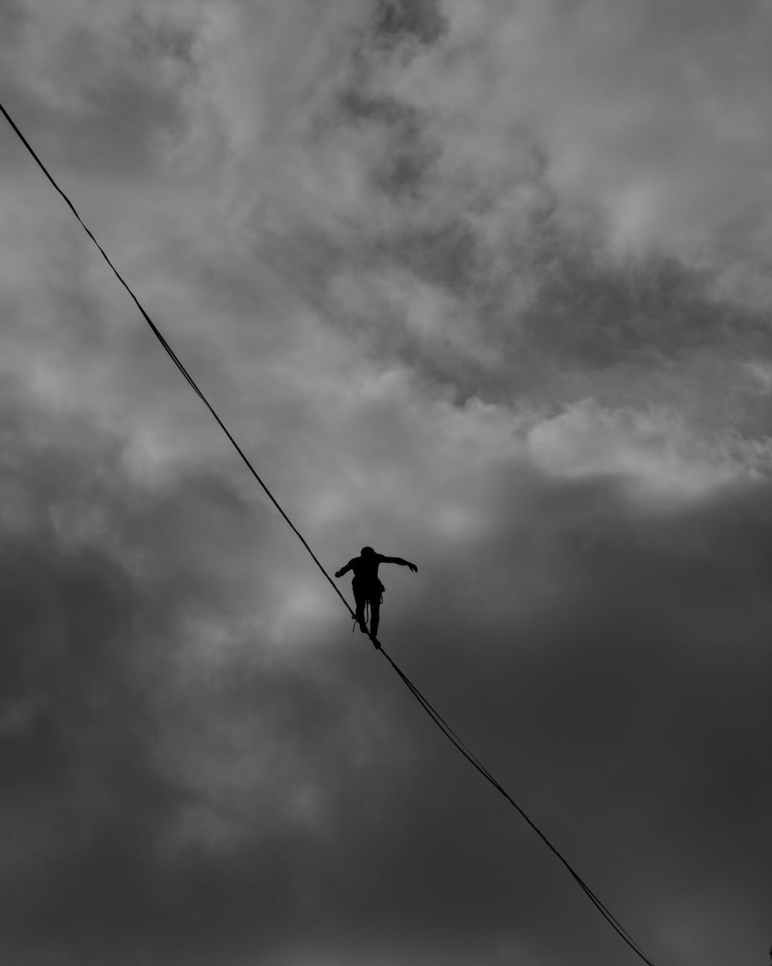
In the next few months I’ll be walking a tight wire, wobbling side to side in the effort to stay balanced and I am committed to making sure my writing is still something I carry with me, despite the extra weight it sometimes brings.

So today, in honor of some of my new obligations and the every-moment-filled reality I’m currently living in, I wanted to drop a gentle reminder.

This world we live in is unbalanced and filled with sadness. Each one of us carries a weight that no one else can completely understand.

Each one of us is on a tightwire.

Sometimes it’s razor thin and sharp. Sometimes it’s wide and steady.

But the drop is all the same.

I urge you, in whatever cycle of the wobble you’re in, to remember three things:

  • Breath. In, Deep and full. To the very tops of your lungs, plus one sip. Exhale, heavy and slow, to the very bottom of your belly. At least three times, three times a day.
  • Go out of your way to be kind to others. It costs nothing, not even much of your time in its truest simplicity. But it can mean the difference between that razor edge and solid footing for someone else.
  • Be kind to yourself. Not one of us is perfect, and we’re not meant to be. Give yourself grace, to wobble, to tumble, to rest and retry.


On Thursday I’m going to start the blog off with some fantastic first lines from contributors as well as my own. I hope you, and your badass kind self, can join me.

Oh…and about that Poetry Anthology…Thursday. I promise, something on Thursday (she said, wobbly and arms outstretched).

Higher Learning

We live in a world fueled by instantaneous information and misinformation. The overtaking of the Internet as our ‘news source’, social media, online anonymity, and the dangers of segregation through groupthink mentality have created a strange, and quick moving divisiveness that’s drawing hard lines through and around our community.

I live in Fort Collins, home of Colorado State University (not a CSU alumni myself), and the newest controversy involving a group of white students involved in a racially charged incident. Four of CSU’s students donned charcoal face masks and referenced Black Panther in a photo now widely dispersed on the internet.

What’s the big deal, right? Kids are young and dumb. They do stupid shit all the time.

Yeah…that may be true, we all do stupid shit. ESPECIALLY in college. But this isn’t throwing a chicken into a bar or lighting fireworks out of a car window.

This is racism. And no racism is done ‘in good fun’.

Living in today’s world with access to limitless information means that we have a responsibility to understand where we’ve gone wrong as a country and why we are always responsible for our actions, specifically how we treat our fellow human beings.

Being young is no longer a viable excuse for this kind of behavior. Theirs is the generation that has seen the thick disease of racism, white nationalism, and ethnocentrism bubble up to the surface. They should understand it better than any of us…maybe they do, and perhaps that’s what’s most disturbing about this incident.

The only person to come forward said it all happened so fast, that she didn’t even have time to question if making the gesture from Black Panther was right or wrong.

I call bullshit.

If you’re ‘clever’ enough to think of the reference while your white face is covered in black clay you’re clever enough to understand what it means to American culture and the disturbing history we share.

And if those students haven’t ever learned this history then here’s a quick recap for any of you out there who aren’t sure what the big deal is.

In the 1850’s black face (a white person painting their face in shoe polish, coal dust, etc) began as a way to portray African American people on stage for the entertainment of Antebellum era Southerners still miffed that much of their free labor had been emancipated. Actors played black characters in ways that perpetuated inaccurate stereotypes of them as being lazy, ignorant, superstitious, hypersexual, criminal and cowardly.

It wasn’t right then. It certainly isn’t now.

Now listen…I am human. You are too. We screw up.

Once, I was driving a friend home from a race and belted out the lyrics to a DMX song (because I love post-race DMX) and she stared at me in horror before I realized the word I’d sang along with. I still feel bad about it to this day…so I’m not sitting here on any sort of high horse.

But what I can say is this, when we make a mistake we admit it, we understand it and we OWN it. Meaning that we don’t try to turn the situation around to how our wrong behavior has “victimized us”.

I read through the young woman’s apology (side note and something we should all be aware of when looking at the whole picture: the female from the photo, Leana Kaplan had her apology printed in The Coloradoan even though they don’t accept outside articles or personal letters. Turns out, her father, Les Kaplan, owns the building that the newspaper resides in. Can you say “conflict of interest”, kiddies?) Her apology turned from seemingly genuine regret to her own hardships resulting from the incident. She even went on counter attack saying it was all a political ploy by a prominent educator, Tay Anderson, who is running for the Denver School Board.

I have to call bullshit again. You are responsible for how you behaved, you can’t be mad that people are raising awareness of the racial inequality which brought about such behavior. It’s not all about you, princess.

Public shaming is completely acceptable when you’ve been a total douche about something.

CSU is facing its own backlash and I say it’s about time. The predominantly white upper-class college isn’t a stranger to this kind of behavior from it’s students. In the past two years there have been a string of racist and anti-semitic crimes, including a noose hung in a resident hall targeting a Black resident assistant, graffiti proclaiming “Fu%& Jews”, and even CSU security calling the police on two Native American students who were on a tour of the college. Despite all of these hate crimes, CSU and its board of directors have done little to combat the behaviors that make its minority students feel threatened, anxious and segregated.

Speaking of threats, and to return to a more balanced overview, Miss Kaplan has had death threats (over 50 she claims) due to this incident, and has lost her job, causing ‘financial hardship’.

While there’s a lot to be said for the shady nature of white privilege in this story here is where I want to end this discussion with:

Firstly, if your dad owns buildings that house newspapers, I’m inclined to think that you don’t have nearly the ‘financial hardships’ that other disadvantaged students are facing.

Secondly, no matter how stupid or blindly privileged you are, you are still a human being and no one should be threatening your life.

This is a strange and hard time to live. Especially for those of us with hearts in the right places and genuine care and concern for all the people we share this world with. I feel like a momma to the expanse of the world sometimes, holding my hands out to each child, trying to keep them from hurting one another.

Stop.

Stop thinking its funny and no big deal to make fun of a history that destroys lives, ruined families and entire cultures, and ripped our country in half. Be a better person, goddamnit, and understand that your actions have the power to either perpetuate hate and divisiveness or love and compassion.

Stop.

Stop threatening to take someone’s life for making a mistake. I understand that you worry that by offering forgiveness and a second chance you think they won’t learn…that they will just keep on doing hurtful things. But taking someone’s life makes you no better a person. Causing them fear and anxiety, while seemingly just punishment, is the low road to take.

This post’s exhausted me. I hope you all can take one thing away from it: That you are responsible for your behavior and the consequences that it brings. You are responsible for the world you create through your actions and words…so Be Better.


 

“Living is Easy With Eyes Closed”

John Lennon’s quote is the basis for my Tuesday soapbox.

Listen, I do write about writing. I do want to inspire your creativity and help you along with your craft. It’s integral to my purpose in life.

But part of inspiring creativity means reminding you of the massive computer sitting atop your shoulders and why we should never forget to use it.

This week I’ve been researching statistics, studies, and references for an article (probably a book one day) on the staggering racial disparity present in our privatized prison systems, in particular, how it affects young black men in our communities and the short and long-term damage it causes to their families as well as to our society as a whole.

So you know… a real fluff piece.

The problem with scrubbing off a bit of dirt from the surface of something like this is that you expose a teeming cesspool of disease and horror beneath. And once you look into that darkness, falling ever-deeper into that rabbit hole of associated cultural setbacks, systemic traps, and loopholes for those in power, you CAN NEVER NOT KNOW.

You’ve opened your eyes.

You swallowed the red pill.

You know the truth and life becomes difficult.

(Well, if you’re a human being with a heart and a decent-sized sense of empathy, and compassion, life becomes difficult.)

Suddenly, with your eyes open, you see it everywhere.

You see it in the unarmed black woman body-slammed by an officer twice her size, when she wasn’t even fighting back. You see it in the teenagers of color who are convicted of crimes while their white counterparts go free. You see it in the wary HOA’s that lodge baseless complaints against a family because the color of their skin makes the neighbors ‘nervous’, and cause entire families to lose their homes.

I’m not talking about 1955 Alabama here… I’m talking today, here. In our city. In our community.

And I’m ashamed of us, and I’m shaky, and I’m pissed off.

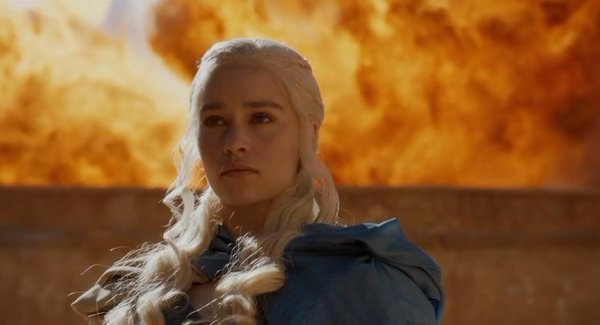
I feel like if I were the mother of dragons…I might pull a Season 8 Episode 5 and burn it all down to rebuild from the ashes.

sack-of-astapor-s3e4
What bells? I didn’t hear any bells…


The problem is too big.

That’s what we’re told right?

You can’t fight the system! It’s so much bigger than us. We don’t have the power. The government controls it. The rich control it. The churches, the states, the universities, the public schools, the whole of American culture…

But if you will remember…

The computer on top of your shoulders. The big 10 pounder. The one that processes thoughts and emotions, chemicals and body regulation, the one that creates poetry, writes novels, formulates complex plot and character design.

That’s not nothing.

That’s a powerful weapon in the hands of an informed public. And the way I see it, once we open our eyes, it’s our duty to shake as many egg pods as possible, peel back some eyelids and make the world pay attention.

Two open eyes becomes four. Becomes eight. Becomes sixteen. Becomes hundreds…

The Beautiful Stuff has everything to do with facilitating the best version of humanity we can muster. The most compassionate, fair, and just human we can be. And when we are faced with a hard and ugly cesspool, teeming beneath a society built on the death and destruction of so many lives, we can no longer live easy.

So neither should the powers that be.


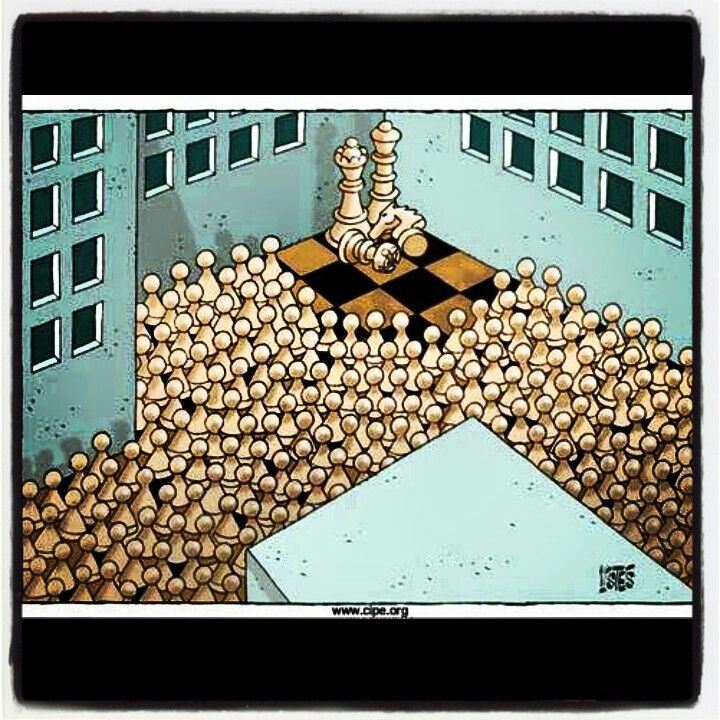
pawns and king
Never underestimate the power of a well-informed populace with like-minded goals.

My eyes are open and I will do my damndest to keep those that benefit from the broken and ugly system from covering them up.

We may not have the money. We may not have the loopholes and congressmen in our pockets. We may not have law degrees, or time, or the power of influence on large groups of people.

But we have our words. We have our minds. We have our actions and, I hope, enough anger to bypass our fear. Pay attention and acknowledge that this is a problem. Shine a fucking light on it so the rest of the world can’t ignore it anymore.

Find that spark in your chest. That pinprick of light that knows every human deserves to be safe, to be heard, to be healthy and fed, and treated with respect. Find a way to make it grow. Let it lead you to do what you can to change the inequality of the world around you.

You can always do something. Little. Big. It doesn’t matter the size of the action but the heart you put into it.

One water droplet may not have much impact, but a rainstorm can change the landscape.

Go out there. Be bold. Be heard. Stand up for each other.

grayscale photo of man woman and child
Photo by Kristin De Soto on Pexels.com

Conferring on Conferences


Okay, so I promised two weeks ago that last week we’d be talking about writing conferences. Then my squirrel brain shouted “I do what I want!” and flicked its squirrel brain tail and stole some nuts and ran off on a tangent.


Adult Sarah remembers. So without further prodding, let’s get into the meaty goodness of writers conferences and why you should strive to attend at least one a year.

If you’ve never been before or even if you are old-hat in the world of conferences, here are a few tips on how to choose the right one for you, how to get the most out of it, and how to not feel completely overwhelmed in the process.


How do you choose which one to attend?


  • If you are anything like me, you’re wealthy in creativity but strapped for cash. One of the biggest deciding factors, for me, is the cost of the conference (including travel and accommodation expenses) against what classes, speakers, and agents will be there. Getting to pitch to an agent, or multiple agents for publishers specific to your genre is a boon. Classes that are not just interesting but will help expand your craft are also good factors to consider.


  • Some conferences are genre specific and if you are a comfort-hugging archetype who doesn’t flirt around outside your style and subject matter, then definitely consider something specifically geared to your genre. The Romance Writers of America is hosting its annual conference in New York City this year…but, as my first bullet point states, it’s a little too much expense for my budget. Plus, I like to flirt… (outside of my genre, that is *wink)


  • If you’re stuck deciding between two, look at the courses offered, the speakers presenting, and if they are offering pitch sessions, especially agents suited to your work. Pick the one that gives you the most opportunity for growth and stretches your creative and ambitious goals.


How do I get the most out of my conference?


  • Here’s what I’ve learned. Plan ahead but be flexible. Conferences don’t just start the minute you pin that snazzy name badge on your seldom-used dress clothes. They start the year before, during writing when you (hopefully) self-reflect on the issues you have with your WIP, your style, your grammar, or even the steps you want to take next. If you have trouble with dialogue but are a whiz at plotting out the perfect story arc, then use your conference to build up your weak points. Even if it means stepping out of your comfort zone. Which leads me to my next point:


  • Sit it on at least one session that is outside of your genre, comfort zone, or even interest. Look, conferences can be amazing experiences but if you’ve been through sixteen hours of various takes on the query letter, trying to perfect your memoir pitches, you’re not growing as much as you could be. “But Sarah, why do I need to grow as a writer? I’m practically perfect as is!” Of course you are…but I ask you this: why does an athlete cross train? Why does an engineering major still have to take social science classes? Because learning about the realm outside yourself will make you better. Try a sci-fi world-building class or screenwriting. I guarantee, you will get something new out of it that will help your project and your craft.


  • Push your limits. Talk to people you wouldn’t normally, share your story, your success, and your pitfalls. This is an awesome opportunity (I’m talking to you little introvert from up there) to commiserate, vent, and rejoice in the craft you love so much. Pitch your novel, article, or story. Talk to the larger-than-life keynote speaker (here’s a hint: every single one of them I’ve had the pleasure to meet has been the kindest, most down-to-Earth and supportive writer). Come away feeling like the weekend/day was an experience that has changed you in some fundamental way.


How do I not get overwhelmed?


  • For goddess’ sake, take a break in the midst of it all. I’m the worst at this. I paid the money and I’m going to hit every single class. I will volunteer, pitch, hit up the speakers at the dinner table, and stuff every bit of information into my head until explodes! Then by day two, nothing makes sense in my mind, words are blurry, I’m not sure what my name is, and I’m crying into my mashed-potato tower, while wearing Underoos on my head that clearly are not my own. Take the breaks between sessions or even forgo a session and find a quiet corner or go for a walk outside. You need it to recharge, allow time to absorb the information and be refreshed for the next round.

close-encounters-of-the-third-kind-mashed-potatoes


  • If you are pitching to an agent or editor, polish the shit out of that thing. Take your pitch to your critique group, your friends, random people on the street before the conference and learn how to deliver it with confidence and clarity. Know your story, your characters, and your plot, inside and out. That first page should sing the sweetest siren’s song anyone has ever heart and lure the tepid agent from the afternoon lunch lull into something exciting they want to read more of. The more you practice your pitch, the more it will feel like a conversation with a good friend instead of an interview.


  • If you are pitching, don’t be intimidated by the agent or editor. Remember they are people. They are there, specifically, to talk to you. To hear your story. To find the next big thing. Most of them are also just like you…they may even be wearing Underoos and like mashed potatoes. The point is, it’s okay to be nervous, but don’t go in assuming they relish the idea of shooting you down. Be polite and always thank them for their time and any advice they have to give.


  • Sleep before. Sleep after. Eat nutritious food, take walks outside whenever you can, and watch the caffeine and the booze. Free coffee stations are like crack for me (okay, I’ve never been addicted to nor have I ever even tried crack but…you get the idea) and cash bars are a tempting mistress at the end of a long, people-filled day. But you have things to do tomorrow and Underoos stay safely tucked in if you can avoid that third cocktail.

underoos1


Well, good luck out there writer. Go find you a conference and learn to mill about in the wealth of knowledge and inspiration. Leave any comments or helpful hints you’ve gained over the years here, or even your worst experiences. I can’t wait for you to jump into one and discover how decadent it feels to immerse yourself in the craft you love.