A Super Secret Guide to Finishing Your Damn Book. Part Three: The Down and Dirty of Feeding Your Creation to The Wolves of the World

Hello, gentle writer, thanks for surviving that title up there…ahem. Let’s chat, shall we?

I suppose it goes without saying that after you’ve written your book and streamlined it into a gleaming beacon of fine-as-hell storytelling, you could easily stop reading this blog. You may even wish you could. But there is one more thing I’m going to need you to do…

Resist the urge to tuck that book safely away in a drawer.

Unless of course, all you want for your book is for it to sit on the dusty shelves of your den and no other eyes need apply. That’s cool.

We probably didn’t want to read it anyway, right? Your story? The shining soul child of your imagination and hard work? The obsession that’s kept you awake at night and in the zombie zone of blank-eyed stares over your cornflakes, morning after morning, while your brain builds the magnificent steel girdle of plot and your vibrant right hemisphere stretches the skin of detail and beauty across the iron bones to make something quite unique and amazing. Nah…We don’t want to see that. Who would?

Were you able to pick up on that sarcasm? It’s tricky in Cambria 12 font to really capture the essence of my meaning. Here, allow me be to be perfectly direct.

Show me your work! (Channeling Cuba Gooding Jr.—“Show me the Story!”)

It’s quite possibly the hardest thing you’ll ever do (even harder than killing your darlings? Why yes, even harder than that!) Being a writer is a parade of progressively harder choices and leaps of faith…but then again, so is life… hang on to your self-help hats here, she’s getting deep.

Yeah, it is scary. Because we’ve learned well by this point in our lives that when we put so much love and heart into our work it’s gut-wrenching to hand it over to someone who can’t possibly understand the grit and soul we put into it. They might misinterpret. They might not ‘get’ it. They might declare us wrong, or awful, or in desperate need to change our dreams.

Nobody wants to face that possibility. You are not alone in this fear. And let’s face facts; there are jerks out there. Legit, bonafide A-holes. Those that are quick to cut down creative efforts (especially when they get to hide behind the curtain of anonymity in some trolling-Wizard-of-Oz’s mother’s basement.) They LOVE to give a good criticism, because of their own fears of failure and are stung by the twinge of jealousy when someone else is bold and brave enough to create and share.

It’s a sad state of affairs but your work can become fresh meat for the slathering-mouthed, teeth-gnashers of the world.Wolf / Gray Wolf / Timber Wolf - eating White-tailed deer prey
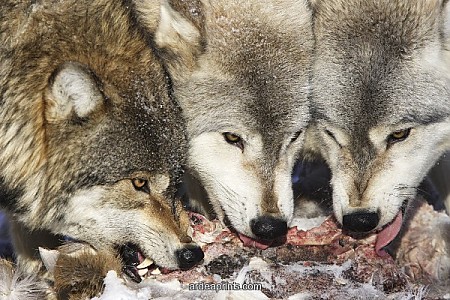
You Are Not Alone. You aren’t the first they’ll try to tear down, and you certainly won’t be the last.

Do it anyway.

Why? Why torture yourself? Because, there are good people out there. People who love stories and story-tellers. People who understand it’s a process and that when you come to them with open pages and hearts, that they are taking on a mantle of trust. Trust that they will be kind, but honest. That they will work WITH you to make the story better. They will point out things you’ve been too close to see. They will point out things they think could use clarification. They will show you the loosened bolts and torn canvas so you can repair your creation. They will point out the beauty, the grace, the delicate details that gave them shivers or tears and it will embolden your spirit to fight for your creature.

Sharing your book is a monumentally important part of finishing your book. It will teach you what you didn’t know about your writing. It will teach you what works, and what needs work.

My challenge to you, frightened artist cowering over your pages like a hunched Gollum in the dark defending a scarred band of metal, is to offer up your precious. The beauty and the joy of creating are in the sharing.
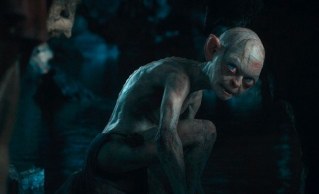
gollum

I’ve had my cut of criticisms, hard and dirty. Mean. Some of them made me wonder if the person had even read my writing or just made assumptions based on my genre and lack of MFA gilding. I’ve wanted to take match and tinder to 8 years worth of my life on the front lawn while screaming profanities in the general direction of certain publishing houses. But I didn’t. I cooled down and let myself say these words to my disgruntled brain.

bookburning

“What are they seeing? What is slowing my writing/impairing my message? What can I change while still being true to my work?”

Opening the wound is to lay your ego out on the ground beside your creature and do the work that needs to be done. This is not an actual child. It’s an idea. And all good ideas can always get better.

Find a group of friends. Start there. Start with those that love you. Move up to those that think you’re decent enough, but aren’t afraid to tell you what they think. Give it to a few discerning hard-asses. Each step along the way, refining and tweaking, without giving up your voice or the elements that make your writing yours. No one can take that, nor should you let them.

So that’s it. The third and nearly final part of this series. Next week I’ll wrap it all up with a handy and bulleted (we all know you love the bullet lists) list of how to query your work to someone who can serve as a gateway into the realm of publishing.

Good luck, kiddo. And if all else fails and you don’t know where to turn with your work, send it to me or another writer you trust. Nobody knows the soul struggle better than your own kind.
A Super Secret Guide to Finishing Your Damn Book. Part Deux: Seeing The Bigger Picture

Bonjour!

I’m so glad you decided to come back.

How was last week?

Did you separate the amoebic tendrils of your technological parasites long enough to remember how to write, free-style? Did you get hand cramps? Keep it up, before you know it, you’ll be cleaning and jerking 7,000 words a week, vocabularian veins popping out all over the place.

For this week we’re going to zoom ahead to the future; to the cumulation of all your writing efforts and the massive chunk of story sitting in front of you. All of those beautiful words you’ve poured into a pile are just waiting for the dexterous hand of a good story teller.

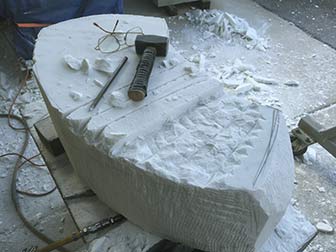
Your rough draft is like a thousand pound hunk of stone. If you want to get all “Americana” on it, you could even say its akin to a 100 pound ‘pat’ of butter. Yeah, let’s go with butter.

The rough material has potential. Your story has energy and power. But if you were to send in a stick of butter to the Iowa State Fair judging committee, they’d probably to one of three things: write you a scathing review for wasting their time; send it back and write a scathing review for wasting their time; or batter it, deep fat fry it, and send their thanks for the mid-morning snack.

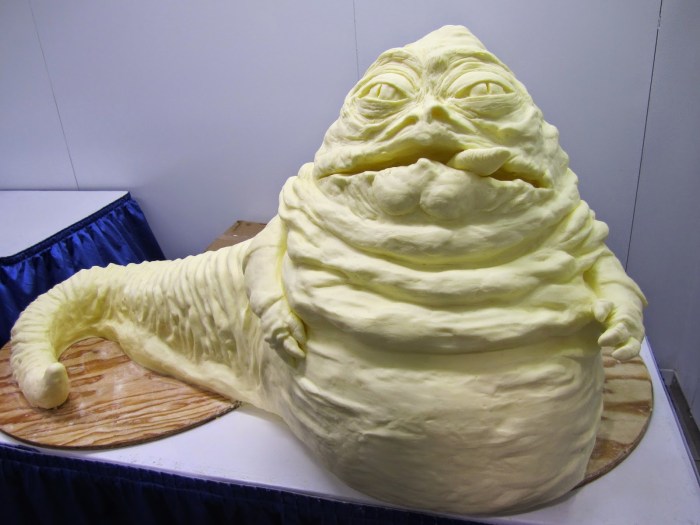
jabba butter
Jabba the Butt(er). No? Come on. You have no idea how many hours I spent looking at butter sculpture.

Your book, your words, your ideas deserve better. If you loved it enough to write it, then love it enough to shape it into the best it can be. And by that I mean…learn to edit your work properly. This week’s true secret to finishing your damn book is something you won’t hear from a lot of writers and here it is:

Being a great writer is 20% writing. and 267% editing. Shut up, I’m not good a public math. Seriously though, when you get your ass in that chair and throw all the good and bad down, and your mind learns to work in the space and time you give it to create, you can really accumulate a massive amount in a short period of time. But the art of writing, the finesse, the je ne sais quoi, if you will, lies in the ability to edit that beautiful mess into a story that captivates.

Que voulez-vous dire?

How does this magic happen, you might ask? If you’ve been around in the writing game for any amount of time, you’ve had the old adage banged into your skull over and over “Kill your darlings, Kill your darlings…” Yes…yes Maestro Faulkner, whatever you ask!

What does that really mean? Well–*le sigh*–it means you as a dreamer, a wordsmith, a lover of story and character…you, creator…must become a destroyer. A hard, eagle-eyed machine; disconnected from the rapport you’ve built over the years with your characters. You must let go of the personal angst, pain, and joy you’ve brought into the world enough to see its true potential. You have to take that beautiful hunk of marble (or butter) and break the rough and useless parts away to reveal the true work of art beneath.

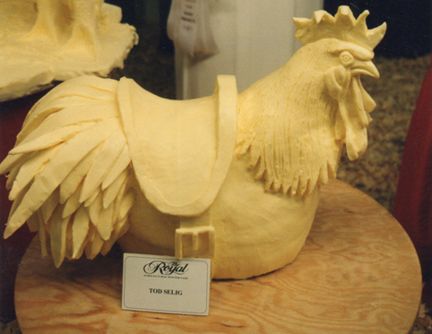
buttered saddled cock
Yep…that’s a giant butter cock with a saddle. You. Are. Welcome. (By the way, ‘giant butter cock’ is now trademarked. By me.)

Oh, Mon Dieu!  (which literally translates to OMD—OMD Becky, regarde ses derrière!)

The practice of “Killing your Darlings” is meant to make you understand that editing is hard. That letting go of the phrases and pieces of your novel that you love, when they are distractions to the story and its flow, can be the best thing you do. Cut. Cut deep. Cut the subconscious catch phrases and passivity. Give your readers a stronger character by making them the center of the action; by putting the reader in their shoes. Stop telling us everything. Cull the useless, the distracting, the stuffy, the monologues and head hopping. Give us the moonlight glinting off of window panes.

Take that lump and make it into something where details pull double-duty and every word counts. Line by line, strike out that which does not serve purpose or cause emotion to rise in the chest. Because even the most indescript lump of butter can turn into something quite magnificent when given the time and attention it deserves.

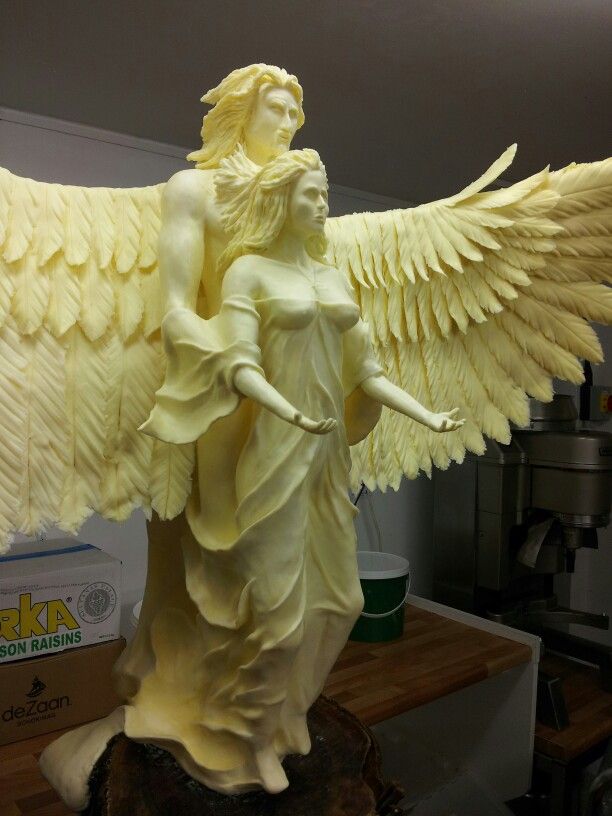
angelic butter
Sweet, Angelic Milk Fat.

Next week…after all of you hoodlums have taken a hard look at your work and gutted it to buttery perfection, we’ll take a look at what you can do next to get that silky minx out into the world.

Until then, keep writing. Drop me a line. Tell me how you’re doing.

Does anyone really want a giant baguette right now?


Survival of The Writer: And What National Novel Writing Month Teaches Us

I’m going to keep it brief and give you a little excerpt at the end of this blog to tie up another great year of NANOWRIMO. I hope that your month was successful and that it taught you something about your ability to persevere, in the face of ominous word counts, writer’s block doldrums, and persnickety characters that don’t do as they’re told.

I, for one, am proud of you. The winner of the goodie bag will be chosen this week and I’ll announce the name on the blog this week. Think of it as an early Christmas. I’m still curious to know how it went for all of you and if you have any pitfalls or successes you’d like to share, please send them my way. If this was your first or your 25th, I know that you got something out of the process.

If anything, it teaches us how to manage our time better, how to flow with the writing even when its not going how we think it should, and how to keep going even when its hard. I hope the very best for your project. My final piece of advice is this:

When the first day of December rolls around, I ask that you take that hard-earned manuscript you slaved over for a month, save it (Twice) and put it away. For a whole month. Don’t look at it, don’t tweak it. Don’t edit it. (the only exception is that if you’re really close to finishing something or the whole thing, keep extending your daily word count goal until you’re at a good stopping place). Don’t open it again until January 1st at the earliest. Give your brain and your thoughts time to settle and reflect, so you can come at it with fresh eyes and a begin the process of turning that beautiful raw material into a wondrous book.

Here’s a little (unedited) piece of my new project. Enjoy! (and Congratulations)

Photo by Taryn Elliott on Pexels.com

I wish the train would go faster, why do we have to keep stopping for people? I get off, shove my way through the current going down, swimming upwards like a desperate salmon. I keep the soup intact. I climb his stairs two at a time and the ache in my chest is probably equal parts worry and being terribly out of shape.
“Please answer. Please answer,” I whisper as I raise my finger to the antiquated brass button. Charlie rips the door open before I can even ring his bell. He looks wild. Unmoored. His eyes are fighting and strange. Like he’s made…decisions. I don’t know what to say so…Kansas takes over.
“Hey—”
“Get out of my way.”
“Where you going?” I ask and tilt my head to the side like an innocent farm girl, unaccustomed to dark thoughts.
“Out,” he grouches.
“I’ll go with you.” I shrug at this, and the soup and bread shrugs too. He glares at me; I can feel his mouth forming sharp blades of words.
“I’m suicidal.” The admission itself is a lifeline that he throws out. He could have said he had a meeting, or lawyers to talk to, or a walk to think. He hopes I’ll back down if he throws it, head on, into my face. I force myself to smirk and roll my eyes, even while I bully him backwards, my will and the box of warm food herding him.
“You’re hungry.”
“No!” he says, a split second before his stomach rises to greet me with a groan. “Just go, Meg. I’ll see you at the funeral.” His back is pressed to the not yet closed door.
“Who’s? Yours?” I pause, Charlie’s eyes go soft through the anger. “Get in the apartment, Charlie. Before it gets cold.” I force him back, and slam the door closed, putting myself between him and it. I set down the box and take off my coat and hang it up next to where he’s standing. He sighs, takes in a deep breath and closes his eyes.
“Meg,” he whispers.
“Let’s eat,” I say and take off his scarf for him, hanging it with reverence next to my shabby long trench. He gives in and throws his coat over the bright blue. As though he can’t look at it tonight. I take the box into the kitchen and start to unpack the hot soup and warm bread. I have to get the step stool to reach the bowls in the cabinet and Charlie is just standing there watching me, shirt with his cuffs rolled up, untucked and pining for the bridge or busy street that would have ended the pain.
But the pain can fade. I know. It can become livable. It’s been my asshole roommate for some time. I set down the bowls and crack open the top of the container. Charlie leans in, trying to feign disinterest.
“Is that—”
“Chicken and wild rice, from Saul’s private stash.”
Charlie fake glares and his stomach growls again. “You little shit.”
I don’t respond but I pass him a full bowl and a chunk of fresh bread. He holds them both in his hands, warm, soft. Little things to cling to in a world that was so desperate and cold five minutes ago. He doesn’t speak, but he sits at the island and I saddle up next to him.
I talk about work. I talk about an article I’m working on about AI, I talk about the impending writer’s strike. I keep my topics to things easy to let go of. I talk about anything, but leave spaces of silence for him to contribute. He doesn’t, but he presses his long thigh against mine under the counter, and finishes the rest of the soup.
I offer to stay. He says it’s unnecessary. The funeral is tomorrow. We have things to take care of. He shakes his head. He’s changed from the man marching to death. To someone resigned to accept it. But I’m wary, and I don’t want to return to my cold apartment. Not with his knee touching mine.
“I can take the couch.”
“No.”
“Charlie.”
“I’m fine.” He says, and I believe him, but I look at him like I’m not sure. “I’m gonna be fine.” He says, and nods. “I’ll see you tomorrow.”

A Super Secret Guide to Finishing Your Damn Book: Part Four…

Okay, look. I realize that I’m a couple of days late. I could go into the messy details of powder room renovations, balcony patio refreshes, banister painting and contractor calling that has overtaken my life in the last two days but I don’t want to waste the precious time we have, gentle writer. So. here I am, as my grandfather used to say, a day late and a dollar short (several dollars short, blown away at Lowe’s mostly on fifteen different paint samples of varying shades of gray–not the bondage kind, just the regular old, actual shades of gray kind). But here, nonetheless, is a final bit of information I think you should have.

If you’ve gotten through all of my previous blogs on the matter, first of all: Kudos to you, Kid! You’ve put up with a lot of tenth-grade-level writing, inappropriate swearing, probably some sort of weird butter sculpture or Robert Downey Jr. memes, and cut through all of that to, hopefully, gain some inspiration and insight into finishing your book.

So let’s say, for argument’s sake, you followed all the handy tips and tricks. Let’s say you’ve taken the time, effort and guts it needed to type those final words and sit back in front of a finished novel. You’ve let other’s read it, you’ve taken suggestion and time to fix it. Now, here you are.

You big stud. You big amazing pile of human visceral awesomeness. You should take a night off. Go have a drink, or a movie, or a hot bath, or a cat-o-nine-tails whipping. Whatever you like to do to celebrate.

Then, come back to your work space…and write a query letter.

Gulp…a…a…what? A what kind of letter? Qu—Qu—Query?

Yep. You heard me.

At some point along your journey you’ve wondered what it would be like to see your book, your blood, and sweat, and sleepless nights up on a bookshelf. Something hold-able.

Maybe some of you want to leave behind something beautiful, and tangible, and real, before you shuffle off your mortal coil. Some part of you wants to share your story, or you would have never come this far.

Getting an agent is one of the best ways to get your book shared on a large scale. But you don’t just get one (unless you’re fucking fabulous and have the superpower of Luck…)

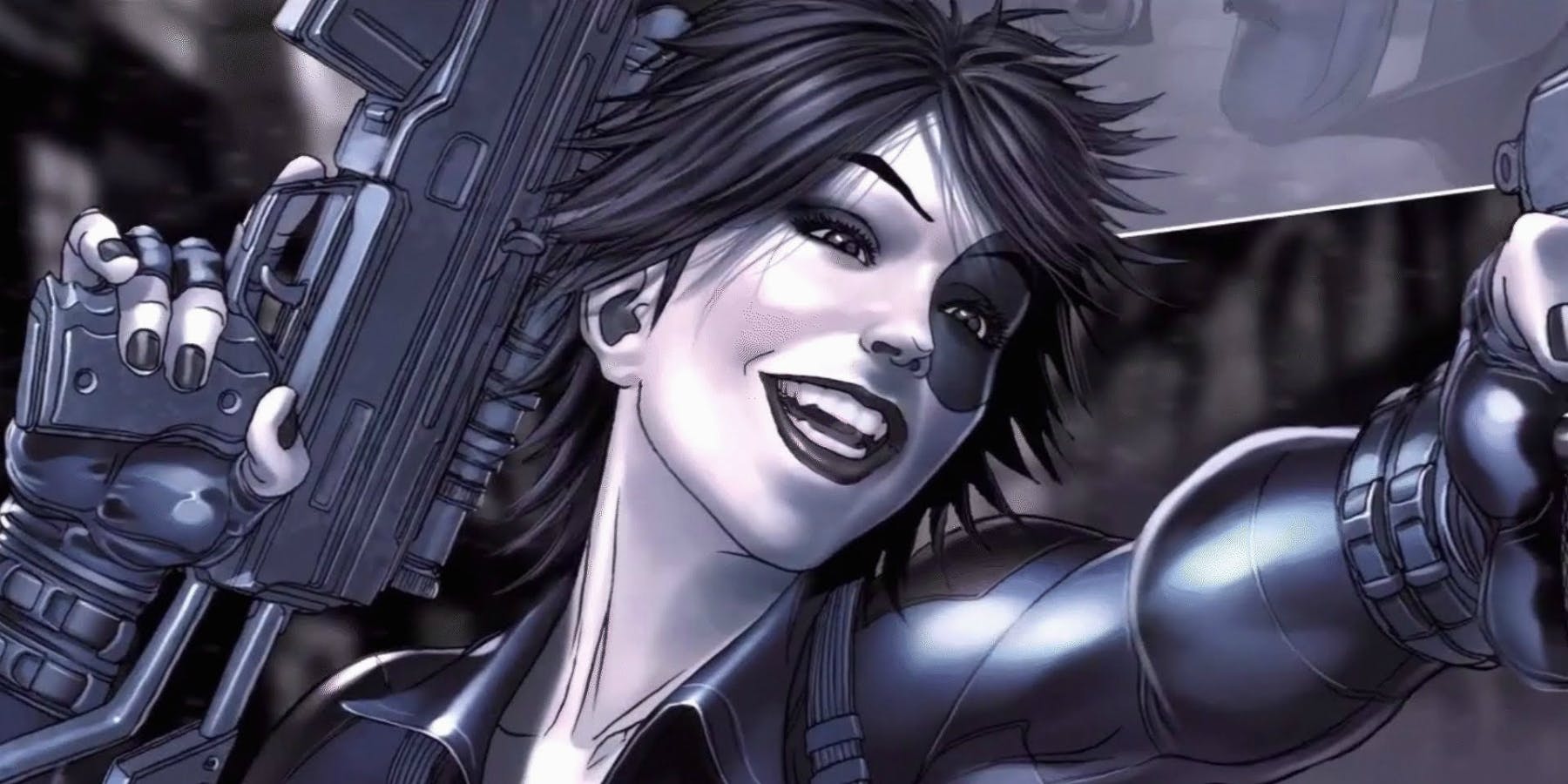
Domino-in-Deadpool-2
Obscure nerd-worthy image of Domino.

You have to catch them (not like kidnapping–please don’t let your takeaway from this be an agent abduction). You have to entice agents, capture their attention and interest, and to do that, you’re going to need a rockin’ query letter.

Make sure to research what a good query letter looks like. Here, it’s Friday and I feel bad for being late so I did some of the hard work for you.

Agent Query

Writer’s Digest Query Letter Perfection

Jane Friedman’s guide to query letters

There are some key elements that you should in mind.

  1. Address the agent by name and do your research. Know who you are querying. Know what they’re asking for. Don’t send your erotic space opera to a Christian YA publisher.
  2. Keep it short, but snappy. After the greeting, jump into the most intriguing aspect of your story. “Victoria Sullivan threw herself out of a moving car to escape her husband. How far will she go to start over?” A query letter starts like a movie preview and it has to make an impression.
  3. Keep it under a page. Three to four paragraphs, with three to four lines each and don’t indent them.
    1. First paragraph is your greeting, brief, personal but professional
    2. Second paragraph is your project summary: Title, genre, word count, comps (which style or writer can your book be compared to).
    3. Third paragraph is your PITCH, remember this is the movie tag line, the “Sell Copy” not the “Show Copy”
    4. Fourth paragraph is your bio and credentials.
  4. Write a bio that shows you are committed to your craft. I don’t care if you’ve been published sixty times or zero. Write about your passion, any successes you’ve had, and the work you’ve done that relates to your book. Agents love new, undiscovered talent, so don’t shy away if your accolade list is short.
  5. ALWAYS, ALWAYS, ALWAYS follow submission guidelines, including correct genre, correct word count, and appropriate agent for your specific project. These poor agents (yeah, I just gave a sympathetic nod to them–little secret, they’re actually human too…with feelings and families and all that beautiful stuff you’ve got filling your life) slog through a lot of queries a day. It behooves them to weed out any that haven’t followed the rules right off the bat. Don’t waste their time; submit in the form, length, and manner they request.

That’s the cut and dry of it.

I will add this; if you have met an agent at a conference or workshop, mention it. Try to remember something specific about them (not creepy-stalker specific “I really appreciate how thoroughly you brush your teeth in the morning, and are those new panties?” is too personal). Try something innocuous and personal; “I enjoyed exchanging stories about our Jack Russell terriers.” or “I enjoyed meeting you at the Erotic Space Opera Conference and talking over our mutual obsession with Jean-Luc Picard.”

Well kiddies, I think we can wrap up this little project on finishing your work in progress. I’m not saying there isn’t more (so, so much more) about writing and publishing to learn. But I’ve got limited time and it’s Friday; I’m sure ya’ll got more fun things to get to.

Write that query letter. Find yourself an agent (go local and small, independent and new agencies are more open to building their own portfolios) and offer them a chance to be a part of your journey. Until next week, when I PROMISE to be on time, write on.

picard
Make this query letter so…