I don’t have much to say about this one. Today we’ll be in the hospital. Next week, a new world. In a month? Who knows. Every season feels like fall these day, minus the comfort of repose.
Confetti

Fall afternoon
where asphalt splits
the glory of some
reticent nature apart and the
contrived quaintness of our street
twenty years-lived
sits picturesque and soft

our voices are silent and
our thoughts are loud
and we are so alone,
next to one another
each a leaf fallen
even as the confetti of mountain ash
dances down like glitter
the aftermath some big show
we've just missed
the end of a celebration
we held no part in

Tomorrow we run more tests,
tomorrow they measure you again
to see the
failure to thrive
and the insistence of dying thin
rather than living
with anything over your bones
but shivering skin

and the dark bark of trees
reaches up to claw the blue skies
and I hear
you giggling from your stroller
at the leaves of confetti
just somewhere down our street

it echoes, this joy
even as you stare sullen
beside me, alone
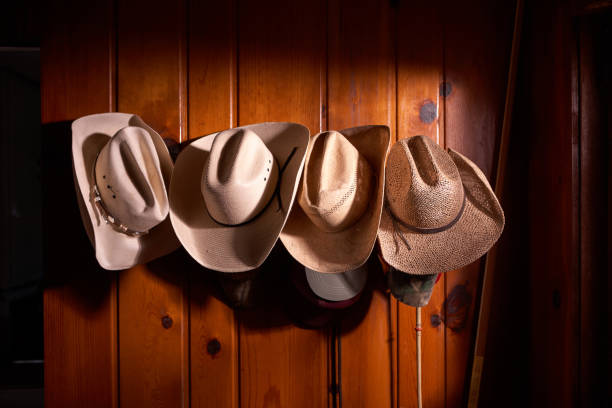
This particular phrase came to me me during a few years ago post, on the subject of home. This week, I’m on limited mental and emotional bandwidth due to stuff and things, so I decided to dust off this still-timely look at what home means, where home is, and all the hats we wear when we go ‘outside’ of it.
I’m from Wyoming, born and raised, with some detours along the way.
Wyoming has some pretty awesome colloquialisms (for more on that, please check out my Sweet Valley Series, set in Wyoming—very romantic-west) and “Home is Where You Hang Your Hat” is no exception. (Some other, unrelated, favorites; “wouldn’t mind if his boots were under my bed,” and “wish I had a swing like that on my back porch.”)
I could go into the history of hats, cowboy and otherwise, what they meant, where they came from, who wore them, the political and pop cultural significance each one carried, but you didn’t come here to listen to the historical social scientist in my back pocket, you came here for an expansion on home.
Hanging your hat up was something you used to do when you came in from a long day of work. I’m looking at you…slack-jawed twerker, with your suuuuper cool trucker’s hat turned sideways at the dinner table…you realize that it’s the same ‘model’ my 97 year-old grandfather would get free from NAPA (that’s the part store, not the wine country) and wear until the brim fell off… And, he wore it better but never at the table… sorry where were we?
Yes, gentlemen used to take off their hats inside and, in the case of coming home, would hang them on a hook or rack by the door.
A simple move that signified something so much more profound.
Hanging your hat, coming home, dropping the world at the door and breathing. Breathing in the place of your own, the space you occupy, the people who wait for you; who love you, who have seen your head without hat, your hair going gray. Coming home meant escaping the life’s demands and the outside world’s burdens and just be.
Why is it important, that we take off our ‘hats’ in today’s world? Why does it matter?
I’m glad you asked. It’s kinda why I’m here.
Humans these days are so connected by technology and the speed-of-light information bursts, that there’s really no such thing as a safe space anymore. Now your home has multiple outlets for this information to stream in, constant and blaring.
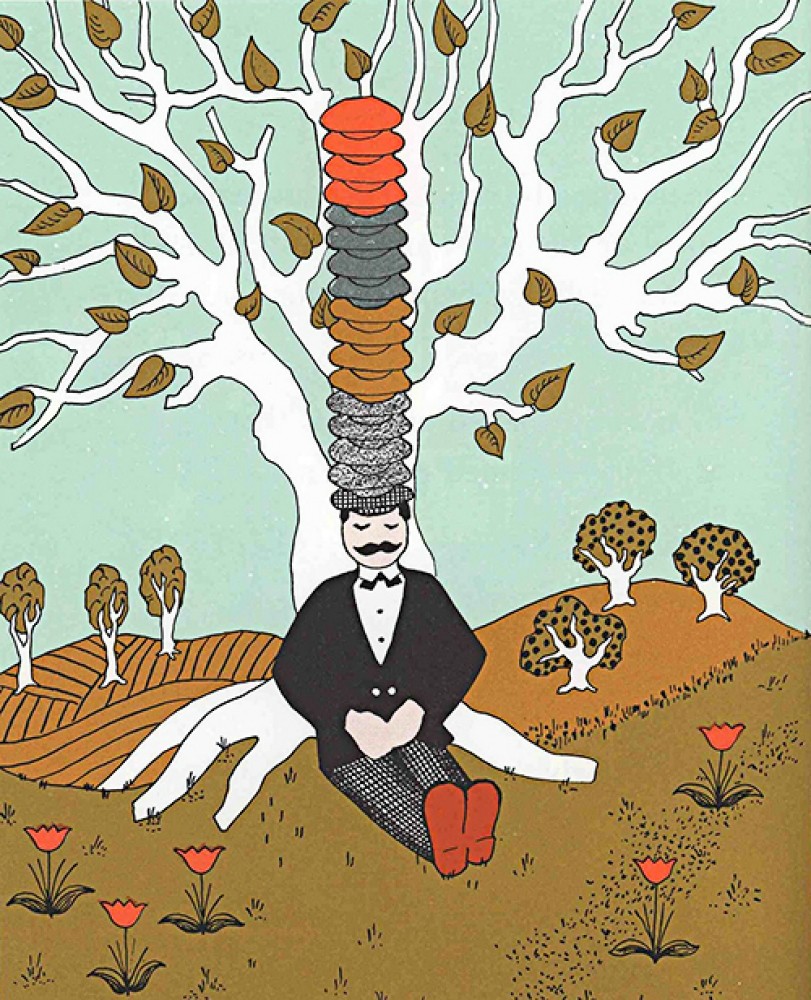
And the ‘hats’ have changed too, haven’t they? We used to wear one, maybe two. Now, we’ve got them stacked one on top of the other until they tilt in the breeze and wobble when we try to move forward. We’re doctors, and scientists, social activists and martyrs. Writers and poets, librarians and board members. We’re frienemies and friends, lovers and exes. We’re husbands and mothers, daughters, sons adopted or otherwise. Victim and accuser, the pious and the demon. We are presidents of PTAs and the one mom that always forgets cups. We’re the one to takes the dog to the vet and the kids to the dentist and forgets to pick up their dry cleaning. We’re the ones who need more sleep, but don’t get it. The ones to work long hours, for little recognition. The ones who scoff and say ‘its fine’ when it isn’t.
Caps For Sale: A Tale of a Peddler, Some Monkeys, and Their Monkey Business. Esphyr Slobodkina (how is it I never knew that was the full title?)
We’re chained to the images that we build on our social media pages and constantly feel the need to live up to the happy smiling selfie that the world thinks we are. It’s getting so one can’t even close the door and drop what’s not real for a few minutes.
And if you can’t ever drop it, how do you even know who you really are?
It’s no wonder we’re overmedicated, depressed, anxious and stressed. People constantly shoving hats into our hands, telling us what we should be, what we could be, showing off how beautifully they’re balancing their own stack with perfect pictures of perfect lives through perfect filters that they post fresh every day.
It can leave a person feeling that if they aren’t getting enough ‘likes’ that no one actually likes them. That the measure of being loved is dependent on some superficial and meaningless emoji.
Listen, kid, ain’t nobody that happy. Ain’t nobody that perfect.
And the brilliance of those images, I guarantee, is hiding the same nasty, visceral darkness that resides in each of us, fed on self-doubt and anger. Jealousy, dis-ease with the person in our skin, and the pressures squeezing through our walls each day.
I just want to go home.
Let’s go back to that place.
The place where you put your phone on the shelf by the door and kick off your shoes. Leave your meal un-Instagramed. Your run un-shared. Write down the cute thing your two-year-old said, and then tell your mom face-to-face over a cup of un-tagged, un-pinned coffee.
Wait for your meal in silence and anticipation. Look up something– in a book. When you feel the need, the itch to pick up that screen, or turn that television on, or otherwise disconnect from real life, don’t. Over half of our lives are spent looking at the world through our screens and its becoming a new, cold, disconnected home where we find no respite.
The ball is in your court, the stack of hats in your arms. Drop them all, for just a moment and pick up only the ones that satisfy your soul. Even those, hang up once in a while and sort through how they make you feel when you wear them.
Find your home by letting go of the things that are outside of who you feel you need to be. Find the home in the center of your chest, your truest self, and come back to that. Hang your hat there. That’s your home.
Shhh…can you hear that? It’s something rustling through the back shelves of the library to the north. Up there in Wyoming, my home state. I can here it, in those churches of knowledge that helped educate me when I was cut off from the rest of the world. In that god-like place of words and stories, something foul is afoot.
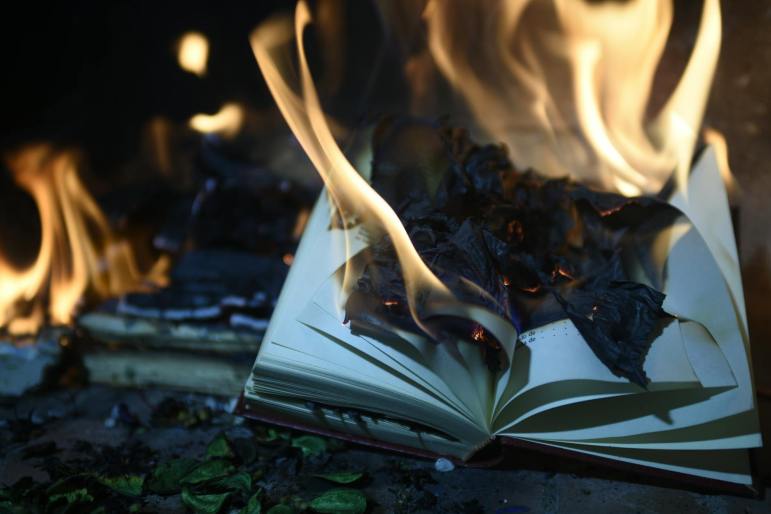
Idaho did it. Wyoming is following suit…but with even more extreme regulations. The governments in these fine, god-fearing states, are trying to ban books in libraries that might be ‘sexually explicit’ for children. These hellfire books would certainly condemn these innocent youths to a life of sin for the knowledge of such things as… ‘masturbation’ and ‘menstruation’. Yes, parents cannot simply be asked to pay attention to which books are on shelves and might get pulled off by their sheltered (and not-at-all-on-the-internet-where-FUCK ALL EVERYTHING-can-be-found) children. The almighty hand of the government must step in to ‘save the children’. Not from actual death by gunfire from an assault rifle easily bought by anyone breathing mind you, that would be silly, but from the immoral leanings of condemnable ideas that maybe gender doesn’t really exist, periods are actually pretty normal, sometimes people touch themselves, poop jokes are funny, and that women can actually have orgasms. So much worse than a bullet to the brain of a 6 year old right?
It’s really god’s work. And I know I’m speaking, sort of, in jest, but the really NOT FUNNY thing about this situation is that should these bills pass, it would mean a cut in funding, fines, and an overstretching of already overstretched resources for local libraries. Some of which, are the only ones in the county for multiple towns. And the beginning of what can only be described as the Fahrenheit 1984 Syndrome (trademark by me) Wherein they burn what they don’t like, brainwash the masses into believing they didn’t like it either, and then spoon-feed the applesauce of Christian extremism down everyone’s throats until ours souls are so worn down that we don’t remember a time when we could have fought back.
Like today. As in, this is still the time we can fight back. It starts with a rustling. It starts with one book that seems suspect. But the machine of this fascist regime taking power is never satiated by one. It wants all of the books. It wants all of the thoughts. Because words are thoughts. Books are thoughts. These books in turn create thoughts. Thoughts create more thoughts. Thoughts support and connect other thoughts. Thoughts make us curious and wondrous and compassionate. Thoughts free us from man-made systems that are only real because someone has gotten hold of all the funding and weapons. Thoughts cause anarchy against systems that are no longer ethically or morally right.
So… if you live in Wyoming I urge you to get involved. Call your representatives. Go to the hearings, the meetings, the protests. Be vigilant. Fuck, be a vigilante for books. Be aware. Our country is at stake yes, but so is the future of our humanity. First they came for the books containing even the slightest whiff of sexuality. And maybe you did not speak because you do not write or read them. But then, they will come for the mysteries, the horror, the coming of age, the fantasy, and magical realism. The newspapers and magazines that don’t tow the line… The science (in and out of fiction), the christian that was not christian enough, the cookbooks for vegetarians…and on and on…until soon there will be no one else left to speak out for you…or your book.
Hey kids. My life has been a bit of a shipwreck these last couple of weeks. Transitions, seemingly impossible battles, lost luggage, and forgotten obligations. I am not feeling my best self, though I know I ought allow myself more grace for the days that are in a constant state of upheaval. So my grace today is in recycling an old poem. Because my mind is too on fire, and yet still disconnected, and I do not have the space for much else today.
My River

My river runs deep
and walks shallow
into the porous nature
of bed-rocked layers
the clay and sand
and above to deer-perked ears
silent hoof prints on banks
sunk in

My river is the tumble of rock
into sand
and foamy puffs
in swirling whirls
quick eddies of frantic joy
released
and the unforgiving relentless call
to keep moving

My river begs spotted trout
slip through the icy fingers
of its burbling caress
wet swells against
the willow banks
and plays below the soft wings
of mayflies dancing
round poles of half-sunken timber

My river is the mirror
a night of stars
the giving dark
splashed with milk
and splattered with a forgiveness
of perspective in light years
of still thoughts
and letting go things
too far away,
too long gone
to be mine

My river is the blood
hushing through veins
the secrets in history
the timeless genomes and
photographs carrying ghosts
with no remembered names
but they have my eyes,
the rise of cheekbone
the propensity to carry
all this grief
in the generous swell of my hips
Approximately three days ago, my daughter Madelyn was a boisterous and fancy-dress-loving two year old. She would wore through not one but two (in growing sizes) Tigger costumes, bringing light and bounciness to her preschool, the grocery store, the library story hour, and daily walks. She would sing and dance (usually in her underwear and draped in all the scarves she could find in my drawers), splash in puddles, cuddle up to me for hours a day, and she taught me everything I know about patience and the importance of staying present in the moment you’re in.
Today we’re getting the keys to her apartment, in Leeds, UK, where she’ll be attending University. Thousands of miles away from home.
Away from me.
And I knew this day would eventually come. I just didn’t think it would seem like three days worth of time, squished into 18 years. Getting to be next to her as she grew up through her boisterous youth, to her unsure and difficult middle school era, to the renaissance of her bloom where she came into her own thoughts, and opinions, and power in the last few years has been, hands down, the best adventure of my life.
Honestly, I don’t know how I managed to steer her little boat down this great big life river to where we’re at today. She’s such a sturdy and reliable vessel, that I often wonder if someone else raised her. Because on this day, and for the past few months really, I’ve been a wreck of a dingy.
Her resilience and perseverance are the only reasons I didn’t lock her in her room and tell her she could pick a nice online program to attend instead. For someone who has worked so hard to be self sufficient, patient, kind, hard working, and just in an unjust world…it would be a grave disservice to not let her spread her wings into this world that so desperately needs her. As my grandparents and parents have always said. We don’t raise them to stay at home and need us. We raise them to go out into the world and be good humans. So I’m learning to let go, I am leaning into embracing this time of her. Because it is. It’s her time now. And how amazing that she gets to spend it, invest in it, experience it, with me still as her mom?
There will be, inevitably, a lot of letting go and holding on in our lives. Family, jobs, relationships, loved ones, hopes, dreams…change and flow with the actions and inactions of the world. Learning when to loosen your grip and when to hold tighter is a difficult dance and the choreography is always changing. So this week I encourage you, as a writer, a human, and a soul…to think about what you’re holding on to. And ask you if it serves you…If not, why are your fingers so tight? What would happen, if you let go of something meant to fly? Not everything is ours to keep, after all.
For me, and Madelyn, letting go is an act of love that tells her I trust her, and I believe in her. It tells her that I’m excited for her life and for what she’ll do out there in the world. It tells her that I know she has brighter (and probably darker) days ahead and that both with teach her about life and finding her purpose. It tells her that I know she’s got this. But it also tells her that I am here and I will hold on to her in my heart, where she’ll always have a home. A big old oak tree to sit beneath when the world gets too loud and too busy. My roots will be there to sit within. My branches always here to give shelter. I will hold on to the bright memories and the endless giggles and curiosities, to remind myself that we are all borne as stardust into this universe and we are all born knowing. We are all, always, undeniably connected. Only the world makes us doubt these undeniable truths. I will hold onto this knowledge for her, in case the world makes her doubt it.
Hug your kiddos, hug your loved ones, hug yourself. (I’d caution against hugging strangers…best not to unless invited and both consenting) Remember you are stardust, glowing and bright. And that means, in terms of the vastness of the universe, that we’re never, really, very far away from each other even when we’re miles away.
Hey there. I see you. Staring, blank eyed, into your screen. Just a thousand more words. Just get this poem revised. Just submit to one more journal. Post one more eye-catching reel. Just call three more bookstores. Just, just, just, just…
It isn’t hard to get caught up in the loop of hustling for your art. And I don’t mean that’s always a bad thing. We care about our work. We love our work. We want to share and celebrate our work. This world has a variety of pathways to do that (an overwhelming and convoluted sphere in itself), but it often amounts to at least a part time job in itself. Beyond the writing, the poem-ing, the editing, the revision, our creativity is in constant competition for the pesky day-to-day of living.
Psh. Family. Day jobs. Grocery shopping. Cleaning. Taxes. PTA meetings. Board meetings. Bake sales. Yard work. Caregiving. That contest you said you’d judge. Simultaneous vaccinations for every furry thing in the house… everything competing for space in your brain and on your schedule. I get burnt out just thinking about it all. So this week, we’re going to take a step back, put down the balls I’m juggling (I can’t type balls without giggling a little–Jesus Christ Sarah, pull it together) and talk about some things we can do as creatives/writers to keep ourselves sane, calm, and focused, in these over productive lives. I think you guys deserve a bullet list. It’s been awhile.
Sleep. Protect your goddamn sleep at all costs. Seriously. Priding yourself on four hours a night is only super cool to tech bros and cocaine addicts (or do I repeat myself?) Create a bedtime routine like you were a toddler. We turn off our phones, we brush our teeth, we stretch and meditate, we read something calming, we shut off the light and we settle in. (or whatever combination works for you) Every night. Limit your caffeine and your booze.
Find time to write for fun. I get it, all of us write and it’s all ‘supposed’ to be fun. But sometimes there are projects and deadlines. You should always have some outlet that isn’t related to your bigger goals. Journaling every day counts. I have a tiny notebook and every day I sit down to write one poem in only the space of two tiny pages. Only have 5 minutes? Do that. That’s enough. Have 20? Take it and make it your downtime.
Exercise. Listen you don’t have to run marathons. You could to chair yoga or mobility stretches. You could go for a walk or a bike ride. You could Jazzercise for all I care, Richard Simmons your heart out. Power lift or join a Cross-Fit cult. The brain works better when the blood is flowing. Not only that, but it will kick up your endorphins and hopefully help your sleep, posture, and overall sense of well-being. Movement matters
Read. Holy shit, I used to be terrible about this! I’d only pick up a book at the end of the day, maybe make it through a page, and fall asleep. I told myself I didn’t have time. I was a big dumb liar. There is time in the day. I read in the morning now, and a little at lunch, and again in the afternoon. A variety, some philosophy, some writing books, some fiction. A healthy diet of words help me to have fuel for my own.
Don’t take it so seriously. I’m not talking about just your writing. I’m talking about your life. Here’s a secret that capitalism and social media doesn’t want you to know. The statuses, the Amazon ratings, the likes and comments–none of it really matters. It’s an alternate plane of information that really doesn’t mean anything. Have you ever sat in your own skin consciously for a minute. Felt the reality of being? Known that if a giant EMP took out all technology suddenly, you would still exist in the world. We only get this one time, we only get the moment and the breath we’re in. If you never published another book, the world would still keep spinning. If you were rejected 600 times, the sun would still rise the next day. Silly human, stop obsessing about the trivial and just be present. Find your joy in the here and now.
Well, there you go. Take care of yourself. Get sunshine, good food, movement, and water. Treat yourself like your favorite houseplant. Talk gently to yourself. Forgive yourself. Take lots of big, deep belly breaths, and trust that whatever you have to give for today, is more than enough.
A large part of human nature’s beauty lies in our failures and follies. Perfect people are rarely very interesting. As a writer, creating ‘perfect’ characters is a sure-fire way to distance your readers and lose their interest. Why? Because no one wants to read about someone who always gets it right. Who can share commonality with that? And yet…our reality is often ruled by what we, as actual humans, fail at.
When thinking about human frailty and my own failings I stumbled across the largest stone in my path of late; Self-Worth.
I know I’m not alone. I see you out there.
It’s more than fair to say that we are comparative beings. The media propagates it, competitive constructs in work and school demand it, and long-standing cultural threads tie our successes (and our failures) to what we’re worth in the eyes of the rest of the world.
Its the single most destructive lie we’ve ever been told.
And its easy to say that it doesn’t affect us. That we don’t care how we stand in relation to other people, that we don’t have a competitive nature, that we don’t feel the need to be anything else than what we are. I say those things all the time. And they rarely do more than offer a feeble disguise over the surface of self-doubt.
If we didn’t care, we’d cease to try. We’d stop looking for ways to improve. But something that should drive our greatness often tears us apart and we are left with shreds of the human we used to be, torn apart in an effort to create something more inspirational in the eyes of the world.
I was recently told, by a very generous soul, that my self-worth shouldn’t come from anyone but myself. That I couldn’t let the berating, criticism, or comparisons of the world let me feel any less than what I was worth. That it wasn’t the outside that should decide, but what was inside of me.
So it made me wonder; What am I worth?
In terms of chemistry, my physical make-up is probably no more than about $3.00 worth of material.
If you broke down my daily tasks and how much you’d have to pay someone else to do them, some would say I’d be worth about $140,000 a year. If you based my worth on what I contribute to the world with my writing we’re looking at a solid $50 a year. Monetarily, its not very impressive. And again, I’m basing my worth on what other’s consider useful tasks/materials.
So what am I worth? What are you worth? Sit still with yourself and ask the question:
“What do I do, what am I, that matters to me? That impacts the world? That brings me contentment?”
Deep…yes. Sometimes we gotta get past the cloak of simple thought to really understand why we matter. We have to, for the sake of our own self-preservation. After all; if you don’t see worth in yourself, you start to feel like a burden to the people you love. And all sorts of ugly outcomes arise from that train of thought…trust me, I’ve been building a scary set of tracks in that direction myself of late.
So I sat down, prompted by my friend’s words and suffering through a trough of depression, and asked myself what I was worth.
I came to the conclusion that for a long time I’ve let the words and actions of other people (in their own beautiful human imperfection) determine my self worth. If they were mad at something in our shared existence, I took it on as a fault of mine. As a problem that I didn’t fix or prevent. If comments were made about appearance, I took the darkest path of focusing on my imperfections and felt the need to correct them by any strange and unhealthy way possible.
It left me wanting and sick.
Why do I let my brain do that?
Because we’re taught to improve. To impress. To be better. To strive for more. Instead of just being what and who we are and understanding that we aren’t responsible for other people’s happiness or conforming to ideas of perfection. We must set boundaries to the information we let affect us. Even my friend’s well intentioned advice was still someone on the outside telling me what to think about my self worth. It’s not about letting someone tell me I am worth-while. Its about knowing my own worth and not letting the outside world sway that knowledge either negatively or positively.
Now there are times, when someone who loves us may come to us with good intention, and full hearts and offer us a viewpoint about something destructive they see in us. There are times when someone has honest praise to offer. With careful appreciation of the information we’re given we can chose to look at it with neutrality and see if there is helpful advice within it, and take it as an opportunity for self-reflection.
I love you guys, for all you are. Just as you are. Have a beautiful week and stretch your brains and hearts to fit the worth inside of you. It’s there.
“My dear,
In the midst of hate, I found there was, within me, an invincible love.
In the midst of tears, I found there was, within me, an invincible smile.
In the midst of chaos, I found there was, within me, an invincible calm.
I realized, through it all, that…
In the midst of winter, I found there was, within me, an invincible summer.
And that makes me happy. For it says that no matter how hard the world pushes against me, within me, there’s something stronger – something better, pushing right back.
So…this was written on a train (if the title doesn’t somehow give that way). Somewhere in the wilds of Norway, which still feels like the beating heart of my home. Some yearnings remain. After years, after miles, after all the weights we carry and let go. We still remain. Remember your wild heart. Yearn a bit more. Worry a bit less.
Thoughts from a Train
the gnarled and yet not-aching-to-be-straight aspens, forever reaching up while tethered to their roots below the largest organism, still seems so alone, standing on the draping hills and keeping a respectable distance from one another
a rushing river teases between trees and gives the snowy foam of passion a rise and climax as it dances across unforgiving rocks on the edge of a desire fluid against hard surfaces rutting in season and calm placation when the urgency subsides
I’m still trying to see through the trees to find the rushing sound
hard rock faces, lining the tracks to dark tunnels where the rush of entry changes the pressure of my body and eyes flutter close the dark and light dappling through my eyelids and I feel the butterfly brush of lashes to cheeks you’re lying there in the sun, now shade, now sun beside me
I am sitting with all my desire, laying in warm beds faraway from here and the ways it will never reach me, never catch up to me through windows along miles in this cold space next to strangers known and unknown
I am heavy in obligation weighed, like black holes contracting around the reality they consume
but in my heart still beats the wilderness and still grows in brambles, and still peeks through evergreen thick to remind me that a river always rushes cold and powerful ever cyclical and returning between my crevasses and to the lowest points of all the lovely roots of this, my human desire
So yesterday I was invited to this really cool space in north Fort Collins, called Kestrel Fields Studio and Art Residency. The owner, Heather Matthews, is a delightful human who has created this space to help support not just artists in need of a space to work and focus their attention on their craft, but also as a gathering space for artists from all around. Last night, she invited a lively and varied crowd of Arts Administrators from the area to mingle, talk, and answer some important questions about what art means in our community, how we can work together, and what the future of art in our community could look like.
I won’t go into great detail but I did notice a few things that were brought up time and time again. First, that even in communities where the art scene (I’m covering it all; music, visual arts, performing arts, literary arts, etc) is vibrant, there is often a disconnect between artists sharing their work and the public being connected to it. We all know that funding for the arts has taken a hit under the current federal administration. When we couple that with an economy that’s currently circling the toilet bowl, private funds are also being withheld as the whole country braces for these depressive futures. In itself, this creates a depression and repression of a different kind. Creation of art is not free nor easy. It costs time, and material and effort.
Artists in America (with the exception of those billion dollar stars out there) are not paid well, if at all. Art is not considered worthy of compensation to a capitalist system. Why? Because it defies all the markers of capitalism. It is not meant to be consumed and thrown out in an never-ending wasteful cycle. It is not massed produced, or homogenized for easier consumption. Art is unique, and personal, and deep-rooted. It asks the observer to think and to feel, and to step outside of their own perceptions. Art is uncomfortable and often questions power. It is dangerous in all the right ways. Because people who think and ask you to question our societal confines are often discredited. After all, why would a system promote someone trying to shake us out of a stupor to acknowledge our humanity above powerful, greed-driven systems? Art does not serve systemic oppression.
The point is that art and artists in America are more often seen as quaint, quirky and starving, rather than being hard-working harbingers of change and progress. Unfortunately, the marker of respect in our society is tied with monetary compensation, and we do not give that to artists, no matter how they may improve our lives or move our souls. So…something to think about is how you interact, support, and uplift the artists in your community. First, by going to their shows, reading their books, reviewing them and spreading the word. Paying a cover designer when you can. Paying for someone who edits or writes copy for you. Paying a musician to preform at your event. That money goes directly back to the artists and therefor the community. And it speaks a louder truth that Art Is Worthwhile.
Along those lines, let’s talk about cross-support. A big issue that came up was the “siloing” (I feel like that’s a hot-topic word of late) of artists. Painters stay in gallaries, musicians only go to music festivals, writers stay home in their pajamas and turn their ringer off. Yes. It’s hard to step outside of our own comfort zones within our art. But the beautiful thing about art, in any sphere, is just what I mentioned above. Art makes you think. Makes you question. Gets you outside of your world and asks you to see something new. To question. To feel. And those questions and feelings, especially when planted in the seed of another artistic mind, will lead to a garden of beautiful, unique and expansive ideas. If you’re familiar with ekphrastic work, you know that a painting can inspire a poem. A poem can become a song lyric. A song can drive the hand of a painter. We are not siloed, we are an expansive field of fertile and ready soil. And at the risk of sounding sensual, we should start cross-pollinating. Not only for the health and vitality of our own art, but to support the minds and hearts of people who share in our struggle and joy of being translators of the soul into art.
I am proud of the community of writers and poets I work with. I am overjoyed to meet the artists who paint, and draw, and sing, and perform. I love to know how art and passion move through their bodies, and to feel kindred in their drive to create something that feels like touching the deep truths of humanity and shared experience. My ask of you today, whether you write or not, is to find out more about the artists in your community. Go to their shows, follow them on line, support them with words and presence if you don’t have the funds. But let them know they’re important. That they are seen. Because artists see you. They work and create to bring us all closer to understanding each other. And that’s something worth leaving my pajamas for.
I know it’s been a pretty poetry-heavy blog of late and I’m honestly not apologetic about that. Poetry is a grace that fits into my life better these days. It’s more accessible to write, to slip my fingers into it’s lines, and to distill so many of the big and difficult feelings I’m currently holding. If you don’t poetry, you should. (Yes, it’s a verb, and a noun). But for today, I wanted to write about something I think is a skill whose value is immeasurable for writers.
The power to listen. Now, I’ve always been kind of a quiet kid (until I know you better, then good luck getting me to shut up) and was subjected to all kinds of comments. “Doesn’t she know how to talk?”, “I guess she’s just not much of a joiner, huh?”, “She’s so quiet.” All of this and more almost berated me into more silence until I was into my adulthood, and was forced to be more proactive in communicating. Still, to this day, in a large crowd of people, I prefer to be the one slinging one question into the crowd and then softly withdrawing to the sidelines to watch the frenzy.
Because I learn more this way.
First: I learn about character, history (or backstory), as well as flaws and strengths. In the listening to their words, their thoughts, their stories in total, yes, but also… I learn how they speak, I listen for intonations, and body cues. I listen for changes in pitch and pace, I listen for old dialects and idioms sneaking through. I listen with my eyes to watch the way their hands talk, their body nervous or posturing. I listen to the subtext of history behind it all. I learn about humans, and their story when I listen. And learning about humans is such a fundamental skill for writers to have. Not because we want to poach a character straight out of our monthly PTA meeting (well, maybe you do, I’m not here to judge) but so that when we sit down with our characters we can visualize them. As they are, with all of their imperfections and mannerisms, and really start to build a world true to what they’re saying in words, thoughts, and actions.
Second, and perhaps more utilitarian, I learn about the world. Listening to people opens me up to experiences and knowledge that I don’t have, maybe that I may have never even wondered about. And every story that settles into my encyclopedia brain is a new idea, a richer understanding of an old idea, and a bigger picture of this fantastical world. Every human being is a conduit to experience I don’t have enough years to gather myself. What a wonderful way to learn, am I right?
Third, and this is a natural consequence of the last point, listening to someone is a sign of respect, of interest, and on some level, love and acknowledgment of their existence, their struggle, and their worth in the world. More than just getting that character quirk you’ve been struggling with for months, or learning that a group of hippos is called a ‘bloat’, you are validating the experiences and importance of another person’s life. You are willingly giving them your time and attention (finite resources) and being present with them. That matters. More than just as a writer, but as a human being.
So–next time you’re in a crowd, writer… pay attention. Focus in, feel the presence of being in someone’s audience and listen to the story they show and tell you. It may lead to the next grand idea, it may help you unstick your work, or it may just help another human being feel seen.




 Sarah Reichert Author