Two Ears, One Mouth: The Power of Listening for Writers

I know it’s been a pretty poetry-heavy blog of late and I’m honestly not apologetic about that. Poetry is a grace that fits into my life better these days. It’s more accessible to write, to slip my fingers into it’s lines, and to distill so many of the big and difficult feelings I’m currently holding. If you don’t poetry, you should. (Yes, it’s a verb, and a noun). But for today, I wanted to write about something I think is a skill whose value is immeasurable for writers.

The power to listen. Now, I’ve always been kind of a quiet kid (until I know you better, then good luck getting me to shut up) and was subjected to all kinds of comments. “Doesn’t she know how to talk?”, “I guess she’s just not much of a joiner, huh?”, “She’s so quiet.” All of this and more almost berated me into more silence until I was into my adulthood, and was forced to be more proactive in communicating. Still, to this day, in a large crowd of people, I prefer to be the one slinging one question into the crowd and then softly withdrawing to the sidelines to watch the frenzy.

Because I learn more this way.

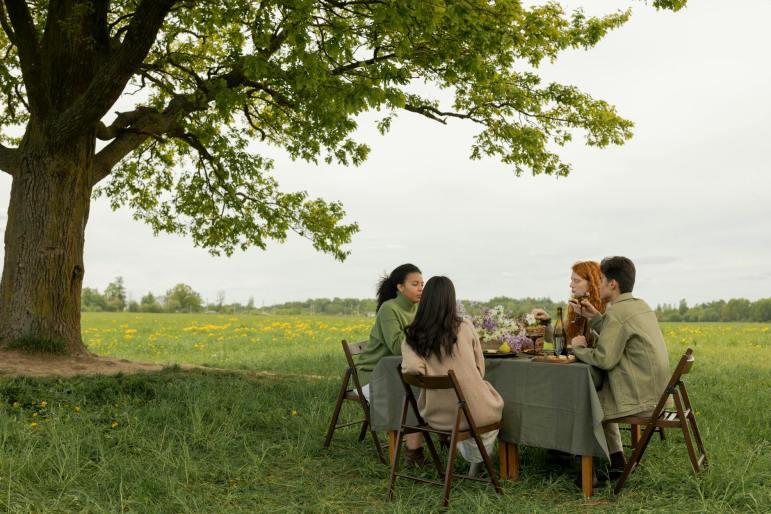
First: I learn about character, history (or backstory), as well as flaws and strengths. In the listening to their words, their thoughts, their stories in total, yes, but also… I learn how they speak, I listen for intonations, and body cues. I listen for changes in pitch and pace, I listen for old dialects and idioms sneaking through. I listen with my eyes to watch the way their hands talk, their body nervous or posturing. I listen to the subtext of history behind it all. I learn about humans, and their story when I listen. And learning about humans is such a fundamental skill for writers to have. Not because we want to poach a character straight out of our monthly PTA meeting (well, maybe you do, I’m not here to judge) but so that when we sit down with our characters we can visualize them. As they are, with all of their imperfections and mannerisms, and really start to build a world true to what they’re saying in words, thoughts, and actions.

Second, and perhaps more utilitarian, I learn about the world. Listening to people opens me up to experiences and knowledge that I don’t have, maybe that I may have never even wondered about. And every story that settles into my encyclopedia brain is a new idea, a richer understanding of an old idea, and a bigger picture of this fantastical world. Every human being is a conduit to experience I don’t have enough years to gather myself. What a wonderful way to learn, am I right?

Third, and this is a natural consequence of the last point, listening to someone is a sign of respect, of interest, and on some level, love and acknowledgment of their existence, their struggle, and their worth in the world. More than just getting that character quirk you’ve been struggling with for months, or learning that a group of hippos is called a ‘bloat’, you are validating the experiences and importance of another person’s life. You are willingly giving them your time and attention (finite resources) and being present with them. That matters. More than just as a writer, but as a human being.

So–next time you’re in a crowd, writer… pay attention. Focus in, feel the presence of being in someone’s audience and listen to the story they show and tell you. It may lead to the next grand idea, it may help you unstick your work, or it may just help another human being feel seen.

Happy and Safe Pride

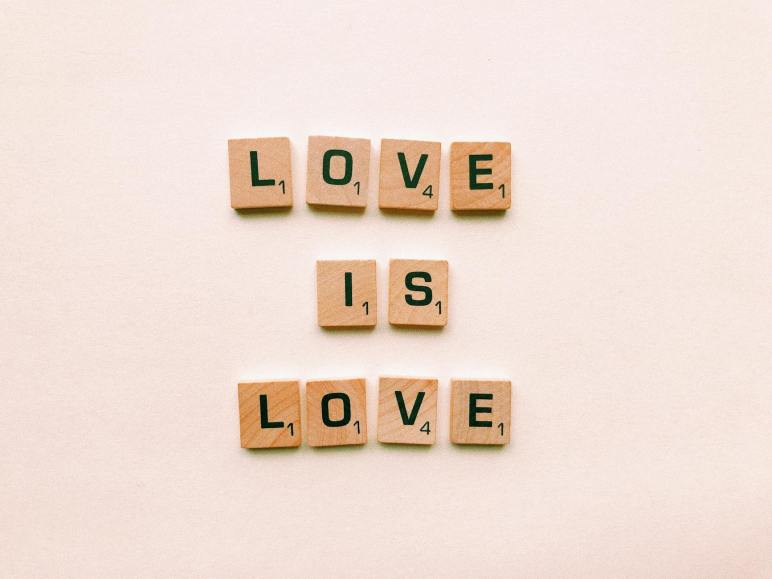
In honor of Pride Month and celebrating all of the amazing human beings, in their struggled to be themselves, live fully, and be safe from violence and oppression, I’m doing all I can to support LGBTQ+ writers and poets. Listed below are a group of wonderful authors and their work that you should check out. If you can buy from them directly do, and leave positive reviews if you have some to give. Each one is an opportunity to learn, to grow, to understand and to find connection. Not just this month, but every month. Enjoy and be the loving force for change you want to see in the world.

  • One Day I Will Write About This Place: A Memoir by Binyavanga Wainaina
  • As Beautiful as Any Other: A Memoir of My Body by Kaya Wilson
  • La Bâtarde by Violette Leduc, translated by Derek Coltman
  • The Truth About Me: a Hijra Life Story by A. Revathi, translated by V Geetha
  • The Sex Lives of African Women: Self-Discovery, Freedom, and Healing by Nana Darkoa Sekyiamah
  • The Pink Line: Journeys Across the World’s Queer Frontiers by Mark Gevisser
  • Modern Nature by Derek Jarman
  • My Lesbian Experience with Loneliness by Nagata Kabi, translated by Jocelyne Allen
  • People Change by Vivek Shraya
  • Asylum: A Memoir & Manifesto by Edafe Okporo
  • Welcome to St. Hell: My Trans Teen Misadventure by Lewis Hancox
  • We Have Always Been Here: A Queer Muslim Memoir by Samra Habib
  • Dear Senthuran: A Black Spirit Memoir by Akwaeke Emezi
  • The Other Side of Paradise by Staceyann Chin
  • Red Azalea by Anchee Min
  • Me Hijra, Me Laxmi by Laxminarayan Tripathi, translated by PG Joshi and R. Raj Rao
  • They Called Me Queer compiled by Kim Windvogel and Kelly-Eve Koopman
  • Unicorn: The Memoir of a Muslim Drag Queen by Amrou Al-Kadhi
  • Angry Queer Somali Boy: A Complicated Memoir by Mohamed Abdulkarim Ali
  • Thérèse and Isabelle by Violette Leduc, translated by Sophie Lewis (1966)
  • Maurice by EM Forster (1971)
  • Orlando: A Biography by Virginia Woolf (1928)
  • America is Not the Heart by Elaine Castillo
  • Hotel World by Ali Smith
  • Less by Sean Andrew Greer
  • The Price of Salt aka Carol by Patricia Highsmith
  • Valencia by Michelle Tea
  • Under the Udala Trees by Chinelo Okparanta
  • Paper is White by Hilary Zaid
  • Stone Butch Blues by Leslie Feinberg.
  • Orlando by Virginia Woolf
  • Giovanni’s Room by James Baldwin
  • Sodom Road Exit by Amber Dawn
  • Angels in America: A Gay Fantasia on National Themes by Tony Kushner
  • Fried Green Tomatoes at the Whistle Stop Cafe by Fannie Flagg
  • The Book of Salt by Monique Truong
  • Tea by Stacey D’Erasmo
  • Tipping the Velvet by Sarah Waters
  • Alice Isn’t Dead by Joseph Fink
  • Oranges Are Not The Only Fruit by Jeanette Winterson
  • Marriage of A Thousand Lies by SJ Sindu
  • Nightwood by Djuna Barnes
  • Tales of the City by Armistead Maupin
  • Close to Spider Man by Ivan E. Coyote
  • Jack Holmes and His Friend by Edmund White
  • A Single Man by Christopher Isherwood
  • Fruit by Brian Francis
  • Salt Fish Girl by Larissa Lai
  • Morrow Island by Alexis M. Smith
  • Pages for You by Sylvia Brownrigg
  • Confucius Jane by Katie Lynch
  • Little Fish by Casey Plett
  • Such a Lonely, Lovely Road by Kagiso Lesego Molope
  • She of the Mountains by Vivek Shraya
  • For Today I Am A Boy by Kim Fu
  • The Color Purple by Alice Walker
  • Rubyfruit Jungle by Rita Mae Brown
  • Disoriental by Négar Djavadi
  • Speak No Evil by Uzodinma Iweala
  • The Life and Death of Sophie Stark by Anna North
  • Never Anyone But You by Rupert Thomson
  • Hood by Emma Donoghue
  • Blue Boy By Rakesh Satyal
  • My Education by Susan Choi
  • Here Comes The Sun by Nicole Dennis-Benn
  • Aristotle and Dante Discover the Secrets of the Universe by Benjamin Alire Sáenz
  • We Are Okay by Nina LaCour
  • Summer of Salt by Katrina Leno
  • 48 Shades Of Brown by Nick Earls
  • Call Me by Your Name by André Aciman (2007)
  • The Language We Were Never Taught to Speak by Grace Lau
  • Butcher by Natasha T. Miller
  • Water I Won’t Touch by Kayleb Rae Candrilli
  • The Renunciations by Donika Kelly
  • Bestiary by Donika Kelly
  • Paul Takes the Form of a Mortal Girl by Andrea Lawlor
  • You Better Be Lightning by Andrea Gibson
  • Lord of the Butterflies by Andrea Gibson
  • Black Girl, Call Home by Jasmine Mans
  • Black Queer Hoe by Britteney Black Rose Kapri
  • If They Come for Us by Fatimah Asghar
  • Nothing is Okay by Rachel Wiley
  • Cenzontle by Marcelo Hernández Castillo
  • The Tradition by Jericho Brown
  • Soft Science by Franny Choi
  • Bodymap by Leah Lakshmi Piepzna-Samarasinha
  • Night Sky With Exit Wounds by Ocean Vuong
  • When the Chant Comes by Kay Ulanday Barrett
  • More Than Organs by Kay Ulanday Barrett
  • Don’t Call Us Dead by Danez Smith
  • Things You Left Behind by Keondra Bills Freemyn
  • Femme in Public by Alok Vaid-Menon
  • Wild Embers by Nikita Gill
  • Chelsea Girls by Eileen Myles (1994)

BOOKS: POETRY

Roller Coast

Writers, man.

We live deliciously. And when I say that, I mean that we often tend towards the magnificence of highs and lows. I’ve always been more partial to the belief that artists, musicians, writers, poets and the like tend to live life on the shorter wave-length side of things.

Imagine life as a string. We all get the same length of string. Pin it down to one side of the desk. Now, give it a nice, soft undulation of a small lake and see where it lands. That’s a good example of a typical life.

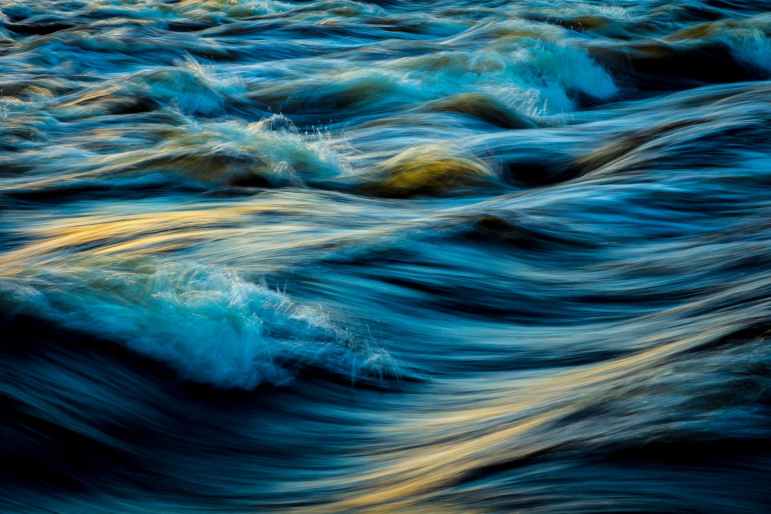
Take another string, same length, same starting point, and make those undulations like the waves of the ocean, impressive highs and catastrophic lows.  The ocean string runs out far before the lake string. This is the life of a creative.

Does that mean we die sooner? Not necessarily. In some extreme cases (think Janis Joplin, Jim Morrison or Jimi Hendrix) death was aided in his cause by the use of drugs or alcohol. But it begs the question, why do such creative geniuses seem to expire sooner?

I have an unsupported theory that living in a creative mind isn’t easy. Often, it’s a discombobulated place, filled with wild fantasy, grim darkness, and a dash of bipolar tendencies. The fantastical neurons are on overdrive and move in spiraling thought storms that are often uncontrollable or at best frustratingly elusive.

That’s not an easy brain to live in.

We may scoff at Hemingway’s whiskey or Stephen King’s cocaine but it’s hard to make quick judgments when we’ve all had to deal with voices in our heads, characters doing whatever-the-damn-well-they-want, plot failures and to top it off, the cycles of elation and rejection that line this path we’ve chosen (willingly or not).

Writing can be hard on the heart.

We get diagnosed with depression, anxiety, panic attacks, emotional disorders or other mental health issues. And I’m prone to believe that part of that comes from a society and educational system that values the boxed in test score measures than the immeasurable brain power involved in creative and critical thinking.

When we’re standing at the precipice of throwing our work into the world, firing out the query letters, calling editors and agents, pitching novels, or even entering contests, the mountains of hope and valleys of despair can be wretched chemical surges that amplify the already swirling thunderstorms in the creative mind.

No wonder we are driven to seek out the numbing magic of fermented fruit or dried poppy milk. We’re seeking to elongate the valleys and peaks.

Unfortunately for the human body, those distractions are just that…distractions. Bandaids over too deep a wound.

My point is this, writer, creator, artist with vividly full skull… you are a colorful, magical, beautiful soul, who’s gift comes at the cost of a little sanity. You will see things and know things the world at large is not ready to see or know.

They may call you a dreamer.

But you’re not the only one.

Surround yourself with people who get it. Who know when you need to pontificate in unruly and unrelated thought strings out loud once in awhile, and who understand when you want to stay quietly tucked into a corner avoiding eye contact. You know… other vividly full skulls.

Find your weirdos and keep each other on the gentle undulation side of things, so that when your mind and talent have created in the frothing whirlwind, you can bring your ideas, books, poems, articles, and novels, to the world while standing on solid ground.

When you are in the fire of creating, let it burn.

Then cull your flames with rest, and good food, and time away so that you have the fuel to burn for a long, long, long time to come.

VerseDay 4-18-19

In observance of the Boston Marathon bombing that occurred 6 years ago Monday, I’m reposting a poem I wrote the day after.

Running on a dark highway, under speckled stars and the approaching dawn, I felt the legs of thousands of runners alongside me. The shrapnel of fear and terror, echoing thousands of miles away, gave rise to such indomitable hope and strength for so many.

runner

Runner


Today I ran.
Not out of fear,

not out of obligation to a scale or a time.

Today I ran to remember why we run,

to share the heavy hurt,

to find the solace that only comes in the gentle cadence of the body and road.

Today I ran for them,

For the hearts and soles that carry the world with them as they go.

just as I do.

Down pavement, and sidewalks, and dirt trails we fly

Down these paths to lighten the burdens of life.

Today I run with my countless brothers and sisters.

Those who came before me,

those paced beside me,

those still on their way.

For all of the tireless legs, the calloused feet, the hardened lungs and loosened smiles.

For those that find their peace and promise where feet connect to Earth.

I don’t have to know you, to know you.

You are me.

In the dark morning, pavement shining in just-stopped rain.
In the quick wedge of afternoon between meetings and bus drops.
In the long weekends when we find out what we really can do in the hours

and hours

of loving devotion.

With hope and in respect,

Today, I’ll carry your burden,

Until you’re back on your feet.

Today I ran.