A Super Secret Guide to Finishing Your Damn Book: Part Four…

Okay, look. I realize that I’m a couple of days late. I could go into the messy details of powder room renovations, balcony patio refreshes, banister painting and contractor calling that has overtaken my life in the last two days but I don’t want to waste the precious time we have, gentle writer. So. here I am, as my grandfather used to say, a day late and a dollar short (several dollars short, blown away at Lowe’s mostly on fifteen different paint samples of varying shades of gray–not the bondage kind, just the regular old, actual shades of gray kind). But here, nonetheless, is a final bit of information I think you should have.

If you’ve gotten through all of my previous blogs on the matter, first of all: Kudos to you, Kid! You’ve put up with a lot of tenth-grade-level writing, inappropriate swearing, probably some sort of weird butter sculpture or Robert Downey Jr. memes, and cut through all of that to, hopefully, gain some inspiration and insight into finishing your book.

So let’s say, for argument’s sake, you followed all the handy tips and tricks. Let’s say you’ve taken the time, effort and guts it needed to type those final words and sit back in front of a finished novel. You’ve let other’s read it, you’ve taken suggestion and time to fix it. Now, here you are.

You big stud. You big amazing pile of human visceral awesomeness. You should take a night off. Go have a drink, or a movie, or a hot bath, or a cat-o-nine-tails whipping. Whatever you like to do to celebrate.

Then, come back to your work space…and write a query letter.

Gulp…a…a…what? A what kind of letter? Qu—Qu—Query?

Yep. You heard me.

At some point along your journey you’ve wondered what it would be like to see your book, your blood, and sweat, and sleepless nights up on a bookshelf. Something hold-able.

Maybe some of you want to leave behind something beautiful, and tangible, and real, before you shuffle off your mortal coil. Some part of you wants to share your story, or you would have never come this far.

Getting an agent is one of the best ways to get your book shared on a large scale. But you don’t just get one (unless you’re fucking fabulous and have the superpower of Luck…)
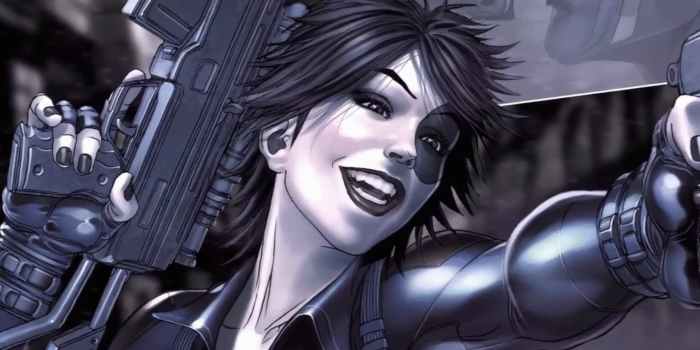
Domino-in-Deadpool-2
Obscure nerd-worthy image of Domino.

You have to catch them (not like kidnapping–please don’t let your takeaway from this be an agent abduction). You have to entice agents, capture their attention and interest, and to do that, you’re going to need a rockin’ query letter.

Make sure to research what a good query letter looks like. Here, it’s Friday and I feel bad for being late so I did some of the hard work for you.

Agent Query

Writer’s Digest Query Letter Perfection

Jane Friedman’s guide to query letters

There are some key elements that you should in mind.

  1. Address the agent by name and do your research. Know who you are querying. Know what they’re asking for. Don’t send your erotic space opera to a Christian YA publisher.
  2. Keep it short, but snappy. After the greeting, jump into the most intriguing aspect of your story. “Victoria Sullivan threw herself out of a moving car to escape her husband. How far will she go to start over?” A query letter starts like a movie preview and it has to make an impression.
  3. Keep it under a page. Three to four paragraphs, with three to four lines each and don’t indent them.
    1. First paragraph is your greeting, brief, personal but professional
    2. Second paragraph is your project summary: Title, genre, word count, comps (which style or writer can your book be compared to).
    3. Third paragraph is your PITCH, remember this is the movie tag line, the “Sell Copy” not the “Show Copy”
    4. Fourth paragraph is your bio and credentials.
  4. Write a bio that shows you are committed to your craft. I don’t care if you’ve been published sixty times or zero. Write about your passion, any successes you’ve had, and the work you’ve done that relates to your book. Agents love new, undiscovered talent, so don’t shy away if your accolade list is short.
  5. ALWAYS, ALWAYS, ALWAYS follow submission guidelines, including correct genre, correct word count, and appropriate agent for your specific project. These poor agents (yeah, I just gave a sympathetic nod to them–little secret, they’re actually human too…with feelings and families and all that beautiful stuff you’ve got filling your life) slog through a lot of queries a day. It behooves them to weed out any that haven’t followed the rules right off the bat. Don’t waste their time; submit in the form, length, and manner they request.

That’s the cut and dry of it.

I will add this; if you have met an agent at a conference or workshop, mention it. Try to remember something specific about them (not creepy-stalker specific “I really appreciate how thoroughly you brush your teeth in the morning, and are those new panties?” is too personal). Try something innocuous and personal; “I enjoyed exchanging stories about our Jack Russell terriers.” or “I enjoyed meeting you at the Erotic Space Opera Conference and talking over our mutual obsession with Jean-Luc Picard.”

Well kiddies, I think we can wrap up this little project on finishing your work in progress. I’m not saying there isn’t more (so, so much more) about writing and publishing to learn. But I’ve got limited time and it’s Friday; I’m sure ya’ll got more fun things to get to.

Write that query letter. Find yourself an agent (go local and small, independent and new agencies are more open to building their own portfolios) and offer them a chance to be a part of your journey. Until next week, when I PROMISE to be on time, write on.

picard
Make this query letter so…

Back in The Saddle

Ever get side tracked?

Waylaid?

Distracted?

Veered off of course; far outside of the navigational beacons?

Maybe an unanticipated wind hit you on the 45 and you didn’t crab enough into it. Maybe you paused to look to the side and the wheel shifted with the direction of your gaze. By the time you’ve roused yourself into present moment awareness, you’re fifty knots south of course or three feet deep in a burrow ditch, and it’s too late for small corrections.

I’d like to take a moment and share a problem that I think many of us struggle with in our over-packed, over-scheduled lives. Distraction. A falling off of our horse. A monumental sidetrack.

I’ve spoken before about being true to your path and not straying from your destiny and the things you love. But life has a quirky way of making us look away. We all veer. We all must. Life is not a straight-line stretching out into infinity. It’s a curvy, succulent dance, filled with random peculiarities and delicious distractions. Honestly, we’re all really just one absent-minded neuron away from dog-and-squirrel level diversion.

Let me tell you a story. I’ll keep it brief.

Once upon a time a writer needed a break from her head. So overpacked and under inspired were her thoughts that she looked outside of her normal realm of expertise for a hobby that would balance her mind and body. She found something that she loved. She dabbled. She accelerated; one might say she began to excel.

The problem with acceleration and the momentum associated with skyrocketing off on a new and less-resistance riddle path is that in no time at all, you’ve soared hell-and-far from your home, and it becomes increasingly hard to slow your trajectory down. By the time this writer looked up and realized what had happened, she was soaring across the cosmos, her original pursuits long behind her. Worse, she realized she was tied into the obligations of a hobby that had become something different.

Something more akin to work.

She’d thrown her effort, her energy, her time and body in so wholeheartedly that nothing was left for her writing. She became tired; uninspired. The sidetrack, the hobby, had taken over. The horse dumped her in the ditch.

Awareness came as her child lay battling the flu on the couch next to her, with nowhere else she COULD be. She slowed down enough to read her writing group’s newsletter; something she hadn’t “had time for” in months. Because she was too engulfed in the everyday (some days every hour) demands of her ‘hobby’.

Glancing over the call for submissions she thought, “Wow, I remember when I used to submit. I just don’t have time for it. Wish I did.” (What did daddy alway say? If wishes were fishes, we’d all stink?)

The child snorted in the silent house and roused her into awareness of the present. To remind her that she was not truly bound to anything except that which she loves. And if she does not love it any more, the universe says (perhaps even demands) it’s okay to let it go. So our writer got a pencil and she numbered off ten promising leads. She reconnected the creative powerhouse in her brain, adjusted her heading, checked the map and 180’d her ship. She put a foot in the stirrup and hoisted her ass back into the saddle.

Now, after months of excuses and “too busy”, and “just until this next benchmark is met”, she’s at her laptop. Writing. And she doesn’t care if its good, or if it fits guidelines, or if it will be picked apart by whoever may be watching. Because she’s writing. Again. Like the first time.

My hobby took over. It sort of ransacked my life. I resisted and succumb, I got angry for submitting and resisted more. I felt guilty because I enjoy it still. I got mad for feeling guilty. Like a cat bouncing on the end of the leash, frantic to get away, feeling trapped and powerless against the ties, I forgot that I’ve got opposable thumbs, brains in my head, feet in my shoes. I can steer myself wherever I choose.

I’m choosing to turn back to the place I call home. To the page. To the work and the characters, the words and worlds and delicious dance of ideas and thought. Will I visit the other place again? Of course! Balance is balance. And I’ve learned too much to cast it aside completely. I’ll still dabble.

But it isn’t my home. It isn’t my story.

Some moments it feels like a long way back, and remembering my brain and fostering creativity will take some priming of the neural pumps. But even the longest journey starts with a single submission.


saddle2

Finding The Path

Human lives are constantly being pulled in different directions and subjected to demands from outside forces. Some of them we want to go along with; some we’re forced to ride along beside. The older we are the more paths we’ve walked, lost, found ourselves on, resisted to leave, and feared to lose.

Of late, I’ve found myself being pulled off of my desired path by well-meaning but (for lack of better word) pushy people. They are people in my life that I respect and admire. We are compatriots in a common goal and therefore, we walk beside each other on parallel paths. But sometimes their strong personalities engage in manipulative tactics to pull me over with them on their path.

It is, in part, my own fault. I’m a people pleaser. I want to make people happy, often at the expense of myself. After all, what greater gift can I give than to be a benefit to another?

But now, after months of stress-related, psychosomatic issues, I’m realizing how detrimental this pattern can be. When I tie my worth around my ability to be useful and giving to others, I let myself be pulled along by people who insist that their path is the right and best path for me in order to feel valuable.

I let myself believe that they know me better than I do, that perhaps, they could be right. Their path seems like a good one. It’s not a bad path. It has interesting things to see along the way, it’s headed to different and new places, it has challenges and triumphs…it’s a decent path. Nothing is acutely wrong with the path.

Except it’s not mine.

It’s theirs.

I am slowly learning that there is no goodness in putting yourself second time, and time, and time again. There is no goodness in letting someone lead you away from your dream and your path. It twists your gut, it drops your mind into dark places, until all you can do is stare at your feet and feel the heavy weight of someone else’s wants and expectations breaking you down into the ground with every step as you cast longing glances back at the sunshine dappled trail you once took to so excitedly.

So how can I stop, mid stride on the dusty path, let go of the expectations and wants of others, and get back on my path? How do I love myself enough to know that I am worth the leaving?

Every decision, no matter how coerced, is a lesson, not necessarily a mistake. And what I’ve committed to for the wrong reasons, I don’t have to continue with. I tried another path. I tried to please others. I did what I thought life wanted from me. I’ve learned. I gained education along the path, methods, techniques, and experiences but most importantly–I’m learning about Me. Learning about oneself is never a mistake.

Sometimes the most important thing we can learn about ourselves is what we don’t want, what we will not endure, what we will not take, and what we will not put up with. That is how we grow strong.

So the next time you are on your path, where you should be, and someone takes your hand and says, “Hey, come check out my path over here!” you can look at it, and understand that your priorities and dreams are important enough to stay on course and take your hand back with a firm no thanks.

Your dreams are important, more than anyone who isn’t wearing your shoes will ever understand. You don’t have to justify their worth to anyone else. Your goals along life’s journey are enough.  Your path is well-suited and enough. You are enough.

I’d love to hear any stories or comments you may have about how you’ve chased your own dreams and what it has brought you in terms of fulfillment and/or hardship.

Until next time, stay on your path.


What a Character: A Brief Study on Character Development and Creation Part II: Developing A Character Readers Love, Or Love To Hate.


From the dark, cavernous recesses of the author’s twisted mind springs forward all sorts of nasty and derelict creations.


Okay, that’s a touch overdramatic.


Frankly most writers will begin by creating a story from people they know or have read about (please see my last blog–  Part 1 ). Sometimes we do it without even realizing it. Characters and personality traits that we admire or, equally, cringe at, stay with us in that sometimes-twisted-but-always-magical realm of our subconscious. Realism in characteristics is important because it adds to their believability and with that, their ability to connect with our readers.


Why is it so important to connect your character to your reader?


We are a society of channel flippers, of instant gratification lovin’, drive-thru eatin’, convenience hounds. We have the attention spans of goldfish. If you can’t connect your readers to your character through the common ground of sympathetic and universal traits they will put your book down. And often, when a book lands on the nightstand, it never gets picked up again. I shudder to think how many amazing stories were lost to the underside of the coffee table.

If your reader can’t identify with your character in even some small way, they will cease to care (maybe even resent) the character and will not follow them, no matter how interesting the story is. The human element is very important.

So along with grabbing them from the beginning with an interesting and challenging first scene, you must hold your reader to character that they care about, either because they relate to them, or because they are fascinated by their darker side. Their traits and foibles make your readers want to know what’s going to happen to them next. And that keeps them reading.

In the ignorance of youth, I used to think that my character could be anything and do anything. They could be perfect because I was building their world and I could make them flawless. They could be smart, and athletic, and beautiful, always saying and doing the right thing, always in control of their situation and aware of their future.

Snooze-o-rama and eye-roll Central.

Nobody, and I mean NOBODY, wants to read about some pristine person who’s practically perfect in every way.

For one, we don’t need perfection rubbed in our face. We get enough from the glaring Hollywood machine. Secondly, a character that always says the right things, does the right things, and looks like a supermodel is not challenged and if they are, they do not fail. Characters that never fail are unrealistic, which means they cannot relate to the nerdy girl in her frumpy sweater and ripped jeans, curled up with your book (Yep, that’s me I just described). And what happens when that person doesn’t relate? The book is given a good chuck over the shoulder with a hearty ‘Good Riddance’.

So make your characters dirty. Make them tarnished and worn. If they have to be beautiful, make them fundamentally broken somehow inside. If they are self-assured and intelligent, give them an outward physical challenge that hinders them. When a reader sees your character fail, they see the humanity within their own failures. More importantly, when they see them overcome the faults that stall their growth, they feel hopeful for their own path. They follow that character. They root for that character.

As a beginner writer it’s tempting to live out the life you wish you had in your pages, and it’s okay to write those ideas down. But keep those rarities for yourself. When it’s time to write an amazing story for the world, give the reader a character they can root for.

This advice is straightforward for developing the protagonist’s character traits. But it’s equally important to give this attention to your antagonist. No good guy is all good, and no bad guy is all bad. Even the worst ‘bad guy’ has to have reasoning in his actions. They have something that drives them, and it has to be something we can understand on our basic human level, even if we don’t agree with it. Having even a slight sympathetic response to an antagonist builds tension between the characters and gives your reader the nail-bite reaction. The opposing forces both come from places that can seem justified and ‘right’ in their position, which makes the battle all the more important on both sides and the outcome so much more brutal or celebratory.

This week’s exercise is to take a hard look at your characters. Do they have some baseline, deep-rooted faults? Are these faults causing interesting and plot-driving stumbling blocks? Are they loveable, and a little bit annoying? Are they dangerous, but still broken?

If you find that they’re not engaging enough, throw in a life-changing event into their past and rewrite them based on their new fault. Divorce, fire, murder, car accident, illness, or the loss of loved one can be good ideas to play with. Take away one of their defining traits and replace it with its opposite. Nothing you play with is set in stone, it’s just a way to grow your character’s depth and help you to know them better.

If you’re looking for a good reference, one of my favorite books on the subject is Writer’s Guide to Character Traits by Linda N. Edelstein, PH.D Writer’s Guide to Character Traits.


Good luck out there, kiddos. I’d love to hear if this helped you out and how!


Happy Writing.


Bounce-Catch

I was, quite often, a lonely child.

I have wonderful parents and two amazing siblings that filled the space of my childhood. But being the youngest (and unexpected) of the family, my brother and sister had already formed a subtle bond somewhere in the first delicate years of their lives. It remains this way even thirty-some years later. Of course we love each other and get along well, but they always seem to have an invisible members-only jacket to a club I couldn’t join.

That being said, I spent a lot of time trailing behind in a constant state of catching up to the bigger kids, the bigger wheels, the bigger ideas. Often, having exhausted the possibility of joining them, I’d hole up in my room.

Some would say this was sad.

I say (in retrospect) it was a seedling of a blessing, buried under the obvious soil of loneliness.

Sometimes the absence of noise from other minds and voices leaves us with the vital quiet so essential for creation. Not all brains are the same, obviously. Some people need the crash of busy streets, and nightclubs, and neon-thrashed cities, feeding off the energy like some sort of urban vampires. I’m not knocking that method. The brain works as the brain does and it draws inspiration from the strangest, most unfounded places. But for me, and for a few other minds I know, the quiet drudge of boredom is the perfect nesting ground for good ideas. After all, how can you ask “what if…” when all the ideas and answers are pounding around you, distracting the neural pathways and interrupting the natural stream of human consciousness.

So out of this boredom, this loneliness, comes the theme of today’s post; the game of Bounce-Catch.

We’ve all played bounce-catch. You just need a ball, a wall, and the ability to repeat the motion of throwing and catching the rebound. Bounce, bounce, catch. I remember the sound of the hollow tennis ball’s echoing reverberation. I can see the wall in front of me, and feel how the slightest deviation of hand movement would change the trajectory of the returning ball. The repetition led to meditation. Meditation led to flourishing thought.

Meditative states free up neural pathways and unclog thought highways, leading us to the subtle and slow coming to new ideas. We need a pastime, or practice that helps us let go of our frantic mind-state and relax into the untapped creativity within us.

The second part of this analogy is a counter-balance to the idea of loneliness.

A wall is essential to the game of bounce-catch. In the same way, our creativity needs someone to return our thoughts to us, with nuances of change that can build and grow them.

Who is your wall? Who is the person you can talk to without being judged? Who will listen, patiently to the rough outline of our ideas and return what you say with an outside perspective essential for growth and movement?

The wall’s job is not to throw a wild return that causes you to bolt across the parking lot after your idea. It’s job is to add to the force and power of the throw, echoing back the reality of what happens when the outside world receives your idea.

So, this week, try to focus on two things.

1.) Find a meditative space, a mantra, a mindless, repetitive activity (folding laundry, running, bounce-catch, etc.) and while you do it, let your brain wander and play with the creative seeds in your head.

2.) Take your foundling ideas, or those that have paused with stagnation, and find someone to talk to about them, (friend, co-worker, spouse, writing group, family member) and ask what they think, what they’d do differently, how you could improve or move forward with the idea.

Remember, this doesn’t have to be about writing. It could be a painting, or a quilting project, an invention or engineering problem. It just needs to be your Work In Progress.

Good luck out there. Find some boredom. Find some support. But find your Folly and follow the hell out of it.


The Beautiful Stuff

What do we do with the time we are given?

How do we choose our direction?

How do we find our voice, and once we have it, how do we use it?

Welcome to The Beautiful Stuff. This blog is a loving mish-mash of all the things in life that challenge us, knock us down, pick us up, and move us along this crazy, mortal coil. The Sweet Stuff. The Messy Stuff. The Stuff that makes us divinely human.

I am a writer, an author, and a student of human nature. This blog seeks to answer introspective questions and provide inspiration for the creativity in your life. Most of these blogs will center around writing, but I hope that the ideas and methods I discuss here can be applied to various facets of your life.

I don’t fancy myself an expert in any particular arena of life. Rather, I’m a hodge-podge of Earthly existence. I’m not the wisest person I know, I’m certainly not the most experienced, but I’m a hand in the darkness and an understanding kindred to those tripping along their own journey.

My hope is that for a couple of times a month I can help you push past obstacles in your creative life and provide inspiration to continue on, to build a life full of the beautiful stuff.

With each post, I hope to share personal revelations as well as exercises in creativity to keep your writing/art flowing, and to improve your mental well-being. We all can use a perspective shift once in awhile, and my hope is that combining creativity with positive, compassionate living, we can move the world.