Artists Need Each Other

So yesterday I was invited to this really cool space in north Fort Collins, called Kestrel Fields Studio and Art Residency. The owner, Heather Matthews, is a delightful human who has created this space to help support not just artists in need of a space to work and focus their attention on their craft, but also as a gathering space for artists from all around. Last night, she invited a lively and varied crowd of Arts Administrators from the area to mingle, talk, and answer some important questions about what art means in our community, how we can work together, and what the future of art in our community could look like.

I won’t go into great detail but I did notice a few things that were brought up time and time again. First, that even in communities where the art scene (I’m covering it all; music, visual arts, performing arts, literary arts, etc) is vibrant, there is often a disconnect between artists sharing their work and the public being connected to it. We all know that funding for the arts has taken a hit under the current federal administration. When we couple that with an economy that’s currently circling the toilet bowl, private funds are also being withheld as the whole country braces for these depressive futures. In itself, this creates a depression and repression of a different kind. Creation of art is not free nor easy. It costs time, and material and effort.

Artists in America (with the exception of those billion dollar stars out there) are not paid well, if at all. Art is not considered worthy of compensation to a capitalist system. Why? Because it defies all the markers of capitalism. It is not meant to be consumed and thrown out in an never-ending wasteful cycle. It is not massed produced, or homogenized for easier consumption. Art is unique, and personal, and deep-rooted. It asks the observer to think and to feel, and to step outside of their own perceptions. Art is uncomfortable and often questions power. It is dangerous in all the right ways. Because people who think and ask you to question our societal confines are often discredited. After all, why would a system promote someone trying to shake us out of a stupor to acknowledge our humanity above powerful, greed-driven systems? Art does not serve systemic oppression.

The point is that art and artists in America are more often seen as quaint, quirky and starving, rather than being hard-working harbingers of change and progress. Unfortunately, the marker of respect in our society is tied with monetary compensation, and we do not give that to artists, no matter how they may improve our lives or move our souls. So…something to think about is how you interact, support, and uplift the artists in your community. First, by going to their shows, reading their books, reviewing them and spreading the word. Paying a cover designer when you can. Paying for someone who edits or writes copy for you. Paying a musician to preform at your event. That money goes directly back to the artists and therefor the community. And it speaks a louder truth that Art Is Worthwhile.

Along those lines, let’s talk about cross-support. A big issue that came up was the “siloing” (I feel like that’s a hot-topic word of late) of artists. Painters stay in gallaries, musicians only go to music festivals, writers stay home in their pajamas and turn their ringer off. Yes. It’s hard to step outside of our own comfort zones within our art. But the beautiful thing about art, in any sphere, is just what I mentioned above. Art makes you think. Makes you question. Gets you outside of your world and asks you to see something new. To question. To feel. And those questions and feelings, especially when planted in the seed of another artistic mind, will lead to a garden of beautiful, unique and expansive ideas. If you’re familiar with ekphrastic work, you know that a painting can inspire a poem. A poem can become a song lyric. A song can drive the hand of a painter. We are not siloed, we are an expansive field of fertile and ready soil. And at the risk of sounding sensual, we should start cross-pollinating. Not only for the health and vitality of our own art, but to support the minds and hearts of people who share in our struggle and joy of being translators of the soul into art.

I am proud of the community of writers and poets I work with. I am overjoyed to meet the artists who paint, and draw, and sing, and perform. I love to know how art and passion move through their bodies, and to feel kindred in their drive to create something that feels like touching the deep truths of humanity and shared experience. My ask of you today, whether you write or not, is to find out more about the artists in your community. Go to their shows, follow them on line, support them with words and presence if you don’t have the funds. But let them know they’re important. That they are seen. Because artists see you. They work and create to bring us all closer to understanding each other. And that’s something worth leaving my pajamas for.

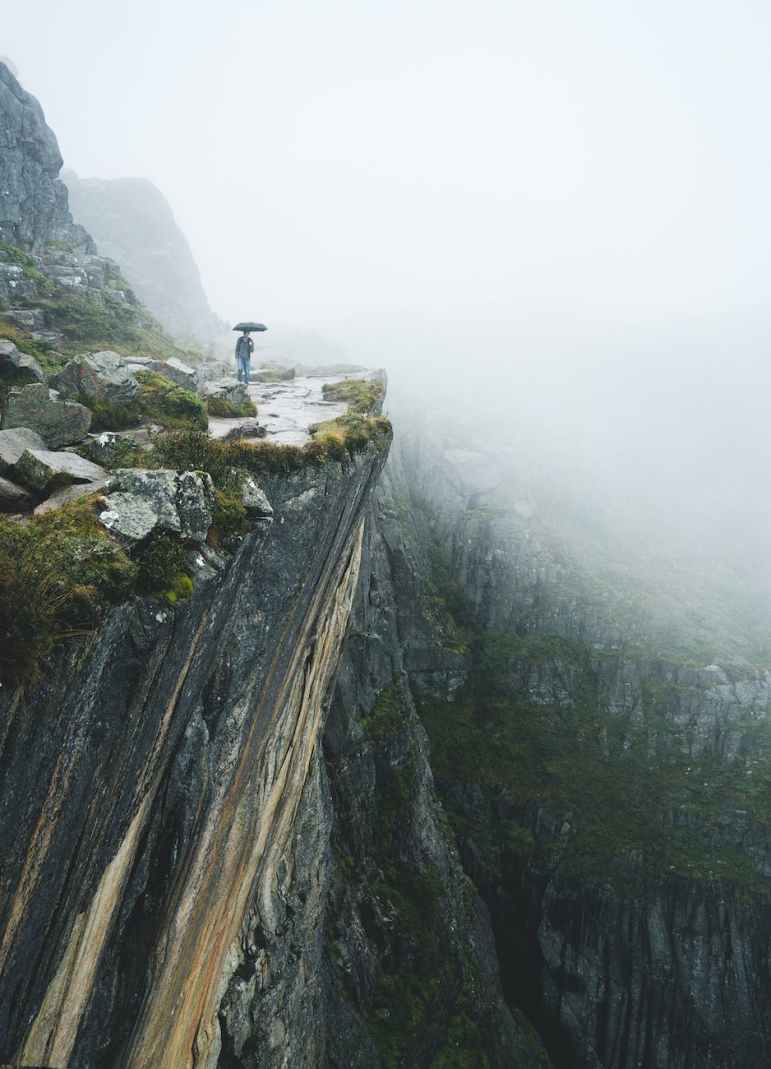
New Horizons and Old Loves

Life, man… It is a perpetual state of change. In fact, one of the only certainties about life is that it will change. And humans are no different than any other oxygen breathing, carbon-based sack of stardust. The world changes. We change with it, whether consciously or not. We discover things we didn’t know (I hope) we learn and make different choices (also—I hope and that they are in positive directions). We take hurt and either learn to heal or use it as a weapon on the other stardust sacks near us. We find excuses to fall back into bad habits, or reasons to springboard into better ways of living. We are a constant swirl of contradictions and brilliance.

As a beginning writer, I always thought I’d write the same kind of book for my whole life. Because I loved love. And I loved romance. And I enjoyed participating in the happily ever after of a good swoon-worthy book. But as the world evolves so do we, and I am no different. This is not to say that romance is some basic-bitch level writing, it absolutely is not. Romance is hard to pull off (sexual pun completely intended) in a way that is both believable and reaches for something we all wish we had. Its maddening and beautiful and some of my favorite books are still romances.

Back to my evolution.

It didn’t take me long to realize that while I love romance…it wasn’t the genre that fascinated me. The trouble began (I feel like this is one of those old 1960’s “don’t let this happen to you” videos in health class) probably when I started genre hopping like a vagabond onto railway cars in whatever direction the tracks were going. Just anywhere but here. I was thinking about how and why I seemed easily distracted into forays of genre crossing, experimental writing, and odd formats…And I just figured it out.

I’m a character follower. I can’t stick to a genre because my storytelling is like a puppy out on a walk that wants to jump on and follow every new person home. I want to stick my noses in their crotches and find out where they’ve been. Ok. That—that analogy went too far.

The point is… People interest me. Characters interest me. Whether I’m watching them pirate a space ship, imagining them breaking up the scar tissue of a thoroughbred horse, or fear for them as they get possessed by the spirit they’re hot for. I’m curious about people. How they live, how they deal, how they fail. How they love… what they love. How they keep on keeping on and manage to use their big old squishy hearts towards better ends. Or bitter ends.

So I guess I don’t stray too far from love. But I like the depth of how love incorporates itself into our lives, whether its romantic or not. Knowing this about me feels like untying a corset, a big breath in, a cutting of old ideas binding me into “what kind” of writer I am.

I’m a character writer.

Which means I can write poetry, or gay romance. I can write socially conscious plays, or epic space farmer odysseys. I can write song lyrics or philosophical observations on love and meaning (but I repeat myself). I can write about characters because I love and respect each of them. I care about them. I am curious about them. I am compassionate for them. I can be the journalistic eye that follows character and changes the world and myself through their experiences.

This year I’m wrapping up some older projects (urban fantasy-erotic-trilogy based on the legends of Norse and Scottish mythology? Yes please…Genetic killing machine learns she has a conscious? Don’t mind if I do… A time traveling, hot as hell gay romance between two of my new favorite characters? My heart is all a-twitter… A literary first person POV exploration of grief, loss, and how we let go without losing our hearts? My soul didn’t know my brain could write like that…)

But I’m also hopping on new rail cars. Tentatively, 2 plays covering everything from the cost of pro-life legislation on a micro level and the oft-ignored life ruination of the high school to prison pipeline for black youth, a book of erotic poetry, and exploring my horror side with short fiction. It’s all a little ethereal and unsettled yet, but I see the stardust of potential, tossed out in the frozen dark of space, lying in wait for a gravitational pull to gather it into new universes.

Oh, and signed up for another fucking marathon so…that was stupid. That stardust seed is a cackling massive black hole I should have clicked away from instead of looking at the price and going… “Hey! That’s a cheap way to suffer immensely.” I bet I could have paid somebody less to take a bat to my knees, with the same outcome…but here we are. Eternally hopeful and stubborn.

So here’s to new endeavors, in your writing and your life. Open up that perspective a little wider and let some of the stardust in. But keep love…at the heart of your universe.

What Change Can Teach Us

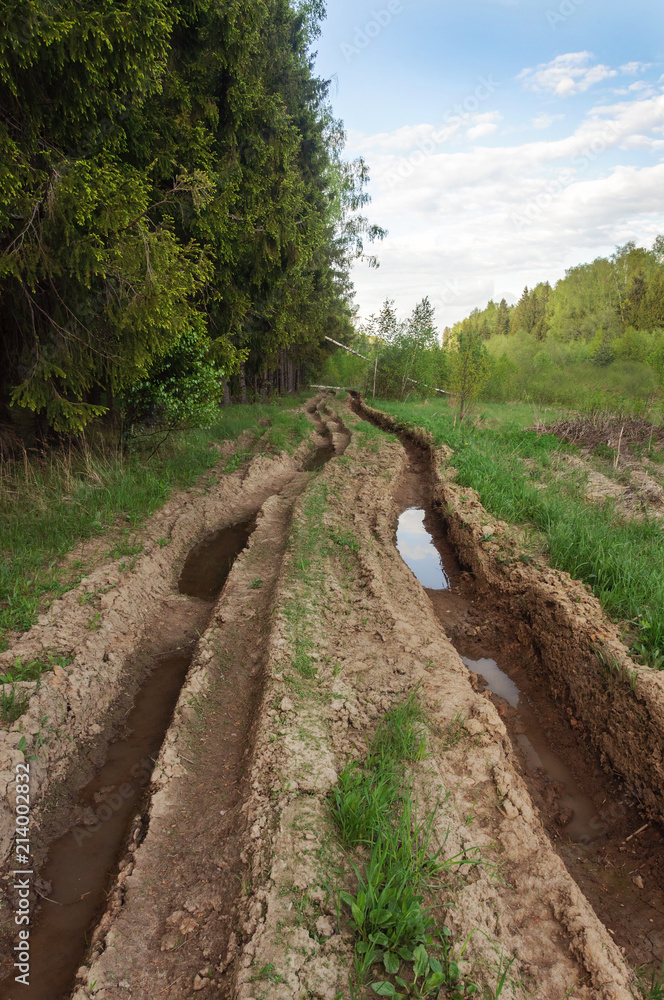
Ah, sweet homeostasis. That divine little holding pattern that so many of us humans cling to. Cute little creatures of habit, we like to find our lane, our niche, the familiar, the expected, the routine. I’m almost even inclined to believe that we not only enjoy it, but the longer we spend in our well-loved ruts, the harder it is to leave them. Even when we need to. Even if we want to. Even as the world changes around us. Isn’t that just when trauma and painful growth usually happens? When we are forced to change? Or are left behind because we refuse?

I could probably write a good 10,000 words alone on what change does to us as humans, but this blog is about writing, so I’m going to narrow it down.

Every writer has a rut. The niche you gravitate towards, the style you use, the genre, the POV, even your character choice…we have familiars that feel good to write in because they come easy. We know the pattern, the trope, the arc of a plot and all its points. And we could write this way forever and do, probably, quite well for ourselves (James Patterson and Nora Roberts own prime real estate on this front). But we don’t do very much growing.

Why is it important to grow?

Well, unless you ARE James Patterson or Nora Roberts (and if you are, holy shit welcome to my humble blog, thanks for reading) the chances of you scoring big on mass repetition are slim. Plus, the world of writing is changing and trending and learning to understand and at least try out these new waves, will help us adapt to the new and dynamic tides of readers. It will also help diversify your portfolio for future projects. Sounds like a 401k investment plan, right? Well—in a way it is.

Changing up your routine, your genre, your trope, your characters, even your plot is scary and hard and it may feel like you’re stumbling around in the dark. You may get tangled up, and blocked. But the best thing happens when you struggle and even when you fail. You learn. You learn what works, you learn how to take chances on solutions you might not have thought of before. You learn that you are capable of writing a flash fiction piece when all you’ve ever written were 200,000 word novels. You may learn you can plot a novel when all you’ve tried before is a 1200 word magazine article. You learn that you can explore different avenues of writing and still keep your voice.

You will learn. And learning empowers us, it invests in our ability and talents so when the next project, idea or work in progress comes around, we are armed with experience and inspiration to deal with it. So submit to a contest or journal that takes something you’re new to trying. Sign up for a class not in your genre. Try out a magazine article, or a poem if that’s not your normal route home. Do it. The worst that can happen is rejection and that’s not the worst that can happen in the grand scheme of things.

Get out of your comfort zone and face change and challenge as if they were opportunities for bigger, grander landscapes ahead. Say yes once in a while, even when it scares you.

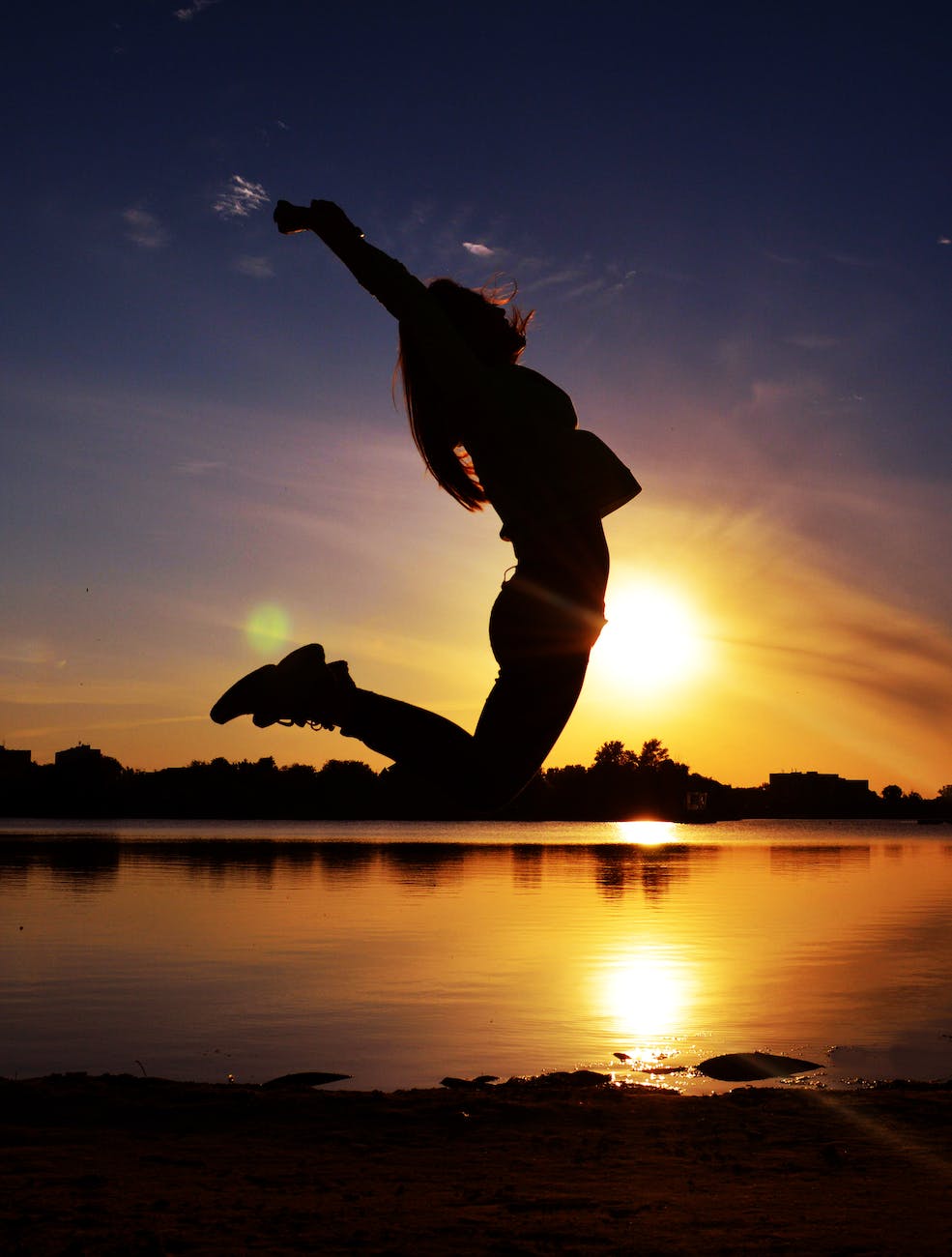
We don’t always get to choose the changes that happen in our lives, but we can choose how we move forward with our art. We can jump out of the rut and careen into the unknown. We can fall. We can get scraped up. We will rise, take the lesson and keep leaping. To the end, that someday, we won’t be afraid of any new endeavor and will jump up to the opportunities that come by. And every time we do…we learn how to land on our feet. We will learn to navigate all kinds of bigger change if we chose to jump into the small changes.

You never know where your next great adventure will show up. Don’t let your head be buried in your rut when it does.

Photo by Ksusha Semakina on Pexels.com