Muse

Vim and Vigor. Piss and Vinegar. Spunk, Spark, And the Immortal Divine.

sexy secretary pinup girl 1960s

I’m talking about Muse…not the band…I mean the illusive, seductress…who steals into your thoughts and whispers sweet plot lines into your ear like naughty suggestive teases.

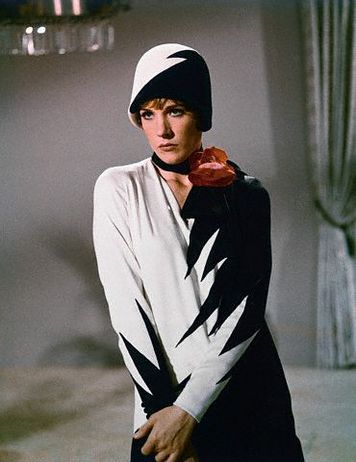
One of my favorite older movies starred a young Julie Andrews and even younger Mary Tyler Moore. It was based on a Broadway musical and was set in the roaring twenties when women were toying with independence and embracing a more modern sense of sexuality. In Thoroughly Modern Millie, the main character, a stenographer, comes on to her boss by lounging across his desk and rasping out the line; “Well, when you’ve got it, you’ve got it.” (In context she’s referring to Tom Sawyer’s innate mojo despite his tender age of 12)

Julie Andrews Rockin' It

So when I think of that evasive and tease, inspiration, I think of that line.

When you’ve got it, you’ve got it.

The problem is that so many of us think we cannot create without ‘it’. That unless the muse is on our desks, lounging across our scattered post-it notes and circling the rim our cold coffee cup with a delicate finger, we won’t be able to create anything substantial.

Can I let you in on a secret I’ve learned? That blank stare against the wall of a writer’s block doesn’t come from a lack of ‘it’. It comes from the expectation that having ‘it’ is the only way creativity will come, and that anything other than madly typing away the best idea we’ve ever been gifted, is simply a waste of our time and divine talent.

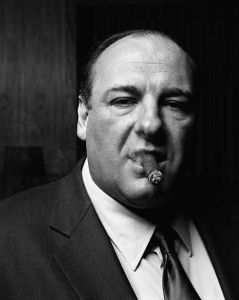
Let me tell you something about my muse. He’s a well-upholstered, balding guy in a basement, with a half-smoked cigar hanging out one side of his mouth and a sneer that could stop a very determined freight train on its tracks. He’s an asshole. He doesn’t come out when I sit down at my lovely little desk with all of my office supplies neatly aligned inmy muse OCD perfection. He sneaks up behind me at airports and gooses me like some over-entitled politician. He wakes me up in the sweetest six minutes of sleep before the alarm goes off by hitting me in the face with his meaty hand and a pale idea of how to fix Chapter 8. He’s the one that whispers, in dark undertones, questions about unassuming passerby’s that turn into vibrant characters. I cannot summon him to lie across my desk and pull up his smooth skirts seductively.



He’s got it, all right, but it’s never what I expect.

The one exception is this, and the point of my post this week:

That bastard shows up every time I give up hope on him and just sit down to write anyway.

The first few sentences on my own are stumbling patches of weeds, filled with gopher holes and tripping hazards. But if I ignore the imperfections and keep at it, one paragraph becomes a page, and so forth and so forth.

I don’t stop for clerical errors like misspelled names, or fudged facts. I forget the use or non use of oxford commas and just let the words go where they go. I don’t allow myself deletions, even if I’m painfully aware of the stupid that trails behind my keystrokes.

It’s like emptying the hot water from the camelback tube on a hike. You have to draw out that nasty part before you can get to the refreshing cold stuff.

Before I know it, I can smell cigar smoke and salami and that cagey bastard is behind me…nodding in a nearly impressed manner.

Creativity is part vim and vigor. It is part mojo. It is part magic and a dash of spark. But it is mostly work. Even when the playing is done and the book is written, she’s just a dowdy, ill-fitting dress until you nip and tuck her into shape.

Maybe creativity lives in my basement because a dash of it goes a very long way. It’s the elbow grease we have to buy by the barrel full. Because long after Muse is sacked out on his brown plaid recliner with one hand down his polyester waistband, the work still remains and that’s when we really find out if we are indeed full of vim and vigor.

. . . If we’ve got ‘it’; the magic that turns muse into story, story into book, and book into experience for you and your readers alike.

So don’t pay too much mind to capturing that sultry vixen. Just write. When she whispers at you in crowded stores, or on quiet trails, be at the ready with pen and paper (or…ugh, yes your cellphone if you must) to catch her teasing giggle. But for all of the other 97 out of 100 times, don’t let her be the excuse you aren’t putting your ass in the chair.

After all, a muse is best attracted when she’s being ignored.

Happy writing, Kids.

VerseDay 8-30-18

Happy VerseDay.

Today was darker, as some days can be.

Enjoy…or if you can’t enjoy it, sit with its awkwardness for a bit and don’t be afraid of the feelings you may catch. Part of our Beauty lies in those dark and painful corners.

I Belong

I am yours and I am theirs.

I am the scale’s and the mirror’s

I belong to the vogue airbrushing

And the PTO.

I am the tethered hawk,

Forgotten her wings.

Hungry to hunt,

No freedom with which to fly.

I am the man’s and the patriarchy’s

I am the lament of God

And the decent substitute,

When nothing better comes along.

I belong to so many,

Each a share of grief,

Each a pound of flesh

So many hyenas tearing at a picked over carcass

I am wasted and wanting,

Found without

I am the lukewarm spread, the mannequin arms,

The expected response and sweaty spectral.

I am the failure of my skin

The price of privilege

The stain of guilt.

For apples I did not eat.

I am the sunken boat,

long forgotten; a weathered splinter in the reeds,

I am the once useful, fading at dusk.

I belong to you.

And to them.

I am no more myself, than anyone else’s.

But oh the torture of knowing.

How different it could have been.

Cross-Writing

Today was my official first run on an abbreviated 10-week marathon training plan. Okay, that’s a little fictitious. I’ve been running. I trained for and completed a 200-mile relay race last weekend, surpassing my hopes to not die by not only surviving but actually enjoying the whole thing. But this morning I dusted off the old chart and began to slowly start building the mileage I’d need to not die again in October for the Blue Sky Trail Marathon.

runnerIt got me to thinking about different types of runners. Some would have started training much sooner than this. Some are going to show up on race day with minimal miles and legs full of ego. Some have calculated calories to the numbers, selected precise nutrients per ingestion, and are weighing their shoe laces. Some are probably going to drink the night before and show up with four-year old sneakers and a day-old bagel with green chili cream cheese for fuel. The rest of us will fall along the spectrum between.
We’re all in the race, we’ve all got different reasons why, and different motivations to pursue that finish line.

In the same way, there are many types of writers in the world.

Those that dabble only when the muse traipses through their line of sight. Those that succumb completely to the words, to the exclusion of all else in their lives. The researching non-fiction gurus and the world-building sci-fi pros. The haiku aficionados and epic scribblers. The plotters and pantsers. The pious and the pornographic.

We cover all the bases.

penThe one thing we shouldn’t be as writers, no matter if we’re outlining or winging it, is stagnant. Yes, we need periods of repose  where we can recoup our mental losses and rest the neurons. Just like runners need a resting season, writers should take breaks as needed. This doesn’t mean we sit still. We are always, in some way, in training. And sometimes, the best way to train is to diversify the hours we spend at our art.

My suggestion for today’s post is to make a plan with your writing.

HEY! Come back! Hear me out…sheesh…pantsers!

When I say plan, I’m not suggesting you go investing your hours in spreadsheets and calendars. I’m saying expand your repertoire. It’s one of the best ways to grow as a writer.

If all a runner does are long, slow-paced runs, they will only develop a certain set of muscles. If all a runner trains at, are speed drills around a track, the same thing occurs. Unless you’re an olympian in a specific event this is a waste of your potential and a recipe for injury.

Balance, writer. That’s what I’m talking about.

If you are a novelist, take a break and work on a short story (you can even make it about a side character or your main character thrown into an alternate universe). If you’re a flash fiction genius, take a couple minutes to start plot building a novella or research a topic for a non-fiction essay.

If you spend your writing hours researching and plugging away at your non-fiction novel about the long line of Fredricks ruling the Kingdom of Prussia in the eighteenth century, try giving your brain a break and write a noir short story set in 1920’s Chicago. Or, *gasp*, try your hand at a little poetry.

writingStretching your brain is just as important as stretching your training plan to incorporate different activities.
Just like miles for runners, words for writers are not a waste. It doesn’t matter if they’re on paved or dirt roads, up hellacious hills, or on even city streets…the miles are the work and the work makes you stronger for the bigger tests ahead. Your words, your writing, grows stronger and better with every method you use to stretch it.

So get to it.

Go out and do ten fartleks of sonnets and a long-day of article submissions to Knitter’s Weekly.

Get uncomfortable.

Get better.

Inaugural Verseday!

Welcome to the joyride, ya’ll. Today is the the first Verseday of the year and I’ve chosen a simple little thing I’ve dusted off from a few contest entries ago.

excited


Remember to send me your poems, and/or thoughts and comments on what you’re reading here. I’m so excited to begin!

Enjoy!


robin

Soul, Lifted


I watched a robin take the sky today

Bright red breast striking blue cerulean,

a rocket cutting through air

Silent beats


Free. 


That must be what it’s like to die.

Wing lifting, pounding rush.

Air swirling behind feather tip.


Untethered

Unbound

from the confines of earth and expectation

Like too-high clouds, out of reach. 


A soul lifted.
 

Where is Your Home? (Preceded by Naked Self-Promotion)

I threw naked in there so you’d read this. There’s really no nudity…but you might as well continue on, because there’s some good stuff here.

This week I’m launching a new project. Wednesdays will continue to be a weekly rant about writing, and life, and inspiration, and all the strange, obscure references to pop culture I can muster while still being relevant to the topic (it’s an art form people).

But every Thursday I’ll be starting a new post series called Verseday.

I’ll be posting a poem each week that I’ve written either recently or dusted off from some old file folder. You’re welcome to contribute your criticisms and comments.

In addition I’ll be hitting up some of my talented and nimble-worded friends and colleagues for poetic contributions. This whimsy will continue until I gather a good pool of work and I’ll select the finest pieces, mine and yours, to publish the first ever Beautiful Stuff Poetry Anthology (I’m thinking of a snappier title as we speak).

So if you love poetry, if you write poetry, if you’d like a chance to be a part of a gathering of words and ideas, drop me a line.

The only requirements for entries are that they have to be yours, previously unpublished, and be something you’ve sunk some part of your soul into. Humorous or dark, nature-inspired or industrial driven, pious or chocked full of the f-bomb, I’ll look at them all.

I’ll set up a Facebook page to more easily contact me specifically for Verseday Submissions. Not every poem will be selected (there’s only 52 weeks in a year after all, and I want a little of the glory too) and if you send me anything that’s horrifically violent (shockingly awful gore etc.), racist, or otherwise unjustly hateful, you probably won’t be hearing back from me.

With that in mind, keep an eye out here at The Beautiful Stuff and on my author page (S.E. Reichert on Facebook) for links to the submission guidelines.

This week’s blog was taken up by a lot of hoopla for Verseday but I want to spend the limited time left talking to you about HOME.

Home is something we humans have an odd sense of connection to. Home is where your heart is. You can’t go back Home. Home for the Holidays, Hearth and Home. Home Sweet Home. Home alone. Home again. Homeward bound. Home safe.

For some home is a physical place, for some it’s a person, some it’s a meal or a smell, or a sound. For some, it has negative connotations, a place where they suffered fear or abuse. For some it was a place that moved with changing guardians. For some it was a grandparent’s arms, or a roommate’s couch. For every person, there is a different sense of it and some of us still haven’t found it.

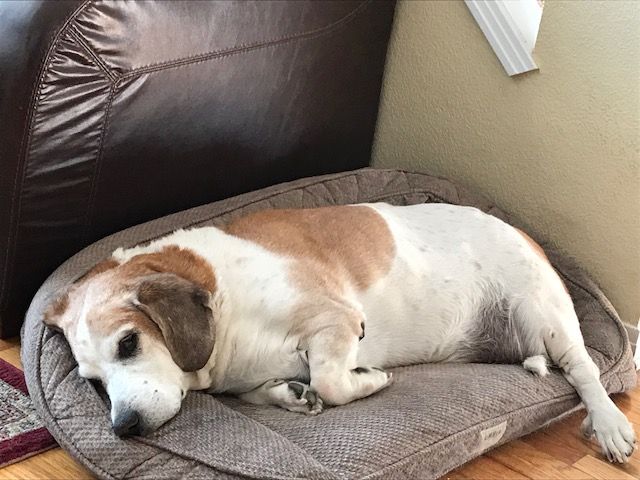
What does home mean to you? Is it a place you can close the door on the world and take off your bra and relax? Is it the person who’s smile and voice lowers your heart rate and washes you over in calm? Is it the wiggling furry body of a dog, anxiously excited to see you EVERY SINGLE TIME you walk in the door?

clyde
This is Clyde’s excited face

Is it a church, a synagogue, a mosque? A quiet corner where you meditate or yoga your little heart out?

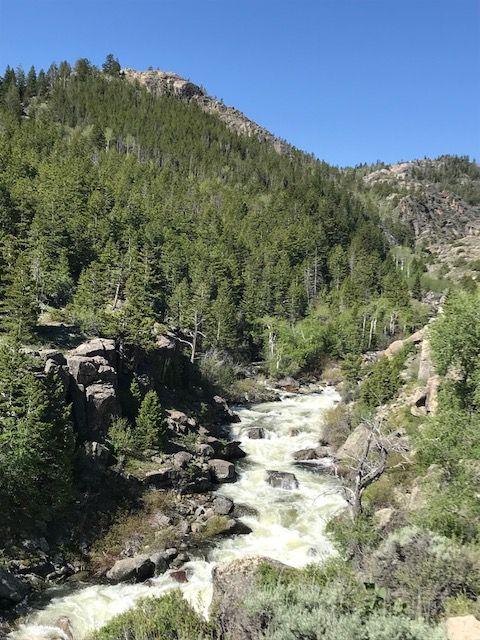
Is it turkey dinner? Is it Sunday football? Is it the smell of fresh cut hay, or campfire? Is it the sound of a river rushing down a mountain’s craggy side? What makes these things home?

mountain

I’m inclined to believe that we build home at the first instrumental moments we are aware of a sense of place, safety, and worth.

When the pitch of your sister’s laugh is the same as your own. When the smell of Swedish meatballs cooking on the stove came with your mom’s hug after a tough day.

When, in the midst of personal crisis, spiraling depression, and loss of self and worth, a mountain takes you in and shows you how meaningful and symbiotic you are to the world.IMG_1346

Home is the lightness and comfort that settles into your heart when you don’t have to question or fear that you belong.

Next week, I want to touch on this again, and am looking for comments and replies about your version of home, and what it means to you. Good and bad. Warm or ugly. Tell me all.

Back in The Saddle

Ever get side tracked?

Waylaid?

Distracted?

Veered off of course; far outside of the navigational beacons?

Maybe an unanticipated wind hit you on the 45 and you didn’t crab enough into it. Maybe you paused to look to the side and the wheel shifted with the direction of your gaze. By the time you’ve roused yourself into present moment awareness, you’re fifty knots south of course or three feet deep in a burrow ditch, and it’s too late for small corrections.

I’d like to take a moment and share a problem that I think many of us struggle with in our over-packed, over-scheduled lives. Distraction. A falling off of our horse. A monumental sidetrack.

I’ve spoken before about being true to your path and not straying from your destiny and the things you love. But life has a quirky way of making us look away. We all veer. We all must. Life is not a straight-line stretching out into infinity. It’s a curvy, succulent dance, filled with random peculiarities and delicious distractions. Honestly, we’re all really just one absent-minded neuron away from dog-and-squirrel level diversion.

Let me tell you a story. I’ll keep it brief.

Once upon a time a writer needed a break from her head. So overpacked and under inspired were her thoughts that she looked outside of her normal realm of expertise for a hobby that would balance her mind and body. She found something that she loved. She dabbled. She accelerated; one might say she began to excel.

The problem with acceleration and the momentum associated with skyrocketing off on a new and less-resistance riddle path is that in no time at all, you’ve soared hell-and-far from your home, and it becomes increasingly hard to slow your trajectory down. By the time this writer looked up and realized what had happened, she was soaring across the cosmos, her original pursuits long behind her. Worse, she realized she was tied into the obligations of a hobby that had become something different.

Something more akin to work.

She’d thrown her effort, her energy, her time and body in so wholeheartedly that nothing was left for her writing. She became tired; uninspired. The sidetrack, the hobby, had taken over. The horse dumped her in the ditch.

Awareness came as her child lay battling the flu on the couch next to her, with nowhere else she COULD be. She slowed down enough to read her writing group’s newsletter; something she hadn’t “had time for” in months. Because she was too engulfed in the everyday (some days every hour) demands of her ‘hobby’.

Glancing over the call for submissions she thought, “Wow, I remember when I used to submit. I just don’t have time for it. Wish I did.” (What did daddy alway say? If wishes were fishes, we’d all stink?)

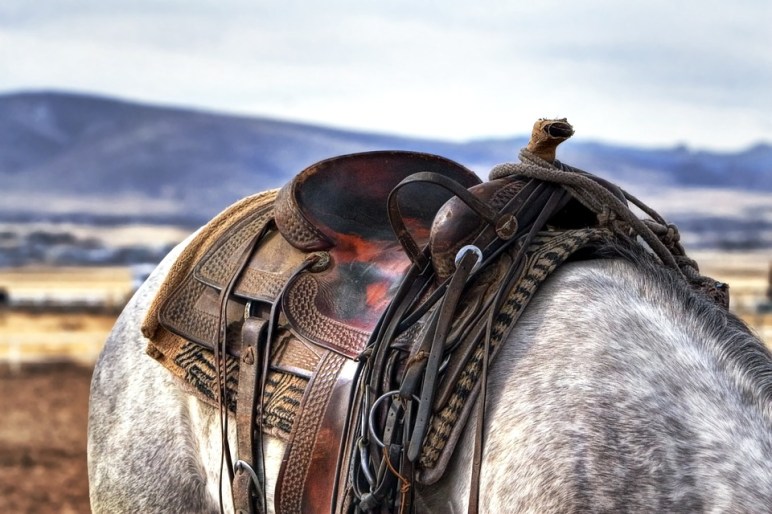
The child snorted in the silent house and roused her into awareness of the present. To remind her that she was not truly bound to anything except that which she loves. And if she does not love it any more, the universe says (perhaps even demands) it’s okay to let it go. So our writer got a pencil and she numbered off ten promising leads. She reconnected the creative powerhouse in her brain, adjusted her heading, checked the map and 180’d her ship. She put a foot in the stirrup and hoisted her ass back into the saddle.

Now, after months of excuses and “too busy”, and “just until this next benchmark is met”, she’s at her laptop. Writing. And she doesn’t care if its good, or if it fits guidelines, or if it will be picked apart by whoever may be watching. Because she’s writing. Again. Like the first time.

My hobby took over. It sort of ransacked my life. I resisted and succumb, I got angry for submitting and resisted more. I felt guilty because I enjoy it still. I got mad for feeling guilty. Like a cat bouncing on the end of the leash, frantic to get away, feeling trapped and powerless against the ties, I forgot that I’ve got opposable thumbs, brains in my head, feet in my shoes. I can steer myself wherever I choose.

I’m choosing to turn back to the place I call home. To the page. To the work and the characters, the words and worlds and delicious dance of ideas and thought. Will I visit the other place again? Of course! Balance is balance. And I’ve learned too much to cast it aside completely. I’ll still dabble.

But it isn’t my home. It isn’t my story.

Some moments it feels like a long way back, and remembering my brain and fostering creativity will take some priming of the neural pumps. But even the longest journey starts with a single submission.


saddle2

What a Character: A Brief Study on Character Development and Creation Part II: Developing A Character Readers Love, Or Love To Hate.


From the dark, cavernous recesses of the author’s twisted mind springs forward all sorts of nasty and derelict creations.


Okay, that’s a touch overdramatic.


Frankly most writers will begin by creating a story from people they know or have read about (please see my last blog–  Part 1 ). Sometimes we do it without even realizing it. Characters and personality traits that we admire or, equally, cringe at, stay with us in that sometimes-twisted-but-always-magical realm of our subconscious. Realism in characteristics is important because it adds to their believability and with that, their ability to connect with our readers.


Why is it so important to connect your character to your reader?


We are a society of channel flippers, of instant gratification lovin’, drive-thru eatin’, convenience hounds. We have the attention spans of goldfish. If you can’t connect your readers to your character through the common ground of sympathetic and universal traits they will put your book down. And often, when a book lands on the nightstand, it never gets picked up again. I shudder to think how many amazing stories were lost to the underside of the coffee table.

If your reader can’t identify with your character in even some small way, they will cease to care (maybe even resent) the character and will not follow them, no matter how interesting the story is. The human element is very important.

So along with grabbing them from the beginning with an interesting and challenging first scene, you must hold your reader to character that they care about, either because they relate to them, or because they are fascinated by their darker side. Their traits and foibles make your readers want to know what’s going to happen to them next. And that keeps them reading.

In the ignorance of youth, I used to think that my character could be anything and do anything. They could be perfect because I was building their world and I could make them flawless. They could be smart, and athletic, and beautiful, always saying and doing the right thing, always in control of their situation and aware of their future.

Snooze-o-rama and eye-roll Central.

Nobody, and I mean NOBODY, wants to read about some pristine person who’s practically perfect in every way.

For one, we don’t need perfection rubbed in our face. We get enough from the glaring Hollywood machine. Secondly, a character that always says the right things, does the right things, and looks like a supermodel is not challenged and if they are, they do not fail. Characters that never fail are unrealistic, which means they cannot relate to the nerdy girl in her frumpy sweater and ripped jeans, curled up with your book (Yep, that’s me I just described). And what happens when that person doesn’t relate? The book is given a good chuck over the shoulder with a hearty ‘Good Riddance’.

So make your characters dirty. Make them tarnished and worn. If they have to be beautiful, make them fundamentally broken somehow inside. If they are self-assured and intelligent, give them an outward physical challenge that hinders them. When a reader sees your character fail, they see the humanity within their own failures. More importantly, when they see them overcome the faults that stall their growth, they feel hopeful for their own path. They follow that character. They root for that character.

As a beginner writer it’s tempting to live out the life you wish you had in your pages, and it’s okay to write those ideas down. But keep those rarities for yourself. When it’s time to write an amazing story for the world, give the reader a character they can root for.

This advice is straightforward for developing the protagonist’s character traits. But it’s equally important to give this attention to your antagonist. No good guy is all good, and no bad guy is all bad. Even the worst ‘bad guy’ has to have reasoning in his actions. They have something that drives them, and it has to be something we can understand on our basic human level, even if we don’t agree with it. Having even a slight sympathetic response to an antagonist builds tension between the characters and gives your reader the nail-bite reaction. The opposing forces both come from places that can seem justified and ‘right’ in their position, which makes the battle all the more important on both sides and the outcome so much more brutal or celebratory.

This week’s exercise is to take a hard look at your characters. Do they have some baseline, deep-rooted faults? Are these faults causing interesting and plot-driving stumbling blocks? Are they loveable, and a little bit annoying? Are they dangerous, but still broken?

If you find that they’re not engaging enough, throw in a life-changing event into their past and rewrite them based on their new fault. Divorce, fire, murder, car accident, illness, or the loss of loved one can be good ideas to play with. Take away one of their defining traits and replace it with its opposite. Nothing you play with is set in stone, it’s just a way to grow your character’s depth and help you to know them better.

If you’re looking for a good reference, one of my favorite books on the subject is Writer’s Guide to Character Traits by Linda N. Edelstein, PH.D Writer’s Guide to Character Traits.


Good luck out there, kiddos. I’d love to hear if this helped you out and how!


Happy Writing.


What a Character: A Brief Study on Character Development and Creation


I get a lot of good questions from readers and curious friends about the art of writing. Recently, I was asked how I create characters and if they were ever based on people I knew. Since character development is one of my favorite aspects of writing and I thought I’d pay homage to it’s process in a two part post.

So first, let’s address where characters come from.

I’ve had characters come to me in dreams (day or night), sometimes they’re inspired by true stories from the news that I trip across. Sometimes they spring from hazy memories of a childhood friend, or the curious behavior of the neighbor across the street who steals decorative rock from the common area and smuggles it away in her purse. Any one adept at studying human nature and observing their fellow human beings can get inspiration simply from watching what our nutty human brethren do and don’t do in the course of their day.

Often, though never in their entirety, I write from people I know. By this I mean people I know both casually and intimately are good places to start for characters.

Although real people can help jumpstart the process, they rarely become the character in the final draft, and here’s why.

For one, it would be creepy (and, depending on the story and topic, possibly slanderous) to write about an actual person from your life, unless it is a memoir of said person and they are asking you for your help. Ethically, a writer looking to publish or share their work with the world must adhere to certain rules of respect and common decency concerning using the likeness of other people. That being said, you can (and should) borrow personality traits, history, and physical attributes that enhance your character’s believability, without putting someone’s life down, verbatim, on your page.

Secondly, even when based on someone you may know, something magical will inevitably happen when you put a ‘real’ person on a page and shove them into a conflict (the driving force of your story). The character you began with will be forced to shift and evolve into someone else because we don’t know how the actual person will behave in a, let’s say, apocalyptic dystopia and the situations and subsequent decisions that the character is faced with and make are more a result of the author’s reactions based on their experiences and what they want or need that character to do to move the story forward.

For example, Joe Smith may start off looking like your high school biology teacher but if you write him exactly as he was, including is normal day to day, your audience will be too bored to stick with his story.

Now, if you put the body of an alien in the school science lab’s freezer next to the dissected frogs, Joe Smith, your old biology teacher will automatically become way more interesting. And as he does, he will move away from the real person you started with and morph into a different character. A man of his own alien-hiding design.

A writer can tweak, correct, enhance and play with personality types, turning one, real-world person, into a completely different but still realistic character. But it’s important to keep the relatable aspects of the initial ‘muse’, including the physical attributes that you can describe in realistic detail, or the personality types that can be explored in depth from a place of personal interaction.
What can be left behind are names, exact and undeniable physical description (don’t be a creeper) and any ‘boring’ or typical parts that may be cliché or expected. The character will change to be their own person with the natural progression of their role and development within your story.

The other method of character development is to begin with a story and let your mind follow the natural path of who lives it. This is one part plot-driven creation and one part spontaneous combustion.

An atomic bomb goes off, a virulent disease hits the population, a train switches tracks, a car runs through an intersection, an alien shows up in a freezer.

Start with something that happens and ask yourself; who would it affect most? Who stands to lose or gain the most? Who is equipped to deal with the situation? More interestingly, who is least able to cope with it and how do they survive?

Characters will find their way into your mind. They may look and act like someone you know or they may have a mind of their own. As a writer you will find that as your plotline advances the character will become less and less your creation and more a product of their history combined with their destiny.

We all have these personalities in our heads that sit dormant on the shelves until something shakes them loose. Most writers, (yes, I’m saying it) are a little bit schizophrenic. We are geniuses of introspection and observation. Humans are interesting and a good writer will watch and learn from their interactions how to build characters that could be a best friend or a worst enemy in their reader’s own world. They talk to us as we write their paths, they argue when we move too far away from their true reactions. They trip us up by throwing random but necessary bits of history our way that we hadn’t considered for the bigger picture. It’s maddening and magical all at once.

Next time we’ll talk about developing intricate characters and some tips I’ve picked up along my journey to make them somebody your reader’s will root for, love, and hate. Until then, take a few minutes today to think about some characteristics that you love and loathe in human beings and think about why they draw your attention.

Make a list of character traits that are interesting in both beneficial and detrimental ways.

Also, feel free to write or comment about your favorite characters, and if you’ve ever found yourself ‘accidently’ writing about someone from real life. Next time we’ll have an exercise on character development and I look forward to your responses!


Happy Writing!


Bounce-Catch

I was, quite often, a lonely child.

I have wonderful parents and two amazing siblings that filled the space of my childhood. But being the youngest (and unexpected) of the family, my brother and sister had already formed a subtle bond somewhere in the first delicate years of their lives. It remains this way even thirty-some years later. Of course we love each other and get along well, but they always seem to have an invisible members-only jacket to a club I couldn’t join.

That being said, I spent a lot of time trailing behind in a constant state of catching up to the bigger kids, the bigger wheels, the bigger ideas. Often, having exhausted the possibility of joining them, I’d hole up in my room.

Some would say this was sad.

I say (in retrospect) it was a seedling of a blessing, buried under the obvious soil of loneliness.

Sometimes the absence of noise from other minds and voices leaves us with the vital quiet so essential for creation. Not all brains are the same, obviously. Some people need the crash of busy streets, and nightclubs, and neon-thrashed cities, feeding off the energy like some sort of urban vampires. I’m not knocking that method. The brain works as the brain does and it draws inspiration from the strangest, most unfounded places. But for me, and for a few other minds I know, the quiet drudge of boredom is the perfect nesting ground for good ideas. After all, how can you ask “what if…” when all the ideas and answers are pounding around you, distracting the neural pathways and interrupting the natural stream of human consciousness.

So out of this boredom, this loneliness, comes the theme of today’s post; the game of Bounce-Catch.

We’ve all played bounce-catch. You just need a ball, a wall, and the ability to repeat the motion of throwing and catching the rebound. Bounce, bounce, catch. I remember the sound of the hollow tennis ball’s echoing reverberation. I can see the wall in front of me, and feel how the slightest deviation of hand movement would change the trajectory of the returning ball. The repetition led to meditation. Meditation led to flourishing thought.

Meditative states free up neural pathways and unclog thought highways, leading us to the subtle and slow coming to new ideas. We need a pastime, or practice that helps us let go of our frantic mind-state and relax into the untapped creativity within us.

The second part of this analogy is a counter-balance to the idea of loneliness.

A wall is essential to the game of bounce-catch. In the same way, our creativity needs someone to return our thoughts to us, with nuances of change that can build and grow them.

Who is your wall? Who is the person you can talk to without being judged? Who will listen, patiently to the rough outline of our ideas and return what you say with an outside perspective essential for growth and movement?

The wall’s job is not to throw a wild return that causes you to bolt across the parking lot after your idea. It’s job is to add to the force and power of the throw, echoing back the reality of what happens when the outside world receives your idea.

So, this week, try to focus on two things.

1.) Find a meditative space, a mantra, a mindless, repetitive activity (folding laundry, running, bounce-catch, etc.) and while you do it, let your brain wander and play with the creative seeds in your head.

2.) Take your foundling ideas, or those that have paused with stagnation, and find someone to talk to about them, (friend, co-worker, spouse, writing group, family member) and ask what they think, what they’d do differently, how you could improve or move forward with the idea.

Remember, this doesn’t have to be about writing. It could be a painting, or a quilting project, an invention or engineering problem. It just needs to be your Work In Progress.

Good luck out there. Find some boredom. Find some support. But find your Folly and follow the hell out of it.


The Beautiful Stuff

What do we do with the time we are given?

How do we choose our direction?

How do we find our voice, and once we have it, how do we use it?

Welcome to The Beautiful Stuff. This blog is a loving mish-mash of all the things in life that challenge us, knock us down, pick us up, and move us along this crazy, mortal coil. The Sweet Stuff. The Messy Stuff. The Stuff that makes us divinely human.

I am a writer, an author, and a student of human nature. This blog seeks to answer introspective questions and provide inspiration for the creativity in your life. Most of these blogs will center around writing, but I hope that the ideas and methods I discuss here can be applied to various facets of your life.

I don’t fancy myself an expert in any particular arena of life. Rather, I’m a hodge-podge of Earthly existence. I’m not the wisest person I know, I’m certainly not the most experienced, but I’m a hand in the darkness and an understanding kindred to those tripping along their own journey.

My hope is that for a couple of times a month I can help you push past obstacles in your creative life and provide inspiration to continue on, to build a life full of the beautiful stuff.

With each post, I hope to share personal revelations as well as exercises in creativity to keep your writing/art flowing, and to improve your mental well-being. We all can use a perspective shift once in awhile, and my hope is that combining creativity with positive, compassionate living, we can move the world.