What in the hell is she talking about now?
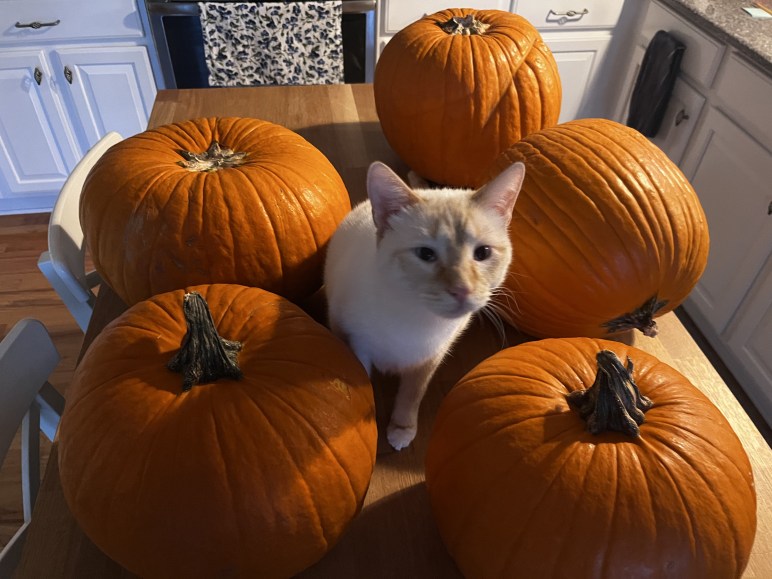
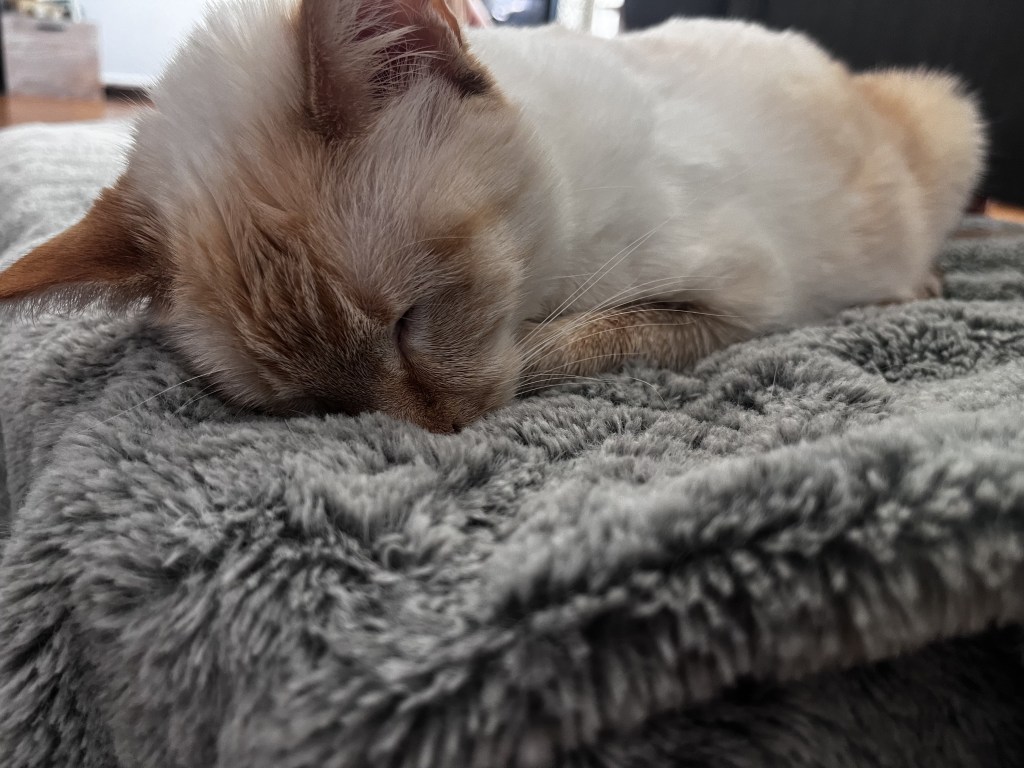
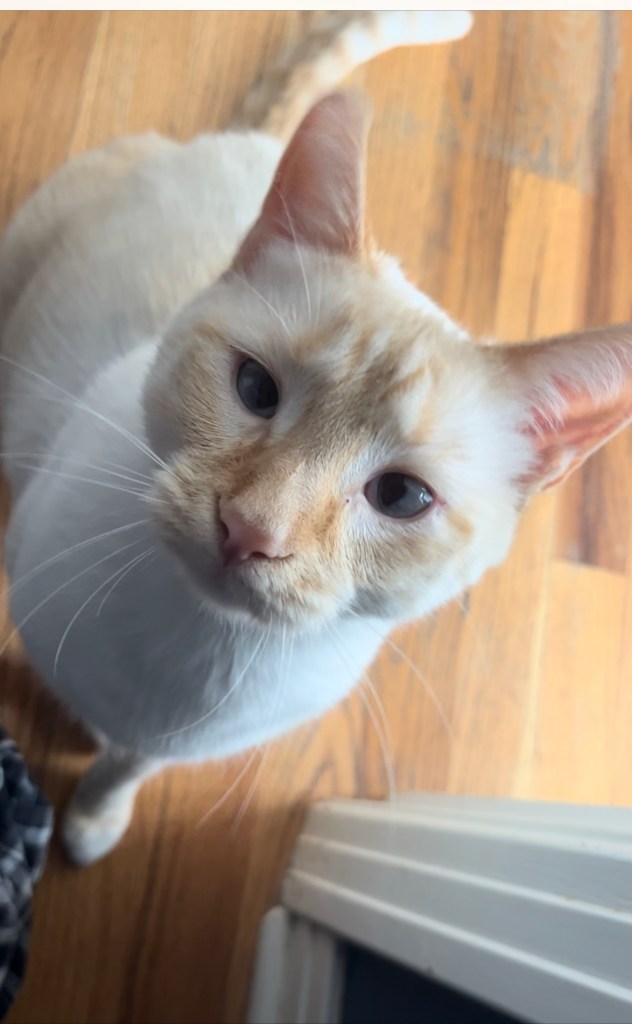
Well, I was going to go through more information on conferences and educational opportunities, and how to network, with the impending conference season upon us all…but right now, my semi-blind, seizure prone cat is sitting at my feet, having unstartled from when I came up in different pants an hour ago.
This blog is about writing. In so much as it’s about compassion. In so much as it is about responsibility.
In so much as it is about living, every day, as fully and as lovingly as we can.
Periwinkle started going blind about a year ago, as a year-old rescue kitten. We adjusted, pivoted, and managed the house to meet her needs. Because I recognize that when you agree to make an animal part of your family, then you take them in total, and you care for them as best you can until it’s their time to move on to the next adventure at a nice farm in upstate New York. Then about a month ago her seizures started. Scary ones, big ones, with hissing and violence and running in circles while she urinated all over herself. Trying to hold her steady enough that she didn’t knock her head into a wall again and bloody her nose. And then came the clean up, and calm down, and gentle hands to wash it all away. I was convinced, after the third, that she would need to have help, ending her suffering.
After relaying my plan to my children, to prepare them for this difficult decision, my daughter…my loving, quiet, introverted daughter, the oldest and my first, who never asks for much and is sensitive to wavelengths most people in the world never even feel, looked me dead in the eye and said. “You’re just giving up on her.”
And at first I was mad. I’m the only one who takes care of the pets. I was exhausted. I was doing all I could and our vet didn’t have answers. There was medicine that might not help. There were surgeries she might not live through. All we had were mights and maybes.
Then I let her words sink lower into my heart.
When exactly–in the course of my ever-jading timeline–did I decide that nothing was better than mights and maybes? That the certainty of quitting overruled the hope of trying? When did I start putting my comfort over the pain of effort that may not be rewarded? Was I just justifying her ‘quality of life’ over my own life-weary need to not bother?
And didn’t I have a responsibility to do better for her?
So we took her to the neurologist (a three hour appointment that my husband took on as I had to work that day) and was given an order to administer 2ml of shitty tasting medicine, by mouth, twice a day.
I’m not sure if you’ve ever owned a blind animal, or one who’s breed and temperament predisposes them to vocal and violent physical outbursts but if not, understand that Periwinkle’s NORMAL vet appointments require no less than four vet techs/veterinarians to come in with welding gloves and a kitty straight-jacket to administer a two second shot to her hind quarters. Nonetheless, twice a day, we (two untrained and un-welding-level-protected adults) have to hold her down, open her mouth, and force her to take this sticky, foul tasting medicine.
TWICE A DAY.
FOR A MONTH.
That’s 60 times. 60 times I have to hold her down, against her will, pry her mouth open, let her nails tear into my inner thighs and hands and hope she doesn’t sneeze or vomit it all out again. I hold. My husband gives it to her. We placate her with treats and pets, and clean her face after. And it doesn’t get easier, and it never feels good.
But I’m not giving up on her. Because we don’t give up on the things we love. Not our pets, not our writing, not ourselves. And I try to recognize and respect that present discomfort is short term, survival and hope in thriving are the end goal.
We find a way, we exhaust all possibilities, we trudge through the painful tearing of our work and the forced sittings of writing in the parts and pieces of the story we’re trying to heal and bring to the surface. We go to therapy and we journal and we cut out toxic people who we’ve tried to appease for too long, even when it feels lonely and unsupported. We start saying no. We start aiming for yeses that matter. We sit in the pain and ply ourselves with gentleness in the aftermath. We speak kindly to ourselves. We cherish every moment, even the painful hard ones and we don’t take the easy way out.
Because the truth is, there’s not really an easy way out. Nothing in life is easy all the time. And I suppose you could quit whenever it got hard, but you’d never really get anywhere and all you’d end up with is a huge steaming pile of regret. And that’s a pretty shitty consolation prize for life.
I wasn’t built to give up. I wasn’t built to let heavy weight wear me down. Or have false friends, and gossiping narcissists and egotistical jerks make roadblocks of my own insecurities or need for love. I will do the hard work. Despite the odds, despite the voices that whisper behind my back and inside my head “wouldn’t it be easier if…”
I have a responsibility to my characters, to my stories, to my own love of writing. I have a responsibility to my peace of mind, to my health and well-being, to my balance and serving my future. Anything that gets in the way of those things, whether its claw marks, or vicious gossip, or plot holes…I’m no longer willing to accept or let them stop me anymore.
Now, if you’ll excuse me, I’m going to go pet my cat, and enjoy the sunshine calm where I can catch it.
Don’t give up while I’m gone.


 Sarah Reichert Author