The Simplicity of Practice

I can’t tell you how much of my life I overthink. From what a friend has said, to what the scowl my daughter is giving me means, to the side eye my dog throws at me and the head shaking the man in the car next to me offers when I’m belting out Blink-182 lyrics… I overthink it all. I overthink every decision (but if I have a bagel without the egg I’m going to be hungry, if I brush my teeth now they’ll just get dirty because I want one more cup of coffee, but if I don’t brush them now, it might not happen today…) You see what I mean?

So when I’m given (or read, or listen to) writing advice, I tend to do the same. I over calculate how many chapters I should be writing a month to finish a book in a quarter. I’m diagraming the hell out of my character’s backstory (after a pantster first draft that feels too tepid). I’m getting lost looking at internet trends, publishing tips, and marketing plans… And so much of these grand ideas, sparked by advice to help in the long run (some don’t) but what they for sure do, is take up time. And invested time like that isn’t just the physical hours but the mental energy that it takes to process it all. Less mental energy means…less writing (or less quality in the writing?)

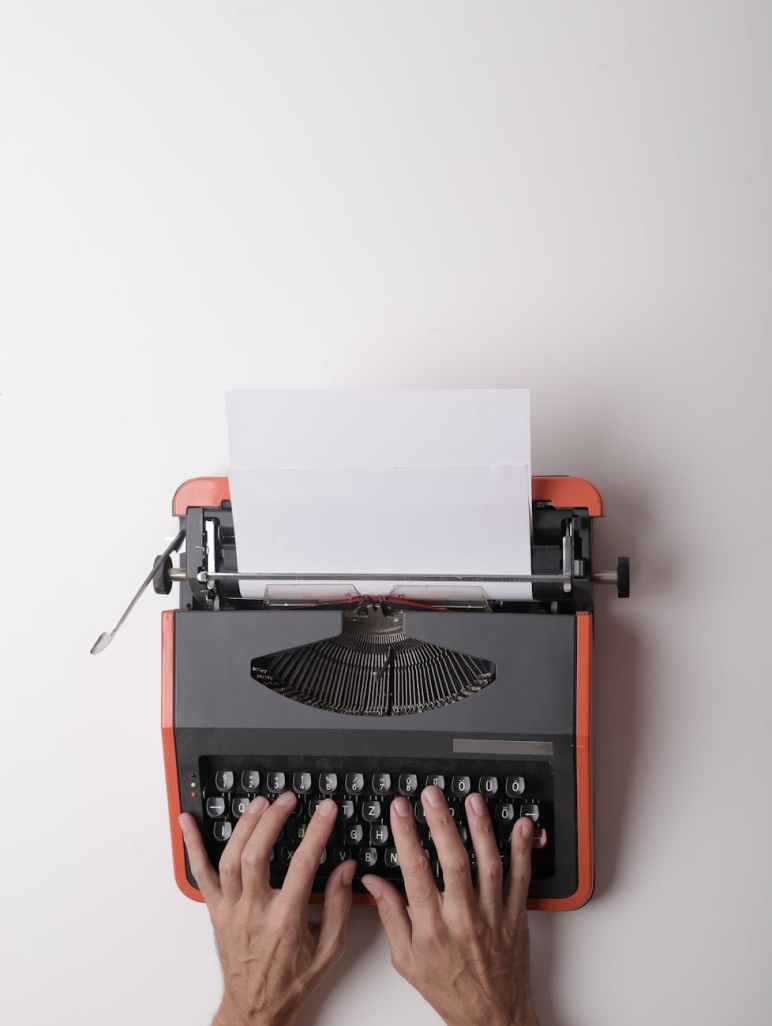
Recently, I read this great article on the timeless tidbit of: “just write”.

I mean, admittedly, it’s kind of a breath of fresh air. Simple. Not complicated. Correct. To be a writer, to finish your novel/story/project, you must actually write it. So…just write.

But it’s also oversimplified. If writing were just that easy, every person who’s ever come up to me and said “I’ve always wanted to write a book” or “I’ve started a novel but I can’t seem to finish it” would have oodles of books written. Wants made into dids. I mean, “just write” makes it sound like all we really have to do is sit down, the words will come, the knowledge will be there and the novel will march through beginning, middle, and end without fail or hiccup.

But writing isn’t simple. It’s akin to playing an instrument, and doing it well. Anyone can pluck the strings of a guitar. Anyone can thunk on the piano keys, but it takes more dedication, thought, and skill to actually play a song, none the less write one. But the practice is the road towards a better song.

So, as this pretty smart writer guy said, we should instead “Practice Writing.”

Practice Writing. It is better, no? You’re still doing the writing thing, but it comes with the lightened atmosphere of it being something continually tried and worked for, something offered, reworked, and perfected, but never perfect. Something we find joy in, while still being committed to the process of it.

And it helps me not over think it. Because every sentence, scene, poem, blog, or chapter I indulge in, is a practice, and a learning opportunity, but not a commitment to perfection. And just like an instrument, through trial and error, and time spent, we writers will get better and better. So, I beg you to go forth, and practice your writing today. Whether it’s 2000 words, or 20. Every plunking of the keys counts towards learning the complete song. Every word, every thought, every rambling blog post, is a writer in the making.
2nd Person POV: You Are the Great White Whale of Perspective

Your name is Ahab but you ask the crowd to call you Ishmael. You are the outcast. A man with a singular determination that will destroy your life one league at a time. One sharp harpoon, rusty tipped after another; giant nails in the coffin of your sanity. You spend your life in pursuit of an enemy, who stole your leg, the ghost of which pains you every night, mocks you, like the monster’s great white smile…

I’ve talked about perspective before but today, I wanted to get more into the elusive and cagey fellow that lies between the literary popular 1st, and the genre popular 3rd. This is the perspective one rarely writes a novel in (though it has been done) but can pack a powerful punch when building emotional investment in your reader.

Let’s talk about “you“. That is…the 2nd Person POV.

What you may not know is 2nd person POV is often used as a more intimate alternative to 1st person. It almost feels like a narrator is putting the reader in the middle of the action and making them the lead while they hold their hand through the journey.

But why is it so treacherous?

Well, the grammar alone can be strange, and redundant. On top of that, it is easy to fall into heavy and long-winded monologuing from this perspective and forget that your novel/book/story, must also contain those vial elements of setting, other characters, dialogue, and plotline

(If you ever want to see how it’s done right, I encourage you to check out Bright Lights, Big City by Jay McInerney: link)

So why do we bother using it? Well, like anything good and worthwhile in life, storytelling should evolve, it should test boundaries and experiment with ways to bring readers into our little worlds. In addition to that, 2nd person POV is a beautiful way to break up a scene by adding suspense, asking bigger picture questions, and engaging our readers on a more personal level.

It is an effective tool for removing a reader from a difficult situation while still keeping them interested. If your subject matter is ethically challenging (drug abuse, violence, non-conforming ideals) putting the scene or story in 2nd allows for the author and the reader to put you in the shoes of the person going through the questionable behavior. It’s a way to show the humanity behind bad decisions or the person in the crime, rather than being removed and judgmental towards the material presented.

If we see, third-hand, a man using cocaine in a bathroom we will make all kinds of judgements, but when the writer says something like,

“You promised yourself this would be the last hit, the one-way ticket to get you back to where you needed to be in your circle of friends. After all, those friends are the only family you have. What’s one little white line? They are cheering you on from behind and it feels like being on top of the world for that one brief inhale.”

2nd person POV is a beautiful way to get inside the characters head and making you the character at the same time.

2nd person is also great for allowing the writer to break a bit of the fourth wall and talk to a reader directly. Which can be fun, and strange but like I said, experimenting brings us to new ideas about how writing can affect us and our readers.

One of my favorite ways to use 2nd person POV is in a broader sense of humanity. I utilize it occasionally in poetry when dealing with universal ideas of loss, scarcity, war, hardship, joy, birth and death. Authors can tell the story we all are a part of and bring clarity and consciousness to larger metaphysical concepts and philosophy.

This method is often employed in passages scattered throughout a 3rd or 1st person POV novel, as a character telling a larger-picture story or asking a question that begs for more introspection.

If you’d like to give it a try remember: Avoid long monologues, stick to the action (just like any good writing), and don’t forget to do the work of writing (dialogue, scenes, sensory info). Also, start small, poetry, flash, short stories are a great venue for experimenting.

Converting current WIP (works in progress) or parts of them into 2nd can help you suds out the emotion you’re trying to hook the reader with as well as give you a fresh perspective on a character or scene that is simply not working.

Good luck out there.

Remember this Saturday (7/30), Episode 5 (“The Rainstorm”) of Westbury Falls will be available on Kindle Vella (link)